Karl Markovics: The Life Story Behind the Austrian Actor and Director
In this post
- A Young Actor in Vienna
- Theatre Years and Learning the Craft
- Inspector Rex and Television Fame
- The Counterfeiters and a Performance That Moved the World
- Breathing and Becoming a Director
- A Life in Vienna, on Stage and on Screen
- A Legacy of Quiet Power and Second Chances
- The Streets of Vienna as a Stage
- My Take:
Karl Markovics is an Austrian actor and director who became famous around the world for his performance as Salomon Sorowitsch in The Counterfeiters, a film that won the Academy Award for Best Foreign Language Film in 2007. He was born in Vienna, he worked in theatre for many years, he became known on television as Inspector Stockinger in the series Inspector Rex, and then he became a film star with The Counterfeiters. He later became a director, making the film Breathing in 2011, a film about a young man in prison who learns to breathe again, and he has continued to act and direct in Austria and Germany. He is a man who is known for his quiet power, his intelligence, and his ability to play men who are complex, troubled, and deeply human.
His story is a story about a long apprenticeship in theatre, about a man who worked for years before he became famous, and who then used his fame to tell stories that mattered to him. He is not a star who became famous overnight. He is an actor who learned his craft on stage, who worked in television, who waited for the right role, and who then gave a performance that moved audiences around the world. He is a director who cares about young people, about second chances, and about the human heart, and his films show that care.
This is the story of a boy from Vienna who became a theatre actor, a television detective, an Oscar-winning film star, and a director. It is a story about patience, about hard work, about the streets of Vienna, and about a man who never stopped believing in the power of a good story told honestly.
A Young Actor in Vienna
Karl Markovics was born on 29 August 1963 in Vienna, Austria, and he grew up in a city that is full of theatre, music, and history. Vienna was a city where acting was a respected profession, where the Burgtheater and other theatres were at the centre of cultural life, and young Karl grew up with that sense of theatre. He was a boy who liked to perform, who liked to watch plays, and who was drawn to the stage from an early age. He was not a child from a famous acting family. He was a boy from Vienna who loved acting, and who wanted to learn how to do it well.
As a young man, he studied acting at the Max Reinhardt Seminar in Vienna, one of the most famous acting schools in the German-speaking world. He was a student who took his craft seriously, who studied, who rehearsed, and who learned from his teachers. He was not in a hurry to become a star. He wanted to learn how to act, how to use his voice, how to move on stage, and how to tell a story with truth. He worked in theatres in Vienna and in other cities, and he built a reputation as a talented and serious young actor. He was learning his craft step by step, and that slow learning gave him a strong foundation.
He worked in theatre for many years, playing in plays by classical and modern writers, and he became known as a reliable and talented stage actor. He was a man who could play many kinds of roles, from comedy to tragedy, and who could hold an audience with a quiet and powerful performance. He was not a loud actor. He was a quiet actor, a man who showed feeling with a look, with a pause, and with a small movement, and that quiet power became his signature. He was a theatre actor in the truest sense, a man who loved the stage, and who never left it, even after he became a film star.
The most important thing about those early years is that Markovics did not rush into film. He studied, he worked in theatre, and he formed his own view of acting. He believed that an actor should understand the character, should be honest, and should work hard. That belief stayed with him for the rest of his career, and it is why his performances feel so real and so human. The boy from Vienna had become a man of the theatre, and that theatre training would guide his work in television and in film.
Theatre Years and Learning the Craft
For many years, Karl Markovics worked in theatre in Austria and Germany, and he learned the craft of acting from the inside. He played in theatres in Vienna, in Salzburg, and in other cities, and he worked with directors and actors who taught him a great deal. He was known as an actor who rehearsed a great deal, who studied his roles, and who gave everything to a performance. He was not an actor who relied on charm alone. He relied on hard work, on discipline, and on a deep understanding of the text. He played many roles, and each one taught him something new about acting and about life.
Theatre taught him patience, it taught him to listen, and it taught him to work with other actors. A play is live, it is direct, and it cannot hide behind editing or special effects. Markovics learned that lesson well, and he carried it into his film work. He was a man who had learned to be present on stage, to be real, and to let the audience feel what was happening. That presence is visible in his films, especially in The Counterfeiters, where he plays a man in a concentration camp with a quiet and powerful dignity. He learned that power on stage, and he brought it to the screen.
He also learned about the history of Vienna, about its streets, its people, and its stories, and he carried that knowledge into his work. He was a Viennese actor, a man who knew his city, who walked its streets, and who understood its people. That sense of place is part of his acting, and it makes his performances feel rooted and real. He was not an actor who came from nowhere. He was an actor from Vienna, and Vienna was in his work, in his voice, and in his way of being.
During those theatre years, he also began to work in television, and he began to be noticed by a wider audience. He was a stage actor who was slowly becoming a television actor, and then a film actor, and each step made him a better performer. He was a man who had earned his place through hard work, and who was ready for a bigger role when it came. The theatre actor from Vienna was about to become a television star, and then a film star, and his long apprenticeship would pay off.
Inspector Rex and Television Fame
Karl Markovics became known to a wide audience in Austria and Germany when he played Inspector Ernst Stockinger in the television series Inspector Rex, also known as Kommissar Rex. The series, which began in 1994, was about a police detective and his dog Rex, a German Shepherd who helps to solve crimes in Vienna. Markovics played Stockinger, a detective who was serious, intelligent, and dedicated, and he became a familiar face in homes across Austria and Germany. The series was a huge success, it was shown in many countries, and it made Markovics a television star.
He played Stockinger for two years, from 1994 to 1996, and his performance was praised for its warmth, its humour, and its intelligence. He was not a typical television detective. He was a man who cared about his work, who cared about justice, and who had a good relationship with his dog and with his colleagues. He was a detective who felt real, and audiences loved him for it. The series gave him fame, it gave him a chance to work in television, and it gave him a base from which to build a film career. He was a stage actor who had become a television star, and he was ready for the next step.
After Inspector Rex, he continued to work in television and in film, and he became known as a versatile actor who could play many kinds of roles. He appeared in television films, in series, and in films in Austria and Germany, and he was respected by directors and by audiences. He was a man who had worked in theatre, in television, and in film, and who had succeeded in all three. He was not a star who had been made overnight. He was an actor who had built his career step by step, with hard work and with talent.
His television fame also made him a public figure in Austria, a man who was recognised on the street, who was interviewed, and who was asked about his work. He handled that fame with humility, and he did not let it change him. He remained a theatre actor at heart, a man who loved the stage, and who returned to it again and again. He was a television star who never forgot where he came from, and that humility is part of why people respect him. The detective from Inspector Rex was about to become a film star, and his best work was still to come.
The Counterfeiters and a Performance That Moved the World
In 2007, Karl Markovics starred in The Counterfeiters, directed by Stefan Ruzowitzky, and his performance changed his life. He played Salomon Sorowitsch, a Jewish forger who is imprisoned in a Nazi concentration camp and forced to make counterfeit money for the Germans. Sorowitsch is a man who is clever, who is charming, who is a survivor, and who has to make impossible choices between his own life and the lives of others. Markovics played him with a quiet power, with a dignity, and with a humanity that moved audiences around the world. He did not overact. He was quiet, he was real, and he let the character speak for itself.
The film was based on a true story, and Markovics prepared for the role with great care. He studied the history, he read about Sorowitsch, and he thought deeply about what it means to survive in a concentration camp. He played Sorowitsch not as a hero or as a villain, but as a complex man, a man who wants to live, who is afraid, who is clever, and who is also capable of kindness. That complexity made the performance powerful, and it made the film unforgettable. Critics praised his work, audiences were moved, and the film won the Academy Award for Best Foreign Language Film in 2008.
The Oscar win made Markovics a world-famous actor. He was invited to festivals, he was interviewed, and his name was known in many countries. He was a man who had worked in theatre for many years, who had been a television detective, and who was now a film star. He handled that fame with grace, and he used it to choose roles that mattered to him. He did not chase Hollywood fame. He stayed in Austria and Germany, he worked in theatre and film, and he chose work that was honest and meaningful. He was a star who had earned his fame through a great performance, and he used it wisely.
The Counterfeiters remains his most famous film, and it is still shown today as an example of great acting and great film making. Markovics’s performance is still studied, and it is still praised for its quiet power and its humanity. He played a man in a terrible situation, and he made the audience understand that man, feel for him, and think about the choices he faced. That is a great achievement, and it is why his performance is remembered. He was not only an actor in a film. He was a man who told a true story with honesty and with heart.
Breathing and Becoming a Director
After The Counterfeiters, Karl Markovics became a director, and he made his first feature film, Breathing, in 2011. The film tells the story of Roman Kogler, a young man in prison who is given a chance to work in a morgue, and who slowly learns to breathe again, to live again, and to connect with other people. It is a quiet film, a film about a young man who has made mistakes, who is trying to change, and who is learning to be human again. Markovics directed it with great care, with a quiet style, and with a deep understanding of young people who are in trouble. The film was praised by critics, it won awards, and it showed that Markovics was not only a great actor. He was also a great director.
Breathing was a personal film for Markovics, because it was about second chances, about young people who have made mistakes, and about the possibility of change. He had worked with young actors, he had thought about the lives of people in prison, and he wanted to tell a story that was honest and hopeful. He did not make a film that was loud or dramatic. He made a film that was quiet, that was observant, and that trusted the audience to understand. That style, quiet and honest, is the same style that made his acting so powerful, and it made his directing powerful too.
He has continued to direct, making films and television, and he has continued to act. He directed Superwelt in 2015, a film about a woman who has a vision, and he has worked on other projects in Austria and Germany. He is a director who cares about stories, about people, and about the human heart, and his films show that care. He is not a director who makes films for money or for fame. He makes films because he has something to say, and because he wants to tell a story that matters. That is a rare and valuable quality in a director.
His work as a director has also made him a mentor for young actors and young film makers. He has worked with young people, he has shared his knowledge, and he has helped them to find their way. He is a man who believes in second chances, both in his films and in his life, and that belief is visible in his work. He is an actor who became a director, and a director who has not forgotten what it is like to be an actor. That understanding makes him a better director, and a better teacher.
A Life in Vienna, on Stage and on Screen
Karl Markovics lives in Vienna, he works in theatre, film, and television, and he continues to be a presence in Austrian culture. He is a man who has spent his life in art, who has worked on stage, on television, and in film, and who is still working today. He is married, he has children, and he tries to balance his work with his family life. He is a private man in many ways, but he is open about his love of Vienna, his love of theatre, and his love of telling stories. He is a Viennese actor, a man who walks the streets of Vienna, who knows its people, and who brings that knowledge into his work.
He has received awards in Austria and Germany, he has been honoured for his acting and for his directing, and he is respected by his colleagues. He is a man who has won an Oscar as an actor, who has directed award-winning films, and who has worked in theatre for more than thirty years. He is a complete artist, a man who can act, direct, and teach, and who does each one with skill and with honesty. He is a star who has stayed in Vienna, who has not moved to Hollywood, and who has built a career that is rooted in his home.
His later work includes films and television in Austria and Germany, and he continues to be in demand as an actor and as a director. He is a man who is still learning, still working, and still telling stories, even in his sixties. He is a testament to the power of patience, of hard work, and of a love of art that never fades. He is a man who has lived a full life in theatre and film, and who is still living it, with grace and with dignity.
A Legacy of Quiet Power and Second Chances
Karl Markovics’s legacy is a legacy of quiet power, of second chances, and of a man who tells stories with honesty. His performance in The Counterfeiters is still remembered as one of the great performances in Austrian cinema, and his film Breathing is still praised as a film about hope and about change. He showed that an actor can be quiet and still be powerful, that a director can be gentle and still be strong, and that a story about a young man in prison can be a story about all of us. That is a legacy that matters, and it will last.
His legacy is also in the young actors and directors he has helped, in the theatre he has worked in, and in the films he has made. He is a man who has given back to Austrian cinema, who has shared his knowledge, and who has helped others to find their way. He is a teacher as well as a star, and that makes his legacy richer. He is a Viennese actor who has become a world-famous star, and who has stayed true to his home, his theatre, and his values.
He is remembered in Austria as a great actor, a director, and a man of integrity. His name is associated with The Counterfeiters, with Breathing, and with a long career in theatre and television. He is a son of Vienna who became a star, and who did it with patience, with hard work, and with a quiet power that still moves audiences today. That is a legacy worth celebrating, and a life worth honouring.
The Streets of Vienna as a Stage
Karl Markovics is a Viennese actor, and Vienna is in his work, in his voice, and in his way of being. He was born in Vienna, he lives in Vienna, he walks its streets, and he knows its people, its history, and its stories. That sense of place is a part of his acting, and it makes his performances feel rooted and real. When he played Inspector Stockinger in Inspector Rex, he was a detective in Vienna, solving crimes in the city he knew. When he played Salomon Sorowitsch in The Counterfeiters, he was a man from a different Vienna, a Vienna of the past, but he brought his understanding of the city into the role. He is an actor who knows where he comes from, and who brings that knowledge into every performance.
His theatre work in Vienna also shows that sense of place. He worked at theatres in the city, he played in plays about Vienna, about its people, and about its history, and he became a part of its cultural life. He is a man who is not just an actor in Vienna. He is a Viennese actor, a person who belongs to the city, and who is loved by it. That belonging is a beautiful thing, and it is a lesson: you do not need to leave home to be a world star. You can stay at home, you can work in your city, and you can make the world come to you. Markovics did that, and Vienna is proud of him for it.
His film Breathing is also about Vienna, about a young man in the city, about its streets, its morgue, and its people, and it shows his love of the city in a quiet and honest way. He directed it with care, with a style that is Viennese in its quietness, its humour, and its humanity. He is a director who tells stories about his home, and who does it with love. That love of home is a part of his legacy, and it is a legacy that will last in the streets of Vienna, in the theatres he worked in, and in the films he made.
My Take:
When I think about Karl Markovics, I think about quiet power, and I think about a man who does not need to shout to be heard. He played Salomon Sorowitsch in The Counterfeiters with a quiet dignity, with a look, with a pause, and with a humanity that moved audiences around the world. He did not overact, he did not try to be dramatic, and he did not try to make the character a hero. He played him as a real man, a man who is clever, who is afraid, who wants to live, and who has to make impossible choices. That quiet power is a rare gift, and it is why his performance is still remembered. I admire him for trusting silence, for trusting the audience, and for showing that a quiet performance can be more powerful than a loud one.
I think about his long apprenticeship in theatre, and I respect it deeply. He studied at the Max Reinhardt Seminar, he worked in theatres in Vienna and in other cities for many years, and he built his career step by step. He did not become famous overnight. He worked, he learned, and he waited for the right role. That patience is a lesson for anyone who wants a long career: learn your craft, work hard, and do not rush. Markovics did that, and when The Counterfeiters came, he was ready. He was ready because he had spent years on stage, learning how to act, how to listen, and how to be present. That readiness is what made his performance so strong, and it is a reminder that preparation matters more than luck.
What moves me most is his film Breathing, about a young man in prison who learns to live again. It is a film about second chances, about a young person who has made mistakes, and about the possibility of change. I think that is a beautiful and important story, because many films about prison are about violence or about punishment, but Breathing is about hope, about breathing, about learning to be human again. Markovics directed it with great care, with a quiet style, and with a deep understanding of young people. He showed that he cares about people who are often ignored, about young men in prison, and about their chance to change. That compassion is a part of who he is, and it is a part of his work that I admire deeply.
I also think about his role as Inspector Stockinger in Inspector Rex, and I smile, because it is a role that made him famous in Austria and Germany, and it is a role that shows a different side of him. He played a detective who was serious, intelligent, and kind, and who worked with a dog to solve crimes in Vienna. It was a popular series, it was watched by millions, and it made him a television star. That role is very different from Sorowitsch in The Counterfeiters, and that difference shows his range. He can play a detective, he can play a forger in a concentration camp, he can play a director, and he can do each one well. That versatility is a gift, and it is a sign of a great actor.
There is something else I keep thinking about, and it is his love of Vienna. He was born in Vienna, he lives in Vienna, he works in Vienna, and his films and his acting are full of Vienna, its streets, its people, and its history. He is a Viennese actor, and he is proud of it. He did not move to Hollywood, he did not leave his home, and he built a career that is rooted in his city. That loyalty is a beautiful thing, and it is a lesson: you do not need to leave home to be a world star. You can stay at home, you can work in your city, and you can make the world come to you. Markovics did that, and Vienna is proud of him for it.
I think about the moral question at the heart of The Counterfeiters, about what you would do if you had to make fake money for the Nazis to survive, and I feel the weight of that question. Markovics does not give an easy answer. He shows a man who is trying to survive, who is clever, who is afraid, and who has to live with his choices. That is a powerful way to tell a story about the Holocaust, not as a simple tale of heroes and villains, but as a story about real people in impossible situations. I think that is a brave and honest way to make a film, and it is why The Counterfeiters won an Oscar. It asks the audience to think, and it trusts them to think. I respect that trust, and I think we need more films like that.
If I compare Markovics with other actors, I think what makes him special is his humanity. He plays men who are flawed, who are troubled, and who are trying to do their best, and he plays them with a humanity that makes you care for them. He does not judge his characters. He understands them, and he shows them as they are. That is a rare gift, and it is a gift that comes from his theatre training, from his patience, and from his love of people. He is an actor who loves people, even when they are difficult, and that love shows in his work.
For a young reader, I think the lesson is to be patient, to learn your craft, and to care about people. Markovics learned his craft on stage, he worked for many years before he became famous, and he cared about the characters he played, whether they were detectives, forgers, or young men in prison. He did not rush, he did not try to be famous quickly, and he did not give up. He kept working, kept learning, and kept caring, and his career is proof that patience and compassion can lead to great work. If you are young and you feel in a hurry, remember Markovics. He waited, he worked, and when his moment came, he was ready.
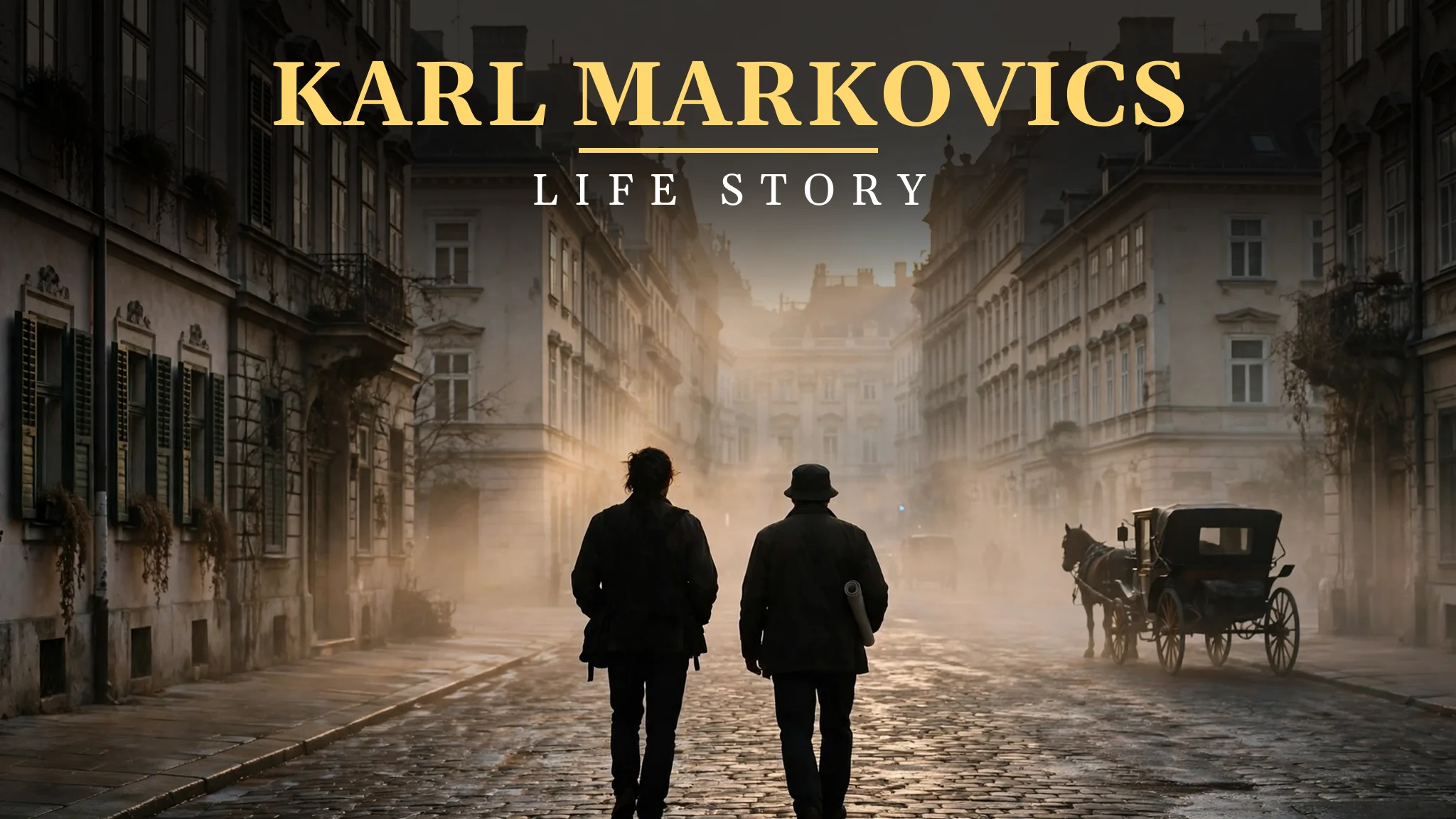
I keep thinking about the image of two men walking down a misty Vienna street at sunrise, past old buildings and a horse-drawn carriage, and I think it fits Markovics. He is a man who walks the streets of Vienna, who knows its history, who tells its stories, and who does it with a quiet and steady step. He is not a star who rushes. He walks, he observes, and he tells a story with care. I wish him well, I wish him more films, and I wish him a life where he can continue to act, to direct, and to tell stories that matter. He is a star who has stayed true, and he deserves to be celebrated for that.
In the end, I think Karl Markovics teaches us that quiet can be powerful, that patience can lead to greatness, and that a story about a second chance can change a life. He was a boy from Vienna who became a theatre actor, a television detective, an Oscar-winning film star, and a director who makes films about hope. He did not have a short or simple career. He had a long, rich, and varied career, and he is still living it. That is a legacy I respect, and a life I want to honour.
One more thought stays with me, and it is about breathing, the title of his film. To breathe is to live, to take in air, to be alive, and the young man in Breathing learns to breathe again after being in prison. That is a beautiful metaphor for life: we all need to learn to breathe again after hard times, after mistakes, after loss. Markovics understood that, and he made a film about it. I think we should all remember to breathe, to take a moment, to live, and to give ourselves a second chance. That is a lesson worth carrying, and it is a gift from a director who cares.
I think about Karl Markovics’s quiet power, and I realise how rare it is. He does not shout, he does not overact, and he does not try to be dramatic. He is quiet, he is real, and he lets the audience feel what he feels. That quiet power is a gift, and it is why his performance in The Counterfeiters is still remembered. He played a man in a concentration camp with a dignity that moved audiences around the world, and he did it with a look, a pause, and a small movement. I admire that, because it takes a great actor to be quiet and powerful at the same time. Many actors try to be loud to be noticed, but Markovics is noticed because he is true.
I also think about his patience, about working in theatre for many years before he became famous. He studied at the Max Reinhardt Seminar, he worked in theatres in Vienna, and he built his career step by step. He did not become famous overnight. He worked, he learned, and he waited for the right role. That patience is a lesson for anyone who wants a long career: learn your craft, work hard, and do not rush. Markovics did that, and when The Counterfeiters came, he was ready. He was ready because he had spent years on stage, learning how to act, how to listen, and how to be present. That readiness made his performance so strong.
There is a compassion in his film Breathing that I love, a compassion for young people in prison, for people who have made mistakes, and for the possibility of change. He directed a film about a young man who learns to breathe again, to live again, and to connect with others, and he did it with a quiet and honest style. That film is about second chances, about hope, and about the human heart, and it shows that Markovics cares about people who are often ignored. I think that compassion is a part of who he is, and it is a part of his work that I admire deeply. He is not only an actor. He is a director who cares.
I think about his role as Inspector Stockinger, and I smile, because it shows a different side of him. He played a detective who was serious, intelligent, and kind, and who worked with a dog to solve crimes in Vienna. It was a popular series, it was watched by millions, and it made him a television star. That role is very different from Sorowitsch, and that difference shows his range. He can play a detective, he can play a forger, he can direct, and he can do each one well. That versatility is a gift, and it is a sign of a great actor who is not limited to one kind of role.
Another thought stays with me, and it is about Vienna, about the streets he walks, and about the city he loves. He was born in Vienna, he lives in Vienna, and his work is full of Vienna. He did not move to Hollywood, he did not leave his home, and he built a career that is rooted in his city. That loyalty is a beautiful thing, and it is a lesson: you do not need to leave home to be a world star. Staying in Vienna did not hold him back. He worked in his own city, and audiences around the world came to his work. Markovics did that, and Vienna is proud of him.
I keep thinking about breathing, about the title of his film, and about what it means to learn to breathe again after hard times. We all need to learn to breathe again after mistakes, after loss, after prison, after pain. Markovics understood that, and he made a film about it. I think we should all remember to breathe, to take a moment, to live, and to give ourselves a second chance. That is a lesson worth carrying, and it is a gift from a director who cares about people.
Frequently Asked Questions
When was Karl Markovics born?
Karl Markovics was born on 29 August 1963 in Vienna, Austria, and he studied acting at the Max Reinhardt Seminar in Vienna.
What role made Karl Markovics famous around the world?
He became famous for playing Salomon Sorowitsch in The Counterfeiters in 2007, a Jewish forger forced to make counterfeit money for the Nazis in a concentration camp. The film won the Oscar for Best Foreign Language Film.
Who did Karl Markovics play in Inspector Rex?
He played Inspector Ernst Stockinger in the television series Inspector Rex from 1994 to 1996, a detective in Vienna who works with his dog Rex to solve crimes.
What film did Karl Markovics direct?
He directed Breathing in 2011, a film about a young man in prison who works in a morgue and slowly learns to live again. The film won awards and was praised by critics.
Did Karl Markovics work in theatre?
Yes, he worked in theatre in Vienna and other cities for many years before becoming famous in film, and he has continued to work on stage throughout his career.
What other films has Karl Markovics directed?
He also directed Superwelt in 2015, a film about a woman who has a vision, and he has worked on other film and television projects in Austria and Germany.
Is Karl Markovics still working today?
Yes, he continues to act and direct in Austria and Germany, lives in Vienna, and remains a respected figure in Austrian theatre, film, and television.


