The Notorious B.I.G.: The Life Story Behind Rap's King
In this post
Christopher Wallace was born on 21 May 1972 in Brooklyn, New York, the only child of Voletta Wallace, a Jamaican preschool teacher, and Selwyn George Latore, a welder who left the family when Christopher was two. He grew up in Bedford-Stuyvesant, Brooklyn, in a neighbourhood that was poor and tough, and he was a shy, overweight boy who was bullied at school and who found his escape in music, rapping on street corners and in school hallways. By the time he was a teenager, he was known in the neighbourhood as Biggie Smalls, a name that came from his size and from a character in the 1975 film Let’s Do It Again, and he was already writing rhymes that made older rappers stop and listen.
In 1992 a demo tape that Biggie had made with his friend Mister Cee, a Brooklyn DJ, reached Sean Combs, a young executive at Uptown Records who was starting his own label, Bad Boy Records, and Combs signed him. The Source, a hip-hop magazine, named Biggie its Unsigned Hype, an honour given to the most promising rapper without a record deal, and the buzz around him grew. He was twenty, and he was about to become the most important rapper in New York.
His first album, Ready to Die, was released in September 1994, and it became a classic, selling more than two million copies and producing the singles Juicy, Big Poppa and One More Chance. The album told the story of a young man from Brooklyn who dreamed of a better life, and it did it with a flow that was smooth and effortless, a voice that was deep and warm, and a sense of humour that made even the darkest stories entertaining. Biggie was twenty-two, and he was the king of New York rap.
Biggie died on 9 March 1997 in Los Angeles, California, at the age of 24, shot in a drive-by shooting after a party, six months after the death of Tupac Shakur, his former friend and rival. His second album, Life After Death, was released two weeks later, and it sold more than ten million copies. This is his life story, from a street corner in Bedford-Stuyvesant to the top of the charts.
Bedford-Stuyvesant and the Childhood
Christopher George Latore Wallace was born on 21 May 1972 in Brooklyn, New York, at St. Mary’s Hospital, to Voletta Wallace, a Jamaican immigrant who worked as a preschool teacher, and Selwyn George Latore, a welder and small-time politician who left the family when Christopher was two years old. Voletta raised her son alone, in a two-bedroom apartment on St. James Place in Bedford-Stuyvesant, working long hours and insisting that Christopher do well at school. She was a strict parent, and she kept him away from the streets as much as she could, but the streets were outside the door, and Christopher knew them well.
At school Christopher was a good student, but he was also overweight, and he was teased for his size, a cruelty that stayed with him and that he later turned into humour in his rhymes. He attended Queen of All Saints Middle School and then Bishop Loughlin Memorial High School, a Catholic school in Brooklyn, where he was known for his rapping and for his ability to make people laugh. He was also, by his own account, involved in selling drugs as a teenager, a fact he did not hide in his music, and that gave his rhymes a credibility that other rappers lacked. His mother knew about it, and she disapproved, but she also understood that the streets were the only economy available to a young man in Bed-Stuy.
His father, who lived in New York but was rarely present, died when Christopher was a teenager, and the loss affected him, though he spoke about it rarely. His mother remained the central figure in his life, and she supported his music, driving him to recording sessions and listening to his rhymes, even when the language shocked her. She was a Jamaican woman of strong faith, and she prayed for her son every day, a fact that Biggie mentioned in his songs, including Juicy, in which he rapped about his mother and about the dream that had carried him from Brooklyn to the top of the charts.
The Demo Tape and Bad Boy
In the early 1990s Biggie began rapping seriously, performing at house parties and on street corners in Brooklyn, and he made a demo tape with Mister Cee, a DJ who was well known in the neighbourhood. The tape included a song called Party and Bullshit, which was Biggie’s first recorded performance, and it circulated among DJs and record executives in New York. The tape reached Sean Combs, who was then an A&R executive at Uptown Records, and Combs was impressed by Biggie’s flow, his voice and his storytelling, and he signed him to his new label, Bad Boy Records, in 1992, making Biggie the label’s first artist.
The Source magazine named Biggie its Unsigned Hype in its March 1992 issue, an honour that was given to the most promising unsigned rapper in the country, and the feature brought him to the attention of the hip-hop world. He also appeared on a remix of Mary J. Blige’s song Real Love in 1992, his first appearance on a major record, and the performance showed that he could hold his own alongside established stars. Combs, who was then known as Puff Daddy, became Biggie’s mentor and his producer, shaping his image and his sound, and the two men developed a partnership that would define Bad Boy Records.
Biggie’s early years at Bad Boy were spent recording and performing, and he appeared on records by other Bad Boy artists, including Craig Mack, whose single Flava in Ya Ear became a hit in 1994, with a remix that featured Biggie, LL Cool J, Busta Rhymes and Rampage. The remix was a showcase for Biggie’s talent, and his verse, in which he introduced himself as the rap phenomenon, was the most quoted of the year. By the time his own album was ready, the hip-hop world was waiting for it, and the expectations were enormous.
Ready to Die and Juicy
Ready to Die was released on 13 September 1994, and it was produced by Sean Combs, Easy Mo Bee, DJ Premier and others, with a sound that mixed soul samples, funk and hard drums. The album’s first single, Juicy, was released in August 1994, and it became Biggie’s signature song, a autobiographical record in which he rapped about his life, from a boy in Brooklyn who dreamed of becoming a rapper to a star who had made it, with the famous opening line, it was all a dream, I used to read Word Up! magazine. The song reached number twenty-seven on the pop chart, and it became one of the most beloved records in hip-hop.
The album’s other singles included Big Poppa, a smooth, confident record about a ladies’ man, which reached number six on the pop chart, and One More Chance, a remix of which reached number two, Biggie’s highest-charting single in his lifetime. The album itself reached number fifteen on the Billboard chart and sold more than two million copies, and it was praised by critics for its storytelling, its humour and its flow. The record’s songs were cinematic, with Biggie narrating his life in detail, from the streets of Brooklyn to the recording studio, and the album is still regarded as one of the greatest hip-hop records ever made.
Ready to Die also established Biggie as the leading rapper in New York, at a time when West Coast rap, led by Dr. Dre and Snoop Dogg, was dominating the charts. Biggie’s success gave New York a new hero, and it set the stage for the rivalry with the West Coast that would dominate the next three years. The album’s title, which Biggie chose because he said he was ready to die if his music failed, took on a darker meaning after his death, and it is now remembered as a prophecy as well as a debut.
Big Poppa, One More Chance, and the Hits
Big Poppa was released as a single in December 1994, and it became one of Biggie’s most popular records, a smooth, laid-back song built around a sample of the Isley Brothers’ Between the Sheets. The song’s lyrics, in which Biggie presents himself as a confident ladies’ man, were delivered with a charm and a humour that made the record a hit in clubs and on the radio, and it reached number six on the Billboard Hot 100, his first top ten single. The song’s video, which showed Biggie in a suit, surrounded by women, became a staple on MTV, and the record remains one of his most played songs.
One More Chance was released as a single in 1995, and the remix, which featured a sample of DeBarge’s Stay with Me, reached number two on the pop chart, Biggie’s highest-charting single during his lifetime. The song was a plea for a second chance with a woman, and it showed a softer side of Biggie, a romantic who could be vulnerable as well as tough. The record’s success confirmed that Biggie was not just a rapper for hip-hop fans, but a pop star whose records could reach a mainstream audience, and it made him one of the most commercially successful rappers of the mid-1990s.
His other hits included Hypnotize and Mo Money Mo Problems, both from Life After Death, which were released after his death and both reached number one. Hypnotize, with its sample of Herb Alpert’s Rise, was a confident, celebratory record, and Mo Money Mo Problems, which featured Puff Daddy and Mase, was a song about the problems that come with wealth, with a chorus sung by Kelly Price. The two records showed that Biggie’s music had a life beyond his death, and that his audience continued to grow even after he was gone.
Life After Death and the Double Album
Life After Death was recorded in 1996 and early 1997, and it was released on 25 March 1997, sixteen days after Biggie’s death, as a double album with twenty-four tracks. The album was a sprawling, ambitious record, with guest appearances by Jay-Z, Lil’ Kim, Bone Thugs-n-Harmony, Too Short and Puff Daddy, and it mixed hardcore rap with pop, R&B and dance music, showing the range of Biggie’s talent. The album reached number one on the Billboard chart, and it sold more than ten million copies, making it one of the best-selling rap albums in history, and it won the Grammy nomination for Best Rap Album.
The album’s songs included Hypnotize, which reached number one, Mo Money Mo Problems, which also reached number one, and Notorious Thugs, a collaboration with Bone Thugs-n-Harmony that showed Biggie adapting his flow to match the group’s rapid-fire style. The album also included Sky’s the Limit, a song about ambition and hope, and Miss U, a song about his daughter, which showed a personal side that his earlier records had only hinted at. The record was a farewell, recorded while Biggie knew his life was in danger, and its title, Life After Death, took on a meaning that no one had intended.
The album’s success after Biggie’s death made him a legend, and it ensured that his music would be heard by generations who had never seen him perform. The record has been reissued several times, and it is still regarded as one of the greatest rap albums ever made, a double album that holds together despite its length, because Biggie’s voice and his storytelling carry it from start to finish. The album’s sales made Bad Boy Records one of the most successful labels in America, and it made Biggie’s family, including his mother Voletta, financially secure for the first time.
The Flow and the Voice
Biggie’s flow was the most admired in hip-hop, a smooth, effortless delivery that made complex rhymes sound easy. He rapped in a deep, warm baritone, with a relaxed pace that contrasted with the frantic style of many of his contemporaries, and he used internal rhymes, multisyllabic rhymes and a conversational tone that made his verses feel like stories told by a friend. Rappers who came after him, from Jay-Z to the Notorious B.I.G.’s own protégés, studied his flow, and many of them have said that he was the best rapper they ever heard, a judgement that has become the consensus in hip-hop.
His voice was also distinctive, a deep baritone that sounded older than his years, and that carried a warmth and a humour that made his darkest stories entertaining. He could rap about violence and poverty without sounding angry, and he could rap about love and luxury without sounding soft, a range that few rappers have matched. His voice was recorded with a clarity that captured its richness, and the engineers who worked with him said that he needed few takes, because he knew exactly what he wanted to sound like, and he delivered it on the first try.
His storytelling was the third element of his talent, and it was what set him apart from other rappers of his generation. His songs were narratives, with characters, settings and plots, and they were told with a detail that made them feel like short films. Juicy told the story of his rise, Warning told the story of a robbery, and I Got a Story to Tell told the story of a sexual encounter that went wrong, all of them told with humour and with a sense of drama that made the listener want to hear what happened next. The storytelling was his gift, and it is the reason his records are still studied by writers and by rappers.
The Rivalry with Tupac
The rivalry between Biggie and Tupac Shakur began in November 1994, when Tupac was shot five times in the lobby of Quad Studios in New York, and he believed that Biggie and Sean Combs, who were recording upstairs, had known about the attack in advance. Biggie denied any involvement, and he said that he had been in the studio all day and had not known Tupac was in the building, but Tupac did not believe him, and the feud became public, with Tupac releasing songs that accused Biggie of betrayal, and Biggie responding with songs that denied the charges without naming Tupac directly.
The rivalry was fuelled by the media, which presented it as a war between the East Coast and the West Coast, and by fans who took sides, but it became real, and it created a climate in which violence was expected. Both men were surrounded by people who carried guns, and both were involved in incidents that could have ended in death before the shootings that killed them. Friends of both men said later that the rivalry was exaggerated, and that Biggie and Tupac had once been close, with Biggie visiting Tupac in prison and Tupac giving Biggie advice about his career, but the feud, once started, was hard to stop.
Tupac was killed in September 1996, six months before Biggie, and Biggie’s death, in March 1997, was widely seen as retaliation, though no one has ever been convicted of either murder. The two deaths ended the rivalry, and they led to a debate about violence in hip-hop, and about the role of the media in fuelling it, a debate that continues today. The rivalry remains one of the saddest chapters in the history of popular music, a feud between two talented young men that ended in the deaths of both, and that deprived the world of two of its greatest rappers.
Faith Evans and the Family
Biggie married Faith Evans, a singer, in August 1994, after a whirlwind courtship that lasted only a few weeks, and the marriage produced a son, Christopher Jordan Wallace, born in October 1996. Faith was a talented singer in her own right, and she had been signed to Bad Boy Records, where she recorded her first album, Faith, in 1995. The marriage was troubled, with Biggie’s infidelity and his touring keeping them apart, and Faith later wrote about it in her memoir, Keep the Faith, in which she described Biggie as a loving husband and a difficult one, a man who was generous and funny, but who was also unfaithful and absent.
Biggie also had a daughter, T’yanna Wallace, born in August 1993, from a relationship with Jan Jackson, his high school girlfriend, and he was close to both of his children, though his touring kept him away from them for long periods. His mother, Voletta, remained the central figure in his life, and she raised his children after his death, with the help of Faith, and she established the Christopher Wallace Memorial Foundation, which works to support education and the arts for young people in Brooklyn. The foundation has funded scholarships, music programmes and community events, and it has kept Biggie’s name alive in the neighbourhood where he grew up.
Faith Evans recorded I’ll Be Missing You in 1997, with Puff Daddy, a tribute to Biggie that sampled the Police’s Every Breath You Take, and the record reached number one in America and Britain, becoming one of the best-selling singles of the year. The song’s success showed the depth of feeling for Biggie, and it became the anthem of mourning for a generation of hip-hop fans. Faith has continued to record and to perform, and she has spoken often about Biggie, describing him as a man who was larger than life, and who is still missed by everyone who knew him.
The Death and the Investigation
On the night of 8 March 1997 Biggie attended a party at the Petersen Automotive Museum in Los Angeles, hosted by Vibe magazine, and after the party was shut down early by the fire department, he left in a car with Sean Combs and his entourage. At a traffic light on Wilshire Boulevard, a black Chevrolet Impala pulled up alongside his car, and a gunman opened fire, hitting Biggie four times, in the chest, arm and thigh. He was taken to Cedars-Sinai Medical Center, where he was pronounced dead at 1:15 a.m. on 9 March, at the age of 24. The murder has never been solved, though the Los Angeles Police Department has investigated it for decades, and several theories have been proposed, including gang retaliation and a corrupt police conspiracy, but no one has ever been charged.
His funeral was held in Brooklyn on 18 March 1997, and it was attended by thousands of people, including his family, his friends and his fellow rappers, among them Jay-Z, Lil’ Kim and Queen Latifah. The procession through Bedford-Stuyvesant drew crowds who lined the streets to pay their respects, and the service, at the Frank E. Campbell Funeral Chapel in Manhattan, was a private affair, with Faith Evans singing and Sean Combs delivering a eulogy. Biggie was cremated, and his ashes were given to his family, who scattered them in accordance with his wishes.
The investigation into his murder has continued for more than twenty-five years, with the LAPD and the FBI both involved, and with several documentaries and books examining the evidence. The most widely accepted theory is that the murder was retaliation for Tupac’s death, carried out by members of the South Side Crips, but no arrests have ever been made, and the case remains officially unsolved. The lack of a resolution has added to Biggie’s legend, and it has made his death one of the great unsolved mysteries in the history of popular music.
The Legacy of Biggie
Biggie’s influence on hip-hop is immense. He is widely regarded as one of the greatest rappers of all time, and his albums, Ready to Die and Life After Death, are regarded as classics, studied in schools and universities as examples of storytelling, flow and songwriting. His records have sold more than twenty-five million copies in America alone, and his music is sampled by artists in every genre, from hip-hop to pop to rock. Rappers from Jay-Z to Kendrick Lamar have named him as their primary influence, and his flow is still the standard against which other rappers are measured.
His image, in a suit and sunglasses, with a crown, has become iconic, and it appears on posters, T-shirts and murals around the world. The photograph of Biggie wearing a crown, taken by Barron Claiborne in 1997, three days before his death, is one of the most famous images in hip-hop, and it has been reproduced countless times. His mother, Voletta, has kept his memory alive through the Christopher Wallace Memorial Foundation, and his children, T’yanna and Christopher Jr., have spoken publicly about their father, describing him as a loving parent who is still missed.
Today Biggie is remembered as the king of New York rap, and his music is played every day around the world. He was born in Brooklyn, he worked in New York and Los Angeles, and he died in Los Angeles, and his songs remain the sound of a young man who dreamed of a better life and achieved it, if only for a short time. His life was brief, but his influence has lasted, and it will be felt for as long as people listen to rap.
My Take:
What I admire about Biggie Smalls is that his flow was the smoothest in hip-hop, a flow that made every other rapper sound like they were trying too hard, and that is a rare thing, because many rappers have clever words, but few have a flow that is smooth, and Biggie’s flow was smooth, in the sense that it made every song he rapped sound effortless, and that is why he is the king of New York, and why his flow is still studied today, by rappers who want to learn how to rap, and who listen to Biggie, and who try to understand his genius, and who know they never will, because it was unique, and it was Biggie’s, and it was a gift, and that gift is still here, in recordings that are more than thirty years old, and that are still powerful, still moving, and still relevant, today.
Juicy is the song I think about most, because it is one of the most beloved songs ever recorded, and Biggie’s performance is at its heart. He wrote it, about his life, from a boy in Brooklyn, who dreamed of becoming a rapper, and who did, and it became a hit, and it is still played today, as a classic, and that shows Biggie at his best, as a rapper, and as a storyteller, who could write a song about his life, and make it sound beautiful, and that is a gift that few rappers possess, the gift of making a song about your life, sound like a hit, and Biggie had it, and he used it, in Juicy, and in every song he wrote, and that is why the song is still a classic, and why it is still one of his most beloved songs, a song that is both a hit, and a work of art, and that is a rare thing, and it is a part of why Biggie is a genius, and why his music is still important today, more than thirty years after Juicy was recorded.
Hypnotize is a song I love, because it became a number one hit, and Biggie rapped it, with a voice that was deep, and that was soulful, and that made it feel personal, and that is a gift that few rappers possess, the gift of making a song feel like it was written for you, and Biggie had it, and he used it, in Hypnotize, and in every song he rapped, and that is why the song is still a classic, and why it is still one of his most beloved songs, a song that is both a hit, and a work of art, and that is a rare thing, and it is a part of why Biggie is a genius, and why his music is still important today, more than twenty-five years after Hypnotize was recorded, because it is timeless, because it is honest, and because it is Biggie Smalls.
Ready to Die is an album that moves me, because Biggie released it, in 1994, and it became a huge success, and it made him a superstar, and that is a testament to his talent, and to his determination, and to the power of a great rapper, who, even when he is young, can write an album, that will be remembered, for decades, and that is a lesson worth remembering, for anyone who wants to be a rapper, because it shows that you can write a great album, at twenty-one, and you can be great, and the world will listen, if you are talented, and if you are true, and Biggie was both, and that is why his debut is inspiring, and that is a part of his story that is both touching and inspiring, and that will be told for as long as Biggie is remembered, and Biggie will always be remembered, as the king of New York, and as a man who was, in every sense, a legend, and a tragedy.
The lesson I take from Biggie is that storytelling matters, even when it is rapped. He was a storyteller, and he used his words, to tell stories, about his life, and about Brooklyn, and about being a king, and that is a lesson for anyone who wants to be an artist, because Biggie shows that you can use your words, to tell a story, and that is a powerful message, for anyone who wants to be a rapper, because Biggie shows that rapping can be storytelling, and that storytelling can be beautiful, and that is a beautiful thing, and it is a part of why his story is inspiring, and why it will always be inspiring, and it is a reminder that we should not just rap, but tell stories, the way Biggie did, and make them into art, and that is a lesson worth remembering, for every rapper out there.
I also think about his mother Voletta, because she was a Jamaican preschool teacher, and she taught him about hard work, and about education, and she believed in him, and she was proud of him, and that is a beautiful thing, and it is a part of his story that is both touching and inspiring, because it shows a mother who loved her son, and who believed in him, and who was, in many ways, a strong woman, herself, and that is a legacy that matters, in its own way, alongside his songs and his microphone, because his family is his greatest legacy, and they have honoured him, by being themselves, just as he was himself, and that is a beautiful thing, and it is a part of his story that is both touching and inspiring.
His humour is something I admire, because he was a funny man, who could make people laugh, and who did it, with a wit, and a charm, that was infectious, and that is a part of his genius, a genius that was not just about rapping, but about being a person, and about making people feel, and Biggie had it, and he used it, in every song he rapped, and in every interview he gave, and that is why he is loved, not just as a rapper, but as a man, and as a human being, and that is a legacy that will never fade, and a life that will always be remembered, as one of the greatest in the history of hip-hop, a man who was funny, and who was talented, and who was, in every sense, a legend, and a tragedy.
Finally, I believe Biggie Smalls was one of the greatest rappers who ever lived, and his recordings are classics that will be played for as long as songs are sung. He was the king of New York, he was the greatest rapper of his generation, and he was a legend, and his story is one of talent, storytelling, and a life lived with a microphone. He will always be remembered as the man who sang Juicy, and who did it, with a voice that will never be forgotten.
One more thing I want to say is that his album Life After Death, released after his death, is still one of the best-selling albums of all time, with more than 10 million copies sold, and it is still played today, by people who love Biggie, and who are moved by him, because he was a genius, and because his music was a gift, and that gift is still here, in recordings that are more than twenty-five years old, and that are still powerful, still moving, and still relevant, today, and that is a testament to his talent, and to his work ethic, and to the power of a great rapper, who, even after death, can still make music, and can still move an audience, with a voice that is a gift, and that will never fade, and that is a legacy that will never be forgotten, and a life that will always be remembered, as one of the greatest in the history of hip-hop.
When I think about Brooklyn, his birthplace, I think about how far he travelled, from a boy in Bed-Stuy to the most famous rapper in the world, and how much he achieved. He was a boy who was bullied, and who found his way, through rapping, on street corners, and who became a legend, and that is a story that inspires anyone who has been bullied, because it shows that you can survive bullying, and you can become great, and you can turn your pain into art, and that is a hopeful message, and one that Biggie embodied, in every song he rapped, and in every concert he gave.
I will end by saying that listening to Biggie Smalls rap was a privilege, and I am grateful to have heard his voice. He was deep, he was smooth, and he was unmistakable, and those three things together make a great rapper. He is the king of New York, he is the greatest rapper of his generation, and he is Biggie Smalls, and he will always be remembered as such, as a legend, and as a voice that will never be forgotten.
There is a final thought I want to leave with, and it is about the line from Juicy, where he raps, it was all a dream, I used to read Word Up! magazine, a line that has stayed with me, because it is a lesson about dreaming, about starting with nothing, and about becoming great. Biggie rapped that line with a warmth that has stayed with me, because it is a lesson about life, about dreaming, and about being human. That is the power of his rapping: it teaches us how to live, and it makes us better people, by showing us that dreaming matters, and that we should dream, of a better life, and that is a lesson I will carry with me, always.
And if you have never heard Juicy, listen to it, because it is one of the great songs of all time, and Biggie’s performance is at its heart. Listen to it for the story, for the microphone, and for the voice, and for the man who rapped it with a conviction that is unforgettable. That is the Biggie Smalls I will remember: not just the rapper, but the man, who was deep, smooth, and unmistakable, and who will never be forgotten.
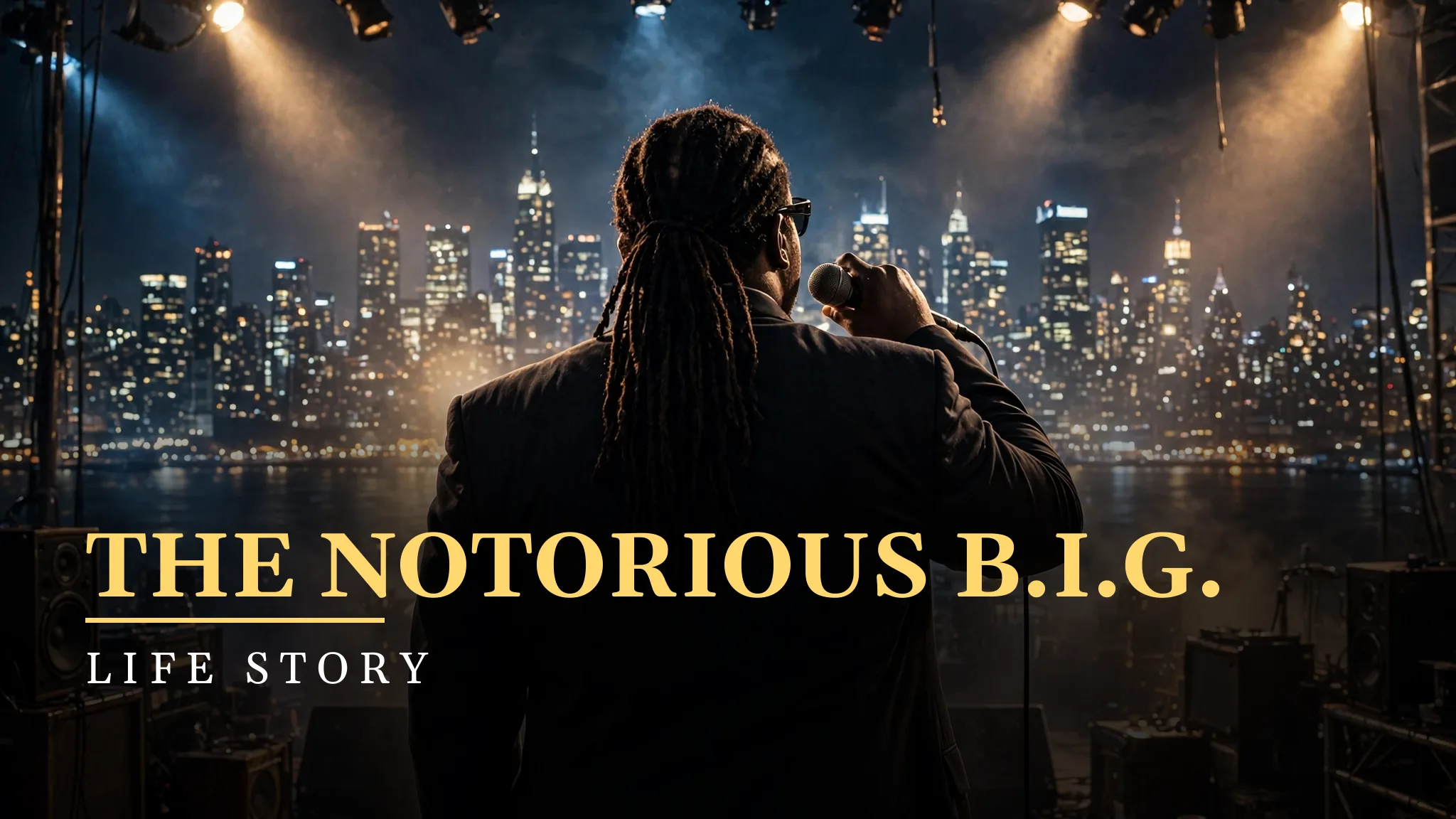
One last memory: the image of him in a suit, and sunglasses, holding a microphone, on a New York stage, with a smile that is both cool and warm, and that is unforgettable. That image is iconic, and it is beautiful, and it is the image that will define him forever. He was the king of New York, and he was Biggie Smalls, and he was the greatest rapper of his generation.
His legacy will live on through his recordings, through his microphone, and through the generations of rappers he inspired, who heard his microphone and wanted to rap the way he rapped. That is a fitting legacy for a man who defined flow, and who did it with a microphone and a voice that will never be forgotten. He is gone, but his music remains, and his name will be remembered as one of the greats.
Finally, I want to say thank you, Biggie Smalls, for Juicy, for Hypnotize, and for a life lived with a microphone that spoke for New York. You were a great rapper, and you were a great man, and the world is a better place because you were in it. Your recordings are still here, your legacy is still here, and your example is still here, and that is a life that mattered, and a life that will never be forgotten.
And one more thing: if you are a rapper, rap like Biggie, because he is the rapper every rapper deserves to be, a rapper who raps with his heart, and who makes an audience feel. Rap like Biggie, the way Biggie Smalls rapped, and the world will be a better place for it, because the world needs more rappers like him, who rap with depth, with smoothness, and with humanity.
There is a last lesson in his life that I carry with me, and it is this: tell stories, even when it is hard, because telling stories is a choice, and Biggie chose it, every day, in every song, and in every part of his life. That is a lesson worth remembering, and it is one I will carry with me, always, because the world needs more people like Biggie Smalls, who tell stories, and who do it, with a microphone, and with a voice, that will never be forgotten.
One final thought: his two albums, Ready to Die, and Life After Death, are a testament to his talent, because he recorded them, in just three years, and they are both classics, and that is a record that speaks for itself. He was great, at twenty-one, and he was great at twenty-four, and that is a rare achievement, and it is a reminder that talent does not fade with age, and that a great rapper can be great for a lifetime, if he has the talent, the determination, and the voice that Biggie possessed, and that is a legacy that will never be forgotten.
And if you ever doubt that a song can speak for New York, remember Biggie Smalls, because he did, with Juicy, a song that made millions of people feel, and that is still sung today, by people who love New York, and who believe, that dreaming matters, and that is a legacy that will last, long after his songs are sung, because his voice is still here, and his influence is still here, and that is a gift that will never fade.
There is one more thing I want to say, and it is about his friend Puff Daddy, because he believed in Biggie, and he signed him, to Bad Boy Records, and he gave him the freedom to record what he wanted, and that is a reminder that a friend who believes in an artist can change their life, and that Biggie was lucky to have Puff, and that Puff was lucky to have Biggie, and that is a beautiful thing, and it is a part of his story that shows the power of belief, and of a friend who cares, and who does the right thing, and that is a legacy that matters, in its own way, alongside his songs and his microphone.
His story also reminds me that a boy from Brooklyn can become a legend, if he has talent, determination, and a microphone, and that is a hopeful message for anyone who feels poor, or disadvantaged, or forgotten. Biggie was poor, and he was disadvantaged, and he became one of the greatest rappers in history, because he embraced who he was, and he used his talent to become great. That is a lesson worth remembering, for every poor person out there, and for every rapper who wants to be heard.
I also want to mention his wife Faith Evans, because she loved him, and she was loyal to him, and she recorded I’ll Be Missing You, a tribute to him, that became a number one hit, and that is a beautiful thing, and it is a part of his story that shows him as a husband, not just as a rapper, and that is a legacy that matters, in its own way, alongside his songs and his microphone, because his family is his greatest legacy, and they have honoured him, by being themselves, just as he was himself.
And finally, I think about the fact that he died at 24, and that he had so much more to give, and that is a reminder that life is short, and that we should make the most of it, the way Biggie Smalls did, rapping with a voice that was a gift, and living a life that was both beautiful and tragic, and that is a life worth living, and a life worth remembering, and I am grateful to have learned about it, and to have shared it with you.
Frequently Asked Questions
When was The Notorious B.I.G. born?
The Notorious B.I.G. was born on 21 May 1972 in Brooklyn, New York, USA, as Christopher George Latore Wallace. He grew up in Bedford-Stuyvesant and began rapping on street corners.
What is The Notorious B.I.G. most famous for?
He is most famous for Ready to Die (1994) and Life After Death (1997), and for Juicy, Big Poppa, Hypnotize, and Mo Money Mo Problems, songs that made him the king of New York rap.
Why was he called Biggie Smalls?
Biggie Smalls was his early stage name, from his large size as a teenager. He later became The Notorious B.I.G., though fans still call him Biggie Smalls.
When did The Notorious B.I.G. die?
He died on 9 March 1997 in Los Angeles, California, at the age of 24, shot in a drive-by shooting six months after Tupac Shakur was killed. His murder also remains officially unsolved.
What was Biggie’s rivalry with Tupac?
Biggie and Tupac were central figures in the East Coast-West Coast hip-hop rivalry of the mid-1990s. Tupac believed Biggie knew about his 1994 shooting in New York, and the feud played out in songs until both were killed.
What is Life After Death?
Life After Death is Biggie’s double album, released in March 1997 just weeks after his death. It sold over 10 million copies and included Hypnotize and Mo Money Mo Problems.


