The Wiggles: The Life Story Behind the Children's Stars
In this post
- Four Teachers and a Simple Idea
- Hot Potato, Fruit Salad, and the Songs Children Love
- Television, Touring, and Becoming a Global Brand
- Changes in the Group and Greg Page’s Health
- New Wiggles, New Energy, and Emma Watkins
- Still Wiggling: The Wiggles Today
- The Characters, the Colours, and the World Children Love
- The Wiggles in the Digital Age
- Generations of Fans and Passing the Songs On
- Why the Songs Last
- My Take:
There are few sounds in the world as joyful as a room full of small children singing along to a song they love, and for more than thirty years, that sound has belonged to The Wiggles. They are an Australian children’s group, and they have become one of the most successful acts in the history of children’s entertainment. Their songs are simple, their colours are bright, and their shows are full of dancing, laughter, and fun. Behind the coloured shirts and the friendly characters, there is a story of four teachers who had a simple idea: that music for children should be as good as music for anyone else.
The group began in Sydney in 1991, when Anthony Field, Murray Cook, Greg Page, and Jeff Fatt, four men who had studied early childhood education together, decided to make music for young children. They were not pop stars. They were teachers who understood how children learn, how they move, and how they laugh. They took that knowledge and turned it into songs, and those songs changed children’s music forever.
What makes their story worth telling is how big it became and how long it lasted. The Wiggles went from playing in small halls to selling out arenas, from making a few tapes to becoming a global brand, with television shows, books, toys, and tours around the world. Along the way, members left, new members joined, and the group had to change without losing what made it special. This is the story of how four teachers from Sydney became the most loved children’s band in the world.
Four Teachers and a Simple Idea
Anthony Field, Murray Cook, Greg Page, and Jeff Fatt met while studying early childhood education at Macquarie University in Sydney. They were young men training to be teachers, and they shared a love of music. They played together in a band, they talked about how children learn, and they began to think about the music that was available for young children. Much of it was simple and dull, and they believed it could be better.
Their idea was simple: write songs for children that were as well made as songs for adults, with strong melodies, clear words, and rhythms that made children want to move. They knew from their teaching that children learn through music, through movement, and through play, and they wanted to make songs that helped children learn while they were having fun. It was not a plan to become famous. It was a plan to make good music for small people.
The four men had different strengths. Anthony Field played guitar and had a gift for performance, Murray Cook played guitar and bass and had a calm, steady presence, Greg Page sang lead and had a warm, friendly voice, and Jeff Fatt played keyboards and had a quiet sense of humour. Together, they had everything they needed to make a group. They called themselves The Wiggles, a name that came from the way children wiggle when they dance, and it was perfect.
In 1991, they released their first album, and they began to perform for children in Sydney. The shows were small, the audiences were young, and the response was immediate. Children loved the songs, parents loved that the songs were well made, and the group began to build a following. It was a humble beginning, but it was built on a real idea, and that idea would carry them further than any of them imagined.
Hot Potato, Fruit Salad, and the Songs Children Love
The Wiggles’ early songs became classics of children’s music, and they are still sung by children today. Hot Potato, with its simple words and its bouncing rhythm, became one of their most famous songs. Fruit Salad, Yummy Yummy, with its cheerful list of fruits, became another favourite. Rock-a-Bye Your Bear, with its gentle melody, became a bedtime song for many families. These songs were simple, but they were not simple in a careless way. They were carefully written, with melodies that stuck in the head and words that children could understand and remember.
The group also created characters who became as famous as the songs. Dorothy the Dinosaur, a friendly green dinosaur who loved to dance, Wags the Dog, a big brown dog who loved to play, Henry the Octopus, who conducted an underwater band, and Captain Feathersword, a friendly pirate who loved to tickle, all became part of the Wiggles world. Children did not just listen to the songs. They entered a world, and they wanted to come back to it again and again.
The Wiggles’ approach was different from other children’s entertainment. They did not talk down to children. They spoke to them directly, with warmth and respect, and they made music that parents could enjoy too. Their shows were interactive, with children invited to dance, to sing, and to join in, and that participation made the experience special. A Wiggles concert was not a show to watch. It was a party to join.
As the 1990s went on, the group grew. They released more albums, they made television shows, and they began to tour outside Australia. Their songs were translated into other languages, and their shows were seen by children in many countries. The simple idea of four teachers making good music for children had become something much bigger, and the group were ready for it.
Television, Touring, and Becoming a Global Brand
In the late 1990s and early 2000s, The Wiggles became a global phenomenon. Their television shows were broadcast in many countries, and their videos were watched by millions of children. They toured the United States, the United Kingdom, and other countries, playing to sold-out crowds of families. They were no longer just an Australian group. They were a world-famous children’s brand.
The touring life was hard work. The group played hundreds of shows a year, travelling from city to city, performing for audiences of young children who had endless energy. They had to be cheerful, energetic, and patient, show after show, and they did it with a professionalism that impressed everyone who worked with them. They understood that for many children, a Wiggles concert was their first live show, and they wanted it to be a happy memory.
The group also became a business, with books, toys, clothes, and other products. But at the centre of it all was always the music and the live show. The Wiggles never lost sight of the simple idea that had started it all: good songs, performed with warmth, for children who deserved the best. That focus kept them grounded, even as the brand grew.
During this period, The Wiggles won many awards, including ARIA Awards, and they were recognised as one of the most successful Australian acts of all time. They were not a rock band or a pop group. They were a children’s group, and they were proud of it. They had proved that children’s music could be a serious art, and that it could be loved by millions of people around the world.
Changes in the Group and Greg Page’s Health
No group that lasts for decades stays the same, and The Wiggles faced changes that tested them. In 2006, Greg Page, the original lead singer, left the group because of health problems. He had a condition that made it hard for him to perform, and he needed to rest. It was a sad moment for the group and for their fans, because Greg’s voice had been at the heart of many of their best-known songs.
Sam Moran joined the group as the new Yellow Wiggle, taking over Greg’s role. He was a talented performer, and he worked hard to learn the songs and the shows. Fans accepted him, and the group continued to tour and record. But the change was a reminder that even the happiest group faces hard times, and that health must come first.
Greg Page returned to the group in 2012, and his return was welcomed by fans. But his health problems continued, and he eventually left again. The group had to learn how to change without losing their identity, and they did it by focusing on the music and on the children. The Wiggles were bigger than any one member, and the songs belonged to the audience as much as to the group.
These changes were hard, but they also showed the strength of the group. Anthony Field, the Blue Wiggle, remained at the centre, and he guided the group through each transition with care. He understood that the Wiggles were a team, and that the team had to keep going for the children who loved them. That sense of duty kept the group together through the hardest years.
New Wiggles, New Energy, and Emma Watkins
In 2013, The Wiggles made history by adding Emma Watkins as the first female Wiggle. Emma, who wore yellow, brought a new energy to the group, and she became a favourite with children and parents alike. Her arrival showed that The Wiggles could change and grow, and that they were open to new ideas. She was a talented dancer and singer, and she helped the group reach a new generation of fans.
Other new members joined in the years that followed, including Lachlan Gillespie, Simon Pryce, and later Tsehay Hawkins, and the group became more diverse, with performers from different backgrounds. The new Wiggles brought fresh ideas, new songs, and new energy, and the group continued to tour and record. The original members, Anthony Field, remained, and he became the link between the old group and the new one.
The new line-up also showed that The Wiggles were not stuck in the past. They made new television shows, they released new albums, and they used social media to connect with families. They understood that children today watch videos on phones and tablets, and they adapted their shows to fit the way families live now. But the core of the group stayed the same: good songs, bright colours, and a warm welcome for every child.
In 2011, The Wiggles were inducted into the ARIA Hall of Fame, one of the highest honours in Australian music. It was a recognition of everything they had achieved, and it placed them alongside the greatest acts in Australian history. For four teachers who had started with a simple idea, it was an extraordinary honour, and it was richly deserved.
Still Wiggling: The Wiggles Today
Today, The Wiggles are still performing, still recording, and still making children smile. They have been going for more than thirty years, and they have become a part of childhood for millions of people around the world. Parents who grew up watching The Wiggles now bring their own children to the shows, and the songs are passed down from one generation to the next. That is a rare and beautiful thing in music.
The group continue to tour, to make television shows, and to release new music. They have also embraced new ways of reaching families, with videos online and shows that can be watched at home. But the live show remains the heart of what they do, because there is nothing like seeing children dance and sing together in a room full of colour and music.
The Wiggles’ legacy is not just in the awards or the sales. It is in the memories they have created for families around the world. A child who danced to Hot Potato, who sang Fruit Salad, who met Dorothy the Dinosaur, will remember that moment for the rest of their life. The group gave those memories to millions of children, and that is a gift that cannot be measured in numbers.
The story of The Wiggles is still being written. New members will join, new songs will be written, and new children will discover the group for the first time. But the simple idea that started it all, that children deserve good music, will remain at the centre of everything they do. As long as there are children who love to dance and sing, The Wiggles will be there.
The Characters, the Colours, and the World Children Love
Part of the magic of The Wiggles is not just the songs, but the world around them. The group wear bright coloured shirts, blue, red, yellow, and purple, and children can spot them from across a room. The colours are not random. They help young children, who are still learning, to tell the performers apart, to remember who is who, and to feel safe in a world that is clear and friendly. It is a small detail, but it shows how carefully the group thought about their audience.
The characters who share the stage with the Wiggles are just as important. Dorothy the Dinosaur is a gentle green dinosaur who loves to dance and eat roses. Wags the Dog is a big, friendly dog who loves to play and to bark. Henry the Octopus conducts an underwater band with eight arms, and Captain Feathersword is a friendly pirate who loves to tickle, not to fight. Each character has their own personality, their own songs, and their own way of moving, and children love them as much as they love the Wiggles themselves.
These characters were created with the same care as the songs. They are not scary, they are not mean, and they do not talk down to children. They are friends, and they invite children to join in, to dance, to sing, and to play. A child who meets Dorothy the Dinosaur at a show will remember that moment for years, because it feels like meeting a real friend. That feeling is the heart of the Wiggles’ success.
The Wiggles’ television shows brought this world into homes around the world. Children could watch the group sing, dance, and play with their friends, and they could learn new words, new movements, and new ideas. The shows were made with the same educational care as the songs, with clear language, repetition, and encouragement. Parents trusted the shows, because they knew the content was good, and children loved them, because they were fun.
The group’s approach to children’s entertainment has influenced many others. They showed that a children’s show could be well made, with good music, good writing, and good performances, and that it could be loved by parents as well as by children. They raised the standard for the whole industry, and they did it without ever losing sight of their audience. The colours, the characters, and the songs are all part of one world, a world that is safe, joyful, and full of music, and it is a world that millions of children have grown up in.
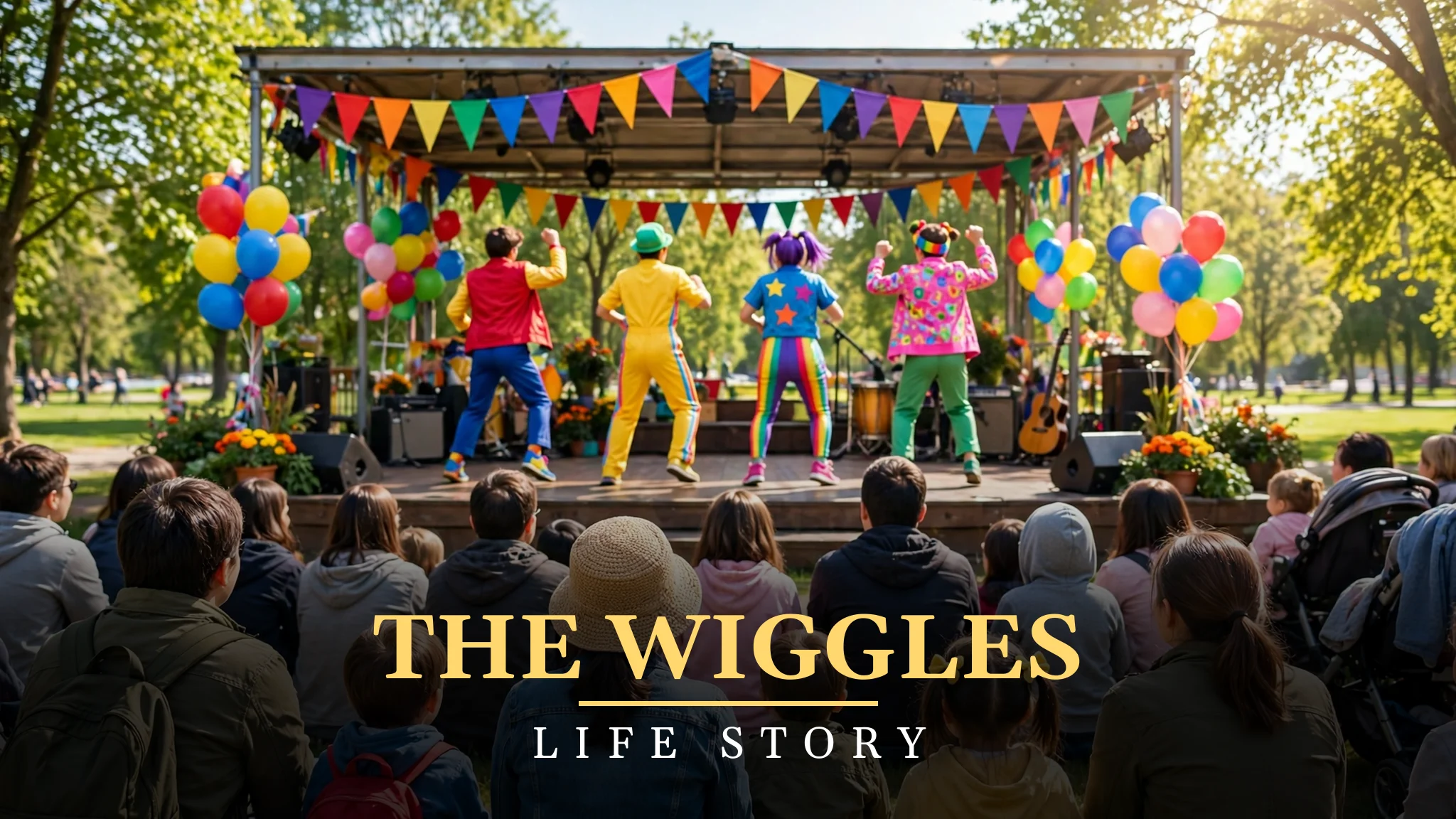
The live show brings that world to life in a way that television cannot. When children see the Wiggles on stage, in their bright shirts, with Dorothy and Wags beside them, the world they know from the screen becomes real. They can dance along, they can sing along, and they can feel part of something bigger than themselves. That experience, of being in a room full of happy children and happy parents, is one of the most joyful in entertainment, and it is why the Wiggles’ concerts are so special.
The group have also adapted their world for new generations. They have made videos for the internet, they have created new characters, and they have welcomed new performers who bring fresh energy. But the core of the world has not changed: bright colours, friendly characters, good songs, and a warm welcome for every child. That consistency is a big part of why the group have lasted for more than thirty years, and why new children keep discovering them.
The Wiggles in the Digital Age
The Wiggles began before the internet changed how children watch television, and they have adapted to every change since. Their songs are now watched on video platforms by millions of families, their shows are streamed on demand, and their live concerts are shared online by parents who want to remember the day. The group have embraced these changes, making videos for the internet and creating content that fits how families live today, with phones, tablets, and smart televisions in every home.
This digital presence has introduced the Wiggles to a new generation of children who may never watch a traditional television show. A child today might discover Hot Potato on a tablet, sing along in the car, and then ask to see the group live. That journey, from a small screen to a big stage, is a modern version of the one the group have always relied on: a good song, heard by a child, leading to a lifelong love of music. The technology has changed, but the idea has not.
The group have also used the internet to stay connected to families, sharing behind-the-scenes videos, new songs, and messages from the performers. That direct connection, much like the one the group built in their early days, keeps the relationship with their audience warm and personal. They are not a distant brand. They are people who talk to families, who thank them, and who invite them to join in. That warmth is the reason the Wiggles have survived every change in the media world, and it is why they will keep going.
Generations of Fans and Passing the Songs On
One of the most beautiful things about The Wiggles is that their songs are passed down from one generation to the next. Parents who grew up watching the group now bring their own children to the shows, and the children sing the same songs their parents sang. That is a rare thing in music, and it is a sign of how deeply the group have become a part of family life. A song like Hot Potato is not just a children’s song. It is a family memory, shared across generations.
This passing on of songs is the group’s greatest legacy. Awards fade, charts change, and trends come and go, but a song that a parent sings to their child will last. The Wiggles have given millions of families those songs, and they have given them moments of joy that will be remembered for a lifetime. That is a gift that cannot be measured, and it is why the group matter so much.
Why the Songs Last
The Wiggles’ songs last because they are simple, honest, and well made. A good children’s song does not need to be complicated. It needs a melody that a child can sing, words that a child can understand, and a feeling that makes a child want to dance. The Wiggles have written hundreds of songs like that, and they are still sung by children today, just as they were thirty years ago. That is the mark of great songwriting, and it is why the group will be remembered.
My Take:
When I think about The Wiggles, I think about kindness. That is not a word people often use about a pop group, but it is the word that fits them best. Their music is kind. Their shows are kind. The way they talk to children is kind. They do not shout, they do not show off, and they do not try to be cool. They try to be warm, and that warmth is what has made them loved for more than thirty years. In a world that is often loud and harsh, a group that is gentle and joyful is a rare and valuable thing.
I admire the fact that they started as teachers. That matters more than people realise. A lot of children’s entertainment is made by people who do not understand children, and it shows. The Wiggles were made by people who had studied how children learn, who had spent time in classrooms, and who knew that children are not simple. They are curious, they are clever, and they deserve music that respects them. The Wiggles gave them that music, and that is why it has lasted.
What I find most impressive is how long they have kept going. Thirty years is a long time for any group, and it is a very long time for a children’s group, because children grow up and move on. The Wiggles solved that problem by becoming a part of family life. Parents who watched them as children now bring their own children to the shows, and the songs are passed down like a family recipe. That is not a marketing trick. That is a real connection, built over decades of good work.
I also think about the changes in the group, and how hard they must have been. When Greg Page left because of his health, it must have been painful for everyone. When new members joined, it must have been strange for fans who loved the original four. But the group handled those changes with grace. They did not pretend that nothing had changed. They welcomed new members, they honoured the old ones, and they kept the music going. That is a lesson in how to change without losing yourself.
There is a sadness in their story too, and it is the sadness that comes with any long career. The original members grew older, their health changed, and the group had to say goodbye to people who had been at the centre of it for years. I think about Anthony Field, who has been there from the beginning, and who has watched his friends leave and new people join. That must be a strange and sometimes lonely experience, even in the middle of a joyful show. But he kept going, because the children needed him to, and that dedication is admirable.
If I have a criticism, it is only that The Wiggles are sometimes not taken seriously as musicians. Because they make music for children, some people assume that the music is simple or unimportant. That is wrong. Writing a song that a three-year-old can sing and a parent can enjoy is very hard. It asks for melody, for clarity, and for a deep understanding of how music works. The Wiggles are skilled musicians, and they deserve to be recognised as such. Their induction into the ARIA Hall of Fame was a step in that direction, but I think they deserve even more credit.
What I take away from their story is a simple idea: do good work for the people in front of you, and do it with care. The Wiggles did not set out to become a global brand. They set out to make good songs for the children in Sydney, and they did it so well that the world noticed. That is a lesson for anyone who makes something for others. You do not need to aim for the whole world. You need to aim for the person in front of you, and if you do that well enough, the world will find you.
I also think about the joy in their shows. I have seen videos of Wiggles concerts, and the happiness in the room is real. Children are dancing, parents are smiling, and for an hour, everyone is having fun together. In a busy, stressful world, that hour matters. It is a moment of pure joy, and The Wiggles have given that moment to millions of families. That is a wonderful thing to have done with a life.
In the end, I see The Wiggles as proof that kindness and quality can last. They are not the loudest group, or the coolest, or the most fashionable. They are the warmest, and they have been warm for more than thirty years. That is a remarkable achievement, and it is why their story deserves to be told with respect and with love.
I also think about the colours, and how much thought went into them. A child who is two or three years old does not know the names of the performers, but they know the colours. Blue, red, yellow, purple, each one is a friend, each one is a signal that something fun is about to happen. That is not an accident. It is the work of teachers who understood how children learn, and who used that knowledge to make a show that is clear, friendly, and easy to love. I think that care, that attention to the smallest detail, is what separates the Wiggles from other children’s entertainment.
There is another lesson in their story, and it is about doing good work for the people in front of you. The Wiggles did not set out to become a global brand. They set out to make good songs for the children in Sydney, and they did it so well that the world noticed. That is a lesson for anyone who makes something for others. You do not need to aim for the whole world. You need to aim for the person in front of you, and if you do that well enough, the world will find you. It is a simple idea, but it is a powerful one, and the Wiggles proved it.
I think about the parents, too, and how important they are to this story. A children’s group lives or dies by whether parents trust it, and parents trust the Wiggles because the music is good, the content is safe, and the performers are kind. When a parent brings their child to a Wiggles concert, they know their child will be happy, and they know they will enjoy it too. That trust was earned over decades of good work, and it is not something that can be bought. It is a reward for doing things properly, show after show, year after year.
I also think about the joy in their shows, and how rare that joy is. I have seen videos of Wiggles concerts, and the happiness in the room is real. Children are dancing, parents are smiling, and for an hour, everyone is having fun together. In a busy, stressful world, that hour matters. It is a moment of pure joy, and the Wiggles have given that moment to millions of families. That is a wonderful thing to have done with a life, and it is a gift that cannot be measured in money or in awards.
If I could tell a new parent one thing, it would be to watch a Wiggles show with your child, not just to put it on in the background, but to sit down, to sing along, and to dance. You will see your child light up, and you will understand why this group has lasted for more than thirty years. It is not just entertainment. It is a shared experience, a moment of connection between a parent and a child, and those moments are the ones that families remember.
I think the Wiggles also teach us something about change. The group have changed members, they have added new performers, they have embraced new technology, and they have done it all without losing who they are. That is not easy. Many groups fall apart when they change, but the Wiggles changed with grace, honouring the old members and welcoming the new ones. That is a lesson in how to grow without losing yourself, and it is one that applies far beyond children’s music.
I also think about how the Wiggles have survived every change in the media world, from videotapes to streaming, and how they did it without losing who they are. A lot of children’s entertainment chases the latest trend, but the Wiggles stayed true to their simple idea: good songs, bright colours, and a warm welcome. That consistency is a big part of why parents trust them, and why new children keep discovering them. In a world that changes fast, a group that stays kind and steady is a rare and valuable thing.
Finally, I think the best word for their story is joy. They have given joy to millions of children, to millions of parents, and to everyone who has ever danced to Hot Potato or sung along to Fruit Salad. That joy is not a small thing. It is one of the most useful things a group can make, and the Wiggles have made it for more than thirty years. As long as there are children who love to dance and sing, the Wiggles will be there, and that is a happy thought.
I also think about the generations of fans, and how beautiful it is that a parent can sing the same song to their child that their own parent sang to them. That is a rare thing in music, and it is a sign of how deeply the Wiggles have become a part of family life. A song like Hot Potato is not just a children’s song. It is a family memory, shared across generations, and that memory will last long after the charts have forgotten it. The Wiggles gave families that gift, and it is one of the most valuable things any group can give.
I also think about the teachers who started it all, and how their training shaped everything. Anthony Field, Murray Cook, Greg Page, and Jeff Fatt were not pop stars. They were teachers who understood how children learn, and they used that knowledge to make music that was good, honest, and joyful. That is a lesson for anyone who makes something for children: respect your audience, understand how they learn, and make the best work you can. The Wiggles did that, and their work has lasted for more than thirty years because of it.
In the end, I come back to a simple image: a room full of children, dancing to a song they love, with their parents smiling beside them. That image is the heart of the Wiggles’ story, and it is a happy one. They gave that moment to millions of families, and they did it with kindness, with good music, and with a warm welcome for every child. That is a wonderful thing to have done with a life, and it is why their story deserves to be told with love.
I also think about the songs themselves, and why they last. A good children’s song does not need to be complicated. It needs a melody that a child can sing, words that a child can understand, and a feeling that makes a child want to dance. The Wiggles have written hundreds of songs like that, and they are still sung by children today, just as they were thirty years ago. That is the mark of great songwriting, and it is why the group will be remembered long after the charts have forgotten them.
I also think about the future, and about the children who will discover the Wiggles tomorrow, next year, and in ten years. They will sing the same songs, dance the same dances, and feel the same joy that children have felt for more than thirty years, and that is a wonderful thought. The Wiggles will be there for them, just as they were there for their parents, and the songs will keep going.
Frequently Asked Questions
When did The Wiggles form? The Wiggles formed in Sydney, Australia, in 1991. The original members were Anthony Field, Murray Cook, Greg Page, and Jeff Fatt, who had studied early childhood education together.
Who were the original Wiggles? The original Wiggles were Anthony Field as the Blue Wiggle, Murray Cook as the Red Wiggle, Greg Page as the Yellow Wiggle, and Jeff Fatt as the Purple Wiggle. Each wore a different coloured shirt.
What are The Wiggles’ most famous songs? Their most famous songs include Hot Potato, Fruit Salad Yummy Yummy, and Rock-a-Bye Your Bear. These songs have been loved by children for more than thirty years.
Who are Dorothy the Dinosaur and Wags the Dog? Dorothy the Dinosaur, Wags the Dog, Henry the Octopus, and Captain Feathersword are friendly characters from the Wiggles’ world. They appear in the songs, shows, and live concerts alongside the group.
Are The Wiggles still performing today? Yes, The Wiggles are still performing and recording, with a newer line-up that includes Anthony Field and other members. They continue to tour and make television shows for children.
Have The Wiggles won major awards? Yes, they have won many ARIA Awards and were inducted into the ARIA Hall of Fame in 2011, one of the highest honours in Australian music.


