Thekla Reuten: The Life Story Behind the Dutch Film Star
In this post
Thekla Reuten is a Dutch actress known for performances that are quiet, precise, and deeply felt. She does not act with loud gestures or big speeches. She acts with a look, a pause, and a stillness that makes the audience lean in and pay attention. Her breakthrough came in Twin Sisters, a Dutch film that was nominated for an Academy Award, and she went on to appear in international films such as In Bruges and The American. She has worked in the Netherlands, in Britain, and in America, and she has built a career on quality rather than on noise.
She was born on 16 September 1975 in Bussum, a town in the Netherlands, and she grew up in a country with a strong tradition of theatre and film. She studied acting in Amsterdam, she worked on stage, and she moved to film with a clear sense of what she wanted to do. She wanted to play real people, in real situations, and to tell stories that mattered. That simple goal has guided her career for more than twenty-five years.
What makes her story worth telling is the consistency of her work. She has never chased fame, and she has never tried to be a star in the usual sense. She has chosen roles that interested her, she has worked with good directors, and she has given performances that critics and audiences remember. Her story is about an actress who values her craft above everything else, and who has built a lasting career by staying true to that value.
A Childhood in Bussum
Thekla Reuten was born on 16 September 1975 in Bussum, a town in the province of North Holland in the Netherlands. Bussum was a pleasant and quiet town, close to Amsterdam but with its own character, and life there was calm and orderly. She grew up in a family that valued culture and education, and she was encouraged to read, to think, and to explore the world around her. It was a good place to grow up, and it gave her a sense of stability that would later help her in a career that is often unstable.
As a child, she was observant and thoughtful. She liked to watch people, to listen to how they spoke, and to notice the small details of daily life. She was not the loudest child in the room, but she was one of the most attentive, and that attention would later become one of her greatest strengths as an actress. An actor who watches people closely can play them truthfully, and Reuten learned to watch from an early age.
Her school years were shaped by her interest in art and in stories. She liked books, she liked theatre, and she liked the idea of becoming someone else for a while. She took part in school plays, and she found that acting gave her a freedom she did not feel in ordinary life. On stage, she could explore feelings and ideas that were hard to talk about at home or at school, and that freedom was exciting to her.
The town of Bussum gave her a Dutch sense of proportion. Life there was not glamorous, and it did not encourage showing off. It encouraged honesty, hard work, and a respect for others. Those values stayed with her, and they appear in her acting, which is honest, hard working, and respectful of the audience. She has never tried to impress people with tricks. She has tried to tell the truth, and that is a Dutch quality that she carries with her wherever she works.
Studying Acting in Amsterdam
After school, Reuten studied acting at the Amsterdamse Toneelschool, the Amsterdam School of Drama, one of the leading drama schools in the Netherlands. The training was demanding, and it taught her the technical side of acting: how to use her voice, how to move, how to work with a text, and how to build a character from the inside. She learned that acting was a craft, and that it required discipline and practice as well as talent.
Amsterdam was a good place to study, because it was a city full of theatre, film, and art. Reuten threw herself into her studies, and she made the most of the opportunities the city offered. She went to the theatre, she watched films, she read plays, and she learned from the actors and directors she met. She was a dedicated student, and her teachers noticed her focus and her ability to listen.
The years at drama school also gave her a network of friends and colleagues who would work with her in the years that followed. Dutch theatre and film is a small world, and the people an actress meets at school often become the people she works with for decades. Reuten built those relationships, and they became an important part of her professional life.
By the time she graduated, she was ready to work as a professional actress. She had the training, she had the talent, and she had the determination to build a career. She did not expect instant success. She expected to work hard, to take the roles that were offered, and to learn from every job. That attitude served her well in the years that followed, and it is still part of how she works today.
Stage Work and First Films
After graduating, Reuten worked in theatre, performing in plays across the Netherlands. Theatre was a demanding teacher, because it required an actress to be ready every night, to perform in front of a live audience, and to work as part of a team. She learned a great deal from her stage years, and she became a strong theatre actress before she became a film star. She played in classic plays and in new Dutch works, and she showed that she could handle a wide range of roles.
She also began to work in film, appearing in Dutch productions that gave her a chance to learn how a film set worked. Film acting was different from stage acting, because the camera was close and the performance had to be more subtle. Reuten learned to adjust her acting for the screen, and she became a versatile performer who could work in both forms. Her early film roles were not large, but they taught her how to work with a director and a crew, and how to trust the camera to see what she was feeling.
During these years, she built a reputation as a serious and talented actress. Directors liked working with her because she was prepared, because she listened, and because she brought a quiet intensity to her roles. Audiences liked her because she felt real, not like a star who was acting a part. That quality would later become her trademark, and it is one of the reasons she has remained respected for so long.
The early years were not glamorous, but they were important. Reuten was learning her craft, building her experience, and preparing for the opportunity that would change her career. She did not know when that opportunity would come, but she was ready for it when it did, because she had done the hard work that comes before success.
Twin Sisters and an Oscar Nomination
In 2002, Reuten starred in Twin Sisters, known in Dutch as De Tweeling, a film based on the novel by Tessa de Loo. The film told the story of twin sisters who are separated as children during the Second World War, one growing up in the Netherlands and the other in Germany, and who meet again many years later. Reuten played one of the twins, Lotte, and her performance was praised for its sensitivity and its depth. The film was a great success, and it was nominated for the Academy Award for Best Foreign Language Film.
Twin Sisters worked because it was a true story about real people, and because Reuten and her co-star made the audience care about the sisters even when their lives took them in very different directions. The film dealt with the war, with family, and with the question of what it means to be German or Dutch, and it did so with honesty and care. Reuten’s performance was central to that success, because she showed the inner life of a woman who had lost her sister and who had lived with that loss for decades.
The Oscar nomination brought the film to the attention of audiences around the world, and it made Reuten known outside the Netherlands. She was no longer just a Dutch actress. She was an actress who had been part of an Oscar nominated film, and that gave her a new level of recognition. She handled that recognition in her usual calm way, and she continued to choose her roles carefully, looking for stories that mattered to her.
The film also showed her ability to handle a serious and historical subject with care. The Second World War is a difficult topic in the Netherlands, and an actress who plays it badly can make a film feel false. Reuten played it well, and she earned the respect of audiences and critics alike. It was a breakthrough that proved she could carry a major film, and it set the stage for the international work that followed.
In Bruges, The American, and International Work
After Twin Sisters, Reuten began to work internationally. In 2008, she appeared in In Bruges, a dark comedy directed by Martin McDonagh and starring Colin Farrell and Brendan Gleeson. The film was set in the Belgian city of Bruges, and it told the story of two hitmen who are sent there to hide after a job goes wrong. Reuten played a small but memorable role, and she worked with a cast of major actors in a film that became a cult classic. It was an important step, because it showed that she could work in English language cinema and hold her own opposite major stars.
In 2010, she appeared in The American, a thriller starring George Clooney, in which she played a woman who becomes involved with Clooney’s character, an assassin who is trying to leave his old life behind. The film was quiet and atmospheric, and Reuten’s performance fitted its mood perfectly. She played her role with the same stillness and precision that had made her famous in the Netherlands, and she showed that her style worked just as well in an American film as it did in a Dutch one.
These international roles were important because they proved that her talent was not limited to Dutch cinema. She could work in Britain, in America, and in other countries, and she could do it without changing who she was as an actress. She did not try to become a Hollywood star. She remained a Dutch actress who worked internationally, and that gave her a distinctive place in the film world.
Her international work also brought her new opportunities, and she continued to appear in films and television series in different countries. She worked in Germany, in Britain, and in the Netherlands, and she built a career that was truly European. That breadth is one of her greatest strengths, because it allows her to play many different kinds of characters in many different settings.
Later Work and a Steady Career
In the years since, Reuten has continued to work steadily in film and television. She has appeared in Dutch films, in international productions, and in television series, and she has maintained her reputation as a serious and talented actress. She has not chased fame, and she has not tried to be in every film. She has chosen her roles carefully, and she has given performances that are remembered for their quality rather than for their quantity.
She has also worked on stage, returning to the theatre when the right play came along. The stage remains an important part of her life, because it is where she learned her craft and where she feels most at home as an actress. She has said in interviews that theatre keeps her honest as an actress, because it does not allow her to hide behind a camera or a second take. That honesty is visible in her film work as well.
Today, Thekla Reuten is seen as one of the most respected Dutch actresses of her generation. She is known for her work in Twin Sisters, In Bruges, and The American, and she is respected by directors and by her fellow actors for her professionalism and her talent. She is not a celebrity in the usual sense. She is an actress, and she has built her career on the quality of her work rather than on publicity.
Her story is a story of steady work, of talent, and of an actress who has stayed true to herself. She has not followed fashion, and she has not tried to be someone she is not. She has played the roles that interested her, in the way that felt right to her, and she has earned the respect of audiences around the world. That is a lasting achievement, and it is one that will continue as long as she keeps working.
The Power of a Look
Thekla Reuten’s acting is often described as quiet, but quiet does not mean empty. In her performances, a look can say more than a page of dialogue, and a pause can carry more feeling than a long speech. That is because she understands that the camera sees everything, and that a small change in the eyes or in the mouth can tell the audience what a character is thinking, even when the character says nothing. It is a style that requires great control, because an actor who is too still can seem blank, while an actor who moves too much can seem false. Reuten finds the balance, and she holds it with a precision that few actors can match.
In Twin Sisters, there are scenes where Lotte says very little, but her face tells the whole story. She looks at a photograph, she looks out of a window, she looks at a person she has not seen for decades, and the audience can see her whole life in that look: the loss, the longing, and the hope that it is not too late. That is not an easy thing to achieve, and it is the result of years of training on stage, where an actor learns that the audience is always watching, even when the actor is silent.
Her stage training also taught her how to listen. On stage, an actor must listen to the other actors, must react to what they say, and must be present in the moment. Reuten brings that listening to her film work, and it makes her performances feel alive. She does not simply wait for her turn to speak. She watches, she listens, and she responds, and the audience can see that she is truly engaged in the scene. That engagement is what makes her characters feel real, because real people listen as well as speak.
She has also learned how to use her body on screen. She stands very still when her character is afraid, she moves slowly when her character is uncertain, and she holds herself with a grace that reflects the character’s inner life. That physical awareness comes from her training, and it is one of the things that makes her performances so complete. An actor who only thinks about words will miss half the story. Reuten thinks about the whole person, and her performances show it.
A European Actress
Thekla Reuten’s career is a good example of what it means to be a European actress in the modern film world. She has worked in the Netherlands, in Britain, in Germany, and in America, and she has done it without losing her identity as a Dutch performer. She speaks Dutch and English, she understands different film cultures, and she adapts to each one while remaining herself. That is a rare skill, and it is one that has become more important as European cinema has become more international.
In the past, an actress from a small country like the Netherlands would often have to choose between working at home and working abroad. Reuten has shown that it is possible to do both, and to do both well. She returns to Dutch theatre and film when the right project comes along, and she works internationally when a good role is offered. That balance keeps her work fresh, because she is always learning from different directors, different actors, and different audiences. It also keeps her grounded, because she never forgets where she came from.
Her European career also reflects a change in the film industry itself. Films are now made by international teams, with actors from many countries, and a performer who can work across borders is more valuable than one who can only work in one place. Reuten is such a performer, and her career is a model for young European actors who want to work beyond their own country. She shows that it is possible to be both Dutch and international, and that those two identities can strengthen each other rather than conflict.
She has also worked in German productions, and her ability to work in different languages and cultures is part of what makes her so respected. A director who casts her knows that she will bring professionalism, preparation, and a deep understanding of the character, no matter what language the film is in. That trust is earned over many years, and Reuten has earned it through consistent and excellent work.
The Quiet Strength of Dutch Acting
Thekla Reuten belongs to a tradition of Dutch acting that values honesty over showmanship, and that tradition is visible in every performance she gives. Dutch actors are known for being direct, for speaking plainly, and for trusting the audience to understand a character without being told what to feel. Reuten embodies that tradition, and she has carried it with her to Britain, to America, and to every set she has worked on. Her performances do not rely on big gestures or on dramatic tricks. They rely on truth, on listening, and on a quiet strength that makes the audience lean in and pay attention. That is a very Dutch way of acting, and it is one that has served her well throughout her long career.
That tradition also explains why she is so respected by directors. A director who casts Reuten knows that she will arrive prepared, that she will understand the script, and that she will give a performance that is thoughtful and precise. She does not need to be told what to do at every moment. She brings her own understanding to the role, and she works with the director to shape it into something that feels real. That independence is a sign of a mature actress, and it is one of the reasons she has been able to work with so many different directors in so many different countries.
My Take:
When I think about Thekla Reuten, I think about stillness. Most actors try to fill a scene with movement, with words, with energy. Reuten does the opposite. She is still, she listens, and she lets the audience come to her. That stillness is powerful, because it makes you pay attention. When she looks at another character, you want to know what she is thinking. When she pauses before she speaks, you want to hear what she will say. That is a rare skill, and it is the reason her performances stay with me long after I have watched them.
I admire the way she has built her career. She did not chase fame, and she did not try to be a star. She chose roles that interested her, she worked with good directors, and she gave performances that were honest and precise. That is a quiet way to build a career, and it is not the way that gets headlines. But it is a way that lasts, because it is built on quality rather than on noise. A career built on noise fades when the noise stops. A career built on quality lasts, and Reuten’s career has lasted because it is built on quality.
What moves me most about her is her performance in Twin Sisters. The film is about two sisters who are separated by war, and Reuten plays one of them with a sensitivity that is hard to describe. She does not overact. She shows the loss, the longing, and the hope in small ways, in a look, in a pause, in the way she holds herself. That is a difficult thing to do, and it is a sign of a great actress. Many actors would have tried to make the role bigger, louder, more dramatic. Reuten made it smaller, quieter, and more real, and that is why it works.
I also think about her international work, and I find it impressive that she could move from Dutch cinema to films like In Bruges and The American without changing who she was. She did not try to become a Hollywood actress. She remained a Dutch actress who worked in Hollywood, and she brought her own style with her. That takes confidence, because Hollywood often asks actors to change themselves to fit in. Reuten did not change. She trusted her own style, and it worked. I respect that, because it shows a person who knows who she is and who does not need to pretend to be someone else.
If I have a sadness about her story, it is that she is not as famous as she should be. Her performances are excellent, but she is not a household name in the way that some other actresses are. That is partly because she has chosen not to seek fame, and partly because the film world does not always reward quiet talent. A loud performance gets more attention than a quiet one, even if the quiet one is better. I think that is unfair, and I hope that more people will discover her work, because they will find an actress who is worth watching.
I also respect the way she has balanced stage and film. Many actors leave the stage when they become successful in film, because film pays more and reaches a larger audience. Reuten has kept returning to the stage, because she knows that theatre keeps her honest as an actress. That is a sign of a person who cares about her craft more than about money or fame. Theatre is hard work, and it does not make an actor rich, but it makes them better. Reuten understands that, and she has stayed loyal to the stage throughout her career.
Another thing I notice is her choice of roles. She has played women who are complex, who have secrets, and who are not easy to understand. She does not play simple characters. She plays people who have lived, who have been hurt, and who are trying to find their way. That is a brave choice, because such roles are harder to play and harder for an audience to love. But they are also more interesting, and they are the reason her performances feel so real. She is not afraid of complexity, and that is a rare quality.
When I compare Reuten with other actresses of her generation, what stands out is her restraint. She does not try to impress the audience. She tries to tell the truth, and she trusts that the truth will be enough. That is a mature approach to acting, and it is one that comes from years of experience on stage and on screen. A young actress might try to show everything she can do in one role. Reuten shows only what the role needs, and she does it with precision. That restraint is a sign of confidence, and it is what makes her performances so powerful.
For a young actor reading this, I think the lesson is to learn to listen and to be still. Acting is not just about speaking. It is about listening, about watching, and about being present in a scene. Reuten is a master of that, and young actors who study her work will learn a great deal. They will learn that a pause can be more powerful than a speech, and that a look can say more than a paragraph. That is a valuable lesson, and it is one that will serve them well in any role they play.
In the end, I think Thekla Reuten teaches us that a quiet career can be a great career, and that an actress who values her craft above fame can build a body of work that lasts. She has played in an Oscar nominated film, she has worked with major directors, and she has earned the respect of audiences around the world, all without ever shouting about it. I admire her for that, and I look forward to seeing what she does next, because I believe that her best work may still be ahead of her.
One more thought stays with me, and it is about the twins in Twin Sisters. The film is about two sisters who are separated and who never fully find each other again. It is a sad story, but it is also a beautiful one, because it shows how strong the bond between sisters can be, even when they are apart for decades. Reuten’s performance captures that bond, and it reminds us that family is one of the most powerful forces in a person’s life. That is a lesson worth remembering, and it is one that her film teaches with great tenderness.
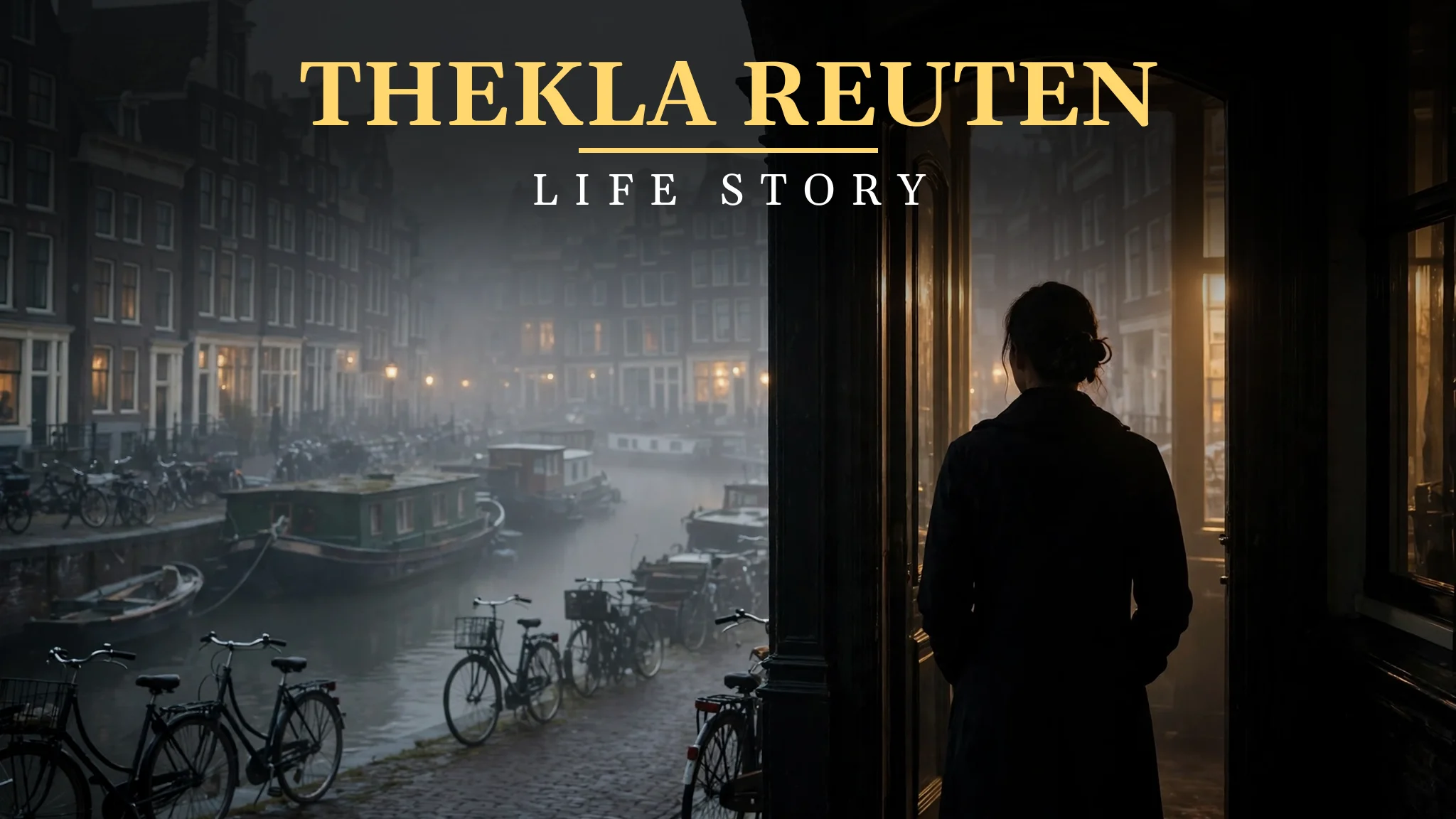
I also think about the Amsterdam canal in her image, and about what it says about her work. A canal is quiet, it is still, and it reflects the houses and the sky above it. Reuten’s acting is like that: quiet, still, and reflective. She does not make a noise to get attention. She reflects the world around her, and the audience sees themselves in that reflection. That is a beautiful quality, and it is one that makes her performances feel both personal and universal. A viewer in any country can look at her face and see something they recognise, because she shows feelings that everyone knows.
Another thing I admire is her courage in playing difficult women. Many actresses are afraid to play a character who is not likeable, because they worry that the audience will not love them. Reuten is not afraid. She plays women who are complex, who have made mistakes, and who are not easy to understand, and she does it with honesty. That courage is important, because it allows films to tell the truth about women, rather than showing them as simple heroes or simple victims. Reuten’s women are real, and that reality is a gift to audiences who are tired of seeing the same simple characters again and again.
I also think about her work in In Bruges, and about how she held her own in a film full of strong male performances. Colin Farrell and Brendan Gleeson are both powerful actors, and a lesser actress might have been overshadowed by them. Reuten was not. She played her role with a quiet confidence that made her memorable, even in a small part. That is a sign of an actress who does not need a large role to make an impact. She needs only a few scenes, and she will use them well. I respect that, because it shows a professional who understands that the size of a role does not determine its importance.
There is also a lesson here about the value of European cinema, because Reuten’s career shows that a Dutch actress can work across Europe and in America without losing her identity. She has worked in the Netherlands, in Britain, in Germany, and in the United States, and she has brought a Dutch sensibility to each of those places. That sensibility is direct, honest, and unafraid of difficult subjects, and it is one that enriches every film she appears in. European cinema needs actors like her, because they bring a different perspective to stories that might otherwise feel the same.
I think about her future too, and about what roles she might play next. She is in her fifties, and she has many years of acting ahead of her. She could play mothers, grandmothers, leaders, and women who have lived a long life and who have learned from it. Those are rich roles, and Reuten has the experience and the talent to play them well. I hope that directors will give her those chances, because audiences will benefit from seeing a mature actress at the height of her powers.
Finally, I want to say something about the twins in Twin Sisters once more, because the film is about a bond that survives decades of separation, and Reuten’s performance captures that bond with great tenderness. It reminds me that family is one of the most powerful forces in a person’s life, and that even when people are apart for a long time, the connection between them does not disappear. That is a hopeful message, and it is one that Reuten’s film delivers with great beauty. I will remember it long after I have finished writing about her.
I also think about the misty canal in her image, and about how it reflects her acting. A misty canal is quiet, it is mysterious, and it hides as much as it shows. Reuten’s performances are like that: they are quiet, they are mysterious, and they suggest more than they state. The audience must look closely to see what is there, and when they do, they are rewarded with a depth that a louder performance could never achieve. That is a beautiful quality, and it is one that makes her work worth watching again and again.
Another thing I admire is her longevity. She has been acting for more than twenty-five years, and she is still working, still choosing interesting roles, and still giving excellent performances. That is not an accident. It is the result of hard work, of a strong craft, and of a decision to value quality over fame. Many actresses have a few good years and then fade away. Reuten has had a long and steady career, and that steadiness is a sign of a professional who takes her work seriously and who is respected by everyone she works with.
There is also a thought about the importance of supporting roles, because Reuten has often played supporting characters, and she has made them memorable. A film needs strong supporting actors to feel real, because the world of a film is made up of many people, not just the hero. Reuten understands that, and she brings the same care to a small role as she does to a large one. That generosity is rare, and it is one of the reasons directors love to work with her. She makes every film she appears in better, no matter how large or small her part.
Frequently Asked Questions
Where was Thekla Reuten born and what did she study?
Thekla Reuten was born on 16 September 1975 in Bussum, Netherlands, and she studied acting at the Amsterdam School of Drama before working in theatre and film.
What was Thekla Reuten’s breakthrough film?
Her breakthrough was Twin Sisters from 2002, based on the novel by Tessa de Loo, about twin sisters separated during the Second World War, which was nominated for an Academy Award for Best Foreign Language Film.
Who did Thekla Reuten play in In Bruges?
She appeared in In Bruges from 2008, the dark comedy directed by Martin McDonagh starring Colin Farrell and Brendan Gleeson, playing a memorable supporting role in the cult classic film.
Did Thekla Reuten appear in The American?
Yes, she appeared in The American from 2010, starring George Clooney, playing a woman who becomes involved with his character, an assassin trying to leave his old life behind.
Did Thekla Reuten work on stage before film?
Yes, after drama school she worked in theatre across the Netherlands, performing in classic and modern plays, which gave her a strong foundation before she moved to film and television.
What kind of acting style is Thekla Reuten known for?
She is known for a quiet, precise, and still style, using a look or a pause to convey feeling rather than loud gestures, which makes her performances feel real and powerful.
Is Thekla Reuten still acting today?
Yes, she continues to work steadily in Dutch and international film and television, as well as returning to the stage, and she remains one of the most respected Dutch actresses of her generation.


