Tom Tykwer: The Life Story Behind the Run Lola Run Director
In this post
- Wuppertal 1965: A Boy Who Loved the Cinema
- Short Films, Deadly Maria, and the Berlin Years
- Run Lola Run and the Twenty Minutes That Changed Everything
- The Princess and the Warrior, Heaven, and the Next Films
- Perfume and the Story of a Murderer
- Cloud Atlas and the Most Ambitious Film
- Babylon Berlin and the Television Triumph
- What Tom Tykwer Leaves Behind
- Music as a Partner: Klimek, Heil, and the Sound
- My Take:
Tom Tykwer is the German director who made a film about a woman running through Berlin, and in doing so, he made one of the most exciting films of the 1990s. “Run Lola Run” is a film about time, about chance, and about love, and it is told in twenty minutes, three times, with a different ending each time. It is fast, it is clever, and it is full of energy, and it made Tykwer famous around the world. He is not a director who makes slow, quiet films. He makes films that move, that pulse with music, and that ask big questions about fate, about choice, and about what a single moment can mean.
Tykwer was born in Wuppertal, Germany, in 1965, and he grew up loving films. He did not go to a traditional film school. He learned by watching films, by working in cinemas, and by making short films on his own. He moved to Berlin, where he became part of a new generation of German filmmakers, and he co-founded the production company X Filme Creative Pool, which became one of the most important independent film companies in Germany. His films include “Run Lola Run”, “The Princess and the Warrior”, “Heaven”, “Perfume: The Story of a Murderer”, “Cloud Atlas”, and the television series “Babylon Berlin”, one of the most successful German TV shows of recent years.
What makes his story special is his love of rhythm and music. His films are built like songs, with a beat, a tempo, and a feeling that carries the viewer forward. He works closely with composers, and music is at the heart of his work. This is the story of how a young man from Wuppertal who loved cinema became one of the most innovative directors in Europe, and how he kept making films that were fast, smart, and full of life.
Wuppertal 1965: A Boy Who Loved the Cinema
Tom Tykwer was born on 23 May 1965 in Wuppertal, a city in western Germany known for its suspension railway, a train that hangs from a track above the streets. Wuppertal is an industrial city, with a strong working-class culture, and Tykwer grew up in that world. He loved films from a young age, and he went to the cinema as often as he could. He was drawn to films that were visual, exciting, and different, and he began to think about making films himself while he was still a teenager.
As a young man, he worked in a cinema in Wuppertal, showing films and watching them again and again. Working in a cinema is a good education for a future director, because you see how audiences react, you learn what works and what does not, and you watch hundreds of films from around the world. Tykwer watched films by many different directors, and he learned from all of them. He was especially drawn to films that played with time, with structure, and with music, and those interests would later shape his own work.
He did not go to a traditional film school. Instead, he learned by doing, by making short films, by working as an assistant, and by teaching himself the craft of directing. That self-taught path gave him a freedom that many film school graduates do not have. He was not bound by rules about how a film should be made. He was free to try new ideas, to experiment with editing, and to build a film around music and rhythm. That freedom became his greatest strength.
In the late 1980s, he moved to Berlin, which was then a divided city, with a wall running through it. Berlin was a place of energy, creativity, and change, and Tykwer found a home there. He made short films, he worked with other young filmmakers, and he began to build the career that would make him famous. Berlin, with its streets, its music, and its history, became the setting for his most famous film, and it remains at the heart of his work.
Short Films, Deadly Maria, and the Berlin Years
Tykwer’s early work included short films that showed his talent for visual storytelling and for music. He made “Because” in 1990, a short film that was praised at festivals, and he began to develop a style that was fast, rhythmic, and full of energy. He was interested in how editing could create a feeling of movement, how music could drive a story, and how a film could be built like a piece of music, with verses, choruses, and a strong beat.
His first feature film, “Deadly Maria”, came out in 1993, and it was a dark, strange story about a woman who is trapped in a loveless marriage and who dreams of escape. The film was not a commercial success, but it was praised by critics, and it showed that Tykwer was a director with a distinctive voice. He was not making normal, straightforward films. He was making films that played with time, with fantasy, and with the inner life of his characters. That willingness to experiment set him apart from many other young directors.
In 1994, he co-founded X Filme Creative Pool with the directors Dani Levy and Wolfgang Becker and the producer Stefan Arndt. The company became one of the most important independent film companies in Germany, producing films that were personal, artistic, and successful. X Filme gave Tykwer the freedom to make the films he wanted to make, without having to follow the rules of the big studios. It also gave him a team of collaborators who shared his vision, and that team would help him make his breakthrough film.
The Berlin years were a time of learning and growth. Tykwer worked hard, he made films, he learned from his mistakes, and he built a reputation as a talented, ambitious director. He was ready for a bigger project, and that project would come in 1998, with a film about a woman running through Berlin, a film that would change his life and German cinema forever.
Run Lola Run and the Twenty Minutes That Changed Everything
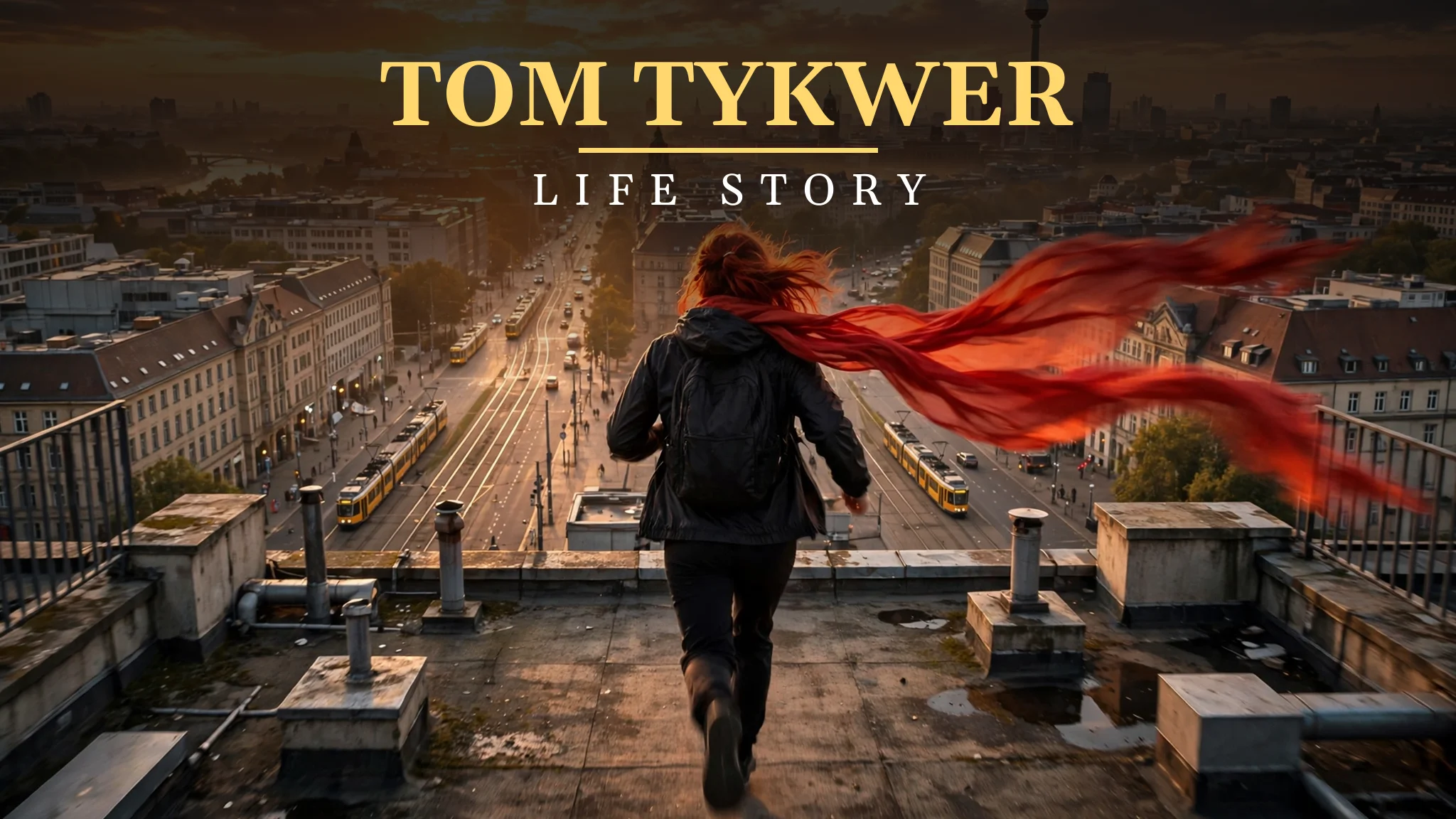
In 1998, Tykwer directed “Run Lola Run”, known in German as “Lola rennt”. The film tells the story of Lola, a young woman with red hair, who has twenty minutes to find 100,000 marks to save her boyfriend Manni, who has lost the money. The film shows the same twenty minutes three times, with small changes each time, and with a different ending each time. It is a film about chance, about choice, and about how a small decision can change a life completely. It stars Franka Potente as Lola, and it features a driving techno soundtrack by Tykwer and his collaborators Johnny Klimek and Reinhold Heil.
“Run Lola Run” became a worldwide hit, and it is now considered one of the most important films of the 1990s. Audiences loved its energy, its clever structure, and its music, and critics praised its originality. The film was a success in Germany, in America, and around the world, and it made Tykwer famous. It also made Franka Potente a star, and it showed that a German film could be fast, modern, and exciting, not just slow and serious. The film’s images of Lola running through Berlin, with her red hair flying, became iconic, and they are still remembered today.
The film’s success gave Tykwer the freedom to make bigger films, and he used that freedom well. He was now a major director, and he was invited to work in Hollywood and in Europe. He also became known for his collaboration with Klimek and Heil, who became his regular composers. Together, they created a sound that was rhythmic, electronic, and emotional, and that sound became a central part of Tykwer’s films.
“Run Lola Run” remains Tykwer’s most important film, because it proved that a clever, fast, musical film could be both artistic and popular. It showed that German cinema could be modern, that a film about time and chance could be thrilling, and that a director who thought like a musician could make a film that felt like a song. That achievement is the heart of Tykwer’s story.
The Princess and the Warrior, Heaven, and the Next Films
After “Run Lola Run”, Tykwer directed “The Princess and the Warrior” in 2000, a film about a nurse named Sissi who saves a man named Bodo and who falls in love with him. The film stars Franka Potente again, and it is a romantic, dreamlike story about two people who are searching for a new life. It was less successful than “Run Lola Run”, but it showed that Tykwer could make a film that was gentle and emotional as well as fast and exciting. It also showed his interest in fate, in chance, and in the ways in which people find each other.
In 2002, he directed “Heaven”, a film based on a story by the Polish director Krzysztof Kieślowski, about a woman who kills a drug dealer and who falls in love with a young policeman. The film stars Cate Blanchett, and it was shot in Italy. It was a more serious, more European film, and it showed that Tykwer could work with international stars and in different countries. The film was praised for its beauty and its emotion, and it confirmed Tykwer’s place as a director who could work at the highest level.
During this period, Tykwer also worked on other projects, including the film “True” in 2004, a short film that was part of a series about Paris. He was now a director who was known around the world, and he was able to choose his projects carefully. He did not rush. He took his time, he worked on scripts, and he waited for the right story. That patience is part of why his films feel so carefully made.
The years after “Run Lola Run” were a time of growth. Tykwer learned how to work with bigger budgets, with international actors, and with more complex stories, and he kept his distinctive style: fast, musical, and full of ideas about time and fate. He was building a body of work that was varied, ambitious, and personal, and he was becoming one of the most respected directors in Europe.
Perfume and the Story of a Murderer
In 2006, Tykwer directed “Perfume: The Story of a Murderer”, based on the famous novel by Patrick Süskind. The novel was thought to be unfilmable, because it is about smell, about a man who can smell everything and who kills women to capture their scent. Tykwer took on the challenge, and he made a film that was visually stunning, emotionally powerful, and deeply strange. The film stars Ben Whishaw as Jean-Baptiste Grenouille, and it was shot in Germany, France, and Spain. It became a major success in Europe, and it is one of Tykwer’s most ambitious works.
“Perfume” showed that Tykwer could adapt a difficult novel, work with a large budget, and create a world that felt both historical and dreamlike. The film’s images of 18th-century Paris, its use of music, and its portrayal of a man who is both a genius and a monster made it a unique experience. It was not a simple film, and it divided some critics, but it was praised for its ambition and its beauty. It proved that Tykwer was not only a director of fast, modern films. He could also make a historical epic, with patience and with visual richness.
The film’s success also gave Tykwer more opportunities in Hollywood and in Europe. He was now a director who could handle a large, complex production, and he was trusted with bigger budgets and bigger stories. He used that trust to make “The International” in 2009, a thriller about a bank and a global conspiracy, starring Clive Owen and Naomi Watts. The film was less successful, but it showed that Tykwer was willing to try different genres and to work in the thriller form.
“Perfume” remains one of Tykwer’s most important films, because it showed his range. He could make a film about a woman running through Berlin, and he could make a film about a murderer in 18th-century Paris, and both films felt like his work. That range is the mark of a great director, and it is why Tykwer is respected by audiences and critics alike.
Cloud Atlas and the Most Ambitious Film
In 2012, Tykwer co-directed “Cloud Atlas” with the Wachowskis, the American directors of “The Matrix”. The film is based on the novel by David Mitchell, and it tells six stories across different times and places, from the 19th century to a far future, with the same actors playing different roles in each story. The film is about reincarnation, about connection, and about how a single act of kindness can change the world. It was one of the most ambitious films ever made, with a large budget, a complex structure, and a huge cast including Tom Hanks, Halle Berry, and Hugh Grant.
“Cloud Atlas” was a difficult film to make, and it divided critics and audiences. Some loved its ambition, its beauty, and its message. Others found it confusing and too long. But it is now recognised as a remarkable achievement, a film that tried to do something no other film had done, and that succeeded in creating a unique, moving experience. Tykwer’s contribution, especially the music, which he co-wrote with Klimek and Heil, was praised, and the film’s score became one of its most loved parts.
The film’s production was a collaboration across continents, with Tykwer working in Germany and the Wachowskis working in America. That collaboration showed Tykwer’s ability to work with other directors, to share a vision, and to make a film that was bigger than any one person. It also showed his interest in big, philosophical questions: about time, about fate, about the connections between people across centuries. Those questions had been at the heart of his work since “Run Lola Run”, and “Cloud Atlas” took them to their largest scale.
After “Cloud Atlas”, Tykwer continued to work on films and on television, and he remained a director who was willing to take risks. He did not play it safe. He kept trying new ideas, new structures, and new collaborations, and that willingness to experiment is part of what makes him an important filmmaker.
Babylon Berlin and the Television Triumph
In 2017, Tykwer co-created and co-directed “Babylon Berlin”, a television series set in Berlin in the late 1920s, during the Weimar Republic. The series is based on the novels by Volker Kutscher, and it follows a police detective named Gereon Rath who comes to Berlin to investigate a case and who becomes involved in a world of crime, politics, and cabaret. The series is lavish, detailed, and full of music, and it became one of the most successful German television shows of recent years, watched by millions of people in Germany and around the world.
“Babylon Berlin” showed that Tykwer could bring his cinematic style to television, and that he could sustain a long, complex story over many episodes. The series’ recreation of 1920s Berlin, its costumes, its sets, and its music, is extraordinary, and it has been praised by critics and audiences alike. Tykwer directed many of the episodes, and he co-wrote the music, which became a central part of the show’s appeal. The series also gave him a new audience, people who had never seen his films but who loved his television work.
The success of “Babylon Berlin” also showed that German television could be as ambitious and as high-quality as American or British television. The series was expensive to make, but it was worth it, because it brought a key period in German history to life in a way that felt real and exciting. Tykwer’s work on the series confirmed his place as one of the leading storytellers in Germany, in film and in television.
In recent years, Tykwer has continued to work on “Babylon Berlin”, with new seasons, and he has also worked on other film projects. He remains a busy, creative director, and he shows no sign of slowing down. His story is still going on, and he continues to be one of the most innovative filmmakers in Europe.
What Tom Tykwer Leaves Behind
Today, Tom Tykwer is one of the most respected directors in Europe, with a body of work that includes “Run Lola Run”, “Perfume”, “Cloud Atlas”, and “Babylon Berlin”. His films have been shown at festivals around the world, his television work has reached millions of viewers, and his music has become a central part of his art. Yet he is still, in many ways, the same person who started in Wuppertal: a director who loves cinema, who loves music, and who believes that a film can be fast, smart, and full of life.
His legacy is not only in his films. It is in the way he changed German cinema, making it faster, more musical, and more modern. He showed that a German film could be a worldwide hit, that a film about time and chance could be thrilling, and that a director who thought like a musician could make a film that felt like a song. Many young directors who came after him learned from that example, and German cinema is more energetic because of it.
For new viewers, the best place to start is simple: watch “Run Lola Run” for the energy, watch “Perfume” for the ambition, watch “Cloud Atlas” for the scale, and watch “Babylon Berlin” for the world-building. Then listen to the music, because it is at the heart of his work. Tom Tykwer is not a director from the past. He is a filmmaker who is still happening, still fast, and still making films and television that move, and that is a rare and wonderful thing.
Music as a Partner: Klimek, Heil, and the Sound
Tom Tykwer’s collaboration with the composers Johnny Klimek and Reinhold Heil is one of the most important partnerships in modern German cinema, and it is central to his story. The three men have worked together since “Run Lola Run”, and they have created a sound that is rhythmic, electronic, and emotional. Klimek and Heil are not just composers who write music after the film is finished. They are partners who work with Tykwer from the start, thinking about the rhythm of the story, the tempo of the editing, and the feeling of each scene. That collaboration is why Tykwer’s films feel like music, not just like films with music added on top.
The process is unusual. Tykwer often thinks about the music before he shoots, and he edits to a beat, like a musician. He has said that he hears his films as much as he sees them, and that the music is part of the script. Klimek and Heil understand that approach, and they write music that fits the film’s rhythm, that drives the story forward, and that gives the audience a physical feeling of movement. In “Run Lola Run”, the techno beat is the heartbeat of the film, and it makes Lola’s running feel urgent and alive. In “Cloud Atlas”, the music connects six stories across centuries, and it makes them feel like one story.
Their work together also shows the value of a long collaboration. When artists work together for many years, they develop a shared language, a trust, and an understanding that cannot be built in a single project. Tykwer, Klimek, and Heil have that trust, and it shows in the consistency and quality of their work. Each film sounds different, but each one has the same rhythmic energy, the same attention to detail, and the same belief that music can tell a story.
The trio’s music has also reached audiences beyond the films. The soundtrack of “Run Lola Run” became popular on its own, and the score of “Cloud Atlas” is loved by people who have never seen the film. That is a sign of great film music: it works in the cinema, and it works on its own, as a piece of music. Tykwer and his composers have achieved that again and again, and their partnership is one of the reasons his films feel so alive.
For young filmmakers, the lesson is clear: find collaborators you trust, work with them for a long time, and let music be a partner, not an afterthought. Tykwer did that, and his films are better because of it. His work reminds us that cinema is a collaborative art, and that the best films are made by teams who share a vision and who listen to each other.
My Take:
When I think about Tom Tykwer, the first thing I feel is energy. His films move, they pulse, they run, and they make me feel alive. “Run Lola Run” is a film that I can watch again and again, and each time I feel the same excitement: the music starts, Lola starts running, and the world starts moving. That is a rare gift in cinema, to make a film that feels like a song, that has a beat, and that carries the viewer forward. I admire Tykwer for that, because it takes a special kind of director to think like a musician, to build a film around rhythm, and to make time itself feel like a character.
I admire “Run Lola Run” most of all, because it is a film that changed what I thought a film could be. It tells the same twenty minutes three times, with small changes, and each time the story ends differently. That is a clever idea, but it is also a deep idea, because it asks a question we all ask: what if I had made a different choice? What if I had turned left instead of right? What if I had been five seconds earlier or later? Tykwer takes that question and turns it into a thrilling, funny, and moving film, and he does it in eighty minutes. That is a remarkable achievement, and it is why the film is still loved today.
What I love about his films is their love of music. Tykwer works with Johnny Klimek and Reinhold Heil, and together they create scores that are not just background music. They are part of the story, part of the rhythm, and part of the feeling. In “Run Lola Run”, the techno beat drives Lola forward, and it drives the audience forward too. In “Cloud Atlas”, the music connects six different stories across centuries, and it makes them feel like one story. That understanding of music as a storytelling tool is rare, and it is why Tykwer’s films feel so alive. He does not just use music. He thinks in music.
I also think about his journey from Wuppertal to Berlin to the world, and I find it inspiring. He did not go to a traditional film school. He learned by working in a cinema, by watching films, by making short films, and by teaching himself. That self-taught path gave him a freedom that many directors do not have. He was not bound by rules. He was free to experiment, to try new structures, to build a film around a beat. I think there is a lesson in that for anyone who wants to make something: you do not need permission, you do not need a perfect education, you need curiosity, patience, and the courage to try.
There is something else I admire, and it is his willingness to take on difficult projects. “Perfume” was thought to be unfilmable, because it is about smell. “Cloud Atlas” was thought to be unfilmable, because it has six stories across centuries. Tykwer took on both, and he made films that were ambitious, beautiful, and unique. That takes courage, because it is easy to make a safe, simple film. It is hard to make a film that everyone says cannot be made, and to make it work. Tykwer did that twice, and I respect him for it.
If I have a criticism, it is that some of his films can feel too clever for their own good. “Cloud Atlas” is a remarkable film, but it is also confusing at times, and some viewers may find it hard to follow. “The International” is a solid thriller, but it does not have the energy of his best work. I do not think that is a serious flaw, because a director who takes risks will sometimes make a film that does not fully work, and that is part of being an artist. But I do think a new viewer should start with “Run Lola Run” and “Babylon Berlin”, which are his most accessible and most enjoyable works, before moving to his more complex films.
Another thing I notice is how his work has changed German television. “Babylon Berlin” is not just a good show. It is a show that proved German television could be as ambitious as any in the world, with lavish sets, complex stories, and beautiful music. Tykwer’s work on that series has brought a key period in German history to a global audience, and it has made people think about the Weimar Republic in a new way. That is a legacy that goes beyond film, and it is one that deserves to be remembered.
For a young reader, I think the lesson of Tom Tykwer is to find your rhythm, trust your instincts, and do not be afraid to experiment. If you love music, let it shape your work. If you have a clever idea, try it, even if people say it cannot be done. If you fail, learn from it and try again. Tykwer did that, and he built a career that has lasted for more than thirty years and reached audiences around the world. That is a story worth remembering.
I think about the future of his work, and I hope he keeps making films and television for many more years. He has already given the world some of its most energetic and innovative films, and he has shown that a director can be a musician, a storyteller, and a visionary all at once. When I watch his films, I feel excited, I feel thoughtful, and I feel like I have been on a journey. That feeling is rare, and it is precious. I am glad this director exists, and I am glad he stayed true to his vision, because without him, German cinema would be slower, quieter, and less musical.
One more thought stays with me. Tykwer’s story is a story about a boy in Wuppertal who loved the cinema, who worked in a cinema, and who believed that a film could be like a song. That idea has carried him across the world, across many years, and across many films and television shows. It is a reminder that a good idea, pursued with energy and with music, can change a life and can change cinema. I will keep watching Tom Tykwer, and I will keep smiling when I hear the beat of “Run Lola Run”, because that music means the story is still running, and the story is a good place to be.
I also think about the idea of time in Tykwer’s films, and how it shapes everything he makes. “Run Lola Run” is about twenty minutes, repeated three times. “Cloud Atlas” is about six lifetimes, connected across centuries. “Babylon Berlin” is about a specific moment in history, the late 1920s, when the future was uncertain. Each work asks the same question in a different way: how much does a single moment matter? Tykwer’s answer is that a moment matters a great deal, that a small choice can change a life, and that time is not a straight line but a web of possibilities. I find that idea both exciting and comforting, because it suggests that our choices matter, and that it is never too late to choose differently.
Another thing that stays with me is his willingness to work in television as well as film. Many film directors look down on television, but Tykwer embraced it with “Babylon Berlin”, and he made a series that is as ambitious and as beautiful as any of his films. That openness is admirable, because it shows that a good story can be told in any form, and that a director should follow the story, not the format. Television gave him more time to develop characters, to build a world, and to explore history in depth, and he used that time well. His work on “Babylon Berlin” has brought German history to a global audience, and that is a valuable achievement.
I think about the future, and I wonder what Tykwer will do next. He has already made many innovative films and a landmark television series, but he does not seem tired. He seems curious, and he seems ready to keep experimenting with time, with music, and with new forms of storytelling. I hope he does, because German cinema needs him. It needs a director who is fast, musical, and clever, all at the same time. It needs a director who can make a film about running and make it feel like a song. That is a rare combination, and I am glad it exists.
When I watch his films now, I see something different from what I saw at first. At first, I saw speed and cleverness. Now I see years of work, of learning from cinema, of collaborating with composers, and of thinking deeply about time and fate. That depth is what makes his later works so moving, and it is what makes his story worth telling. A director can be famous for a year, but to be loved for more than thirty years, you need something more than hits. You need trust, and this director has earned it.
I also want to say something about his co-founding of X Filme Creative Pool, which is sometimes overlooked. That company gave independent German filmmakers a home, a place where they could make personal films without following the rules of the big studios. Tykwer helped build that home, and it has supported many important German films. A director who builds an institution, not just a career, is doing something more important than making hits. He is building a future for the cinema he loves, and that is a generous act. I admire that generosity, because it shows that success is more meaningful when it is shared.
In the end, my feeling about this director is simple: I am grateful. I am grateful for the energy, for the music, for the clever stories about time, and for the example he set. He showed me that a film can be fast and thoughtful at the same time, that music can be a partner in storytelling, and that a small choice can change a life. Those are lessons that go beyond cinema, and they are lessons I will carry with me. When I hear the beat of “Run Lola Run” again, I will think of a red-haired woman running through Berlin, of twenty minutes that changed everything, and of a director who taught me to pay attention to the moment.
One last thought: the best directors do not just tell stories. They make us feel time, they make us hear music, and they make us think about the choices we make every day. Tom Tykwer does that, in his films, in his television work, and in his collaborations. His work is still open, still fast, and still welcoming, and I hope it stays open for many more years. If you have never watched “Run Lola Run”, watch it with the sound up, and let the beat carry you. You may find, as I did, that a director from Wuppertal has something important to say to you, too.
I keep returning to the idea of the moment, because it is at the centre of all of Tykwer’s work. In “Run Lola Run”, twenty minutes can change a life. In “Cloud Atlas”, a single act of kindness can echo across centuries. In “Babylon Berlin”, a single night in a cabaret can change a detective’s fate. Tykwer believes that moments matter, that small choices add up, and that time is not something that happens to us but something we shape. I find that idea both exciting and responsible, because it means that what I do now, in this moment, could matter more than I think. His films do not just entertain. They make me pay attention to my own life, to the choices I make, and to the people I meet.
I also think about his work in a cinema in Wuppertal, and how it shaped him. Watching hundreds of films, seeing how audiences react, learning what works and what does not, that is an education no film school can replace. Tykwer learned cinema by watching it, by loving it, and by thinking about it, and that love shows in every film he makes. He is a director who is also a fan, and that is why his films feel so alive. He makes the kind of films he would want to watch, and audiences can feel that enthusiasm. It is a reminder that the best work often comes from love, not from duty, and Tykwer’s love of cinema is evident in every frame.
Frequently Asked Questions
When was Tom Tykwer born and where is he from?
Tom Tykwer was born on 23 May 1965 in Wuppertal, Germany. He grew up loving cinema, worked in a cinema as a young man, and later moved to Berlin to make films.
What is Tom Tykwer’s most famous film?
“Run Lola Run”, known in German as “Lola rennt”, from 1998 is his most famous film. It tells the same twenty minutes three times with different endings, and it became a worldwide hit.
What is Tom Tykwer’s film Run Lola Run about?
“Run Lola Run” is about Lola, a young woman with red hair, who has twenty minutes to find 100,000 marks to save her boyfriend Manni. The film shows three versions of those twenty minutes, each with a different outcome.
Who are Johnny Klimek and Reinhold Heil?
Johnny Klimek and Reinhold Heil are composers who have worked closely with Tykwer on many films, including “Run Lola Run”, “Perfume”, and “Cloud Atlas”. Their electronic, rhythmic scores are a central part of Tykwer’s style.
What is Perfume about?
“Perfume: The Story of a Murderer” from 2006 is based on the novel by Patrick Süskind, about Jean-Baptiste Grenouille, a man with an extraordinary sense of smell who kills women to capture their scent in 18th-century France.
What is Babylon Berlin?
“Babylon Berlin” is a television series co-created by Tykwer, set in Berlin in the late 1920s. It follows police detective Gereon Rath and became one of the most successful German television shows in recent years.
Is Tom Tykwer still making films?
Yes, Tykwer is still active, continuing to work on “Babylon Berlin” and on new film projects. He remains one of the most innovative directors in German cinema and television.


