What Foods Give You Energy Without Coffee
In this post
- Why Food Gives You Energy in the First Place
- Breakfast Foods That Start the Day Well
- Foods That Keep You Going Through the Afternoon
- Fruit, Vegetables and Water: The Quiet Helpers
- Snacks That Actually Help Instead of a Sugar Crash
- Why Sugary Snacks and Energy Drinks Let You Down
- Putting It Together: A Simple Day of Eating for Steady Energy
- When Tiredness Is Not About Food
- Eating Regularly: Why Skipping Meals Steals Your Energy
- My Take:
Coffee is the first thing millions of people reach for in the morning, and it is easy to see why. It is quick, it is warm, and within half an hour it makes a tired person feel awake. But coffee has a limit. Its lift fades, and when it fades, the tiredness often comes back worse than before, especially if the person skipped breakfast and drank coffee on an empty stomach. Many people then drink a second cup, then a third, and by the afternoon they feel wired and tired at the same time. There is a better way to get energy, and it is sitting in the kitchen already: ordinary food, eaten at the right times, in the right combinations.
Food gives you energy in a completely different way from coffee. Coffee does not give your body fuel. It borrows alertness from your own system and pushes you to use it now. Food actually supplies the fuel. When you eat, your body breaks the food down into energy it can use over hours. The kind of food you choose decides whether that energy arrives slowly and lasts, or arrives in a rush and disappears. A bowl of oats with a banana will keep you going until lunch. A sweet biscuit will lift you for twenty minutes and then leave you lower than before. This article explains which everyday foods give steady energy, why they work, and how to fit them into a normal day, without coffee and without anything expensive or hard to find.
Why Food Gives You Energy in the First Place
Your body runs on fuel, and food is where that fuel comes from. Everything you eat is broken down in your stomach and gut, and the useful parts are carried in your blood to your muscles, your brain and every other part of you. The main fuel is carbohydrate, which your body turns into glucose, a simple sugar in the blood that your cells burn for energy. Fat is a second fuel, slower and longer-lasting, stored in the body for times when food is not available. Protein is mainly a building material for muscle and repair, though it can also give energy when needed. The point is simple: energy does not appear from nowhere. It comes from what you eat, and what you eat decides how steady that energy feels.
Not all carbohydrates behave the same. Some are digested quickly, and some slowly, and that speed changes everything about how you feel. A spoon of sugar or a piece of white bread breaks down fast, so your blood sugar rises quickly and falls quickly, and that fall is what people feel as a crash — sudden tiredness, a headache, a craving for something sweet again. Whole grains, beans, lentils and vegetables break down slowly, because they contain fibre, which acts like a brake. The energy trickles in over hours, your blood sugar stays level, and you feel steady instead of swinging between wired and exhausted. That is why two breakfasts with the same number of calories can leave you feeling completely different by ten in the morning.
Water matters too, and it is the part people forget most. Your body is mostly water, and even mild dehydration makes you feel tired, slow and headachy. Many people who think they need coffee in the afternoon actually need a glass of water and a small snack. A glass of water with your breakfast, a bottle of water on your desk, and a glass with lunch will do more for your energy than most people expect. Food gives you the fuel, but water carries it around your body, and without enough water the whole system runs slowly.
Breakfast Foods That Start the Day Well
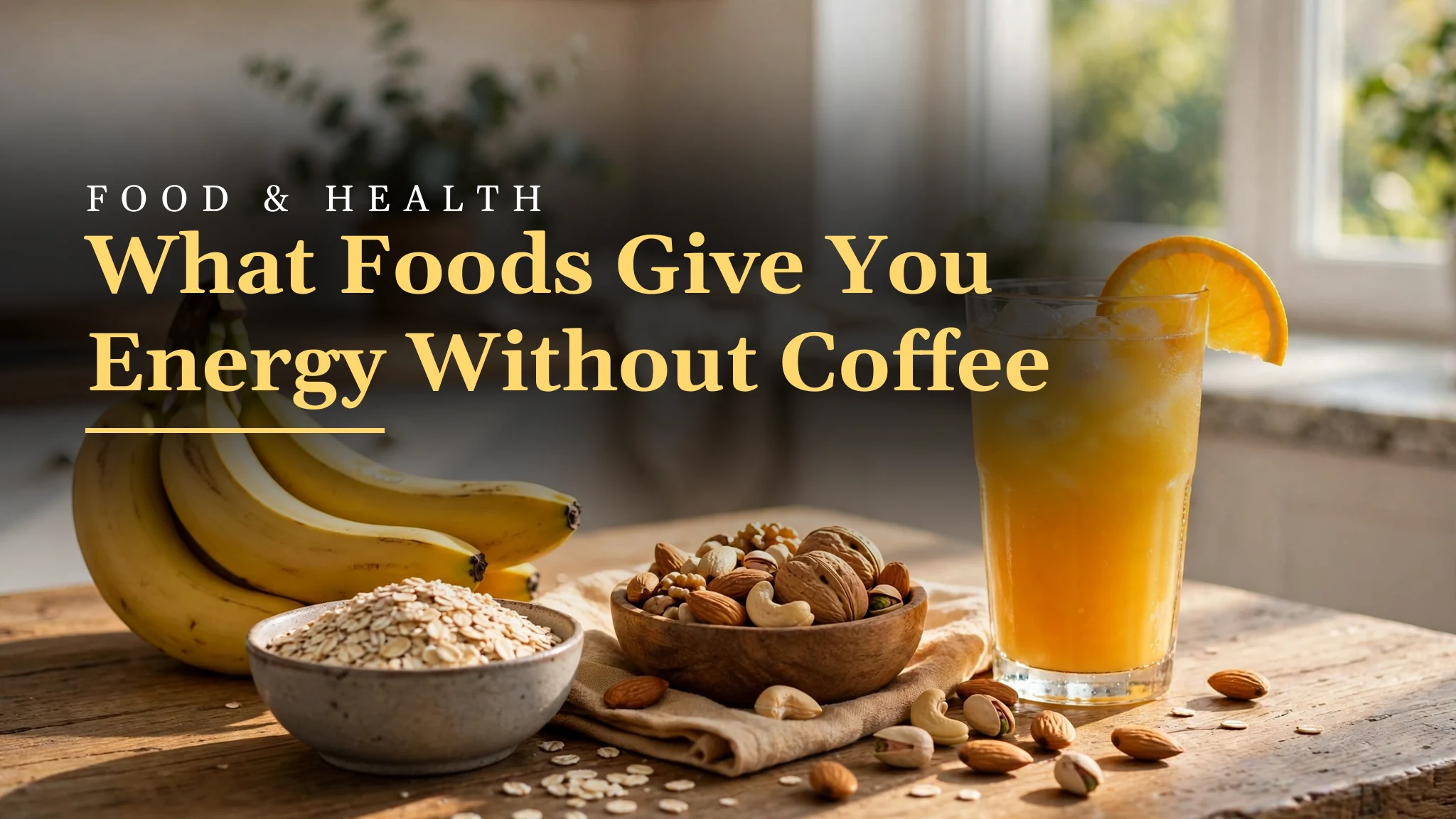
Breakfast sets the tone for the whole morning, and the best breakfasts all share one thing: they mix slow carbohydrate with protein or healthy fat, so the energy lasts. Oats are the classic example. A bowl of porridge made with milk or water, with a sliced banana and a few nuts on top, is cheap, filling, and slow to digest. The oats give you steady carbohydrate, the banana adds sweetness and potassium, and the nuts add fat and protein that keep you full. It takes five minutes to make, and it can carry a labourer, a student or an office worker comfortably to lunch.
Eggs are another strong start. One or two boiled eggs with a slice of wholemeal bread give you protein that keeps hunger away for hours, plus nutrients your body uses for steady energy. An egg is not a quick snack; it is a proper food that your stomach works on slowly. In many homes, eggs are already part of breakfast, and that is a good habit to keep. Yoghurt works the same way. A small pot of plain yoghurt with fruit is light, easy to digest, and gives protein that a piece of toast on its own cannot give. If you only eat toast and tea for breakfast, try adding an egg or a pot of yoghurt, and notice how much longer the morning feels.
Fruit at breakfast is useful too, but it works best as part of a meal, not on its own. A banana, an apple or a handful of berries gives you natural sugar for quick energy, plus fibre and vitamins. On its own, fruit digests quickly and leaves you hungry again within the hour. With oats, yoghurt or bread, it becomes part of a breakfast that lasts. The rule for breakfast is simple: do not eat only one thing. Mix a slow food, a protein food and a fruit, and the morning takes care of itself.
Foods That Keep You Going Through the Afternoon
The afternoon is where energy usually runs out, and the reason is often lunch. A heavy lunch of white rice or white bread with little else can make a person feel sleepy by two o’clock, because the quick carbohydrate floods in and then drops away. A lunch built on whole grains, beans or lentils behaves very differently. Brown rice, wholemeal bread, lentils and chickpeas all digest slowly, so the energy from lunch arrives gradually and lasts until evening. A plate of lentils with rice and vegetables is one of the best energy meals in the world: cheap, filling, and steady for hours.
Beans and lentils deserve special attention, because they are the cheapest steady-energy food most people can buy. A bowl of lentils gives you slow carbohydrate, fibre and protein all in one dish, and it costs almost nothing. Chickpeas, kidney beans and black beans do the same. In many countries, these foods are already eaten every day, and that is no accident — they are the foods that keep working people going through long afternoons. If your lunch leaves you sleepy every day, try swapping the white bread or white rice for lentils or beans for a week, and see how the afternoon feels. The difference is often clear within two or three days.
Sweet potatoes are another strong afternoon food. A baked sweet potato with beans or vegetables gives slow carbohydrate, fibre and a natural sweetness that satisfies the craving for something sweet without the crash. Fish and chicken, eaten in a normal portion with vegetables and a whole grain, also help, because protein slows digestion and keeps you full. The pattern is the same at every meal: slow carbohydrate plus protein plus vegetables equals steady energy. It is not a complicated formula, and it does not need expensive ingredients. It needs a plate with more than one kind of food on it.
Fruit, Vegetables and Water: The Quiet Helpers
Fruit and vegetables do not give you as much energy as oats or lentils, but they decide whether the energy you do have is used well. They carry vitamins and minerals your body needs to turn food into energy, and without enough of them the whole process runs less smoothly. An orange gives you vitamin C, leafy greens give you iron and folate, and a banana gives you potassium, which your muscles need to work properly. None of these is a magic ingredient on its own. Together, they are the background support that keeps your energy system working.
The practical way to get enough of them is to add one fruit and one vegetable to every meal, without making a project of it. An apple with breakfast, a salad or some cucumber with lunch, a piece of fruit in the afternoon, and vegetables with dinner — that is enough for most people. It does not need to be a special diet. It needs a habit of putting something green or colourful on the plate next to the main food. People who eat this way often notice they feel fresher in the afternoon, not because vegetables are full of energy, but because their body finally has the tools it needs to use the energy from the rest of the meal.
Water belongs in this section too, because it is the most overlooked energy helper of all. A person who drinks very little water during the day will feel tired even if they eat well. The signs are easy to miss: a dry mouth, a dull headache, difficulty concentrating, a feeling of heaviness in the afternoon. A glass of water when you wake up, a bottle at work, and a glass with each meal is a simple routine that costs nothing. If plain water feels boring, a slice of lemon in it is enough. The point is not to drink a huge amount at once, but to drink a little, often, through the whole day.
Snacks That Actually Help Instead of a Sugar Crash
The afternoon snack is where most people go wrong. At three or four o’clock, energy dips, and the hand reaches for the easiest thing: a biscuit, a chocolate bar, a sweet drink. These give a quick lift, and then a crash, and the crash is worse than the dip that came before it. The person feels more tired at four o’clock than they did at three, and they reach for another biscuit. The cycle repeats every day, and the person concludes they have low energy, when really they have a snack problem.
A good snack follows the same rule as a good meal: slow food plus protein. A handful of nuts — almonds, walnuts, peanuts — with a piece of fruit is one of the best snacks there is. The nuts give fat and protein that digest slowly, the fruit gives quick natural sugar, and together they keep you going for two hours. A small pot of yoghurt with a few nuts does the same. A boiled egg, a piece of cheese with wholemeal bread, or a small bowl of roasted chickpeas all work for the same reason: they are real food, not sugar, and your body takes time to break them down.
The trick is to have the good snack ready before the tired moment arrives. A bag of nuts in a desk drawer, a banana in a school bag, a pot of yoghurt in the fridge at work — these are small preparations that decide what you eat at four o’clock. If the only thing within reach is a biscuit, you will eat a biscuit. If a banana and some nuts are within reach, you will eat those instead, and you will feel the difference an hour later. Energy is not only about what you choose. It is about what you prepared for, and preparation is a five-minute job the night before.
Why Sugary Snacks and Energy Drinks Let You Down
Sweet food feels like energy because it is fast. Sugar enters your blood within minutes, and for a short time you feel alert, even cheerful. The problem is what happens next. Your body releases insulin to deal with the sudden sugar, and the insulin clears it quickly, often overshooting, so your blood sugar drops below where it started. That drop is the crash: tiredness, irritability, a headache, and a craving for more sugar. The sweet snack did not give you energy. It borrowed energy from the next hour and spent it in twenty minutes.
Energy drinks do the same thing, with caffeine added. They contain a large amount of sugar and a large dose of caffeine, and together they create a strong, short lift followed by a hard fall. They also disturb sleep if drunk late in the day, and poor sleep makes the next day’s tiredness worse, which makes the person reach for another energy drink. It is a cycle that feeds itself, and it is expensive. A person who drinks two energy drinks a day is spending real money on a habit that leaves them more tired, not less. Water, a banana and a handful of nuts cost less and do more.
This does not mean sugar is forbidden. A piece of cake at a celebration, a sweet with tea when guests visit — these are pleasures, and pleasures have a place in life. The problem is only when sweet food becomes the main source of energy, every day, several times a day. Then the crashes become the normal feeling, and the person forgets what steady energy feels like. The fix is not to ban sweetness. It is to move it back to its proper place — a treat, not a fuel — and to let real food do the work of keeping you going.
Putting It Together: A Simple Day of Eating for Steady Energy
A day of steady energy does not need a special diet or expensive shopping. It needs a pattern, and the pattern is easy to remember: three meals, each with a slow food and a protein food, plus fruit, vegetables and water through the day. Breakfast could be oats with a banana and nuts, or eggs with wholemeal bread and an orange. Lunch could be lentils with rice and vegetables, or beans with wholemeal bread and salad. Dinner could be chicken or fish with sweet potato and vegetables, or a vegetable and bean stew with bread. None of these meals is fancy. All of them are foods ordinary families already buy.
Between meals, one or two snacks are enough: a banana with nuts in the afternoon, or yoghurt with fruit. Water should be with you all day — a bottle at work, a glass at the table. The timing matters too. Skipping breakfast and waiting until noon for the first food is one of the commonest causes of a tired morning, because the body has fasted all night and has nothing to run on. Eating something, even something small, within an hour or two of waking up changes the whole morning. Similarly, eating dinner very late and going to bed on a full stomach can disturb sleep, and poor sleep makes the next day harder.
It also helps to keep the pattern regular. Eating at roughly the same times each day teaches your body when to expect fuel, and it stops the long gaps that lead to dips. A person who eats breakfast at seven, lunch at one and dinner at seven will usually feel steadier than a person who eats at random times, even if the food is the same. The body likes routine. It is not a complicated idea, but it is one of the most useful things in this whole article: regular meals, real food, water through the day.
When Tiredness Is Not About Food
Food can do a lot for energy, but it cannot do everything, and it is honest to say so. If a person sleeps five hours a night, no breakfast will make them feel fully awake. Sleep is the foundation, and food is built on top of it. A regular bedtime, a dark and quiet room, and no screen in the last half hour before sleep will do more for next-day energy than any superfood. Similarly, a person who sits all day without moving will feel sluggish no matter what they eat. A short walk after lunch, even ten minutes, wakes the body up and helps digestion at the same time.
There are also times when tiredness needs a health professional, not a new snack. If someone feels exhausted every day for weeks, even with good sleep and regular meals, or if they feel dizzy, very pale, or short of breath, they should speak to a doctor. General information in an article can explain how food affects energy, but it cannot look at one person’s body and tell them what is wrong. Low iron, thyroid problems and other conditions can all cause tiredness, and they need proper checking. I say this plainly because the worst thing a person can do with lasting tiredness is to keep buying energy drinks and hoping it goes away.
The honest picture is this: for most people, most tiredness comes from ordinary causes — a skipped breakfast, too little water, too much sugar, too little sleep, too little movement. Fixing those ordinary causes fixes most of the problem, and it costs almost nothing. Food is the biggest of those causes, because it is the fuel, and when the fuel is steady, the whole day runs better. That is the real promise of this article: not a miracle, but a steadier day, built from foods you already know.
Eating Regularly: Why Skipping Meals Steals Your Energy
Skipping meals is one of the commonest causes of tiredness, and it is also one of the most easily fixed. Many people skip breakfast because they are in a hurry, skip lunch because work is busy, and then eat a very large dinner late in the evening. The result is a day of long gaps with no fuel, followed by a heavy meal that leaves them sleepy. The body is not designed to run for twelve hours on nothing and then take in a whole day’s food at once. It works best on regular fuel, in moderate amounts, spread through the day.
Breakfast is the meal people skip most, and it is the skip that costs the most. After a night’s sleep, your body has used up the fuel from dinner, and your blood sugar is at its lowest. A person who skips breakfast starts the day on empty, and by ten o’clock they feel tired, irritable and unable to concentrate. They often blame the early start or the weather, when the real cause is that they have eaten nothing since last night. Eating something, even something small, within an hour or two of waking up changes the whole morning. It does not need to be a large breakfast. A banana, a boiled egg, a bowl of oats or a piece of bread with yoghurt is enough to give the body fuel to begin the day.
Lunch matters for the same reason. A person who skips lunch will feel the gap by three in the afternoon, and that is exactly when the hand reaches for biscuits and sweet drinks. The skipped lunch creates the crash, and the crash creates the craving. Eating a proper lunch — lentils with rice, beans with bread, or chicken with vegetables and a whole grain — stops that whole chain before it starts. It does not need to be a long lunch. Fifteen or twenty minutes, sitting down, with real food, is enough. The person who eats lunch properly rarely needs a sweet snack at three o’clock, because their body already has fuel.
Dinner timing matters too. Eating a very large meal late at night, and then going to bed soon after, can disturb sleep, because the stomach is still working hard when the body is trying to rest. A moderate dinner, eaten at least two hours before bed, digests more peacefully, and the sleeper wakes clearer in the morning. This does not mean dinner should be small or joyless. It means it should be a proper meal at a proper time, not a huge plate eaten in a rush at eleven o’clock. The pattern that works best for most people is simple: breakfast in the morning, lunch in the middle of the day, dinner in the evening, at roughly the same times each day. The body likes routine, and when it knows when food is coming, it uses energy more steadily.
It is also worth saying that eating regularly does not mean eating constantly. Three meals and one or two small snacks is enough for most people. Grazing all day on small sweet things keeps blood sugar swinging up and down, and it never gives the stomach a rest. Real meals, with real gaps between them, work better. The gaps matter, because they let the body finish digesting one meal before the next arrives, and they let hunger return naturally, so you eat because you are hungry, not because food is in front of you. A day built on three good meals is steadier, cheaper and simpler than a day built on a dozen small snacks, and it leaves you with more energy, not less.
My Take:
If you ask me what I think about getting energy without coffee, my answer is simple: food does the job better, and it was doing the job long before coffee became a habit. People worked in fields, built houses and raised families for thousands of years without a single cup of coffee, and they were not lying down at ten in the morning. They ate oats, bread, lentils, eggs and fruit, and they drank water, and that was enough. Coffee is a modern shortcut, and like most shortcuts, it works for a while and then asks for payment. Food is the long road, and the long road is the one that actually gets you there.
I think the most important thing to understand is the difference between borrowed energy and real energy. Coffee does not give you fuel. It tells your brain to ignore the tiredness for a while, and the tiredness waits. When the coffee wears off, the tiredness is still there, and now it has company: the crash. Food works the opposite way. It gives your body actual fuel, broken down slowly, used over hours. A bowl of oats in the morning is still working at eleven o’clock. A cup of coffee at eight is a memory by ten. I would rather have the slow, honest energy of food than the quick, borrowed energy of coffee, and I think most people would too, if they gave food a fair trial.
The trial is the part I want to stress, because coffee is a habit, and habits do not change by reading an article. They change by trying something different for a week and feeling the result. My suggestion is this: for one week, eat a proper breakfast — oats with a banana and nuts, or eggs with wholemeal bread — and drink a glass of water with it, before any coffee. Then wait until after breakfast for your coffee, if you still want it. Most people who try this find two things. First, they feel steadier in the morning, without the jittery feeling coffee on an empty stomach can give. Second, they need less coffee, because the food is doing part of the work. That is a fair trade, and it costs nothing to try.
I also think we should be honest about why people reach for coffee in the first place, and it is usually not the coffee they want. It is the break. A cup of coffee is a reason to stop work for five minutes, to stand up, to talk to a colleague, to breathe. Food can give you that break too. A banana and a glass of water at your desk, a ten-minute walk after lunch, a proper lunch eaten sitting down — these are also breaks, and they give your body something real at the same time. If the coffee habit is really a break habit, then the fix is not to ban coffee. It is to keep the break and change what you put in your body during it. I think that is a kinder and more honest way to look at it.
Lentils and beans are the foods I would praise most in this whole article, because they are the foods that help the people who need help most. A labourer, a student, a mother feeding a family on a tight budget — these are the people who cannot afford expensive health foods, and they do not need to. A bowl of lentils costs almost nothing, and it gives slow energy for hours, plus protein and fibre. It is one of the best energy foods in the world, and it sits in every market, in every country, for pennies. I think there is something wrong with health advice that starts with expensive foods and never mentions the cheap ones. The cheapest foods are often the best, and lentils prove it. If I could give one piece of advice to a family on a small budget, it would be this: eat lentils or beans every day, and your afternoons will feel different within a week.
The afternoon snack is where I think most people lose the day, and it is also where the fix is easiest. At three o’clock, the choice is usually between a biscuit and a banana with nuts. The biscuit is easier, because it is in the drawer. The banana needs preparation the night before. But look at what happens an hour later. The biscuit person feels worse at four o’clock and reaches for another biscuit. The banana person feels steady until dinner. Over a month, that small daily difference adds up to a large one: steadier energy, fewer crashes, less money spent on sweets. I think preparation is the real skill here, not willpower. Willpower runs out by three o’clock. Preparation does not. A bag of nuts in a drawer is preparation, and it works even on the worst day.
I want to say something about water too, because it is the simplest advice in this article and the one people ignore most. A person who feels tired at three in the afternoon, with a dry mouth and a dull headache, often does not need coffee or sugar. They need a glass of water. The body is mostly water, and even a small shortage slows everything down. I have seen people transform their afternoons by doing nothing more than keeping a bottle of water on their desk and drinking from it through the day. It is not exciting advice. It will not sell a product. But it is true, and I would rather give true advice than exciting advice.
I am also honest about what food cannot do. If you sleep five hours a night, no breakfast will make you feel fully awake. If you sit all day without moving, no snack will make you feel fresh. And if you feel exhausted every day for weeks, even with good food and good sleep, you should speak to a doctor, because some causes of tiredness need proper checking. Food is the fuel, but sleep is the foundation and movement is the spark, and all three matter. I say this because I do not want anyone to treat food as a cure for everything. It is one part of a bigger picture, and the picture works best when all the parts are in place.
There is a money point here too, and I think it matters. Coffee, energy drinks and sweet snacks cost real money every day. A person who buys two coffees and an energy drink daily is spending a large amount over a month, and getting crashes in return. Oats, lentils, bananas, eggs and nuts cost less, and they give steady energy instead of a crash. For a family watching every rupee, that is not a small difference. Eating well does not have to mean spending more. Often it means spending less, on simpler foods, and feeling better for it. I think that is worth saying plainly, because health advice that only works for rich people is not good advice.
So here is my final view, in plain words. You do not need coffee to feel awake. You need fuel, and fuel comes from food: oats and eggs in the morning, lentils and whole grains at lunch, a banana with nuts in the afternoon, vegetables and water through the whole day. Eat at regular times, do not skip breakfast, keep water nearby, and keep a good snack ready before the tired moment arrives. Try it for one week and judge it by how you feel, not by what I say. If your mornings are steadier and your afternoons are calmer, keep going. If coffee still has a place in your day, keep it too — after breakfast, in a smaller amount, as a pleasure rather than a crutch. In my view, that is the sensible balance: food does the work, coffee is a treat, and your energy belongs to you again.
One last thought: the best energy habit is the one you barely notice. A bowl of oats in the morning, a bottle of water on the desk, a banana in the bag — these are small, quiet choices that ask nothing of you and give you a steadier day in return. You do not need willpower for them, you do not need money for them, and you do not need to learn anything new. You just eat, drink, and get on with your day. Over weeks and months, those small choices add up to more than any energy drink ever will. That is the real lesson of food and energy, and it is a lesson worth keeping.
I also think about the people who skip breakfast every day, because I believe that is the single most common energy mistake in the world. The morning is rushed, the bus is coming, the children need to get to school, and breakfast feels like a luxury the day cannot afford. But look at what that skip costs. By ten o’clock, the person is tired, irritable and unable to concentrate, and they reach for coffee and a biscuit, which gives a quick lift and a crash. The whole morning is spent fighting a problem that a five-minute breakfast would have prevented. A banana, a boiled egg, a bowl of oats — these take almost no time, and they change the entire morning. I think breakfast is the cheapest energy anyone can buy, and skipping it is the most expensive habit anyone can keep.
There is another point I want to make, and it is about routine. The body likes to know when food is coming. A person who eats breakfast at seven, lunch at one and dinner at seven will usually feel steadier than a person who eats at random times, even if the food is the same. The body prepares for meals, it digests them better, and it uses the energy more smoothly. Random eating — skipping lunch one day, eating dinner at eleven the next — keeps the body guessing, and a guessing body is a tired body. I am not asking anyone to live by a strict timetable. I am only saying that a rough routine, three meals at roughly the same times each day, is one of the simplest ways to feel steadier, and it costs nothing at all.
Finally, I want to say something about patience with this change, because food habits do not change in a day. The first week of eating a proper breakfast and keeping nuts in your desk will feel like effort. You will forget the water bottle, you will eat the biscuit at three o’clock, and you will wonder if any of it matters. That is normal. A habit is not built by one perfect week. It is built by returning to the small change again and again until it becomes the easy thing. After a month, the breakfast will be automatic, the banana will be in the bag without thinking, and the afternoon will feel calmer without any effort. That is the real prize: not a diet, not a rule, but a day that runs on steady fuel, built from foods you already know and can already afford. In my view, that is worth a week of trying.
One more thing I want to be honest about is that I am not asking anyone to give up coffee completely. Coffee is a pleasure for many people, and pleasure has a place in life. A cup of coffee after breakfast, enjoyed slowly, is a fine thing. What I am asking is that coffee stops being the fuel and goes back to being a treat. When food does the work of keeping you going, coffee becomes something you enjoy rather than something you depend on, and that is a much better relationship to have with it. The goal is not a life without coffee. The goal is a day where you feel awake because you ate well, slept well and drank enough water — and the coffee is just the cherry on top.
Frequently Asked Questions
Is what foods give you energy without coffee something I should think about every day?
Yes, because you eat every day, and what you eat decides how steady your energy feels. A breakfast of oats, eggs or yoghurt, a lunch with lentils or whole grains, and a snack of fruit and nuts will keep you going without coffee. You do not need to think about it constantly — once the habit is in place, it runs itself.
How long does it take to notice anything from what foods give you energy without coffee?
Most people notice a difference within two or three days. The morning feels steadier first, usually after the first proper breakfast, and the afternoon improves within the first week, once the sugary snacks are replaced with fruit and nuts. A full, steady pattern takes about two to three weeks to settle into a habit.
Can what foods give you energy without coffee fit into a busy workday?
Yes. The foods are ordinary and quick: oats take five minutes, a boiled egg can be made the night before, and a banana with a bag of nuts fits in a pocket or a desk drawer. Keep a bottle of water at work, eat lunch sitting down, and take a short walk after eating. None of this needs extra time — it needs a little preparation the night before.
What is the simplest way to start with what foods give you energy without coffee?
Start with breakfast. For one week, eat a proper breakfast — oats with a banana and nuts, or eggs with wholemeal bread — and drink a glass of water with it, before any coffee. That one change improves the whole morning, and it is the easiest place to begin because it needs no special shopping.
Does what foods give you energy without coffee work the same way for everyone?
No. People differ in their work, their appetite, their sleep and their health. A labourer doing heavy physical work needs more food than an office worker, and a person who sleeps badly will still feel tired even with good food. The pattern — slow food plus protein plus water — works for most people, but the exact foods and amounts should fit your own day.
What should I do if what foods give you energy without coffee does not suit me?
If changing your food does not help, or if you feel exhausted every day for weeks, speak to a qualified health professional. General information can explain how food affects energy, but it cannot diagnose one person’s tiredness. If a particular food does not suit you, try a different one from the same group — for example, yoghurt instead of eggs, or chickpeas instead of lentils — rather than giving up on the whole idea.
Sources
- NHS — Eat Well
- World Health Organization — Nutrition
- Centers for Disease Control and Prevention — Nutrition
- Healthline — Nutrition
- Mayo Clinic — Nutrition and Healthy Eating
This article is general information only. It is not medical advice and it does not diagnose, treat, or cure anything. For personal concerns, speak to a qualified health professional.


