Why Innocent People Confess Crimes
In this post
- The Man Who Served 23 Years For Someone Else’s Crime
- Nine Hours: An Interrogation As Siege
- The Lie That Made Prison Seem Inescapable
- Why Lies About Science Are Different
- The Missing Tape: An Interrogation Nobody Recorded
- Why “I Would Never Confess” Is The Wrong Test
- Most Confessions Are True
- What DNA Exonerations Taught Us
- The Reforms That Would Make False Confessions Rarer
- How To Read A Confession In The News
- You may also like
Most people are sure of one thing about themselves: they would never confess to a crime they did not commit. Admitting to a crime means subjecting yourself to punishment, maybe decades in prison or even death. There is no way you would do that unless it were true, or you were forced into it. That certainty feels like common sense. It is also wrong, and DNA evidence has proved it wrong, case after case, for more than twenty years.
For years, the law professor David A. Harris writes, he, like most people, did not believe that a person would ever confess to a serious crime he or she did not commit. It just seemed implausible. Of course, with DNA on the scene for more than 20 years, we know better: people do confess to crimes they did not commit, usually because of the huge pressures brought to bear on them in the interrogation room. According to the Innocence Project, about a quarter of the post-conviction DNA-based exonerations on record featured a false confession, or a false statement of guilt of some kind. One in four people proved innocent by DNA had, at some point, said they did it. This post explains how that happens, through one man’s story, and what would make it happen less often.
The Man Who Served 23 Years For Someone Else’s Crime
Here is a story that makes a good example of how and why false confessions can happen. A man named Richard Lapointe falsely confessed to a rape and murder, serving 23 years in prison as a result. Now, a court has ruled that he must receive a new trial. The flaws of Lapointe’s interrogation put many of the major causes of false confessions on display, and each flaw is worth understanding separately, because each one, alone, can break a person, and together they are overwhelming.
Lapointe was brain damaged, and the police knew it. Mental disabilities make false confessions more likely. A person with a brain injury may struggle to follow long, complex questioning, to hold onto what was actually said, to understand the consequences of agreeing, or to resist repeated suggestion. They may agree to end confusion, to please the questioner, or because they cannot keep track of the story being built around them. The police knew about Lapointe’s condition, and the interrogation went ahead anyway, for hours, without the safeguards that a vulnerable person needs most.
Nine Hours: An Interrogation As Siege
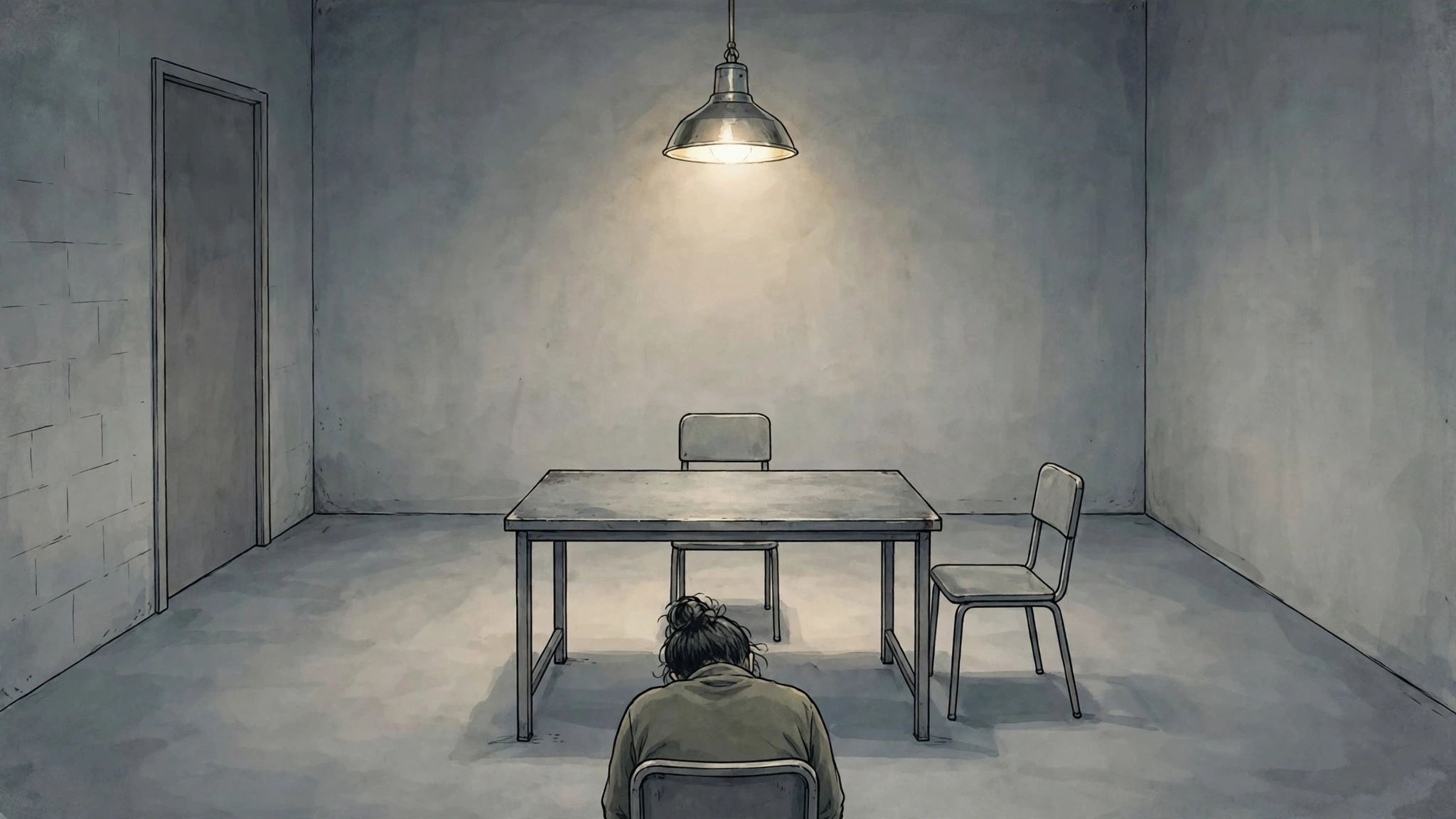
The interrogation continued for about nine hours, far longer than average. Nine hours is not a conversation. It is a siege. After hours of questioning, without proper rest, food, or a clear sense of time, most people become exhausted, confused, and desperate for the questioning to stop. The interrogation room is designed for that effect: small, bare, with no clock, no window, and no way out except through the interrogator. The only apparent exit is agreement. Say what they want, and the pressure stops. Deny, and it continues. After nine hours, that choice does not feel like a choice between truth and lies. It feels like a choice between relief and more hours of the same.
The Lie That Made Prison Seem Inescapable
The police lied to Lapointe about falsified scientific evidence. Police are allowed to lie in interrogations, but lies about scientific and forensic testing make prison seem inescapable, forcing the suspect to tell the police what they want to hear in order to stop the pressure. That distinction matters, and it is the heart of how false confessions are produced.
Imagine you are innocent, and the police tell you that your DNA was found at the scene, that your fingerprints match, that a laboratory test proves you were there. You know you were not there, but the “science” says you were, and science, in most people’s minds, does not lie. Your memory of where you were begins to feel unreliable. Perhaps you misremember. Perhaps you were there and forgot. Perhaps the evidence is right and you are wrong. The interrogator offers a way out: admit it, explain it, say it was an accident, and the punishment will be lighter. The lie about evidence does not only frighten. It rewrites the suspect’s sense of what is true, until confessing feels like the only story that fits the “facts” the police have presented.
Why Lies About Science Are Different
That is why lies about forensic testing are different from other interrogation tactics. An interrogator may bluff about what a witness said, and the suspect can weigh that against their own memory. A lie about a DNA test or a fingerprint feels final, because it claims the authority of science. It tells the suspect that denial is pointless, that the case is already proved, and that the only choice left is how to confess, not whether to confess. For a tired, confused, brain-damaged man after hours of questioning, that message is devastating.
The Missing Tape: An Interrogation Nobody Recorded
The interrogation was not recorded. Recording of interrogations can reduce false confessions and supply an indisputable record of what was said in the interrogation room. Without a recording, the only accounts of what happened are the memories of the people who were there, and those memories disagree. The police remember a willing confession. The suspect remembers pressure, confusion, and lies. A judge and jury, years later, must choose between those accounts, with no tape to settle the question.
Recording matters for two reasons. First, it protects the innocent, by preserving exactly what was asked, what was answered, and what was promised or threatened. A confession that was produced by nine hours of pressure and false evidence looks very different on tape from a confession given freely in ten minutes, and a jury that can see the difference can judge accordingly. Second, it protects honest police officers, by proving that a confession was obtained fairly, and by deterring the tactics that produce false ones. An interrogation that will be watched is an interrogation conducted more carefully. An interrogation that will never be seen invites shortcuts.
Lapointe’s case puts all of these flaws on display at once: no recording, lies about scientific evidence, a nine-hour interrogation far longer than average, and a brain-damaged suspect whose disability the police knew about. Any one of those flaws should trouble us. Together, they explain how an innocent man came to confess to a rape and murder, and how he came to serve 23 years in prison for it, before a court ruled that he must receive a new trial. The case is not an exception to how interrogations work. It is a warning about how they work when no one is watching, and no safeguards are in place.
Why “I Would Never Confess” Is The Wrong Test
The most common response to a false confession story is disbelief: “I would never do that.” That response assumes that confessing is a single, free decision, made calmly, by a rested person, with full knowledge of the consequences. Interrogation is designed to remove every one of those conditions. The suspect is tired, frightened, isolated, and told that the evidence is conclusive. The interrogator is trained, rested, and in control of the room, the time, and the information. The suspect’s job is to survive the room. The interrogator’s job is to get a confession. It is not a fair contest, and it is not meant to be one.
There is another reason “I would never” fails as a test. Confessions in interrogation rooms are rarely a single dramatic moment. They are usually gradual. The suspect first agrees to a small detail, to stop a line of questioning. Then to another. Then to a story that the interrogator suggests, with the suspect filling in gaps to please, to rest, or because the suggested story begins to feel like a memory. By the time the suspect signs a statement, they may have agreed to so many details, over so many hours, that denying the whole thing feels impossible. The confession is built, piece by piece, and the suspect helps build it, because building it is the only way the pressure stops.
Most Confessions Are True
This does not mean every confession is false. Most confessions are true, and interrogation is a legitimate tool for solving crimes. It means that a confession, on its own, is not proof, and that the conditions under which it was obtained matter as much as the words themselves. A confession obtained after a short, recorded, fair interview, with no lies about evidence and no exhaustion, carries great weight. A confession obtained after nine unrecorded hours, from a vulnerable person told that science proves their guilt, should carry very little weight, however confident it sounds in court.
What DNA Exonerations Taught Us
The scale of the problem only became clear when DNA testing allowed old convictions to be checked against new science. About a quarter of the post-conviction DNA-based exonerations on record featured a false confession, or a false statement of guilt of some kind. That figure, from the Innocence Project, is not a guess about how many confessions are false in general. It is a count of a specific group: people whose convictions were overturned because DNA proved they could not have committed the crime, and among whom a quarter had confessed or made false statements of guilt.
That figure should change how we think about confessions in three ways. First, it proves false confessions are not rare freaks. They are a regular feature of wrongful convictions, common enough to appear in one case in four among the proven innocent. Second, it proves that the usual safeguards, judges, juries, lawyers, and appeals, did not catch them. Juries believed the confessions, even though the defendants were innocent, because the confessions sounded detailed and convincing, as confessions built in interrogation rooms often do. Third, it proves that the problem is systemic, not personal. The same pressures, the same tactics, and the same missing safeguards appear again and again, in different cases, in different places, with different innocent people.
DNA exonerations also teach a humbler lesson: we do not know how many false confessions have never been discovered, because most crimes have no DNA evidence to test. The quarter figure counts only cases where DNA could prove innocence. For crimes without DNA, false confessions may sit unchallenged forever, with innocent people serving sentences, and real offenders free. The known cases are the visible tip of a problem whose full size we cannot measure.
The Reforms That Would Make False Confessions Rarer
Lapointe’s case is an object lesson in what can go wrong, and what we should be doing to make sure this does not happen. Professor Harris proposes simple steps, and each one answers directly to a flaw in the Lapointe interrogation. We should record all interrogations, front to back. We should prohibit lying to suspects about test results. And we should limit the interrogation time to two hours, with extensions, perhaps to four hours, only with a supervisor’s permission. These simple steps can keep us from hearing more stories like Lapointe’s in the future.
Recording all interrogations, front to back, is the most important reform, because it makes all the others checkable. A time limit means little if no one can prove how long the interrogation lasted. A ban on lying about evidence means little if no one can prove what was said. A recording protects everyone: the suspect from pressure that cannot be denied, the police from false claims of pressure, and the jury from having to guess. It is a simple, cheap safeguard, and its absence in Lapointe’s case is what allowed every other flaw to hide.
Prohibiting lies about test results targets the most powerful false-confession tactic. Police may use many forms of persuasion, but telling a suspect that scientific tests prove their guilt, when they do not, crosses a line, because it presents fiction as fact and makes denial feel pointless. Limiting interrogation time targets exhaustion. Two hours, with extensions to four only with a supervisor’s permission, recognises that after hours of questioning, a suspect’s ability to think clearly, remember accurately, and resist suggestion falls away, and that a confession obtained from an exhausted person is not reliable evidence, however detailed it sounds.
How To Read A Confession In The News
When you read about a confession in the news, ask the questions this post has raised. Was the interrogation recorded? How long did it last? Was the suspect vulnerable, young, ill, disabled, or without a lawyer? Were they told about scientific evidence, and was that evidence real? Did the confession contain details that only the criminal could know, or details that the interrogator had already suggested? A confession that survives those questions is strong evidence. A confession that fails them should be treated with great caution, however dramatic it sounds.
It is also worth remembering that a false confession does not mean the police acted in bad faith, in every case. Interrogators may genuinely believe the suspect is guilty, and may use tactics they believe are fair, without realising how pressure, exhaustion, and false evidence can break an innocent person. The problem is not only bad officers. It is a system that allows long, unrecorded interrogations, permits lies about forensic evidence, and treats a signed confession as the end of inquiry rather than the beginning of checking. Reforming the system protects the innocent, and it protects honest policing too, by ensuring that true confessions are obtained in ways that cannot be doubted.
Richard Lapointe served 23 years in prison for a crime he did not commit, after a confession obtained in an unrecorded, nine-hour interrogation, in which police lied about falsified scientific evidence, and in which his brain damage was known. A court has now ruled that he must receive a new trial. That ruling does not give him back 23 years. Nothing can. It does give the rest of us a clear lesson, if we are willing to learn it: innocent people do confess, they confess because of pressure, and the way to stop it is not to disbelieve them, but to change the rooms in which confessions are made, so that pressure cannot do its work unseen.
You may also like
Frequently Asked Questions
Why do innocent people confess to crimes they did not commit? Usually because of the huge pressures brought to bear on them in the interrogation room. After hours of questioning, exhaustion, isolation, and being told that scientific evidence proves their guilt, confessing can feel like the only way to make the pressure stop. According to the Innocence Project, about a quarter of post-conviction DNA-based exonerations featured a false confession or false statement of guilt, proving that innocent people do confess, and do so regularly enough to be a major cause of wrongful convictions.
What happened to Richard Lapointe? Richard Lapointe falsely confessed to a rape and murder, serving 23 years in prison as a result, before a court ruled that he must receive a new trial. His interrogation was not recorded, it continued for about nine hours, far longer than average, the police lied to him about falsified scientific evidence, and he was brain damaged, a fact the police knew, which made a false confession more likely. His case puts many of the major causes of false confessions on display at once.
Can police lie during interrogations? Yes, police are allowed to lie in interrogations, but lies about scientific and forensic testing are especially dangerous. Lies about DNA, fingerprints, or laboratory results make prison seem inescapable, forcing the suspect to tell the police what they want to hear in order to stop the pressure, because science feels final and denial feels pointless. That is why reformers propose prohibiting lying to suspects about test results, while allowing other forms of persuasion to continue.
Would recording interrogations stop false confessions? Recording can reduce false confessions and supply an indisputable record of what was said in the interrogation room. A confession produced by nine hours of pressure and false evidence looks very different on tape from a confession given freely in ten minutes, and a jury that can see the difference can judge accordingly. Recording also protects honest police officers by proving that a confession was obtained fairly, and it makes time limits and bans on lying about evidence checkable, rather than matters of disputed memory.
How long should an interrogation last? Professor David A. Harris proposes limiting interrogation time to two hours, with extensions, perhaps to four hours, only with a supervisor’s permission. After hours of questioning, without proper rest, most people become exhausted, confused, and desperate for the questioning to stop, and the only apparent exit is agreement. A time limit recognises that a confession obtained from an exhausted person is not reliable evidence, however detailed it sounds, and that the interrogation room should not be allowed to become a siege.
Sources
- NYU Press Blog, David A. Harris, “Why would anyone confess to something they didn’t do?”: https://nyupress.org/blog/2012/10/12/why-would-anyone-confess-to-something-they-didnt-do/