Winter Solstice Explained and How the World Celebrates It
In this post
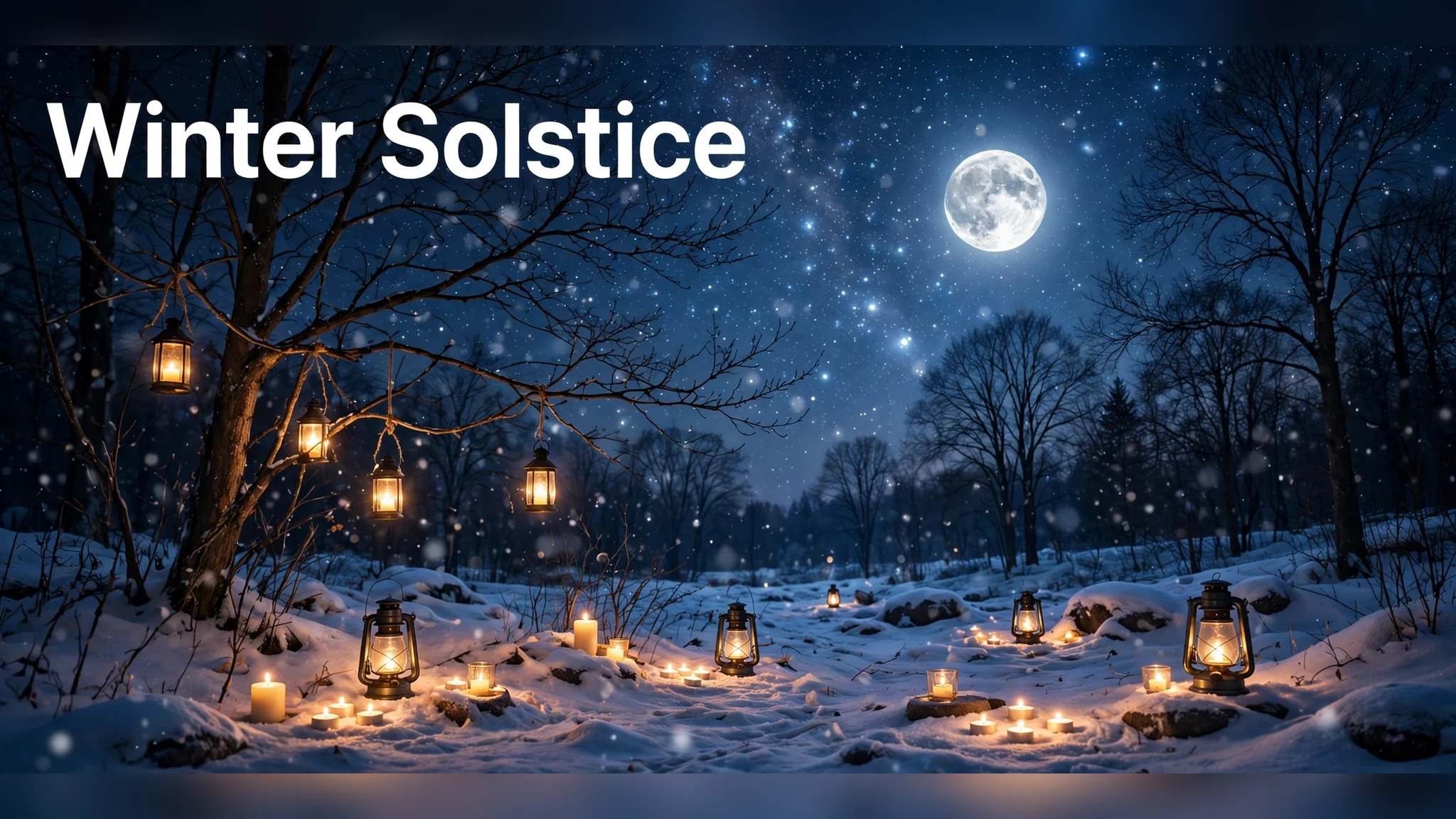
The winter solstice is the shortest day of the year, but that simple description hides a remarkable astronomical event. It happens because Earth is tilted on its axis, and as Earth orbits the Sun, one hemisphere leans away from the Sun for part of the year. At the winter solstice, that lean reaches its maximum, the Sun appears lowest in the sky at noon, daylight is shortest, and night is longest. After that day, daylight slowly begins to lengthen again, even though the coldest weather usually arrives later. That turning point — the moment when darkness stops growing and light begins, almost imperceptibly, to return — is why the solstice has been marked by cultures for thousands of years.
In the Northern Hemisphere, the winter solstice usually falls on 21 or 22 December, while in the Southern Hemisphere it falls around 21 June, when that hemisphere experiences its winter. The exact date varies slightly from year to year because Earth’s orbit and calendar do not align perfectly. The solstice is a precise astronomical moment, not a whole day, though the day containing that moment is called the solstice day. For most people, the experience is simple: a late sunrise, an early sunset, and a long night. For ancient astronomers, farmers, and builders, that experience was a vital calendar signal, telling them where they were in the year and when seasons would change.
Understanding the solstice also explains a common confusion: why the coldest days come after the shortest day. Daylight begins to increase after the solstice, but Earth, oceans, and land take time to warm up, a delay known as seasonal lag. Similarly, the longest day in summer is not usually the hottest day. The solstice marks a turning point in light, not in temperature, and that distinction matters for anyone trying to understand seasons scientifically. It also helps explain why solstice celebrations focus on light, hope, and renewal, rather than on warmth: people celebrated the return of light long before they felt its heat.
The Astronomy in Simple Terms
Imagine Earth as a ball tilted slightly to one side, spinning as it travels around the Sun. That tilt, about 23.4 degrees, is the reason we have seasons. Without tilt, every day would have roughly equal daylight all year, and there would be no summer or winter as we know them. With tilt, the Northern Hemisphere leans toward the Sun in June, giving long days and short nights, and leans away in December, giving short days and long nights. The winter solstice is the moment when the Northern Hemisphere is tilted farthest away from the Sun, and the Sun’s rays hit the Southern Hemisphere most directly.
At the solstice, the Sun’s path across the sky is at its lowest and shortest in the Northern Hemisphere. At noon, shadows are longest, the Sun stays low even at midday, and in places far north, such as inside the Arctic Circle, the Sun may not rise at all, a period known as polar night. In places far south, the opposite happens: the Southern Hemisphere experiences its summer solstice at the same moment, with long days and, inside the Antarctic Circle, a midnight sun. The two hemispheres therefore experience opposite solstices at the same instant, a useful reminder that seasons are local, not global, even though the astronomical event is shared.
Ancient people did not know about axial tilt, but they observed the Sun’s rising and setting points on the horizon with great care. Over weeks, the sunrise point moves along the horizon, reaching its southernmost point at the northern winter solstice, then slowly moving back. Marking that extreme point with stones, posts, or buildings allowed early communities to track the year, plan planting, and time festivals. Modern astronomy explains the mechanism, but the observation itself — watching light return after the darkest day — is still accessible to anyone who notes sunrise times over December and January. The solstice is therefore both an ancient calendar and a modern science lesson, visible without any equipment.
Stonehenge, Newgrange and Ancient Markers
Some of the most famous solstice sites are ancient monuments aligned to the Sun. Stonehenge in England is best known for the summer solstice, when the Sun rises over the Heel Stone, but it also has a winter solstice alignment, with the Sun setting through the monument in a way that has drawn modern gatherings. Newgrange in Ireland, a Neolithic passage tomb older than the pyramids in popular comparison, is famous for its winter solstice alignment: at sunrise around the solstice, light enters a roof box above the entrance and illuminates the inner chamber for a short time. That precise alignment, built thousands of years ago, shows that solstice observation was not casual; it was engineered into sacred architecture.
Other sites around the world show similar care. In Egypt, temples and tombs were aligned to solar events, though their specific solstice connections vary and are debated by researchers. In the Americas, ancient structures built by peoples such as the Maya, Aztec, and Ancestral Puebloans tracked solar positions for farming and ritual calendars. These examples should be described carefully: not every old stone circle is a solstice observatory, and some popular claims are exaggerated. The strongest evidence comes from sites where alignment, archaeology, and historical records together support a solar purpose, rather than from a single photograph of a sunrise.
Modern solstice gatherings at Stonehenge and Newgrange reflect a renewed interest in these alignments. At Newgrange, access to the chamber at solstice sunrise is limited by lottery, because demand far exceeds space. At Stonehenge, managed open access allows visitors to gather for solstice sunsets and sunrises, with rules to protect the monument. These gatherings blend archaeology, astronomy, spirituality, and tourism, and they attract people with very different beliefs. What they share is a desire to stand in a place where humans have watched the same Sun for thousands of years, and to mark the darkest day not with fear, but with attention and community.
Yule, Saturnalia and European Winter Festivals
In northern Europe, the winter solstice is closely linked to Yule, a festival with roots in Norse and Germanic traditions. Yule, or jól, was a midwinter celebration involving feasting, drinking, and rituals to mark the turning of the year. The Yule log, originally a large log burned over several days, survives in modern form as a chocolate cake shaped like a log, and as a decorative log burned in a fireplace. Evergreen branches, holly, and mistletoe, which stay green in winter, became symbols of life enduring through darkness, and many of those symbols were later absorbed into Christmas decorations.
Saturnalia, a Roman festival held in December, is often mentioned alongside the solstice, though it was not itself the solstice. Saturnalia honoured the god Saturn with feasting, gift giving, role reversals, and a temporary relaxation of social rules. Its timing in mid-to-late December, near the solstice, meant that its themes of light, renewal, and social warmth overlapped with solstice celebrations. Later, Christmas, which is celebrated on 25 December in Western Christianity, adopted some midwinter customs, including evergreens, lights, and feasting, though the religious meaning differs. Understanding these overlaps helps explain why December feels festive across cultures, even when the specific festivals are distinct.
Modern pagan and nature-based celebrations of Yule continue this tradition, often with a focus on the return of light, the cycle of seasons, and the natural world. Rituals may include lighting candles, sharing a meal, telling stories, and spending time outdoors to observe the Sun. These celebrations are diverse and personal, and they should not be stereotyped as a single ancient practice unchanged for thousands of years. Like all living traditions, Yule has been revived, adapted, and reinterpreted in modern times, drawing on historical sources, folklore, and contemporary spirituality. Its core theme, however, remains consistent: at the darkest moment, light begins to return, and that return is worth marking.
Dongzhi, Shab-e Yalda and Solstice Around the World
In China, the winter solstice is marked by Dongzhi Festival, one of the most important traditional festivals in Chinese culture. Dongzhi, which means the arrival of winter, is a time for family reunion, special foods, and respect for ancestors. In northern China, dumplings are a traditional Dongzhi food, with a popular saying linking dumplings to warmth and health. In southern China, tangyuan, glutinous rice balls in sweet soup, are eaten, with their round shape symbolising reunion and completeness. The festival’s emphasis on family, balance, and the turning of yin and yang reflects Chinese philosophy, in which the solstice represents a point where darkness reaches its peak and light begins to grow.
In Iran and neighbouring regions, Shab-e Yalda, or Yalda Night, is celebrated on the longest night of the year. Families gather, often staying up late, to eat pomegranates, watermelon, nuts, and dried fruits, read poetry, particularly the works of Hafez, and tell stories. The red colour of pomegranate and watermelon is said to symbolise the dawn and the Sun, and the gathering itself is a way to endure the longest night together, with light, food, and conversation. Yalda is an ancient festival with Zoroastrian roots, now celebrated as a cultural occasion by many Iranians and diaspora communities, and it shows how a solstice can be marked not with a single ritual, but with an entire night of social warmth.
Other cultures mark the solstice in their own ways. In Japan, the winter solstice, or tōji, is associated with eating pumpkin, which is thought to bring health, and bathing with yuzu citrus fruit, which is said to ward off colds and bring good fortune. In Peru, the Inti Raymi festival in June marks the Southern Hemisphere winter solstice and honours the Sun god Inti, with a modern re-enactment at Sacsayhuamán near Cusco that draws visitors from around the world. In Scandinavia, St Lucia’s Day on 13 December, close to the old solstice date in the Julian calendar, features processions of girls in white with candles, bringing light into the darkness. Each of these customs uses food, light, or gathering to answer the same human experience: a long night that needs to be faced together.
How to Mark the Solstice Today
Marking the solstice today does not require a monument, a large gathering, or a specific belief. A simple and meaningful way is to observe light itself: note sunrise and sunset times for a few days around the solstice, watch the Sun set from a favourite spot, or light a candle at sunset and reflect on the year. Many people use the solstice as a natural moment for review, similar to New Year, but quieter and more personal: what has ended, what is beginning, and what light, literally and metaphorically, they hope will grow in the coming months. That reflective quality suits the season, which is often busy with other festivals and can benefit from a calmer pause.
Food is another accessible way to mark the day. Cooking a seasonal meal with root vegetables, citrus, spices, or a traditional solstice food from another culture can turn an ordinary dinner into a celebration. Sharing that meal with family or friends, telling a story about the solstice, or reading a poem aloud can create a small ritual without needing special equipment. For families with children, simple activities such as making paper lanterns, going for a sunset walk, or counting how many minutes of daylight return each day after the solstice can make astronomy tangible and exciting. The key is intention: choosing to notice the day, rather than letting it pass unmarked.
For those who want a larger experience, visiting a solstice site, joining a guided walk, or attending a local event can be rewarding, provided access rules and the environment are respected. Ancient sites are fragile, and crowds, litter, and climbing can damage them. Checking official visitor information, arriving early, dressing warmly, and following guidance from site managers protects both the monument and the experience for others. Whether the solstice is marked alone with a candle, with family over a meal, or with a crowd at a stone circle, the shared theme remains: darkness has reached its limit, light is returning, and that turning point, however small at first, is worth noticing.
Solstice, Seasons and Everyday Sky Watching
The solstice becomes easier to understand when it is observed over weeks, not just on one day. If you note the time of sunrise and sunset every few days in December, you will see daylight shrinking, then reaching its minimum, then slowly growing again in January. That slow change is more instructive than a single solstice photograph, because it shows the turning point as a process, not a sudden event. Children and adults alike can keep a simple sky diary: the date, the sunrise time, the sunset time, and a short note about the weather or the colour of the sky. After a month, the diary reveals a curve, with the solstice at its lowest point, and that curve makes axial tilt feel real rather than abstract.
Everyday sky watching also connects the solstice to other seasonal markers. The earliest sunset in the Northern Hemisphere actually occurs a few days before the solstice, and the latest sunrise occurs a few days after it, because of the equation of time, which relates to Earth’s orbit and tilt. That detail surprises many people, who assume the shortest day must have both the latest sunrise and the earliest sunset, but the total daylight is still shortest on the solstice day. Noticing these small offsets teaches a useful lesson: natural cycles are rarely perfectly symmetrical, and a calendar date is a simplification of a more complex, beautiful motion. That complexity is part of why ancient observers needed careful, long-term records, not just a single observation.
You do not need special equipment to watch the sky, though a few tools help. A phone app or website can give sunrise and sunset times for your location, a compass can help you note where the Sun rises and sets on the horizon, and a notebook can record changes. Avoid looking directly at the Sun, especially through binoculars or a telescope, unless using proper solar filters. Sunset watching is safe and rewarding, particularly in winter, when low Sun angles create long shadows and rich colours. By watching the Sun’s path change from December into February, you will experience the solstice not as a fact in a book, but as a slow, visible return of light that you noticed yourself, which is exactly how ancient skywatchers experienced it.
My Take:
I think the winter solstice is the most honest festival in the calendar, because it does not promise instant warmth or immediate change. It promises only that light has stopped decreasing and has begun, very slowly, to increase. That promise is modest, and that modesty is its power. In a culture that often demands dramatic transformations — a new year, a new you, a complete fresh start overnight — the solstice offers a quieter truth: change begins imperceptibly, a minute of daylight at a time, and it still counts. I find that reassuring, especially in winter, when many people feel tired, low, or pressured to be festive on demand. The solstice says you do not need to feel bright to notice that light is returning. You only need to look.
My strongest belief is that ancient solstice monuments deserve respect, not just as tourist attractions, but as evidence of human attention. Building Newgrange so that a beam of light enters a chamber on one morning a year required observation over generations, careful planning, and a belief that the Sun’s movement mattered enough to build in stone. That level of attention is humbling in an age when we can check sunrise times on a phone in seconds and then forget them. Standing at such a site, or even reading about it, reminds me that humans have always tried to make sense of time, darkness, and light, and that our modern tools have not replaced that need. They have only changed how quickly we can satisfy it, and sometimes speed makes us less attentive, not more.
I also feel that solstice celebrations from different cultures should be appreciated side by side, without forcing them into a single story. Dongzhi dumplings, Yalda pomegranates, Yule logs, and Japanese yuzu baths do not share a single origin, and they do not need to. They share a human response to the same astronomical fact: the longest night. That shared response, expressed through different foods, poems, and gatherings, is more interesting than any claim that all winter festivals are really one festival. Diversity here is not a problem. It is evidence that people in very different climates, religions, and histories all found a reason to gather, eat, and light a candle when darkness was deepest. That universality, without uniformity, is what makes the solstice feel global.
Another point I hold is about the difference between light and warmth, which the solstice teaches clearly. After the solstice, days lengthen, but temperatures often fall further before they rise, because of seasonal lag. That delay can feel disappointing if you expect immediate spring, but it is also a useful metaphor. In personal life, a turning point rarely brings instant comfort. A decision to change, a new habit, or a recovery from a difficult period often begins with a small, invisible shift, followed by a long, cold stretch before results are felt. The solstice normalises that delay. It says the turn has happened, even if you cannot yet feel it, and that patience is part of the process, not a sign that the turn failed.
I also think modern solstice marking should stay simple and accessible. You do not need to travel to Stonehenge, buy special equipment, or follow a complex ritual to honour the day. A candle, a walk at sunset, a shared meal, or a few minutes of quiet reflection are enough, and they are available to people of any belief or none. That accessibility matters, because festivals that require expensive travel or specialised knowledge can exclude the very people who might benefit most from a moment of calm in a busy December. The solstice, at its core, is a public astronomical event, visible to everyone, and its celebration should remain equally public and simple, not gated by cost or expertise.
Finally, I believe the solstice offers a better model for New Year reflection than the noisy countdown that follows it a week later. New Year often demands resolutions, parties, and instant optimism, which can feel forced after a tiring December. The solstice, by contrast, invites a quieter review: what ended this year, what is still dark, and what small light is beginning to grow? That question, asked on the longest night, feels more honest than a list of goals shouted over fireworks. It allows for grief, rest, and hope to coexist, which is how most real years actually feel. If more people marked the solstice, even briefly, I think December would feel less like a performance and more like a season, with darkness acknowledged, light noticed, and the return of both held in proper balance.
I also think the solstice can help with winter wellbeing, in a modest, non-medical way. Many people feel low in winter, when days are short, light is scarce, and social pressure is high. Noticing that daylight is returning, even by a minute a day, gives a concrete reason for hope that is not based on forced cheerfulness. It is based on astronomy, which does not depend on mood. A short walk at midday, when the Sun is highest, a moment by a window, or a candle lit at sunset can become a small daily anchor, reminding a person that the season is turning, however slowly. That anchor does not replace professional help for depression or seasonal mood difficulties, and anyone struggling should seek support, but it can complement other care by providing a simple, natural rhythm to follow through the darkest weeks.
There is also an environmental point that the solstice makes visible. Ancient monuments, illumination displays, and modern light festivals all use light, and light itself has become a resource with costs, from energy use to light pollution that affects wildlife and stargazing. Marking the solstice with candles, a single walk, or a shared meal, rather than with an elaborate display, can be a reminder that light is precious precisely because it is limited in winter. That restraint does not diminish celebration; it focuses it. A few candles in a dark room feel more powerful than a floodlit display, because contrast matters. The solstice teaches that lesson naturally: light matters most when darkness is deepest, and using it thoughtfully, rather than wastefully, honours both the festival and the natural world it celebrates.
Frequently Asked Questions
What exactly is the winter solstice? It is the moment when one hemisphere is tilted farthest away from the Sun, giving the shortest day and longest night of the year in that hemisphere, after which daylight slowly begins to increase.
When is the winter solstice? In the Northern Hemisphere it usually falls on 21 or 22 December, and in the Southern Hemisphere around 21 June. The exact date varies slightly each year because of Earth’s orbit and the calendar.
Why is it coldest after the winter solstice? Because of seasonal lag: land and oceans take time to warm up, so temperatures often keep falling for weeks after daylight starts increasing, even though the Sun is returning.
What happens at Newgrange at the winter solstice? At sunrise around the solstice, sunlight enters a roof box above the entrance and illuminates the inner chamber for a short time, an alignment built into the Neolithic tomb thousands of years ago.
What foods are eaten at Dongzhi in China? In northern China dumplings are traditional, while in southern China tangyuan, glutinous rice balls in sweet soup, are eaten, with their round shape symbolising family reunion.
How can I celebrate the winter solstice simply? Watch a sunset, light a candle, cook a seasonal meal, go for a walk, or spend a few minutes reflecting on the year. No special equipment or belief is needed to notice the return of light.