Yorick van Wageningen: The Life Story Behind the Dutch Character Actor
In this post
Yorick van Wageningen is a Dutch character actor known for performances that are quiet, intense, and unforgettable. He does not play leading men who charm the audience with a smile. He plays complex men, often troubled, often dangerous, often deeply human, and he does it with a stillness that makes the audience pay attention. His breakthrough came in Winter in Wartime, a Dutch film about the Second World War, and he went on to appear in international films such as The Girl with the Dragon Tattoo. He has built a career on quality, on craft, and on a willingness to play characters that other actors might avoid.
He was born on 16 April 1964 in Baarn, a town in the Netherlands, and he grew up in a country with a strong tradition of theatre. He studied acting, he worked on stage, and he moved to film with a clear sense of what he wanted to do. He wanted to play real people, in real situations, and to tell stories that mattered. That simple goal has guided his career for more than thirty years.
What makes his story worth telling is the consistency of his work. He has never chased fame, and he has never tried to be a star in the usual sense. He has chosen roles that interested him, he has worked with good directors, and he has given performances that critics and audiences remember. His story is about an actor who values his craft above everything else, and who has built a lasting career by staying true to that value.
A Childhood in Baarn
Yorick van Wageningen was born on 16 April 1964 in Baarn, a town in the province of Utrecht in the Netherlands. Baarn was a pleasant and quiet town, with forests, parks, and a close community, and life there was calm and orderly. He grew up in a family that valued culture and education, and he was encouraged to read, to think, and to explore the world around him. It was a good place to grow up, and it gave him a sense of stability that would later help him in a career that is often unstable.
As a child, he was observant and thoughtful. He liked to watch people, to listen to how they spoke, and to notice the small details of daily life. He was not the loudest child in the room, but he was one of the most attentive, and that attention would later become one of his greatest strengths as an actor. An actor who watches people closely can play them truthfully, and van Wageningen learned to watch from an early age.
His school years were shaped by his interest in stories and in performance. He liked books, he liked theatre, and he liked the idea of becoming someone else for a while. He took part in school plays, and he found that acting gave him a freedom he did not feel in ordinary life. On stage, he could explore feelings and ideas that were hard to talk about at home or at school, and that freedom was exciting to him.
The town of Baarn gave him a Dutch sense of proportion. Life there was not glamorous, and it did not encourage showing off. It encouraged honesty, hard work, and a respect for others. Those values stayed with him, and they appear in his acting, which is honest, hard working, and respectful of the audience. He has never tried to impress people with tricks. He has tried to tell the truth, and that is a quality that audiences recognise and respect.
Studying Acting and the Stage
After school, van Wageningen studied acting in the Netherlands, training at drama schools that taught him the technical side of performance. The training was demanding, and it taught him how to use his voice, how to move, how to work with a text, and how to build a character from the inside. He learned that acting was a craft, and that it required discipline and practice as well as talent.
He performed on stage, working with theatre companies in the Netherlands, and he learned how to hold an audience’s attention for hours, how to work with a director, and how to make a character feel real even when the play was set in another time or place. Theatre was a demanding teacher, because it required an actor to be ready every night, and van Wageningen learned that lesson well. He became a strong stage actor before he became a film actor.
The years on stage also gave him a deep understanding of how a director works. He watched directors closely, he learned how they shaped a production, and he began to think about what makes a performance feel true. That thinking would later help him as a film actor, because he knew how to work with a director and how to trust the process of making a film.
By the time he moved to film, he was ready. He had the training, he had the talent, and he had the determination to build a career. He did not expect instant success. He expected to work hard, to take the roles that were offered, and to learn from every job. That attitude served him well in the years that followed, and it is still part of how he works today.
First Films and Dutch Work
Van Wageningen’s early film work was in Dutch productions, where he played supporting roles that allowed him to learn how a film set worked. Film acting was different from stage acting, because the camera was close and the performance had to be more subtle. He learned to adjust his acting for the screen, and he became a versatile performer who could work in both forms. His early film roles were not large, but they taught him how to work with a director and a crew, and how to trust the camera to see what he was feeling.
He appeared in Dutch films and television series, building his experience year by year. Each role taught him something new, and each one made him a stronger actor. He was not in a hurry to become famous. He was building a career, and he was doing it in the right way, by working steadily and by learning from every job. Directors liked working with him because he was prepared, because he listened, and because he brought a quiet intensity to his roles.
During these years, he built a reputation as a serious and talented character actor. He was not a leading man in the usual sense. He was an actor who could play a wide range of characters, from a father to a soldier to a villain, and who could make each one feel real. That versatility made him valuable to directors, and it opened doors to bigger roles.
The early years were not glamorous, but they were important. Van Wageningen was learning his craft, building his experience, and preparing for the opportunity that would change his career. He did not know when that opportunity would come, but he was ready for it when it did, because he had done the hard work that comes before success.
Winter in Wartime and a Breakthrough
In 2008, van Wageningen appeared in Winter in Wartime, known in Dutch as Oorlogswinter, a film based on the novel by Jan Terlouw and directed by Martin Koolhoven. The film was set during the Second World War in the Netherlands, and it told the story of a young boy who becomes involved with the resistance. Van Wageningen played a major role in the film, and his performance was praised for its depth and its honesty. The film was a great success in the Netherlands, and it was shown at festivals around the world.
Winter in Wartime worked because it was a true story about real people, and because van Wageningen and the rest of the cast made the audience care about the characters even when their lives were in danger. The film dealt with the war, with family, and with the question of what it means to be brave, and it did so with honesty and care. Van Wageningen’s performance was central to that success, because he showed the inner life of a man who was trying to do the right thing in a terrible situation.
The success of the film brought him to the attention of audiences outside the Netherlands, and it made him known as an actor who could handle a serious and historical subject with care. He was no longer just a Dutch character actor. He was an actor who had been part of a major film, and that gave him a new level of recognition. He handled that recognition in his usual calm way, and he continued to choose his roles carefully.
The film also showed his ability to play a character who was both strong and vulnerable. That combination is hard to achieve, and it is a sign of a talented actor. Many actors can play strength, and many can play vulnerability, but few can play both at the same time. Van Wageningen can, and that is why his performances feel so real.
The Girl with the Dragon Tattoo
In 2011, van Wageningen appeared in The Girl with the Dragon Tattoo, the American film directed by David Fincher and based on the novel by Stieg Larsson. He played Nils Bjurman, a lawyer who is the guardian of Lisbeth Salander, and who abuses his power over her in a cruel and disturbing way. It was a difficult and controversial role, because Bjurman was a villain who did terrible things, and van Wageningen had to play him in a way that was believable without being a caricature.
His performance was chilling, because he played Bjurman as a man who seemed respectable on the outside and who was corrupt on the inside. He did not overact. He played the role with a quiet menace that made the character even more frightening, because the audience could see how such a man could exist in real life. Critics praised his performance, and it became one of the most talked about parts of the film.
The Girl with the Dragon Tattoo was a major Hollywood production, starring Daniel Craig and Rooney Mara, and it gave van Wageningen a chance to work with a major director and a major cast. He handled it with confidence, and he showed that he could work in an American film and hold his own opposite major stars. It was an important step, because it proved that his talent was not limited to Dutch cinema.
The role also showed his willingness to take on difficult characters. Many actors would avoid playing a character like Bjurman, because the role is disturbing and because audiences might associate the actor with the character. Van Wageningen took the role because he believed in the story, and because he wanted to show the reality of abuse of power. That courage is part of what makes him a respected actor.
Later Work and International Roles
After The Girl with the Dragon Tattoo, van Wageningen continued to work internationally. He appeared in films such as 47 Ronin, a fantasy action film starring Keanu Reeves, and he worked in European productions as well as in American ones. He also continued to work in Dutch film and television, keeping his connection to his home country’s cinema alive. That balance between Hollywood and Europe is important to him, because it allows him to do different kinds of work and to stay true to himself.
He has also appeared in television series, playing characters who are complex and often troubled. His television work has allowed him to develop a character over many episodes, and to build a relationship with an audience over a long period. He is known for his work in Dutch series as well as in international ones, and he is respected by directors and by his fellow actors for his professionalism and his talent.
His later work shows the same qualities as his early work: quiet intensity, honesty, and a willingness to play characters who are not easy to love. He does not play heroes. He plays real people, with flaws and with strengths, and he does it in a way that makes the audience think. That is a rare quality, and it is why his performances are remembered long after the film has ended.
Today, Yorick van Wageningen is seen as one of the most respected Dutch character actors of his generation. He is known for his work in Winter in Wartime and The Girl with the Dragon Tattoo, and he is respected by directors and by his fellow actors for his craft. He is not a celebrity in the usual sense. He is an actor, and he has built his career on the quality of his work rather than on publicity.
The Weight of History on Screen
Yorick van Wageningen has played in films about the Second World War, and those films carry a special weight in the Netherlands, where the war is still remembered by many families. Winter in Wartime is based on a novel that Dutch schoolchildren read, and it tells a story that many Dutch people know from their own family history. Playing in such a film is not like playing in an ordinary drama. It requires an actor to understand the history, to respect the people who lived through it, and to tell the story with honesty rather than with sentimentality. Van Wageningen did that, and his performance was praised by audiences who knew the history first hand.
The Netherlands was occupied for five years during the war, and many Dutch people suffered, resisted, or collaborated in ways that are still difficult to talk about today. A film about that period must handle those complexities with care, and an actor in such a film must be willing to show a character who is not simply good or simply bad, but who is a real person trying to survive in a terrible time. Van Wageningen’s character in Winter in Wartime is such a person, and he played him with a depth that made the audience think about the choices people make when they are under pressure.
His work in The Girl with the Dragon Tattoo also dealt with a difficult subject, the abuse of power, and it required a similar kind of honesty. Bjurman is a man who uses his position as a guardian to abuse a vulnerable young woman, and van Wageningen had to play that abuse in a way that was believable without being sensational. He did it by playing Bjurman as a man who seemed respectable on the outside, a lawyer in a suit, a person who would be trusted by society, and who was corrupt on the inside. That contrast is what makes the character so disturbing, because it shows how abuse can hide behind respectability.
Both of these roles show van Wageningen’s willingness to take on subjects that other actors might avoid. He does not choose easy roles. He chooses roles that ask difficult questions, and he answers them with performances that are honest and unflinching. That is a brave way to build a career, and it is one that has earned him the respect of directors and of audiences who value truth over comfort.
Character Acting as a Craft
Yorick van Wageningen is a character actor, and that term deserves respect, because character acting is one of the hardest crafts in film. A leading man is often cast because he looks right for the part, and the audience is expected to like him. A character actor is cast because he can become someone else, someone who may not be likeable, someone who may be strange or difficult, and he must make that person feel real. Van Wageningen does that again and again, and he does it with a skill that is easy to overlook precisely because it is so good. When a character actor is doing his job well, the audience does not see the actor. They see only the character, and they forget that a performance is happening at all.
His training on stage taught him the foundations of this craft. On stage, an actor must build a character from the ground up, thinking about how the character walks, talks, and thinks, and then sustaining that character for two hours in front of a live audience. Van Wageningen learned that discipline, and he brought it to film, where the camera is even less forgiving than a theatre audience. A small false note on film is visible to everyone, and van Wageningen rarely hits a false note. His performances are consistent, honest, and complete, and that consistency is the mark of a master of his craft.
He has also shown that a character actor can work in many different genres. He has played in war films, in thrillers, in fantasy, and in drama, and he has adapted his style to each one. In a war film, he plays a man under pressure. In a thriller, he plays a man with a secret. In a fantasy film, he plays a man in a world that does not exist. Each of those requires a different approach, and van Wageningen finds the right one every time. That versatility is rare, and it is why directors keep coming back to him.
The Value of a Long Career
Yorick van Wageningen’s career has lasted for more than thirty years, and that longevity is an achievement in itself. Many actors have a few good years and then disappear, because they cannot find new roles or because they lose their passion for the work. Van Wageningen has kept working, year after year, because he loves his craft and because directors trust him to deliver a strong performance. He has played in Dutch films, in Hollywood productions, and on television, and he has done it with a consistency that is rare. That long career is a testament to his talent, his professionalism, and his willingness to keep learning, even after decades in the business.
His longevity also shows the value of being a character actor rather than a leading man. Leading men are often judged by their looks, and their careers fade when their looks change. Character actors are judged by their skill, and their skill only grows with age. Van Wageningen’s performances have grown deeper and richer as he has grown older, because he brings a lifetime of experience to each new role. That is a beautiful thing, and it is one of the reasons his later work is among his best.
My Take:
When I think about Yorick van Wageningen, I think about a kind of acting that does not ask for applause. He does not play characters who are charming or who make the audience feel good. He plays characters who are difficult, who are troubled, and who force the audience to think. That is a brave choice, because it means that many people will not like the character, and some may not like the actor. But it is also an honest choice, because real life is full of difficult people, and a film that only shows charming people is not telling the truth. Van Wageningen tells the truth, and I admire him for it.
I admire his performance in Winter in Wartime, because it showed a man trying to do the right thing in a terrible time. The Second World War is a subject that many Dutch people feel deeply, and an actor who plays it badly can make a film feel false. Van Wageningen played it well, and he earned the respect of audiences who knew the history first hand. That is a difficult thing to do, and it is a sign of a talented actor who understands the weight of the story he is telling.
What I find most difficult, and most impressive, about his work is his role as Nils Bjurman in The Girl with the Dragon Tattoo. Bjurman is a cruel and abusive man, and playing him must have been very hard. Many actors would have refused the role, because they would not want to be associated with such a character. Van Wageningen took it, and he played it with a quiet menace that made the character feel real. That is a courageous decision, because it shows an actor who is willing to explore the dark side of human nature in order to tell a true story. I do not enjoy watching Bjurman, but I respect the actor who played him, because he did it honestly and without flinching.
I also think about his style, and I find it very distinctive. He acts with stillness, with a look, with a pause, and he lets the audience come to him. That stillness is powerful, because it makes you pay attention. When he looks at another character, you want to know what he is thinking. When he pauses before he speaks, you want to hear what he will say. That is a rare skill, and it is the reason his performances stay with me long after I have watched them. A loud performance is forgotten quickly. A quiet one stays.
If I have a sadness about his story, it is that character actors like him do not always get the recognition they deserve. Leading men get the magazine covers and the awards, while character actors do the hard work of making a film feel real. Van Wageningen is one of those character actors, and his work is essential to the films he appears in, but he is not as famous as he should be. That is unfair, and I hope that more people will notice his work, because they will find an actor who is worth watching.
I also respect the way he has balanced Dutch and international work. He has not abandoned the Netherlands, and he continues to work there when the right project comes along. That is a sign of loyalty to the place that gave him his start, and it is a sign of a person who knows who he is. He has worked in Hollywood, but he has not become a Hollywood person. He remains a Dutch actor who works internationally, and that gives him a distinctive place in the film world.
Another thing I notice is his choice of roles. He has played soldiers, fathers, villains, and many other characters, and he has done it without repeating himself. Each role is different, and each one shows a different side of his talent. That versatility is rare, and it is a sign of an actor who is curious and who wants to learn. He does not play the same man again and again. He finds something new in each character, and he brings it to life with care.
When I compare van Wageningen with other actors of his generation, what stands out is his restraint. He does not try to impress the audience. He tries to tell the truth, and he trusts that the truth will be enough. That is a mature approach to acting, and it is one that comes from years of experience on stage and on screen. A young actor might try to show everything he can do in one role. Van Wageningen shows only what the role needs, and he does it with precision. That restraint is a sign of confidence, and it is what makes his performances so powerful.
For a young actor reading this, I think the lesson is to not be afraid of difficult roles. Van Wageningen has played characters who are hard to like, and he has done it because he believes in the story. A young actor who follows his example will not always play the hero. They will play real people, with flaws and with strengths, and they will learn more from those roles than they would from playing a perfect hero. That is a valuable lesson, and it is one that will serve them well in any role they play.
In the end, I think Yorick van Wageningen teaches us that a quiet career can be a great career, and that an actor who values his craft above fame can build a body of work that lasts. He has played in major Dutch and international films, he has worked with major directors, and he has earned the respect of audiences around the world, all without ever shouting about it. I admire him for that, and I look forward to seeing what he does next, because I believe that his best work may still be ahead of him.
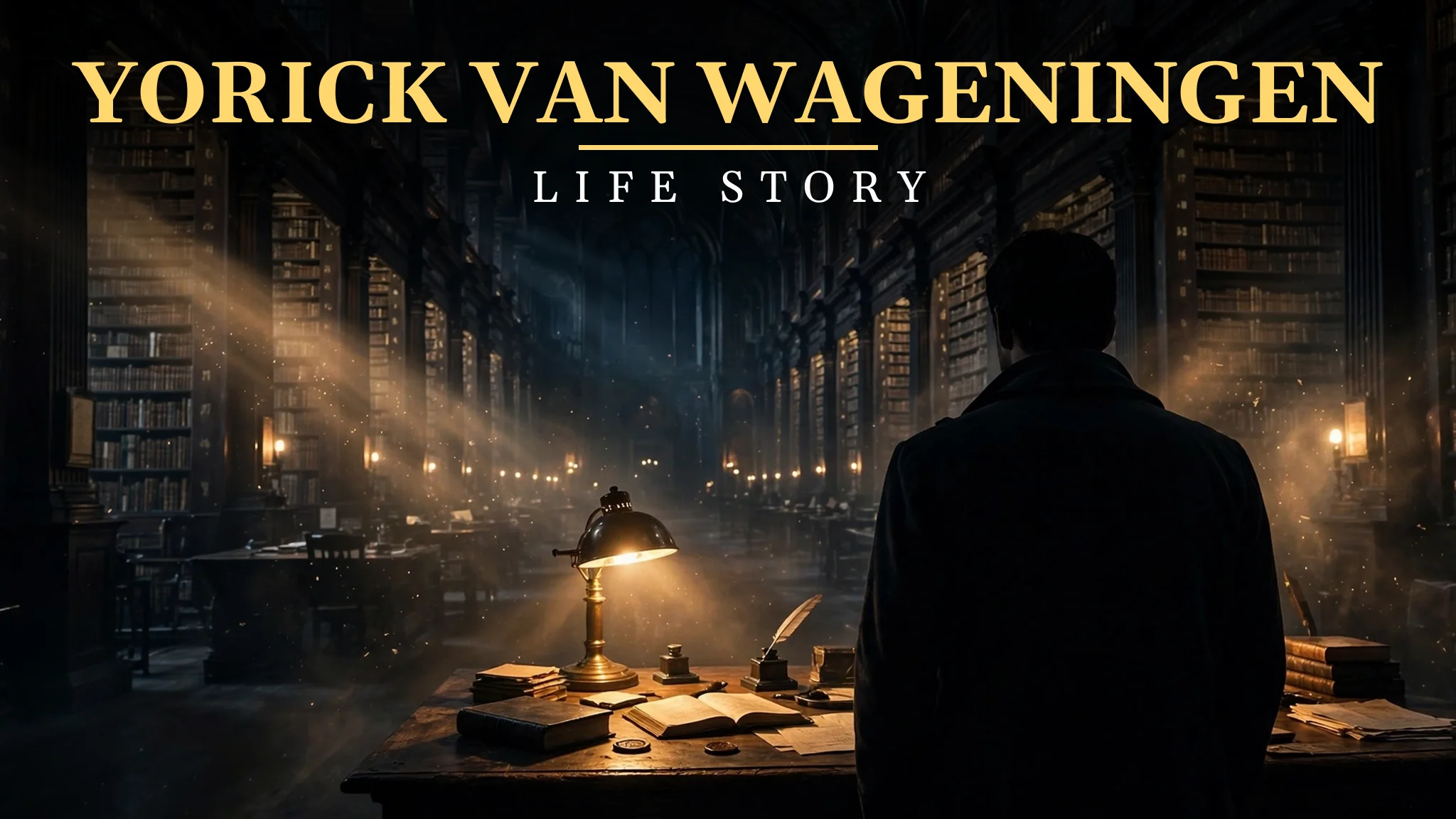
One more thought stays with me, and it is about the library in his image and the idea of knowledge. Van Wageningen’s characters often seem to know more than they say, and they carry a weight of knowledge that is not always visible. That is a good image for his acting, because it suggests a depth that is not on the surface, but that is there if you look closely. I think that depth is what makes him special, and it is what will keep his performances alive in the memory of his audience.
I also think about the old library in his image, and about what it says about his work. A library is a place of knowledge, of history, and of stories that have been collected over many years. Van Wageningen’s acting is like that: it is full of knowledge, it is rooted in history, and it carries the weight of stories that have been told before. He does not act as if he is inventing a character from nothing. He acts as if he is drawing on a deep store of human experience, and that depth is what makes his performances feel so rich. A viewer who watches him can sense that there is more to the character than what is on the surface, and that sense of depth is a rare gift.
Another thing I admire is his patience. He has built his career slowly, over more than thirty years, and he has never rushed to become famous. He has taken the roles that interested him, he has worked in theatre and in film, and he has built a reputation step by step. That patience is a form of wisdom, because it shows a person who understands that a good career is not made in a single year, but over a lifetime. Many young actors want instant success, and they are disappointed when it does not come. Van Wageningen shows that a slow and steady career can be just as rewarding, and often more lasting, than a quick rise to fame.
I also think about the way he handles the darkness in his roles, because playing a villain like Bjurman must take a toll on an actor. To play a cruel man, an actor must understand cruelty, must imagine what it feels like to hurt another person, and must carry that understanding with him even after the cameras stop. That is a heavy burden, and not every actor is willing to carry it. Van Wageningen is willing, because he believes that telling the truth about darkness is important, even when it is painful. I respect that willingness, because it shows a commitment to honesty that goes beyond personal comfort.
There is also a lesson here about the value of character actors in general. Films need leading men and women, but they also need character actors who can fill a scene with life, who can make a small role feel important, and who can give a film its texture. Van Wageningen is one of those actors, and his work makes every film he appears in better. Without character actors, films would feel empty, because the world they show would have no depth. He provides that depth, and he does it with a skill that deserves more recognition than it usually gets.
I think about his future too, and about what roles he might play next. He is in his sixties, and he has many years of acting ahead of him. He could play older men who have lived a long life, who carry the weight of history, and who have learned from their experiences. Those are rich roles, and van Wageningen has the experience and the talent to play them well. I hope that directors will give him those chances, because audiences will benefit from seeing a mature actor at the height of his powers.
Finally, I want to say something about the quiet dignity of his career. He has never sought the spotlight, he has never tried to be a celebrity, and he has never made a fuss about his work. He has simply done it, year after year, with care and with honesty. That quiet dignity is a beautiful quality, and it is one that I admire more than fame. A person who does good work without needing applause is a person who truly loves their craft, and van Wageningen is such a person. I am glad that his work exists, and I hope that more people will discover it.
I also think about the books in his image, and about what they represent. A library full of old books is a place where stories have been kept for centuries, and van Wageningen’s acting is like that library: it is full of stories, of knowledge, and of a deep understanding of human nature. He does not act as if he is making something up. He acts as if he is drawing on a long tradition of storytelling, and that tradition gives his performances a weight that a younger actor cannot achieve. That weight is a gift of experience, and it is one that grows stronger with age.
Another thing I admire is his willingness to be unpopular. Playing Bjurman made many viewers dislike him, and some may have associated him with the character long after the film ended. That is a risk that few actors are willing to take, because they want to be loved. Van Wageningen was willing to take it, because he believed in the story and because he thought it was important to show how abuse can hide behind a respectable face. That is a courageous decision, and it is one that I respect deeply, even though the character himself is repellent.
There is also a thought about the Dutch film industry, and about van Wageningen’s place in it. Dutch cinema is small, but it has produced many excellent actors, and van Wageningen is one of them. He has shown that a Dutch character actor can work internationally, can hold his own opposite major Hollywood stars, and can bring a Dutch sensibility to films made in other countries. That is an important contribution, and it is one that will inspire other Dutch actors who want to work beyond their own borders.
Frequently Asked Questions
Where was Yorick van Wageningen born and when?
Yorick van Wageningen was born on 16 April 1964 in Baarn, Netherlands, and he grew up in a town known for its forests and quiet community life before studying acting.
What was Yorick van Wageningen’s breakthrough film in the Netherlands?
His breakthrough was Winter in Wartime from 2008, based on the novel by Jan Terlouw, a film about a young boy who becomes involved with the Dutch resistance during the Second World War.
Who did Yorick van Wageningen play in The Girl with the Dragon Tattoo?
He played Nils Bjurman in The Girl with the Dragon Tattoo from 2011, the lawyer and guardian of Lisbeth Salander who abuses his power over her in a cruel and disturbing way.
Did Yorick van Wageningen work on stage before film?
Yes, he worked in theatre in the Netherlands after studying acting, performing in plays that gave him a strong foundation before he moved to film and television.
What other international films has Yorick van Wageningen appeared in?
He appeared in 47 Ronin, a fantasy action film starring Keanu Reeves, as well as in European productions, building a career that spans Dutch and international cinema.
What kind of roles is Yorick van Wageningen known for?
He is known for playing complex and often troubled character roles, using quiet intensity and stillness to create performances that feel real and that make audiences think.
Is Yorick van Wageningen still acting today?
Yes, he continues to work in Dutch and international film and television, and he remains one of the most respected Dutch character actors of his generation.


