Zhang Zifeng: The Life Story Behind China's Child Star
In this post
- A Little Girl From Wuhan
- Aftershock and a Child Who Made a Nation Cry
- Growing Up in Public, and Studying Properly
- Sister and the Choice Every Young Woman Understands
- Detective Chinatown and the Mysterious Girl
- A Quiet Life Away From the Noise
- What Her Future May Hold
- School, Study, and a Normal Life Between Films
- My Take:
Zhang Zifeng has been acting for almost as long as she can remember. She was a child when she first stood in front of a camera, and she was a star before she was ten years old. Most child stars fade away. They grow up, they lose the charm that made them famous, and the world moves on. Zhang Zifeng did not fade. She grew up, she studied, and she became one of the most respected young actresses in China. She played a girl who survives an earthquake, a girl who solves a mystery, and a young woman who must choose between her own dreams and her family. Each time, audiences believed her, because she has a gift that cannot be taught: she is completely natural in front of a camera.
She was born in 2001 in Wuhan, a large city in Hubei province, on the Yangtze River. She was a bright and lively child, and her parents saw that she had a talent for performance. She began acting as a small child, and at the age of eight, she played the young Fang Deng in Aftershock, Feng Xiaogang’s great film about the Tangshan earthquake. It was a heartbreaking role, and she played it with a truth that made audiences weep. She became famous at once, and she became known as one of the most talented child actresses China had ever seen.
This is the story of a girl who grew up on screen, and who managed to do what very few child stars manage: to grow up well, to study properly, and to become an adult actress with a real career. It is a story about talent, about family, about school, and about the difficult change from a child star to a grown woman. It is also a story about a young person who has carried the hopes of millions of people since she was eight years old, and who has carried them with grace.
A Little Girl From Wuhan
Wuhan is a large city in central China, where the Yangtze and Han rivers meet. It is a city of bridges, of lakes, and of busy streets. Zhang Zifeng was born there on 27 August 2001. She was a bright child, full of energy, and her parents noticed early that she liked to perform. She liked to sing, to dance, and to act out stories. Many children like those things, but Zhang Zifeng had a special quality: when she performed, people stopped and watched. She had a natural way of being in front of others, a confidence that was not loud, but was real.
Her parents supported her talent, and they took her to auditions and to acting classes. She began to appear in television dramas as a small child, playing daughters, young girls, and children in need of help. She was good at it, and directors liked working with her, because she was professional even at a young age. She learned her lines, she listened to the director, and she did not complain about long hours. That professionalism, learned so young, would stay with her for the rest of her career.
Child acting in China, as in many countries, is a difficult world. Children on film sets must work long hours, must miss school, and must grow up faster than other children. Zhang Zifeng’s parents tried to protect her from the worst of that. They made sure she went to school, that she had a normal life at home, and that acting was a part of her life, not the whole of it. That protection mattered. Many child stars lose their childhood to fame. Zhang Zifeng kept hers, at least in part, because her family kept her grounded.
As a small child, she could not have known what was coming. She was simply a girl from Wuhan who liked to act. But in 2010, when she was eight years old, she was cast in a film that would change her life, and the life of her family, for ever. It was a film about an earthquake, about loss, and about a little girl who survives. It was called Aftershock, and it was directed by Feng Xiaogang, one of the most famous directors in China.
Aftershock and a Child Who Made a Nation Cry
Aftershock, released in 2010, told the story of the Tangshan earthquake of 1976, one of the worst disasters in modern Chinese history. The film followed a family torn apart by the earthquake, and a little girl named Fang Deng, who is separated from her mother and must survive on her own. Zhang Zifeng played the young Fang Deng, and her performance was the heart of the film. She played a child who is frightened, who is lost, and who is brave in the way that children can be brave, without understanding how brave they are being.
Audiences wept when they watched her. She did not act like a child star showing off. She acted like a real child, confused and sad, trying to understand a world that had fallen apart. The film was a huge success in China, and it was watched by millions of people. Zhang Zifeng became famous overnight. She was eight years old, and she was already one of the most talked-about actresses in the country. She won praise from critics, and she won the love of audiences, who saw in her a rare and natural talent.
The success of Aftershock brought her many offers. She was cast in more films and dramas, playing children in a range of stories. She appeared in Detective Chinatown in 2015, playing a mysterious young girl named Snow, in a role that showed she could be more than a sad child. She could be clever, strange, and a little bit frightening, and audiences loved that too. She was growing up on screen, and each new role showed a new side of her talent.
Those years were also a time of learning. She went to school, she studied, and she tried to live a normal life between film shoots. Her parents kept her close, and they made sure that fame did not change her. She remained a quiet, serious girl, known for her professionalism on set and her modesty off it. People who worked with her said that she was one of the easiest child actors to work with, because she listened, she learned, and she never acted like a star. That reputation would follow her into adulthood, and it would help her to build a long career.
Growing Up in Public, and Studying Properly
Growing up in public is hard. A child star is watched by millions, and every change in her appearance, in her voice, and in her life is noticed and discussed. Zhang Zifeng grew up under that watchful eye, and she handled it with a grace that surprised many people. She did not rebel. She did not seek attention. She studied, she worked, and she grew up in a steady and sensible way. She went to school in Beijing, and she prepared for the entrance exams to the Beijing Film Academy, the most famous film school in China.
Getting into the Beijing Film Academy is a serious achievement. Thousands of young people apply every year, and only a small number are taken. Zhang Zifeng passed the exams and was accepted, and she studied there as a young adult, learning the craft of acting in a formal way for the first time. She had been acting since she was a child, but she had learned it on the job. At film school, she learned the theory behind it, the history of acting, and the skills that would help her to play adult roles. She took her studies seriously, and she was known as a good student, not only as a famous one.
Her time at film school was also a time of change. She was no longer a child. She was a young woman, and she had to find a new place in the film world. Child stars often struggle with this change. The roles that made them famous as children do not suit them as adults, and the audience does not always accept them as grown-ups. Zhang Zifeng faced that challenge, and she met it by choosing her roles with care. She took parts that suited a young woman, not a child, and she showed that she could play adult characters with the same natural talent she had shown as a girl.
One of the most important steps in that change was the film Sister, released in 2021. In it, she played An Ran, a young woman who has just started a new life when she learns that her parents have died and left her with a young brother to raise. She must choose between her own dreams and her duty to her family. It was a grown-up role, about a grown-up problem, and Zhang Zifeng played it with a depth that surprised even those who had followed her career since she was eight. The film was a great success, and it proved that she had made the change from child star to adult actress.
Sister and the Choice Every Young Woman Understands
Sister deserves a close look, because it is the film that showed Zhang Zifeng as an adult. The story is simple, and it is powerful. An Ran is a young woman who has fought hard to build a life for herself. She has a job, she has plans, and she has dreams. Then her parents die in a car accident, and she learns that she has a younger brother, a small boy she barely knows. She must decide: will she give up her own life to raise him, or will she give him up so that she can live her own life? It is a choice that many young women in China understand, because family duty is a strong force, and personal dreams are also strong.
Zhang Zifeng played An Ran with an honesty that made audiences feel every part of the choice. She showed the anger, the love, the guilt, and the hope, all in the same performance. She did not play a perfect sister. She played a real young woman, who is sometimes selfish, sometimes kind, and always trying to do the right thing in a situation where there is no perfect answer. The film was a box office success, and it was talked about across China, because it asked a question that many families ask: what do we owe our family, and what do we owe ourselves?
The film also showed how much Zhang Zifeng had grown as an actress. As a child, she had played a girl who survives an earthquake. As a young woman, she was playing a woman who must survive a different kind of earthquake, the sudden loss of her parents and the sudden arrival of a child to care for. The two roles are linked, in a way, by the theme of survival, but the second role is deeper, because it is about choice, not only about survival. Zhang Zifeng understood that, and she played it with a maturity that was far beyond her years.
Sister won her praise from critics and from audiences, and it confirmed her place as one of the leading young actresses in China. She was no longer a former child star. She was a star in her own right, as an adult, with a major film success behind her. She had made the hardest change in acting, the change from child to adult, and she had made it look natural. Very few actors manage that change. Zhang Zifeng did, and she did it with grace.
Detective Chinatown and the Mysterious Girl
Before Sister, there was another role that showed a different side of Zhang Zifeng. In Detective Chinatown, released in 2015, she played Snow, a young girl who is at the centre of a murder mystery. Snow is quiet, strange, and a little bit frightening. She does not speak much, but when she does, her words matter. At the end of the film, there is a famous scene where she smiles in a way that makes the audience realise that she knows far more than she has said. It became one of the most talked-about moments in Chinese cinema, and it showed that Zhang Zifeng could play a character who is not innocent, not simple, and not easy to understand.
That role mattered because it broke the image of Zhang Zifeng as only a sad, sweet child. She could be mysterious. She could be clever. She could be dark. Directors began to see her in a new way, as an actress who could play many kinds of characters, not only the good girl. She was growing up, and her roles were growing with her. She was no longer only the girl from Aftershock. She was an actress with range, and with a future that was wide open.
She has continued to take a variety of roles since then, in films and in television, playing young women in different kinds of stories. She has played in comedies, in dramas, and in films about modern life. She has worked with many of the best directors in China, and she has built a reputation as a reliable and talented young actress. She is known for her professionalism, for her quiet manner, and for her ability to make a character feel real, even in a small role. That reputation is the result of many years of work, from the age of eight to the age of twenty-five, and it is a reputation she has earned.
A Quiet Life Away From the Noise
One of the most striking things about Zhang Zifeng is how quiet she is, away from the camera. She does not seek attention. She does not appear on variety shows to make people laugh. She does not share her private life on social media. She goes to work, she does the work well, and then she goes home. In a world where young stars are expected to be loud, to post every day, and to fight for attention, her quietness is unusual, and it is part of what makes her respected.
She is known for being a serious student, a careful actress, and a modest person. People who work with her say that she is easy to work with, that she listens, and that she never acts like a star. That modesty is rare, especially for someone who has been famous since she was eight years old. It suggests that her family raised her well, and that she has kept her feet on the ground, even as her fame has grown. She seems to understand that fame is not the same as worth, and that the work matters more than the attention.
Her private life is kept private, and little is known about her relationships or her home life. That is by choice, and it is a wise choice. A young woman who has been in the public eye since childhood needs a private life, a place where she can be herself, away from the cameras. Zhang Zifeng has protected that place, and she has done it without making a show of it. She simply does not share what she does not want to share, and the public has learned to respect that.
In recent years, she has continued to work steadily, taking roles that suit her as a young adult. She is twenty-five years old, and she has already had a career that most actors would envy. She has been a child star, a film school student, and a leading lady in a major film. She has done all of that without losing herself, and without becoming a cautionary tale. That is a remarkable achievement, and it is one that deserves to be recognised.
What Her Future May Hold
Zhang Zifeng’s future is wide open. She is young, talented, and respected, and she has many years ahead of her. She could become one of the great actresses of her generation, if she continues to choose her roles with care. She could also become a director, or a producer, or a teacher, if she decides to move in a new direction. Whatever she does, she will do it with the same quiet professionalism that has marked her career so far.
The challenge for her now is to find roles that are worthy of her talent. She has played a child who survives an earthquake, a mysterious girl in a detective story, and a young woman who must choose between her dreams and her family. Those are strong roles, and they have shown what she can do. The next step is to find roles that are even deeper, roles that ask her to play women with complex lives, with flaws, and with stories that have not been told before. If she finds those roles, she will grow even further as an actress.
For young actors, she is an example of how to grow up in public without losing yourself. She shows that it is possible to be famous as a child and to become a respected adult, if you study, if you work hard, and if you keep your family close. She shows that talent is not enough on its own. It needs discipline, modesty, and patience. Zhang Zifeng has all of those things, and they have carried her from Wuhan to Beijing, from a small girl in Aftershock to a leading lady in Sister, and they will carry her further still.
Her story is a hopeful one, because it shows that a child star does not have to fade. She can grow, she can learn, and she can become even better as an adult. Zhang Zifeng has done that, and she is still doing it. The girl who made a nation cry at the age of eight is now a young woman who makes a nation think, and that is a journey worth celebrating, and worth watching, for many years to come.
School, Study, and a Normal Life Between Films
One of the most important parts of Zhang Zifeng’s story is the way her family protected her schooling. She was a famous child actress, but she was also a student, and her parents made sure that school came first, as much as possible. She went to school in Beijing, she did her homework, and she took her exams seriously. That may sound ordinary, but for a child star, it is extraordinary. Many child stars leave school early, or they study only when they have time, which is rarely. Zhang Zifeng studied properly, and she did well, because her family insisted on it, and because she herself wanted to learn.
Her time at school gave her something that film sets could not give her: a normal life, with normal friends, normal lessons, and normal problems. She sat in a classroom, she listened to teachers, and she learned about the world outside film. That normal life mattered, because it kept her grounded. She did not grow up thinking that the film world was the only world. She knew that there was a world of school, of books, and of ordinary people, and that world gave her a sense of proportion. She understood that fame was not the most important thing in life, and that learning mattered more.
When she went to the Beijing Film Academy, she took her studies even more seriously. She studied acting theory, film history, and the craft of performance, and she learned from teachers who had trained many great actors. She was not only a famous student. She was a good student, known for her discipline, her curiosity, and her willingness to learn. Her classmates respected her, not only because she was famous, but because she worked hard, and because she treated her studies with the same seriousness she brought to her acting.
That education has shaped her adult career. She chooses her roles with care, she thinks about her characters deeply, and she approaches each new project as a student, eager to learn something new. She is not an actress who relies only on talent. She relies on study, on preparation, and on a deep understanding of her craft. That combination of talent and study is rare, and it is one of the reasons she has grown from a child star into a respected adult actress. She learned her craft properly, and she is still learning it, one film at a time.
My Take:
I think Zhang Zifeng is the most remarkable young actress in China, and the reason is not only her talent. It is the way she grew up. Most child stars do not grow up well. They become famous too young, they lose their childhood, and they struggle as adults. Zhang Zifeng did not follow that path. She became famous at eight, she studied properly, she went to film school, and she became an adult actress with a real career. I think that is an extraordinary achievement, and it says as much about her family as it does about her. Her parents protected her. They made sure she went to school. They made sure she had a normal life at home. They did not let fame eat her childhood. I admire that, because it is easy to let a talented child work all the time, and to forget that she is still a child. Her family did not forget, and Zhang Zifeng is better for it.
What I admire most about her acting is its naturalness. When she plays a character, she does not look like she is acting. She looks like she is living. In Aftershock, she played a little girl who had lost everything, and she played her with a truth that made audiences weep. She was eight years old. She had not studied acting theory. She had not learned technique. She simply understood the character, and she showed it. That kind of understanding cannot be taught. It is a gift, and Zhang Zifeng has it. I think it is the rarest gift an actor can have, rarer than beauty, rarer than a good voice, rarer than anything else. It is the gift of being real in front of a camera, and she has had it since she was a child.
I also think about Sister, and about the choice at its heart. An Ran must decide between her own dreams and her duty to her younger brother. It is a choice that many young women understand, not only in China, but everywhere. Family duty is strong, and personal dreams are strong, and sometimes they pull in opposite directions. Zhang Zifeng played that choice with an honesty that made audiences think about their own lives. I think that is what great acting does. It does not only tell a story. It makes the audience ask questions about their own story. After watching Sister, many young women must have asked themselves what they would do in An Ran’s place. That is a powerful thing for a film to do, and it is a powerful thing for a young actress to achieve at the age of nineteen.
There is a sad part to her story, and I want to name it honestly. The sad part is that she never had a normal childhood, not really. She was working on film sets when other children were playing. She was famous when other children were unknown. She was judged by millions when other children were judged only by their teachers. That is a heavy weight for a child to carry, and it is a weight that can break a person. Zhang Zifeng carried it, and she carried it well, but I wonder what it cost her. I wonder if she ever wished she could be anonymous, if she ever wished she could walk down a street without being recognised, if she ever wished she could make a mistake without millions of people knowing about it. I hope she has found a way to live with that weight, and I hope she has people around her who remind her that she is more than her fame. She is a person, and a person needs privacy, rest, and a life away from the camera.
I want to say something about the smile in Detective Chinatown, because it is one of the most famous moments in recent Chinese cinema. At the end of the film, Zhang Zifeng’s character, Snow, smiles in a way that changes everything the audience thought they knew. It is a small moment, a few seconds, but it is unforgettable. I think that smile shows something important about her talent. She can say more with a smile than most actors can say with a whole speech. She can change the meaning of a film with a single look. That is a rare power, and it is the power of a great actress. I think directors know it, and that is why they keep casting her in roles that ask her to hold a secret, to hide a truth, and to reveal it at just the right moment.
The lesson I take from Zhang Zifeng is about growing up slowly, even when the world wants you to grow up fast. She was famous at eight, but she did not rush to become an adult star. She studied. She waited. She chose her roles with care. She let herself grow up at her own pace, and when she was ready, she played an adult role in Sister, and she proved that she had become an adult actress. I think that patience is a lesson for all of us. We live in a world that wants everything fast: fast fame, fast success, fast growth. Zhang Zifeng shows that slow growth can be better. She grew slowly, and she grew well, and she is stronger for it. I hope young people who read her story understand that. You do not need to be famous at eighteen to have a good life. You need to learn, to grow, and to be ready when your time comes. Zhang Zifeng was ready, because she took her time.
Finally, I want to say that her story gives me hope about the future of Chinese cinema. She is twenty-five years old, and she is already one of the best actresses in the country. She has many years ahead of her, and she has the talent, the discipline, and the modesty to become one of the greats. I look forward to watching her grow, to seeing the roles she chooses, and to seeing the woman she becomes. I think she will surprise us, again and again, as she has surprised us since she was eight years old. The little girl from Wuhan who made a nation cry is now a young woman who makes a nation think, and I believe the best is still to come. That is a hopeful thought, and it is one I want to hold on to.
I also think about the way Zhang Zifeng listens on screen, because listening is one of the hardest things an actor can do, and she does it beautifully. Many actors are good at speaking, at delivering lines with feeling. Fewer are good at listening, at showing that they are truly hearing what the other person is saying. Zhang Zifeng listens with her whole face. When another actor speaks, her eyes follow them, her expression changes, and you can see her thinking, feeling, and responding. That listening makes her performances feel real, because in real life, we spend more time listening than speaking. A person who listens well is a person we trust, and Zhang Zifeng’s listening is one of the reasons audiences trust her. I think that is a lesson for all of us, not only for actors. Listening is a skill, and it is a gift. A person who listens carefully is a better friend, a better colleague, and a better human being. Zhang Zifeng listens, on screen and, I suspect, in life, and that listening is a large part of her gift.
I want to think, too, about what it means to be twenty-five years old and to have already had a career lasting almost twenty years. Most people at twenty-five are just starting their careers. They are fresh out of university, looking for their first job, and wondering what their life will be. Zhang Zifeng has already been a child star, a film school student, and a leading lady in a major film. She has already achieved more than most people achieve in a lifetime, and she is only twenty-five. That is an extraordinary thing, and it is also a heavy thing. When you have achieved so much so young, where do you go next? How do you keep growing, when you have already grown so much? I think Zhang Zifeng is answering that question by studying, by choosing her roles with care, and by not rushing. She is not trying to do everything at once. She is taking her time, and that patience is wise. A career is long, and she has many years ahead of her. She does not need to prove herself every year. She needs to keep learning, keep growing, and keep choosing well. I believe she will do that, because she has done it so far.
There is another part of her story that I find moving, and it is the way her parents protected her. They could have let her work all the time, earning money, becoming more famous, and losing her childhood. They did not do that. They made sure she went to school, that she had a normal life at home, and that acting was a part of her life, not the whole of it. That protection was a gift, and it is one that many child stars do not receive. I think about the parents of other child stars, who push their children to work harder, to earn more, and to be more famous, and I wonder what those children lose. Zhang Zifeng’s parents did the opposite. They protected her childhood, and she is better for it. She is a grounded, modest, and professional young woman, and that is, in large part, because her family kept her grounded. I admire that, and I think it is a lesson for all parents of talented children. Talent is a gift, but childhood is also a gift, and it should not be sacrificed for fame. Zhang Zifeng’s family understood that, and she is the proof that they were right.
I want to be honest about something else as well. Zhang Zifeng is a wonderful actress, but she is still young, and she still has a great deal to learn. She has played children, teenagers, and young women, but she has not yet played a woman in her thirties or forties, with the depth and the complexity that age brings. That is not a criticism. It is simply a fact of her age. She will grow into those roles, in time, and when she does, I think she will be even better than she is now. I look forward to watching that growth, to seeing the roles she chooses, and to seeing the woman she becomes. I think the best is still to come, and I think that is a hopeful thought, for her and for all of us who have watched her since she was eight years old.
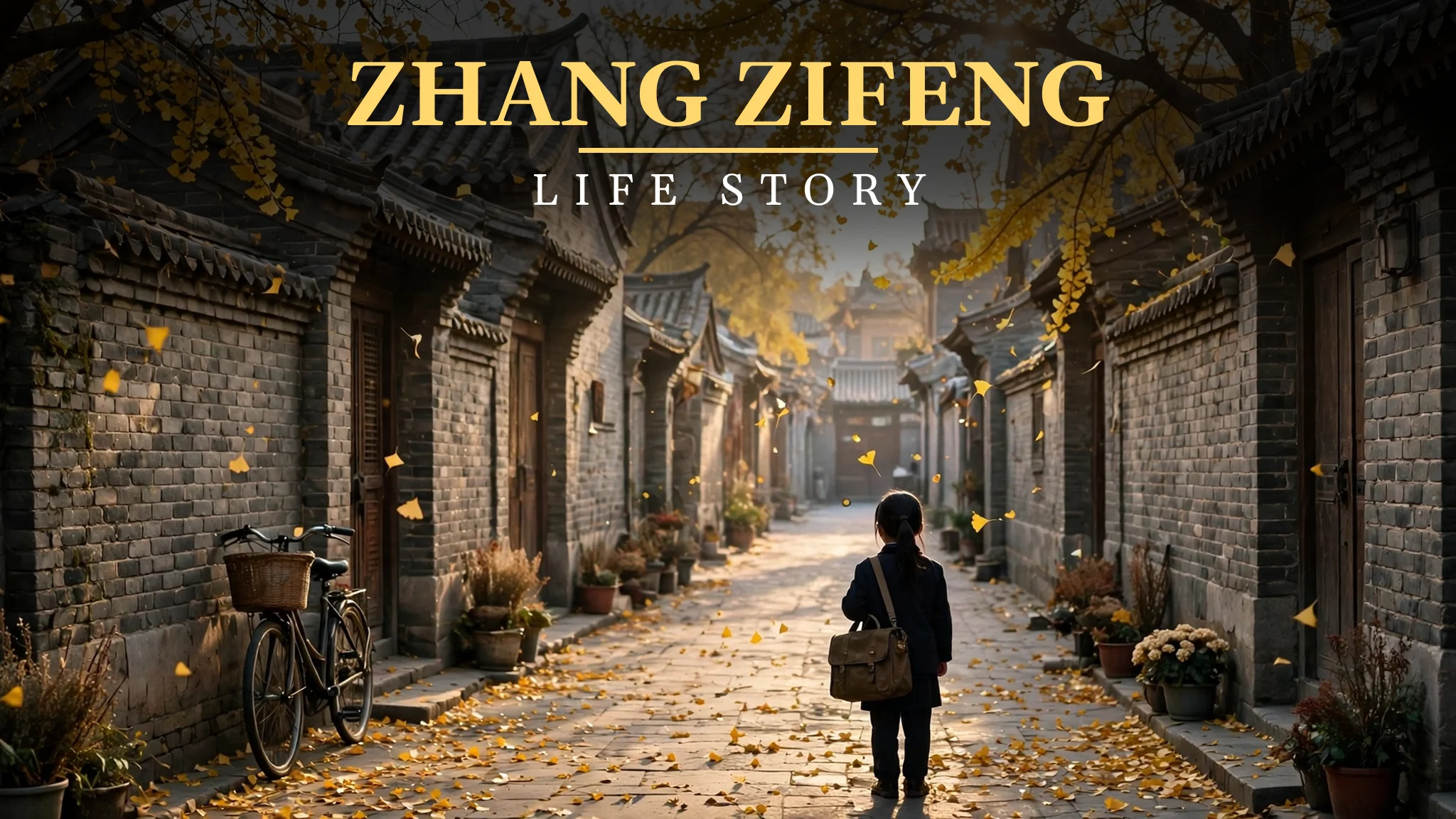
Finally, I want to return to the image of the young girl walking down an old alley in autumn, with golden leaves falling around her, which is the image on her cover. That image fits Zhang Zifeng perfectly, because it shows a small figure, walking alone, on a quiet street, with a schoolbag on her back, in a world that is beautiful and a little bit sad. She is not running. She is walking, steadily, toward whatever comes next. That is the story of her life, in a way. She started as a small girl in Wuhan, she walked through the film world, one role at a time, and she is still walking, toward the future, with her schoolbag still on her back, in a sense, because she is still learning. I think that is a beautiful image, and it is a hopeful one. It says that the journey is long, that the leaves will fall, and that the seasons will change, but that if you keep walking, you will get where you are going. Zhang Zifeng has kept walking, and she is still walking, and I believe she will go far.
I also want to say something about the way Zhang Zifeng handles praise, because praise can be as dangerous as criticism. When people praise you from the age of eight, it is easy to start believing that you are special, that you do not need to work hard, and that success will always come easily. Zhang Zifeng has not fallen into that trap. She is modest, she works hard, and she treats praise with gratitude, not with arrogance. That modesty is rare, especially for someone who has been praised for most of her life, and it is one of the reasons people respect her. Praise is a gift, but it is also a test. A person who handles praise well, with humility, will keep growing. A person who lets praise go to their head will stop growing. Zhang Zifeng has handled praise well, and she is still growing, and I believe she will keep growing for many years.
Frequently Asked Questions
Who is Zhang Zifeng and how did she become famous?
Zhang Zifeng is a Chinese actress born in 2001 in Wuhan, Hubei. She became famous at eight years old for playing the young Fang Deng in Aftershock in 2010, Feng Xiaogang’s film about the Tangshan earthquake, a performance that made audiences across China weep.
Where did Zhang Zifeng study acting?
After years of acting as a child, she studied at the Beijing Film Academy, China’s top film school, where she trained in acting and prepared herself for adult roles after growing up as a child star.
What is the film Sister about?
Sister, released in 2021, stars Zhang Zifeng as An Ran, a young woman whose parents die suddenly, leaving her with a young brother to raise. She must choose between her own dreams and her duty to her family, a role that proved she had become a leading adult actress.
Who does Zhang Zifeng play in Detective Chinatown?
In Detective Chinatown from 2015, she plays Snow, a quiet and mysterious young girl at the centre of a murder case. Her smile at the end of the film became one of the most talked-about moments in recent Chinese cinema.
How old is Zhang Zifeng?
Zhang Zifeng was born on 27 August 2001, so she was twenty-five years old in 2026. She has been acting since she was a small child, with a career already lasting almost twenty years.
Why is Zhang Zifeng seen as different from other child stars?
She is seen as different because she grew up well, studied at film school, and made a successful change from child roles to adult leading roles, especially with Sister, while keeping a quiet, modest, and professional public image.
What other films has Zhang Zifeng appeared in?
Besides Aftershock, Detective Chinatown, and Sister, she has appeared in many films and television dramas in China, playing a wide range of young women as she has grown from a child actress into an adult star.


