Zhao Liying: The Life Story Behind China's Hardworking Star
In this post
If there is one Chinese actress whose life reads like a story about work itself, it is Zhao Liying. She did not come from a famous family. She did not study at a top acting school. She came from a village in Hebei, entered a talent contest, and then worked her way up, one small role at a time, until she became one of the most popular actresses in China. Her fans love her not only for her face, but for the feeling that she earned every step. When she plays a heroine who starts with nothing and builds a life, viewers believe her, because they know that is close to her own story.
Zhao Liying was born in 1987 in Langfang, Hebei, in a rural family, and her early life was far from the bright lights of Beijing. She went to a vocational school, not a drama academy, and she learned skills that had nothing to do with acting. Her entry into entertainment came through a contest run by Yahoo in 2006, a search for new stars, where she was noticed and given a chance. That chance was small. It did not make her famous overnight. It gave her a door, and she had to walk through it herself, day after day, for years.
The climb was slow and often invisible. She played tiny parts, sometimes with only a few lines, in dramas that other people starred in. She watched, she learned, and she waited. Many young actors give up at that stage, because the work is hard and the reward is small. She did not give up. She kept taking roles, kept improving, and kept believing that a bigger part would come. When it came, in Legend of Lu Zhen, she was ready. And when The Journey of Flower made her a star across Asia, she was ready for that too, because she had already spent years learning how to work.
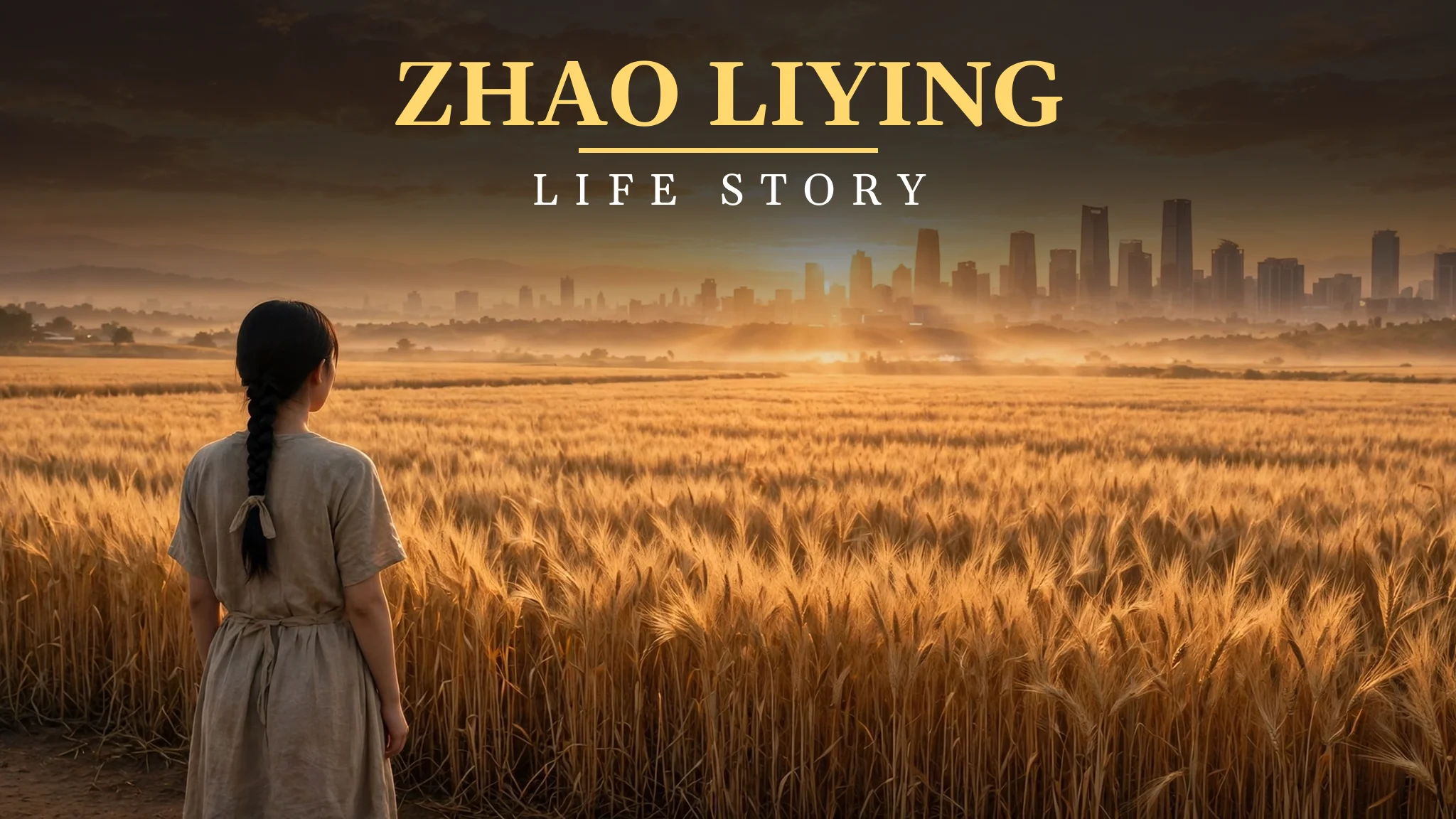
Her later life has included marriage, motherhood, divorce, and a powerful return to work, with dramas like The Story of Minglan, Wild Bloom, and The Legend of Shen Li. Each of those roles shows a different side of her: a clever wife in a large family, a businesswoman fighting in a hard world, a goddess learning to love. Through all of it, the image that stays is the same one from the start. A girl from a village, standing in a field, looking toward a city far away, and walking toward it, one step at a time.
A Village Childhood in Hebei
Zhao Liying was born on 16 October 1987 in Langfang, in the province of Hebei, near Beijing but far from its glamour. Her family lived a rural life, and her childhood was shaped by ordinary work, by seasons, by fields, and by the kind of community where people know each other well. She was not raised in a home full of scripts and cameras. She was raised in a home where life was practical, where things were fixed rather than replaced, and where a person was judged by what she did, not by how she looked. That background stayed with her, and it is one reason why viewers feel she is different from stars who grew up in the city.
She did not attend a famous acting school. She studied at a vocational school, where she learned practical skills, and her path to acting was not planned in the way a drama student’s path is planned. She did not spend her teenage years in acting classes, learning voice and movement from teachers. She spent them in a more ordinary life, and that ordinariness became a strength later. When she plays a woman from a humble background, she does not have to imagine it. She remembers it. When she plays a woman who must work hard to be noticed, she knows what that feels like.
The decision to try for a career in entertainment came through a contest. In 2006, Yahoo ran a search for new stars in China, and Zhao Liying took part. She was noticed, and she won a place in the competition that gave her a first chance to be seen. A contest win is a small thing in itself. It does not guarantee work. It only says that someone, somewhere, thinks you have something worth looking at. For Zhao Liying, that small yes was enough. She took it, moved toward Beijing, and began the long work of turning a chance into a career.
Those first years were not glamorous. She lived modestly, took small roles, and learned the business from the bottom. She learned how to be on a set, how to wait, how to take direction, and how to keep going when the part was tiny. A village girl in a big city learns quickly that the city does not care about her past. It only cares about what she can do today. Zhao Liying learned to do something every day, and that daily work became the foundation of everything that followed.
Small Roles and Years of Waiting
After the contest, Zhao Liying began to appear in television dramas, but her roles were small. She played supporting characters, sometimes a maid, sometimes a young woman in the background, sometimes a girl with only a few scenes. These roles are easy to overlook, and many viewers who watched those dramas at the time would not remember her in them. But for an actress, small roles are a school. They teach you to be ready, to make the most of a short scene, and to watch the leading actors and learn from them. Zhao Liying was a good student in that school.
She appeared in dramas such as Golden Marriage, and she took work wherever she could find it. She did not refuse small parts because she thought she deserved better. She took them because she knew that a career is built from work, not from waiting for the perfect role. That attitude is rare, and it is one reason why directors liked working with her. She was not difficult. She was not proud. She arrived, she worked, and she left a good impression. Over time, those good impressions added up, and people began to remember her name.
The waiting years also taught her how to handle disappointment. An actress who plays small roles sees other people get the big parts, and she must learn not to be bitter. She must learn to keep improving, to keep her health, to keep her hope. Zhao Liying did that. She practised, she watched, and she waited for a role that would let her show what she could do. She did not know when it would come, but she acted as if it would come, and that faith kept her going through the long, quiet years.
By the early 2010s, the waiting began to pay off. She was given larger supporting roles, and then a leading role that would change her life. The years of small parts had not been wasted. They had given her the skill, the patience, and the toughness to carry a drama on her own. When the chance arrived, she did not freeze. She took it, and she made the most of it, because she had been preparing for it for years without knowing it.
Legend of Lu Zhen and the First Leading Role
In 2013, Zhao Liying took the leading role in Legend of Lu Zhen, a historical drama about a young woman who rises from a humble background to become a powerful figure in the palace. The story was close to her own life in its shape, if not in its details. Lu Zhen starts with nothing, works hard, learns quickly, and earns respect through skill rather than birth. Zhao Liying played her with a warmth and a determination that viewers loved, and the drama became a success. It was the first time many people saw her as a leading actress, and it changed how the industry saw her.
The role mattered because it proved that she could carry a long drama. A leading role is not only about acting well in one scene. It is about holding the audience’s attention across dozens of episodes, about showing a character growing and changing, about being present even when the story is slow. Zhao Liying did that, and she did it with a natural style that felt different from the more formal acting of some of her peers. She played Lu Zhen as a real person, not as a perfect heroine, and viewers responded to that honesty.
After Legend of Lu Zhen, she became a sought-after actress, and she took leading roles in dramas such as Boss and Me, a modern romance, and The Journey of Flower, which would become her biggest success. The climb that had taken seven years was now moving fast, but she did not forget the years of waiting. She continued to work hard, to prepare carefully, and to treat each new role as a chance to prove herself again. That attitude, learned in the small-role years, stayed with her even when she became a star.
The first leading role is a turning point for any actor, but for Zhao Liying it was more than that. It was proof that a girl from a village, without a famous school behind her, could become a leading lady in Chinese television. That proof mattered not only to her, but to many young people watching at home, who saw in her a version of their own hopes. She had not been given a career. She had built one, and the building was visible in every scene she played.
The Journey of Flower and a Star Across Asia
In 2015, Zhao Liying starred in The Journey of Flower, a fantasy drama based on a popular novel, and she played Hua Qiangu, a young girl with a kind heart and a tragic fate, who becomes the student of a cold and powerful master. The drama became a huge hit, not only in China, but across Asia, and it made Zhao Liying one of the most famous actresses of her generation. Hua Qiangu is a character who suffers, loves, and sacrifices, and the role asked for tears, courage, and a deep emotional range. Zhao Liying gave it all, and viewers cried with her, week after week.
The Journey of Flower worked because it combined fantasy, romance, and tragedy in a way that felt personal. Hua Qiangu is not a powerful heroine at the start. She is a small, ordinary girl who is drawn into a world of gods and demons, and she must learn to survive there. That journey, from small to strong, from innocent to wise, matched Zhao Liying’s own journey from small roles to stardom, and viewers could feel the match, even if they did not name it. The drama’s songs, scenes, and costumes became part of popular culture, and Hua Qiangu became a character that fans still talk about today.
The success of the drama also brought new pressures. Fame on that scale means that every move is watched, every new role is compared with the last, and every mistake is noticed. Zhao Liying handled that pressure by working, not by hiding. She took new roles, including Princess Agents in 2017, where she played Chu Qiao, a slave girl who becomes a warrior and a leader. The role was physical, demanding, and very different from Hua Qiangu. It showed that she could play a fighter, not only a girl who suffers, and it became another major success. Her audience grew, and her reputation as a hard worker grew with it.
These years were the peak of her early fame, and they were also the years when she learned what fame costs. Long shoots, little rest, and constant attention are hard on any person. She kept going, but she also began to think about the next part of her life, about the roles she wanted to play as a grown woman, and about the life she wanted beyond the screen. That thinking would soon lead to a marriage, a child, and a new chapter.
Minglan, Marriage, and a New Life
In 2018, Zhao Liying starred in The Story of Minglan, a historical drama about a clever young woman in a large and complicated family, who must use her intelligence to survive and to protect the people she loves. She played Minglan, a girl who is quiet on the outside and sharp on the inside, and the role was widely praised as one of her best. The drama was long, detailed, and full of family politics, and it asked the actress to show a character growing from a child into a wife and a mother. Zhao Liying played that growth with care, and the drama became a major success, both in China and abroad.
The Story of Minglan was also important because of her co-star, Feng Shaofeng, whom she married in 2018. Their marriage was announced to the public in a simple way, and it was followed by the birth of their son in 2019. For a star at the height of her fame, marriage and motherhood were a major change, and Zhao Liying took time away from work to focus on her family. She did not work as much in the year after her son was born, and when she returned, she returned as a woman with a new life behind her.
The marriage did not last. In 2021, Zhao Liying and Feng Shaofeng announced their divorce, and the news was shared in a calm and respectful way. Divorce is a private pain, and for a public figure it is also a public event. Zhao Liying handled it with the same quiet dignity that she brings to her work. She did not make a show of her feelings. She returned to work, and she let her roles speak for her. That return was not easy, but it was strong, and it showed that she could face a hard personal change and keep building her career.
Her work after the divorce included Wild Bloom, a drama from 2022 in which she played a businesswoman in the steel industry, a role that was very different from her fantasy heroines. It was a modern, realistic story about work, money, and survival, and it showed a new side of her acting. Viewers praised her for taking a risk, and the drama became a success. It proved that Zhao Liying, now in her thirties, was not only a fantasy star. She was an actress who could play a real woman in a real world, with debts, rivals, and hard choices.
Wild Bloom and The Legend of Shen Li
Wild Bloom was a turning point, because it showed Zhao Liying playing a woman who builds a business from nothing, in a world dominated by men. Her character, Xu Banxia, is tough, clever, and unafraid to take risks, and the role asked for a kind of acting that is very different from playing a goddess or a princess. Zhao Liying played it with a directness that surprised some viewers, and the drama was praised for its realistic look at Chinese business in the 1990s. It was a reminder that her own story, a girl from a village who built a career, was not far from Xu Banxia’s story, a woman who builds a company from nothing.
In 2024, she returned to fantasy with The Legend of Shen Li, a drama in which she played Shen Li, a powerful goddess who falls to the human world and must learn to live there. The drama was a success, and it showed that she could still carry a fantasy epic, even as a mature actress. But the Shen Li of 2024 is different from the Hua Qiangu of 2015. She is stronger, wiser, and less willing to suffer in silence. That change reflects Zhao Liying’s own growth, from a young star to a woman who knows her worth. The audience could see the difference, and they loved her for it.
These recent roles show a career that is still growing, still changing, and still surprising. Zhao Liying is no longer the young girl from the contest. She is a leading actress, a mother, a businesswoman in her roles, and a person who has faced public divorce and returned to work with strength. Her story is not a simple rise. It is a rise, a pause, a fall in her personal life, and a rise again, and that shape makes it more human than a straight line ever could be.
She has also become a producer and a figure with more control over her work, choosing projects that matter to her. That control is important, because it means she is no longer only taking the roles offered to her. She is shaping her own career, and that shaping is visible in the variety of her recent work. From a village girl to a star, from a star to a mother, from a mother to a businesswoman on screen, her life keeps changing, and her work changes with it.
What Hard Work Really Looks Like
Zhao Liying is often called a hardworking star, and the words are used so often that they can lose their meaning. But in her case, the words are true in a very concrete way. Hard work, for her, meant years of small roles, years of waiting, years of learning on the job. It meant taking a contest chance and turning it into a career. It meant playing a leading role and then working even harder to prove that the first success was not a lucky accident. It meant returning to work after marriage, after motherhood, after divorce, and proving herself again, in a new kind of role.
There is a cost to that kind of work. It means little rest, little privacy, and a life lived largely in front of cameras. It means that personal pain becomes public news, and that a divorce is discussed by strangers. Zhao Liying has paid that cost with a quiet dignity that is easy to admire. She does not complain in public. She does not seek sympathy. She works, and she lets the work answer the questions that people ask about her life. That is a strong way to live, but it is not an easy one, and it deserves respect.
Her story also has a lesson for anyone who starts with nothing. She did not have a famous family, a top school, or a powerful backer. She had a contest, a chance, and a willingness to work. That is not a guarantee of success, and many people with the same start do not become stars. But her story shows that a start without advantages is not a reason to give up. It is a reason to work harder, to learn faster, and to keep going when others stop. That is a useful lesson, and it is one that many young people in China have taken from her. She has also become a producer and a figure with more control over her work, choosing projects that matter to her. That control is important, because it means she is no longer only taking the roles offered to her. She is shaping her own career, and that shaping is visible in the variety of her recent work. From a village girl to a star, from a star to a mother, from a mother to a businesswoman on screen, her life keeps changing, and her work changes with it. What is often missed is how much her rural childhood taught her about business. A village family learns to save, to plan, to work with what it has, to fix rather than replace. Xu Banxia in Wild Bloom does the same thing in the steel business, saving, planning, taking risks with care. Zhao Liying plays that businesswoman with a practical sense that feels learned, not acted, and I think that practical sense comes from Hebei, from a childhood where money was counted carefully and work was never wasted.
My Take:
I admire Zhao Liying more than almost any other star in this group, and I want to explain why in plain words. I admire her because she started with nothing and built everything herself. She did not have a famous father, a top school, or a rich family to open doors for her. She had a village childhood, a vocational school, a contest, and a willingness to work. That is a story I can believe in, because it is the story of many ordinary people, not only stars. When she plays a woman who starts with nothing, I believe her, because I know she has lived something close to it. That belief is the most valuable thing an actress can give an audience, and she gives it again and again.
I think about her small-role years a lot. Seven years of tiny parts, of waiting, of watching other people get the big roles. Most people would give up. Most people would say, this is not for me, I will go home, I will find another life. She did not. She kept taking the small parts, kept learning, kept showing up. That is not glamorous, but it is heroic in a quiet way. I think about the girl in those years, living modestly in Beijing, taking a bus to a set, playing a maid for a few scenes, going home tired, and doing it again the next day. That girl is the real Zhao Liying, more than the star on a red carpet. The star is the result. The girl is the cause.
The Journey of Flower is the drama that made her famous, and I understand why it moved so many people. Hua Qiangu is a girl who loves deeply and suffers deeply, and Zhao Liying played her with a heart that felt real. I cried, in my own way, watching that story, not because it was fantasy, but because it was about a person who gives everything and is not always thanked for it. That is a feeling many people know. We give, we love, we work, and sometimes the world does not give back. Zhao Liying played that feeling with honesty, and that is why the drama lasted.
I also feel a deep respect for how she handled her marriage and divorce. She married, she became a mother, she divorced, and she returned to work. She did all of that in public, with millions of people watching, and she did it without making a show of her pain. I do not know what those years felt like for her, and I will not pretend to know. But I know that divorce is hard in private, and it is harder in public, and she faced it with a calm that I admire. She did not blame, she did not shout, she did not disappear. She worked. That is a strong answer to a hard time, and it tells me a lot about who she is.
Wild Bloom is, for me, her most important recent work, because it shows a woman who is not waiting to be saved. Xu Banxia builds a business, fights rivals, takes risks, and stands on her own. That is a different kind of heroine from Hua Qiangu, and it is a more grown-up one. I love that Zhao Liying chose it, because it says that she is not afraid to play a woman who is tough, who is sometimes wrong, who is sometimes hard to love. A star who only plays perfect heroines is boring. A star who plays a real businesswoman, with debts and rivals, is interesting. She chose interesting, and I am glad she did.
I want to be honest about the parts of her story that are harder. Fame on the scale she has known is not a kind life. It means little rest, little privacy, and a constant pressure to stay at the top. I worry, sometimes, that she works too hard, that she does not rest enough, that the industry asks too much of her. I do not have an answer for that worry. I only note it, because admiration should not blind us to cost. A person who works as hard as she does pays a price, and that price is often invisible. I hope she finds time to rest, to be with her son, to live a life that is not only work, because a life that is only work is not a full life, even for a star.
What can a reader learn from her? I think the first lesson is that a humble start is not a shame. It is a strength. A girl from a village knows how to work, how to wait, how to survive. The second lesson is that small work matters. The tiny roles, the few lines, the background scenes, they are not wasted time. They are school. The third lesson is that a fall in personal life is not the end of a career. She divorced, and she came back stronger. That is a lesson for anyone who has faced a hard change and wondered if they can start again. She shows that you can.
I also think about young people in villages and small towns who watch her and dream. I would tell them to look at the whole story, not only the fame. Look at the contest, the small roles, the seven years of waiting, the long shoots, the divorce, the return. If you want a life like hers, you must be ready for all of it, not only the bright parts. Fame looks like a red carpet, but most of it is work, waiting, and getting up again after a fall. Zhao Liying’s story shows both sides, and that is why I trust it.
In the end, I see her as a woman who walked from a wheat field toward a distant city, and who kept walking until the city was hers. The image stays with me, because it is simple and true. She did not fly. She walked. She walked through small roles, through fame, through marriage, through divorce, through new roles, and she is still walking. I hope her next steps take her to roles that are as strong as she is, and to a life that gives her rest as well as work. She has earned both, not by luck, but by years of showing up, one day at a time, and by never forgetting where she began.
I keep thinking about the contest in 2006, that small Yahoo search for new stars, and how much depended on that one chance. A contest is a strange thing. It can change a life, or it can change nothing. For Zhao Liying, it changed everything, but only because she was ready to work after it. Many people win a contest and then wait for fame to come to them. She did not wait. She took small roles, she learned, she worked, she kept going. That is the difference between a chance and a career. A chance is given. A career is built. She built hers, brick by brick, role by role, year by year, and that building is the most impressive part of her story, more impressive than any single drama, because it shows what a person can do with a small beginning and a large will.
The Story of Minglan stays with me for another reason. Minglan is a girl in a large family, a girl who must be clever to survive, who must hide her intelligence, who must choose her moments, who must protect the people she loves. That is a story about a woman in a house full of politics, and it is also a story about any person who must survive in a difficult workplace, in a difficult family, in a difficult world. Zhao Liying played Minglan with a quiet cleverness that made me respect her, because she did not shout her intelligence. She hid it, she used it carefully, she waited for the right moment. That is a useful lesson. You do not have to show all your strength at once. You can hide it, save it, use it when it matters most. Minglan does that, and Zhao Liying does that in her own career, choosing her moments, choosing her roles, choosing when to speak and when to stay silent.
I also think about her son, and about the choice to be a mother in public, to raise a child while working in a demanding industry, to divorce and to keep working, to show her son, by example, that a person can face a hard change and keep going. I do not know her son, and I will not pretend to, but I can imagine that he will one day read about his mother, about the village girl who became a star, about the woman who worked for seven years in small roles, about the actress who played a goddess and a businesswoman, and he will be proud. That pride is a kind of success that no award can give, and it is a success that Zhao Liying has earned, not by fame, but by work, by patience, by love.
Wild Bloom deserves more thought, because Xu Banxia is a woman in a man’s world, in the steel industry, a world of smoke, of money, of risk, and she must be tougher than the men around her to survive. Zhao Liying played her with a directness that surprised me, because I had only seen her as a fantasy heroine, a girl who suffers beautifully. Xu Banxia does not suffer beautifully. She fights, she argues, she takes risks, she makes mistakes, she learns. That fighting spirit feels like it comes from Zhao Liying herself, from a girl who fought for seven years to be noticed, who fought for a leading role, who fought for a career after divorce. I love that fighting spirit, because it is honest, and because it shows that a woman can be tough and kind at the same time, can be a businesswoman and a mother at the same time, can be a star and a worker at the same time.
One more thought, about rest. I worry that she works too hard, that she does not rest enough, that the industry asks too much of her, and I hope she finds time to rest, to be with her son, to sit in a field, to look at a city far away, as she once did as a girl. Rest is not a reward for work. Rest is part of work. A field must rest between harvests. A person must rest between roles. If she rests, she will work better, she will live better, and her next roles will be stronger, because they will come from a person who is rested, not only from a person who is tired. I hope she learns that, as she has learned so much else, slowly, and well. One more thought stays with me, about the way she handles being called hardworking. That word is used so often for Zhao Liying that it can start to sound empty, but in her case it is true in a very concrete way. Hard work, for her, meant seven years of small roles, years of waiting, years of learning on the job, years of taking a bus to a set, playing a maid for a few scenes, going home tired, and doing it again the next day. That is not glamorous, but it is heroic in a quiet way. I think about the girl in those years, living modestly in Beijing, taking a small part, learning, waiting, and I feel respect for her, because most people would give up, and she did not. She kept taking the small parts, kept learning, kept showing up, and that showing up is the real secret of her success, more than any single drama, more than any award, more than any famous role.
There is also a lesson in the way she played Xu Banxia in Wild Bloom, a businesswoman in the steel industry, a woman who builds a company from nothing, in a world dominated by men. That role is very different from Hua Qiangu, a girl who suffers beautifully, and it shows a new side of Zhao Liying, a tough, clever, unafraid side. Xu Banxia fights, argues, takes risks, makes mistakes, learns, and keeps going. That fighting spirit feels like it comes from Zhao Liying herself, from a girl who fought for seven years to be noticed, who fought for a leading role, who fought for a career after divorce. I love that fighting spirit, because it is honest, and because it shows that a woman can be tough and kind at the same time, can be a businesswoman and a mother at the same time, can be a star and a worker at the same time, and that is a powerful lesson for any young person who starts with nothing and dreams of something more.
I want to talk about Wild Bloom, because it shows a side of Zhao Liying that her early fantasy dramas never showed. She played Xu Banxia, a woman in the steel business in the nineteen nineties, a woman who starts with almost nothing and builds a company in a world run by men. Xu Banxia argues, takes risks, makes mistakes, loses money, and keeps going. She is not a sweet girl waiting to be saved. She is a boss, a negotiator, a person who learns how to survive in a hard market. Zhao Liying played her with a toughness that surprised many viewers, and I think that toughness came from her own life. She knows what it is to start with nothing, and she brought that knowledge to the role.
I also admire that she became a producer. For The Legend of Shen Li, she did not only act in the drama, she helped to make it, and that is a big step for an actress. It means she is no longer waiting for someone to give her a good role. She is choosing the story, choosing the team, and taking responsibility for the result. Many stars stay in front of the camera their whole lives and never learn what happens behind it. Zhao Liying learned, and that learning gives her more power over her own career. I think that is a lesson for anyone who works for others. At some point, you have to stop waiting to be chosen and start building your own work.
Then there is Minglan, and I keep returning to it, because it is a quiet drama about a clever woman in a strict old family. Minglan survives not by shouting or by fighting, but by watching, by waiting, by being patient, and by choosing the right moment to speak. That patience is exactly the patience Zhao Liying showed in her own career, waiting years in small roles before anyone gave her a leading part. I think she understood Minglan from the inside, because she had lived a version of that patience herself. A village girl in a big industry learns to watch and wait, just as Minglan learned to watch and wait in a big house.
Her private life also teaches something, and I want to say it gently. She married Feng Shaofeng, her co-star, and they had a son, and then they divorced, and the news was public and painful. She did not make a show of the pain. She did not blame anyone in public. She went back to work, she made Wild Bloom, she made The Legend of Shen Li, and she kept her son’s life private. I respect that quiet dignity. A broken marriage is hard for anyone, and it is harder when millions of people are watching. She handled it by working, by staying calm, and by protecting her child from the noise.
What stays with me most is that she never hid where she came from. She was born in a village in Hebei, her family was ordinary, she did not go to a famous acting school, and she entered the industry through a talent contest. Many stars try to hide a plain beginning. She did not. She lets young people from villages and small towns see themselves in her, and that matters more than any award. If a girl from a village can become one of the biggest stars in China, then hard work is not just a saying. It is a road, a long road, and Zhao Liying walked it step by step, without shortcuts, and she is still walking it today.
Frequently Asked Questions
When was Zhao Liying born and where did she grow up?
Zhao Liying was born on 16 October 1987 in Langfang, Hebei, China, in a rural family. She did not study at a top drama academy, and she entered entertainment through a talent contest in 2006.
How did Zhao Liying become famous?
She became widely known through Legend of Lu Zhen in 2013, and then became a star across Asia with The Journey of Flower in 2015, where she played Hua Qiangu.
What is Zhao Liying’s most famous drama?
The Journey of Flower is often seen as her most famous drama, followed closely by Princess Agents and The Story of Minglan. Each gave her a different kind of heroine to play.
Was Zhao Liying married?
Yes, she married actor Feng Shaofeng in 2018, and their son was born in 2019. They announced their divorce in 2021, and she has since returned to work with strong new roles.
What is Wild Bloom about?
Wild Bloom, from 2022, is a modern drama about Xu Banxia, a businesswoman in the steel industry who builds a company from nothing. It showed a tougher and more realistic side of Zhao Liying’s acting.
What did Zhao Liying star in most recently?
In 2024 she starred in The Legend of Shen Li, a fantasy drama in which she plays Shen Li, a powerful goddess who falls to the human world. It became a major success.


