AI Deepfake Videos: How to Spot Them in 2027
In this post
- Start With the Face: Blinking, Edges and Movement
- Listen to the Voice and Watch the Sync
- Check the Context, Not Just the Pixels
- Tools, Labels and Limits of Detection
- What to Do If You Receive or Suspect a Deepfake
- Deepfakes in Elections, Scams and Everyday Life
- Deepfakes and Children: Protecting Young Viewers
- Check Metadata and Original Files When Possible
- My Take:
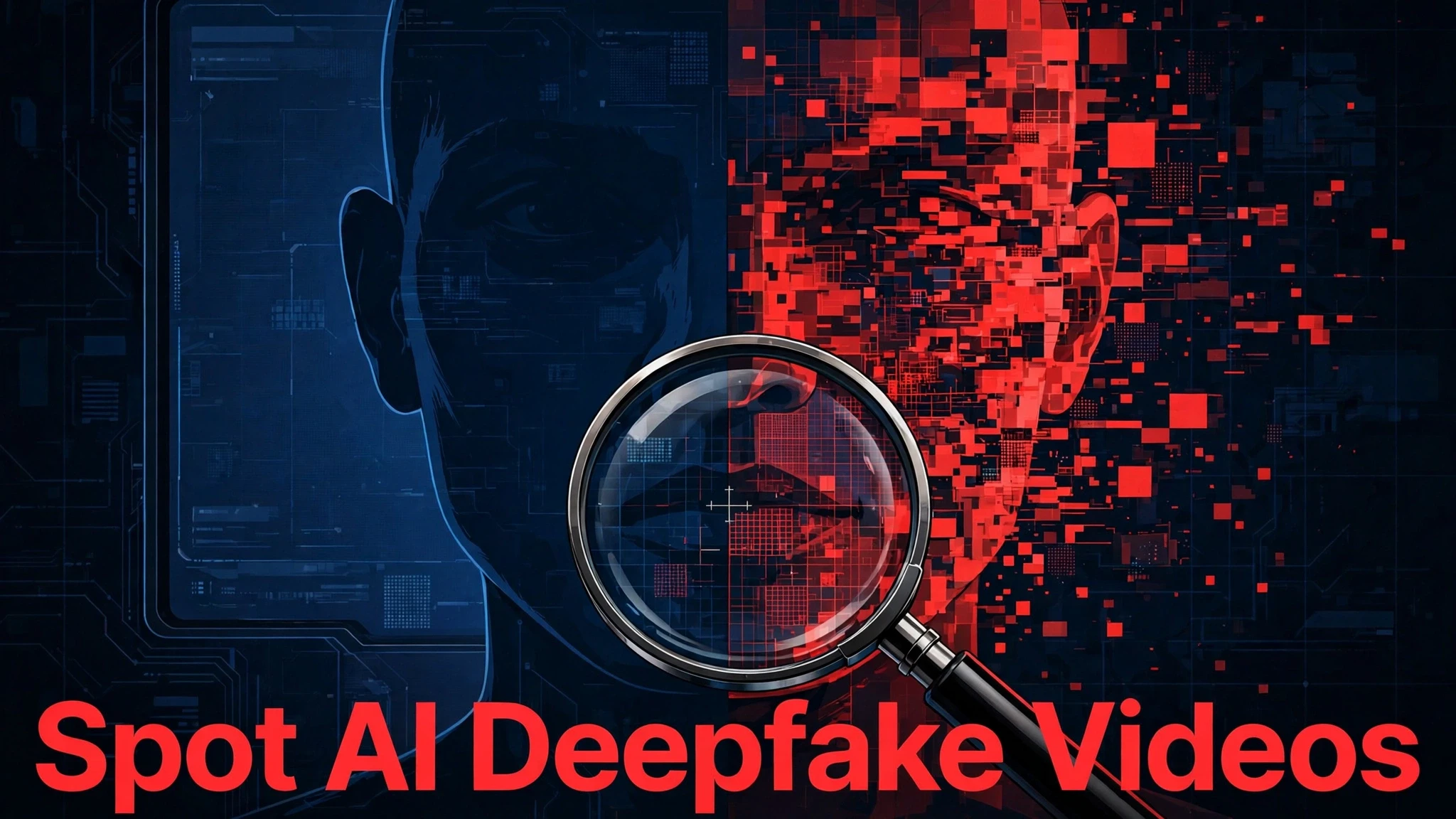
A deepfake video uses artificial intelligence to replace or alter a person’s face, voice, or body in a video, often so convincingly that it looks real at first glance. Some deepfakes are harmless entertainment: a film effect, a comedy sketch clearly labelled as fake, or a historical figure brought to life for education. Others are harmful: fake endorsements, fake news clips, romance scams, financial fraud, and non-consensual intimate videos. In 2027, deepfake tools are easier to use and harder to spot than a few years ago, because models have improved at skin texture, lip movement, and voice cloning. That does not mean you are helpless. With a calm, systematic check of face, voice, context, and source, you can catch many fakes before you believe or share them.
The most important habit is pause. A shocking video is designed to make you react quickly: to share, to donate, to invest, or to feel angry. Scammers and misinformation spreaders rely on that speed. If a video makes a famous person say something surprising, promise money, or announce an emergency, stop before sharing. A few minutes of checking can prevent a costly mistake and stop a false clip from reaching more people. No single clue proves a video is fake, and no single clean check proves it is real, so use several checks together.
Start With the Face: Blinking, Edges and Movement
Watch the face closely, especially during movement. Early deepfakes often showed unnatural blinking, but modern models blink more normally, so blinking alone is no longer a reliable test. Look instead for consistency over time. Does the face stay stable when the head turns quickly? Does the skin texture change suddenly? Do ears, teeth, hair edges, or glasses behave strangely? A common clue is the boundary where the fake face meets the real head: it may blur, flicker, or shift slightly during fast movement. Another clue is lighting: the face may be lit differently from the neck, background, or other people in the scene.
Pay attention to the mouth and eyes during speech. Lip movement should match the sounds, including difficult consonants and pauses. In some fakes, lips move smoothly but do not quite form certain words, or the mouth looks slightly detached from the rest of the face. Eyes may look too still, too glossy, or oddly focused. Teeth can be a giveaway: they may look too uniform, blurry, or change shape between frames. Hands are another weak point for AI video: fingers may merge, bend oddly, or hold objects in impossible ways. If a video is short, low resolution, or heavily compressed, these clues are harder to see, which is itself a warning: a low-quality clip is easier to fake and harder to verify.
Do not rely on one frame. Pause, rewind, and watch the same few seconds several times. A single screenshot can look perfect while motion reveals problems. If possible, watch on a larger screen rather than a small phone screen, and turn up brightness. If the video is a screen recording of another video, or has been re-uploaded many times, quality loss can hide both real and fake details, so treat re-uploads with extra caution.
Listen to the Voice and Watch the Sync
Voice cloning has improved dramatically, but it still leaves clues. Listen for a voice that sounds flat, overly smooth, or lacking natural breaths, pauses, and emotion. Real speech includes hesitations, slight pitch changes, background noise, and small imperfections. A cloned voice may pronounce unusual names or words too perfectly, or struggle with accents, laughter, sighs, and interruptions. If a famous person suddenly speaks in a different language fluently, or uses phrases they would never use, that is a reason to check the source, not to accept the clip.
Audio-video sync is another check. Do lip movements match the voice exactly, or is there a tiny delay or mismatch? Does background noise stay consistent, or does it cut out unnaturally when the person speaks? Does the voice echo differently from the room shown? In a real recording, voice, room sound, and lip movement belong together. In a fake, voice may have been generated separately and added later, so small mismatches appear. Use headphones if possible, because phone speakers hide subtle audio clues.
Also ask whether the voice matches known recordings. If a clip claims to be a celebrity, politician, or company leader, compare it with a verified interview or official video. Does the person use their usual vocabulary, accent, and speaking style? A sudden change in style, especially combined with an urgent request for money or personal information, is a strong red flag. Financial and celebrity endorsement scams often use cloned voices to create false trust, so never send money based on a video alone.
Check the Context, Not Just the Pixels
Many deepfakes fail on context before they fail on pixels. Ask simple questions: where was this video first posted? Is it on the person’s verified account, an official news site, or an unknown account with few followers? Does a reputable news outlet report the same event? Does the background match the claimed location, weather, clothing, or event? Does the person appear in clothes or a setting that fits the date claimed? A video claiming to show a live event should usually appear in multiple independent recordings, not only in one viral clip.
Look for missing context. A clip may be real footage edited misleadingly, rather than a full deepfake. For example, an old interview may be reposted with a new caption, or a real person’s face may be swapped onto a real body in a different scene. Reverse image search and video search can help: take a screenshot or search key phrases from the caption to see if the same footage appears elsewhere with a different explanation. If the same clip appears with contradictory captions, at least one version is misleading.
Be especially careful with urgent claims. Fake videos often claim a celebrity death, a political resignation, a natural disaster, a giveaway, or an investment opportunity. Real breaking news is usually reported by multiple trusted sources within hours, with details, locations, and follow-up. If only one anonymous account reports a dramatic event, wait for confirmation. Sharing an unverified dramatic clip does not help anyone, even if your intention is to warn others. A short message saying “this is unverified” is better than a confident share.
Tools, Labels and Limits of Detection
Several tools claim to detect deepfakes, including browser extensions, apps, and platform features that label AI generated content. These tools can help, but none is perfect. Detection models are trained on known fakes, while generation models keep improving, so a new fake may pass an old detector. A tool that says “likely fake” is useful, but a tool that says “likely real” is not proof, especially for a short or low-quality clip. Use detection tools as one signal among many, not as a final verdict.
Labels and watermarks are also imperfect. Some platforms require AI content to be labelled, and some generators add invisible watermarks or metadata. However, labels can be removed when a video is downloaded, cropped, screen-recorded, or re-uploaded. The absence of a label does not prove a video is real, and a fake label can be added to a real video to discredit it. When a platform does show a reliable AI label, respect it, but do not assume unlabeled videos are authentic.
For high-stakes cases, such as a video used as evidence, a financial decision, or a news report, seek expert verification. Newsrooms, forensic analysts, and platform trust teams have access to original files, metadata, and detection systems that ordinary viewers do not. If you are a journalist, teacher, or community leader, do not publish a suspicious video based on your own visual check alone. Contact the person or organisation shown, check official channels, and wait for confirmation. The cost of waiting is small compared with the harm of spreading a fake.
What to Do If You Receive or Suspect a Deepfake
If you receive a suspicious video in a message, do not forward it immediately, even to warn friends, because forwarding spreads the clip and its claim. Instead, describe it in words: “I received a video claiming X, but I have not verified it.” If it asks for money, passwords, or personal information, do not comply. Contact the supposed sender through a separate, trusted channel, such as a known phone number or official website, not by replying to the suspicious message. Scammers often control the account or number shown in the fake.
If a deepfake targets you or someone you know, especially a non-consensual intimate video, preserve evidence safely, report it to the platform, and seek help from local law enforcement or a trusted support organisation where appropriate. Do not share the video further, even to ask if it is fake, because sharing increases harm. Many platforms have specific reporting paths for impersonation and intimate image abuse. Keep links, usernames, and dates, but avoid downloading or redistributing harmful material unnecessarily. Support the person targeted, and avoid repeating the false claim as if it were true.
If you create AI video yourself, label it clearly. A comedy sketch, parody, or educational reconstruction should say it is AI generated or fictional, especially if it uses a real person’s likeness. Clear labelling protects your audience, protects the person depicted, and protects you from accusations of deception. Never create a deepfake that impersonates a real person to mislead, defraud, or harm, even as a joke, because the harm can be serious and the legal consequences can be severe depending on your location.
Deepfakes in Elections, Scams and Everyday Life
Deepfakes matter most when they affect decisions people cannot easily undo. In elections, a fake clip of a candidate saying something extreme can spread faster than a correction, especially if it appears close to voting day. In finance, a fake video of a business leader announcing a crisis or a celebrity endorsing an investment can move markets or trick savers. In personal life, a fake video of a family member in distress, asking for urgent money, can exploit love and panic. These cases share a pattern: urgency, authority, and emotion are used to bypass careful checking. Recognising that pattern is itself a defence, because it prompts you to pause even when the video looks convincing.
Education and workplaces also need deepfake awareness. A fake clip could be used to bully a student, discredit a teacher, or impersonate a manager asking an employee to transfer money or share passwords. Organisations should have a simple verification rule: any unusual video request involving money, passwords, or sensitive data must be confirmed through a second channel, such as a known phone number or in-person check, before action. Schools should teach students not to share suspicious videos of classmates, even as jokes, because a shared clip can cause lasting harm even after it is proven fake. The social cost of a deepfake often outlives its technical debunking.
Deepfakes and Children: Protecting Young Viewers
Children and teenagers are especially vulnerable to deepfake harm, because they may lack experience in checking sources, and because fake videos of classmates can spread quickly through school networks. A fake video used for bullying, even if it is obviously edited to adults, can feel devastating to a young person and can be shared before adults notice. Schools and parents should talk openly about deepfakes: explain that videos can be faked, that sharing a suspicious video can harm someone even as a joke, and that asking a trusted adult for help is the right response. Encourage children to pause, not forward, and to report harmful content through platform tools and to a teacher or parent.
Parents should also be careful about sharing children’s photos and videos publicly, because publicly available images can be misused to create fakes. That does not mean families must never share photos, but it means thinking about audience, privacy settings, and the permanence of online posts. Private sharing with named family and friends is safer than public posting. If a child is targeted by a fake, respond with support first, not blame, preserve evidence safely, report through proper channels, and seek school or professional help if needed. The emotional harm of a fake can outlast the video itself, so kindness and prompt action matter as much as technical removal.
Check Metadata and Original Files When Possible
When a video matters, original files and metadata can help, although they are not foolproof. A genuine video from a phone or camera usually carries metadata about device, date, and settings, while a downloaded, re-uploaded, or screen-recorded clip may have stripped or altered metadata. If someone claims a video is original, ask for the original file rather than a compressed social media copy, and check whether the file details match the claimed date and device. Be aware that metadata can be edited, so it supports other evidence rather than proving authenticity alone. Still, a refusal to share an original, combined with a dramatic claim and an unknown source, is a useful warning sign that should make you wait for independent confirmation before sharing.
My Take:
My view is that deepfake literacy is now a basic life skill, like checking a suspicious email. We do not need everyone to become a forensic expert, but we do need a shared habit: pause, check the source, look for context, and refuse to share dramatic claims without verification. The technology will keep improving, and detection will always lag behind generation by some amount. That means human judgement, not software alone, will remain the last line of defence. The good news is that most harmful fakes still rely on urgency and trust, not on perfect pixels. If you slow down and ask “who benefits if I believe this quickly?”, you will catch many of them.
I also think platforms and creators share responsibility. Platforms should label AI content clearly, preserve provenance where possible, and act quickly on impersonation and fraud. Creators should label AI work honestly, even when a label might reduce views. A short-term gain in clicks is not worth long-term loss of trust. For viewers, I recommend a simple personal rule: never send money, share a password, or make a public claim based on a single video. Verify through an official channel first. That rule is easy to remember, and it blocks the most damaging deepfake scams even when the video looks flawless.
Finally, I would urge kindness when a fake targets a real person. It is easy to laugh at a viral clip or to assume a public figure can handle it. But deepfakes can damage reputations, careers, and mental health, especially for private individuals. Do not treat a suspicious video as entertainment until you know it is consensual and labelled. A moment of restraint costs you nothing, and it may protect someone from serious harm. In a world where seeing is no longer believing, our responsibility is not to become cynical about everything, but to become careful about what we amplify.
I think the deeper challenge with deepfakes is not only technical detection, but the erosion of trust in real evidence. If people begin to dismiss every inconvenient video as fake, then genuine wrongdoing can hide behind doubt, and genuine victims may struggle to be believed. That is sometimes called the liar’s dividend: the existence of fakes gives liars an excuse to deny real footage. To resist that, we need a balanced habit: neither blind belief nor blanket denial, but evidence-based judgement. Ask for original sources, multiple recordings, metadata where available, and independent reporting. A real event usually leaves multiple traces, while a fake often leaves only one viral clip and a vague caption. Following traces, not feelings, protects both truth and fairness.
Another responsibility lies with people who share content for a living, including influencers, community pages, and small news outlets. A share is an endorsement, even when captioned as a question. If you have an audience, your verification duty is higher, because your share reaches people who trust you. Before posting a dramatic video, check the original account, search for other coverage, and wait if verification is incomplete. If you later learn a video was fake, correct it as prominently as you shared it, and explain what you missed. Corrections build long-term trust far more than silent deletions, and they teach your audience to check as well.
I also believe we should protect the people most vulnerable to deepfake harm, including young people, older adults, and private individuals who lack public platforms to correct falsehoods. A celebrity can issue a denial that reaches millions, but a private person targeted by a fake may have no such reach. Platforms, schools, and families should therefore prioritise fast reporting, support, and removal for non-consensual and impersonation cases, rather than treating all fakes as equal entertainment. If you see a fake targeting a private person, do not amplify it for curiosity. Report it, support the person privately, and avoid repeating the false claim in your correction. That restraint is a form of care.
Finally, I would encourage a hopeful view: the same AI that creates fakes also creates tools for verification, accessibility, and creativity. Watermarking, provenance records, and detection research are improving, even if they are not perfect. Clear labelling, media literacy in schools, and simple workplace verification rules can reduce harm significantly without banning creative AI use. The goal is not a world without synthetic media, which is neither possible nor desirable, but a world where synthetic media is labelled, consensual, and checked before it shapes important decisions. That world depends less on perfect software than on everyday habits: pause, verify, and refuse to amplify what you cannot confirm.
One last practical habit I recommend is building a personal trusted-source list. Identify a handful of official accounts, news outlets, and organisations you trust for breaking news, finance, and public safety, and check dramatic videos against that list before believing them. When a video comes from outside that list and makes an extraordinary claim, treat it as unverified by default. That simple rule will filter most harmful fakes, while still allowing you to enjoy clearly labelled creative AI content. Trust is not about believing everything you see; it is about knowing whose evidence you will accept, and why.
I also think workplaces need simple deepfake policies before an incident happens, not after. A policy could state that any video or voice message requesting money, passwords, or urgent action must be verified through a second channel, that employees should report suspected impersonation immediately, and that no employee will be punished for delaying a suspicious request to verify it. That last point is crucial: if workers fear punishment for slowing down, they will comply with scams to appear efficient. A culture that rewards verification over speed protects the organisation far better than any single detection tool, because most deepfake fraud succeeds through urgency, not through perfect forgery.
Another area worth attention is the use of deepfakes in creative and educational work with consent. A museum could use an actor’s likeness with permission to tell a historical story, a film could de-age an actor with consent, or a teacher could create a clearly labelled educational video. These uses can be valuable, provided consent is genuine, labelling is clear, and the person depicted, or their estate where applicable, agrees to the terms. The distinction is not whether AI was used, but whether it was used honestly and with permission. Clear consent and labelling should become the normal standard, so audiences can enjoy creative synthetic media without confusion about what is real.
Finally, I would encourage everyone to practise verification as a daily habit, not only during dramatic events. When you see a surprising video, take ten seconds to check the account, look for other coverage, and consider whether the claim fits what you know. That habit, repeated daily, becomes automatic, and it protects you when a truly convincing fake appears. You do not need to become suspicious of everything; you need to become selective about what you amplify. In a media environment where anyone can create a realistic video, the most powerful tool is not a detector, but a community of careful sharers who refuse to spread what they have not checked.
Frequently Asked Questions
What is a deepfake video?
A deepfake video uses AI to replace or alter a person’s face, voice, or body in a video, often making it look as if the person said or did something they did not.
How can I spot a deepfake quickly?
Pause before sharing, check the source, watch for face edge flicker, odd teeth or hands, lip-sync mismatch, flat voice, and context errors, and look for independent confirmation.
Can detection tools prove a video is real?
No. Detection tools can flag likely fakes, but no tool is perfect, and a “likely real” result is not proof, especially for short or low-quality clips.
What should I do if a video asks me for money?
Do not send money based on a video alone. Contact the person or company through a separate official channel and verify the request independently.
Are all AI videos harmful?
No. Clearly labelled comedy, film effects, and educational reconstructions can be harmless, but impersonation, fraud, and non-consensual videos are harmful and should be reported.
How do I report a harmful deepfake?
Use the platform’s report options for impersonation or abuse, preserve links and dates safely, do not share the video further, and seek local law enforcement or support help if needed.