Alice in Chains: The Life Story Behind Grunge's Darkest Band
In this post
- Seattle, 1987, and Two Voices in Harmony
- Facelift, Man in the Box, and a Breakthrough
- Dirt, Addiction, and a Masterpiece
- Jar of Flies, Unplugged, and a Long Silence
- Layne Staley’s Death and the End of an Era
- William DuVall, Black Gives Way to Blue, and a Comeback
- Still Heavy, Still Honest, Still Alice in Chains
- The Harmonies, the Acoustic Side, and Jerry Cantrell Solo
- My Take:
Alice in Chains is the darkest band to come out of Seattle, and one of the most honest. Their music is heavy, slow, and full of harmonies that sound like two voices singing in pain together. When they released Facelift in 1990, with Man in the Box, they became one of the biggest bands in grunge. When they released Dirt in 1992, they made an album about addiction that is still one of the most powerful records ever made.
The band was formed in Seattle, Washington, in 1987, when Jerry Cantrell, a guitarist with a gift for riffs and harmonies, met Layne Staley, a singer with a powerful, haunting voice. They were joined by Mike Starr on bass and Sean Kinney on drums, and together they became Alice in Chains, a band named after a joke about a glam metal band. They were young, loud, and determined to make music that was heavy, dark, and real.
Their story is a story of huge success, of addiction that destroyed the band, of the death of Layne Staley in 2002, and of a comeback with a new singer, William DuVall, that showed the band could go on. It is a story of talent, of pain, of loss, and of survival, and it is one of the saddest and most powerful stories in rock.
Their harmonies are a key part of their sound, and they deserve a closer look. Jerry Cantrell and Layne Staley sang together in a way that few other rock singers have matched. Cantrell sang a lower harmony, Staley sang a higher lead, and together they created a sound that was both beautiful and unsettling, like two voices singing in pain. That harmony became the band’s trademark, and it is still one of the most recognisable sounds in rock. When William DuVall joined the band, he learned to sing those harmonies with Cantrell, and he does it well, honouring Staley’s memory while bringing his own voice to the songs.
Their acoustic work is also worth thinking about. Alice in Chains made two acoustic EPs, Sap and Jar of Flies, that showed a softer, more melodic side of the band. Jar of Flies, in particular, is a beautiful record, with songs like No Excuses and I Stay Away that are gentle, haunting, and deeply moving. It showed that the band could write great songs without being loud, and that their harmonies were just as powerful when they were quiet. It is a reminder that a heavy band can also be a beautiful band, and that volume is not the only way to make an impact.
Jerry Cantrell has also had a successful solo career, releasing albums like Boggy Depot in 1998 and Degradation Trip in 2002. His solo work is personal, thoughtful, and melodic, and it shows a different side of him from his work with Alice in Chains. He is a talented songwriter, a great guitarist, and a man who has kept making music through good times and bad. His solo albums are a complement to his work with the band, and they show his range as an artist.
Seattle, 1987, and Two Voices in Harmony
Alice in Chains was formed in Seattle, Washington, in 1987. Jerry Cantrell was born on 18 March 1966 in Tacoma, Washington, and he grew up in a musical family. He learned to play the guitar as a teenager, and he was influenced by heavy metal, by classic rock, and by country music. He was a talented guitarist and songwriter, and he had a gift for writing riffs that were both heavy and melodic. He met Layne Staley at a party in Seattle, and the two became friends.
Layne Staley was born on 22 August 1967 in Kirkland, Washington, and he grew up in Seattle. He was a singer with a powerful, haunting voice, and he had been singing in bands since he was a teenager. He was a charismatic frontman, with a stage presence that was both beautiful and frightening. He and Cantrell began to write songs together, and they discovered that their voices blended perfectly. Cantrell sang in a lower harmony, Staley sang in a higher lead, and together they created a sound that was unique in rock.
They were joined by Mike Starr, a bass player who had played with Cantrell before, and Sean Kinney, a drummer who was a friend of Staley’s. Together, they became Alice in Chains, and they began to practise, to write songs, and to play in clubs around Seattle. They were a loud, heavy band, and they played with a power that few other Seattle bands could match. They were influenced by Black Sabbath, by Led Zeppelin, and by punk, but they had their own sound, a sound that was dark, slow, and full of harmonies.
Seattle in the late 1980s was a vibrant place for music, and Alice in Chains was part of that scene. They recorded a demo tape, they played in small venues, and they were noticed by Columbia Records, a major label that signed them in 1989. It was the break they had been waiting for, and it came after two years of hard work in Seattle. They were young, they were loud, and they were ready to show the world what they could do.
Facelift, Man in the Box, and a Breakthrough
Alice in Chains’ first album, Facelift, came out in 1990, and it was a breakthrough. The album included Man in the Box, a song about censorship and about being trapped, with a famous vocal by Layne Staley and a guitar riff by Jerry Cantrell that became instantly recognisable. Man in the Box became a hit on rock radio, and its video became famous on MTV. The album also included We Die Young, a song about youth and violence, and Sea of Sorrow, a song about loss. Facelift sold millions of copies, and it made Alice in Chains one of the biggest bands in Seattle.
The band toured to support Facelift, playing in clubs, theatres, and arenas, and their live shows became famous for their power and their intensity. Layne Staley was a charismatic frontman, Jerry Cantrell was a brilliant guitarist, and the band played with a heaviness that was both exciting and frightening. They were a band that sounded like no one else, with their harmonies, their slow tempos, and their dark lyrics. They were the darkest band in grunge, and their fans loved them for it.
They also released an acoustic EP called Sap in 1992, which included songs like Got Me Wrong and No Excuses, and it showed a softer side of the band. The EP was a success, and it showed that Alice in Chains could write beautiful, melodic songs, not just heavy ones. They were a band with range, and they were growing as songwriters. They were ready for their next album, an album that would become a classic.
But behind the success, there were problems. Layne Staley was using heroin, and his addiction was getting worse. Jerry Cantrell was also struggling, and the band was dealing with the pressures of fame, of touring, and of being in a band that was becoming huge. It was a difficult time, and it would get worse before it got better.
Dirt, Addiction, and a Masterpiece
In 1992, Alice in Chains released Dirt, their second album, and it became their masterpiece. The album included Would?, a song written for Andrew Wood, the singer of Mother Love Bone who had died of a drug overdose, Rooster, a song about Jerry Cantrell’s father, who had served in Vietnam, and Down in a Hole, a song about love and loss. Dirt also included Them Bones, Angry Chair, and Dam That River, songs that were heavy, dark, and powerful. The album was a commercial success, and it is now considered one of the greatest albums of the 1990s.
Dirt was an album about addiction, about pain, and about the dark side of life. Layne Staley’s lyrics were honest, raw, and frightening, and they gave a voice to people who were struggling with drugs. The album did not glorify addiction. It showed its cost, its pain, and its power. It was a brave album, and it was a necessary one. Fans who were struggling with addiction heard their own story in Dirt, and they felt less alone.
The band toured to support Dirt, but the tour was difficult. Layne Staley’s addiction was getting worse, and he was often ill, often late, and often unable to perform. The band cancelled shows, they argued, and they were in danger of falling apart. Mike Starr left the band in 1993, and he was replaced by Mike Inez, a bass player who had played with Ozzy Osbourne. Inez was a talented bass player, and he brought a new energy to the band, but the problems remained.
Dirt made Alice in Chains one of the biggest bands in the world, but it also showed the cost of that success. The band was famous, but they were also in pain. Layne Staley was a brilliant singer, but he was also an addict, and his addiction was destroying his life and his career. It was a sad time, and it would lead to a long silence.
Jar of Flies, Unplugged, and a Long Silence
In 1994, Alice in Chains released Jar of Flies, an acoustic EP that included No Excuses, I Stay Away, and Don’t Follow. The EP was a commercial success, and it showed a softer, more melodic side of the band. It was recorded in just a few days, and it was a beautiful, haunting record. It showed that Alice in Chains could write great songs without being loud, and that their harmonies were just as powerful when they were quiet.
In 1995, they released a self-titled album, Alice in Chains, which included Grind, Heaven Beside You, and Again. The album was a success, but the band did not tour to support it, because Layne Staley’s health was too poor. They played a few shows, including an MTV Unplugged performance in 1996, which became famous for its intimacy and its power. The Unplugged show was a beautiful, sad performance, and it showed Layne Staley’s voice at its best, even though he was clearly struggling.
After the Unplugged show, the band went on a long break. Layne Staley’s addiction got worse, and he became a recluse, rarely leaving his home in Seattle. Jerry Cantrell released solo albums, Sean Kinney and Mike Inez worked on other projects, and the band was effectively over, even though they had not officially broken up. It was a sad time, and fans wondered if they would ever see Alice in Chains again.
On 5 April 2002, Layne Staley died in Seattle, at the age of thirty-four. He died of a drug overdose, after years of addiction, and his death shocked the music world. He was a brilliant singer, a talented songwriter, and a man who had struggled with pain for most of his adult life. His death was a tragedy, and it was a reminder of how destructive addiction can be. The band came to an end, and it seemed like Alice in Chains was over for good.
Layne Staley’s Death and the End of an Era
Layne Staley’s death in 2002 was a turning point for Alice in Chains and for rock music. He was only thirty-four, and he had been one of the greatest singers of his generation. His voice, with its power, its range, and its emotion, was unique, and it could not be replaced. His death was a loss for his family, for his bandmates, and for his fans, and it was a reminder of the dangers of addiction.
Jerry Cantrell, Sean Kinney, and Mike Inez were devastated by Staley’s death. They had lost a friend, a bandmate, and a creative partner. They decided not to continue Alice in Chains without Staley, and the band came to an end. Cantrell released solo albums, Kinney worked on other projects, and Inez played with other bands. They were all successful in their own ways, but they were not Alice in Chains. The band was over, and it seemed like it would stay over.
But the band’s music lived on. Facelift, Dirt, Jar of Flies, and Alice in Chains continued to sell, and new generations of listeners discovered the band. Their songs were played on the radio, in films, and in television shows, and they became classics. Layne Staley became a legend, a singer who is still talked about, still listened to, and still loved, more than twenty years after his death. His voice is still one of the most distinctive in rock, and his songs still move people.
The band’s legacy was clear. They were the darkest band in grunge, a band that wrote about addiction, about pain, and about loss with honesty and courage. They were a band that did not hide from the dark side of life, and that is why their music still matters. They were a band that made a difference, and their story is a powerful one.
William DuVall, Black Gives Way to Blue, and a Comeback
In 2005, Alice in Chains reunited for a benefit concert, with guest singers filling in for Layne Staley. The concert was a success, and it showed that the band’s music still mattered, and that their fans still wanted to hear it. They began to play shows again, with William DuVall, a singer and guitarist from Atlanta, as their new lead singer. DuVall was a talented musician, and he had a voice that could handle Staley’s songs, while also bringing his own style to the band.
In 2009, they released Black Gives Way to Blue, their first album of new songs in fourteen years, and their first album with DuVall. The album included Check My Brain, a song about California, Your Decision, a song about choices, and the title track, Black Gives Way to Blue, a tribute to Layne Staley. The album was a critical and commercial success, and it showed that Alice in Chains could go on without Staley, while still honouring his memory. It was a brave comeback, and it was a successful one.
They followed it with The Devil Put Dinosaurs Here in 2013, an album that included Hollow and Stone, and Rainier Fog in 2018, an album that included The One You Know and So Far Under. The albums were successes, and they showed that the band was still making great music, still touring, and still relevant. They toured the world, playing in stadiums and arenas, and their audiences included both old fans and young listeners who were discovering the band for the first time.
William DuVall has been praised for his work with the band. He does not try to copy Layne Staley. He sings the old songs with respect, and he sings the new songs with his own voice. Jerry Cantrell has said that DuVall is the right singer for the band, and that he has helped them to move forward. It is a partnership that works, and it has allowed Alice in Chains to have a second life.
Still Heavy, Still Honest, Still Alice in Chains
Today, Alice in Chains is still touring, still recording, and still playing their songs for audiences around the world. They are one of the most respected bands in rock, a band that has survived tragedy, addiction, and loss, and that is still here. Their songs are still played every day, and their influence can be heard in the music of countless bands. They are the darkest band in grunge, and they will always be.
Their legacy is clear. They made Facelift, Dirt, Jar of Flies, and Alice in Chains, albums that are still considered classics. They wrote Man in the Box, Would?, Rooster, and No Excuses, songs that are still loved today. They were a band that wrote about addiction with honesty, that sang in harmonies that sounded like pain, and that never compromised. They are a band that matters, and their story is a powerful one.
Alice in Chains’ story is the story of four young men from Seattle who became one of the biggest bands in the world, who struggled with addiction, who lost their singer, and who found a way to go on. It is a story of talent, of pain, of loss, and of survival, and it is a story that still matters today. It is a reminder that music can help us through dark times, and that even the darkest band can find a way to keep going.
The Harmonies, the Acoustic Side, and Jerry Cantrell Solo
Alice in Chains’ harmonies are one of the most distinctive sounds in rock, and they deserve a closer look. Jerry Cantrell and Layne Staley sang together in a way that was both beautiful and unsettling. Cantrell sang a lower harmony, Staley sang a higher lead, and their voices blended into a sound that was dark, rich, and full of pain. It was a sound that no other band had, and it became the band’s trademark. When William DuVall joined the band, he learned to sing those harmonies with Cantrell, and he does it with respect and with skill, honouring Staley while bringing his own voice to the music.
Their acoustic work is also a key part of their story. Alice in Chains released two acoustic EPs, Sap in 1992 and Jar of Flies in 1994, that showed a softer side of the band. Jar of Flies, in particular, is a beautiful record, with songs like No Excuses, I Stay Away, and Don’t Follow that are gentle, haunting, and deeply moving. The EP was recorded in just a few days, and it became the first EP to debut at number one on the charts. It showed that Alice in Chains could write great songs without being loud, and that their harmonies were just as powerful when they were quiet.
Jerry Cantrell’s solo career is also worth thinking about. He released Boggy Depot in 1998, an album that included Cut You In and My Song, and Degradation Trip in 2002, a double album that was dark, personal, and powerful. His solo work is thoughtful, melodic, and honest, and it shows a different side of him from his work with Alice in Chains. He is a talented songwriter and guitarist, and he has kept making music through good times and bad. His solo albums are a complement to his band work, and they show his range.
Over the years, Alice in Chains has sold more than 30 million records, they have been nominated for Grammy Awards, and they have been honoured for their influence on grunge and on rock. They have not yet been inducted into the Rock and Roll Hall of Fame, but many fans and critics believe they deserve it. Their influence can be heard in the music of many younger bands, who have said that Alice in Chains showed them how to be heavy and melodic at the same time, how to write honest songs about pain, and how to sing in harmonies that sound like a single voice.
Their songs are still played on the radio, in films, and at concerts, and new listeners discover them every day. A young person hears Man in the Box and feels the anger of being trapped. A fan hears Would? and thinks about a friend who died. A person going through a hard time hears Down in a Hole and feels understood. That is the power of Alice in Chains’ music. It speaks to people where they live, and it tells them that their lives matter, even when life is dark.
Today, the band continues to tour, with Cantrell, Kinney, Inez, and DuVall, and they continue to play their classic songs for audiences around the world. They are older now, but they are still Alice in Chains, still heavy, still honest, and still loved. Their story is far from over, and their music will be played for a long time to come.
My Take:
When I think about Alice in Chains, I think about honesty. Their music is dark, it is heavy, and it is honest about pain, about addiction, and about loss. They did not hide from the dark side of life. They sang about it, and they gave a voice to people who were struggling. I admire that honesty, because it is hard to be honest about pain. It is easy to hide it, to pretend it is not there. Alice in Chains did not pretend. They told the truth, and that truth helped a lot of people.
I admire Layne Staley’s voice more than almost any other voice in rock. It was powerful, haunting, and full of emotion. When he sings Man in the Box, I can hear the anger and the frustration. When he sings Down in a Hole, I can hear the sadness and the love. When he sings Would?, I can hear the grief for a friend who died. His voice could do all of that, and it never sounded fake. It sounded real, and that is rare. I miss his voice, and I think the world misses it, too.
I admire Jerry Cantrell’s guitar playing and songwriting, too. He wrote many of the band’s best songs, and his riffs are memorable, heavy, and melodic. He also sang harmonies with Staley, and their voices together created a sound that was unique. I think Cantrell is one of the great songwriters in rock, not because he writes catchy songs, but because he writes honest songs. He writes about his father, about his friends, about his pain, and he does it with care.
I think about Layne Staley’s addiction, and I feel sad. He struggled with heroin for many years, and it destroyed his health, his career, and his life. He died in 2002, at the age of thirty-four, and it was a tragedy. I wish he had gotten more help, and I wish he had known how much people loved him. His death is a reminder that addiction is a disease, not a choice, and that people who struggle with it need help, not judgement. I hope his story helps someone who is struggling right now.
I think about the band’s comeback with William DuVall, and I respect it. It would have been easy for the band to stop after Staley died. Instead, they found a new singer, they made new music, and they kept going. DuVall does not try to copy Staley. He sings with his own voice, and he respects Staley’s memory. I think that is the right way to do it. It honours the past, and it allows the band to have a future. I admire that courage.
I think about Dirt, and I think it is one of the greatest albums ever made. It is a dark album, but it is also a beautiful album, with songs that are honest, powerful, and moving. Would? is a tribute to a friend who died, Rooster is a song about a father in Vietnam, and Down in a Hole is a song about love and loss. Each song is different, but each one is true, and that is why Dirt still matters. I listen to it now, and it still sounds fresh, and it still moves me.
If I have a criticism, it is not about Alice in Chains. It is about the music business, and about fame. Layne Staley was a sensitive man who became famous too fast, and the business did not protect him. It used him, it exploited him, and it did not give him the help he needed. I think the industry has a responsibility to take care of its artists, especially young ones, and it failed Staley. I wish it had done better.
I learn from Alice in Chains that it is okay to be dark, to be sad, and to be honest about pain. Their music is not happy, but it is real, and it helps people who are in pain feel less alone. That is a powerful gift. When I hear their songs, I feel like someone else understands what it is like to struggle, and that helps me keep going. I think that is why their music has lasted.
I also learn from them that a band can survive loss. They lost their singer, they lost their friend, and they kept going. They found a new singer, they made new music, and they honoured Staley’s memory. That takes courage, and it takes love. It says that music is bigger than one person, and that a band can be a family that keeps going, even after a terrible loss. I respect that.
When I listen to No Excuses now, I hear a song about a friendship, about two people who are different but who understand each other. It is a beautiful song, and it reminds me of the friendship between Cantrell and Staley. They were different, but they made great music together, and their harmonies were perfect. I think that is what a good partnership is: two people who are different, who work together, and who make something beautiful.
In the end, I think Alice in Chains teaches me to be honest, to be brave, to ask for help when I need it, and to keep going even when life is dark. They are not a perfect band, and they would be the first to say so. They are a real band, with real problems, real talent, and real songs, and their music has helped millions of people feel less alone. That is a real achievement, and it is why I will keep listening to them.
I will remember Alice in Chains as the darkest band in grunge, the band that could play a small club, make a crowd feel pain, and come back from the edge. They are survivors, they are rock legends, and they are still loved. Their story reminds me that life is dark sometimes, but music can help us through it, if we are brave enough to listen.
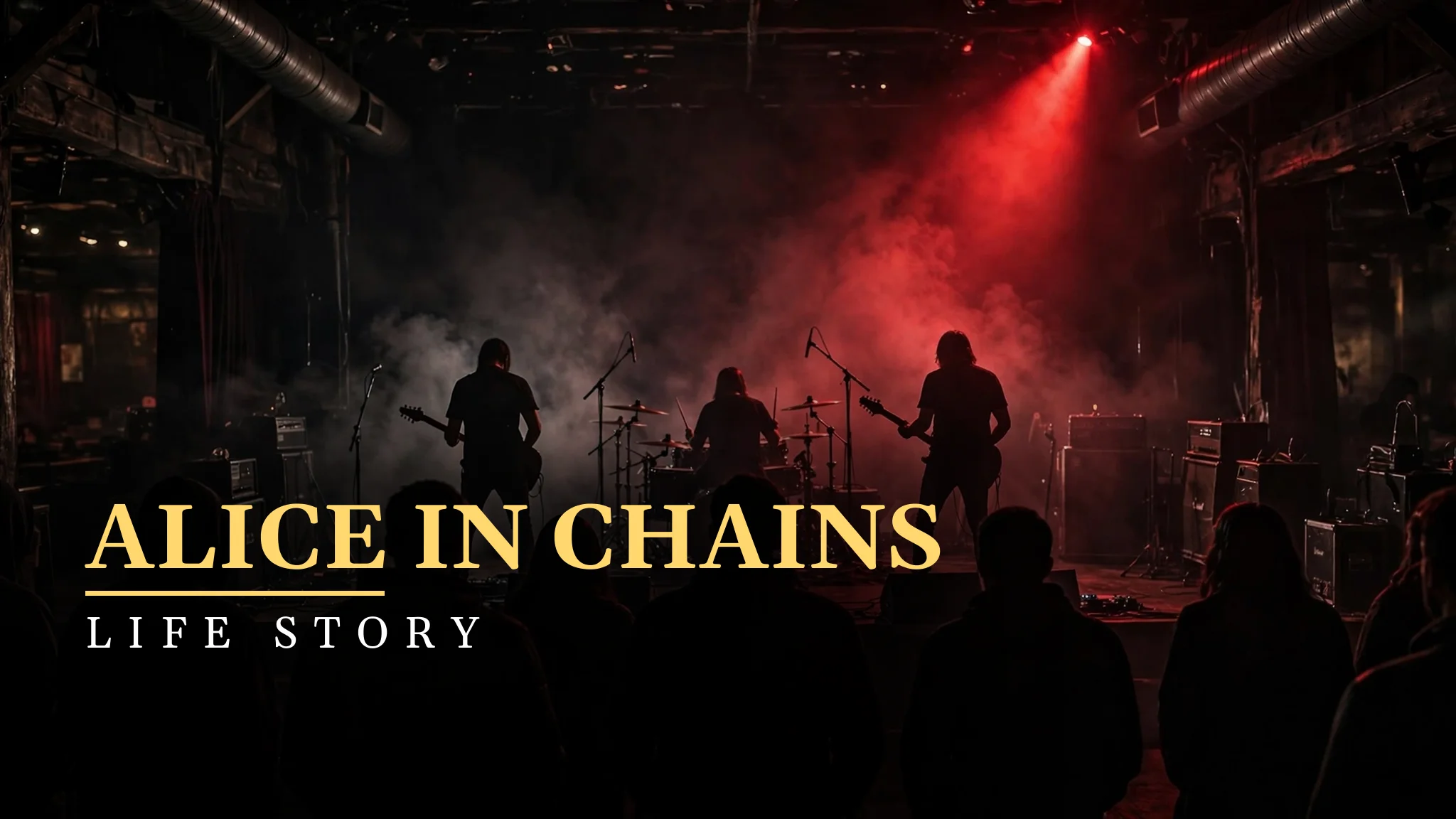
I keep thinking about the image of a band on a small club stage, under a red light and smoke, with an audience close by. That feels like Alice in Chains to me. They are a band that plays in small rooms, in the dark, with their fans close, and they do not need a huge stadium to make it special. I hope their music keeps playing for a long time, because it deserves to be heard.
I think about Alice in Chains’ harmonies, and I realise how special they are. Jerry Cantrell and Layne Staley sang together in a way that sounded like one voice, but with two parts, a lower harmony and a higher lead, blending into something dark and beautiful. It is a sound that no other band has matched, and it is still one of the most recognisable sounds in rock. When I hear those harmonies, I feel the pain in them, but I also feel the beauty. That mix is rare, and it is why their music lasts.
I also think about their acoustic EPs, Sap and Jar of Flies, and I like them a lot. They show a softer side of the band, a side that many people do not know. Jar of Flies is a beautiful record, with songs like No Excuses and I Stay Away that are gentle and haunting. It shows that a heavy band can also be a quiet band, and that volume is not the only way to make an impact. Sometimes a quiet song can be more powerful than a loud one, and Alice in Chains knew that.
When I listen to Rooster, I hear a song about Jerry Cantrell’s father, who served in Vietnam. It is a personal song, about a man who came home from war and who was changed by it. Cantrell sings it with love and with sadness, and it is one of the band’s most moving songs. I like songs that are personal, that tell a real story about a real person. Rooster does that, and it is why it still matters today. It is a tribute to a father, and to all the soldiers who came home changed.
I think about Layne Staley’s addiction, and I feel sad. He struggled with heroin for many years, and it destroyed his health, his career, and his life. He died in 2002, at the age of thirty-four, and it was a tragedy. I wish he had gotten more help, and I wish he had known how much people loved him. His death is a reminder that addiction is a disease, not a choice, and that people who struggle with it need help, not judgement. I hope his story helps someone who is struggling right now.
I also think about the band’s comeback with William DuVall, and I respect it. It would have been easy for the band to stop after Staley died. Instead, they found a new singer, they made new music, and they kept going. DuVall does not try to copy Staley. He sings with his own voice, and he respects Staley’s memory. I think that is the right way to do it. It honours the past, and it allows the band to have a future. I admire that courage, and I am glad they did it.
If I have a criticism, it is not about Alice in Chains. It is about the music business, and about fame. Layne Staley was a sensitive man who became famous too fast, and the business did not protect him. It used him, it exploited him, and it did not give him the help he needed. I think the industry has a responsibility to take care of its artists, especially young ones, and it failed Staley. I wish it had done better, and I hope it has learned from his death.
I learn from Alice in Chains that it is okay to be dark, to be sad, and to be honest about pain. Their music is not happy, but it is real, and it helps people who are in pain feel less alone. That is a powerful gift. When I hear their songs, I feel like someone else understands what it is like to struggle, and that helps me keep going. I think that is why their music has lasted for more than thirty years.
I also learn from them that a band can survive loss. They lost their singer, they lost their friend, and they kept going. They found a new singer, they made new music, and they honoured Staley’s memory. That takes courage, and it takes love. It says that music is bigger than one person, and that a band can be a family that keeps going, even after a terrible loss. I respect that, and I think it is a lesson for anyone who has lost someone they love.
When I listen to No Excuses now, I hear a song about a friendship, about two people who are different but who understand each other. It is a beautiful song, and it reminds me of the friendship between Cantrell and Staley. They were different, but they made great music together, and their harmonies were perfect. I think that is what a good partnership is: two people who are different, who work together, and who make something beautiful. I want to remember that.
In the end, I think Alice in Chains teaches me to be honest, to be brave, to ask for help when I need it, and to keep going even when life is dark. They are not a perfect band, and they would be the first to say so. They are a real band, with real problems, real talent, and real songs, and their music has helped millions of people feel less alone. That is a real achievement, and it is why I will keep listening to them.
I will remember Alice in Chains as the darkest band in grunge, the band that could play a small club, make a crowd feel pain, and come back from the edge. They are survivors, they are rock legends, and they are still loved. Their story reminds me that life is dark sometimes, but music can help us through it, if we are brave enough to listen.
Frequently Asked Questions
When was Alice in Chains formed?
Alice in Chains was formed in Seattle, Washington, in 1987, when Jerry Cantrell met Layne Staley. They were joined by Mike Starr on bass and Sean Kinney on drums, and they became one of the most important grunge bands.
What are Alice in Chains’ best-known songs?
Their best-known songs include Man in the Box, Would?, Rooster, Down in a Hole, No Excuses, and Check My Brain. Man in the Box, from their debut album Facelift, is their most famous song.
What is Dirt?
Dirt is Alice in Chains’ second album, released in 1992. It included Would?, Rooster, and Down in a Hole, and it is now considered one of the greatest albums of the 1990s, dealing honestly with addiction and pain.
When did Layne Staley die?
Layne Staley died on 5 April 2002 in Seattle, at the age of thirty-four. He died of a drug overdose after years of addiction, and his death was a tragedy that ended the band’s first era.
Who is William DuVall?
William DuVall is the singer who joined Alice in Chains in 2006, after Layne Staley’s death. He sings lead on the band’s later albums, including Black Gives Way to Blue, and he has helped the band to continue while honouring Staley’s memory.
Is Alice in Chains in the Rock and Roll Hall of Fame?
Alice in Chains has not yet been inducted into the Rock and Roll Hall of Fame, although many fans and critics believe they deserve it. Their influence on grunge and on rock music is widely recognised, and their albums are still considered classics.
Is Alice in Chains still touring?
Yes, Alice in Chains is still touring and recording, with Jerry Cantrell, Sean Kinney, Mike Inez, and William DuVall as the band’s members. They released Rainier Fog in 2018, and they continue to play concerts around the world.


