Arctic Monkeys: The Life Story Behind the Sheffield Rock Band
In this post
Arctic Monkeys are one of the biggest British rock bands of the last twenty years, and they are also one of the most interesting, because they started as four school friends in Sheffield, they became famous through the internet before any other band did, they made a debut album that broke records, and then they changed their sound again and again, from fast indie rock to desert rock to lounge pop, and they kept their fans with them through every change.
Their story is about Alex Turner, the singer and songwriter with a gift for words, about Jamie Cook, the guitarist, about Andy Nicholson and later Nick O’Malley on bass, and about Matt Helders, the drummer who is also a singer and a personality in his own right. It is about a band from Sheffield, a steel city in the north of England, who wrote songs about nights out, about girls, about taxis, and about growing up, and who became stars by being honest about the world they lived in.
What makes their story worth telling is the music and the words. Turner writes lyrics that are clever, funny, and poetic, about ordinary life, and he does it in a way that makes ordinary life feel like art. They made I Bet You Look Good on the Dancefloor, Fluorescent Adolescent, Do I Wanna Know?, and 505, songs that are still loved today. This is the story of how four friends from Sheffield became Arctic Monkeys, and how Arctic Monkeys became legends.
Four Friends in High Green, Sheffield
Alex Turner was born on 6 January 1986 in High Green, a suburb of Sheffield, in South Yorkshire, and he grew up in a musical family, with a father who played in a band and a mother who taught German. He learned to play the guitar as a teenager, he loved music, and he began to write songs, filling notebooks with lyrics about the world around him, about his friends, about nights out, and about the girls he knew. He was a quiet, thoughtful boy, but he had a sharp eye for detail, and a gift for turning everyday life into poetry.
Jamie Cook was born on 8 July 1985 in Sheffield, and he grew up with Turner, going to the same school, Stocksbridge High School, and sharing a love of music. He learned to play the guitar, and he became the other guitarist in the band, with a style that was rhythmic, melodic, and full of energy. Andy Nicholson was born on 9 April 1986 in Sheffield, and he played bass, while Matt Helders was born on 7 May 1986 in Sheffield, and he played drums, and he was also a talented singer, often singing backing vocals and sometimes taking the lead.
The four friends met at school in Sheffield in the early 2000s, when they were teenagers, and they formed a band, first playing in garages and in rehearsal rooms, and then in small venues in Sheffield. They were influenced by bands like the Strokes, the Libertines, and the Smiths, as well as by hip hop and by the music they heard on the radio. They were not a typical school band. They were serious, they were talented, and they wanted to make music that mattered, and they practised hard, writing songs and playing gigs whenever they could.
Sheffield in the early 2000s was a city with a strong musical history, from Pulp to the Human League to the Arctic Monkeys themselves, and the band were proud of their roots. They wrote about Sheffield, about its streets, its pubs, and its people, and they did it with a sense of place that made their songs feel real. They were not trying to be Londoners. They were Sheffield lads, and they were proud of it, and that pride came through in their music, in their lyrics, and in their attitude.
The Internet, MySpace, and a Record-Breaking Debut
In 2004 and 2005, Arctic Monkeys became famous in a new way, through the internet, and specifically through MySpace, a social networking site where fans shared their songs, their demos, and their live recordings. The band gave away free demo CDs at their gigs, fans uploaded the songs to MySpace, and the songs spread from fan to fan, without any help from a record label. By the time they signed to Domino Records, a respected independent label, they already had a huge following, built entirely by their fans on the internet.
Their first single, I Bet You Look Good on the Dancefloor, was released in October 2005, and it reached number one in the UK, with its fast guitars, its clever lyrics, and its energy. It was followed by When the Sun Goes Down, which also reached number one in January 2006, and by their debut album, Whatever People Say I Am, That’s What I’m Not, released in January 2006, which became the fastest-selling debut album in British history at the time, selling more than 360,000 copies in its first week.
The album was a snapshot of life in Sheffield, with songs about nights out, about taxis, about bouncers, and about young people trying to have fun in a city that could be tough and boring at the same time. Turner’s lyrics were sharp, funny, and full of detail, and they captured a world that many young people recognised, even if they did not live in Sheffield. The album was praised by critics, it won the Mercury Prize, and it made Arctic Monkeys one of the biggest bands in Britain, almost overnight.
The success was fast, and it was huge, and the band had to learn how to handle fame, how to tour, and how to live with being famous at such a young age. They were still teenagers, they were still learning, and they were suddenly the most talked-about band in the country. They toured the album in Britain and America, they played festivals, and they built a reputation as a great live band, with energy, with humour, and with songs that made crowds sing along.
The band also learned how to handle a bigger stage during this period, playing at Glastonbury as headliners in 2007, and learning how to make a huge festival crowd feel like a small club gig, by talking to the audience, by playing with energy, and by making every song feel personal and direct.
Favourite Worst Nightmare and the Second Album
In 2007, Arctic Monkeys released their second album, Favourite Worst Nightmare, which reached number one in the UK and included the singles Brianstorm, Fluorescent Adolescent, and Teddy Picker. The album was faster, louder, and more confident than their debut, with songs that were still about Sheffield life, but with a bigger, more polished sound. Fluorescent Adolescent, in particular, became one of their best-loved songs, a bittersweet song about growing up, about losing your youth, and about remembering the past.
The album was recorded with a new bass player, Nick O’Malley, who had replaced Andy Nicholson in 2006, after Nicholson left the band, saying that he was tired of touring and that he wanted a break. O’Malley was a friend of the band, and he fitted in well, playing bass with energy and with skill, and he has been a member ever since. The change in line-up did not slow the band down, and they continued to tour, to record, and to build their following.
Favourite Worst Nightmare showed that Arctic Monkeys were not a one-album band, and that they could follow a record-breaking debut with another great record. They were still writing about everyday life, but they were also growing as musicians, trying new sounds, new rhythms, and new ideas. Turner was becoming a more confident songwriter, Helders was becoming a more prominent singer, and the band were becoming tighter and more professional as a live act.
They toured the album around the world, playing in America, in Europe, and in Japan, and they became known as one of the best live bands of their generation. They played at festivals like Glastonbury, where they headlined in 2007, becoming one of the youngest bands ever to headline the festival, and they proved that they could handle a huge stage, a huge crowd, and a huge occasion. They were still young, they were still learning, and they were already legends in the making.
Working with Josh Homme in the desert also gave the band a new perspective, away from Sheffield and away from London, in a place where the landscape was vast and empty, and that sense of space comes through in the music on Humbug, which sounds bigger, darker, and more open than their earlier records.
Humbug, Suck It and See, and Changing Sound
In 2009, Arctic Monkeys released their third album, Humbug, which was a major change, with a darker, heavier, desert-rock sound, produced by Josh Homme of Queens of the Stone Age, in the California desert. The album included the songs Crying Lightning, Cornerstone, and My Propeller, and it showed a band that was willing to take risks, to change its sound, and to move away from the fast indie rock of their first two albums. Some fans were surprised, but many loved the new sound, and the album was a success, reaching number one in the UK.
They followed it with Suck It and See in 2011, an album with a brighter, more melodic sound, with songs like Don’t Sit Down ‘Cause I’ve Moved Your Chair, The Hellcat Spangled Shalalala, and Suck It and See, and with a cover that was controversial in America, where it was censored. The album was praised by critics, and it showed a band that was still growing, still experimenting, and still writing great songs, even as they moved further from their Sheffield roots.
These years were also a time of personal change for the band. Turner moved to America, he became interested in new music, in new sounds, and in new ways of writing, and he began to work on other projects, including the Last Shadow Puppets, a band he formed with Miles Kane, which released albums in 2008 and 2016. Helders also worked on other projects, and the band took their time with their next album, working in the studio, experimenting, and thinking about what they wanted to do next.
The changing sound showed that Arctic Monkeys were not afraid to evolve, and that they trusted their fans to follow them, even when the music changed. They were not a band that made the same album again and again. They were a band that grew, that learned, and that tried new things, and that is a major reason why they have lasted for more than twenty years, while many of their contemporaries have broken up or faded away.
The success of AM also brought the band a new audience in America, where they had previously been a cult band, and they became headliners in the United States, playing to crowds who had discovered them through Do I Wanna Know? on the radio and on streaming services.
AM, Do I Wanna Know, and Worldwide Fame
In 2013, Arctic Monkeys released AM, their fifth album, and it became their biggest success, reaching number one in the UK and the United States, and selling millions of copies around the world. The album included the songs Do I Wanna Know?, R U Mine?, Arabella, and Why’d You Only Call Me When You’re High?, and it had a dark, sexy, hip-hop-influenced rock sound, with Turner’s voice lower and smoother, and with riffs that were heavy and memorable. Do I Wanna Know? became their most famous song, with its slow, driving riff and its lyrics about late-night desire, and it is still one of the most streamed rock songs of all time.
AM made Arctic Monkeys global stars, playing stadiums and arenas around the world, headlining festivals, and becoming one of the biggest rock bands on the planet. They toured the album for more than a year, playing in America, in Europe, in Australia, and in South America, and they became known as a band that could fill stadiums, with a stage show that was confident, stylish, and powerful. Turner, with his slicked-back hair and his leather jacket, became a rock star in the classic sense, and the band became a symbol of modern rock.
The album also won awards, including the Brit Award for Best British Album, and it was praised by critics as a masterpiece, a record that showed a band at the peak of its powers. It was a long way from their debut album about Sheffield nights out, but it was still Arctic Monkeys, still Turner writing clever lyrics, still Helders drumming with power, and still a band that understood how to make a great rock record. AM is now regarded as one of the best albums of the 2010s, and it is still loved by fans today.
After AM, the band took a long break, with Turner living in Los Angeles, working on new music, and the other members working on their own projects. They did not rush their next album, because they had learned that good music takes time, and they wanted to make a record that was worth the wait. That patience would lead to their next album, which was another reinvention, and another surprise for their fans.
The Car was recorded with strings and with a full band, in a studio in Suffolk, and it showed Turner writing more about his own life, about his relationships, and about the feeling of being in your thirties and wondering what comes next, which is a theme that many of their fans, who have grown up with the band, recognise in their own lives.
Tranquility Base, The Car, and Later Work
In 2018, Arctic Monkeys released Tranquility Base Hotel and Casino, their sixth album, a record that was a complete change from AM, with a lounge-pop, piano-led sound, with songs about a hotel on the moon, about technology, and about the modern world. The album was confusing for some fans, because it did not sound like a rock album, and it did not have hit singles like Do I Wanna Know?, but over time, it became regarded as a brave and interesting record, and as a sign that the band were still willing to take risks.
They followed it with The Car in 2022, their seventh album, with a more orchestral, cinematic sound, with songs like There’d Better Be a Mirrorball, Body Paint, and I Ain’t Quite Where I Think I Am, and with Turner’s lyrics becoming more reflective, more personal, and more concerned with ageing, with love, and with the passage of time. The album was praised by critics, and it showed a band that was growing up, writing about adult life, and making music that was thoughtful and beautiful.
The band have continued to tour, playing festivals and stadiums, and they remain one of the biggest rock bands in the world, with a fan base that spans generations, from teenagers who discovered them through AM to older fans who have followed them since their debut. They are still based in Sheffield in spirit, even if Turner lives in Los Angeles, and they still write songs that are clever, funny, and full of detail, about the world they see around them.
Their later work shows a band that is not afraid to change, that trusts its fans, and that believes in its own creativity. They have made seven albums, each one different from the last, and they have done it without breaking up, without losing their identity, and without compromising their vision. That is a rare achievement, and it is why they are regarded as one of the greatest British bands of their generation.
Their lyrics have also been studied in schools and universities, with teachers using Turner’s songs to talk about poetry, about language, and about how ordinary life can be turned into art, which is a rare honour for a rock band, and a sign of how respected their songwriting has become.
What Arctic Monkeys Leave Behind
Arctic Monkeys left behind a body of music that is still loved today, with albums like Whatever People Say I Am, That’s What I’m Not, AM, and The Car regarded as classics, and with songs like I Bet You Look Good on the Dancefloor, Fluorescent Adolescent, Do I Wanna Know?, and 505 still played on the radio, still sung by fans, and still loved by new generations. They sold tens of millions of records, they won Brit Awards and a Mercury Prize, they headlined Glastonbury, and they became one of the biggest rock bands in the world.
Their legacy is also about the internet and about how music is shared. They were one of the first bands to become famous through MySpace, through fans sharing their songs online, and they showed that a band could build a following without a record label, without radio, and without traditional marketing. That model is now normal, but in 2005, it was revolutionary, and Arctic Monkeys were at the front of it, proving that fans, not labels, could make a band famous.
For young musicians, Arctic Monkeys are an example of what is possible if you are talented, if you work hard, and if you believe in your own ideas. They started as school friends in Sheffield, they made music in a garage, they gave away demo CDs, they became famous on the internet, and they became legends. They did it with talent, with hard work, and with a love of music. They also did it with humour, with style, and with a gift for words. They were not perfect, and their story has sad parts, but their music remains, and it will remain for as long as people listen to rock music.
They also showed that a band from the north of England can speak to the whole world, that a song about Sheffield can be loved in America, in Australia, and in South America, and that good music has no borders.
Their early demos, shared on MySpace, also taught the music business a lesson, that fans are the best promoters, that a good song will spread on its own, and that a band does not need a big marketing budget if its music is good enough to be shared.
My Take:
When I think about Arctic Monkeys, the first thing I think about is Alex Turner’s lyrics. He writes about ordinary life, about nights out, about taxis, about girls, and about growing up, and he does it with words that are clever, funny, and poetic. When I hear I Bet You Look Good on the Dancefloor, I hear a song about a night out that feels real, because Turner has noticed the details, the way people dance, the way they talk, and the way they try to impress each other. That is a gift, and it is why his lyrics are loved by so many people.
I admire Turner most of all, because he is one of the best songwriters of his generation. He started as a teenager in Sheffield, writing about his life, and he has grown into a songwriter who can write about love, about ageing, about technology, and about the modern world, with the same sharp eye for detail. He is not afraid to change, he is not afraid to try new sounds, and he is always looking for new ways to say things. I respect that kind of creativity, because it takes courage to keep changing, and it takes talent to make those changes work.
I also think about Matt Helders, because he is more than just a drummer. He sings backing vocals, he sometimes takes the lead, and he is a personality in his own right, with a sense of humour and a stage presence that makes him a fan favourite. He is also a brilliant drummer, with a style that is powerful, precise, and full of groove, and his playing is a major part of the band’s sound. I think he deserves more credit than he often gets, because without him, the band would not sound the same.
I think about their debut album, too, because it is one of the greatest debut albums ever made. Whatever People Say I Am, That’s What I’m Not is a snapshot of life in Sheffield, with songs that are fast, funny, and full of energy, and it captured a moment in British music that will never be repeated. I love that album, because it is honest, it is direct, and it is full of life. It is an album that makes me feel young, even when I am not, and that is a powerful thing for a record to do.
There is a part of their story that I find inspiring, and that is their rise through the internet. They did not become famous because a record label pushed them. They became famous because fans shared their songs on MySpace, because people loved their music, and because they passed it on to their friends. That is a democratic way to become famous, and it shows that good music can find its audience, even without a big marketing campaign. I think that is a hopeful message for young bands today, who can use the internet to reach people all over the world.
I also think about AM, because it is one of my favourite albums of the 2010s. Do I Wanna Know? is a perfect song, with a slow, driving riff, with Turner’s smooth vocal, and with lyrics about late-night desire that are both sexy and sad. R U Mine? is a loud, energetic song that makes me want to move. Arabella is a clever, funny song about a girl with a Barbarella look. The album is a masterpiece, and it shows a band at the peak of its powers, making music that is both popular and artistic.
If I have a criticism, it is that Arctic Monkeys’ later albums, especially Tranquility Base Hotel and Casino, can feel a little too clever and a little too distant, with songs that are hard to connect with on a first listen. I understand why they do it. They want to try new things, and they want to make music that is challenging. But as a listener, I sometimes miss the direct, energetic songs of their early years, and I wish they would make a record that is a little more immediate. I think their best work is when the experiment and the emotion work together, as they do on AM.
Another thing I think about is how their music has lasted. I Bet You Look Good on the Dancefloor was released in 2005, twenty years ago, and it is still played today, still sung by fans, and still loved by people who were not born when it was made. That is a rare thing. Most music fades after a few years. Arctic Monkeys’ music does not fade. It stays, because the songs are well written, because the playing is superb, and because the feelings in them are true.
I think about their influence, too. They changed the way bands became famous, the way music was shared online, and the way young people wrote about their lives. They showed that a band from Sheffield could become global stars, that a song about a night out could be art, and that a clever lyric could be as important as a great riff. Many bands that came after them learned from them, and many still do. They opened a door, and many other artists walked through it.
For a young reader, I think the lesson from Arctic Monkeys is about being yourself and about writing about your own life. Turner wrote about Sheffield, about his friends, about nights out, and about the world he knew, and he did it with honesty and with humour. He did not try to be American, he did not try to be London, and he did not try to be someone else. He was himself, he wrote about his own life, and people loved it. That is a hopeful message for anyone who wants to write songs. You do not need to invent a life. You can write about the life you have.
I also think their story teaches something about friendship. Alex, Jamie, Matt, and Nick have been friends since they were teenagers, they have grown up together, they have argued, and they have stayed together as a band for more than twenty years. That is a rare achievement, and it shows that friendship, trust, and respect can keep a band together, even when the pressure is great. I admire that kind of loyalty, and I think it is a major reason why their music has lasted.
In the end, I think Arctic Monkeys will be remembered as one of the greatest British bands ever, not only because they sold the most records, but because they made the cleverest music, because they changed how bands became famous, and because their songs still make people happy. They were four friends from Sheffield who became legends, and they became legends because they were talented, because they worked hard, and because they made music that spoke to people. I love their music, I respect their story, and I will keep listening to them for as long as I can.
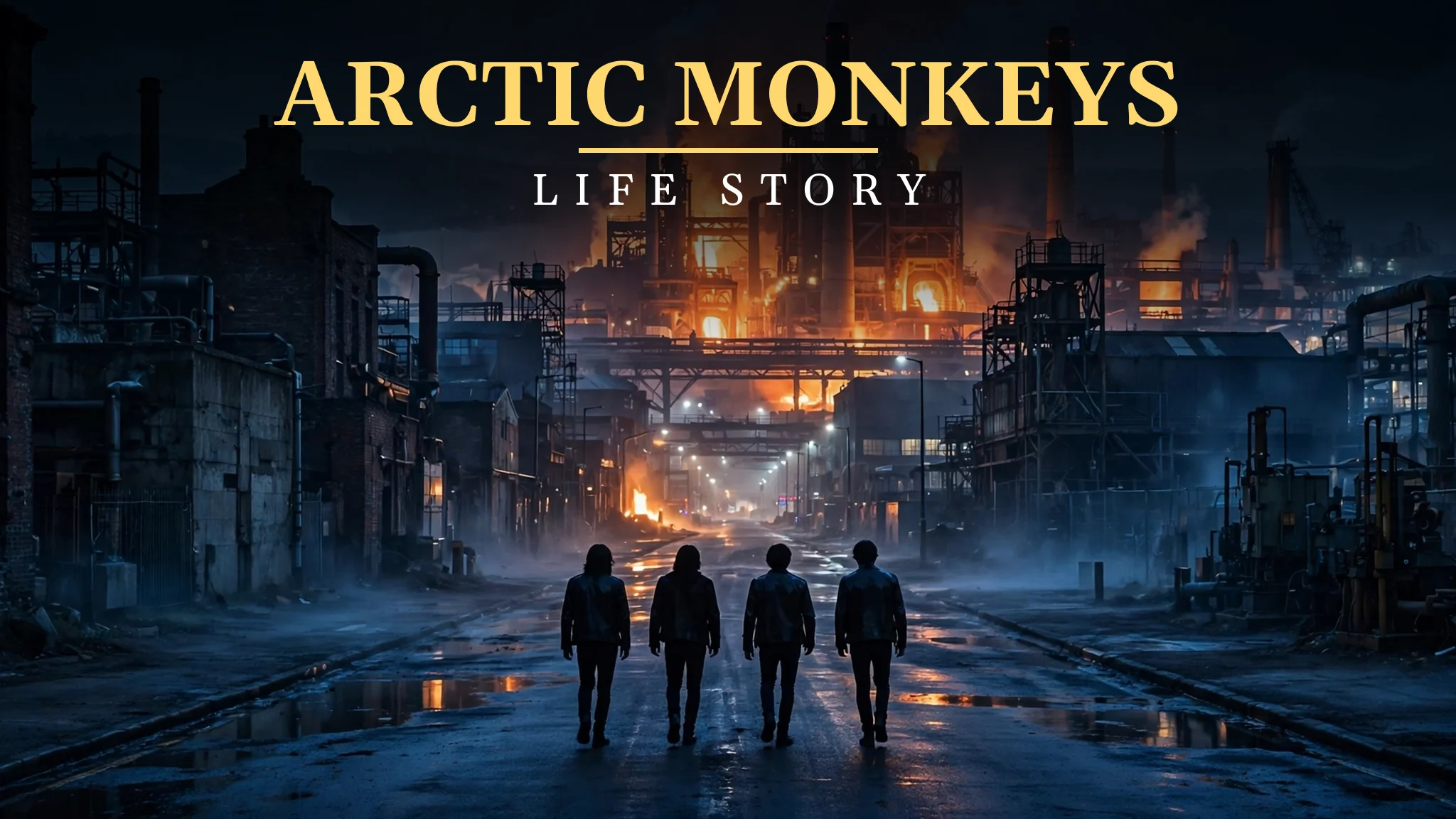
One more thought stays with me. When I think about Arctic Monkeys, I think about the image of four men walking down a wet industrial street at night, towards glowing steelworks, and I think about how that image captures their music: industrial, northern, hard-working, and full of fire. Their music is like that steelworks, hot and bright, and it is still burning, still loved. I think that is a beautiful image, and it is one I will always remember.
I also think about their Sheffield roots, because Sheffield is a city that has produced so many great bands, from Pulp to the Human League to Arctic Monkeys, and the band are proud of that history. They carry Sheffield with them wherever they go, in their lyrics, in their accent, and in their attitude, and that pride is a part of their appeal. They are not just a band. They are Sheffield, and Sheffield is a part of them.
I think about the future, too. Arctic Monkeys are still making music, still touring, and still changing, and they are still a band that matters. One day, they will stop, and that will be a sad day for British music. But their songs will remain, their albums will remain, and their concerts will be remembered. They have left a legacy that will last for generations, and they have shown that rock music can be clever, can be funny, and can be beautiful. I am grateful that I have been able to hear their music.
Finally, I want to say that Arctic Monkeys teach me something about growing up. Their early songs are about being young, about nights out, and about having fun, and their later songs are about getting older, about love, and about the passage of time. That journey, from youth to adulthood, is in their music, and it is a journey that we all take. I think that is why their fans stay with them, because they grow up with the band, and the band grows up with them. That is a special bond, and it is one I will always remember.
I also think about the way their songs are used in films and television, introducing their music to people who may never have bought an Arctic Monkeys album, and how songs like Do I Wanna Know? have become part of popular culture in a way that few rock songs ever do.
I think about their live shows, too, because they are known as one of the best live bands in the world, with a stage show that is confident, stylish, and powerful, and with Turner as a frontman who can hold a stadium in the palm of his hand with just his voice and his guitar.
I think about the Last Shadow Puppets, because Turner’s work with Miles Kane shows another side of him, more orchestral, more romantic, and more influenced by 1960s pop, and it proves that he is not only an Arctic Monkeys songwriter, but a musician who can explore many different sounds.
I also think about the way their fans have grown up with them, from teenagers who loved their debut album to adults in their thirties who now love The Car, and how that shared journey, from youth to adulthood, is a bond that few bands have with their audience, and one that makes Arctic Monkeys special.
I think about their Sheffield accent, too, because Turner sings in his own voice, with his own accent, and he does not try to sound American or London, and that honesty is part of their appeal, because it shows that you can be yourself and still be loved all over the world.
I think about the future, and how Arctic Monkeys will continue to change, to experiment, and to surprise their fans, because that is what they have always done, and it is why I will keep listening to whatever they do next, with excitement and with trust.
Finally, I want to say that Arctic Monkeys remind me that a great song can be about a taxi ride, a night out, or a girl in a club, and still be poetry, if it is written with care, with humour, and with love for the world it describes.
I also think about how their music makes Sheffield feel like a magical place, even though it is an ordinary industrial city, and how that magic comes from Turner’s words, which turn streets, pubs, and taxis into a world that feels alive and full of possibility.
That magic, turning the ordinary into poetry, is the true gift of Arctic Monkeys, and it is why I believe their songs will still be sung, still be studied, and still be loved long after the band has stopped playing.
I will keep playing their records, from the fast songs of their youth to the slower songs of their maturity, because each one tells me something true about growing up, about Sheffield, and about life itself.
Frequently Asked Questions
How did Arctic Monkeys become famous through the internet?
Arctic Monkeys gave away free demo CDs at gigs, fans uploaded their songs to MySpace, and the songs spread from fan to fan without a record label, building a huge following before they signed to Domino Records.
What was Arctic Monkeys’ debut album and why was it so important?
Whatever People Say I Am, That’s What I’m Not, released in January 2006, became the fastest-selling debut album in British history at the time, with I Bet You Look Good on the Dancefloor and When the Sun Goes Down both reaching number one.
What is AM and why is it their biggest album?
AM, released in 2013, is their fifth album, with Do I Wanna Know?, R U Mine?, and Arabella, a dark, sexy, hip-hop-influenced rock sound that made them global stars and one of the biggest rock bands in the world.
Who writes Arctic Monkeys’ songs?
Alex Turner is the main songwriter, writing clever, funny, and poetic lyrics about ordinary life, Sheffield, nights out, and growing up, with a gift for turning everyday details into art.
Why did Andy Nicholson leave Arctic Monkeys?
Andy Nicholson, the original bass player, left in 2006, saying he was tired of touring, and he was replaced by Nick O’Malley, a friend of the band, who has played bass ever since.
What is Tranquility Base Hotel and Casino about?
Tranquility Base Hotel and Casino, released in 2018, is a lounge-pop, piano-led album about a hotel on the moon, technology, and the modern world, a complete change from AM that confused some fans but was praised as brave and interesting.
Are Arctic Monkeys still playing today?
Yes, they released The Car in 2022, continue to tour festivals and stadiums around the world, and remain one of the biggest rock bands in Britain, with fans spanning generations.


