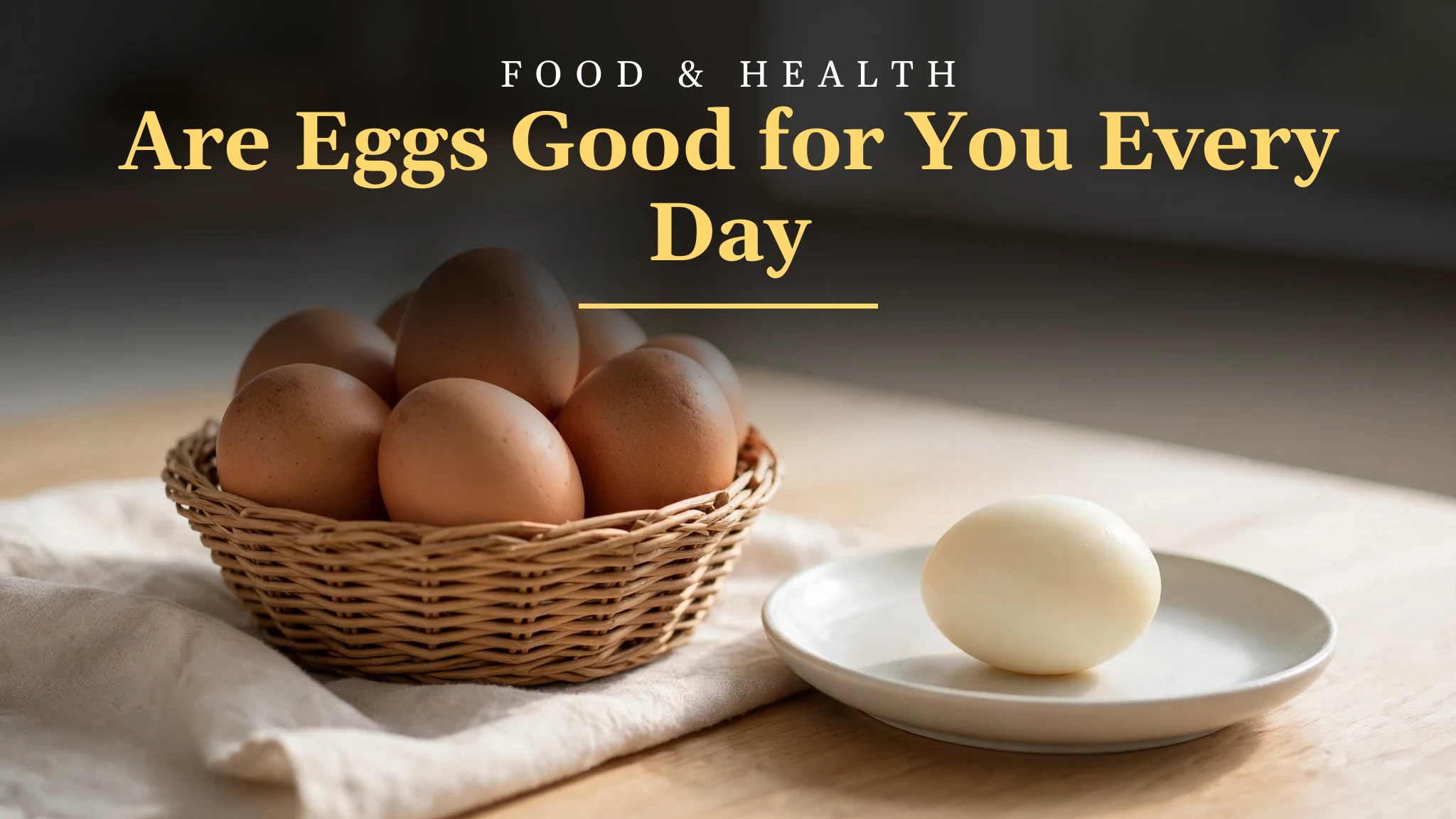
Are Eggs Good for You Every Day
In this post
- What an Egg Actually Gives Your Body
- Protein, Fullness and Why Eggs Keep You Going
- Eggs and Cholesterol: What Changed in the Advice
- How Many Eggs a Day Is Sensible
- Boiled, Fried or Scrambled: Does Cooking Change Anything
- Eggs for Children, Older People and Busy Days
- Buying, Storing and Using Eggs Safely
- Eggs and Weight: Why Fullness Matters
- My Take:
An egg is probably the most complete small food in the kitchen. It is cheap, it is sold almost everywhere, it needs no special skill to cook, and it fits into breakfast, lunch and dinner. A boiled egg can go in a lunchbox, a fried egg can sit on toast, an omelette can fill a whole meal, and a scrambled egg takes two minutes. So it is no surprise that so many people ask the same question: is it fine to eat an egg every single day? For most healthy people, the short answer is yes. One or two eggs a day is a sensible, healthy habit. But the full answer is more useful than that, because it depends on how many you eat, how you cook them, what you eat with them, and whether you have a health condition that changes the rules. This article explains it in plain words, so you can decide for yourself with clear facts instead of rumours.
The first thing to understand is that an egg is two foods in one shell. The white is almost pure protein and water, with very few calories. The yolk is where the fat, the vitamins and the cholesterol live, and it is also where much of the goodness is. For many years people were told to throw the yolk away and eat only the white, because the yolk contains cholesterol. That advice has changed, and this article will explain why. The short version is that for most people, the cholesterol in an egg does not raise blood cholesterol the way scientists once feared, and the yolk contains nutrients that the white does not have at all. An egg is at its best when you eat the whole thing.
What an Egg Actually Gives Your Body
One large egg weighs about 50 grams, and it gives you roughly 70 calories, which is very little for the amount of nutrition it carries. It gives you about 6 grams of protein, which is the nutrient your body uses to build and repair muscle, skin, hair and nails, and to make the enzymes and hormones that run your body. Egg protein is special because it contains all nine of the essential amino acids your body cannot make on its own, in proportions that are close to what the human body needs. That is why nutritionists often call the egg a reference protein, the food they compare other proteins against. For a person who does not eat meat, or who eats it rarely, eggs are one of the easiest ways to get good-quality protein.
The yolk gives you a long list of vitamins and minerals. It gives you vitamin B12, which your body needs to make red blood cells and to keep nerves working properly, and which is found mainly in animal foods. It gives you vitamin D, which helps your body absorb calcium and supports bone health, and which many people are low on because they spend most of their time indoors. It gives you vitamin A, which supports normal vision and healthy skin. It also gives you choline, a nutrient that supports brain function and that many people do not get enough of, plus selenium, iodine, phosphorus and small amounts of iron and zinc. The white gives you protein and a little potassium and magnesium. Together, the two halves make a small package that is far more nutritious than its size and price suggest.
An egg also gives you healthy fats, mostly in the yolk. About a third of the fat in an egg is saturated, and the rest is unsaturated, including a small amount of the healthy fats that support the brain and eyes. The yolk also contains lutein and zeaxanthin, two plant-like compounds that give the yolk its yellow colour and that are linked with eye health. A deeper orange yolk usually means the hen ate more green plants or maize, and it tends to contain more of these compounds. The colour does not change the protein, but it is a small sign of what the hen was fed, and it is one reason free-range and pasture eggs often have darker yolks.
Protein, Fullness and Why Eggs Keep You Going
Protein is the main reason an egg keeps you full for so long. When you eat protein, your stomach empties more slowly than when you eat carbohydrate alone, and your body releases hormones that tell your brain you have eaten enough. That is why a breakfast of two eggs keeps you satisfied until lunch, while a breakfast of white bread and jam can leave you hungry again within an hour, even though both meals gave you a similar number of calories. The difference is not the calories. It is what those calories are made of. Protein lasts longer in the stomach, and that longer feeling is what stops the mid-morning hunt for biscuits.
This is why eggs are so useful for people who work hard or study hard. A labourer who eats two eggs with bread in the morning has fuel that lasts through the first half of the working day. A student who eats eggs before school can concentrate better than a student who ate only something sweet. An older person who eats an egg a day gets protein that helps maintain muscle, which matters more with age because muscle is lost slowly over the years and protein helps slow that loss. An egg is not a medicine for tiredness, and it will not fix poor sleep or a bad diet on its own, but as part of a normal breakfast it gives your body a solid start, and that start shapes the rest of the day.
It is also worth knowing that eggs pair well with other foods. An egg with bread gives you protein plus carbohydrate, which is a more complete meal than either food alone. An egg with vegetables gives you protein plus fibre and vitamins, which keeps you full even longer. An egg with a small amount of cheese or a spoon of beans adds more protein still. The practical point is simple: an egg rarely needs to carry a meal on its own. It works best as part of a breakfast or lunch that also has vegetables, bread or rice, and a drink of water or tea. That combination is filling, cheap, quick to make, and it needs no special skill.
Eggs and Cholesterol: What Changed in the Advice
Cholesterol is the part of the egg story that confuses people most, so it deserves a careful, honest explanation. Cholesterol is a fatty substance your body needs in small amounts to build cell walls and to make some hormones and vitamin D. Your liver makes most of the cholesterol in your blood, and the food you eat adds to it. An egg yolk contains about 185 milligrams of cholesterol, which is a lot for one small food. For many years, scientists believed that eating cholesterol raised blood cholesterol in a simple, direct way, and so they advised people to limit eggs to two or three a week. That advice was printed in health books, taught to doctors, and repeated so often that many people still believe it today.
The advice changed because the science changed. Large studies over many years found that for most people, the cholesterol in food has only a small effect on blood cholesterol. What affects blood cholesterol far more is the amount of saturated fat in the whole diet, along with body weight, smoking, lack of movement and family history. A person who eats one egg a day but also eats a lot of fried food, processed meat and butter will have a different picture from a person who eats one egg a day with vegetables, lentils and whole grains. The egg is not the main driver. The whole diet is. That is why most health authorities no longer set a strict daily limit on dietary cholesterol, and why one egg a day is now considered fine for most healthy people.
There is an honest exception, and it matters. A small number of people are more sensitive to cholesterol in food than others, and some people have a family condition that raises blood cholesterol very high from a young age. For those people, eggs may need to be limited, and only a doctor who knows their blood results can say how many are suitable. The same applies to people who have already been told by their doctor to watch their cholesterol closely. General information in an article can never replace that personal advice. But for a healthy person with no such condition, the old fear of one egg a day is no longer supported by the evidence, and that is a real change, not a fashion.
How Many Eggs a Day Is Sensible
For a healthy adult, one egg a day is a sensible amount, and two a day is still fine for most people, especially if they are active and they eat a varied diet with plenty of vegetables. Three or more eggs every day is where the picture starts to change, not because eggs suddenly become dangerous, but because a very large amount of any one food crowds out other foods. A person who eats four eggs a day is probably not eating enough lentils, beans, vegetables or other protein foods, and variety is the real rule of healthy eating. One or two eggs, plus other protein foods across the day, is a far better pattern than a pile of one food.
Children can eat eggs daily too, and for most children one egg a day is a perfect habit. An egg gives a growing child protein for growth, choline for the brain, vitamin D for bones and iron in a form the body can use. A boiled egg in a lunchbox, an omelette for breakfast, or an egg mixed into fried rice are all easy ways to give a child an egg a day without any fuss. Very young children may start with half an egg, and that is fine. Older people also do well with a daily egg, because it is soft, easy to chew, easy to cook, and a reliable source of protein at an age when appetite is often smaller and muscle needs support. For both groups, the same rule applies: an egg is part of a varied diet, not a replacement for it.
It is also worth thinking about when you eat your egg. There is no magic hour, but timing can help you get more from it. An egg at breakfast gives you protein early, which keeps you full through the morning and stops the mid-morning snack. An egg at lunch, in a sandwich or with rice and vegetables, makes the meal more satisfying. An egg at dinner is fine too, though some people find a heavy meal late at night disturbs their sleep, and that is about timing, not about the egg itself. The best time is simply the time that fits your day and replaces a less healthy food.
Boiled, Fried or Scrambled: Does Cooking Change Anything
How you cook an egg changes it more than most people think, though the egg itself stays nutritious in every form. A boiled egg is the simplest and the lightest way to eat one. It needs no oil, no pan and no skill, and it gives you the full protein and nutrients of the egg with nothing added. A poached egg is much the same: cooked in water, no oil, light and gentle. A scrambled egg is also a good choice, though it usually needs a little butter or oil in the pan, and a little milk if you like it soft, which adds a small amount of fat and calories. None of these is a problem in normal amounts. The difference between boiled and scrambled is small, and both are far better than skipping breakfast altogether.
A fried egg is where the cooking method starts to matter. Frying in a small amount of oil is fine, but frying in a large pool of oil, or in oil that has been reused many times and heated until it smokes, adds a lot of extra fat and can produce compounds that are not good for you. The egg itself is not the problem. The oil, the heat and the amount are. If you like fried eggs, use a non-stick pan, a small spoon of oil, and medium heat, and take the egg out when the white is set and the yolk is as you like it. An omelette with vegetables — onions, tomatoes, spinach, peppers — is one of the best ways to eat an egg, because the vegetables add fibre, vitamins and bulk, and they turn a small food into a proper meal.
There is also the question of raw eggs. Some people drink raw eggs, or eat food made with raw egg, believing it is more natural or more powerful. It is not, and it carries a real risk. Raw eggs can carry germs that cause food poisoning, and the protein in a raw egg is actually harder for your body to absorb than the protein in a cooked egg. Cooking kills the germs and makes the protein easier to use. There is no benefit to eating eggs raw, and there is a real risk, so the sensible rule is simple: always cook your eggs properly, and be careful with dishes that use raw egg, especially if you are cooking for children, older people or anyone whose health is fragile.
Eggs for Children, Older People and Busy Days
Eggs are one of the easiest foods to fit into a busy life, and that ease is not a small thing. Many healthy foods fail in real life because they need time, money or skill to prepare. An egg needs none of those. A boiled egg can be cooked in ten minutes, peeled, and carried in a pocket or a lunchbox. A scrambled egg takes two minutes in the morning. An omelette takes five minutes in the evening. A labourer can eat a boiled egg at a work break. A student can eat one between classes. A mother can cook eggs for the whole family in one pan. An older person can cook a soft scrambled egg without worrying about hard chewing or a sore stomach. That ease is why eggs work for people who are busy, tired or short of money, and it is why they have been a daily food in almost every country for centuries.
For children, eggs are especially useful, because they are one of the few protein foods that most children will eat without argument. A child who refuses meat or lentils will often eat an egg happily, especially if it is presented well: a boiled egg cut into soldiers with toast, an omelette rolled up, or an egg fried and put in a sandwich. Eggs also teach children a useful lesson without any lecture: that a healthy food can also be tasty and enjoyable. Too many children learn early that healthy food is boring and that tasty food comes from a packet. An egg breaks that lesson. It is tasty, it is fun to eat, and it is good for them, and a habit built in childhood will protect them far more than any single piece of health advice.
For older people, the value of an egg is different but just as real. As people get older, their appetite often gets smaller, their teeth may be weaker, and their muscle slowly gets smaller too. An egg solves several of these problems at once. It is soft, it is easy to chew, it is easy to cook in small amounts, and it gives high-quality protein in a small portion. One egg a day, with some bread and vegetables, is a simple meal that an older person living alone can make without help. That independence matters. It is not just about nutrition. It is about being able to feed yourself well, every day, with food you can afford and cook yourself.
Buying, Storing and Using Eggs Safely
Buying and storing eggs properly is simple, but it matters, because a bad egg can make you unwell. When you buy eggs, choose ones with clean, unbroken shells, and check the date on the box. A cracked egg should not be used, because germs can enter through the crack. Store eggs in the fridge, in their box, with the pointed end down, and use them before the date on the box. The box protects them from absorbing smells from other foods, and the fridge keeps them fresh for longer. Eggs kept at room temperature in a hot kitchen go bad much faster, so the fridge is the right place, even if your grandmother kept them on the shelf. In a warm climate, the fridge is not a luxury. It is the safe choice.
There is a simple test for freshness, and it is worth knowing. Put an egg in a bowl of water. A fresh egg sinks and lies flat on the bottom. An older egg stands up on one end, because air has entered the shell over time, and a bad egg floats to the top. A floating egg should be thrown away. You can also crack an egg into a bowl before adding it to a pan or a recipe. A fresh egg has a firm yolk that stands up and a thick white that stays close to the yolk. An older egg spreads out flat, with a thin white. Neither test is perfect, but together with the date on the box and your sense of smell, they are a reliable guide. If an egg smells bad when you crack it, throw it away, no matter what the date says.
It is also worth saying what an egg is not. It is not a medicine. It will not build muscle on its own, though its protein helps you exercise, and exercise builds muscle. It will not fix poor eyesight on its own, though its nutrients support normal eye health. It will not cure tiredness on its own, though a protein-rich breakfast can help you feel steadier in the morning. An egg is a good food, not a treatment. Anyone who tells you otherwise is selling you something. The honest value of an egg is simpler and better: it is a cheap, easy, nutritious food that you can eat every day, and that is enough.
Eggs and Weight: Why Fullness Matters
One of the most useful things about an egg has nothing to do with vitamins. It is fullness. An egg is small, it has only about 70 calories, and yet it keeps you satisfied for hours, because its protein slows down how fast your stomach empties. That combination — few calories, long fullness — is rare, and it is why eggs are so useful for people who want to avoid overeating without feeling hungry all the time. A person who eats two eggs for breakfast is far less likely to reach for biscuits at ten in the morning than a person who ate only white bread and jam, even though both breakfasts gave them a similar number of calories. The difference is not willpower. It is protein.
This is also why eggs work well in a weight plan that is based on real food rather than rules. There is no counting, no weighing and no special product. You simply eat a food that keeps you full, so you naturally eat less later in the day. That is a gentler way to manage weight than skipping meals or following a strict diet, and it is a way that lasts, because it does not depend on willpower. It depends on a breakfast that actually satisfies you. An egg will not make you lose weight on its own, and anyone who promises that is selling you something. But an egg breakfast, as part of a diet with plenty of vegetables and sensible amounts of rice, bread and oil, helps many people eat less without feeling deprived, and that is a real and honest benefit.
It is worth adding that eggs are low in carbohydrate and contain no sugar, which is part of why they keep blood sugar steadier than a sweet breakfast. A breakfast of biscuits or sweet cereal can raise blood sugar quickly and then leave you tired and hungry an hour later. An egg breakfast does not do that. It gives you slow, steady fuel, and that steadiness is what people feel as energy through the morning. Again, this is not a cure for anything. It is simply the result of eating protein and fat instead of sugar first thing in the morning, and it is a result that most people can feel for themselves within a week.
My Take:
If you ask me what I think about eating an egg every day, my answer is simple: it is one of the best small habits a person can have, and I say that not because eggs are special, but because they are honest. An egg does not pretend to be something it is not. It is not an expensive powder, it is not a pill, it is not a diet plan with rules and fees. It is a food that comes from a hen, costs very little, cooks in minutes, and gives your body protein, vitamin B12, vitamin D, choline and steady fullness in exchange for nothing but a pan and a little heat. In a world where healthy eating is often made to look difficult and expensive, an egg is a quiet reminder that it does not have to be. The most useful protein on the planet is also one of the cheapest, and I think that is worth saying plainly.
I think the reason eggs work so well as a daily habit is that they remove every excuse. You do not need a kitchen full of equipment, you do not need time, you do not need money, and you do not need to learn anything. You buy a tray, you keep it in the fridge, and you cook one when you are hungry. That is the whole method. Compare that with the foods people usually eat for breakfast: white bread with jam, a sweet biscuit, or nothing at all. Those are also easy, but they give you sugar with almost nothing else, and they leave you hungry again within the hour. An egg is just as easy, and it gives you protein that your body actually uses. When the healthy choice is also the easy choice, people stick with it, and sticking with it is what matters. A diet is not what you do for one week. It is what you do every day without thinking, and an egg fits that definition better than almost any other food.
I also think we should be honest about the cholesterol story, because it shows how food advice can confuse people for years. For a long time, people were told that eggs were dangerous, that the yolk would clog their arteries, and that they should eat only the white. Many people threw away the yolk, which is where much of the goodness lives, and they felt guilty every time they ate a whole egg. Now the advice has changed, and the new advice is not a fashion. It comes from large studies that followed people for many years and found that for most people, the cholesterol in an egg has only a small effect on blood cholesterol, and that the whole diet matters far more. I think people deserve to hear this change clearly, because guilt about food helps nobody. If you are healthy and you eat one egg a day with vegetables and a varied diet, there is nothing to feel guilty about. If a doctor has told you to watch your cholesterol closely, that is a different situation, and you should follow your doctor, not a general article. But for most people, the old fear is over, and it is time to say so.
There is another reason I like the daily egg habit, and it is about money. Healthy food has a reputation for being expensive, and for many families that reputation is the reason they do not even try. But an egg is one of the cheapest sources of good protein you can buy, in almost every country. A tray of eggs costs less than a packet of meat in many places, and it feeds a family for several days. For a family that is watching every rupee, that matters more than any vitamin chart. I think we should say this plainly: eating well does not have to mean buying expensive things. Sometimes it means buying the cheapest protein in the shop and eating it every day. An egg proves that point, and that is why I would recommend it to anyone, whatever their income.
I also want to say something about children, because I think eggs are one of the best foods a parent can give a child every day. Children need protein to grow, they need choline for their brains, they need food that is easy to eat and easy to like, and they need habits that will stay with them when they grow up. An egg gives them all of that, and it teaches them something important without any lecture: that a healthy food can also be a tasty one. Too many children learn early that healthy food is boring and that tasty food comes from a packet. An egg breaks that lesson. It is tasty, it is fun to cook and eat, and it is good for them. If a child grows up eating an egg every day, that habit will protect them far more than any single piece of health advice I could give.
The question of how many eggs to eat is one I hear often, and my view is that one or two a day is right for most people. I would not eat five or six a day, not because eggs are dangerous, but because no single food should take over your diet. Your body needs different things from different foods, and a person who eats six eggs a day is probably not eating enough lentils, beans, vegetables and other protein foods. One or two eggs, plus vegetables and a proper meal, is a far better pattern than a pile of one food. Variety is the real secret of healthy eating, and it is a secret that costs nothing. Eat your egg, enjoy it, and then eat something different as well.
Cooking is a small detail, but I think it is worth knowing, because it changes what an egg does for you. I prefer a boiled egg, because it needs no oil and it is the lightest way to eat one. A poached egg is much the same. A scrambled egg is also good, though it usually needs a little butter or oil. A fried egg is fine too, if you use a small amount of oil and medium heat, but frying in a large pool of old oil is a different story, and it is the oil, not the egg, that is the problem. An omelette with vegetables is my favourite way to eat an egg, because the vegetables turn a small food into a proper meal. There is no wrong choice here, only a better choice for your own day, and learning to notice that is part of eating well.
I think the most important thing I can say about eggs is this: do not overthink them. People spend a lot of time worrying about whether an egg has too much cholesterol, whether it is the right time of day, or whether they should eat the yolk or throw it away. Those questions matter far less than the simple fact of eating an egg instead of a biscuit for breakfast. The difference between an egg and a biscuit is large. The difference between eating an egg at eight in the morning and eating it at ten is tiny. If you are the kind of person who worries about small details, let the egg be the easy part of your day. Eat it when you are hungry, enjoy it, and save your careful thinking for the bigger choices, like whether your whole diet has enough vegetables, enough protein, and enough water. Those are the choices that shape your health over years, and an egg is simply one good piece of that bigger picture.
There is one more thing I want to be honest about, and it is about who should be careful with eggs. If a doctor has told you to watch your cholesterol closely, you should follow that advice, and you should ask your doctor how many eggs fit your situation. If you are allergic to eggs, which is more common in children than in adults, you should avoid them completely and ask a health professional for advice. If an egg smells bad or its shell is cracked, throw it away, and always cook your eggs properly, because raw eggs can carry germs. None of this changes my view that eggs are a good daily food for most people. It simply means that general advice is general, and your own body and your own doctor matter more than any article, including this one. I would rather give you an honest answer with limits than a simple answer that ignores the people it does not fit.
So here is my final view, in plain words. Eat an egg every day if you like eggs. One or two a day is a good amount. Eat the whole egg, yolk and all, unless a doctor has told you otherwise. Boil it, poach it, scramble it or make an omelette with vegetables. Do not eat six a day and call it a diet. Do not expect it to build muscle or cure anything on its own. And do not feel guilty about it either, because there is nothing to feel guilty about. An egg is a simple, cheap, nutritious food, and eating one every day is a small, sensible habit that costs you nothing and gives you something real. In my view, that is exactly the kind of habit worth keeping.
If a friend asked me whether they should start eating an egg every day, I would say yes, and I would tell them to keep it simple. Buy a tray once a week, keep it in the fridge, and cook one for breakfast. Do not buy a powder, do not download an app, and do not follow a complicated plan. The egg is the plan. If you get bored of eating it boiled, make an omelette with onions and tomatoes, or scramble it with spinach, or put a fried egg in a sandwich. If you travel a lot, carry a boiled egg in your bag, because it is one of the few healthy foods that needs no fridge for a few hours and no preparation. And if you have children, put a boiled egg in their lunchbox instead of a packet of crisps, and do not make a big speech about it. Children copy what they see, and if they see you eating an egg every day, they will think it is normal, which is exactly what you want.
One last thought: the best health habits are the ones you barely notice, and an egg is exactly that kind of habit. You do not need willpower to eat one, you do not need to remember a rule, and you do not need to spend extra money. You just eat it, enjoy it, and get on with your day. Over months and years, those small, easy choices add up to more than any short diet or expensive product ever will. That is the real lesson of the egg, and it is a lesson worth remembering.
I also think it is worth saying what success looks like, because people often measure it the wrong way. Success is not eating a perfect breakfast every day. Success is eating an egg on most days, as part of a varied diet, and returning to the habit after the days you miss. A journey, a busy week or a sick day will break the pattern, and that is normal life, not failure. The person who misses three days and then cooks an egg again has succeeded. The person who misses three days, decides the habit is ruined, and never tries again has not failed at eggs. They have failed at forgiving themselves for being human. I would rather you ate an egg five days a week for a year than perfectly for two weeks and never again.
There is a point about the yolk that I want to make clearly, because it is the part of the egg that people still throw away. The yolk is where the vitamin D lives, where the vitamin B12 lives, where the choline lives, and where the lutein that supports your eyes lives. The white is good protein, but the white alone is only half an egg. Throwing away the yolk because of an old fear is like throwing away half the food you paid for. Unless a doctor has told you to limit yolks for your own personal situation, eat the whole egg. It is the whole egg that makes it one of the most complete small foods in the kitchen, and it is the whole egg that I would recommend.
Frequently Asked Questions
Is are eggs good for you every day something I should think about every day?
Not every day, no. Once an egg becomes a normal part of your breakfast or lunch, you do not need to think about it daily. What matters is the pattern across the week: one or two eggs most days, as part of a varied diet with vegetables, grains and other protein foods. If you are healthy and your diet is varied, a daily egg needs no special thought at all. Only if a doctor has told you to watch your cholesterol, or you have an egg allergy, is it something to think about more carefully.
How long does it take to notice anything from are eggs good for you every day?
The feeling of fullness is the first thing most people notice, often within a few days, because a protein-rich breakfast keeps you satisfied until lunch in a way that bread and jam does not. The steadier morning energy usually follows within a week or two. The longer benefits, like better protein intake and the vitamins and minerals an egg gives you, are slow and quiet, and they build up over months rather than days. There is no single day when an egg suddenly changes your health; it is the daily habit that adds up.
Can are eggs good for you every day fit into a busy workday?
Yes, and eggs are one of the easiest healthy foods for a busy day. A boiled egg can be cooked the night before and carried in a lunchbox or a pocket. A scrambled egg takes two minutes in the morning, and an omelette takes five minutes in the evening. A labourer can eat a boiled egg at a work break, a student can eat one between classes, and a family can cook eggs for everyone in one pan. The version that survives a busy day is a small, easy one, not a perfect one that only works when you have a free morning.
What is the simplest way to start with are eggs good for you every day?
Start with one egg at breakfast for two weeks. Boil it, or scramble it, or make a simple omelette with onions and tomatoes, and eat it with bread and a drink. That is the whole plan. After two weeks, ask yourself whether you feel fuller in the morning and whether you reach for biscuits less often. If the answer is yes, keep going, and add vegetables to the meal when you can. One small, repeatable step teaches you far more than changing five things at once.
Does are eggs good for you every day work the same way for everyone?
No, it does not feel or work the same for everyone. Most healthy people do well with one or two eggs a day, but people who have been told by a doctor to watch their cholesterol closely may need a lower amount, and people with an egg allergy should avoid eggs completely. Children and older people often benefit the most, because eggs are soft, easy to eat and rich in protein. The general pattern is the same — protein, fullness and useful nutrients — but the right amount should fit the person, not a fixed rule.
What should I do if are eggs good for you every day does not suit me?
If eggs make you uncomfortable, do not force it. Try a different way of cooking them first, because a fried egg in a lot of oil feels very different from a boiled egg, and a smaller amount, such as half an egg, may suit you better. If you feel unwell after eating eggs, or you notice itching, swelling or stomach pain, stop eating them and talk to a qualified health professional, because an egg allergy is a real possibility. General information in an article can never replace advice about one person’s situation, and returning to what worked before is the sensible step.
Sources
- NHS — Eat Well
- World Health Organization — Nutrition
- Centers for Disease Control and Prevention — Nutrition
- Healthline — Nutrition
- Mayo Clinic — Nutrition and Healthy Eating
This article is general information only. It is not medical advice and it does not diagnose, treat, or cure anything. For personal concerns, speak to a qualified health professional.