Best Healthy Breakfast Ideas for Busy Mornings 2027
In this post
- Overnight Oats: The Five-Minute Breakfast You Make the Night Before
- Eggs: Fast, Filling, and Endlessly Versatile
- Smoothies and Yoghurt Bowls for Mornings on the Move
- Toast, Done Well: Simple Combinations That Work
- Planning Ahead: The Habit That Makes Breakfast Happen
- What to Avoid, and How to Keep It Simple
- Breakfasts for Different Mornings: Workdays and Weekends
- Drinks With Breakfast: What Helps and What Hurts
- Breakfast for Different Lives: Kids, Shift Workers, and Athletes
- My Take:
Breakfast is the meal that sets up the day, and on a busy morning, it is also the meal most often skipped. The reasons are familiar: no time, no appetite, or no idea what to make. The result is a mid-morning crash, a reliance on coffee and biscuits, and a day that starts on empty. The good news is that a healthy breakfast does not need to take long, cost much, or require cooking skills. It needs a little planning, a few good ingredients, and a habit that fits into a busy life.
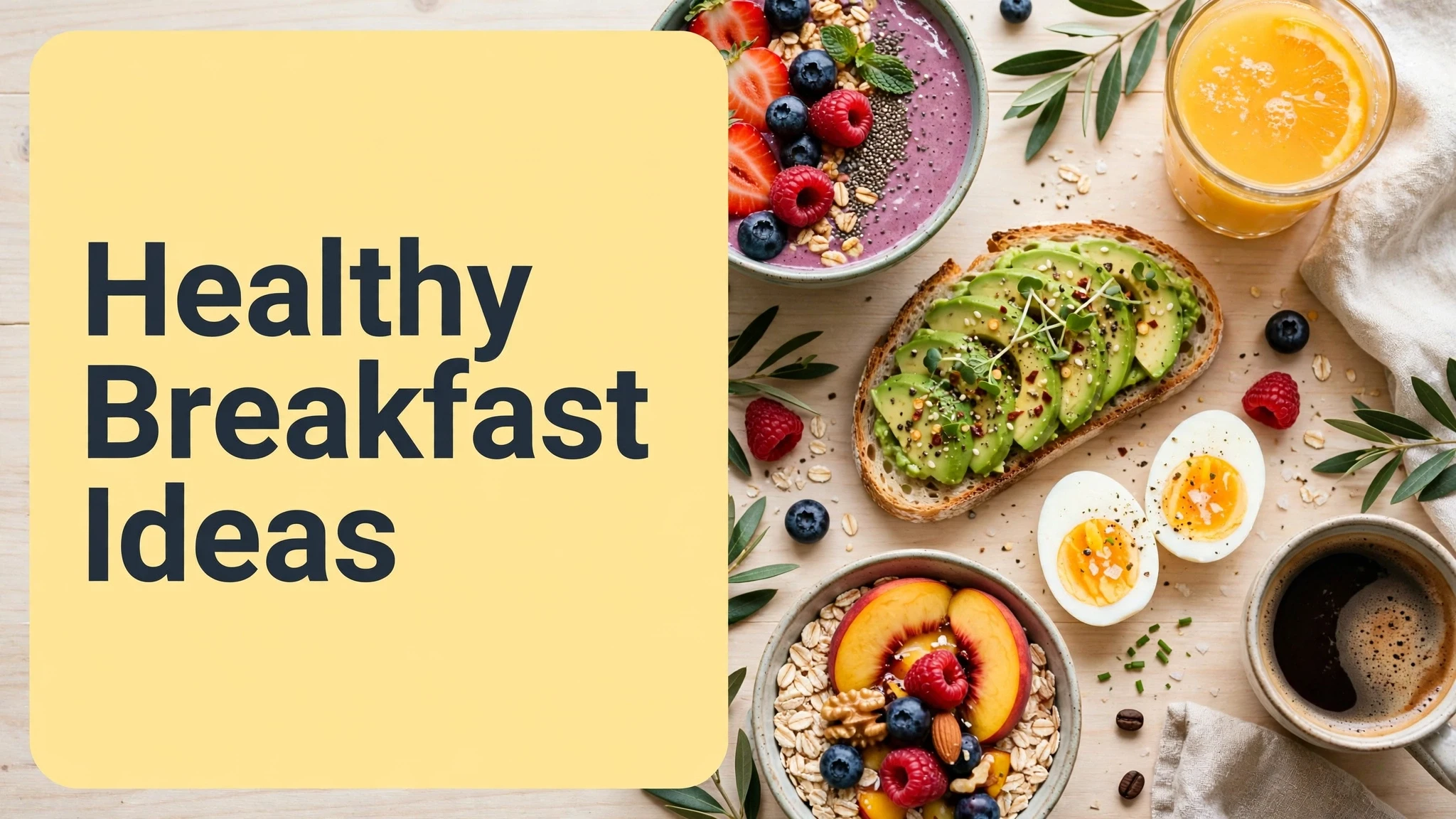
This guide brings together the best healthy breakfast ideas for busy mornings in 2027, from overnight oats to eggs, smoothies, and simple toast combinations. Each idea takes minutes, uses ordinary ingredients, and provides the protein, fibre, and energy that keep you full until lunch. Whether you have five minutes or fifteen, whether you eat at home or on the way to work, there is a breakfast here that will work for you. The best breakfast is not the most elaborate. It is the one you actually eat.
Overnight Oats: The Five-Minute Breakfast You Make the Night Before
Overnight oats are the easiest healthy breakfast there is, because the work is done the night before. Mix oats with milk or yoghurt, add a spoonful of chia seeds, and leave the jar in the fridge overnight. By morning, the oats have softened into a creamy, filling breakfast, ready to eat cold or warmed briefly. Add fruit, nuts, or a drizzle of honey in the morning, and you have a breakfast that is high in fibre, filling, and endlessly variable. A basic recipe is 50 grams of oats, 120 millilitres of milk, and a tablespoon of yoghurt, though you can adjust the amounts to your taste.
The beauty of overnight oats is that they can be made in batches: prepare three or four jars on Sunday, and you have breakfast for the working week. They keep well in the fridge for three to four days, and they travel well, so you can eat them at your desk or on a train. Variations are endless: banana and peanut butter, berries and almonds, apple and cinnamon, or cocoa and hazelnut. Overnight oats are also cheap, because oats are one of the least expensive healthy foods, and they are filling, because the fibre and protein keep you full for hours. If you only try one idea from this guide, try this one.
Eggs: Fast, Filling, and Endlessly Versatile
Eggs are one of the best breakfast foods, because they are high in protein, quick to cook, and versatile. A boiled egg, made in advance and kept in the fridge, is a breakfast you can eat in a minute, with a piece of fruit or a slice of toast. Scrambled eggs take three minutes, and they can be made in a mug in the microwave if you are in a hurry. An omelette with vegetables, made the night before and reheated, is a filling breakfast that provides protein and fibre. Eggs are also inexpensive, and they keep well, so they are a practical choice for a busy household.
To make eggs a habit, boil a batch on Sunday and keep them in the fridge for the week. Peel them in advance, so that they are ready to eat. Or keep a carton of eggs and a loaf of bread by the stove, so that a quick breakfast is always possible. Eggs suit people who want a savoury breakfast, who need protein to stay full, and who have a few minutes to cook. They are also a good choice for people who are trying to reduce sugar, because they contain no sugar and they keep you full far longer than a sweet breakfast. A boiled egg and a banana is a complete breakfast in two minutes.
Smoothies and Yoghurt Bowls for Mornings on the Move
Smoothies are the best breakfast for people who eat on the move, because they can be made in two minutes and drunk on the way to work. A good smoothie needs a base, a fruit, and a protein: milk or yoghurt, a banana or berries, and a spoonful of peanut butter, a scoop of yoghurt, or a handful of oats. Blend it, pour it into a bottle, and you have a breakfast that is filling, portable, and easy to vary. Frozen fruit is cheaper than fresh, it keeps well, and it makes the smoothie cold without ice. A smoothie is not a meal replacement, but it is a real breakfast if it contains protein and fibre, not only fruit and juice.
Yoghurt bowls are a similar idea, for people who eat at a table. A bowl of Greek yoghurt, topped with berries, nuts, and a spoonful of oats or granola, takes two minutes to assemble and provides protein, calcium, and fibre. Choose plain yoghurt, not a sweetened one, because flavoured yoghurts often contain as much sugar as a dessert. Add your own fruit and nuts, and you control the sweetness. Both smoothies and yoghurt bowls are quick, flexible, and easy to adapt to what you have in the fridge, which makes them ideal for busy mornings.
Toast, Done Well: Simple Combinations That Work
Toast is often dismissed as a boring breakfast, but done well, it is quick, filling, and healthy. The key is the topping. Wholemeal toast with peanut butter and banana provides protein, fibre, and natural sweetness, and it takes two minutes. Wholemeal toast with avocado and a boiled egg provides healthy fats and protein, and it is a breakfast that keeps you full for hours. Wholemeal toast with cottage cheese and berries is light, fresh, and high in protein. The bread matters: choose wholemeal or seeded bread, because it contains fibre that white bread lacks, and it keeps you full longer.
Toast is also the best breakfast for people who have no appetite in the morning, because it is light and easy to eat. A single slice, with a good topping, is better than no breakfast at all, and it is a starting point: you can add a piece of fruit, a glass of milk, or a boiled egg as your appetite grows. Toast is cheap, it needs no cooking skill, and it is ready in minutes. The mistake is to choose white bread with jam or chocolate spread, which is mostly sugar and provides little lasting energy. Choose wholemeal bread, a protein topping, and a piece of fruit, and toast becomes a genuinely healthy breakfast.
Planning Ahead: The Habit That Makes Breakfast Happen
The reason most people skip breakfast is not that they do not have time, but that they have not planned. A few minutes of preparation the night before makes a healthy breakfast almost automatic. Set out the bowls, prepare the overnight oats, boil the eggs, or cut the fruit, so that the morning is a matter of assembling, not deciding. Keep a few staples in the kitchen: oats, eggs, yoghurt, fruit, nuts, and wholemeal bread, so that a breakfast is always possible, even when the fridge is nearly empty. And keep the breakfast simple: a routine of two or three breakfasts that you rotate is easier to maintain than a different breakfast every day.
It also helps to think about breakfast as part of your evening routine, not only as a morning task. When you are clearing up after dinner, spend two minutes preparing tomorrow’s breakfast. That small habit removes the morning decision, and it makes it far more likely that you will eat. If you eat at work, prepare a breakfast you can carry: overnight oats in a jar, a smoothie in a bottle, or a boiled egg and fruit in a bag. A breakfast that is ready to go is a breakfast that gets eaten, and that is the goal. Planning is not about perfection. It is about making the healthy choice the easy choice.
What to Avoid, and How to Keep It Simple
Not every breakfast that looks healthy is healthy, and it is worth knowing what to avoid. Sugary cereals, pastries, and flavoured yoghurts often contain as much sugar as a dessert, and they cause an energy crash an hour later. Fruit juice, even without added sugar, is high in natural sugars and low in fibre, and it is not a substitute for whole fruit. A breakfast that is only fruit, or only toast with jam, will not keep you full, because it lacks protein and fibre. The best breakfast contains all three: a source of protein, a source of fibre, and a piece of fruit or vegetable.
Keeping it simple is the key to a lasting habit. Choose two or three breakfasts you enjoy, rotate them, and do not worry about variety for its own sake. A healthy breakfast does not need to be different every day. It needs to be good enough, and it needs to happen. If you miss a day, do not give up: have a piece of fruit, a glass of milk, or a handful of nuts, and try again tomorrow. Breakfast is a habit, not a test, and the best habit is the one you can keep. Start with one idea from this guide, make it part of your morning, and build from there. Your day will be better for it.
Breakfasts for Different Mornings: Workdays and Weekends
Before moving on, it helps to slow down on breakfasts for different mornings: workdays and weekends, because this is the stage where small choices in a healthy breakfast quietly decide whether the experience succeeds.
What makes overnight oats soaked with milk, yoghurt and chia seeds worth studying inside a healthy breakfast is the way it balances simplicity and depth, because beginners can use it at once while experienced readers still find something new. Sharing overnight oats soaked with milk, yoghurt and chia seeds with a friend or reading what others noticed about it can open up angles that were missed, and discussion is one of the fastest ways to deepen a grasp of a healthy breakfast. Choosing overnight oats soaked with milk, yoghurt and chia seeds over a flashier option is often the wiser move, because substance lasts longer than novelty, and a healthy breakfast is best enjoyed when quality comes before hype.
The smartest approach to a boiled egg prepared the night before and peeled in seconds is to set a small, clear goal first, such as understanding one step or one idea, because a healthy breakfast becomes far less overwhelming in small pieces. Compared with a random choice in the same area, a boiled egg prepared the night before and peeled in seconds stands out because it has a clear purpose, and that clarity is what makes a healthy breakfast feel rewarding instead of confusing. A boiled egg prepared the night before and peeled in seconds often comes up first when people discuss a healthy breakfast, and the reason is simple: it is easy to understand, easy to try, and easy to explain to someone else.
What finally matters about Greek yoghurt layered with berries and a spoonful of oats is not how popular it is but how well it fits a person’s own taste, time, and mood, since a healthy breakfast works best when it is personal. One idea worth understanding early in a healthy breakfast is Greek yoghurt layered with berries and a spoonful of oats, which captures a central part of the subject without demanding specialist knowledge first. What makes Greek yoghurt layered with berries and a spoonful of oats worth studying inside a healthy breakfast is the way it balances simplicity and depth, because beginners can use it at once while experienced readers still find something new.
Taken together, these examples show that breakfasts for different mornings: workdays and weekends is less about perfection and more about paying attention, which is a theme that runs through all of a healthy breakfast.
Drinks With Breakfast: What Helps and What Hurts
There is more to drinks with breakfast: what helps and what hurts than first appears, and a little patience here reveals patterns in a healthy breakfast that keep showing up in later sections of this guide.
The smartest approach to wholegrain toast with peanut butter and sliced banana is to set a small, clear goal first, such as understanding one step or one idea, because a healthy breakfast becomes far less overwhelming in small pieces. Compared with a random choice in the same area, wholegrain toast with peanut butter and sliced banana stands out because it has a clear purpose, and that clarity is what makes a healthy breakfast feel rewarding instead of confusing. Wholegrain toast with peanut butter and sliced banana often comes up first when people discuss a healthy breakfast, and the reason is simple: it is easy to understand, easy to try, and easy to explain to someone else.
What finally matters about a smoothie blended from frozen fruit, spinach and milk is not how popular it is but how well it fits a person’s own taste, time, and mood, since a healthy breakfast works best when it is personal. One idea worth understanding early in a healthy breakfast is a smoothie blended from frozen fruit, spinach and milk, which captures a central part of the subject without demanding specialist knowledge first. What makes a smoothie blended from frozen fruit, spinach and milk worth studying inside a healthy breakfast is the way it balances simplicity and depth, because beginners can use it at once while experienced readers still find something new.
When it comes to drinks with breakfast, the simplest rule is the best one: water first, then whatever you enjoy, and keep the sugary drinks for an occasional treat rather than a daily habit.
Breakfast for Different Lives: Kids, Shift Workers, and Athletes
Breakfast is not the same for everyone, because lives are different, and the best breakfast is the one that fits the life of the person eating it. A child needs a breakfast that is quick, appealing, and provides energy for school, without too much sugar, which will cause a crash. A good breakfast for a child might be porridge with fruit, eggs on toast, or yoghurt with berries and a little honey, all of which are simple, nutritious, and easy to eat. It helps to involve children in choosing, and in preparing, because a child who helps to make breakfast is more likely to eat it, and to enjoy it. Keep it simple, keep it consistent, and avoid turning breakfast into a battle, because a calm morning is worth more than a perfect meal.
Shift workers face a different challenge, because their breakfast may be at midnight, or at dawn, and their body clock is disrupted. For them, the key is to eat something light, nutritious, and easy to digest, rather than a heavy meal, which can cause drowsiness. A smoothie, a bowl of soup, or eggs with toast can work well, depending on the time, and it is important to stay hydrated, because dehydration worsens fatigue. Shift workers should also avoid too much caffeine, especially near the end of a shift, because it can disrupt sleep. The best breakfast for a shift worker is one that provides steady energy, without overloading the stomach, and that fits into a schedule that is already difficult.
Athletes, and people who exercise in the morning, need a breakfast that provides energy, and that supports recovery. A breakfast with protein, such as eggs, yoghurt, or a smoothie with protein powder, and with carbohydrates, such as oats, toast, or fruit, is ideal, because it provides fuel, and it helps muscles recover. The timing matters: a small snack before exercise, and a larger breakfast after, is often better than a large meal before, which can cause discomfort. Hydration is also essential, and water should be drunk before, during, and after exercise. An athlete’s breakfast is not about restriction. It is about fuel, and it should be generous, balanced, and enjoyable.
Older people, and people with health conditions, may need a breakfast that is easy to chew, easy to digest, and rich in nutrients, such as porridge, soft eggs, or yoghurt, and they may need to be careful about sugar, salt, and fat, depending on their health. It is important to consult a doctor or a dietitian for specific advice, because general information is not a substitute for individual guidance. But the principles are the same: a breakfast that is simple, nutritious, and enjoyable, eaten regularly, and in a calm setting, is good for everyone, whatever their age, or their health. Breakfast is not a prescription. It is a meal, and it should be enjoyed.
Finally, remember that the best breakfast is the one you will actually eat, regularly, and with pleasure. A perfect breakfast that you do not enjoy, or that you do not have time for, is worse than a simple breakfast that you eat every day. Find the breakfasts that work for your life, prepare what you can in advance, and make the morning as easy as possible. That is the secret to a healthy breakfast habit: not perfection, but consistency, and enjoyment, day after day.
My Take:
I’ll start with the confession that matters: I used to skip breakfast, and I told myself it didn’t matter. I’d have coffee, feel fine for an hour, and then crash at ten, reaching for biscuits and wondering why I couldn’t concentrate. It took me longer than it should have to connect the two. Breakfast wasn’t a luxury. It was fuel, and I was trying to run a day on empty. If you skip breakfast and then wonder why your mornings are hard, the answer might be simpler than you think.
The advice that actually helped me was embarrassingly small: prepare it the night before. Overnight oats in a jar, eggs boiled on Sunday, fruit cut and ready. The mornings I eat well are not the mornings I have more time. They’re the mornings I did two minutes of work the night before. That shift, from morning effort to evening preparation, is the whole trick. Willpower is weakest at 7am. Preparation is strongest at 9pm. Use the evening, and the morning takes care of itself.
Let me be direct about what a good breakfast needs, because the advice is usually vague. It needs protein and fibre. That’s it. Protein keeps you full, fibre slows everything down, and together they carry you to lunch without a crash. An egg, some yoghurt, a handful of oats, a spoonful of peanut butter: these are the ingredients that matter. A breakfast of jam on white toast has neither, and that’s why you’re hungry again by nine. You don’t need a perfect breakfast. You need one with protein and fibre, and the rest is detail.
I also want to be honest about smoothies, because they’re sold as a miracle and they’re not. A smoothie made of fruit and juice is sugar water with a health halo. A smoothie made of yoghurt, oats, banana, and peanut butter is a real breakfast. The difference is what’s in it, not the format. The same is true of yoghurt bowls and cereals: read what’s actually in them, not what the packet promises. A plain yoghurt with berries is a good breakfast. A flavoured yoghurt with as much sugar as a dessert is not, however pretty the bowl looks.
So here’s my suggestion, and it’s a small one. Pick one breakfast from this guide, the one that sounds easiest, and make it your default for two weeks. Prepare it the night before. Eat it every morning, even when you don’t feel like it. Notice how you feel at ten, and at twelve. If you’re fuller, steadier, and less reliant on biscuits, keep it. If not, try another. Breakfast is a habit, and habits are built by repetition, not by inspiration. Start with one, repeat it, and let the rest follow.
The night before is where a good breakfast is really made, because mornings are rushed, and a decision made at 7am is usually a bad one. Overnight oats take two minutes to prepare the evening before: oats, milk, yoghurt, and whatever fruit or seeds you like, left in the fridge, and ready to eat cold in the morning. Egg muffins are the same idea for a savoury breakfast: eggs, vegetables, and a little cheese, baked in a muffin tray on Sunday, and reheated through the week. A pot of porridge can be cooked in a batch, kept in the fridge, and warmed with a splash of milk. None of this is complicated, and none of it needs a special skill. It needs a small habit, made the night before, and it removes the morning scramble that pushes people towards a sugary cereal or a skipped meal.
Children need a different breakfast from adults, and it is worth saying so, because the same advice does not fit both. A child needs energy for school, and a breakfast they will actually eat, and a plate of plain oats with nothing on it will not do that, however healthy it is. A little sweetness is fine, if the base is good: porridge with banana and a spoonful of honey, or toast with peanut butter and sliced apple, will keep a child going until lunch, and it is a better start than a pastry eaten on the way to school. For adults, the priority is often staying full, and that means protein and fibre, not sugar. The shared rule is simple: a breakfast that is prepared, that has some protein, and that you enjoy eating, will beat a perfect breakfast that you never make. Prepare it the night before, and the morning will take care of itself.
Different lives need different breakfasts, and that is the point I would emphasise most, because too much breakfast advice assumes that everyone lives the same life, with the same schedule, the same needs, and the same tastes. That is not true. A child, a shift worker, an athlete, and an older person all need different things, and the best breakfast is the one that fits the person, not the one that fits a rule. I would urge you to think about your own life, your own schedule, and your own needs, and to choose a breakfast that works for you, rather than following a plan that was designed for someone else. Your life is yours, and your breakfast should be too.
I also think we should be honest about the fact that breakfast does not have to be perfect, and that a simple breakfast, eaten regularly, is better than an elaborate one, eaten rarely. Porridge, eggs, yoghurt, and fruit are all simple, nutritious, and affordable, and they are enough, for most people, most of the time. Do not feel that you must make a complicated breakfast, or that you must follow a trend, to eat well. The basics are the basics for a reason: they work, they are accessible, and they are enjoyable. Keep it simple, keep it regular, and you will be eating well, without stress, and without expense.
Another point I would make is about the morning itself, because breakfast is not only about food. It is about the start of the day, and the way you begin it matters. A calm morning, with time to sit, to eat, and to prepare for the day, is better than a rushed one, however good the food. If you can, wake a little earlier, prepare the night before, and give yourself time. That time is a gift, and it will make your day better, not only because you ate well, but because you started well. The morning sets the tone, and a good breakfast, eaten calmly, is one of the best ways to set it.
And the final thing I would say is to enjoy breakfast, and to let it be a pleasure, not a chore. A meal that is eaten with enjoyment, with family, or in quiet, is more nourishing than a meal that is eaten in a rush, or with guilt. Choose foods you like, prepare them simply, and eat them with attention, and you will find that breakfast becomes a highlight of the day, rather than an obligation. That is the best breakfast habit, and it is available to anyone, whatever their life, whatever their schedule, and whatever their budget. Eat well, start well, and enjoy the morning. That is enough.
Frequently Asked Questions
What is the healthiest breakfast for a busy morning?
Overnight oats, boiled eggs, or Greek yoghurt with fruit and nuts are among the healthiest quick breakfasts. They provide protein and fibre, take minutes to prepare, and keep you full until lunch.
How can I make breakfast in 5 minutes?
Prepare overnight oats the night before, boil eggs in advance, or make a smoothie with yoghurt, banana, and oats. Keep staples such as oats, eggs, and fruit in the kitchen so a quick breakfast is always possible.
Is it bad to skip breakfast?
Skipping breakfast is common, but many people find they feel tired and hungry by mid-morning and rely on sugary snacks. A small breakfast with protein and fibre, even just an egg and fruit, usually supports energy and concentration better.
What should I avoid for breakfast?
Avoid sugary cereals, pastries, flavoured yoghurts, and fruit juice, which are high in sugar and cause an energy crash. A breakfast that is only fruit or jam on white toast lacks the protein and fibre needed to stay full.
Are smoothies a healthy breakfast?
A smoothie can be healthy if it contains protein and fibre, such as yoghurt, oats, and peanut butter alongside fruit. A smoothie made only of fruit and juice is high in sugar and will not keep you full.
What is a good high-protein breakfast?
Eggs, Greek yoghurt, cottage cheese, and peanut butter are all good high-protein breakfast foods. A boiled egg with toast, or yoghurt with nuts and berries, provides protein that keeps you full for hours.