Best Christmas Gift Wrapping Ideas 2026
In this post
Gift wrapping is often treated as an afterthought, something done late at night with torn paper and missing tape, yet it shapes how a gift is received. A well-wrapped present creates anticipation before it is opened, signals care from the giver, and turns an ordinary object into an occasion. A poorly wrapped present, even if the gift inside is excellent, can feel rushed. The good news is that beautiful wrapping does not require expensive paper or professional skill. It requires a few basic techniques, a consistent colour scheme, and attention to simple details such as sharp folds, neat tape, and a finishing touch that suits the recipient.
The best wrapping ideas for 2026 share a common principle: choose one style and repeat it. A table full of gifts in mixed, clashing papers looks chaotic, even if each individual gift is wrapped well. A table full of gifts in two or three coordinated papers, with the same ribbon or tag style, looks deliberate and premium, even if the papers themselves are inexpensive. That coordination is the secret of shop displays and professional gift services, and it can be copied at home by buying paper in bulk, choosing a palette before shopping, and resisting the urge to buy every festive design on the shelf.
This guide covers paper choices, folding techniques, bows, natural decorations, fabric wrapping, boxes, and eco-friendly options, with practical tips for awkward shapes, children, and tight budgets. Wrapping well is a skill that improves quickly with practice, and a single evening spent wrapping a few practice gifts can transform the look of a whole Christmas. The goal is not perfection, but a finish that feels thoughtful, tidy, and personal, so that the moment of opening feels as special as the gift inside.
Choose a Palette and Paper That Work Together
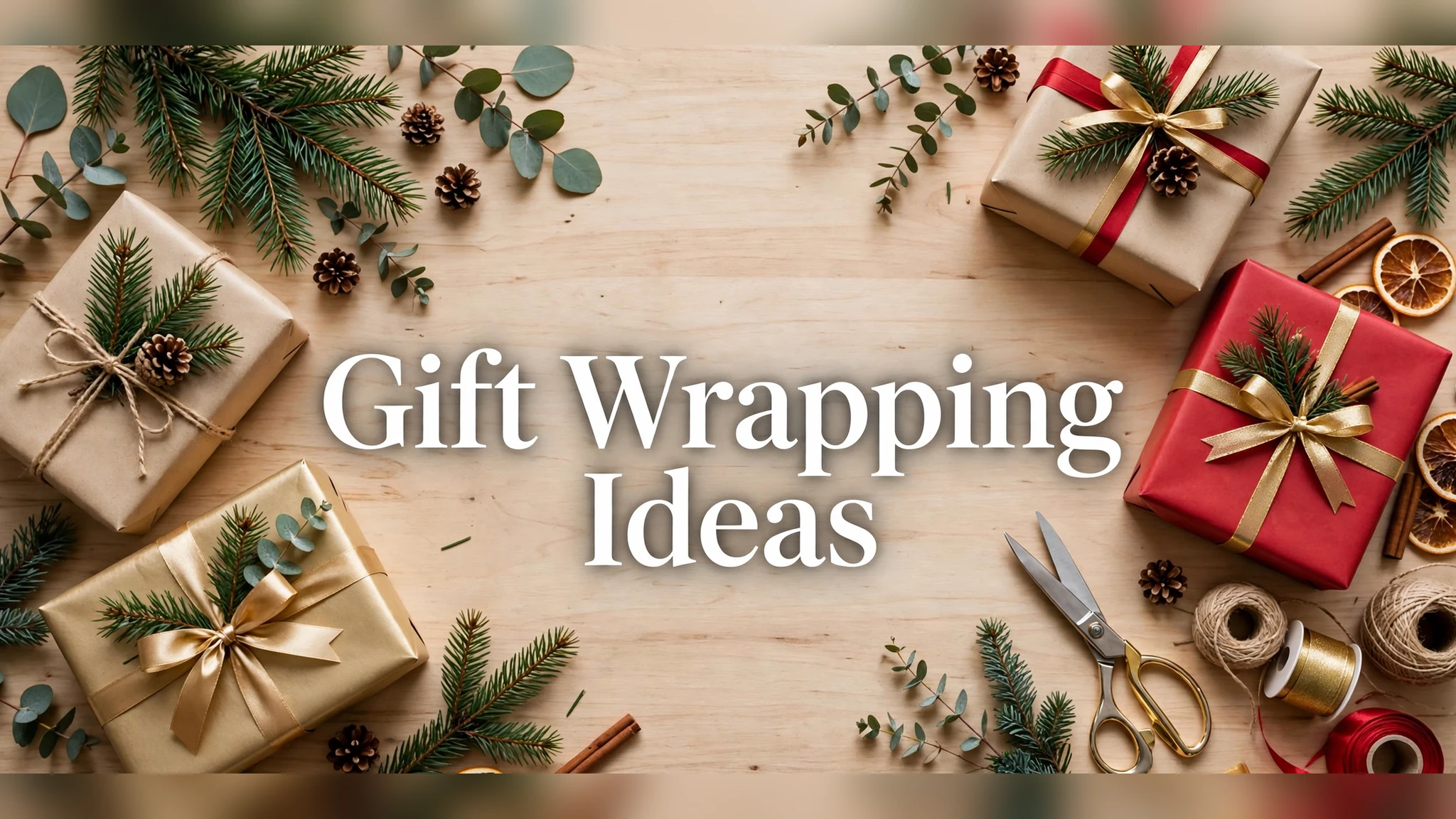
Start by choosing two main colours and one accent, rather than buying paper by impulse. Classic combinations include kraft brown with red and gold, deep green with cream and gold, navy with silver and white, or red with white and natural twine. Kraft paper is particularly versatile: it is inexpensive, sturdy, easy to fold, and it makes ribbons, greenery, and tags stand out. Plain coloured paper, without a busy pattern, also wraps more neatly, because pattern matching is not needed at seams and folds. If patterned paper is used, choose a small, repeating pattern that looks good from any angle, rather than a large design that will be cut awkwardly.
Paper quality matters more than paper price. Thin, glossy paper tears easily, shows tape, and creases badly, while slightly thicker matte paper folds crisply and holds its shape. Test a sheet by folding a corner: it should crease cleanly without cracking. Recycled kraft paper, often sold in rolls, is a good budget choice and also suits eco-friendly wrapping. Buy a roll rather than many small sheets if you have many gifts, because a roll allows you to cut exactly the amount needed for each gift, reducing waste and cost. Keep paper in a tube or rolled, not folded, because fold lines in stored paper will show on finished gifts.
Consider the recipient and the gift when choosing paper. A child’s gift can handle bright, playful paper, while an adult’s gift may suit a calmer palette. A fragile or oddly shaped gift may need sturdier paper or a box first. A gift that will travel by post needs extra protection and paper that will not tear in transit. Planning paper by recipient group, rather than wrapping each gift in a random design, also helps with labelling: for example, all gifts for one family in kraft and red, all gifts for another in green and gold. That system reduces mix-ups and looks impressive under the tree.
Master Clean Folds, Corners and Tape
Clean wrapping is mostly about measurement and patience. Place the gift face down in the centre of the paper, leaving enough paper on each side to cover the gift with a small overlap. Too much paper creates bulky folds, while too little leaves gaps. A useful rule is to cut paper so that it wraps around the gift with about two to three centimetres of overlap, and so that the ends extend about half the height of the gift on each side. With practice, this measurement becomes instinctive, but for a first gift, measuring with a ruler or marking the paper lightly with a pencil can help.
Folding the long sides first, pulling the paper taut but not so tight that it tears, creates a smooth base. Use double-sided tape on the inside of the overlap for a clean finish, or place a small piece of tape on the outside if double-sided tape is unavailable. For the ends, fold the top flap down, fold the side flaps inward at an angle to create neat triangles, then fold the bottom flap up and tape it. Sharp creases, made by running a fingernail or a ruler edge along each fold, make the difference between a tidy gift and a soft, baggy one. Work on a flat, clear table, and keep scissors, tape, and ribbon within reach, so you are not searching for tools halfway through a wrap.
Common mistakes are easy to fix. If a corner is bulky, unfold it and refold with less paper, trimming excess if needed. If tape shows, use smaller pieces or double-sided tape. If paper tears, a small patch on the underside, or a ribbon placed over the tear, can hide it, though a large tear is best rewrapped. If a gift is very light and slides inside the paper, add a little tissue paper inside the box or around the gift to hold it in place. Wrapping slowly, one gift at a time, produces better results than rushing through ten gifts at once, and it is also more enjoyable, especially with music or a festive drink nearby.
Ribbons, Bows and Natural Finishing Touches
Ribbon transforms a wrapped gift from tidy to special, but it should be chosen with the same restraint as paper. A single wide ribbon, tied in a simple bow, often looks better than several narrow ribbons tangled together. Satin ribbon gives a classic, premium feel, grosgrain ribbon gives texture, and twine or raffia gives a rustic, natural feel that suits kraft paper perfectly. To tie a neat bow, wrap ribbon around the gift, cross it underneath, bring it to the top, and tie a bow as you would a shoelace, then adjust the loops to equal size and trim the ends at an angle. Practice on a spare box before wrapping real gifts, because a good bow is a skill, not a talent.
Natural decorations are inexpensive and highly effective. A small sprig of pine, eucalyptus, rosemary, or holly tucked under a ribbon adds colour, scent, and a festive feel, and it costs little if gathered from a garden or bought as a small bunch. Dried orange slices, cinnamon sticks tied with twine, small pine cones, and dried flowers also work well, provided they are light and securely attached. Avoid heavy or sharp decorations that could fall off or damage other gifts, and check for allergies if the recipient is sensitive to scented plants. A single natural element, placed deliberately, looks more premium than a cluster of unrelated decorations competing for attention.
Tags complete the finish. Handwritten tags feel personal and are often kept by recipients, while printed tags can look neat and consistent if handwriting is a concern. A tag should include the recipient’s name clearly, and optionally a short message or a clue about the gift. Attach the tag with ribbon, twine, or a small clip, rather than taping it flat to the paper, where it can look like an afterthought. For gifts under a large tree, a tag in a contrasting colour helps the recipient find their gifts quickly. For a coordinated table, tags in the same style, with the same pen or font, reinforce the overall look and show that the wrapping was planned, not improvised.
Fabric Wrapping, Boxes and Awkward Shapes
Fabric wrapping, inspired by the Japanese art of furoshiki, is an elegant and reusable alternative to paper. A square of fabric, such as a scarf, a tea towel, or a specially bought wrapping cloth, can be folded around a gift and tied at the top, creating a finish that is both wrapping and part of the gift. Fabric is ideal for round, soft, or awkwardly shaped gifts that are difficult to wrap in paper, because it drapes and ties rather than needing sharp folds. It is also eco-friendly, because the fabric can be reused, and it suits recipients who appreciate sustainable choices. Choose fabric that is not too thick, so knots are neat, and practise the fold on a spare item first.
Boxes solve many wrapping problems. A gift in a box, with tissue paper inside, wraps cleanly regardless of the gift’s original shape. Keep sturdy boxes from online orders, shoe boxes, or gift boxes bought in bulk, and wrap the box rather than the gift itself. For a premium finish, wrap the lid and base separately, so the recipient can open the box without tearing the paper, though this takes more time and paper. Alternatively, use a decorative gift bag for awkward items, with tissue paper arranged at the top, which is fast, tidy, and reusable. A bag is not a lesser choice; when chosen in a coordinated colour and finished with a tag and ribbon handles, it can look just as thoughtful as a wrapped box.
Awkward shapes need specific strategies. A bottle can be wrapped in paper like a sweet, with twisted ends tied with ribbon, or placed in a bottle bag. A round gift can be wrapped by gathering paper at the top and tying it, like a pouch, rather than trying to fold flat ends. A soft gift, such as clothing, should be folded neatly, placed in a box or bag, and then wrapped, rather than wrapped directly in paper that will look lumpy. A very large gift can be wrapped in a sheet, a tablecloth, or a large piece of fabric, tied with a bow, or simply decorated with a large ribbon and tag, which is often more practical and more striking than attempting to cover it entirely in paper.
Eco-Friendly Wrapping Without Losing the Magic
Eco-friendly wrapping has become more popular, and it does not need to look plain. Recycled kraft paper, paper that can be recycled after use, and fabric wraps are the most accessible options. Avoid paper with glitter, foil, or plastic coating, because those materials often cannot be recycled, even if they look festive. Check local recycling guidance, because rules vary, and choose paper labelled as recyclable if you are unsure. Using paper tape instead of plastic tape, and twine instead of plastic ribbon, further improves recyclability, though the most important step is simply using less material overall.
Reusing wrapping materials is another effective strategy. Paper that is carefully opened can be ironed flat on a low setting, if safe, or reused for smaller gifts. Ribbons, bows, and gift bags can be saved and reused for years, and a box of saved wrapping supplies, kept from one Christmas to the next, reduces both cost and waste. Children can be taught to open gifts carefully to preserve paper, though this should be presented as a fun challenge, not a rule that spoils excitement. A family that reuses wrapping often develops its own traditions, such as a particular ribbon that appears every year, or a fabric wrap that is passed between family members.
Other eco-friendly ideas include wrapping gifts in items that are themselves useful: a tea towel, a scarf, a tote bag, or a pillowcase. Newspaper, maps, children’s drawings, and brown paper decorated with stamps or hand-drawn designs can also make charming, personal wrapping, especially for friends who appreciate creativity over luxury. The key is to make eco-friendly wrapping look intentional, not accidental. A brown paper gift with a neat bow, a sprig of greenery, and a handwritten tag looks deliberate and premium. A gift hastily wrapped in newspaper with torn edges and no finish looks careless, even if the intention was sustainable. Presentation, not material cost, determines whether eco-friendly wrapping feels special.
Wrapping for Children, Post and Last-Minute Gifts
Wrapping for children calls for a different balance between beauty and durability. A child’s gift will often be shaken, carried, and opened with great enthusiasm, so wrapping should be sturdy, with extra tape on seams and a tag that will not fall off. Bright paper, playful patterns, and a large bow suit children’s gifts, and a small extra, such as a sticker or a tiny candy cane attached to the ribbon, can add excitement, provided allergies and choking hazards are considered for young children. For very young children, avoid small detachable decorations that could be swallowed, and avoid wrapping that is difficult to open, because frustration can spoil the moment. A gift that opens easily, with a satisfying tear of paper, is often more enjoyable for a child than a perfectly sealed, hard-to-open package.
Gifts sent by post need extra care. Wrap the gift in paper, then place it in a sturdy box with padding, such as tissue paper, bubble wrap, or shredded paper, so it does not move during transit. Seal the outer box with strong tape, label it clearly, and consider an outer layer of plain paper if the inner wrapping is decorative and you want it to survive uncreased. Avoid decorations that protrude, such as large bows or pine sprigs, on posted gifts, because they can be crushed or cause postal delays. Instead, include a small decoration inside the box, or attach a flat tag, so the recipient still experiences a festive opening. Posting early in December reduces the risk of delays and gives the recipient time to place the gift under their own tree.
Last-minute wrapping, though stressful, can still look good with a simple system. Keep a ready kit in one place: a roll of kraft paper, scissors, tape, twine, a few tags, and a pen. When a last-minute gift arrives, wrap it in kraft paper, tie twine around it, add a sprig of greenery if available, and write a tag by hand. That five-minute system looks intentional and premium, far better than a rushed attempt with mismatched paper and torn edges. If time is extremely short, a gift bag with tissue paper, in a coordinated colour, is a dignified solution, not a failure. The recipient will remember the gift and the card far longer than the wrapping method, provided the wrapping is tidy and the tag is clear.
My Take:
I think gift wrapping is undervalued because it is seen as packaging, when it is actually part of the gift. The moment someone sees a wrapped present, they form an impression about how much thought went into it, before they know what is inside. That impression is not about money. A kraft paper gift with a neat fold, a simple ribbon, and a handwritten tag can feel more thoughtful than an expensive gift in torn, mismatched paper, because it shows that the giver took time. Time is the real luxury in wrapping, not paper, and I think more people would wrap well if they understood that a few extra minutes, not a few extra pounds or dollars, make the difference.
My strongest view is about coordination. A table of gifts in one palette looks intentional, calm, and premium, while a table in ten random papers looks noisy, even if each gift was wrapped with care. That coordination is not about being rigid or boring. It is about editing choices, just as in cooking or dressing: a few colours, repeated well, create harmony, while too many colours, used at once, create confusion. I would encourage anyone wrapping many gifts to choose a palette first, buy paper in that palette, and resist impulse purchases. The result will look better, cost less, and be easier to manage, because you will not be searching for matching ribbon at the last minute.
I also believe that natural decorations deserve more credit than shiny plastic ones. A sprig of rosemary, a dried orange slice, or a cinnamon stick adds scent, texture, and a connection to the season that plastic glitter cannot match. Natural decorations are also usually cheaper, lighter, and more sustainable, and they photograph beautifully on kraft paper. Plastic bows and glitter, by contrast, often look cheap up close, shed everywhere, and cannot be recycled. I am not against all decorative items, but I think a single natural touch, placed well, will always beat a pile of plastic decorations placed at random. Restraint, again, is the skill: one sprig, one ribbon, one tag, done well.
Another belief I hold is that wrapping should be enjoyable, not a stressful chore done at midnight on Christmas Eve. Wrapping a few gifts each evening in December, with music, a drink, and a clear table, turns the task into a pleasant ritual. Wrapping everything in a panic, with tired hands and missing tape, turns it into a resentment, and that resentment shows in the finish. Planning wrapping time is therefore part of wrapping well, just as planning paper is. I would rather see someone wrap five gifts calmly over five evenings than wrap twenty gifts frantically in one night, because calm hands make sharp folds, and sharp folds make beautiful gifts.
I also feel that eco-friendly wrapping should be presented as premium, not as a compromise. Too often, sustainable wrapping is described as worthy but dull, as if caring for the environment meant accepting ugly presents. That framing is wrong. Kraft paper, fabric, twine, and natural greenery can look more elegant than foil and glitter, precisely because they are simple, textured, and tactile. A fabric-wrapped gift that becomes a scarf, or a tea-towel-wrapped gift that becomes part of the present, is clever and generous, not cheap. If we present eco-friendly wrapping with confidence and good design, more people will choose it, and the environmental benefit will follow from good taste, not from guilt.
Finally, I think the best wrapping tradition is one that includes the recipient’s personality. A tag with a personal message, a ribbon in a favourite colour, a small decoration that references a shared joke, or paper chosen because the recipient loves a particular pattern, all turn wrapping from generic to personal. Those details take only a minute, but they are often remembered longer than the gift itself, because they show that the giver was thinking about the person, not just about the object. A gift wrapped with that kind of attention says, before it is even opened, that the recipient matters. That message, delivered through paper, ribbon, and a handwritten name, is the real purpose of wrapping, and it is worth doing well.
I also think wrapping can be a creative outlet that is undervalued because it is temporary. A beautifully wrapped gift lasts only until it is opened, and that temporariness can make the effort feel wasteful. But many of life’s most meaningful creations are temporary: a meal, a song, a conversation, a snowman. Their value lies in the moment, not in permanence. Wrapping a gift beautifully is a way of saying that the moment of giving matters, even if the paper is soon torn and recycled. That attitude — caring about a fleeting moment — is actually a generous one, because it prioritises experience over possession. A gift wrapped with care creates a memory of opening that lasts far longer than the paper itself, and that memory is the real product of wrapping.
There is also a practical lesson about tools and workspace that I want to emphasise. Good wrapping is much easier with a clear table, sharp scissors, good tape, and paper stored in a roll rather than folded in a drawer. Many wrapping frustrations come not from lack of skill, but from blunt scissors, tangled ribbon, and paper that has been creased by poor storage. Investing a few minutes in setting up a wrapping station — even just clearing a table and laying out tools in order — transforms the task. That principle applies to many crafts: preparation is not wasted time, it is the work itself, done in advance. A host who prepares a wrapping station in early December will wrap better, faster, and with less stress than a host who searches for tape at midnight on Christmas Eve, and that difference will show in every gift.
One last practical encouragement: wrap one practice gift before you wrap the real ones. Use spare paper, practise a bow, test a tag, and see how the palette looks under your own lights. That single practice run, taking less than ten minutes, will improve every gift that follows, because your hands will already know the folds. Confidence in wrapping, like confidence in cooking, comes from one small rehearsal, not from reading about technique alone, and it turns a dreaded chore into a skill you can enjoy each December.
Frequently Asked Questions
What is the easiest premium Christmas wrapping style? Kraft paper with a single ribbon, a sprig of greenery, and a handwritten tag is the easiest premium style. It is inexpensive, coordinates well, and looks deliberate without requiring advanced skills.
How do I wrap a gift neatly without bulky corners? Measure paper so it overlaps by only a few centimetres, fold long sides first with taut paper, then fold end flaps into neat triangles with sharp creases. Trim excess paper if corners become bulky.
Can I wrap Christmas gifts in fabric? Yes, fabric wrapping inspired by furoshiki is reusable and ideal for awkward shapes. Use a square of fabric, fold it around the gift, and tie it neatly at the top, choosing fabric that is not too thick for clean knots.
Is glitter wrapping paper recyclable? Usually not, because glitter, foil, and plastic coatings often prevent recycling. Choose plain or recycled kraft paper, paper tape, and twine for a more recyclable finish, and check local recycling rules.
How do I wrap a bottle or round gift? Wrap a bottle like a sweet with twisted paper ends tied with ribbon, or use a bottle bag. For a round gift, gather paper at the top and tie it as a pouch, or place the gift in a box first for clean folds.
What should I put on a gift tag? Write the recipient’s name clearly, plus a short message or clue if you like. Attach the tag with ribbon or twine rather than taping it flat, and use a contrasting colour so it is easy to find under the tree.