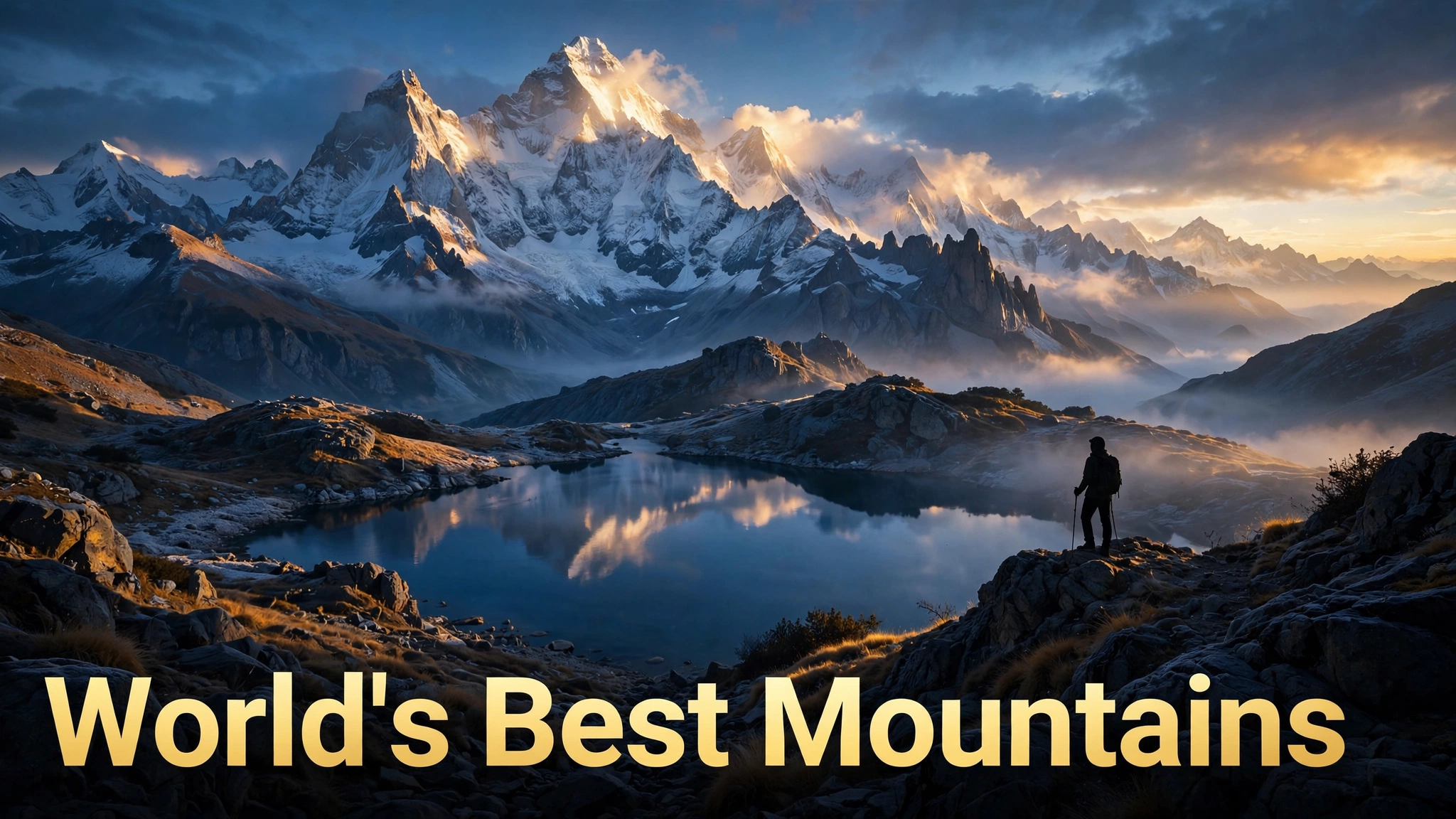
Best Mountain Destinations in the World 2027
In this post
- The Alps: Europe’s Classic Mountains for Every Level
- The Himalayas: High, Sacred, and Unforgettable
- The Rockies, Andes, and North and South American Giants
- Other Great Ranges: Atlas, Caucasus, and Beyond
- Planning Mountain Trips: Season, Fitness, and Safety
- Mountains for Families, Photographers, and Winter Lovers
- My Take:
Mountains offer something no city or beach can quite match: vast scale, clean air, silence broken only by wind and water, and the satisfying feeling of reaching a viewpoint on foot. The world’s best mountain destinations suit very different travellers, from gentle walkers who want lake views and cable cars, to serious hikers planning multi-day treks, to skiers, climbers, and photographers chasing light. This guide compares leading mountain regions for 2027, explains what each does best, and gives practical advice on seasons, fitness, safety, and costs. Mountain weather, altitude, and trail conditions change quickly, so always check local forecasts, trail reports, and official park guidance before setting out, and never rely on a single guidebook or blog post for safety decisions.
The Alps: Europe’s Classic Mountains for Every Level
The Alps, stretching across France, Switzerland, Italy, Austria, Germany, and Slovenia, remain the world’s most accessible high mountains for ordinary travellers. Their strength is infrastructure: efficient trains, cable cars, mountain huts, marked trails, and villages with hotels, restaurants, and medical care, all within reach of major cities. In summer, the Alps offer gentle lake walks, flower meadows, and family-friendly trails, alongside serious high routes for experienced hikers. In winter, they offer world-class skiing, snowboarding, and snowshoeing, with resorts for every budget, though famous Swiss resorts can be expensive and early booking is essential. The shoulder seasons, late spring and early autumn, bring quieter trails and lower prices, but also variable weather and some closed lifts and huts, so check opening dates carefully.
Different Alpine countries offer different characters. Switzerland is famous for dramatic peaks such as the Matterhorn region, pristine trains, and immaculate trails, but it is also the most expensive Alpine destination. France offers vast ski areas and iconic Mont Blanc routes, with lively resort towns and excellent food. Italy’s Dolomites are beloved for their pale, jagged peaks, via ferrata routes, and rifugio hut-to-hut hiking, combining dramatic scenery with wonderful mountain cuisine. Austria offers warm hospitality, affordable family resorts, and beautiful lake-and-mountain combinations. Slovenia’s Julian Alps, around Lake Bled and Triglav National Park, provide a quieter, more affordable Alpine experience with emerald rivers and excellent hiking. Choosing between them depends on budget, language, and whether you prioritise skiing, hiking, or village life.
For first-time Alpine visitors, a base in one valley for several days works better than rushing between countries. Choose a village with a lift or trailhead, walk a valley trail on the first day to acclimatise, then attempt a higher route. Mountain huts allow multi-day walks without carrying camping gear, but book ahead in summer, carry water, sun protection, and a map, and always tell someone your route. Altitude in the Alps is moderate compared with the Himalayas, but weather can still change rapidly, with afternoon thunderstorms in summer. A waterproof jacket, layers, sturdy footwear, and a charged phone with offline maps are essential, even for a short walk.
The Himalayas: High, Sacred, and Unforgettable
The Himalayas, spanning Nepal, India, Bhutan, China, and Pakistan, contain the world’s highest peaks, including Everest, and they offer mountain experiences of extraordinary scale and culture. For many travellers, Nepal is the most accessible Himalayan destination, with famous treks such as Everest Base Camp and the Annapurna Circuit, plus shorter, gentler walks in lower valleys. These treks pass through Sherpa and Gurung villages, Buddhist monasteries, suspension bridges, and rhododendron forests, combining physical challenge with deep cultural immersion. Teahouse trekking, where you sleep and eat in local lodges along the trail, makes multi-day Himalayan walking possible without camping equipment, though fitness, acclimatisation, and a reputable guide or agency matter greatly.
Altitude is the defining challenge of the Himalayas. Treks often rise above 3,000 metres, and some exceed 5,000 metres, where altitude sickness can affect anyone, regardless of fitness. The key safety principles are gradual ascent, rest days for acclimatisation, staying hydrated, recognising symptoms such as headache, nausea, and dizziness, and descending promptly if symptoms worsen. Never ascend to sleep higher while feeling ill, and never rely on medication alone to push through serious symptoms. A guide who knows the route, weather, and evacuation options is not a luxury in high Himalayan trekking; it is a safety investment. Travel insurance that specifically covers high-altitude trekking and helicopter evacuation is essential, and it must be checked carefully, since many standard policies exclude it.
Bhutan offers a different Himalayan experience: controlled, low-volume tourism, pristine forests, cliffside monasteries such as Tiger’s Nest, and a strong focus on cultural preservation and happiness. It is more expensive, due to tourism fees and guided travel requirements, but it rewards visitors with uncrowded trails and a distinctive culture. India’s Himalayan regions, including Ladakh, Himachal Pradesh, and Sikkim, offer high passes, monasteries, and dramatic deserts and valleys, with a range of trekking and road journeys. For travellers who cannot trek at high altitude, lower Himalayan foothills, hill stations, and cultural tours still provide mountain air, views, and village life without extreme elevation. The Himalayas demand respect, preparation, and humility, and they repay it with experiences that stay with travellers for life.
The Rockies, Andes, and North and South American Giants
North America’s Rocky Mountains, stretching from Canada through the United States, offer vast national parks, wildlife, and a superb road-and-trail infrastructure. Banff and Jasper in Canada provide turquoise lakes, glaciers, and excellent hiking, with towns that cater well to visitors, though summer crowds and prices require early booking. In the United States, Colorado, Montana, Wyoming, and Utah offer iconic parks such as Rocky Mountain, Glacier, Yellowstone, and the red-rock mountains of the southwest, each with distinct geology and seasons. The Rockies suit road trips combined with day hikes, wildlife viewing, and, in winter, skiing in resorts such as Aspen, Whistler in Canada, and Jackson Hole. Distances are large, so a car is often necessary, and wildlife safety, including bear awareness, is a real consideration that park rangers explain clearly.
South America’s Andes, the world’s longest mountain range, offer extraordinary diversity, from Patagonia’s granite towers to Peru’s high passes and Bolivia’s high-altitude landscapes. Patagonia, shared by Argentina and Chile, is a dream for hikers and photographers, with Torres del Paine and Los Glaciares National Parks offering multi-day treks among glaciers, turquoise lakes, and wind-shaped peaks. Weather in Patagonia is famously changeable, with strong winds even in summer, so layered clothing, windproof gear, and flexible plans are essential. Peru’s Cordillera Blanca and the Inca Trail to Machu Picchu combine high mountain scenery with ancient history, though the Inca Trail requires permits booked well in advance and a licensed guide. The Andes demand altitude awareness similar to the Himalayas, especially in Peru and Bolivia, where cities and treks sit above 3,000 metres.
For travellers choosing between the Rockies and the Andes, the decision often comes down to infrastructure versus adventure. The Rockies offer easier logistics, clearer signage, and familiar services, making them excellent for families and first-time mountain travellers. The Andes offer wilder, more remote experiences and extraordinary cultural depth, but they require more planning, Spanish language basics, and tolerance for unpredictable transport and weather. Both ranges reward slow travel: base yourself in one park or valley, learn its trails and weather patterns, and allow rest days. A rushed mountain itinerary in either range misses the quiet mornings, wildlife encounters, and changing light that make mountain travel special.
Other Great Ranges: Atlas, Caucasus, and Beyond
Beyond the most famous ranges, several mountain regions deserve attention for 2027, often with lower costs and fewer crowds. Morocco’s Atlas Mountains offer a striking contrast: Berber villages, terraced valleys, and the ascent of Mount Toubkal, North Africa’s highest peak, within reach of Marrakech. Toubkal can be climbed in two days with a guide, making it an achievable high-mountain goal for fit walkers, though winter conditions require proper equipment and experience. The Atlas also offers gentle valley walks, cultural homestays, and a chance to experience mountain life very different from Europe or Asia. Heat in summer, cold at altitude in winter, and the need for a local guide on higher routes should all be planned for.
The Caucasus, between Europe and Asia, offers dramatic, less-visited mountains in Georgia and Armenia. Georgia’s Kazbegi and Svaneti regions combine medieval towers, glaciers, and excellent hiking, with warm hospitality and affordable guesthouses. Armenia’s mountains offer monasteries, volcanic landscapes, and quiet trails, though infrastructure is simpler than in the Alps. The Caucasus suits adventurous travellers who enjoy cultural depth, good food, and uncrowded trails, and who are comfortable with rougher roads and basic English outside main towns. Always check current travel advice for border regions and specific areas, since political situations can change.
Other notable ranges include New Zealand’s Southern Alps, with fjords, glaciers, and world-famous multi-day Great Walks; Japan’s Alps, offering hiking, hot springs, and autumn colours within easy reach of cities; and Africa’s Mount Kenya and Kilimanjaro, which offer high-altitude trekking without technical climbing, though altitude, guides, and park fees must be planned carefully. Each of these regions has its own seasons, permits, and safety rules, and each rewards research. The common lesson is that the best mountain destination is not always the most famous one; sometimes a quieter range, visited in the right season, gives a better, more personal mountain experience than a crowded icon.
Planning Mountain Trips: Season, Fitness, and Safety
Season is the most important planning decision for any mountain trip. Summer is generally best for hiking in temperate ranges such as the Alps and Rockies, with open trails, huts, and lifts, but also crowds and afternoon storms. Autumn brings spectacular colours and quieter trails, but shorter days and possible early snow at altitude. Winter is for skiing, snowshoeing, and snow-covered scenery, but it requires winter skills, avalanche awareness, and proper equipment. Spring can be beautiful but muddy, with lingering snow on high passes and variable trail access. Research the specific range and altitude, not just the country: a valley may be warm and green while a pass above remains snowbound. Local tourist offices, park websites, and hut wardens give the most current trail and snow information.
Fitness preparation should match the trip honestly. A gentle valley walk requires basic fitness and good shoes, while a multi-day trek at altitude requires months of walking, hill training, and carrying a loaded pack. Train by walking regularly, including hills and stairs, and practise with the boots and pack you will use. Break in new boots before the trip, never on the first day of a trek. Pack layers rather than one heavy coat, since mountain weather changes quickly: a moisture-wicking base layer, an insulating layer, and a waterproof, windproof outer layer cover most conditions. Add sun protection, including sunscreen, sunglasses, and a hat, because ultraviolet radiation is stronger at altitude and reflects off snow and water.
Safety in mountains is a mindset, not just equipment. Always check the weather forecast, tell someone your route and expected return, carry a map, water, food, a headlamp, and a charged phone, and be willing to turn back if conditions worsen. Turning back is not failure; it is good mountain judgement, and experienced mountaineers do it often. Learn basic signs of altitude sickness, hypothermia, and dehydration, and know how to call for help in the country you are visiting. Travel insurance should cover mountain activities at the altitudes you will reach, including rescue, which can be extremely expensive without cover. With preparation and humility, mountain travel is deeply rewarding and, for most walkers on marked trails, very safe.
Mountains for Families, Photographers, and Winter Lovers
Mountains are not only for serious hikers; they offer superb experiences for families, photographers, and winter lovers, each with different needs. Families benefit most from mountain destinations with gentle trails, lakes, cable cars, and villages that offer playgrounds, farms, and easy walks. The Alps, with their lift-accessed viewpoints and family huts, and the Rockies, with their visitor centres and short nature trails, are particularly family-friendly. Choose accommodation with a kitchen and laundry, plan one short walk per day rather than a long trek, and build in rest, snacks, and play. Children often love mountains more than adults expect, especially when walks include streams, animals, or a hut meal as a goal. Safety for children means staying on marked paths, keeping them close near cliffs and water, and dressing them in layers with sun protection.
Photographers are drawn to mountains for light, and light in mountains changes rapidly, rewarding early starts and patience. Dawn and dusk, often called golden hours, produce warm, low light that sculpts peaks and valleys, while midday light in summer can be harsh and flat. Mountain lakes at dawn offer reflections, clouds add drama, and weather fronts create rapidly changing scenes that reward photographers who wait. Practical tips include carrying a lightweight tripod for low light, protecting equipment from rain and dust, and scouting a viewpoint the day before so you know where the sun will rise. Respect for the environment matters for photographers too: staying on paths, avoiding fragile meadows for a shot, and not disturbing wildlife are essential, since a photograph is never worth damaging the landscape it celebrates.
Winter mountain lovers face a different world: snow-covered peaks, frozen lakes, and the quiet that follows snowfall. Skiing and snowboarding are the headline activities, but snowshoeing, winter walking on prepared trails, ice skating on natural rinks, and simply enjoying a mountain village in snow are equally rewarding and often cheaper. Winter mountain safety is more demanding: avalanche risk, cold, and whiteout conditions require proper equipment, local advice, and, for off-piste or backcountry travel, training and a guide. For most visitors, staying on marked pistes and winter trails, checking avalanche bulletins, and dressing in warm, waterproof layers is sufficient. A winter mountain trip, planned well, offers a magical contrast to summer hiking, with the same peaks transformed into an entirely different landscape.
My Take:
I think mountains teach a lesson that no other landscape teaches quite so clearly: scale. Standing beneath a peak that has existed for millions of years, watching weather move across a valley in minutes, puts daily worries into perspective in a way that is hard to describe until you feel it. That is why I believe mountain travel is worth the effort, the early starts, and the sore legs. It is not about conquering a summit or collecting a photograph; it is about remembering that we are small, that nature is powerful, and that slow, steady walking can take you to places that feel genuinely apart from ordinary life. That feeling stays long after the trip ends.
I also believe the best mountain trips are slow ones. I have seen travellers rush through three valleys in three days, ticking off viewpoints, and return exhausted with little memory of any single place. I have also seen travellers spend four days in one valley, learning its trails, its weather, its village cafe, and its evening light, and return transformed. Mountains reward patience: a morning fog that lifts, a trail that empties after lunch, a hut meal shared with strangers. If I could give one piece of advice for mountain travel in 2027, it would be to choose one valley, stay a while, and let the mountains set the pace, rather than forcing a schedule onto them.
Another point I feel strongly about is respect for mountain environments and communities. Trails erode, villages change, and fragile alpine plants take years to recover from a single careless step. Staying on marked paths, carrying out all litter, respecting local customs, and supporting local guides and guesthouses are not optional extras; they are part of being a mountain traveller. I think the future of mountain tourism depends on visitors who treat mountains as living places, not as backdrops, and who leave them better, or at least no worse, than they found them.
Finally, I want to encourage anyone who has never walked in high mountains to start gently. You do not need to climb Everest or trek for two weeks to experience mountain magic. A valley walk in the Alps, a lake trail in the Rockies, or a guided day walk in the Atlas can give you clean air, wide views, and a quiet mind, without extreme altitude or technical skill. Start small, prepare well, respect the weather, and build from there. Mountains have a way of calling people back, and the first gentle walk is often the beginning of a lifelong love.
I also think mountain guides and local communities deserve more recognition than they usually receive. A good guide does far more than lead a trail: they read weather, manage altitude, explain local culture, and keep a group safe when conditions change. In the Himalayas, Andes, and Atlas, guides and porters are often the economic backbone of mountain villages, and fair pay, reasonable loads, and respectful treatment matter enormously. Travellers should choose reputable agencies, ask about guide welfare, and tip fairly. When you hire locally, you are not only buying safety; you are supporting the people who maintain trails, run huts, and preserve mountain culture for future visitors. That relationship is central to sustainable mountain tourism.
Another reflection is on climate change and mountains, which is visible faster there than in many other places. Glaciers are retreating, snow seasons are shifting, and trails are affected by rockfall and changing water flows in many ranges. This is not an abstract future threat for mountain communities; it affects livelihoods, water supplies, and safety today. Travellers can respond by choosing lower-impact travel, supporting local conservation efforts, and learning about the changes they witness, rather than treating a retreating glacier as only a photograph. I believe mountain travel in 2027 should include awareness of these changes, not to spoil enjoyment, but to deepen it with understanding and responsibility.
I also want to encourage a mindset of humility in mountains, which I think is the most important safety tool of all. Mountains do not care about your itinerary, your fitness, or your previous summits, and weather can humble even experienced climbers in hours. The best mountain travellers I know are those who check forecasts obsessively, turn back without embarrassment, and treat a safe return as success, even if the summit was not reached. This humility is not fear; it is respect, and it is what allows a lifetime of mountain adventures rather than a single reckless attempt. If a mountain says no today, it will still be there tomorrow, and returning safely is always better than pushing on dangerously.
Finally, I return to the feeling that mountains give, which is difficult to put into words but easy to recognise: a quiet mind, a deep breath, and a sense of perspective that lasts long after the trip. In a busy, noisy, screen-filled life, a few days in mountains can reset attention, improve sleep, and restore a sense of wonder. That reset is not a luxury; it is a form of care for mental and physical health. Whether you walk a gentle valley, photograph a dawn peak, or trek for days to a high pass, mountains offer something essential and timeless. Go prepared, go respectfully, and go slowly, and the mountains will give you far more than you expected.
One more practical point is about mountain weather forecasts, which deserve more attention than most travellers give them. A valley forecast can be misleading for a high trail, because temperature drops with altitude, wind increases on ridges, and afternoon thunderstorms form over peaks even when the morning in town is clear. Check mountain-specific forecasts where available, look at forecasts for the altitude you will reach rather than only the town you sleep in, and learn to read cloud patterns and wind changes during the walk itself. If clouds build rapidly, wind rises sharply, or you hear thunder, descend or seek shelter rather than continuing to a summit. Weather judgement is a skill that improves with each mountain trip, and it is one of the most valuable skills a mountain traveller can develop, because it protects every other part of the experience.
Frequently Asked Questions
What is the best mountain destination for beginners?
The Alps and the Rockies are excellent for beginners, with marked trails, cable cars, mountain huts, and villages nearby. Start with valley and lake walks before attempting higher routes.
When is the best time to visit mountains?
Summer is generally best for hiking in temperate ranges, winter for skiing, and autumn for colours and quieter trails. Always check local trail, snow, and hut opening information for your specific altitude and region.
Do I need a guide for mountain hiking?
Marked valley trails can often be walked independently with good preparation, but high-altitude treks, glacier routes, and remote regions are much safer with a qualified local guide.
How do I prepare for high altitude?
Ascend gradually, include rest days, stay hydrated, recognise altitude sickness symptoms, and descend promptly if symptoms worsen. Insurance covering high-altitude rescue is essential.
What should I pack for a mountain day hike?
Layers, a waterproof jacket, sturdy boots, water, food, sun protection, a map, a headlamp, and a charged phone. Check the forecast and tell someone your route before setting out.
Are mountain trips expensive?
Costs vary widely. The Alps and Rockies can be expensive in peak season, while the Atlas, Caucasus, and parts of the Himalayas offer excellent value, especially with guesthouses and teahouses.