Best National Parks in the World to Visit 2027
In this post
- Yellowstone and Grand Canyon, USA: America’s Classic Parks
- Banff and Jasper, Canada: Mountain Lakes and the Icefields Parkway
- Serengeti and Kruger: Wildlife Parks of Africa
- Torres del Paine and Patagonia: Wild South America
- Fiordland, Plitvice and European Parks: Water, Forest and Variety
- Planning, Safety and Responsible Park Travel
- My Take:
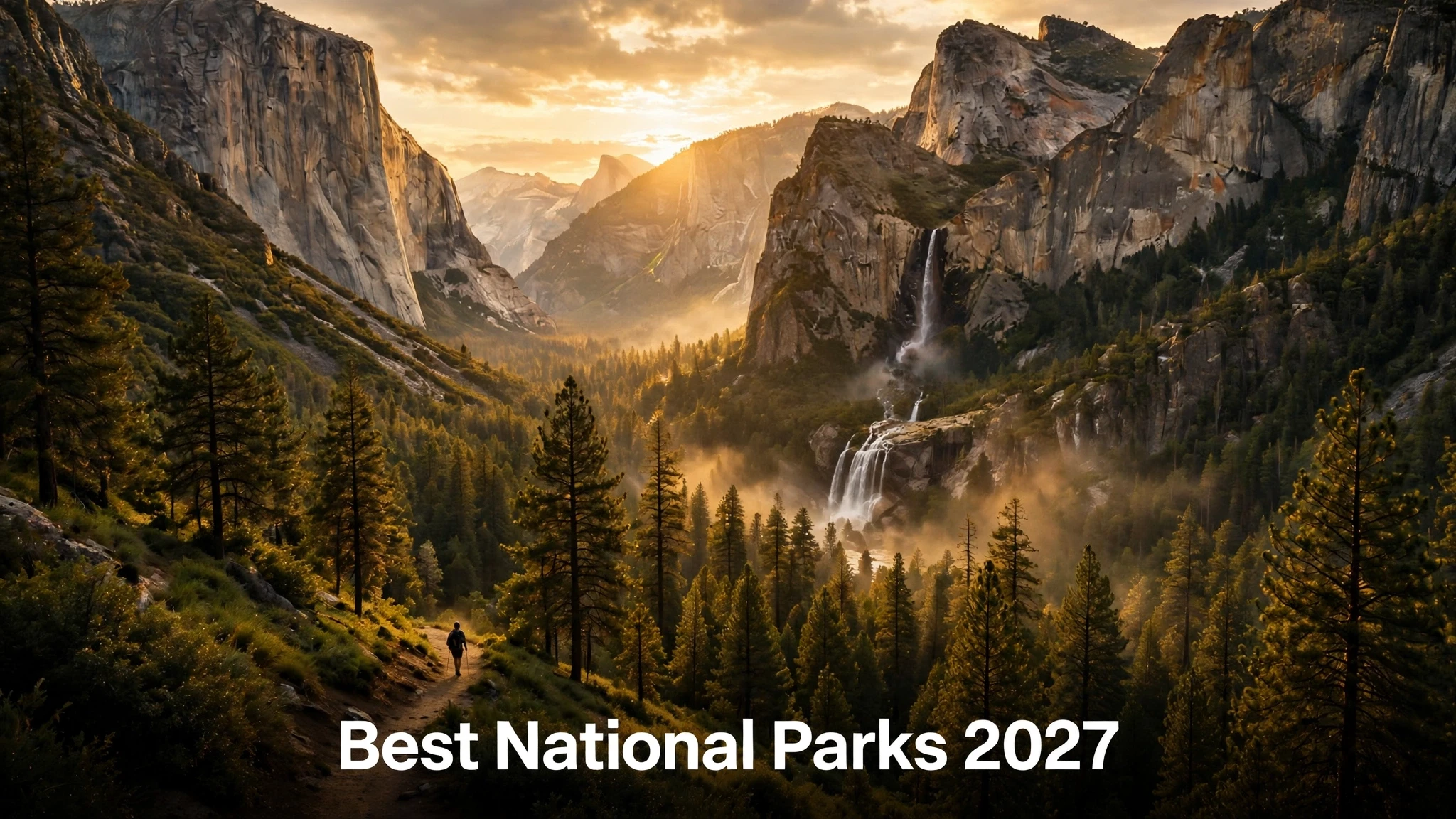
National parks protect the world’s most extraordinary landscapes, and visiting them is one of the most powerful forms of travel. A national park can hold a canyon carved over millions of years, a forest that shelters rare wildlife, a desert of shifting dunes, or a coastline where mountains meet the sea. These places are not theme parks. They are living ecosystems, shaped by geology, climate, and the species that depend on them, and they ask visitors to travel with respect, preparation, and patience. The best national parks in the world to visit in 2027 are not only the most famous. They are the ones that offer a clear, memorable experience, whether that is a geothermal wonderland, a mountain lake, a wildlife migration, or a quiet forest walk far from crowds.
Choosing a national park starts with the experience you want. Some travellers want dramatic viewpoints that can be reached by car, others want multi-day hikes, wildlife safaris, kayaking, stargazing, or winter landscapes. Season matters enormously: a park that is perfect in spring may be crowded in summer, closed by snow in winter, or transformed by rain in a wet season. Wildlife also follows seasons, with migrations, breeding, and feeding patterns that change what you are likely to see. This guide covers famous parks on several continents, explains what makes each special, and gives practical planning advice that applies to almost every park visit, including permits, safety, and responsible travel. Always check official park information before travelling, because access, fees, and trail conditions change.
One principle applies everywhere: national parks are protected for a reason, and visitors are guests. Staying on trails, keeping a safe distance from wildlife, carrying out all rubbish, and respecting closures protects both the park and future visitors. A park visit that follows these rules is not less enjoyable. It is more enjoyable, because it preserves the wildness that makes the park special in the first place. The parks below are presented as starting points for a lifetime of park travel, not as a ranking to complete in one year.
Yellowstone and Grand Canyon, USA: America’s Classic Parks
Yellowstone, in the United States, is often called the world’s first national park, and it remains one of the most extraordinary. Its geothermal features, including geysers, hot springs, and mud pots, create landscapes that look like another planet, while its rivers, canyons, forests, and meadows support bison, elk, bears, wolves, and many other species. The park is large, with roads that form a figure-of-eight loop, and a visit needs at least two or three days to see the main geothermal areas, the Grand Canyon of the Yellowstone, and wildlife valleys without rushing. Summer is busiest, spring offers baby animals and waterfalls, and autumn offers golden colours and elk activity, while winter offers a quiet, snowy park accessible mainly by guided snow vehicles in many areas.
The Grand Canyon, also in the United States, offers a different kind of wonder: scale. Standing on the rim, looking across layers of rock carved by the Colorado River, is an experience that photographs cannot fully capture. The South Rim is open year-round and has the most facilities, viewpoints, and shuttle buses, while the North Rim is quieter, higher, and open seasonally. Rim walks suit most visitors, while hikes into the canyon need serious preparation, water, and fitness, because the return climb is steep and temperatures inside the canyon can be much hotter than on the rim. For travellers with limited time, a rim visit at sunrise or sunset, combined with a short trail walk, can be deeply satisfying without attempting a full canyon descent.
Both parks illustrate important planning lessons for American national parks: book accommodation early, especially inside the park, check whether timed entry or reservations are required, and plan for altitude, heat, and wildlife safety. Keep a safe distance from animals, never feed wildlife, store food properly in bear country, and carry water, sun protection, and layers. These parks are also good examples of how a famous park can still feel wild: leave the main viewpoints, walk a short trail, and the crowds thin quickly, revealing quiet forests, rivers, and meadows that many visitors never see.
Banff and Jasper, Canada: Mountain Lakes and the Icefields Parkway
Banff and Jasper, in the Canadian Rockies, are among the most beautiful mountain parks in the world, with turquoise lakes, glaciers, peaks, and valleys that change with every season. Lake Louise and Moraine Lake are famous for their colour, which comes from glacial rock flour suspended in the water, and they are best visited early in the morning or late in the day to avoid peak crowds. The Icefields Parkway, the road connecting Banff and Jasper, is itself a destination, with viewpoints, waterfalls, glaciers, and wildlife along the way, and driving it slowly, with stops, is one of the great road journeys in the world.
Jasper is larger and quieter than Banff, with dark sky preserve status that makes it excellent for stargazing, and with wildlife such as elk, bears, and mountain goats that visitors may see from a safe distance. Hiking in these parks ranges from easy lakeside walks to challenging mountain trails, and trail conditions depend heavily on season, snow, and bear activity. Visitors should check official trail reports, carry bear spray where recommended and know how to use it, and make noise on trails in bear country. Weather in the Rockies can change quickly, even in summer, so layers, rain protection, and sun protection are all needed on the same day.
Banff town and Jasper town offer hotels, restaurants, and visitor centres, but accommodation in summer books early and can be expensive, so early planning is essential. Winter transforms both parks into snow destinations, with skiing, snowshoeing, and frozen lakes, although some roads and trails close or require special equipment. For travellers who want mountain beauty without the most extreme hiking, Banff and Jasper are ideal: scenic drives, lake walks, gondola rides, and short trails offer world-class scenery with moderate effort. For experienced hikers, the parks offer multi-day routes that reward preparation with solitude and unforgettable alpine landscapes.
Serengeti and Kruger: Wildlife Parks of Africa
The Serengeti, in Tanzania, is synonymous with wildlife on a grand scale. Its endless grass plains host the Great Migration, in which vast herds of wildebeest and zebra move in search of fresh grass, followed by predators such as lions, leopards, and cheetahs. The migration follows a seasonal cycle, and different areas of the park offer the best viewing at different times of year, so timing a visit to the migration needs research and, ideally, advice from a reputable safari operator. Even outside migration peaks, the Serengeti offers exceptional wildlife viewing, with large herds, predators, and birds across open landscapes that make animals easier to spot than in dense forest.
Kruger National Park, in South Africa, offers a different safari experience: a large, well-organised park with paved roads, rest camps, self-drive options, and guided drives. Self-driving in Kruger allows travellers to set their own pace, stop at waterholes, and enjoy the park independently, provided they follow speed limits, stay in vehicles, and respect gate times. Guided drives add expert knowledge, especially for tracking predators and understanding animal behaviour, and night drives offer a chance to see nocturnal species. Kruger is also accessible for travellers on a wider range of budgets than many private reserves, although park fees, accommodation, and transport still need budgeting.
Wildlife parks require a different kind of respect from mountain parks. Animals are wild, not tame, and approaching them, feeding them, or leaving a vehicle outside designated areas can be dangerous and illegal. Safari travellers should follow guide instructions, keep noise low, avoid flash photography at night where discouraged, and support operators and lodges that follow responsible tourism practices. Health preparation, including malaria prevention where recommended by official health guidance, vaccinations, and travel insurance with medical evacuation cover, is essential for many African safari destinations. A safari is not a zoo visit. It is a chance to see animals in their own home, on their own terms, and that wildness is what makes it unforgettable.
Torres del Paine and Patagonia: Wild South America
Torres del Paine, in Chilean Patagonia, is one of the most dramatic national parks in the world, with granite towers, glaciers, lakes, and steppe grasslands shaped by fierce wind. The park is famous for its W trek, a multi-day hiking route that passes the towers, French Valley, and Grey Glacier, and for its longer O circuit, which circles the entire massif and requires more time, fitness, and preparation. Even visitors who do not hike the full W can enjoy day walks, scenic drives, and boat trips to glaciers, although Patagonian weather is famously changeable, with wind, rain, and sunshine possible in a single day, even in summer.
Patagonia’s wildlife adds another dimension. Guanacos graze on the steppe, condors soar above cliffs, and pumas live in the park, although sightings are rare and require patience, guides, and luck. The park’s lodges, refugios, and campsites need advance booking in the main season, which runs roughly from November to March in the Southern Hemisphere summer, and independent hikers must follow park rules about camping, fires, and waste. Wind is the defining challenge: it can be strong enough to make walking difficult, so packing windproof layers, securing tents properly, and checking forecasts are essential parts of planning.
Beyond Torres del Paine, Patagonia offers other remarkable parks, including Los Glaciares in Argentina, home to the Perito Moreno Glacier, and Tierra del Fuego at the southern tip of South America. These parks suit travellers who enjoy remote landscapes, long journeys, and a sense of being at the edge of the world. They are not easy trips, and they require more planning, budget, and flexibility than a typical park visit, but they reward that effort with landscapes that feel truly wild. Patagonia teaches an important lesson: the best park experiences often come from accepting weather, wind, and uncertainty, rather than fighting them.
Fiordland, Plitvice and European Parks: Water, Forest and Variety
Europe’s national parks are often smaller and more varied than the great parks of North America or Africa, but they offer extraordinary beauty and accessibility. Fiordland, in New Zealand, is sometimes grouped with southern parks, but it deserves mention for its fiords, rainforest, and famous walks such as the Milford Track, which is a multi-day hike requiring booking well in advance. Milford Sound, with its steep cliffs, waterfalls, and marine wildlife, can be visited by road, cruise, or kayak, and it is beautiful in rain as well as sunshine, when waterfalls multiply across the cliffs. Fiordland’s remoteness, sandflies, and changeable weather need preparation, but its scale and wildness are world-class.
In Europe, Plitvice Lakes in Croatia is famous for its chain of turquoise lakes connected by waterfalls and boardwalks, set in forest that changes colour with the seasons. Plitvice is beautiful, but it is also very busy in summer, and visiting early, on a weekday, or outside peak season gives a far better experience. The park’s boardwalks protect fragile travertine formations, and staying on paths is essential. Other European parks offer different experiences: the Dolomites in Italy for dramatic peaks and alpine meadows, the Scottish Cairngorms for mountains and wildlife, and the Picos de Europa in Spain for limestone peaks, gorges, and villages. Each park reflects its country’s landscape, culture, and walking traditions.
European parks are often easier to visit without a car, with public transport, village accommodation, and marked trails, although popular parks still need advance planning for parking and entry in peak season. Many European parks are also working landscapes, with farms, villages, and traditional land use inside or near park boundaries, so visitors should respect private land, livestock, and local customs. For travellers who want a national park trip that combines nature with culture, food, and history, Europe offers an excellent range, from coastal parks to mountain parks, all within relatively short journeys.
Planning, Safety and Responsible Park Travel
Planning a national park visit starts with official information. Check the park’s official website for opening times, fees, permits, reservations, trail closures, wildlife alerts, and weather guidance, because third-party blogs and videos may be out of date. Some parks now require timed entry, advance reservations for popular trails or campsites, or permits for backcountry hiking, and arriving without a required permit can mean being turned away. Booking accommodation inside or near a park early is especially important in peak season, and having a backup plan for a second park or a different trail helps if conditions change.
Safety in parks is about preparation, not fear. Carry water, food, sun protection, layers, a map, and a charged phone, but do not rely only on a phone for navigation in remote areas, where signal may fail. Tell someone your route and expected return time for longer hikes, check weather forecasts, and turn back if conditions worsen, because summit fever and stubbornness cause many park accidents. Wildlife safety varies by park: in bear country, carry bear spray where recommended and store food properly; in safari parks, stay in vehicles and follow guide instructions; near cliffs, rivers, and geothermal features, stay behind barriers and on marked paths. These rules exist because parks contain real hazards, and respecting them protects both visitors and wildlife.
Responsible travel also includes environmental care. Stay on trails to protect fragile soil and plants, do not remove rocks, plants, or artefacts, and carry out all rubbish, including food scraps, which can harm wildlife. Avoid using drones where prohibited, keep noise low in quiet areas, and support local communities by staying in local accommodation, eating in local restaurants, and hiring local guides where available. National parks are not only landscapes. They are also homes for wildlife and, in many cases, places of cultural importance to Indigenous and local communities, whose histories and rights should be respected. A responsible park visit leaves no trace, takes only photographs, and helps ensure the park remains wild for the next visitor.
My Take:
My take on national parks is that they should be visited slowly, even when they are famous. I have seen too many park trips that become a race between viewpoints, with a photograph at each stop and no time to actually look, listen, or walk. A viewpoint is a good start, but it is not the park. The park is the trail beyond the viewpoint, the quiet lake after the crowd turns back, the sound of wind in trees, or the moment when an animal appears without being chased. I would rather visit one park well, with time for a long walk and a quiet evening, than visit three parks in a rush and remember only car parks and queues. Slowness is not wasted time in a park. It is the point.
I also believe that national parks teach humility, which is a useful lesson for modern travel. In a park, weather does not follow a schedule, wildlife does not perform on demand, trails close, and rivers rise. Travellers who accept that, who carry layers, who turn back when needed, and who treat a rainy day as part of the experience, usually enjoy parks more than those who demand perfect conditions. I have had park days ruined by expectations and park days saved by flexibility, and the difference was rarely the park itself. It was my attitude. A park is not a service to be consumed. It is a wild place to be visited on its own terms, and that wildness is exactly why it matters.
Another belief I hold is that park travel should support protection, not undermine it. Entrance fees, local guides, and responsible operators help fund conservation, ranger work, and community benefits, while off-trail walking, wildlife harassment, and litter undermine the very beauty visitors came to see. I think travellers should be willing to pay park fees without complaint, to follow rules even when nobody is watching, and to choose operators who respect wildlife and local communities. Conservation is not free, and the cost of protecting a park is far smaller than the cost of losing it. If visiting a park makes you care more about protecting wild places at home as well as abroad, then the trip has done something valuable beyond photographs.
Finally, I believe national parks are for everyone, not only for expert hikers or wealthy safari travellers. Many parks offer accessible viewpoints, short trails, ranger programmes, and visitor centres that make nature available to families, older travellers, and people with limited mobility. A park visit does not need to be extreme to be meaningful. A short walk, a picnic by a lake, or an evening of stargazing can be as memorable as a multi-day trek, if it is done with attention and care. The best national park trip, in my view, is not the hardest or the most remote. It is the one that leaves you calmer, more curious, and more determined to protect wild places, wherever you find them.
Another dimension of park travel that I value is the role of rangers and local guides, who are often the most knowledgeable and passionate people in a park. A ranger talk, a guided walk, or a short conversation at a visitor centre can transform a landscape from beautiful scenery into a story about geology, wildlife, fire, water, and human history. I think travellers should make time for these programmes, especially with children, because they answer questions that signs cannot, and they show how a park is managed and protected day by day. Supporting ranger programmes, by attending, asking questions, and following their advice, is also a way of supporting conservation, because parks that are understood are more likely to be protected by the public who visit them.
I also believe that park travel should include the night, because many parks are among the last places with truly dark skies. Stargazing in a national park, whether in a desert, a mountain valley, or a remote forest, can be as memorable as any daytime viewpoint, and it requires only darkness, patience, and warm layers. Some parks have dark sky status, astronomy programmes, or ranger-led night walks, and these are worth planning around, especially during a new moon when stars are brightest. A night in a park also reveals sounds and wildlife that daytime visitors miss: owls, frogs, wind, and the quiet that comes when human noise fades. I think a park trip that ends at sunset has missed half the park, and a night walk or stargazing session should be part of any multi-day visit where it is safe and permitted.
Finally, I think national parks can change how we live at home, if we let them. A walk in an old forest can make a traveller more careful about local trees, a visit to a fragile desert can make water use feel more real, and seeing wildlife in its own habitat can make conservation feel personal rather than abstract. I do not think park travel should end with photographs. It should end with habits: walking more, wasting less, supporting local parks, and teaching children that wild places matter. If a national park trip leaves you calmer, more curious, and more willing to protect nature near home as well as far away, then it has succeeded in the deepest sense, far beyond a list of viewpoints visited.
One more idea I want to share is the value of visiting a national park in different seasons, because the same park can feel like a different world in spring, summer, autumn, and winter. A waterfall that is powerful in spring may be gentle in autumn, a meadow that is green in summer may be golden in autumn, and a lake that is busy in summer may be frozen and silent in winter. I think travellers who return to a favourite park in a new season gain a deeper understanding of how nature changes, and they often discover quieter trails, different wildlife, and new photographic light. Seasonal visits also spread the benefits of tourism across the year, supporting park communities in quieter months and reducing pressure in peak season. A park is not a single experience to be completed once. It is a living place that rewards returning visitors with new seasons, new stories, and a growing sense of familiarity and care.
Frequently Asked Questions
Which national park is best for a first visit? Yellowstone, Banff and the Grand Canyon are strong first choices because they combine famous scenery, visitor facilities, marked trails and ranger programmes, while Kruger suits first-time safari travellers.
Do national parks require advance reservations? Some parks now require timed entry, trail permits or campsite reservations, especially in peak season, so check the official park website before travelling and book early.
When is the best time to visit national parks? It depends on the park: spring and autumn often offer milder weather and fewer crowds, summer suits high mountain parks, and wildlife parks follow seasonal migration and breeding patterns.
Is it safe to hike in national parks alone? Short, well-marked trails are often fine alone with preparation, but remote, long or bear-country hikes are safer with a companion, a shared route plan and proper equipment.
How close can I get to wildlife in a national park? Keep a safe distance, never feed or approach wildlife, stay in vehicles on safari, follow guide and ranger instructions, and use binoculars or a zoom lens for a closer view.
What should I pack for a national park visit? Water, food, sun protection, layers, a map, a charged phone and suitable footwear, plus park-specific items such as bear spray where recommended or malaria prevention where advised.