Christmas Morning Breakfast Ideas for Family 2026
In this post
- Make-Ahead Dishes That Save Christmas Morning
- Pancakes, Waffles and Festive Sweet Breakfasts
- Savoury Breakfasts for a Longer Morning
- Drinks, Table Setting and a Calm Atmosphere
- Budget, Leftovers and a Stress-Free Plan
- Breakfasts for Different Family Sizes and Homes
- Involving Children and Making Memories
- My Take:
Christmas morning should feel joyful, not like a second shift in the kitchen. The secret is not a fancier recipe. It is a plan made the night before, a menu that mixes one special dish with simple, familiar foods, and jobs shared across the family. When breakfast is ready with little morning effort, everyone — including the cook — can enjoy presents, music, and a slow start. This guide gives family breakfast ideas for 2026 that are festive, practical, and kind to the person cooking.
Start by deciding what Christmas morning means in your home. Some families open presents first and eat later. Others eat first, then gather around the tree. Some have a large brunch at midday instead of an early breakfast. Each pattern needs a different menu. A presents-first family needs food that can wait safely and be served quickly when hunger arrives. An eat-first family can enjoy a slower, cooked breakfast before the excitement. A brunch family can plan a bigger, shared meal with more dishes. Choose the pattern first, then the food, and the morning will feel calm instead of rushed.
Keep the menu to a size your kitchen and energy can handle. One hero dish, two easy sides, one drink, and one sweet extra are plenty. More dishes mean more washing, more timing stress, and more food waste. Children often prefer familiar foods with a festive twist — pancakes shaped with a cutter, toast with a star shape, or yoghurt with berries — over an unfamiliar dish they will not eat. Adults often prefer good coffee, something warm, and time to sit down. A menu that serves both groups, without trying to impress anyone, is the best Christmas menu.
Make-Ahead Dishes That Save Christmas Morning
Make-ahead dishes are the heart of a calm Christmas morning. A baked French toast casserole, prepared the night before and baked in the morning, feeds a family with almost no morning work. A strata — bread, eggs, milk, cheese, and vegetables or ham, assembled overnight — works the same way. Overnight oats, soaked with milk and fruit, can be served cold or warmed, and children can choose their own toppings. These dishes also reduce morning decisions, which is valuable when the house is excited and noisy.
Preparation the night before goes beyond the main dish. Set the table, lay out plates and cups, prepare a fruit bowl, and put drinks and spreads in one accessible place. Chop vegetables, grate cheese, and measure dry ingredients in advance, storing them safely as food safety guidance requires. Perishable foods should be refrigerated promptly and not left out overnight. A short checklist on the fridge — oven on, dish in, drinks ready, table set — helps the morning cook work without thinking hard before coffee. That checklist is a small gift to your future self.
Timing matters more than technique. Write a simple morning timeline with clock times, not vague steps. For example: oven on at eight, casserole in at eight-fifteen, fruit and drinks out at eight-thirty, serve at nine. If presents come first, shift the timeline later and choose food that holds well. Keep one dish that needs no cooking at all — fruit, yoghurt, bread, and spreads — so that early risers and hungry children can eat something while the main dish finishes. Nobody should wait hungrily for a perfect breakfast on Christmas morning.
Pancakes, Waffles and Festive Sweet Breakfasts
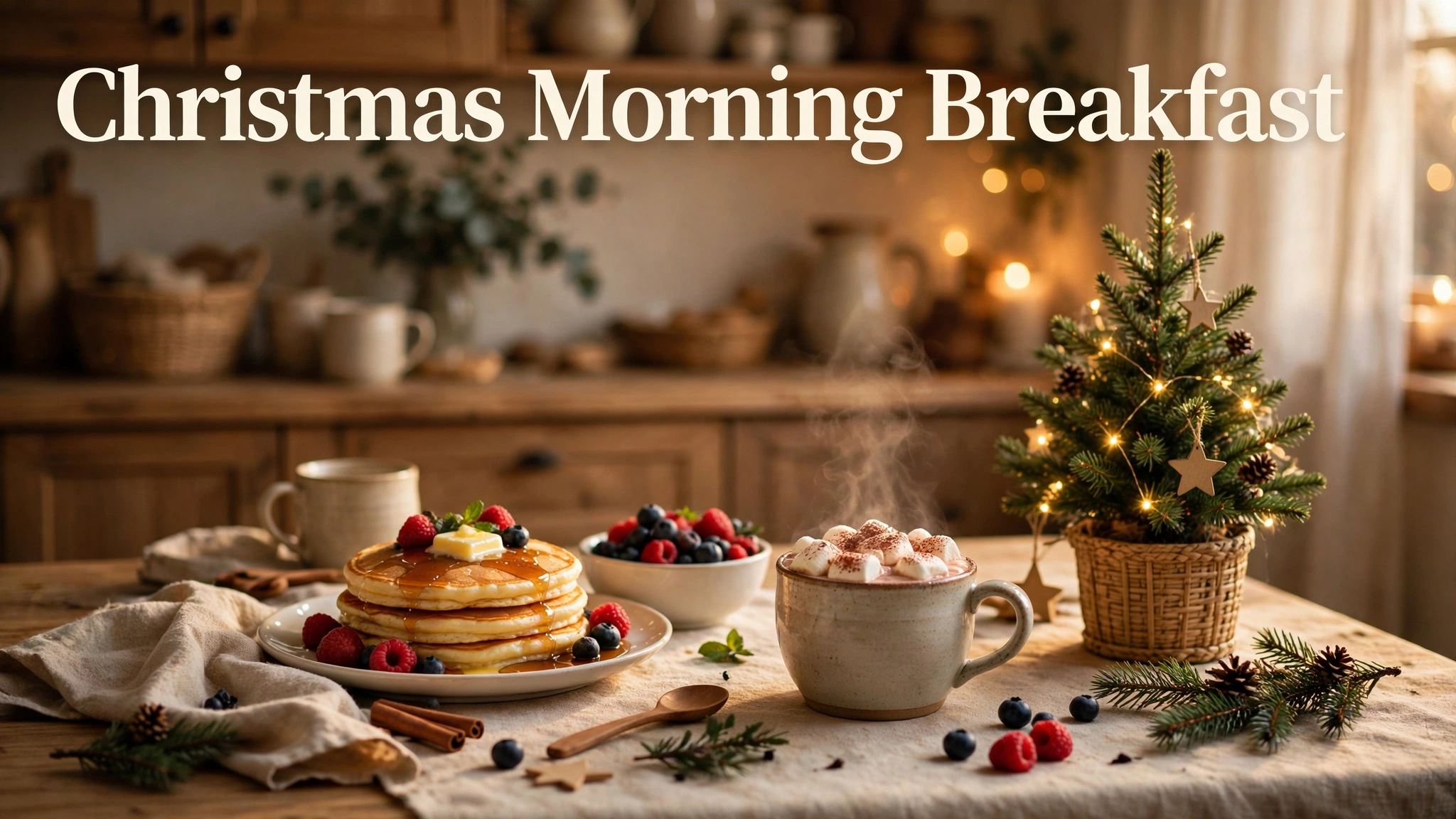
Pancakes are a Christmas morning favourite because they are quick, customisable, and loved by children. Make the batter the night before and refrigerate it, then cook fresh in the morning. Add festive touches without extra work: berries, sliced banana, a dusting of powdered sugar like snow, or a drizzle of honey or maple syrup. For a fun twist, use a star or tree-shaped cutter on thick pancakes, or cook small silver-dollar pancakes that children can stack themselves. Keep a warm plate in a low oven for finished pancakes, so the cook is not serving one pancake at a time while everyone else eats.
Waffles suit families with a waffle maker and a crowd, because they cook evenly and hold toppings well. Prepare toppings as a station — berries, yoghurt, honey, chocolate spread, and chopped nuts, with nut allergies checked first — so each person builds their own plate. This reduces complaints and makes breakfast feel like an activity, not just a meal. If you do not own a waffle maker, thick toast, crumpets, or toasted brioche with the same toppings give a similar festive feel with no new equipment. The toppings, not the base, create the celebration.
Sweet breakfasts need balance, especially for children who will eat sweets later in the day. Pair pancakes or waffles with fruit, yoghurt, or eggs, and offer water alongside juice. A fruit salad with winter fruits — oranges, apples, pomegranate seeds, and grapes — adds colour, freshness, and a lighter option for adults. Keep portions modest, because a huge sweet breakfast followed by a large Christmas dinner can leave everyone sluggish. Christmas morning food should energise the day, not end it before lunch.
Savoury Breakfasts for a Longer Morning
Not every family wants a sweet start. A savoury breakfast can be just as festive and often keeps energy steadier through a long morning of presents and play. Scrambled eggs with toast, smoked salmon with cream cheese and bread, or a simple egg and vegetable bake all work well. A breakfast board — bread, cheese, cold meats where eaten, eggs, fruit, and spreads arranged on a large board — lets people graze while opening presents, without a formal sit-down meal. This style suits families who open presents slowly and want food available over several hours.
A cooked savoury dish can also be made ahead. An egg bake with potatoes, peppers, and cheese can be assembled the night before and baked in the morning. A potato hash, made from pre-cooked potatoes, onions, and peppers, reheats well and feeds a crowd. Keep hot food at safe temperatures and refrigerate leftovers promptly; do not leave cooked food out for hours while presents are opened, however tempting the grazing style may be. Serve smaller portions, refill as needed, and store the rest safely. Food safety is not festive, but it protects the whole day.
Think about dietary needs early, not on Christmas morning. Ask about allergies, vegetarian or vegan diets, and foods children dislike, and plan at least one dish each person can enjoy fully. A dairy-free fruit and oat option, a gluten-free bread choice, or a simple egg-free toast topping can make a guest feel welcome without a separate menu. Label dishes briefly if needed, especially when nuts or dairy are involved. Inclusive planning takes ten minutes in December and prevents awkward, hungry moments on the day itself.
Drinks, Table Setting and a Calm Atmosphere
Drinks set the mood of Christmas morning. Good coffee or tea for adults, hot chocolate for children, and juice or water for everyone cover most families. Hot chocolate can be made special with marshmallows, a cinnamon stick, or whipped cream, without a complicated recipe. Prepare a large pot of tea or coffee in advance if you have a flask or a machine that keeps it warm, so the cook is not making drink after drink. Keep a jug of water on the table, because a morning of excitement, sweet food, and a warm house quickly leads to thirst.
A simple table setting makes breakfast feel like an occasion. Use a tablecloth or festive runner, a few candles or fairy lights where safe, and a small centrepiece such as a bowl of oranges, pine cones, or a tiny tree. Keep the setting practical: plates that stack, cups that do not tip easily, and napkins within reach. Children can help set the table the night before, which builds excitement and shares the work. Avoid candles near curtains, paper decorations, or children’s reach, and never leave a lit candle unattended. A beautiful table that is also safe lets everyone relax.
Music and pace complete the atmosphere. A quiet playlist of favourite songs, played softly, makes the morning feel special without forcing conversation. Let the morning unfold at family pace: some families want presents immediately, others want breakfast first, and both are fine. The cook should sit down to eat, not stand serving all morning. If a dish needs attention, ask another adult or an older child to watch the oven or refill drinks. Christmas morning is a family event, and sharing the work is part of sharing the joy.
Budget, Leftovers and a Stress-Free Plan
Christmas breakfast does not need expensive ingredients. Eggs, bread, oats, milk, seasonal fruit, and basic spreads form the base of almost every idea in this guide. Festive extras — berries, a special cheese, smoked salmon, or good coffee — can be chosen in small amounts for flavour, rather than bought in bulk. Plan the menu around foods you already buy, and add one or two treats. This keeps the shopping list short, the budget calm, and the fridge manageable after Christmas, when leftovers and dinner ingredients compete for space.
Leftovers should be planned, not discovered. Cook enough for one satisfying meal, plus a small amount for a later snack, not double the family size. Store leftovers in clean, covered containers, refrigerate promptly, and use them within safe timeframes as food safety guidance directs. Leftover pancakes can become a snack with fruit, leftover fruit salad can top yoghurt the next day, and leftover bread can become toast or breadcrumbs. A plan that reduces waste also reduces the January feeling that Christmas cost too much, in money and in food thrown away.
Finally, write the plan down and share it. A one-page plan — menu, shopping list, night-before jobs, and morning timeline — can be stuck on the fridge and followed by anyone. If the main cook is ill or delayed, another family member can follow the plan without guessing. Keep the plan realistic for your home, not for a photograph. The best Christmas morning breakfast is not the most elaborate one. It is the one that is ready on time, eaten together, and remembered for laughter and presents, not for stress in the kitchen.
Breakfasts for Different Family Sizes and Homes
A couple with no children, a large extended family, and a house full of overnight guests need very different Christmas breakfasts, and a good plan adapts to the household. For a small household, a single baked dish and a fruit bowl are plenty, and leftovers can be kept small. For a large family, a breakfast board plus a baked dish allows grazing without a formal meal, and a second batch can be prepared if needed. For guests staying overnight, ask about dietary needs and morning routines in advance: early risers may want coffee and toast available before the main breakfast, while late risers may prefer a brunch. A plan that names these differences avoids a morning where half the house is hungry and the other half is still asleep.
Small kitchens need simpler menus. If oven space is limited, because a turkey or roast is already planned, choose a stovetop or no-cook breakfast, such as pancakes, yoghurt bowls, or a breakfast board, rather than competing for oven time. If seating is limited, a buffet or board style works better than a formal sit-down meal. If children are present, set up a low table or a toppings station they can reach safely, and keep hot dishes and drinks away from edges. The best Christmas breakfast for your home is the one your kitchen, table, and family size can actually support, not the one that looks best in a magazine photograph of a much larger house.
Involving Children and Making Memories
Children remember Christmas morning partly through what they do, not just what they eat. Involve them the night before: let them set the table, arrange fruit, choose toppings, or stir a batter with supervision. On the morning, give them a safe job, such as pouring juice, carrying napkins, or decorating pancakes with berries. These jobs build excitement and pride, and they share the work that otherwise falls on one adult. Keep jobs age-appropriate and safe: young children should not handle hot pans, sharp knives, or boiling water, while older children can help with supervision and clear instructions. Praise effort, not perfection, because a slightly messy table set by a child is a happier memory than a perfect table set alone.
Traditions can be simple and still become treasured. A special Christmas plate, a song played every Christmas morning, a first-pancake tradition, or a family photograph at the breakfast table can become rituals children look forward to year after year. Write down the menu and the traditions that worked, and keep the note for next year, so a successful morning can be repeated without reinventing it. Traditions do not need to be old to be meaningful; a new tradition started this Christmas, if it brings joy, may be repeated for decades. The food is the occasion, but the shared doing is the memory.
My Take:
My honest view is that Christmas morning breakfast fails when it tries to be a performance instead of a family meal. We see perfect tables online, with ten dishes and flawless decoration, and we feel our own morning must match that image. But a real family morning includes sleepy children, excited noise, a dog underfoot, and a cook who also wants to enjoy the day. A menu with one hero dish, simple sides, and a drink that everyone likes will always beat a grand menu that leaves the cook exhausted and the food cold. I would rather remember a calm morning with pancakes and laughter than a stressed morning with a perfect table that nobody enjoyed.
I also believe the night before is the real Christmas morning. Setting the table, preparing a casserole, chopping fruit, and writing a short timeline may sound dull, but those quiet jobs are what buy you a slow morning. I have learned that the best gift you can give yourself on Christmas Eve is not a new recipe, but a kitchen that is already ready. When you wake up and the work is mostly done, you can watch presents being opened, drink your coffee while it is still hot, and actually be present. That presence is the point of the day, and it is worth more than any dish, however impressive it looks.
Another point I feel strongly about is sharing the work. Too often one person — usually a parent — cooks, serves, clears, and then wonders why Christmas felt like work. A family breakfast should be a family job. Children can set the table, lay out toppings, and pour drinks. Another adult can watch the oven while the cook sits down. These are not chores imposed on a holiday; they are small ways of saying the morning belongs to everyone. When work is shared, the cook eats with the family instead of after them, and the morning feels fair as well as festive. That fairness matters, especially for the person who also cooks Christmas dinner later in the day.
I also think we should be honest about sweet food and energy. Christmas morning is the start of a long day of sweets, rich food, and excitement, and a huge sugary breakfast can leave children hyper and then tired, and adults sluggish before lunch. Pairing something sweet with fruit, yoghurt, or eggs, offering water alongside juice, and keeping portions modest is not being strict. It is helping the day last longer and feel better. A balanced breakfast does not spoil Christmas; it protects it, so that by dinner everyone still has energy and appetite for the main celebration.
Finally, my view on budget is simple: Christmas breakfast should not add financial stress to a season that already costs enough. Eggs, oats, bread, and seasonal fruit can make a wonderful, festive meal, and one or two small treats are enough to make it feel special. You do not need imported ingredients, a new appliance, or a table full of food to create a memory. What children remember is rarely the exact menu. They remember the warmth, the music, the time together, and the feeling that morning was special. Cook something you enjoy, prepare it the night before, share the work, sit down together, and let that be enough. It will be more than enough.
I also think involving children is not just a nice idea; it is how Christmas memories are made. A child who set the table, chose toppings, or stirred a batter will remember that morning differently from a child who simply waited to be served. Those small jobs teach responsibility gently, share the load, and give children a sense of ownership over the celebration. I would rather have a slightly messy table and a proud child than a perfect table and an exhausted adult. The mess can be cleared in minutes; the memory of helping lasts for years, and it is often the part children mention when they grow up and talk about Christmas at home.
There is one more thought about different homes and families that I want to leave with you. No two Christmas mornings look alike: small flats, large houses, single parents, blended families, guests from far away, and families celebrating without children all have different mornings, and all of them are valid. A breakfast plan that works for a large family in a big kitchen will not work for a couple in a small flat, and it should not be expected to. Choose a menu that fits your home, your budget, and your people, and let that be enough. The measure of a Christmas morning is not how closely it matches someone else’s photograph; it is whether the people at your table felt welcomed, fed, and happy together.
One last thought to carry into Christmas morning: the cook deserves to enjoy it too. Too often the person who prepares breakfast eats last, stands longest, and remembers the morning as work while everyone else remembers it as magic. Sharing jobs, preparing the night before, and choosing a simple menu are not just efficiency tips; they are ways of making sure the cook is part of the celebration, not just its caterer. Sit down together, eat while the food is hot, watch presents being opened, and let the washing wait a little. A Christmas morning where everyone, including the cook, felt happy and unhurried is a morning done right, whatever was on the menu.
A final word on expectations: Christmas morning does not need to be perfect to be wonderful. Pancakes may burn slightly, a child may wake too early, and the table may be messy — and the morning can still be exactly right, because the people you love are together, fed, and happy. Lower the bar for perfection and raise it for togetherness: sit down, eat together, laugh, and enjoy the presents and the day. Years from now, no one will remember whether the pancakes were perfectly round. They will remember that Christmas morning felt warm, calm, and full of love, and that memory is the best breakfast of all.
Keep the plan written down, even if it is just a few lines on the fridge: menu, shopping list, night-before jobs, and morning times. A written plan means anyone can step in if the main cook is delayed, and it means next Christmas can reuse what worked without starting from scratch. Note which dishes were loved, which were left, and how much was enough, and adjust next year accordingly. Christmas breakfast, like any good tradition, improves with small, honest notes — and with a morning that leaves everyone, cook included, smiling.
Frequently Asked Questions
What is the easiest Christmas morning breakfast for a family? A make-ahead baked French toast casserole or egg bake, prepared the night before, is easiest. Serve it with fruit, yoghurt, and drinks, so the morning needs only baking and serving, not cooking from scratch.
Can I prepare Christmas breakfast the night before? Yes. Many dishes, such as overnight oats, baked French toast, egg bakes, and fruit salad, can be prepared or partly prepared the night before. Refrigerate perishable foods promptly and follow food safety guidance for storage times.
What do children usually like for Christmas morning breakfast? Children often like pancakes, waffles, toast shapes, yoghurt with berries, and hot chocolate. A toppings station lets them choose their own fruit, honey, or spreads, which makes breakfast feel fun and personal.
Should Christmas breakfast be sweet or savoury? Either works, and many families mix both. Offer one sweet option, such as pancakes, and one savoury option, such as eggs or a breakfast board, so adults and children can choose what suits them.
How do I keep Christmas morning calm while cooking? Prepare the night before, set the table in advance, write a simple timeline, and keep one no-cook option ready. Share jobs with family members, and choose a menu with one hero dish rather than many complicated dishes.
How can I keep Christmas breakfast affordable? Build the menu around eggs, bread, oats, milk, and seasonal fruit, and add only one or two small treats. Plan portions carefully, use leftovers well, and avoid buying new equipment for a single morning.