Cheapest Christmas Tree Decorating Ideas on a Budget 2026
In this post
- Choose One Colour Story Before You Buy Anything
- Make Lights Do the Expensive Work
- DIY Ornaments That Look Deliberate, Not Last-Minute
- Use Ribbon, Fabric and Paper Instead of More Baubles
- Shop Smart: Sales, Second-Hand and After-Christmas Buys
- Small Trees, Tabletop Trees and Rented Homes
- Store, Repair and Reuse: The Tree That Gets Cheaper Every Year
- Balance the Whole Room, Not Just the Tree
- My Take:
A beautiful Christmas tree does not need an expensive shopping list. It needs a clear theme, good lighting, and decorations placed with care. Many costly trees look busy because every ornament was bought at full price and hung without a plan. A budget tree looks better when one colour story is chosen, old items are reused, and handmade pieces fill the gaps that shop-bought sets leave empty. The goal is not to copy a store display. The goal is a tree that feels warm, personal, and finished, without debt in January.
Start by setting a firm limit before shopping. A useful example budget is a small fixed amount for lights and a few new pieces only, with the rest coming from home. Check what already exists first: last year’s baubles, ribbons, gift wrap, fabric scraps, string, and even children’s drawings can become decoration. Count working lights, test them early, and list only the gaps. This one habit often saves more than any sale, because most households already own enough for half a tree and buy duplicates by mistake.
Choose One Colour Story Before You Buy Anything
A single colour story makes cheap decorations look expensive. Choose two main colours and one accent, for example red and gold with a little green, white and silver with blue, or natural wood tones with warm white light. When every new item must match that story, random purchases stop, and the tree looks planned rather than collected by accident. Write the three colours on a phone note and check it in every shop aisle.
Use what fits the story and store the rest. Ornaments in clashing colours can be repainted, wrapped in fabric, or moved to another room. A plain bauble in the wrong colour becomes useful when tied with ribbon in the right colour or dusted with glitter glue. This is cheaper than replacing a whole set. It also keeps the tree calm to look at, which matters more than the number of decorations hanging on it.
Think about the room as well. A small room suits a narrow tree, lighter colours, and fewer large pieces. A large room can take deeper colours and bigger ornaments without looking crowded. The cheapest mistake is buying decorations for a tree in a photograph, not for the tree and room at home. Measure the tree height, note the wall colour, and choose tones that stand out against that background rather than disappearing into it.
Make Lights Do the Expensive Work
Lights create most of the magic, and they are the best place to spend a small amount. Warm white lights suit almost every theme, while multicolour lights suit a playful family tree. Before adding ornaments, wrap lights from the trunk outward, working in sections from top to bottom, so no dark patch remains. A tree with even light looks full even when ornaments are few.
Count lights by tree size as a guide, not a rule. A small tabletop tree may need only one short string, while a tall family tree needs several. If old lights still work, use them first and add one new set only where a gap shows. Battery lights can help in a corner without a socket, but check battery cost before choosing them for the whole tree. Mains lights usually cost less to run over the season, though exact electricity costs depend on local rates and hours of use.
Safety and neatness matter as much as beauty. Untangle lights before hanging them, avoid overloading one socket, and switch lights off when leaving home or sleeping. This protects the home and keeps the tree looking cared for. A timer plug, if already owned, can make this automatic and stop lights running all night by accident.
DIY Ornaments That Look Deliberate, Not Last-Minute
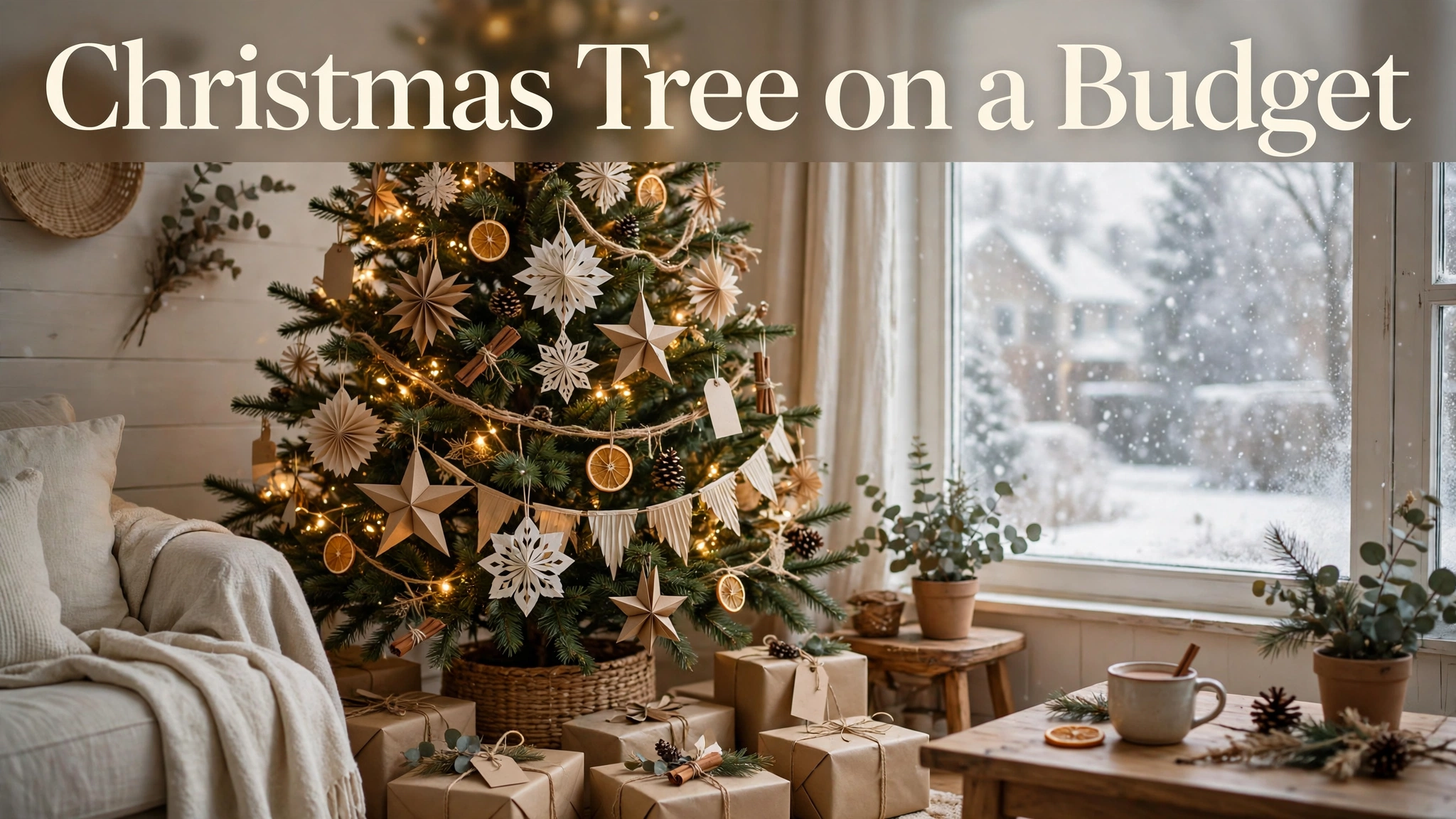
Handmade ornaments look best when they share a material, a shape, or a colour. Paper stars, dried orange slices, cinnamon sticks tied with string, pine cones, and salt-dough shapes all suit a natural theme. Cut paper snowflakes in one colour, or fold simple stars from old maps, music sheets, or brown parcel paper. The repeated shape gives unity, while small differences make the tree feel handmade rather than mass-produced.
Children’s ornaments deserve a plan too. Give each child a limited set of colours and one craft, such as painted wooden shapes or paper chains, so their work joins the theme instead of competing with it. Hang children’s pieces at eye level where they can be seen and enjoyed. This turns decorating into a family activity and saves money that would otherwise go to character ornaments that date quickly.
Finish handmade pieces properly. Trim loose threads, use strong string or hooks, and let glue and paint dry fully before hanging. An ornament that falls, sheds glitter, or leaves marks on branches looks cheap even if the idea was good. A small number of well-finished handmade pieces beats a large number of rushed ones, and they can be stored and reused next year.
Use Ribbon, Fabric and Paper Instead of More Baubles
Ribbon is one of the cheapest ways to make a tree look full. A wide ribbon wound in a spiral, or short ribbon loops tucked between branches, fills empty space faster than dozens of small baubles. Choose one ribbon that matches the colour story and use it generously. Fabric scraps can work the same way: a strip of cotton, felt, or old curtain fabric, cut into bows, adds texture that shiny plastic cannot.
Paper garlands also stretch a budget. A chain made from coloured paper, a string of paper stars, or folded paper fans can cover a large tree for very little money. Keep the paper size consistent and the spacing even. Uneven, mixed-size paper decorations draw attention to themselves, while a steady rhythm looks like a design choice. Paper is best kept away from hot bulbs, so use it with cool LED lights where possible and check it during the season.
A tree skirt or base cover completes the look without a new purchase. A plain blanket, a piece of fabric, or wrapping paper around the stand hides the base and makes the whole display look finished. This single step often matters more than adding ten more ornaments, because the eye notices an untidy base first.
Shop Smart: Sales, Second-Hand and After-Christmas Buys
Timing changes the price of the same decoration. Shops often reduce Christmas stock after the holiday, and that is the best time to buy next year’s lights, baubles, and ribbon, provided storage space exists and the colours still match the chosen theme. Buying in January for the following December only saves money if the items are actually used, so keep the list short and specific.
Second-hand shops, charity shops, and community sales can offer good ornaments at low prices, especially glass baubles and vintage pieces. Inspect each item for chips, loose caps, and damaged hooks before buying. A mixed bag of second-hand ornaments becomes useful when it is sorted by colour and the matching pieces are used together, while the rest are passed on or stored for another project.
Avoid the trap of a cheap set that does not fit. A large box of ornaments in the wrong colours, a tree topper that does not suit the tree, or lights that are too short for the height all waste money even at a low price. Check sizes, colours, and working condition before paying. A smaller purchase that fits the plan is always better value than a bargain that stays in a box.
Small Trees, Tabletop Trees and Rented Homes
A small tree can look just as festive as a large one, and it costs far less to decorate. A tabletop tree needs fewer lights, fewer ornaments, and no large topper. Place it on a sturdy table, a bookshelf, or a windowsill, and use the space around it for candles in safe holders, books, or a simple nativity or village scene if the household enjoys them. The tree becomes a centrepiece rather than a corner filler.
For rented homes, avoid decorations that damage walls, ceilings, or the tree itself. Use freestanding trees, removable hooks, and decorations that hang from branches rather than nails. Keep heavy ornaments off thin branches, and avoid spray snow or glitter that is hard to clean from floors and rented furniture. A landlord-friendly tree is easier to pack away and leaves no repair bill behind.
If space is very tight, a wall tree made from branches, lights, or a simple garland shape can give the same feeling without a full tree. This is an example, not a rule for every home, and it works best when the same colour story and lights are used. The aim is celebration in the space available, not a smaller copy of a large-house display.
Store, Repair and Reuse: The Tree That Gets Cheaper Every Year
Storage decides whether next December is cheap or expensive again. Pack ornaments in small boxes with tissue or old fabric between fragile pieces, label each box by colour, and keep lights wound loosely rather than knotted. A photograph of the finished tree, taken before packing away, helps next year because it shows where ribbon, lights, and large ornaments worked best. Without that record, families often buy replacements for items they already own but cannot find.
Repair is part of a budget plan. Replace a broken hook with wire or a paperclip, re-glue a loose cap, and repaint a chipped bauble in a theme colour instead of throwing the whole set away. Test lights as they are packed away, not only when they are unpacked, so a faulty string can be repaired or replaced calmly rather than in a last-minute shop visit. Keep a small repair kit with spare hooks, string, glue, and ribbon in the same box as the decorations.
Reuse also means knowing when to stop adding. A tree that grows by a few thoughtful pieces each year becomes personal and affordable. A tree that is replaced wholesale each year never builds that history. Keep a short wish list during the season: note one item that would genuinely improve next year’s tree, such as a better topper or a longer ribbon, and buy only that item in a sale. This slow method protects both money and memory.
Children grow, tastes change, and a theme can evolve without a full replacement. Move an old colour to a smaller tree, a hallway garland, or a table display, and let the main tree take a new accent colour. In this way, past spending keeps working instead of becoming waste. The cheapest tree over five years is rarely the cheapest tree in year one; it is the tree whose pieces are stored, repaired, and reused with care.
Balance the Whole Room, Not Just the Tree
A tree looks expensive when the room around it is balanced. Clear clutter from the corner where the tree stands, place it where it can be seen without blocking a walkway, and add one or two matching touches nearby, such as a red cushion, a simple garland on a shelf, or candles in safe holders. These small touches cost little, but they stop the tree looking like an isolated object in an otherwise ordinary room.
Height and proportion also matter. A topper should suit the tree: a large star on a small tree looks top-heavy, while a tiny topper on a tall tree disappears. If a bought topper does not fit, a handmade star, a large bow, or a cluster of branches can work better and cost less. Stand back from the tree often while decorating, because a tree is viewed from across a room, not from six inches away. Step back, check for gaps, and move ornaments rather than adding more.
Finally, think about scent and sound as part of the display, without spending on them. Real pine, cinnamon, and dried orange give a natural scent. Music, conversation, and a calm evening around the tree give warmth that no decoration can buy. A budget tree succeeds when the room feels festive and relaxed, not when every branch is covered. That feeling is what guests remember, and it does not appear on a receipt.
One more practical check helps before the tree is finished. Look at the tree in daylight and again at night with lights on, because a tree that looks balanced in daylight can show gaps once lights highlight some branches and leave others dark. Move one or two ornaments to fill those lit gaps, rather than buying more, and check the back of the tree only if it will be seen from that side. A tree against a wall needs less work at the back, and that saved effort can go to the front where guests actually look.
My Take:
I think the best budget tree is the one that starts in a cupboard, not in a shop. Every year I see people buy a new theme because a photograph told them last year’s tree looked tired, and then they wonder why December feels expensive. The tree did not get tired. The plan got lost. When you open last year’s box first, count what works, and choose three colours, you already own most of the answer. The shop should only fill gaps, not restart the whole display.
My strongest opinion is that lights and ribbon matter more than ornaments. A tree with even light and one good ribbon looks finished with twenty ornaments. A tree with uneven light and no ribbon looks unfinished with eighty. People spend on baubles because they are easy to pick up, but the eye reads light first and structure second. If money is tight, buy light and ribbon before another box of baubles. If time is tight, spend the extra ten minutes wrapping lights properly instead of rushing to hang everything at once.
I also believe handmade pieces should be treated as design, not as a fallback for people who cannot afford shop ornaments. A paper star made well, in the right colour, with a clean fold and a strong loop, looks intentional. Ten rushed crafts in mixed colours look like an accident. Limit the craft, limit the colours, and finish each piece. Children enjoy this more too, because their work is shown properly instead of lost among dozens of shiny purchases.
The part people resist is the spending limit. A limit feels like less celebration, but in practice it creates better choices. Without a limit, every aisle adds something. With a limit, you ask whether a new item matches the theme, fills a real gap, and will be used next year. That question saves more money than any discount code. It also protects January, when the decorations come down and the bills arrive. A tree should not create worry after Christmas.
Finally, I would keep one tradition and drop the rest if needed. Keep the ornament that carries a memory, the star a child made, or the ribbon colour the family loves. Drop the pressure to match a new trend every year. Trends are designed to make last year’s tree feel old. A family tree built slowly, with a few good pieces added each year, becomes more valuable over time, not less. That is the real luxury, and it costs far less than a new set every December.
I would also change how families talk about a budget tree with children. A budget should not be presented as a failure or a secret. Children understand fairness and creativity far better than adults expect. Saying plainly that this year the family will make decorations together, reuse last year’s lights, and choose one new item each, turns a limit into a project. Children who help make a tree often value it more than children who watch adults unpack expensive boxes. That lesson lasts longer than any ornament.
Another point I feel strongly about is waste. Christmas creates a large amount of packaging, broken lights, and single-season decorations that end up thrown away. A budget approach that reuses, repairs, and chooses paper and natural materials where possible is also a kinder approach. It does not require perfect choices or expensive eco-products. It only requires asking, before buying, whether an item will survive until next December. If the answer is no, a handmade or reusable alternative is usually better.
I also think people overestimate how much guests notice. Guests notice light, warmth, a tidy room, and whether they feel welcome. They do not count baubles or check brand names. A host who is relaxed because December spending stayed under control gives guests a better evening than a host who is stressed by a perfect-looking but expensive display. The tree is a background to people, food, and conversation, not the main event. Keeping that order right is a form of good taste.
If I had to give one practical rule for every household, it would be this: photograph the tree, label the boxes, and write the colour story on the box lid. Next year, that note saves a shop trip, a duplicate purchase, and an argument about what theme to choose. Small organisation beats large spending, year after year. The cheapest tree I have ever admired was not the smallest or the simplest. It was the one where every piece had a reason to be there.
I also want to be honest about one temptation: the after-Christmas sale. It is a good time to buy, but only for items already on the wish list. A sale does not make a wrong colour right, and a bargain box that stays unopened for a year is not a saving. I would rather buy one ribbon in January that I know I will use than five boxes of mixed ornaments that I must sort, store, and eventually give away. Discipline in January is what makes December cheap.
The last thing I would say is to enjoy the tree while it is up. Families often spend days perfecting a display and then barely sit near it because December is busy. Switch the lights on in the evening, sit down for ten minutes, and let the tree do its simple job. That quiet moment is the return on all the careful planning, the handmade stars, and the money not spent. A budget tree is not a lesser tree. When it is planned, lit well, and built from pieces with meaning, it is often the better tree.
I also think a budget tree teaches a useful habit for other parts of Christmas. Once a family learns to reuse, repair, and plan a tree, they often apply the same thinking to food, gifts, and travel. Waste falls, spending becomes calmer, and December feels less like a race. That habit, learned from a tree, can help all year. It starts with a simple question: what do we already own, and what do we actually need?
Frequently Asked Questions
How can I decorate a Christmas tree cheaply? Choose one colour story, reuse last year’s working lights and ornaments, add ribbon and a few handmade pieces, and buy only the gaps. Even lighting and a finished base make a low-cost tree look complete.
What is the cheapest Christmas tree theme? A natural theme using paper, pine cones, dried orange slices, cinnamon sticks and warm white lights is usually cheapest, because many materials come from home or cost very little. A single-colour theme using existing baubles can be just as low-cost.
How many lights do I need for a Christmas tree? It depends on tree height and fullness, so use even coverage as the test rather than one fixed number. Wrap lights from trunk outward, check for dark patches, and add one extra string only where a gap remains.
Can I reuse old Christmas decorations? Yes, if lights still work safely, baubles are not chipped, and hooks are secure. Test lights early, sort ornaments by colour, and store them carefully so next year’s decorating starts from a usable box rather than a repair job.
What handmade ornaments look best on a budget tree? Paper stars, paper chains, salt-dough shapes, dried orange slices, pine cones and fabric bows look best when they share one colour and one repeated shape. Finish each piece neatly and hang children’s work at eye level.
Is it safe to use paper decorations on a Christmas tree? Paper can be used with care, especially with cool LED lights, but keep paper away from hot bulbs and open flames. Check decorations during the season and switch lights off when leaving home or sleeping.
Sources
- https://www.energy.gov/energysaver/lighting-choices-save-you-money
- https://www.nfpa.org/education-and-research/home-fire-safety/christmas-tree-fires
- https://www.redcross.org/get-help/how-to-prepare-for-emergencies/types-of-emergencies/fire/holiday-safety.html
- https://www.goodhousekeeping.com/holidays/christmas-ideas/
- https://www.bhg.com/christmas/trees/