Drone Attack Hits Saudi Airport
In this post
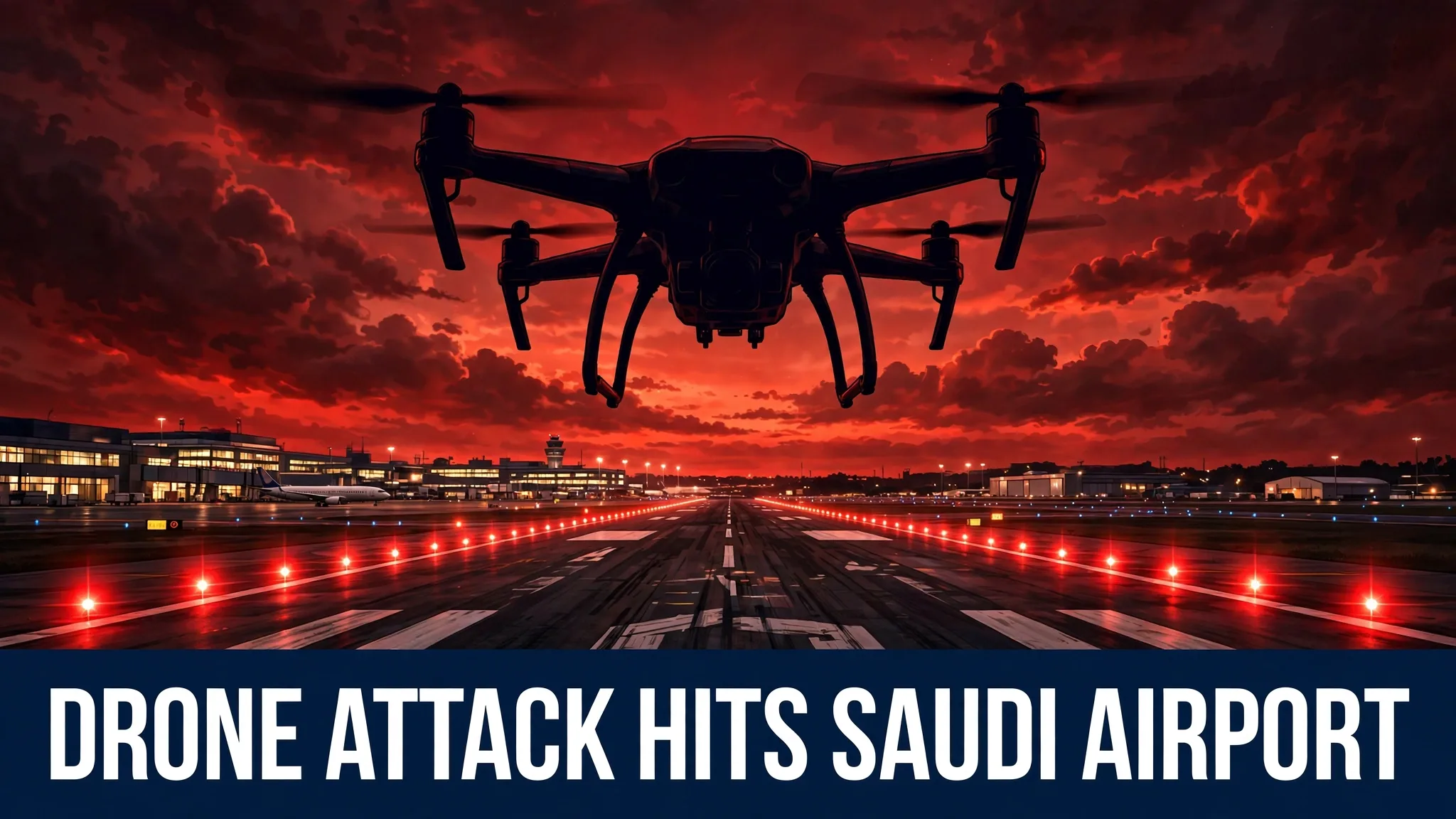
An airport at night has its own quiet rhythm. Bags roll across shiny floors. Children sleep on chairs while their parents watch the departure boards. Pilots prepare their planes, and ground crews move around the aircraft like a well-rehearsed team. On the evening this story is about, King Fahd International Airport in Dammam, Saudi Arabia, looked like any other busy airport on any other night. Then, according to news reports, a drone attack turned that ordinary evening into a night nobody there will forget.
This post walks through that night step by step, in simple words, using only what the reports say. There is sad news in it, and it is shared with respect. One person lost their life, and others were hurt, and behind every short headline there are real families. So this is written calmly, without drama and without graphic detail, because the facts themselves are serious enough.
The Airport Before The Alarm
King Fahd International Airport serves Dammam, a city on Saudi Arabia’s eastern coast, close to the waters of the Gulf. It is one of the country’s important airports, used by workers, families, business travellers and visitors moving between Saudi Arabia and the wider world. On a normal evening, planes land and take off in a steady flow, and the runways glow with rows of lights.
That normal picture matters, because it is what makes the next part of the timeline so shocking. Airports are built around routine and safety. Every movement is planned. Every flight has a slot, a route and a crew watching over it. When something violent reaches a place like that, it breaks more than a schedule. It breaks the feeling that ordinary journeys are safe.
The Moment Everything Changed
According to news headlines on 23 October 2026, a drone attack struck King Fahd International Airport in Dammam. One person was killed and eight people were injured, according to those reports. Flights were diverted, which means planes that were heading for Dammam were sent to land at other airports instead.
Picture the scene in simple terms. In the sky, pilots approaching the airport were told to change course. Inside the terminal, travellers who had been waiting for arrivals or departures suddenly faced confusion and delay. Outside, the airport that had been running like clockwork only minutes earlier was now the centre of an emergency. No further details about the victims are given in the reports this post is based on, and none will be invented here. What is known is enough: a life was lost, eight people were injured, and an airport full of ordinary people had a frightening night.
In my view, this is the part of such stories that stays with you the longest — not the machines or the politics, but the fact that airports are full of tired travellers, small children and elderly parents who simply want to reach home safely, and their safety should always come before everything else.
The Same Storm, Another Place
The airport attack did not happen in an empty sky, and it did not happen alone. According to the same reports, the attack came amid fresh Houthi attacks on Saudi oil facilities. At an Aramco-operated field, two people were killed by drone debris, according to those reports.
So the timeline widens. On the same stretch of days, drones and debris were threatening two kinds of places at once: an airport full of travellers, and oil fields full of workers. Both places are part of daily life in the region. Both are places where ordinary people simply go to do their jobs or catch their flights. When attacks reach both, the worry spreads far beyond any single runway or oil well.
The reports connect these events to the Houthis, the group based in Yemen that has been in conflict with Saudi Arabia for years. This post does not go deeper into that long history, because the facts provided here are about these days, these attacks and their immediate effects.
Oil Prices Feel The Shock
News like this travels fast, and it does not stop at the airport fence. According to the reports, Brent crude climbed to its highest level since May after the attacks. Brent crude is one of the world’s main oil price measures, watched by governments, companies and markets everywhere.
Why does an attack in one place move a price everywhere? The answer is simple. Saudi Arabia is one of the world’s most important oil producers, and the region around it carries a huge share of the world’s energy. When oil facilities there are attacked, traders fear that supply could be interrupted. Fear pushes prices up, even before any actual shortage happens. A higher oil price can later show up in many places: fuel costs, transport costs and the price of goods that travel by road, sea and air.
So the night at Dammam airport connects, in a straight line, to something felt far away — a number on a screen in the oil market, climbing to its highest point in months.
Fighter Jets On The Way
The reports also describe a military response taking shape. According to those reports, the United Kingdom is to deploy Typhoon fighter jets to Saudi Arabia amid the rising Houthi attacks. Typhoon jets are advanced fighter aircraft, and sending them is a strong signal of support for Saudi Arabia’s defence.
Moves like this are meant to protect skies and reassure allies. They also show how seriously the situation is being taken. When a country sends fighter jets to help guard another country’s airspace, it is saying that the threat is real and that the attacked places — airports, oil fields and cities — need stronger protection. For the people living and travelling in the region, such steps are watched closely, because everyone wants the same thing: quiet skies and safe journeys.
The Missiles Behind The Worry
One more detail from the reports explains why the concern runs so deep. Reports also say the Houthis have been using Chinese parts to build advanced missiles capable of striking Israel and Saudi Arabia.
That single line changes the picture. It suggests the weapons involved are not crude or short-ranged, but advanced and able to travel long distances. Weapons built with parts sourced from abroad can be harder to stop and can reach targets far from where they are launched. This is why an airport in Dammam, oil fields in the desert and capitals across the region all appear in the same worried conversation.
A Region Holding Its Breath
Step back from the timeline and the pattern is clear. In a short span of time, according to the reports: an international airport was attacked and one person was killed there, eight were injured and flights were diverted; two more people were killed by drone debris at an oil field; oil prices jumped to their highest since May; the United Kingdom prepared to send fighter jets; and reports pointed to advanced missiles built with foreign parts.
Each of those facts is a thread, and together they form a tense picture. The region is holding its breath, not because of one night, but because nobody knows whether the next night will be calm or bring another alarm. For travellers, that means watching the news before flying. For workers in the oil fields, it means going to work under a heavier sky. For families across the region, it means hoping that ordinary evenings stay ordinary.
Frequently Asked Questions
What happened at King Fahd International Airport?
According to news headlines on 23 October 2026, a drone attack struck King Fahd International Airport in Dammam, Saudi Arabia. One person was killed, eight people were injured, and flights were diverted to other airports.
Where is King Fahd International Airport?
It is the international airport serving Dammam, a city on Saudi Arabia’s eastern coast near the Gulf. It is one of the country’s important airports for workers, families and international travellers.
Were other places attacked too?
Yes, according to the same reports. The airport attack came amid fresh Houthi attacks on Saudi oil facilities, and two people were killed by drone debris at an Aramco-operated field.
What happened to oil prices after the attacks?
According to the reports, Brent crude climbed to its highest level since May. Attacks on a major oil-producing region make markets fear supply problems, and that fear pushes prices upward.
What is the United Kingdom doing in response?
According to the reports, the United Kingdom is to deploy Typhoon fighter jets to Saudi Arabia amid the rising Houthi attacks, as a show of support and to help protect the skies.
What do reports say about the Houthis’ weapons?
Reports also say the Houthis have been using Chinese parts to build advanced missiles capable of striking Israel and Saudi Arabia, which is one reason the threat is being taken so seriously across the region.
Sources
- Jagran Josh (news headlines, 23 October 2026) https://www.jagranjosh.com/lite/articles/school-assembly-news-headlines-october-23-2026-ca-result-jee-mains-neet-ug-and-other-news-1800018111-1
- ABP Live (news headlines, 23 October 2026) https://news.abplive.com/education/school-assembly-news-headlines-today-october-23-top-national-international-sports-business-news-1872688