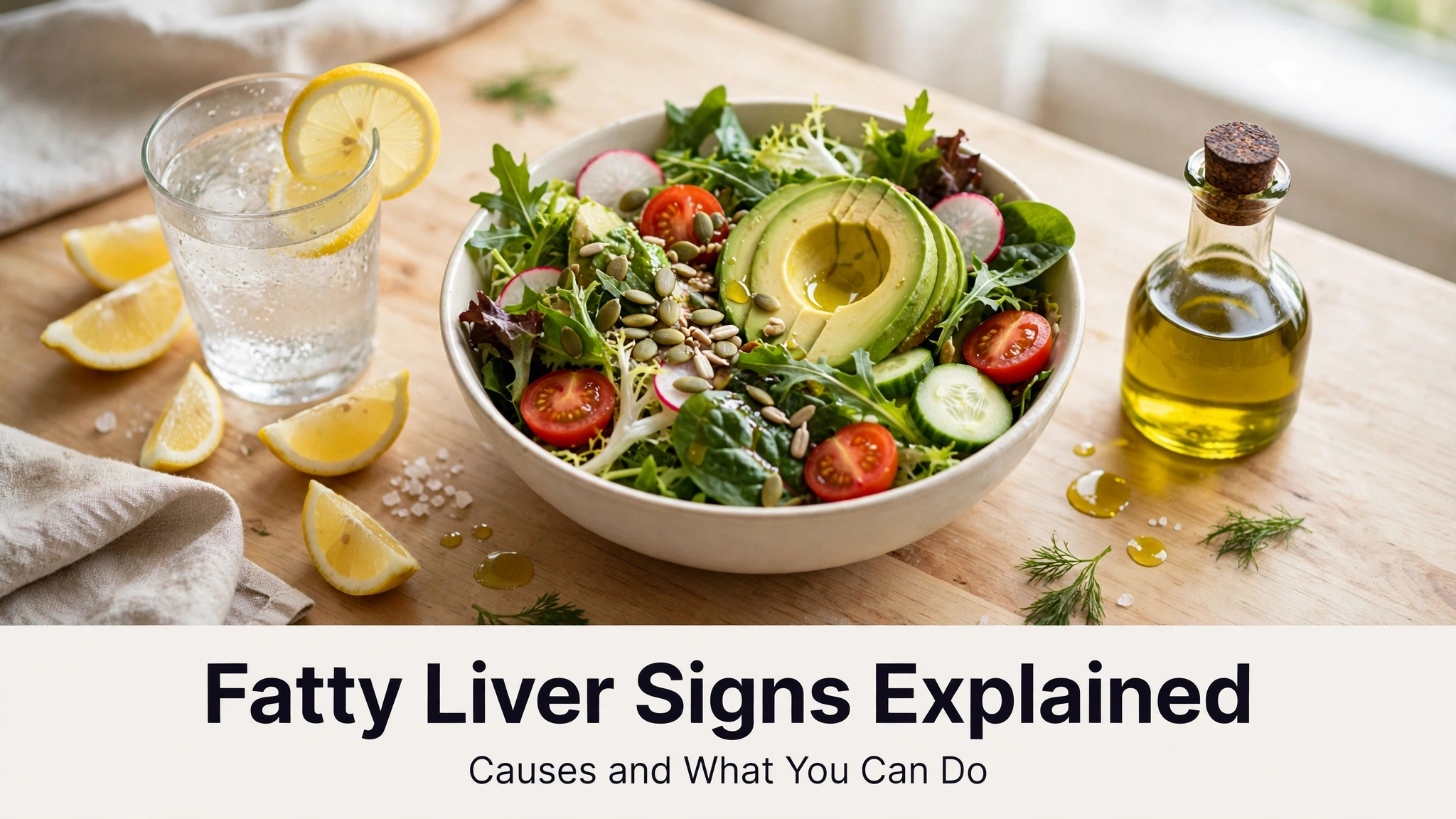
Fatty Liver Signs Explained: Causes and What You Can Do
In this post
- What Fatty Liver Actually Means
- Why There Are Usually No Early Symptoms
- Signs That Appear as It Progresses
- The Main Causes and Risk Factors
- How Fatty Liver Is Found and Measured
- Food and Drink Changes That Help
- Exercise, Weight Loss and the Reversal Window
- Living With Fatty Liver and Follow-Up
- Fatty Liver and the Heart: A Linked Risk
- My Take:
Fatty liver disease means extra fat has built up inside the liver cells, and it now affects a large share of adults in many countries. The troubling part is that it usually causes no symptoms at all in its early stages, so people can carry it for years without knowing. This article is general information only, not individual medical advice, and it explains how fat ends up in the liver, the signs that do appear, and the changes that can reverse it.
The condition is closely tied to weight, blood sugar, and diet, which means it is also one of the most reversible liver problems when it is caught early. Losing even a modest amount of weight can reduce liver fat substantially. The sections below cover the two main types, the warning signs, the causes, how it is found, and the practical steps that help.
What Fatty Liver Actually Means
The liver is the body’s chemical factory, processing nutrients, making proteins, clearing toxins, and storing energy. In a healthy liver, fat makes up only a small share of its weight. In fatty liver disease, fat droplets accumulate inside the liver cells until they make up a much larger share. The liver can still work reasonably well at this stage, which is why the condition is silent, but the fat makes the organ more vulnerable to inflammation and damage.
There are two main types. Alcohol-related fatty liver is caused by drinking heavily, because the liver prioritises breaking down alcohol over processing fat. Non-alcoholic fatty liver disease, often shortened to NAFLD, occurs in people who drink little or no alcohol and is linked to excess weight, type 2 diabetes, high cholesterol, and high blood pressure. The newer term for this is metabolic dysfunction-associated steatotic liver disease, but the underlying problem is the same.
If the fat triggers inflammation, the condition moves to a more serious stage called steatohepatitis, where liver cells become damaged. Over years, that inflammation can lead to scarring, known as fibrosis, and eventually cirrhosis, where the liver’s structure is badly damaged. The reassuring fact is that the early stage is reversible, and even some scarring can improve if the cause is addressed in time.
Why There Are Usually No Early Symptoms
Most people with early fatty liver feel entirely well. There is no pain, because the liver itself has few pain nerves, and blood tests may be only mildly abnormal or even normal. The condition is often discovered by chance: a routine blood test shows slightly raised liver enzymes, an ultrasound done for another reason shows a bright-looking liver, or a clinician notices a pattern of risk factors such as weight, diabetes, and cholesterol.
When symptoms do appear, they are vague and easy to attribute to other causes. The most common are tiredness and a dull discomfort or ache in the upper right side of the abdomen, where the liver sits under the ribs. Some people notice a general feeling of being unwell or a reduced appetite. Because these symptoms are non-specific, they rarely lead someone to suspect the liver on their own.
This silence is the central challenge of the condition. Unlike a sore knee or a cough, fatty liver does not announce itself, so it is usually found through screening or through the investigation of related problems. That is why clinicians increasingly look for it in people with type 2 diabetes, obesity, or metabolic syndrome, and why a raised liver enzyme result should be followed up rather than dismissed as a one-off.
Signs That Appear as It Progresses
As fat and inflammation build, the symptoms become more noticeable. Tiredness deepens into a persistent exhaustion, the upper right abdomen may feel tender or full, and appetite and weight can fall without trying. Some people notice itchy skin, or a general feeling of weakness that makes everyday activity harder. These are signs that the liver is struggling, not that it has failed.
More advanced liver damage brings clearer warning signs. The skin and the whites of the eyes may turn yellow, a condition called jaundice. Fluid can collect in the abdomen, causing swelling, and the legs and ankles may swell too. Small red spider-like blood vessels can appear on the skin, the palms may become red, and easy bruising or bleeding can occur. Confusion or difficulty concentrating can appear when the liver is no longer clearing toxins effectively.
Any of these later signs should prompt urgent medical attention. They do not mean the situation is hopeless; treatments and support can still help, and some people are assessed for a liver transplant in advanced cases. But they do mean the window for simple reversal has narrowed, which is why the earlier stages deserve so much attention. A liver that is caught while it is only fatty has a far better outlook than one that is already scarred.
The Main Causes and Risk Factors
Excess weight, particularly fat carried around the abdomen, is the strongest risk factor for non-alcoholic fatty liver. The fat tissue releases fatty acids and inflammatory signals that the liver must process, and over time the liver stores the excess as fat. Type 2 diabetes and insulin resistance are closely linked: when the body stops responding properly to insulin, fat handling goes wrong in the liver as well as elsewhere.
A diet high in added sugars, especially sugary drinks, is a significant contributor, because the liver turns excess fructose into fat. Refined carbohydrates, large portion sizes, and a diet low in fibre add to the problem. High cholesterol and high blood pressure often travel with the condition as part of metabolic syndrome, a cluster of risk factors that together raise the risk of both liver disease and heart disease.
Alcohol is the main cause of the alcohol-related form, and the risk rises with the amount and duration of drinking. Some medicines, rapid weight loss, and rare genetic conditions can also cause fatty liver. Age matters too: the condition becomes more common with age, and it is increasingly seen in children as childhood obesity rises. The pattern is clear enough that a person with several of these factors has good reason to ask about liver health.
How Fatty Liver Is Found and Measured
Blood tests are usually the first clue. Liver enzymes such as ALT and AST may be raised, though they can also be normal, so a normal result does not rule the condition out. Blood tests also check cholesterol, blood sugar, and other markers that reveal the metabolic pattern behind the disease. A clinician will ask about alcohol, medicines, diet, and family history.
An ultrasound scan is the most common way to confirm fat in the liver. It is painless and shows the liver as brighter than normal when fat is present. More detailed scans can estimate how much fat there is and how stiff the liver has become, which is a measure of scarring. A specialised scan called a FibroScan measures liver stiffness without a needle and is increasingly used to stage the disease.
A liver biopsy, where a small sample is taken with a needle, is the most accurate test but is used only when the picture is unclear or when the clinician needs to know exactly how much inflammation and scarring there is. Most people do not need a biopsy. The combination of blood tests, scans, and risk factors is usually enough to make a plan, and the plan is then monitored with repeat tests over time.
Food and Drink Changes That Help
The most effective dietary change is reducing added sugar, particularly sugary drinks, which deliver a large load of fructose straight to the liver. Water, unsweetened tea, and sparkling water are better choices. Cutting back on refined carbohydrates such as white bread, pastries, and large portions of white rice, and replacing them with whole grains, vegetables, beans, and lentils, helps the liver handle energy more steadily.
A Mediterranean-style pattern of eating is often recommended: plenty of vegetables, fruit, whole grains, beans, nuts, olive oil, and fish, with less red and processed meat. This pattern is associated with less liver fat and better blood sugar and cholesterol, and it is easier to sustain than a strict diet because it is a way of eating rather than a short programme. Coffee, interestingly, has been linked in several studies with a lower risk of liver damage, though it is not a treatment on its own.
Alcohol should be avoided or kept to a minimum, even in non-alcoholic fatty liver, because it adds extra work for an already stressed organ. Crash diets and very rapid weight loss should be avoided too, because losing weight too fast can actually worsen liver inflammation. The aim is steady, sustainable change: smaller portions, fewer sugary drinks, and a diet built around whole foods rather than a dramatic overhaul that lasts three weeks.
Exercise, Weight Loss and the Reversal Window
Weight loss is the most powerful treatment for fatty liver. Losing around five percent of body weight often reduces liver fat noticeably, and losing seven to ten percent can reduce inflammation and even improve some scarring. The key is that the loss is gradual, roughly half a kilogram to a kilogram a week, through a combination of eating less and moving more. Quick fixes and extreme diets are less effective and harder to sustain.
Exercise helps even before weight changes show on the scales. Both aerobic exercise, such as brisk walking, cycling, or swimming, and resistance exercise, such as lifting weights or using bands, reduce liver fat. Aiming for at least 150 minutes of moderate activity a week, plus two sessions of muscle strengthening, is the usual target. The benefit comes from consistency, and even a daily thirty-minute walk is a meaningful start for someone who is currently inactive.
The reversal window is real but not unlimited. Early fatty liver can return to normal, and inflammation can settle, if the causes are addressed. Once scarring is advanced, the liver’s ability to recover is reduced, though treatment can still slow further damage. That is why the message is urgent without being alarmist: the same changes that help the liver also help the heart, blood sugar, and blood pressure, so there is no downside to starting now.
Living With Fatty Liver and Follow-Up
A diagnosis of fatty liver can feel worrying, yet for most people it is a warning rather than a verdict. The follow-up usually involves repeat blood tests, weight and blood pressure checks, and attention to diabetes and cholesterol. A clinician may refer to a dietitian, a diabetes service, or a liver specialist depending on how advanced the condition is. Keeping appointments matters, because the liver changes slowly and the trend over time is more informative than a single result.
Medicines are not the main treatment for fatty liver itself, though medicines for diabetes, cholesterol, and blood pressure are often part of the plan, and some diabetes medicines have been shown to help the liver as well. Vitamin E and some other treatments are used in selected cases under specialist guidance. The foundation, though, remains food, activity, weight, and alcohol, and no tablet replaces those.
Support helps, because changing long-standing eating and drinking habits is hard. Involving family, setting small achievable goals, and tracking progress in a simple way, such as a weekly weight and a step count, all make the changes easier to sustain. The liver is remarkably forgiving when it is given the chance, and many people who take the diagnosis seriously see real improvement within months.
Fatty Liver and the Heart: A Linked Risk
Fatty liver is not only a liver problem; it is also a strong marker of heart risk. People with fatty liver are more likely to have high blood pressure, high cholesterol, type 2 diabetes, and a higher risk of heart attack and stroke. The connection is metabolic syndrome, the cluster of risk factors that includes abdominal obesity, high blood sugar, and abnormal cholesterol, and the liver is one of the organs where that cluster shows up first.
This link changes how the condition should be viewed. A person with fatty liver should have their blood pressure, cholesterol, and blood sugar checked and managed, not only their liver. The same changes that help the liver, weight loss, exercise, and a better diet, also help the heart, which is why they are doubly valuable. In fact, heart disease is a more common cause of death in people with fatty liver than liver failure itself, which is a sobering fact.
The practical implication is that fatty liver care should be joined up. A clinician who finds fatty liver should check the heart risk factors, and a clinician who finds diabetes or high cholesterol should consider whether the liver needs checking too. The body does not divide itself into separate organs, and the care should not either. Treating the whole pattern is more effective than treating one part of it in isolation.
My Take:
My honest view is that fatty liver is the clearest example I know of a modern disease that is both serious and strangely invisible, and that invisibility is the problem. It does not hurt, it does not show, and it does not stop anyone from going to work, so it gets ignored while it quietly builds. I think we need to be much more direct about this: a liver full of fat is not a minor finding on a scan, it is a warning that the body’s energy system is overloaded. The good news is that the warning comes early enough to act on, but only if someone actually delivers it clearly and the person hearing it takes it seriously. Too often both sides soften the message, and the opportunity slips away.
I also believe the sugar conversation needs to be far more honest than it usually is. People know that sugar is bad for teeth, but far fewer know that sugary drinks are one of the fastest routes to a fatty liver, because the liver converts excess fructose into fat. I find it striking that a single daily habit, a bottle of sweetened drink with lunch, can do so much damage so quietly. My view is that cutting out sugary drinks is the single highest-value change a person with fatty liver can make, and it is also one of the easiest to understand: swap the bottle for water and the liver gets an immediate break. That simplicity is a strength, not a weakness, and I wish it were said more plainly.
Another point I keep returning to is weight loss, and specifically the way it is talked about. People with fatty liver are often told to lose weight as though it were a simple instruction, and then left to work out how. That is not a plan; it is a wish. I believe the advice should be specific and modest: lose five percent of your weight first, not twenty, because five percent is enough to reduce liver fat and it is achievable. A smaller target that is actually reached beats a large target that is abandoned in three weeks. I also think the focus should be on the liver, not on appearance, because the liver gives the goal a medical meaning that a dress size never will.
I would also say that the reversibility of fatty liver is the most hopeful fact in this article and the one that should be repeated most often. Early fatty liver can return to normal. That is not a vague promise; it is what the evidence shows when weight, food, and activity change. I think that message matters because fear without hope leads to denial, while hope with a clear plan leads to action. If someone is told they have fatty liver and hears only that it might lead to cirrhosis, they may switch off. If they hear that it can be reversed, and that the same changes protect their heart and blood sugar, they have a reason to start today rather than next year.
Finally, I believe fatty liver should change how we think about routine blood tests. A slightly raised liver enzyme is often dismissed as a minor blip, perhaps from a heavy weekend, and the test is repeated months later or not at all. I think that is a mistake. A raised enzyme in a person with weight, diabetes, or cholesterol problems is a signal worth following up with a scan and a conversation, not a result to file away. The liver is forgiving, but it is not infinitely forgiving, and the difference between acting at the fatty stage and acting at the scarred stage is the difference between a change of habits and a lifetime of specialist care.
I also think the heart connection is the fact that should be said first, because it changes the urgency of fatty liver. Many people hear that they have fat in the liver and think of it as a liver problem for the distant future, when in fact it is a marker of heart risk in the present. I believe clinicians should explain this plainly: the same pattern that fills the liver with fat also raises the risk of a heart attack, and the same changes protect both. That framing makes the advice feel more urgent and more relevant, because the heart is something people already worry about.
Another angle I keep coming back to is the way sugary drinks are marketed, because they are the single most concentrated source of the fructose that the liver turns into fat. A bottle that looks harmless, that is sold everywhere, and that is often cheaper than water, can do real damage when drunk daily. I think the public health response has been too slow, and I believe clearer labelling and honest education are overdue. In the meantime, the individual choice is simple and powerful: replace the daily sweetened drink with water, and the liver gets an immediate break.
I would also say that the word silent is doing a lot of work in this article, and it should worry us. A condition that causes no symptoms for years, that is found by chance, and that can progress to scarring without warning is a condition that needs screening, not waiting. I believe people with diabetes, obesity, or metabolic syndrome should be offered a liver check as a matter of routine, rather than waiting for a blood test to be abnormal by chance. Screening is not over-medicalisation; it is the sensible response to a silent disease.
I also believe the reversibility message should be repeated until it is believed. Early fatty liver can return to normal, and that is not a vague hope but a measured outcome when weight, food, and activity change. I think the reason people do not act is that they do not believe change is possible, or they believe it requires a dramatic transformation. The truth is more modest: five percent of body weight, a daily walk, and no sugary drinks are enough to start, and those are changes that most people can make. Modest changes, sustained, are the ones that reverse the condition.
Finally, I want to stress that the liver is forgiving, but not infinitely so. It will recover from fat and early inflammation if it is given the chance, and it will do so quietly, without thanks. I hope this article persuades someone who has been told they have a fatty liver to take that as a beginning rather than as a verdict: a beginning of a healthier diet, a daily walk, and a follow-up appointment. The liver is offering a second chance, and it is a chance worth taking.
Frequently Asked Questions
What are the signs of fatty liver?
Early fatty liver usually has no symptoms and is often found by chance on blood tests or an ultrasound. Later signs include tiredness, a dull ache in the upper right abdomen, loss of appetite, and, in advanced disease, yellowing of the skin and eyes, abdominal swelling and easy bruising.
Can fatty liver be reversed?
Yes, in its early stages. Losing around five to ten percent of body weight, cutting sugary drinks and refined carbohydrates, exercising regularly and avoiding alcohol can reduce liver fat and inflammation, and sometimes improve early scarring. Advanced scarring is harder to reverse.
What causes fatty liver if you do not drink alcohol?
Non-alcoholic fatty liver is linked to excess weight, especially around the abdomen, type 2 diabetes and insulin resistance, high cholesterol and high blood pressure, and a diet high in added sugars and refined carbohydrates. It is part of the metabolic syndrome pattern.
How is fatty liver diagnosed?
It is usually suspected from blood tests showing raised liver enzymes, and confirmed with an ultrasound scan that shows fat in the liver. More detailed scans can measure liver stiffness to assess scarring, and a biopsy is used only when the picture is unclear.
What foods should you avoid with fatty liver?
Sugary drinks, foods high in added sugar, refined carbohydrates such as white bread and pastries, and large amounts of red and processed meat are the main foods to reduce. Alcohol should be avoided or kept to a minimum, and crash diets should be avoided because rapid weight loss can worsen liver inflammation.
Does fatty liver cause pain?
Early fatty liver usually causes no pain, because the liver has few pain nerves. Some people feel a dull discomfort or fullness in the upper right abdomen as the liver enlarges, but significant pain is uncommon until the disease is advanced, which is why it is often missed.