Gut Health Explained for Beginners 2027
In this post
Gut health has become one of the most talked-about health topics, and for good reason: the gut does far more than digest food. It houses trillions of microbes, produces important chemicals, interacts with the immune system, and communicates with the brain. At the same time, gut health is surrounded by exaggerated products, from expensive probiotic drinks to cleanses that promise to reset digestion in days. For a beginner, the challenge is to separate the solid, everyday advice from the marketing, and to build habits that actually support digestion without fear or expense.
The gut is best understood as an ecosystem, not as a machine with a single switch. The stomach, small intestine, and large intestine each play different roles, and the microbes living mainly in the large intestine, collectively called the gut microbiome, help break down fibre, produce vitamins and short-chain fatty acids, train the immune system, and protect against harmful microbes. Diversity matters: a gut with many different microbial species tends to be more resilient than one dominated by a few, much as a diverse forest is more resilient than a single-species plantation. Diet, sleep, stress, movement, antibiotics, and illness all influence that diversity over time.
This guide explains the basics in plain language, with general information only, not medical advice. It covers what the microbiome is, how digestion normally works, which foods support gut health, what probiotics and prebiotics actually do, how stress and sleep affect digestion, and which warning signs deserve medical attention rather than a dietary experiment. It also warns against cleanses, extreme diets, and unproven tests that are widely sold to beginners.
What the Gut Microbiome Actually Is
The gut microbiome is the community of bacteria, viruses, fungi, and other microbes living in the digestive tract, with the vast majority in the large intestine. Estimates of numbers vary, but the community is enormous, containing thousands of species and more microbial genes than human genes in the body. These microbes are not invaders; most are normal residents that have co-evolved with humans, helping to digest components of food that human enzymes cannot break down, especially certain fibres and plant compounds.
When microbes ferment fibre in the large intestine, they produce short-chain fatty acids, including butyrate, which nourishes the cells lining the colon and helps maintain the gut barrier, the selective wall that allows nutrients through while keeping most microbes and harmful substances out. A healthy barrier, a diverse microbiome, and a balanced immune response work together: the immune system learns to tolerate normal microbes and food components while responding to genuine threats. When that balance is disturbed, a state sometimes called dysbiosis, digestion, inflammation, and even mood may be affected, although the exact links for many conditions are still being researched.
It is important to understand that there is no single ideal microbiome. Microbial composition varies by diet, geography, age, genetics, and life history, and a healthy microbiome for one person may differ from that for another. Commercial tests that claim to diagnose disease from a stool sample and prescribe a personalised diet are often ahead of the science, because researchers have not yet agreed on precise healthy ranges for most microbes. A test can be interesting, but it should not replace medical assessment for symptoms, and its dietary recommendations should be treated as suggestions, not prescriptions.
Antibiotics illustrate both the resilience and vulnerability of the microbiome. Antibiotics kill harmful bacteria, but they also affect normal gut microbes, sometimes causing diarrhoea or bloating during treatment. In most people, the microbiome recovers over weeks to months after a course, especially with a varied diet, but repeated or prolonged antibiotics can have longer effects. This does not mean antibiotics should be avoided when needed; it means they should be used only when prescribed, completed as directed, and followed by supportive habits such as eating fibre-rich foods, rather than by expensive probiotic products unless a clinician recommends them for a specific reason.
How Digestion Normally Works, Step by Step
Digestion begins before food reaches the stomach, with chewing breaking food into smaller pieces and saliva starting to break down starches. In the stomach, acid and enzymes continue breakdown, especially of proteins, and food is churned into a semi-liquid mixture. The small intestine is where most nutrient absorption happens: enzymes from the pancreas and bile from the liver help break down fats, proteins, and carbohydrates, and nutrients pass through the intestinal wall into the blood. What remains, mainly fibre, water, and undigested material, passes to the large intestine.
In the large intestine, water is absorbed, microbes ferment fibre and other residues, and the remaining material is formed into stool. Transit time, the time from eating to passing stool, varies widely, from under a day to several days, and normal stool frequency also varies, from three times a day to three times a week, depending on diet, activity, and individual patterns. Occasional bloating, gas, or changes in stool after a large meal, travel, or a change in diet are common and usually temporary, reflecting the gut’s adaptation rather than disease.
The gut also has its own nervous system, sometimes called the second brain, with millions of neurons controlling muscle contractions that move food along, a process called peristalsis. This system communicates with the brain through the vagus nerve and through chemical signals, including serotonin, much of which is produced in the gut. That gut-brain connection helps explain why stress, anxiety, and low mood can affect digestion, causing butterflies, nausea, diarrhoea, or constipation, and why gut symptoms can in turn affect mood. It does not mean gut symptoms are imagined; it means the gut and brain influence each other in both directions.
Understanding normal variation is reassuring for beginners. A single unusual stool, a day of bloating after beans, or mild discomfort after overeating does not usually indicate a serious problem. Patterns matter more than single events: persistent pain, blood in stool, unintentional weight loss, persistent vomiting, difficulty swallowing, or a lasting change in bowel habits, especially in older adults, should be assessed by a clinician promptly, rather than managed with diet changes alone. Knowing the difference between normal variation and warning signs is one of the most valuable parts of gut health literacy.
Foods That Support a Healthy Gut
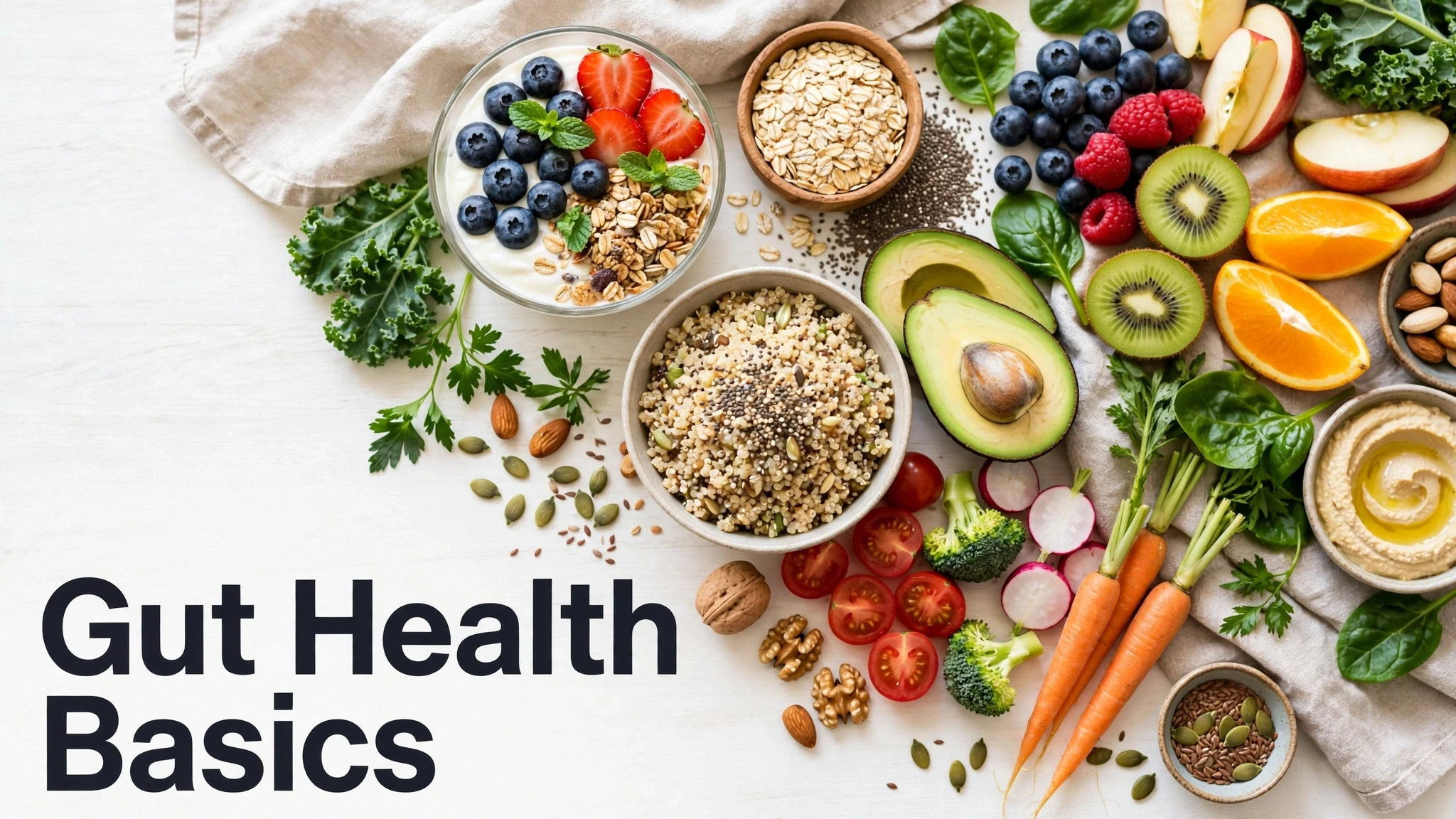
The single most supported dietary advice for gut health is variety, especially of plant foods. Different fibres and plant compounds feed different microbes, so eating a wide range of vegetables, fruits, legumes, whole grains, nuts, and seeds supports microbial diversity better than eating the same few foods repeatedly. A practical target used in research is around 30 different plant foods per week, counting vegetables, fruits, grains, legumes, nuts, seeds, and herbs, not as a strict rule but as a guide to variety. Frozen and canned plant foods without added sugar or excessive salt can count, which makes variety achievable without expense or waste.
Fibre deserves special attention, because it is the main fuel for beneficial microbes. Soluble fibre, found in oats, beans, lentils, apples, and flaxseed, forms a gel and feeds microbes, while insoluble fibre, found in whole grains, vegetables, and skins, adds bulk and supports regular movement. Increasing fibre too quickly can cause gas and bloating, so a gradual increase, with adequate water, is wiser than a sudden jump. For people with certain conditions, such as irritable bowel syndrome, some high-fibre foods may worsen symptoms, and individual tolerance matters more than a universal fibre target.
Fermented foods, such as yogurt with live cultures, kefir, kimchi, sauerkraut, miso, and tempeh, contain live microbes and have been associated in some studies with increased microbiome diversity and improved markers. They are a useful part of a varied diet, but they are not magic: the microbes in food do not usually colonise the gut permanently, and their benefits depend on overall diet. Pasteurised versions of fermented foods may not contain live cultures, so labels matter if live microbes are the goal. Fermented foods can also be high in salt, so portions should be balanced, especially for people monitoring sodium intake.
Foods and habits that tend to harm gut health when consumed excessively include highly processed foods low in fibre, large amounts of added sugar, excessive alcohol, and very low variety diets. Ultra-processed foods often displace fibre-rich plant foods, reducing microbial diversity, while alcohol can irritate the gut lining and disrupt microbes. This does not mean any single processed meal ruins gut health; it means the overall pattern over weeks and months matters. A gut-friendly diet is therefore less about forbidden foods and more about a pattern rich in plants, adequate protein, healthy fats, and water, with treats in moderation.
Probiotics, Prebiotics, and What They Can and Cannot Do
Probiotics are live microbes, usually bacteria or yeasts, taken as supplements or in foods, with the intention of benefiting health. Prebiotics are fibres and compounds that feed beneficial microbes already in the gut, found naturally in foods such as garlic, onions, leeks, asparagus, bananas, oats, and legumes. Synbiotics combine both. These terms are often used loosely in marketing, but their scientific meanings are specific, and their benefits depend on the strain, dose, and condition being addressed, not on the label alone.
For generally healthy people, probiotic supplements have limited proven benefit. Some specific strains have evidence for particular situations, such as reducing antibiotic-associated diarrhoea or helping certain types of irritable bowel syndrome, but those benefits do not transfer automatically to other strains or to healthy people seeking general wellness. A probiotic that helps one condition may do nothing for another, and a product that lists a species without a strain, or without a dose that matches research, is hard to evaluate. Food sources of live microbes, such as yogurt and kefir, are a lower-cost, lower-risk way to include probiotics in the diet for most beginners.
Prebiotics are generally more straightforward, because they are simply fibres in ordinary foods. Eating a variety of prebiotic-rich plant foods supports microbes that are already present, without needing a supplement. Prebiotic supplements, such as inulin or fructooligosaccharides, can cause gas and bloating, especially at high doses, and should be introduced gradually if used. For most people, food-first prebiotics are sufficient, and supplements should be considered only for a specific reason, ideally discussed with a clinician or dietitian.
Cleanses, detox teas, and colon cleanses deserve a clear warning. The gut does not need to be flushed to be healthy; the liver, kidneys, and gut itself handle waste removal, and aggressive cleanses can cause dehydration, electrolyte imbalance, and disruption of normal microbes, without proven benefit. Similarly, restrictive elimination diets undertaken without guidance can reduce variety, cause nutritional gaps, and increase anxiety about food. If digestive symptoms persist, a structured assessment by a clinician, sometimes including a dietitian-supervised elimination and reintroduction process, is far safer than a self-directed cleanse or a long list of forbidden foods based on an unproven test.
Sleep, Stress, Movement, and the Gut
Gut health is not only about food. Sleep, stress, and movement all influence digestion through hormones, the gut-brain axis, and physical movement of the intestines. Poor sleep is associated with changes in microbiome composition and with increased gut sensitivity, while good sleep supports regular bowel habits and appetite regulation. Shift workers, who often have disrupted sleep and irregular meals, frequently report more digestive symptoms, illustrating how timing and sleep interact with gut function.
Stress affects the gut in several ways: it alters gut motility, making it faster or slower, increases sensitivity to normal gut sensations, changes blood flow to the intestines, and can influence microbial composition over time. Chronic stress does not cause every gut condition, but it can worsen symptoms for many people, including those with irritable bowel syndrome. Stress management techniques, such as regular exercise, breathing practices, adequate sleep, and social support, therefore support gut health indirectly, not by changing microbes directly, but by normalising gut-brain signalling and reducing symptom amplification.
Physical movement supports gut health by stimulating intestinal contractions, reducing constipation, and supporting overall metabolic health. Even moderate activity, such as walking after meals, can help digestion and reduce bloating for many people, while prolonged sitting and inactivity are associated with slower transit and constipation. Intense exercise, especially in heat or without adequate hydration, can temporarily cause gut discomfort, sometimes called runner’s stomach, but regular moderate activity is generally beneficial. The goal is consistency, not intensity, and movement that fits daily life is more sustainable than sporadic extremes.
Eating habits also matter beyond food choice. Eating slowly, chewing well, eating regular meals, and avoiding very large meals late at night can reduce reflux, bloating, and discomfort for many people. Rushing meals, eating while stressed, or eating large amounts of very fatty or spicy food in one sitting can overwhelm normal digestion, even if the foods themselves are not harmful in moderation. Mindful eating is not a cure, but it is a practical habit that supports the gut’s normal rhythms and helps people notice which foods and patterns suit them personally.
Gut Health Across Life Stages and Special Situations
Gut health changes across life, and beginners should understand that advice for a healthy adult may need adjustment in special situations. In infancy, the microbiome is seeded at birth and shaped by feeding, with breast milk containing prebiotic compounds that support beneficial microbes, and with gradual introduction of diverse foods in weaning supporting diversity. In childhood, varied diet, outdoor play, and limited unnecessary antibiotics support microbiome development, while in older age, reduced appetite, medication use, slower transit, and changes in diet can alter the microbiome and increase constipation risk, making fibre, fluids, and movement especially important, alongside medical review for persistent symptoms.
Pregnancy also changes digestion, with hormonal effects slowing transit and causing constipation and reflux for many people, and with dietary needs that require professional guidance rather than self-directed supplements or restrictive diets. People with diagnosed gut conditions, such as irritable bowel syndrome, inflammatory bowel disease, or coeliac disease, need tailored advice: a diet that helps one condition may worsen another, and general gut health tips should not override a clinician’s or dietitian’s plan. For example, a high-fibre diet that helps many people may need modification for someone with a flare of inflammatory bowel disease, and a low-FODMAP diet for irritable bowel syndrome should be supervised and time-limited, with reintroduction, rather than followed indefinitely without guidance.
Travel is another special situation that affects the gut, through changes in diet, water, sleep, stress, and exposure to new microbes, often causing traveller’s diarrhoea or constipation. Practical measures include drinking safe water, eating freshly cooked foods where hygiene is uncertain, washing hands, and carrying oral rehydration salts for diarrhoea, with medical advice for severe, bloody, or prolonged symptoms, or for travel to high-risk areas. Probiotics for travel are sometimes discussed, but evidence is mixed and strain-specific, so they should not replace hygiene and safe food and water practices. Understanding these life-stage and situational differences prevents beginners from applying a single gut health rule to every circumstance.
My Take:
My honest opinion is that gut health is a perfect example of a topic where the basics are both simple and powerful, yet the market makes them seem complicated and expensive. The core advice, eat a variety of plant foods, include fibre gradually, include fermented foods if you enjoy them, sleep well, move regularly, and manage stress, is not glamorous, but it is supported by far more evidence than any probiotic drink or cleanse. I think beginners should start there, for several weeks, before spending money on supplements or tests, because the basics are where most of the benefit lies.
I am also sceptical of personalised microbiome tests sold directly to consumers. They can be fascinating, and they may become clinically useful in the future, but at present they often give vague, shifting results, with dietary advice that is not clearly better than general healthy eating guidance. I would not let a test override medical advice for symptoms, and I would not restrict my diet based on a test alone, especially if that restriction reduces variety, which is the opposite of what gut health needs. Curiosity is fine; dietary fear based on an unproven test is not.
On probiotics, my view is balanced: specific strains can help specific conditions, and that research should be respected, but general wellness probiotics for healthy people are often oversold. I think food sources are a better starting point for most beginners, because they provide microbes along with nutrients, fibre, and enjoyment, at lower cost and with fewer claims. If a clinician recommends a specific probiotic for a specific reason, that is a different situation, and the strain and dose should be followed, not replaced by a generic product with a similar name.
I also believe the gut-brain connection should be discussed with care. It is real and important, but it is often misused to imply that gut symptoms are psychological or that anxiety alone explains them. I think the correct message is that gut and brain influence each other, so both deserve attention: medical assessment for gut symptoms, and support for stress, sleep, and mood where relevant, without blaming the person for either. A person with persistent gut symptoms deserves investigation, not dismissal as stress, just as a person with anxiety deserves support, not dismissal as a gut problem.
Finally, I think gut health is a good place to practise patience. Microbes change over weeks, not days, and a diet change that causes a few days of gas while fibre increases is not a failure; it is adaptation. I would encourage beginners to judge gut health by patterns over weeks, such as regularity, comfort, energy, and enjoyment of food, rather than by daily perfection or by a single test result. A gut that is supported by variety, sleep, movement, and calm is a resilient gut, and resilience, not purity, is the goal worth aiming for.
I also think gut health education should include food enjoyment, not only food rules. Many gut health messages focus on what to avoid, creating anxiety about eating, guilt after a treat, and fear of normal foods, which can itself worsen gut symptoms through stress and restrictive patterns. I believe a healthier message is to focus on adding variety, enjoying meals, eating slowly, and noticing what suits you personally, rather than on perfection or punishment. Food is social, cultural, and pleasurable as well as nutritional, and a gut health approach that ignores enjoyment is unlikely to last, however scientifically correct its fibre advice may be.
Another angle is the role of the food industry and marketing in gut health confusion. Products labelled gut-friendly, probiotic, or microbiome-boosting range from genuinely useful fermented foods to sugary drinks with a small amount of added bacteria and a large health claim. I think beginners should read labels critically: check sugar, salt, fibre, and live culture claims, compare with ordinary foods, and ask whether the product offers something beyond a varied diet. A plain yogurt with live cultures and fruit is often a better choice than an expensive probiotic drink with added sugar, and that simple comparison can save money and improve diet at the same time.
I also want to reflect on antibiotics and the microbiome with balance. Antibiotics are life-saving medicines, and fear of harming the microbiome should never lead someone to refuse a prescribed course or to stop early. The correct response to antibiotic effects on the gut is to use antibiotics only when needed, as prescribed, to support recovery with varied plant foods afterwards, and to discuss persistent diarrhoea or other symptoms with a clinician, rather than to self-treat with unproven products. Stewardship, using antibiotics wisely, protects both individual gut health and public health by reducing resistance, and that broader benefit deserves emphasis alongside personal microbiome concerns.
Finally, I believe gut health is a long game, and that patience is its most underrated virtue. Microbial communities shift over weeks, dietary habits form over months, and symptom patterns become clear only with tracking over time. A beginner who tries a new diet for three days, feels bloated, and abandons it has not given the gut time to adapt, while a beginner who makes gradual changes, tracks patterns, and seeks advice for persistent symptoms is far more likely to succeed. I would encourage readers to judge gut health by trends over a month or more, not by a single meal or a single day, because the gut, like any ecosystem, responds to sustained patterns rather than to isolated events.
One last thought: gut health improves most when it becomes ordinary rather than obsessive, woven into varied meals, regular sleep, daily movement, and calm eating, rather than pursued through expensive products or fearful restrictions. If you remember only one idea from this guide, let it be variety: many different plant foods, over weeks, support a diverse and resilient gut far better than any single superfood or supplement. That simple, sustainable idea is the foundation on which all other gut health advice should be built.
Start today with one extra plant food, one extra glass of water, and one short walk after a meal, and let those small steps grow into a lasting pattern.
Keep that lesson in mind whenever a new claim or trend appears: check the evidence, consider who benefits from the claim, and choose the option that is safe, sustainable, and suited to your own situation rather than the loudest option online.
Frequently Asked Questions
What is gut health in simple terms?
Gut health means your digestive system, especially the large intestine and its microbes, is working well: digesting food, absorbing nutrients, forming regular stools, maintaining a strong gut barrier, and communicating normally with the immune system and brain, without persistent pain or distressing symptoms.
How can I improve my gut health naturally?
Eat a wide variety of plant foods, increase fibre gradually with water, include fermented foods if you enjoy them, sleep regularly, move daily, manage stress, and limit excessive alcohol and ultra-processed foods. These everyday habits support microbial diversity more reliably than supplements or cleanses.
Are probiotics worth taking every day?
For generally healthy people, daily probiotic supplements have limited proven benefit. Specific strains can help specific conditions, but food sources such as yogurt and kefir are a reasonable starting point, and supplements should be chosen for a specific reason, ideally with clinical guidance.
What is the difference between probiotics and prebiotics?
Probiotics are live microbes taken in foods or supplements. Prebiotics are fibres and compounds in foods such as garlic, onions, oats, and legumes that feed beneficial microbes already in your gut. Both can be part of a varied diet, but prebiotics from food are usually simpler and cheaper.
When should gut symptoms be checked by a doctor?
Seek prompt medical assessment for blood in stool, unintentional weight loss, persistent vomiting, difficulty swallowing, severe or persistent pain, or a lasting change in bowel habits, especially in older adults. Occasional bloating or a single unusual stool is usually normal, but patterns and warning signs matter.
Do gut cleanses or detox teas help gut health?
No proven benefit, and they can cause dehydration, electrolyte problems, and disruption of normal microbes. The gut, liver, and kidneys handle waste removal naturally. Persistent symptoms should be assessed medically rather than treated with a cleanse.