How Drones Changed Modern Warfare
In this post
- A Short History Of Military Drones
- The First Big Change Is Watching
- The Second Big Change Is Striking
- Why Armies Like Drones So Much
- The Third Big Change Is Cost
- The Fourth Big Change Is Speed
- The Hard Problem Of Defence
- What Drones Cannot Do Well
- What Has Not Changed
- Why This Matters For Readers
- You may also like
Twenty years ago, the most important flying machines in a war were large, costly aircraft flown by pilots sitting inside them. Today, some of the most important are small machines with no pilot on board at all, flown from far away by an operator looking at a screen. The change did not happen in one day. It happened step by step, as drones grew cheaper, smaller and better at watching and striking. This post explains how that happened, and what it has changed.
A Short History Of Military Drones
Unmanned aircraft are older than most people think. The British invented unmanned aircraft as early as 1917, according to Phoenix Tech. Yet drones saw no real action for decades. They were first deployed for reconnaissance in the Gulf War in 1991, when they were used to watch enemy positions from the air without risking a pilot.
Since then, use has risen sharply. Drones moved from watching to striking, from large military systems to small machines that can be carried and launched quickly. What began as a tool for a few rich air forces is now used by many countries and armed groups, in many kinds of conflict.
The First Big Change Is Watching
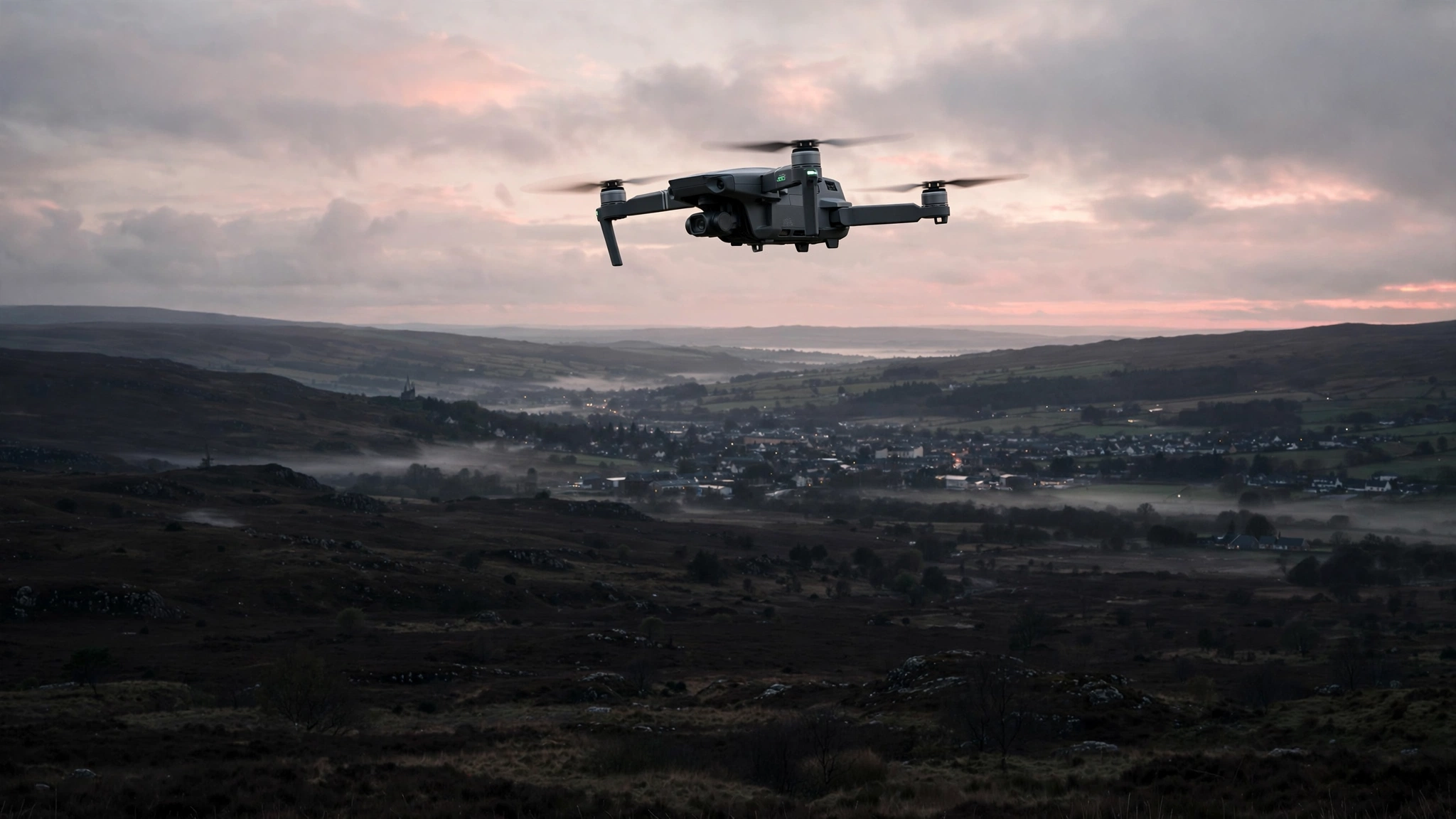
The earliest job of a drone was to see. A drone can stay in the air for a long time, fly over an area again and again, and send back pictures and video. Because drones are quiet and small, they can gather detailed information about enemy movements, roads, buildings and vehicles.
Phoenix Tech notes that surveillance data from drones is more useful precisely because drones do not make much noise and can observe key operations in great detail. A commander who can watch a road, a border or a battlefield hour after hour has a large advantage over one who must guess what is happening on the other side of a hill.
That constant watching has changed how armies plan. Movement is harder to hide. Surprise is harder to achieve. In modern fighting, being seen often means being at risk, because what a drone sees can quickly be passed to weapons that can strike it.
The Second Big Change Is Striking
Drones are now also used for one-use strikes and for attacks with precision-guided munitions. A drone can be flown to a target and strike it directly, or it can drop or fire a weapon at a chosen point. Phoenix Tech notes that drones equipped with precision-guided munitions can strike targets accurately, reducing the risk of civilian casualties and collateral damage compared with less precise attacks.
That precision matters, but it does not make drone war clean or simple. Strikes still kill people, destroy buildings and frighten civilians. The change is in how the strike is delivered: from a small machine, often far from the person who ordered it, against a target found by cameras rather than by soldiers on the ground.
Why Armies Like Drones So Much
Armies use drones for two main reasons, Phoenix Tech explains: ease of manoeuvrability and minimising danger to human life. Drones are much smaller than fighter jets, reconnaissance aircraft and supply aeroplanes. Their small size makes it easier to enter tight spaces in cities or dense jungle, to manoeuvre quickly, and to slip through radar detection better than large planes.
The second reason is about people. Wars are costly, and the loss of human life cannot be replaced. Remote-controlled aircraft let forces carry out missions without putting their own soldiers in direct danger. Phoenix Tech describes this as force protection: by allowing missions without putting soldiers in harm’s way, drones have helped reduce casualties and improve operational effectiveness for the side using them.
The Third Big Change Is Cost
A modern fighter jet costs a fortune to buy, fuel, maintain and fly. A drone costs far less, not only to purchase but also to maintain. Phoenix Tech points out that drones cost much less than fully engineered aircraft in both fixed purchases and upkeep. That lower cost changes who can fight from the air.
Small drones are also easier to transport, carry and deploy quickly. Most modern drones do not need long runways to get airborne, which makes setting up a ground control station and moving it around far simpler. An armed group with modest resources can now do things in the air that once needed a full air force. The sky is no longer reserved for the richest militaries.
The Fourth Big Change Is Speed
Drones have shortened the time between seeing and striking. In the past, a spotter might see a target, report it by radio, wait for orders, and then wait again for an aircraft to arrive. With drones linked to commanders and weapons, that chain can be much shorter. A target seen on a screen can be acted on quickly.
This speed is one reason drone attacks on ships, airports and energy sites have become such a feature of recent conflicts. A small machine can cross water or land, reach a fixed target such as a tanker or a runway, and strike before defenders can react. Defenders must therefore watch the sky constantly, not only during set battles.
The Hard Problem Of Defence
Drones are hard to defend against because they are small, often fly low, and can arrive in numbers. Large air defence systems were built mainly to stop large aircraft and missiles. A cheap drone does not behave like either. It may be too small to spot easily on radar, too low for some systems, and too cheap to justify an expensive interceptor missile.
That mismatch is central to modern warfare. Shooting down a low-cost drone with a very costly missile may work once, but it cannot work for hundreds of attacks without draining money and supplies. Armies are therefore building new defences, from jammers that break the link between drone and operator, to guns and nets, to their own drones that hunt others. The contest between drone and defence is still being fought, and neither side has won it outright.
What Drones Cannot Do Well
Drones have real limits, and Phoenix Tech lists them plainly. They are small, so their fuel capacity is small too. Newer battery-operated drones may have a range of up to a few hundred kilometres, far less than large aircraft that can travel up to a thousand kilometres on one full tank. They also take time to master: a pilot can learn to fly a plane faster than an operator can master drone manoeuvres, according to the same source.
Drones also depend on links and signals. If the connection between operator and drone is jammed or broken, the drone may be blind or lost. Bad weather, strong wind and electronic interference all limit what drones can do. They have not replaced soldiers, tanks or aircraft. They have added a new layer to war, not removed the old ones.
What Has Not Changed
For all the new technology, some things about war have stayed the same. People still die. Civilians still suffer most when fighting reaches towns, ports and airports. Decisions about striking are still made by people, even when machines carry them out. And the fear caused by a buzzing machine overhead is felt by ordinary families, not only by soldiers.
Drones have also raised hard questions that have no simple answer. When a weapon is cheap and its operator is far away, war can become easier to start and harder to stop. When a private company owns the network a drone depends on, control of the war can rest partly outside any army. These questions are now part of every serious discussion about drones, and they will not be settled by technology alone.
Why This Matters For Readers
You do not need to follow military news closely to see why drones matter. They help explain recent headlines: drone attacks on airports in Saudi Arabia, drones hitting tankers in the Black Sea, and the constant search for better defences. In each case, a small flying machine did what once needed a bomber or a missile crew.
The drone did not invent war. It changed its price, its speed and its reach. It made watching constant, striking cheaper, and defending harder. Understanding that change is the first step to understanding much of the conflict news of our time.
You may also like
Frequently Asked Questions
How have drones changed modern warfare?
Drones have changed modern warfare by making watching constant, striking cheaper and faster, and defending harder. They can stay in the air and send back detailed pictures, strike targets with precision-guided weapons, and be launched quickly without long runways. Because they cost far less than fighter jets and put no pilot at risk, many more forces can now use air power, and small machines can reach ships, airports and energy sites that once needed much larger weapons.
When were drones first used in war?
Unmanned aircraft were invented in Britain as early as 1917, but drones did not see real action until 1991, when they were first deployed for reconnaissance in the Gulf War, according to Phoenix Tech. From that watching role, their use grew sharply through the 21st century into strikes and many other security and peacekeeping tasks. The change was gradual: each generation of drones became smaller, cheaper and better at gathering information and hitting targets.
Why do armies prefer drones over fighter jets for some missions?
Armies use drones for ease of manoeuvrability and to minimise danger to human life, Phoenix Tech explains. Drones are much smaller than conventional aircraft, so they can enter tight spaces in cities or dense jungle, manoeuvre fast to escape fire, and slip through radar detection better than large planes. They also let forces carry out missions without putting soldiers in harm’s way, which reduces casualties for the side using them, and they cost far less to buy and maintain than fully engineered aircraft.
What are the disadvantages of military drones?
Drones are small, so their fuel capacity is small, and newer battery-operated drones may reach only a few hundred kilometres, far less than large aircraft that can travel up to a thousand kilometres on one tank. They also take a long time to master, with operators needing more practice than pilots learning to fly a plane. Drones depend on signal links that can be jammed, and bad weather and electronic interference limit what they can do, so they have added a new layer to war without replacing soldiers, tanks or aircraft.
Why are drones so hard to defend against?
Drones are hard to defend against because they are small, often fly low, and can arrive in numbers, while many air defence systems were built mainly to stop large aircraft and missiles. A cheap drone may be hard to spot on radar and too cheap to justify an expensive interceptor missile, so shooting down many of them can drain money and supplies. Armies are building new defences such as jammers, guns and hunter drones, but the contest between drone and defence is still being fought and neither side has won it outright.