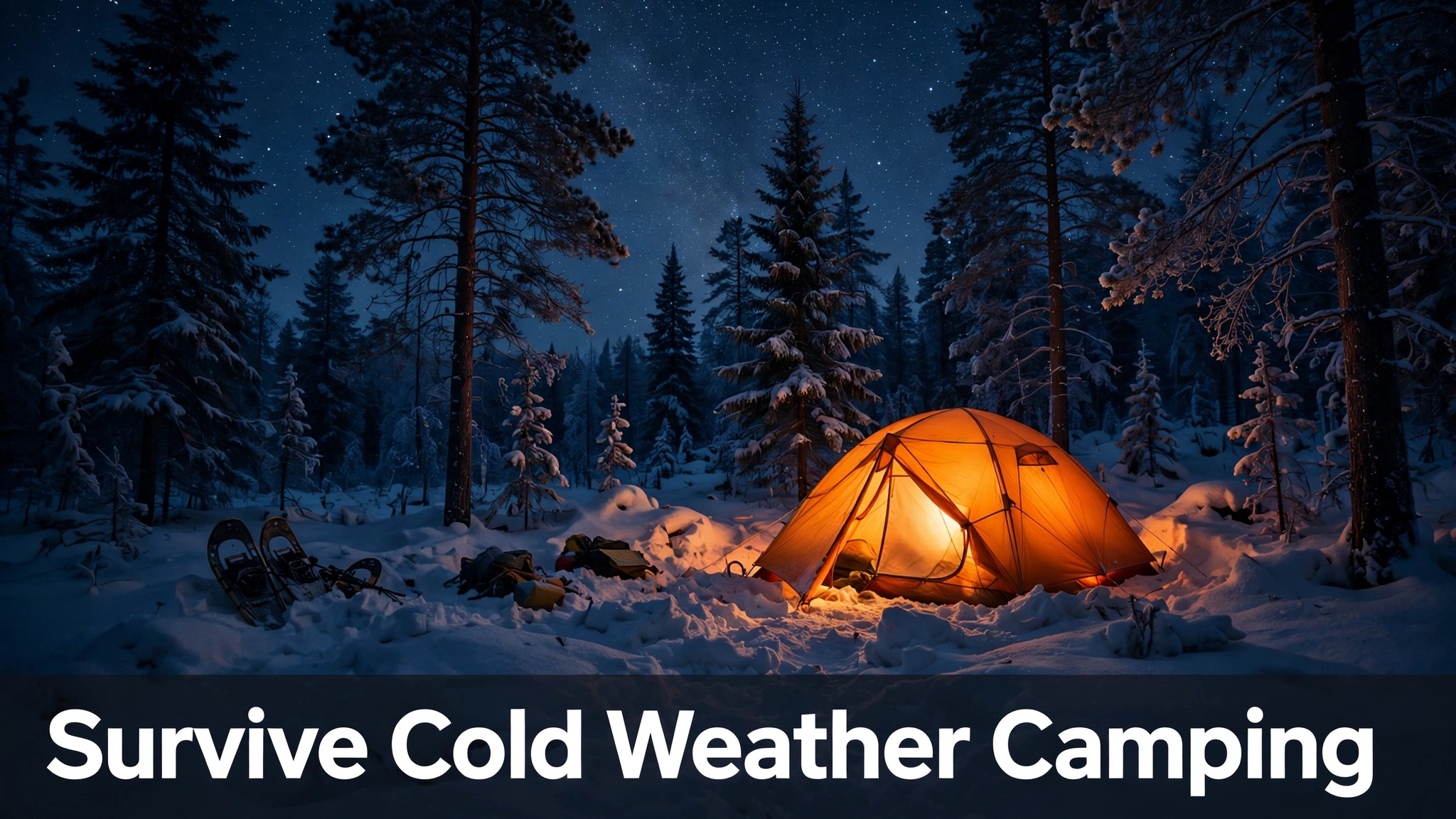
How to Survive Cold Weather Camping
In this post
Cold weather camping is not about toughness. It is about systems: clothing that manages moisture, shelter that blocks wind, sleep insulation that separates you from frozen ground, and food and water plans that keep your body fuelled. When those systems work together, a freezing night can be comfortable and even enjoyable. When one system fails — wet clothing, a thin sleeping pad, or no wind protection — the same night becomes miserable and potentially dangerous. This guide explains the systems in plain terms, with safety first throughout.
The first rule is to respect the cold without fearing it. Cold itself does not injure you instantly; heat loss over time does. Your body loses heat through conduction to cold ground, convection from wind, radiation to a clear night sky, and evaporation from sweat and breath. Good winter camping controls all four. That is why experienced campers talk less about a single “warm jacket” and more about layers, dry clothing, windproof shelter, and insulation underneath. Each choice either slows heat loss or speeds it up, and small choices add up over a long night.
Beginners should start conservatively. Choose a site close to help, camp with at least one experienced person if possible, check the forecast carefully, and tell someone your plan and expected return time. A first winter trip in mild cold, near a road or town, teaches more than a remote trip in extreme cold that ends early. This is general information, not professional training, and anyone with a medical condition that affects circulation, breathing, or temperature regulation should seek medical advice before winter camping. If conditions turn dangerous, leaving early is a success, not a failure.
Dress in Layers That Manage Sweat
The layering system has three jobs: move sweat away from skin, trap warm air, and block wind and snow. The base layer sits next to skin and should be made of wool or a synthetic fabric designed to wick moisture. Avoid cotton as a base layer in cold weather, because cotton holds sweat, dries slowly, and then cools the body. This is one of the most repeated winter camping mistakes, and it is easy to avoid by checking labels before packing.
The middle layer insulates. Fleece, wool sweaters, and insulated jackets trap air warmed by your body. Use more than one thin middle layer rather than one very thick one, so you can adjust as activity changes. When hiking or setting up camp, you will sweat; remove a layer before you start sweating heavily, not after you are already wet. When you stop moving, add a layer immediately, before you feel cold. This habit — adjusting early — is more important than owning expensive clothing.
The outer layer protects against wind and snow. It should be windproof and water-resistant, with a hood that fits over a warm hat. In heavy snow or wet conditions, a fully waterproof shell matters more. Keep the outer layer loose enough to fit over insulation without compressing it, because compressed insulation traps less air and warms less. Gloves, a warm hat, and a neck covering are essential, since a large share of comfort depends on protecting hands, head, and neck from wind. Carry spare dry socks and gloves in a sealed bag; dry feet and hands at night can transform how warm the whole body feels.
Choose and Set Up Shelter Against Wind
A four-season tent is designed for snow loading and strong wind, while many three-season tents are not. If you camp in real winter conditions, use a tent rated for the conditions, or choose a sheltered site and milder weather that matches your tent. Check poles, stakes, and guy lines before the trip, and practise pitching the tent at home in daylight. Setting up an unfamiliar tent in wind, snow, and fading light is stressful and wastes body heat.
Site selection is a survival skill. Look for natural wind protection, such as a tree line or a dip in the ground, but avoid the lowest hollow where cold air pools, and avoid slopes where snow can slide. Do not camp under heavy snow-loaded branches that could drop, and do not camp in a dry riverbed or avalanche path. Clear loose snow from the tent area, stamp the snow flat if needed, and build a low snow wall on the windward side if conditions allow. A wall that breaks the wind can make a large difference to comfort inside the tent.
Ventilation matters even in cold weather. A fully sealed tent traps breath moisture, which condenses, freezes, and then melts onto sleeping bags and clothing. Leave vents open as the tent maker recommends, and avoid cooking inside a tent unless the tent and stove are specifically designed for it and ventilation is assured, because of carbon monoxide risk and fire risk. In general, cook outside the tent entrance, sheltered from wind, and keep the tent dry. A dry tent is a warm tent, and a wet tent is a problem that grows colder all night.
Sleep Warm: Insulation Underneath Matters Most
Many beginners spend heavily on a sleeping bag and forget the sleeping pad, yet the ground steals more heat than the air. Use a pad system with enough insulation for frozen ground — often two pads, such as a closed-cell foam pad underneath an insulated inflatable pad. The foam pad protects against punctures and adds insulation, while the inflatable pad adds comfort and warmth. Check temperature ratings as guides, not guarantees, because ratings assume a warm sleeper, a good pad, and dry clothing. If you sleep cold, choose a bag rated colder than the expected night temperature.
Before bed, change into dry sleep clothing. Never sleep in damp hiking clothes, because damp fabric will chill you through the night. Eat a warm meal, drink warm fluids, and use the toilet before getting into the bag, since a full bladder can make you feel colder and force a midnight trip outside. Loosen the bag’s hood around your face but keep your face outside the bag, so breath moisture does not wet the insulation. A warm hat, dry socks, and a fleece layer inside the bag can add comfort without compressing the bag too much.
If you wake cold, act early. Add a layer, eat a small snack, or warm your hands and feet. A hot water bottle in a sealed, leak-proof container inside the bag can help, but check the seal carefully and never use a bottle that leaks. Keep a spare dry layer, a headlamp, and water within reach inside the tent, so a midnight need does not mean a cold search through packs outside. In the morning, air the bag briefly if possible, shake off frost, and pack it dry. Repeated nights in a damp bag become colder each night, so drying matters across a multi-night trip.
Eat, Drink and Manage Water in Freezing Conditions
Cold camping burns more energy than summer camping, because the body works to stay warm and movement through snow is harder. Eat regular meals with a mix of carbohydrates for quick energy and fats and protein for longer-lasting fuel. A hot breakfast, a substantial evening meal, and snacks through the day are more useful than one huge meal. Keep snacks in a pocket close to your body so they do not freeze solid. Simple foods that are easy to eat with gloves on — for example, nuts, chocolate, dried fruit, and energy bars — are practical choices, though individual dietary needs vary.
Water is easy to forget in cold weather, because thirst feels weaker, yet dehydration still impairs warmth and judgement. Drink regularly, even without strong thirst, and keep water bottles insulated or inside the sleeping bag at night to prevent freezing. Wide-mouth bottles are easier to fill and less likely to freeze shut than narrow ones. Melting snow for water takes time and fuel, so carry enough fuel and start melting early. Never eat snow directly as a main water source, because it cools the body and provides little water for the effort. Boil or treat water as local guidance requires, since winter water can still carry risks.
Stove safety deserves care. Use a stove suited to cold weather, keep fuel away from flames and sleeping areas, and store fuel bottles upright and sealed. Liquid-fuel stoves often perform better than some canister stoves in extreme cold, but they need practice. Test your stove before the trip, carry a lighter and matches in separate dry places, and know how your stove behaves in wind. A stove that works in a warm kitchen may struggle in wind and cold, and discovering that at dinner time is a poor lesson. Always follow the maker’s instructions.
Recognise Cold Injuries and Know When to Stop
Hypothermia happens when the body loses heat faster than it can produce it. Early signs can include shivering, clumsiness, slurred speech, confusion, and poor decisions. Frostbite affects exposed skin, often fingers, toes, ears, and nose, and can begin with numbness, pale or waxy skin, and loss of feeling. These are serious conditions, and this guide is general information only, not medical advice. If someone shows signs of hypothermia or frostbite, seek emergency help promptly, move them to shelter, remove wet clothing if safe to do so, and warm them gradually as first-aid guidance directs. Do not rub frostbitten skin vigorously, and do not rewarm a frostbitten limb if it may refreeze.
Prevention is far easier than treatment. Keep skin covered in wind, check each other’s faces and hands regularly, and take warming breaks before numbness appears. Children, older adults, and people with poor circulation or certain medical conditions face higher risk and need extra protection and shorter exposure. Alcohol does not warm the body; it can increase heat loss and impair judgement, so it is a poor choice in cold camping. Likewise, smoking can affect circulation. Good decisions in cold weather are made early, while everyone is still warm and thinking clearly.
Know your stop signals before you need them. If the forecast worsens sharply, if gear fails, if someone cannot stay warm despite layers and shelter, or if navigation becomes uncertain, change the plan. Retreat to a vehicle, building, or town, or call for help if needed. Experienced winter campers respect these signals; they do not see retreat as weakness. The mountains, forests, and snow will still be there another weekend. A trip cut short by good judgement is a trip that teaches you to camp again safely.
Pack, Travel and Set Up Camp in Snow
Packing for winter camping starts with a checklist written at home, not from memory at the trailhead. Group gear by system — clothing, shelter, sleep, cooking, water, navigation, and safety — and check each group before leaving. Weigh your pack and walk with it before the trip if possible, because snow travel is slower and heavier than summer walking, and an overloaded pack increases sweating, fatigue, and risk. Keep essential items — headlamp, map, snacks, water, spare gloves, and a first-aid kit — where you can reach them without unpacking everything in wind and snow. A small repair kit with tape, a spare buckle, and a needle and thread can save a trip when a strap or seam fails far from help.
Travel in snow needs extra time and care. Shorten your planned distance, because breaking trail through fresh snow can take twice as long as walking a summer path. Use snowshoes or skis if snow is deep, and learn to use them before the trip, not during it. Navigation deserves special attention: snow covers landmarks, paths, and signs, and whiteout conditions can remove visibility almost completely. Carry a map and compass and know how to use them, even if you also carry a phone, because cold drains phone batteries quickly and signals fail in remote areas. Keep the phone warm inside a pocket, and do not rely on it as your only navigation or emergency tool.
Arrive with daylight to spare and set up camp methodically. Put on an extra layer before you start working, because you will cool down quickly once you stop walking, even though setting up camp feels like hard work. Pitch the tent, build the sleep system, and store food safely before darkness falls. Melt water and cook dinner while there is still light, and keep the evening routine calm and unhurried. Rushing in the dark leads to mistakes — a poorly staked tent, wet gear, or a forgotten water bottle left outside to freeze. A slow, ordered setup in daylight is one of the simplest ways to guarantee a warm, safe night.
My Take:
My honest view is that cold weather camping rewards preparation far more than bravery, and that is good news for beginners. You do not need to be the toughest person in the group; you need to be the person who packed dry socks, tested the tent, and remembered to eat and drink. I have seen confident people struggle because they trusted one thick jacket, while quieter, better-prepared campers stayed warm in layers and slept well. The difference was never character. It was systems. If you take one idea from this guide, take that one: warmth in winter is a system, and every part of the system — clothing, shelter, sleep, food, and water — must work together.
I also believe beginners should start small and close to help, even if that feels less adventurous. A first winter night near a road, with a forecast you understand and a friend who has done it before, teaches you how your body reacts to cold, how your gear performs, and how much time everything really takes. That knowledge is worth more than a dramatic first trip that ends in misery and puts you off winter camping for years. Adventure grows with experience. The best winter campers I know are not the ones who took the biggest risks first; they are the ones who built up slowly, learned from each trip, and kept going back because they enjoyed it.
Another point I feel strongly about is the humble sleeping pad. People love to talk about sleeping bags, but the ground is the thief that steals your night. I would rather have a modest bag and an excellent pad system than a superb bag on a thin summer mat. The same logic applies to dry clothing. Changing into dry sleep clothes feels like a small chore after a long day, but it can be the difference between a warm night and a night spent shivering and counting hours. These unglamorous habits — dry socks, early layer changes, a hot meal before bed — are the real secrets of winter camping, and they cost little or nothing.
I also believe that good packing and unhurried setup are underrated survival skills. Many cold nights go wrong not in the middle of the night, but in the last hour of daylight, when a tent is pitched badly, water is left outside to freeze, or dinner is rushed in the dark. Arriving early, working methodically, and keeping essentials within reach costs nothing, yet it prevents a chain of small problems that can become a miserable night. Winter camping rewards the person who slows down at the right moment, checks the tent stakes twice, and cooks dinner while there is still light, far more than it rewards the person who walks furthest or fastest.
Another belief I hold is that winter camping should be shared knowledge, not secret expertise. If you camp with others, talk openly about who feels cold, who is tired, and what gear is not working. Checking each other’s faces for pale skin, sharing a spare pair of gloves, or deciding together to turn back is not embarrassing; it is how a group stays safe. Solo winter camping demands even more caution, experience, and a reliable emergency plan, and beginners should not treat it as the default. A group that looks after each other, speaks up early, and respects stop signals will enjoy winter far more than a group where everyone silently endures cold to avoid seeming weak.
Finally, I think the most important winter camping skill is knowing when to stop. We admire persistence, but in cold weather persistence without judgement can become danger. Checking the forecast, telling someone your plan, watching for early signs of cold injury, and being willing to pack up early are not signs of weakness. They are signs of a camper who will be able to return, learn, and enjoy winter again. Surviving cold weather camping is not about enduring suffering to prove something. It is about planning well, staying warm, eating and drinking enough, and coming home with a good story and a desire to go again. That, to me, is the real measure of a successful winter trip.
There is also a quieter lesson winter camping teaches, and it is about comfort itself. In normal life we adjust a thermostat and forget about warmth, but in a tent you feel every choice: the layer you added, the meal you ate, the pad you laid down. That direct feedback is surprisingly satisfying. You learn what your body needs, how much food and water it really uses, and how small preparations create large comfort. Many people return from a winter trip with a new respect for simple things — dry socks, hot soup, a windproof tent, a clear sky — and that appreciation lasts long after the trip ends. Winter camping, done safely, does not just test you; it teaches you to notice what actually keeps you well.
Finally, I want to be honest about limits. Winter camping is not for every person, every place, or every forecast, and choosing not to go in dangerous conditions is wisdom, not a missed adventure. Extreme cold, storms, avalanche terrain, and remote areas without a reliable emergency plan demand training and experience that a single article cannot provide. If you are unsure, take a course, camp with experienced people, or choose a milder trip first. The snow will wait. What matters is that you come home safe, with skills you can build on, and with a genuine desire to return. That safe return, repeated over seasons, is how a beginner becomes a confident winter camper.
One last thought: the best winter campers I know are calm, not dramatic. They check the forecast twice, pack the night before, arrive early, and laugh about small problems because they planned for them. That calm is not a personality trait; it is a habit built from checklists, practice, and honest reviews after each trip. You can build it too, one careful trip at a time, starting close to home and growing only as your skills grow. Winter rewards that kind of patience with quiet forests, bright stars, and mornings that feel earned.
Frequently Asked Questions
What is the most important gear for cold weather camping? A warm sleep system matters most, and the sleeping pad is as important as the sleeping bag. Insulation from frozen ground, dry sleep clothing, and a windproof shelter together decide whether the night is comfortable or dangerously cold.
Why should I avoid cotton in cold weather camping? Cotton holds sweat and dries slowly, so it can cool the body once activity stops. Wool and synthetic base layers move moisture away from skin and stay warmer when damp, which makes them safer choices for winter camping.
How do I stay warm in a tent at night? Use an insulated pad system, a bag rated colder than the expected temperature, and dry sleep clothing. Eat a warm meal, keep water and a spare layer within reach, and leave tent vents open to reduce condensation inside the tent.
Can beginners go winter camping safely? Yes, with conservative choices: mild cold, a site near help, an experienced companion if possible, a checked forecast, and a shared trip plan. Start with one night, learn how your gear performs, and build up to colder or more remote trips gradually.
Is it safe to cook inside a tent in winter? In general, avoid cooking inside a tent because of carbon monoxide and fire risk. Cook outside the entrance, sheltered from wind, unless your tent and stove are specifically designed for indoor use and ventilation is assured. Always follow the maker’s instructions.
How do I keep water from freezing while camping? Use insulated bottles, keep bottles inside your sleeping bag at night, and prefer wide-mouth bottles. Melt snow early if needed, carry enough fuel, and drink regularly even when thirst feels weak.