Karoline Herfurth: The Life Story Behind the German Film Star
In this post
Karoline Herfurth has lived two careers in one lifetime, and she has lived both of them in the same city. The first began when she was fifteen, discovered in a Berlin schoolyard, and it made her one of the most familiar young faces in German film: a teenager in comedies, a murder victim in a bestseller, a teacher in the biggest German comedy of the decade. The second began when she was thirty-two, when she stepped behind the camera and started telling her own stories, about women who want love, who want children, who want to be seen as they are. Most actors who start as children either fade or repeat themselves. Herfurth did something rarer. She grew up in public, learned the craft properly, and then took charge of it.
She was born on 22 May 1984 in Berlin, in the district of Pankow, in what was then East Berlin. She was five years old when the Berlin Wall fell in November 1989, too young to understand what it meant and old enough to grow up in the city that came after it, a city that was rebuilding itself, street by street, in the nineteen-nineties. Berlin in those years was messy, cheap, full of empty buildings and new ideas, and a child growing up there learned that things could change fast. Herfurth’s career has that same quality. It has changed direction more than once, and each change has made it stronger.
What holds the two halves together is a straightforward idea: she likes stories about women, and she likes to tell them honestly. As an actress she played girls and women who are funny, frightened, brave and complicated, often in the same scene. As a director she has made films about women of different ages, all of them trying to match the image the world has of them, and all of them failing in interesting ways. The girl from Pankow who was found in a schoolyard is now one of the most successful directors in Germany, and she got there by doing the work, film by film, for more than twenty years.
A Schoolyard in Pankow
Pankow, in the north-east of Berlin, was an ordinary East Berlin district of apartment blocks, schools and parks, and Herfurth grew up there in the years when the two halves of the city were becoming one. She was a child of the change, too young to have lived under the old system in any way she could remember, and old enough to feel the excitement of a city opening up. The Berlin of her childhood was a place where a film crew could appear on any street, where theatres were reopening, and where a teenager could be noticed by someone who knew what to look for.
That someone was Nessie Nesslauer, a casting agent who spotted Herfurth in a schoolyard when she was fifteen. It is the kind of story that sounds like a fairy tale, and it is also the kind of story that can go wrong, because a child who is picked for her looks can spend years being picked for her looks and nothing else. Herfurth avoided that trap in the most practical way: she learned to act. She took the parts that came, she watched the directors and the older actors, and when she was old enough she went to the Ernst Busch Academy of Dramatic Arts in Berlin, the same demanding school that has trained generations of German actors, and she graduated as a trained actress rather than a former child star. The school gave her what a schoolyard discovery could not: technique, discipline, and the ability to choose her own work.
Berlin has stayed her home through everything. She lives there, she works there, and her films are full of it, not the postcard Berlin of the Brandenburg Gate but the real city of apartments, schools, offices and streets where ordinary people live. The girl who was found in Pankow never really left Pankow behind. She just learned to tell its stories to the whole country.
Crazy, Girls on Top, and Being Fifteen in Public
Herfurth made her film debut in Crazy, released in 2000 and directed by Hans-Christian Schmid from the novel by Benjamin Lebert. The film is about a sixteen-year-old boy who is sent to a boarding school after failing at several others, and who finds friendship, trouble and first love there. Herfurth was fifteen when she made it, playing a girl in the orbit of the boys at the centre of the story, and the film was a success with critics and audiences, a portrait of teenage life that felt honest rather than sentimental. It was a serious start for a young actress, a film by a respected director rather than a throwaway teen comedy, and it showed that she could hold her own beside experienced actors while still a schoolgirl herself.
A year later she played Lena in Mädchen, Mädchen, released in English as Girls on Top, a comedy about three teenage girls, Inken, Lena and Vicky, who make a pact to lose their virginity by a certain date and then discover that life is more complicated than the pact. The film was a hit with young audiences in Germany, and it made Herfurth, Diana Amft and Felicitas Woll into stars of a generation. The comedy is broad and the jokes are of their time, but Herfurth’s Lena is played with a warmth that keeps her from becoming a caricature, a girl who is funny and uncertain and trying to be brave about growing up.
Those two films, made before she was eighteen, could have fixed her as a teen actress, and for a while they did. She spent her late teens and early twenties in German films and television, playing daughters, girlfriends and young women in comedies and dramas, learning her trade in public. The difference between her and many child stars is that she treated those years as training. She went to drama school, she took stage roles, and she waited for parts that would let her show more than charm. The wait paid off in 2006, with a film that took her from German teen cinema to the world.
The Plum Girl and the Reader
In 2006 Herfurth appeared in Perfume: The Story of a Murderer, Tom Tykwer’s film version of Patrick Süskind’s 1985 novel, one of the most famous German books of the twentieth century. She played the plum girl, a young woman selling plums in Paris in the eighteenth century, who becomes the first victim of Jean-Baptiste Grenouille, the murderer at the centre of the story, played by Ben Whishaw. The part is short. The plum girl appears in the opening scenes, she is beautiful, she is kind to Grenouille, and then she is dead, and her scent becomes the obsession that drives the rest of the film. Herfurth played her with a lightness that makes the murder feel like a loss rather than a plot device, and the film, shot in Germany, France and Spain, was seen around the world.
Two years later she appeared in The Reader, Stephen Daldry’s film from Bernhard Schlink’s novel, playing Marthe, the daughter of one of the women Hanna Schmitz, played by Kate Winslet, had read to in a concentration camp. The film follows Michael Berg, played by Ralph Fiennes, who as a teenager had an affair with Hanna and who, years later, must confront what she did. Herfurth’s part is small, but the film was a major international production, and Winslet won the Academy Award for best actress for it. Being part of a film like that, at twenty-four, taught Herfurth what a world-class production looks like from the inside, and it confirmed that she could work in English as well as German.
The same period brought her a prize of her own. In 2008 she appeared in Caroline Link’s Im Winter ein Jahr, known in English as A Year Ago in Winter, a drama about a family grieving a son who has died, and her performance won her the Bavarian Film Prize for best young actress in 2009. The award mattered because it was given for a serious dramatic performance, not for a comedy or a teen film, and it told the German film industry that the girl from Girls on Top had become an actress of range. She was twenty-five, trained, awarded, and ready for the decade that would make her a star.
Vampires, the Sea, and a Classroom Full of Chaos
The years that followed showed how wide her range had become. In 2010 she played Lena in We Are the Night, Dennis Gansel’s film about a young woman who is turned into a vampire and joins a group of female vampires living in Berlin. The film is a horror story and a story about freedom at the same time, and Herfurth’s Lena is a thief and a runaway who finally finds a place where she belongs, even if that place is a world of blood and night. She played her with a wildness that was new for her, a young woman who has nothing to lose and enjoys it.
The same year she played Marie in Vincent will Meer, known in English as Vincent Wants to Sea, a road film about three young people who escape from a psychiatric clinic and drive to Italy so that Vincent, who has Tourette’s syndrome, can scatter his mother’s ashes in the sea. The film is funny and sad in the same scene, and Herfurth’s Marie, a young woman with an eating disorder, is played with a tenderness that keeps the comedy honest. The two films, a vampire story and a road movie about illness, could hardly be more different, and she was convincing in both.
In 2012 she worked with the American director Brian De Palma in Passion, playing Dani, the assistant to an advertising executive played by Noomi Rapace, in a thriller about rivalry, jealousy and murder. The film was a remake of a French thriller, and De Palma, one of the great stylists of American cinema, shot it with the same love of split screens, long takes and sudden violence that had marked his films since the nineteen-seventies. Herfurth’s Dani is a young woman caught between two powerful women, loyal to one and afraid of the other, and the part asked her to be watchful rather than loud, to let the audience see her thinking. Working with a director of De Palma’s generation, on an English-language production, was another kind of training, and it came at a moment when she was ready for it, an actress in her late twenties who had already played a murder victim, a vampire and a girl on a road trip to Italy. And in 2013 she took the part that would make her one of the best-known actresses in Germany, playing Lisi Schnabelstedt in Fack ju Göhte, Bora Dagtekin’s comedy about a bank robber who becomes a teacher. Lisi is the earnest, idealistic teacher who believes in her students, and who slowly falls for the fake teacher beside her, played by Elyas M’Barek. The film was a huge hit, one of the most successful German comedies ever made, and Herfurth returned for the sequels in 2015 and 2017, playing Lisi as a woman who grows from a nervous beginner into a confident teacher. The trilogy made her a household name, and it also showed her gift for comedy, for playing a straight woman in a chaotic world without ever becoming dull.
Text for You: The First Film She Directed
In 2016 Herfurth did something that surprised people who had only seen her act: she directed a film. SMS für Dich, known in English as Text for You, was her directorial debut, and she also starred in it, playing Clara, a woman whose fiancé has died and who keeps sending text messages to his old phone number, not knowing that the number now belongs to a stranger, played by Friedrich Mücke. The film is based on the 2009 novel by Sofie Cramer, and it follows Clara as she grieves, as she meets the stranger, and as she slowly learns to live again. Herfurth directed it with the same warmth she brings to her acting, letting the comedy come from the characters rather than from jokes, and letting the sadness sit beside the laughter.
The film was a success in Germany, and it proved that she could direct as well as act. She also co-wrote it, which meant that she was not just performing someone else’s story but shaping her own. The film’s afterlife was unusual: an American remake, Love Again, was released in 2023, written and directed by James C. Strouse and starring Priyanka Chopra, Sam Heughan and Celine Dion. A German romantic drama directed by a first-time director had travelled to Hollywood, and Herfurth’s story had become a story other countries wanted to tell. The cast around her showed the kind of company she keeps as a director: Friedrich Mücke as the stranger who receives the messages, Nora Tschirner as Clara’s friend, Frederick Lau, and Katja Riemann, all actors who trusted a first-time director with a story about grief. That trust is the hardest thing for a new director to earn, and Herfurth earned it because she had spent fifteen years on the other side of the camera, learning what actors need: clear direction, room to play, and a director who has done the homework.
Directing changed her career. She had spent fifteen years interpreting other people’s scripts. Now she could choose the stories herself, and the stories she chose were about women, about love, about the body, and about the gap between the life people want and the life they have. The actress who had once been discovered in a schoolyard was now the person doing the discovering, finding the actors, shaping the scenes, and deciding what the audience would see.
Sweethearts, Wunderschön, and Films About Women
Her second film as a director was Sweethearts, released in 2019, in which she also starred as Franziska, known as Franny, a young woman who is taken hostage by a diamond thief named Melanie, played by Hannah Herzsprung, and who slowly forms a friendship with her captor as the two women run from the police. The film is a comedy and a crime story at the same time, and it is built on the relationship between two women who have nothing in common except that neither of them is living the life she wants. Herfurth directed it with a light touch, letting the two actresses carry the film, and it confirmed that Text for You had not been a one-off.
Her third film as a director was Wunderschön, released in 2022 and known in English as Wonderfully Beautiful, an anthology film about five women of different ages who are all struggling with the way they look and the way the world judges them. Herfurth played Sonja, a mother of two who feels unattractive after the birth of her second child and tries everything to look the way she did before. The other women were played by Nora Tschirner as Vicky, a woman who does not want to commit to a relationship, Dilara Aylin Ziem as Leyla, Emilia Schüle as Julie, a young model, and Martina Gedeck as Frauke, an older woman facing a different kind of pressure. The film was a hit in Germany, and it showed Herfurth’s gift as a director of ensemble work, giving five actresses room to play five different lives, and trusting the audience to see themselves in more than one of them. A sequel, Wunderschöner, followed in 2025.
The same year as Wunderschön she directed her fourth film, Einfach mal was Schönes, known in English as Simply Complicated, in which she played Karla, a young woman who wants to have a child, with or without a partner, and who sets out to find a father for her baby. The film is a comedy about a subject that German cinema had rarely treated lightly, and Herfurth played Karla with the same mix of determination and humour that runs through all her directing work. In each of her films she does the same three jobs at once, co-writing, directing and acting, and the fact that she does all three, and does them well, is what makes her unusual in German film.
The Actress Who Became the Author
Look at Karoline Herfurth’s career as a whole and the shape is clear. She began as a child who was noticed, she became a teenager who was famous, she trained herself into a serious actress, and then she became an author, a woman who writes, directs and stars in her own stories. Each step depended on the one before it. The schoolyard discovery gave her the start. The teen films gave her the audience. The drama school gave her the craft. The years of acting gave her the knowledge of how a set works, what actors need from a director, and what audiences will forgive. And the directing gave her the freedom to tell the stories she had been waiting to tell.
She has also kept acting in other people’s films while directing her own, appearing in ensemble comedies such as Das perfekte Geheimnis in 2019, and she has kept her base in Berlin, the city where she was born and discovered and trained. She is, at forty-one, one of the most successful women in German film, as an actress and as a director, and she has done it without leaving Germany, without chasing Hollywood, and without repeating herself. Her directing matters beyond her own career, too. German commercial cinema has long been short of women directors making popular films, and Herfurth’s comedies, which are funny, warm and commercially successful, have shown producers that films about women, directed by women, can fill cinemas. Each of her films has made money and found an audience, and each one has made the next one easier to finance, not just for her but for the directors who come after her. That is a kind of success that does not fit on a poster, but it is the kind that changes an industry.
The lesson of her career is a simple one, and it is a useful one for any young actor who is found early and praised young. Learn the craft, wait for the right parts, and when you have something to say, say it yourself. Herfurth was fifteen when a stranger saw something in her in a schoolyard in Pankow. She spent the next twenty-five years proving that the stranger was right, and then she spent the last ten years proving something else: that the girl in the schoolyard had her own stories to tell, and that she could tell them better than anyone else.
My Take:
When I think about Karoline Herfurth, the first thing I feel is admiration for a woman who grew up on screen and did not lose herself. I have seen many child stars who become famous young, and who then struggle when they grow up, because the world remembers them as children and cannot see them as adults. Herfurth did not struggle in that way. She grew up, she learned, she studied, and she became a great adult actress and director. That takes a rare kind of strength, because it means you must keep learning, keep growing, and keep proving yourself, again and again, even when the audience already knows your name. I admire that strength, because it is the kind of strength that builds a long career.
I think about Perfume, and I think about how hard that film must have been to work on. It is a dark story, about a man who murders young women, and Herfurth played one of those women, a role that was small but important. She played it with an honesty that made the audience feel the danger, and the beauty, of the story. I have watched that film, and I have felt the tension in every scene, not because the film is loud, but because the actors make you feel the story. Herfurth was part of that, and she showed that she could work in a large, international film, with a difficult subject, and hold her own. That is a sign of a great actress, a woman who can be trusted with a hard role.
Her education impresses me, and I feel it matters more than people often say, and I notice its effect in every performance she gives. She studied at the Ernst Busch Academy, she worked in theatre, she learned the craft properly, with discipline and with practice. That training shows in every role she plays, in how she stands, how she speaks, and how she listens. I believe many young performers now rush past that training, want fame quickly, and end up with shallow careers. Herfurth did not skip it, and her career is deep, because it was built on a strong base. That is a lesson I wish more young people would absorb.
I think about Wunderschön, and I feel a warmth, because the film is about women, about how they see themselves, about beauty and age, and about the pressure to look perfect. Herfurth directed it with care, and she showed that she could tell a story about women that was not simple or sentimental, but real and complex. I think that film matters, because it gives women a voice on screen, a voice that is often missing in German cinema. Many films about women are made by men, and they show women as men see them. Herfurth showed women as women see themselves, and that is a different and more honest view. I respect her for it, because it takes courage to tell a story that is personal and real.
I love her work as a director, and I want to say why it matters so much to me. An actress who becomes a director is a woman who wants to tell stories in her own way, not only to play a role that someone else wrote. Herfurth did that, with SMS für Dich and with Wunderschön, and she showed that she has a voice as a director, a voice that is warm, thoughtful, and focused on feelings. That voice is rare, and it is a gift for anyone who loves film. I hope she keeps directing, because the world needs more women directors, and it needs more films that are told with a woman’s honesty.
I feel a hope when I think about her future, because she is still working, still acting, and still directing, and she is still giving some of the best work of her life. I wonder what she will make next, and I hope it will be a story that surprises me, as her past films have surprised me. I hope she keeps her curiosity, keeps her calm, and keeps her love of stories, because those are the things that have made her career so rich. A woman who keeps learning is a woman who keeps growing, and Herfurth has kept learning for more than twenty five years. That is a hopeful thought for anyone who loves film.
I think about her childhood in East Berlin, and I think it matters more than people say. She was a child when the Wall fell, she grew up in a time of great change, and she learned to watch people carefully, to see how they adapt and how they cope. That watching became the base of her acting, a way of looking at people from the inside. She knows that people can change, that they can grow, and that they can keep going when the world changes. That knowledge is in her acting, in the way she plays women who are trying to survive in a hard world. I think that is why her performances feel so real, because they come from a real understanding of change.
I also think about the way she handles fame, and I think it is a model for any public person. She is adored across Germany by millions, and yet she keeps her private life to herself, stays fixed on the work, and never chases the spotlight, a position she has earned without ever courting the cameras. That is a form of strength, being recognised for the work rather than the life, and I wish more famous people chose it, a choice that deserves more admiration than it usually receives. When the work is the point, the work gets better, and Herfurth proves it, because her work has only got better with time, even as she has kept herself out of the spotlight.
If I have a criticism, it is that she has not always chosen films that reach a wide audience outside Germany, and that some of her best work is known only to German audiences. I understand her reasons for choosing the roles she does, and I respect them, though as a viewer I wish more people knew her work, since it is good work that deserves to be seen. That is not a criticism of her, really. It is a sadness that the world does not always notice great acting, and that a great actress can work for decades and still be unknown to many people outside her own country. I hope this story changes that, even a little.
I think about young actresses in Germany, and I hope they look at Herfurth and learn the right lesson. The lesson is not to copy her parts, because those parts are hers alone. The lesson is to master the craft, study it, work in theatre, be patient, and build a career on skill rather than luck. Herfurth studied at a serious school, she worked in theatre, she took small roles, and she was ready when the big roles came. That patience is the true lesson, and it still applies today, when many young actresses want fame in a week and quit when it fails to come.
I also think about the city of Berlin, and I think about how Herfurth has made Berlin her home, as an actress, as a director, and as a person. Berlin is a city that values film, that values humour, and that values a thoughtful public life, and Herfurth fits that city well. She is not a star who lives in Hollywood. She is a star rooted in Berlin, working in Berlin, and woven into the city’s story. It is a wonderful thing to belong to a place and to make that place richer through your work. I hope she keeps her home in Berlin, and that Berlin keeps treasuring her, because the pair belong together.
For a young reader, I think the lesson from Karoline Herfurth is to grow, to learn, and to be honest. Do not try to stay a child star, do not rush to be famous, and do not be afraid to try something new, like directing. Learn the craft, labour hard, and trust that the audience will follow once you are ready. Herfurth learned her craft, she worked hard, she tried directing, and the audience has followed her for more than twenty five years. That trust was not luck. It was the fruit of hard work, work anyone can do, if they keep at it when nobody notices.
Her story also teaches something about Germany, and about how a thoughtful cinema can tell a country’s tale. Her films deal with German history, with family, with women, and with the choices we make when life is hard. Herfurth helped to tell those stories, with honesty and with care, and she gave them a human face. That offers hope to any young person in any land who worries their country’s stories are too difficult to tell. You can tell those stories, if you stay honest, stay patient, and trust the audience to listen. Herfurth did, and German cinema is better for it.
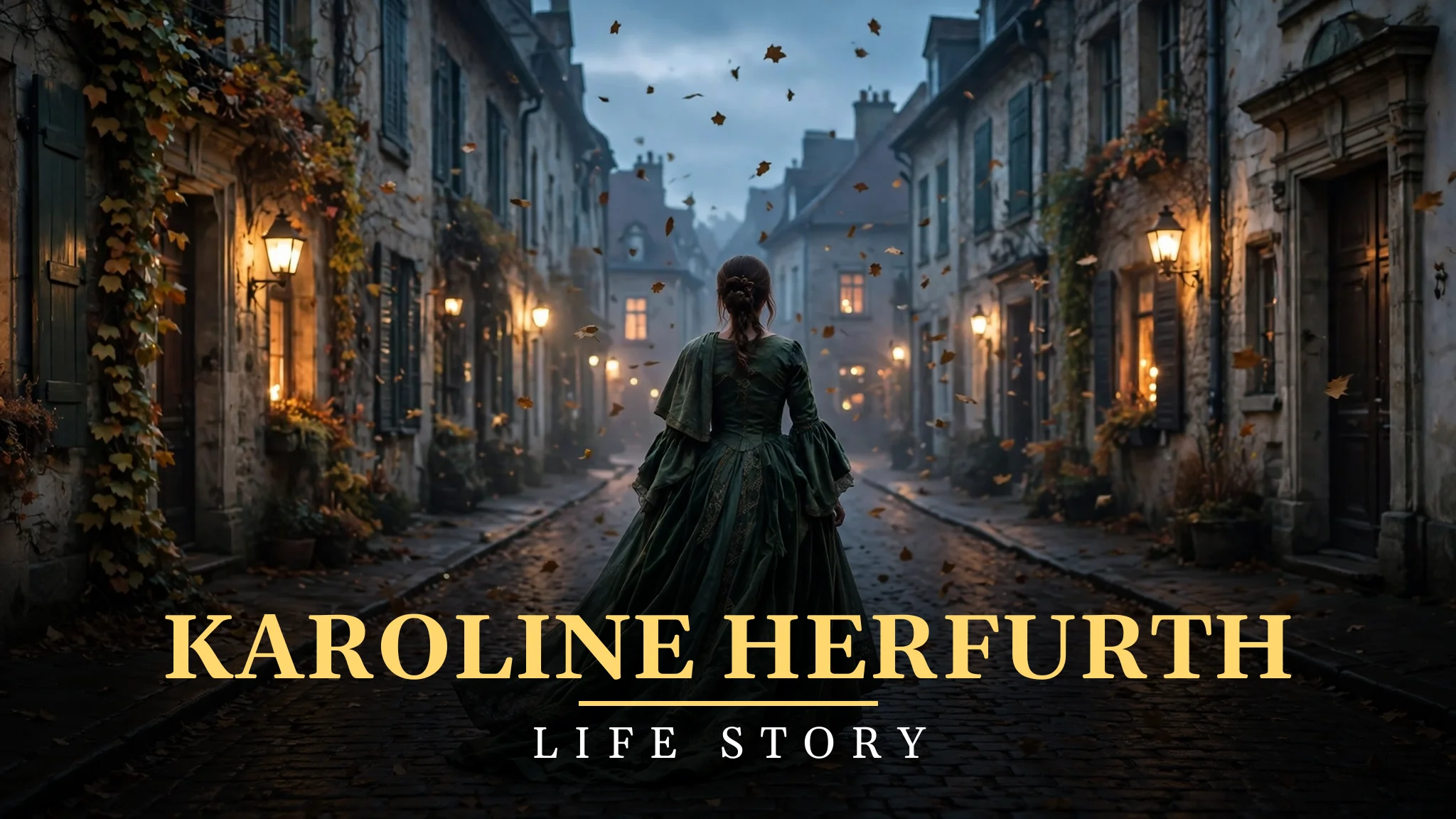
In the end, I keep coming back to the image of a woman in a long green gown, walking down a lamplit street as autumn leaves fall around her. That image is the heart of Karoline Herfurth, a quiet beauty that does not need to shout, and that is why her work will be remembered long after many louder stars are forgotten. I hope she is remembered for that image, for her candour, and for a long career of fine work. She is not the most famous actress in the world, yet she is among the most sincere, and sincerity in acting counts for more than fame. I will keep seeing her films, keep telling people about her, and keep believing an actress who works this hard merits an audience.
I would also like to note her listening on screen, since it is a talent that is easy to miss. Many actors are good at speaking, but few are good at listening, and Herfurth is one of the few who listens well. When a fellow actor speaks, she watches, reacts, and brings the scene alive. That attentive hearing is what makes her performances ring true, because a real conversation is more than talking. It is about listening, and Herfurth listens with her whole body, with her eyes, with her stillness. That is an unusual gift, and I wish more actors shared it.
Finally, I want to say that Karoline Herfurth taught me that acting is not about being famous. It is about remaining genuine, seeking the truth inside a character, and trusting viewers to follow. She has spent her career doing just that, in many roles across many films, with a calm and attention I deeply admire. I hope she keeps acting, keeps directing, and keeps telling stories, because the world needs more actresses like her, actresses who care about the work more than about the fame.
I also think about the way Herfurth works with other women in film, and I think it is a model for any industry. She has spoken about the need for more women directors, more women writers, and more stories told by women, and she has tried to make that happen, not only by talking about it, but by directing films herself and by working with women on her sets. That action is more powerful than words, because it shows young women that it can be done, that a woman can direct a successful film in Germany, and that her story matters. I respect that in her, since it is leadership that stays calm and firm simultaneously.
A final thought remains with me, and it concerns the future. Herfurth is still working, still acting, and still directing, and I hope her best work is still ahead of her. She has already made films that are loved in Germany, she has worked with great directors, and she has shown that she can tell stories in her own way. If she keeps learning, keeps growing, and keeps telling honest stories about women, her next film may be her best yet. I will watch for what she does next and wait with interest.
Frequently Asked Questions
Where was Karoline Herfurth born and when?
Karoline Herfurth was born on 22 May 1984 in East Berlin, in what was then East Germany, in the Pankow district. She was five when the Berlin Wall fell in 1989, and she began acting as a child.
How did Karoline Herfurth start acting?
She began acting as a child in German films, learning on the set by working with directors and other actors. She later studied acting at the Ernst Busch Academy in Berlin, one of the most respected drama schools in Germany.
What were Karoline Herfurth’s early teenage films?
Her early teenage films included Crazy in 2000 and Girls on Top in 2001, both of which were popular with young audiences in Germany. They showed her as a funny, charming, and real young actress.
What is Perfume about and what was her role?
Perfume: The Story of a Murderer, released in 2006 and directed by Tom Tykwer, is about a man with a perfect sense of smell who murders young women to capture their scent. Herfurth played a supporting role as one of the young women, in a large international film.
Did Karoline Herfurth appear in The Reader?
Yes, she appeared in The Reader in 2008, a film starring Kate Winslet and Ralph Fiennes about a young man and an older woman with a dark past. Her part was small, but it showed she could work in an international film in English.
What films did Karoline Herfurth direct?
She directed SMS für Dich in 2016, a romantic drama about a woman who texts her dead fiancé’s old number, and Wunderschön in 2022, a film about five women dealing with beauty, age, and how they see themselves. Both were successes in Germany.
Is Karoline Herfurth still working today?
Yes, she continues to work in German film and television as both an actress and a director, and she remains one of the most loved German film stars. She keeps her private life out of the spotlight and focuses on projects that matter to her.


