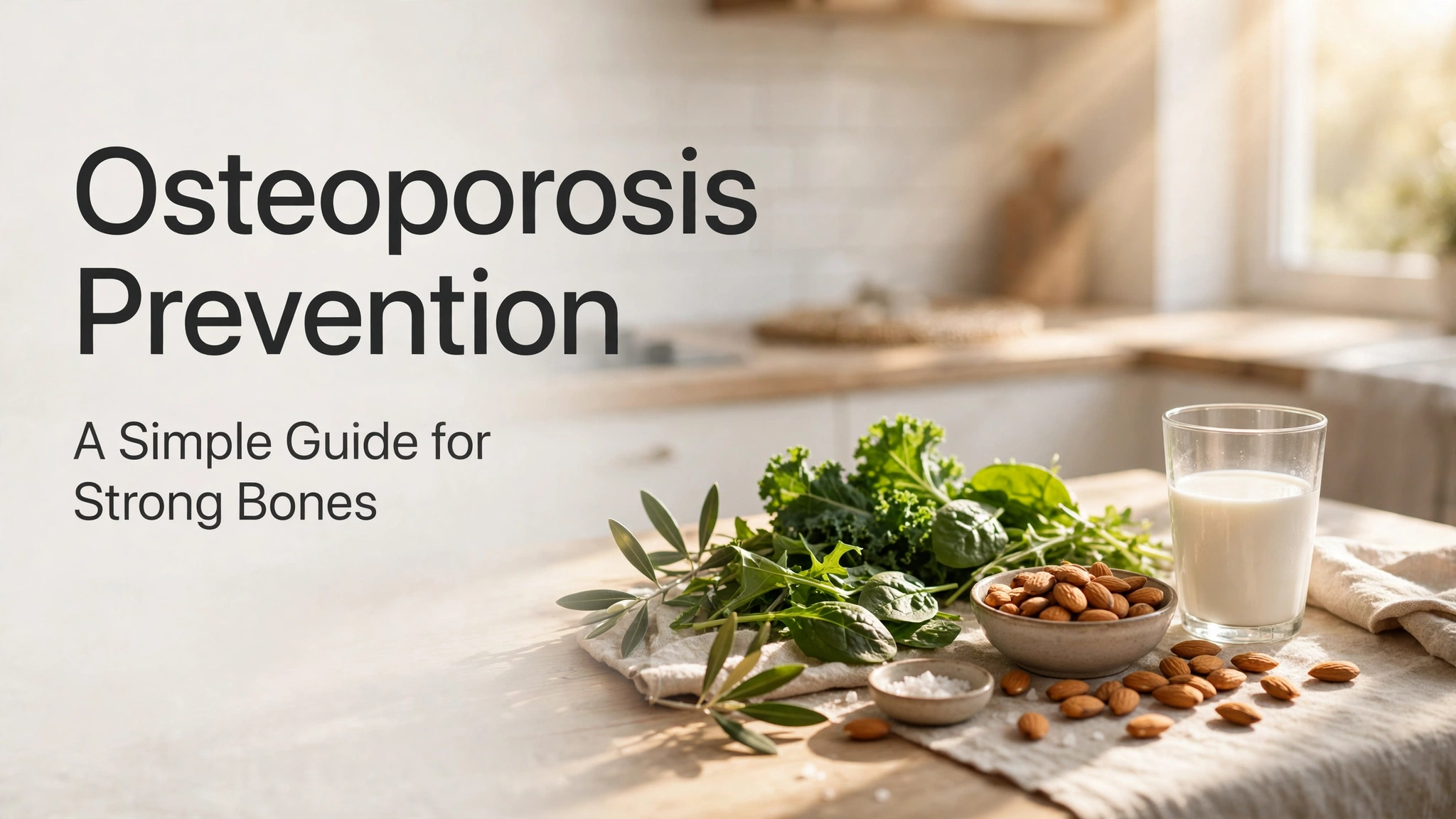
Osteoporosis Prevention: A Simple Guide for Strong Bones
In this post
- How Bones Grow, Peak and Lose Density
- Who Is Most at Risk
- Calcium: How Much and Where to Get It
- Vitamin D and Sunlight
- Exercise That Builds and Protects Bone
- Habits That Quietly Weaken Bones
- Bone Density Tests and Medicines
- Preventing Falls and Fractures at Home
- Osteoporosis in Men and Younger Adults
- My Take:
Bones are living tissue, constantly being broken down and rebuilt, and for most of life the rebuilding keeps pace. After about the age of thirty, that balance slowly shifts, and the bones begin to lose density a little faster than they gain it. When the loss goes too far, the bones become porous and fragile, a condition called osteoporosis, and a minor fall can break a hip or a wrist. This article is general information only, not individual medical advice, and it explains how to protect bone strength at every age.
The hopeful part of this story is that prevention works. The bone built in youth, the food eaten in middle age, and the exercise done in later life all add up, and it is rarely too late to slow the loss. The sections below explain how bones change, who is most at risk, what calcium and vitamin D really do, which exercises help, and the habits that quietly weaken bones over time.
How Bones Grow, Peak and Lose Density
Bone is not a dead scaffold; it is a living structure that remodels itself throughout life. Specialised cells break down old bone and other cells lay down new bone, and in childhood and adolescence the building side wins by a wide margin. Bone mass rises steeply through the teenage years and reaches its peak, often called peak bone mass, in the late twenties or early thirties. The higher that peak, the more bone there is to draw on later.
After the peak, the balance tips gently the other way. Loss is slow at first, around a small percentage each year, and it speeds up for women in the years after the menopause, when oestrogen levels fall sharply. Men lose bone more gradually but are not immune, and by old age both sexes can have significantly thinner bones. Because the process is painless and invisible, most people have no idea it is happening until a fracture reveals it.
This silent progress is why prevention is framed as a lifelong project rather than a problem for old age. A teenager who builds strong bones through activity and good nutrition is effectively banking bone for later, while an older adult who starts resistance exercise and corrects a vitamin D deficiency can still slow the rate of loss. Every stage of life offers a different lever, and none of them requires expensive equipment or unusual effort.
Who Is Most at Risk
Women face the highest risk, particularly after the menopause, because oestrogen protects bone and its loss accelerates thinning. A small, slight frame also raises risk, since there is less bone to lose before it becomes fragile. A family history of hip fracture, especially in a parent, is a recognised warning sign, as is a previous fracture from a minor fall, which suggests the bones were already weak.
Certain medicines and conditions raise risk too. Long-term steroid tablets, some treatments for breast and prostate cancer, and medicines for epilepsy can all affect bone density. Conditions such as rheumatoid arthritis, an overactive thyroid, coeliac disease, and eating disorders also increase the risk, sometimes because they interfere with absorbing calcium or because they keep the body in a state of inflammation.
Lifestyle factors complete the picture. Smoking, heavy alcohol use, a very low body weight, and a long period of inactivity all weaken bones. People who have spent years indoors with little sun exposure are more likely to be low in vitamin D. None of these factors alone decides the outcome, but a person with several of them has good reason to ask a clinician about a bone density check, especially after the age of fifty.
Calcium: How Much and Where to Get It
Calcium is the main mineral in bone, and the body needs a steady supply from food because it cannot make calcium itself. Dairy foods are the richest familiar source: milk, yoghurt, and cheese provide calcium in a form the body absorbs well. For people who do not eat dairy, good sources include fortified plant milks, calcium-set tofu, tinned sardines and pilchards eaten with their soft bones, almonds, and leafy greens such as kale and broccoli.
The amount needed varies with age and sex, and official recommendations differ slightly between countries, but most adults need roughly around a gram a day, with higher needs in adolescence and after the menopause. Rather than memorising numbers, a useful rule is to include a calcium-rich food at most meals. A bowl of yoghurt at breakfast, cheese in a sandwich at lunch, and a glass of milk or fortified alternative in the evening covers most people’s needs from food alone.
Supplements are sometimes suggested, but they are not automatically better than food. Large doses of calcium tablets have been linked in some studies with side effects, and they work best when vitamin D levels are adequate. Anyone considering a supplement, especially someone already taking medicines, should discuss it with a clinician or pharmacist rather than starting a high dose on their own.
Vitamin D and Sunlight
Vitamin D is essential because it allows the gut to absorb calcium; without enough of it, even a calcium-rich diet does not fully reach the bones. The main natural source is sunlight on the skin, and the body makes vitamin D when exposed to strong sun. In northern countries the winter sun is too weak for this, and people who spend most of their time indoors, cover their skin, or have darker skin may make less vitamin D even in summer.
Food provides some vitamin D, notably oily fish such as salmon, mackerel and sardines, egg yolks, and fortified foods such as some breakfast cereals and spreads. For many people, though, food alone is not enough, and health authorities in several countries recommend a daily supplement during autumn and winter. The exact advice varies by country, so it is worth checking local guidance rather than guessing a dose.
A blood test can confirm a deficiency, and clinicians often check vitamin D when assessing bone health. The test is simple, and correcting a low level is one of the most straightforward wins in bone care. Sunlight should still be enjoyed sensibly, with protection against burning, because the goal is a modest regular exposure rather than long unprotected sessions.
Exercise That Builds and Protects Bone
Bones respond to loading: when they are stressed by weight and impact, they signal the body to strengthen them. Weight-bearing exercise, where the feet and legs carry the body’s weight, is therefore the foundation. Brisk walking, hiking, dancing, stair climbing, and jogging all count, and the benefit comes from doing them regularly rather than intensely. Even a daily brisk walk of thirty minutes is a meaningful contribution.
Resistance exercise adds a second benefit. Lifting weights, using resistance bands, or doing bodyweight exercises such as squats and wall push-ups puts tension on the muscles that pull on bones, which stimulates bone formation. Two or three short sessions a week are enough to make a difference, and the weights do not need to be heavy to start with. The key is progression: gradually increasing the load over weeks and months.
Balance and flexibility work is the third piece, and it matters most for preventing the falls that cause fractures. Tai chi, yoga, and simple standing balance exercises reduce the chance of a fall, which is often more important than a small gain in bone density. People with diagnosed osteoporosis should get advice before starting high-impact or heavy lifting, because some movements, such as deep forward bending with a load, need to be avoided.
Habits That Quietly Weaken Bones
Smoking is one of the clearest bone-weakening habits. It interferes with the cells that build bone, reduces oestrogen levels, and is associated with lower bone density and slower healing after a fracture. Stopping smoking is one of the most effective single steps a person can take for bone health, and the benefit begins soon after quitting. It is never too late to gain from stopping.
Alcohol has a similar effect when drunk heavily. It disrupts the balance of bone remodelling, reduces calcium absorption, and increases the risk of falls. Keeping alcohol intake within recommended limits, or avoiding it altogether, protects bones and reduces fracture risk. Very low calorie diets and eating disorders also weaken bones, partly through low calcium intake and partly through hormonal changes, and they deserve professional help rather than willpower alone.
Some everyday habits are less obvious. Very high caffeine intake may slightly reduce calcium absorption, though moderate coffee drinking is not a major concern for most people. Long periods of sitting and bed rest cause rapid bone loss, which is why early movement after illness or surgery is encouraged. Even a diet very high in salt may increase calcium loss in urine, so the familiar advice to eat less salt helps bones as well as blood pressure.
Bone Density Tests and Medicines
A bone density scan, often called a DEXA scan, is a low-dose X-ray that measures the density of the hip and spine. The result is given as a T-score, which compares the person’s bone density with that of a healthy young adult. A T-score above minus one is considered normal, between minus one and minus two point five indicates low bone mass, and below minus two point five indicates osteoporosis. The scan is painless, takes about fifteen minutes, and is usually offered to people at higher risk.
When osteoporosis is diagnosed, or when the fracture risk is high, medicines may be offered. The most common are bisphosphonates, which slow the cells that break bone down, and they are taken as a weekly tablet or a periodic infusion or injection. Other medicines work differently, including some that build new bone, and the choice depends on the person’s age, fracture history, and other conditions. All of them work best alongside adequate calcium, vitamin D, exercise, and fall prevention.
Follow-up matters because bone medicines are usually taken for years, and clinicians review their benefits and side effects regularly. Some people worry about rare side effects they have read about, and those concerns are worth discussing openly rather than stopping treatment silently. A fracture prevented is worth far more than a small risk avoided, but the balance is individual, and it should be decided together with the clinician.
Preventing Falls and Fractures at Home
Most osteoporotic fractures happen after a fall, so preventing falls is as important as strengthening bone. At home, the common culprits are loose rugs, trailing cables, poor lighting, and clutter on stairs. Removing or securing rugs, keeping walkways clear, and adding a night light on the way to the bathroom are simple changes that reduce risk immediately. In the bathroom, grab rails and a non-slip mat are inexpensive and effective.
Footwear and eyesight deserve attention too. Shoes should be low-heeled, well-fitting, and have a good grip; slippers with backs are safer than loose backless ones. Regular eye tests matter because poor vision is a major fall risk, and some medicines cause dizziness, especially when standing up quickly. A pharmacist can review medicines for this effect, and a clinician can check blood pressure and balance.
Finally, keeping active is itself fall prevention. Strong legs, good balance, and quick reactions all come from regular movement, and people who stay active fall less often and recover better when they do. A home that is safe and a body that is strong work together, and neither requires a large investment, only attention to details that are easy to overlook until a fall happens.
Osteoporosis in Men and Younger Adults
Osteoporosis is often described as a women’s condition, yet men account for a significant share of hip fractures, and their outcomes after a fracture are often worse. Men lose bone more gradually, but they are less likely to be tested, less likely to be treated, and more likely to have their fracture attributed to a fall rather than to fragile bones. A man over seventy, or a younger man with risk factors such as long-term steroid use, low testosterone, or heavy alcohol use, should be assessed in the same way as a woman.
Younger adults can develop osteoporosis too, though it is less common. Eating disorders, long-term steroid treatment, an overactive thyroid, coeliac disease, and certain cancer treatments can all cause bone loss at a young age. For these people, the priority is treating the underlying cause, correcting vitamin D and calcium, and building bone through exercise while the skeleton is still responsive. A bone density scan is worth discussing whenever a young adult breaks a bone from a minor fall.
The message for both groups is the same: bone health is not a concern for one sex or one age. Anyone with a fracture from a minor fall, a family history of hip fracture, or a condition or medicine known to affect bone should ask about assessment. The earlier the problem is found, the more options there are, and the better the outcome.
My Take:
My honest view is that osteoporosis is the most unfair health problem in this whole series, because it does its damage in silence and then announces itself with a broken hip. I find it hard to accept that something so preventable is so often discovered only after a fall, when a scan ten years earlier could have changed the story. The reason, I think, is that bones do not ache when they thin, so there is no daily reminder to act. That is why I believe the message about peak bone mass needs to reach teenagers and young adults, not just older people. A young person who walks, runs, plays sport, and eats well is building a reserve that will protect them for decades, and nobody tells them that at the time. It is a strange gap in how we talk about health, and it costs people dearly.
I also think the calcium conversation has become more confusing than it needs to be. People hear conflicting advice about dairy, supplements, and plant milks, and many end up doing nothing because the guidance feels contradictory. My view is simple: get calcium from food first, spread it across the day, and treat supplements as a top-up to discuss with a clinician rather than a default. A glass of milk, a pot of yoghurt, or a portion of fortified soya milk are ordinary foods, not health products, and that is exactly the point. Bone health should feel like normal eating, not like a special regime. When the advice sounds like a sales pitch, I become suspicious, and I think readers should too.
Another point I keep returning to is exercise, because it is the one intervention that helps bones, muscles, balance, mood, and independence all at once, yet it is the one people are most likely to postpone. The excuse is usually time, but the honest version is often that exercise feels like a chore with no visible reward. I would argue that the reward is visible if you know where to look: a steadier step on stairs, a stronger grip, a walk that leaves you less tired. My advice is to choose the form of loading you will actually do, whether that is dancing, hiking, or lifting weights twice a week, and to treat it as a non-negotiable appointment. Bones respond to regular loading, not to good intentions, and the difference between doing it and planning to do it is the whole story.
I would also say that fall prevention deserves far more respect than it gets. People spend money on supplements and scans, which is fine, but then leave a loose rug at the top of the stairs and wear backless slippers in the bathroom. That mismatch bothers me because falls are the trigger for most fractures, and the home is where most falls happen. I believe a home safety check should be part of every osteoporosis conversation, and it should be treated as seriously as a prescription. Grab rails, good lighting, proper shoes, and a clear hallway are not signs of frailty; they are signs of someone who understands the real risk and is dealing with it practically.
Finally, I believe the attitude to take is long-term and calm rather than fearful. Osteoporosis is not a verdict, and a low bone density result is not a sentence. It is information that allows a plan: food, vitamin D, exercise, and, when needed, medicine that has been shown to reduce fractures. The people who do best, in my view, are the ones who treat bone health as a quiet background habit rather than a crisis, checking in with their clinician, staying active, and making their home safer year by year. Strong bones are built slowly, lost slowly, and protected slowly, and that slowness is actually good news, because it means there is almost always time to make a difference.
I also think men are badly served by the way osteoporosis is talked about, because the pink, female framing of the condition means many men never consider that it could apply to them. A man who breaks his wrist in a minor fall is told he was unlucky, while a woman with the same fracture is offered a bone scan. I believe that gap in care is unjustifiable, and I think clinicians should apply the same risk assessment to both sexes. A fracture from a minor fall is a warning sign in a man just as it is in a woman, and it should be investigated as one.
Another angle I keep coming back to is the way bone health is presented as a problem for old age, when the most important window is youth. The bone built before thirty is the reserve that protects the rest of life, yet teenagers are rarely told that their activity and diet are building that reserve. I think schools, sports coaches, and families should say it plainly: running, jumping, and playing sport now is an investment in the skeleton you will live in at seventy. That message is simple, it is true, and it is almost never delivered.
I would also say that vitamin D deserves a more prominent place in the conversation, because deficiency is common and correction is simple. A blood test, a daily supplement through the winter, and a little sensible sun exposure are all it takes, yet many people go years without knowing their level. I believe vitamin D should be checked as part of any bone assessment, and I think the winter supplement recommendation should be repeated every autumn rather than mentioned once. Small, repeated messages are the ones that change behaviour.
I also believe the fear of medicines is doing real harm. People read about rare side effects of bone medicines and stop taking them, or refuse to start, while the risk of a hip fracture, which is far larger, is ignored. I think the comparison should be made honestly: the chance of a fracture without treatment versus the chance of a side effect with it. For most people at high risk, the balance is clearly in favour of treatment, and that balance should be explained in numbers rather than in vague reassurance.
Finally, I want to stress that bone health is a lifelong habit, not a crisis to be managed in old age. The food, the exercise, the vitamin D, and the home safety are all small things, and they are all within reach. I hope this article persuades someone to start one of them this week, whether it is a daily walk, a glass of milk, or a check of the rugs on the stairs. Strong bones are built slowly, and the best time to start was years ago, but the second-best time is today.
Frequently Asked Questions
Can osteoporosis be prevented?
In many cases the risk can be reduced significantly through adequate calcium and vitamin D, regular weight-bearing and resistance exercise, not smoking, limiting alcohol, and preventing falls. It cannot always be prevented entirely, especially after the menopause, but early action slows bone loss and lowers fracture risk.
What foods are best for strong bones?
Dairy foods such as milk, yoghurt and cheese are rich in calcium, as are fortified plant milks, calcium-set tofu, tinned sardines eaten with their bones, almonds, kale and broccoli. Oily fish, eggs and fortified foods also provide vitamin D, which helps the body absorb calcium.
How much exercise do bones need?
Regular weight-bearing exercise such as brisk walking, dancing or stair climbing, plus resistance exercise two or three times a week, is the usual recommendation. Balance exercises such as tai chi also help by reducing the risk of falls. People with diagnosed osteoporosis should get advice before starting high-impact exercise.
At what age should I have a bone density test?
There is no single age for everyone, but clinicians often offer a DEXA scan to women after the menopause, men over seventy, and younger people with risk factors such as long-term steroid use, a previous fracture from a minor fall, or a family history of hip fracture. Ask a clinician if you are unsure.
Is vitamin D important for bones?
Yes. Vitamin D allows the gut to absorb calcium, so without enough of it even a calcium-rich diet does not fully reach the bones. Sunlight is the main source, with oily fish, eggs and fortified foods contributing, and many health authorities recommend a supplement in autumn and winter.
Can you rebuild bone after osteoporosis?
Bone density can sometimes be improved, particularly with medicines that slow bone breakdown or build new bone, alongside calcium, vitamin D and exercise. The main goal of treatment is to reduce the risk of fracture, and even stabilising bone density is a meaningful success.