Paweł Pawlikowski: The Life Story Behind the Ida Director
In this post
Some directors make many films, and some make only a few, but each one matters. Paweł Pawlikowski belongs to the second group. He has made only a handful of feature films, but two of them, Ida and Cold War, are among the most loved and most honoured films of the last twenty years. His films are quiet, they are beautiful, and they are shot in black and white, as if time itself had stopped. They tell stories about Poland, about love, and about people who are caught between two worlds, and they do it with a patience that is rare in modern cinema.
Pawlikowski was born in Warsaw in 1957, and he left Poland when he was fourteen, moving to Britain with his mother. He grew up between two countries, speaking two languages, and living in two cultures, and that experience of being in between became the heart of his films. His characters are often people who do not fully belong anywhere, who are searching for a home, for a family, or for a love that will last. That search is the story of his own life, and it is the story of his films.
This is the story of Paweł Pawlikowski, from a boy in Warsaw to a student at Oxford, from a documentary filmmaker at the BBC to a director who won an Oscar for Ida and the Best Director prize at Cannes for Cold War. It is a story about leaving home, about coming back, about loss, and about love. It is also a story about Poland, and about how a man who left his country as a boy could return to it as a director and tell its stories better than anyone.
What makes Pawlikowski special is his patience. He takes years to make a film, he works slowly, and he does not rush. His films are short, they are quiet, and every shot is carefully made, like a photograph. That care is rare, and it is why his films feel so beautiful. He does not make many films, but each one is made with love, and that love shows on the screen.
There is also something hopeful in the story of Pawlikowski, because it shows that a person who leaves home can come back, and that the home they return to can be a source of art. He left Poland as a boy, and he returned as a man, and the Poland he found was both familiar and strange. That mix of familiarity and strangeness is in all of his films, and it is what makes them so moving.
A Boy Who Left Warsaw
Paweł Pawlikowski was born on 15 September 1957 in Warsaw, Poland, and he spent his childhood in a city that was still rebuilding itself after the Second World War. Warsaw was a grey city, with new blocks of flats rising from the ruins, and the young Paweł grew up in that world, with its streets, its trams, and its people. He was a bright boy, and he loved books, films, and music, and he began to dream of a life beyond Poland.
When he was fourteen years old, in 1971, Pawlikowski left Poland with his mother, and they moved to Britain. Leaving home at fourteen is a hard thing, because a boy of that age is still forming who he is, and to leave his country, his language, and his friends is a great change. Pawlikowski carried Poland with him, in his memory, in his language, and in his family, but he also had to learn to live in a new country, to speak a new language, and to find his way in a new world. That experience of being between two places would shape his whole life.
In Britain, Pawlikowski studied literature and philosophy at Oxford University, one of the best universities in the world. At Oxford, he read widely, he thought deeply, and he learned to ask questions about life, about art, and about what it means to be human. He did not study film at first, but he loved films, and he began to think about how stories could be told on a screen. Oxford gave him a way of thinking that was careful and deep, and that way of thinking stayed with him when he became a director.
After Oxford, Pawlikowski began to work as a documentary filmmaker for the BBC, and he made films about Russia, about the Balkans, and about other parts of the world. Documentary work taught him to watch life closely, to listen to people, and to find the truth in a real moment. He travelled, he met people, and he learned about the world, and that learning gave his later feature films a deep understanding of people and of places. A documentary filmmaker learns to wait, and Pawlikowski learned to wait well.
The years of leaving, studying, and travelling mattered, because they gave Pawlikowski a life that was lived in more than one country, and a mind that could see the world from more than one side. He was not only Polish, and he was not only British. He was both, and that mix made his films richer. The boy who left Warsaw at fourteen became a man who could tell stories about Poland with the eyes of someone who had seen the world.
BBC Documentaries and Learning the Craft
Pawlikowski’s work at the BBC in the 1980s and 1990s was an important part of his education as a director. He made documentaries about the Soviet Union, about Yugoslavia, and about other places in Eastern Europe, and he learned how to film real people in real situations. Documentary work is hard, because the director cannot control what happens, and must be ready to film a moment when it comes. Pawlikowski learned to be ready, and he learned to be patient, and those lessons stayed with him.
One of his best known documentaries was Serbian Epics, made in 1992, about Serbian fighters during the war in Bosnia. The film was controversial, because it showed the fighters in a way that some people found sympathetic, and others found troubling. Pawlikowski did not take sides in a simple way. He showed people as they were, and he let the audience judge for themselves. That way of filming, without preaching, became a hallmark of his later feature films as well.
Documentary work also taught Pawlikowski about the limits of film. He found that a camera can show what people do, but it cannot always show what they feel, and he began to want to make feature films, where he could explore the inner life of his characters. He also found that he wanted to tell stories about Poland, about the country he had left as a boy, and about the people who lived there. The documentaries were a school, and he graduated from it ready to make his own films.
In the late 1990s, Pawlikowski began to move from documentaries to feature films, and he brought with him everything he had learned. He knew how to watch, how to wait, and how to listen, and he knew how to make a film with a small budget and a small crew. That knowledge served him well, because his feature films would be made simply, with few actors, with natural light, and with a camera that watched quietly. The documentary years had taught him that less is more, and his films prove it.
By the end of the 1990s, Pawlikowski was ready to make his first feature film, and he had a clear idea of what he wanted to do. He wanted to make films about people who are caught between two worlds, about love that is hard to hold, and about Poland, the country he had left and the country he still loved. That idea would guide all of his work, and it would make him one of the most respected directors in the world.
Last Resort and My Summer of Love
Pawlikowski’s first feature film, Last Resort, was released in 2000, and it told the story of a young Russian woman and her son who come to Britain seeking asylum, and who are sent to a seaside town to wait. The film was quiet, it was moving, and it showed Pawlikowski’s gift for telling stories about people who do not belong, and who are waiting for a home. The film was praised by critics, and it won awards at festivals, and it announced Pawlikowski as a director of great promise.
Last Resort was made with a small budget, and it was filmed in a real seaside town, with natural light and with actors who felt like real people. The film did not shout, and it did not preach. It watched, and it let the audience feel the loneliness of the woman and her son, and the kindness of the people who helped them. That way of filming, quiet and patient, became Pawlikowski’s style, and it would stay with him for the rest of his career.
His second feature film, My Summer of Love, was released in 2004, and it told the story of two young women in Yorkshire, in the north of England, who fall in love during a summer. The film starred Emily Blunt in one of her first roles, and it was a beautiful and sad story about first love, about class, and about the end of innocence. My Summer of Love won the BAFTA award for Best British Film, and it made Pawlikowski known to a larger audience in Britain and around the world.
My Summer of Love showed Pawlikowski’s range, because it was not about Poland. It was about England, about young people, and about love, and it was told with the same care and patience as Last Resort. The film was also notable for its beauty, with the Yorkshire landscape shown in warm and golden light, and with the two young actresses giving performances that were natural and moving. The film proved that Pawlikowski could tell a story in any country, because his stories were about people, not about places.
After My Summer of Love, Pawlikowski took a long break from feature films, partly because of personal loss. His wife died in 2006, and he needed time to grieve, and to care for his family. He did not rush back to work, and he waited until he had a story that felt true to him. That patience is a part of who he is, and it is one reason his films are so good. He does not make a film until he is ready, and when he is ready, the film is worth waiting for.
Ida and the Oscar
In 2013, Pawlikowski released Ida, a film that would become his most honoured work. Ida told the story of Anna, a young novice nun in Poland in the 1960s, who learns that she was born Jewish, and that her parents were killed during the war. She leaves the convent with her aunt, a judge, and together they travel to find the truth about her family. The film was shot in black and white, in a square format, and it was beautiful, quiet, and deeply moving. It won the Academy Award for Best Foreign Language Film in 2015.
Ida was a return to Poland for Pawlikowski, because it was his first film set in his home country, and it was a story about Polish history, about the war, and about identity. The film asked difficult questions about Poland’s past, about what happened to Jewish people during the war, and about how Poles remembered it. Some people in Poland praised the film, and some criticised it, because it touched a sensitive part of history. Pawlikowski did not hide from the debate. He said that the film told a true story, and that the truth needed to be told.
The film’s style was striking, because it was shot in black and white, with the camera often placed low, and with the characters framed in a way that left much of the screen empty. That style gave the film a feeling of stillness and of reverence, as if the audience were looking at old photographs. The film was only eighty minutes long, but it felt complete, because every shot was carefully made, and every scene mattered. That economy is a hallmark of Pawlikowski’s work.
Ida starred Agata Trzebuchowska as Anna, in her first film role, and Agata Kulesza as her aunt Wanda, a judge who drinks, smokes, and lives a life very different from Anna’s. The two actresses gave performances that were powerful and moving, and their relationship, between a young nun and an older woman who has lived a hard life, was the heart of the film. Pawlikowski directed them with kindness and with patience, and the result was a film that felt both personal and universal.
The Oscar win for Ida was a triumph for Polish cinema, and it made Pawlikowski one of the best known directors in the world. The film was shown in many countries, and it was praised by critics everywhere. It was a small film, made with a small budget, but it reached the whole world, because it told a story that mattered, and it told it with beauty and with honesty. That is the power of Pawlikowski’s work, that a quiet film can speak loudly.
Cold War and the Story of His Parents
In 2018, Pawlikowski released Cold War, a film inspired by the relationship of his own parents, who had a stormy and passionate love affair that lasted for many years. The film told the story of Wiktor, a musician, and Zula, a young singer, who meet in Poland in the 1950s, and whose love takes them to Paris, to Berlin, and back to Poland, over fifteen years. The film starred Joanna Kulig as Zula and Tomasz Kot as Wiktor, and it was shot in black and white, like Ida, with a beauty that took the breath away.
Cold War was a deeply personal film for Pawlikowski, because it was based on his parents, and he has said that the film was a tribute to them, and to their difficult and passionate love. The film did not tell their story exactly, but it captured the feeling of it, the longing, the fights, and the inability to live together or apart. That feeling is at the heart of the film, and it is what makes it so moving. The audience feels the love, and they feel the pain, and they understand both.
The film won the Best Director prize at the Cannes Film Festival, and it was nominated for three Academy Awards, for Best Director, Best Foreign Language Film, and Best Cinematography. It was praised around the world, and it became one of the most loved films of 2018. The music in the film was also important, because it told the story of Polish folk music, of jazz, and of the songs that Wiktor and Zula sang together. The music was the language of their love, and it carried the film.
Joanna Kulig gave a remarkable performance as Zula, and she became known around the world because of it. Tomasz Kot, as Wiktor, was quiet and restrained, and his performance matched hers perfectly. Pawlikowski directed them with the same patience and care that he had shown in Ida, and the result was a film that felt both intimate and epic, a love story that spanned fifteen years and several countries, but that was always about two people.
Cold War was a triumph, and it confirmed Pawlikowski as one of the great directors of his time. He had made only a few films, but each one was a masterpiece, and Cold War was perhaps the finest of them all. The film was a tribute to his parents, and it was also a tribute to love itself, to its beauty, its difficulty, and its power to last, even when everything else falls apart.
Teaching, Waiting, and the Next Film
Alongside his films, Pawlikowski has also taught, at Oxford University and at the National Film and Television School in Britain, where he has shared what he has learned with young filmmakers. He is a quiet teacher, and he tells his students to be patient, to watch, and to wait for the right story. He does not believe in rushing, and he tells his students that a good film takes time, and that the time is worth it. That teaching is a part of his legacy, because the students he has taught carry his lessons into their own films.
Pawlikowski is known for taking long breaks between films, and he has said that he does not want to make a film unless he has something true to say. That patience is rare in the film world, where directors are often pushed to make a film every year, and it is one reason his films are so good. He waits, he thinks, and he works slowly, and when the film is finally made, it is worth the wait. The audience has learned to trust that patience, and they wait with him.
He has also spoken about the loss of his wife, and about how grief shaped his work. He has said that Ida and Cold War were both made after her death, and that they carry something of that loss inside them. That honesty about grief is a part of who he is, and it gives his films a depth that few other directors can match. A director who has known loss will make films about loss, and Pawlikowski does, with great care.
Today, Pawlikowski lives between London and Warsaw, and he continues to work on new projects, though he has not rushed to make another feature film. He is a director who is known for his patience, and his fans wait for his next film with hope. Whatever he makes next, it will be worth waiting for, because his films are made with love, with care, and with a deep understanding of people.
His story is still being written, and the next chapter has not yet been told. But the films he has already made, Last Resort, My Summer of Love, Ida, and Cold War, are enough to remember him by, and they will be watched for many years to come. That is a fine legacy for a director who has made so few films, and it is a reminder that quality matters more than quantity.
What Pawlikowski Gave Cinema
Paweł Pawlikowski gave cinema a new way to look at Poland, and a new way to look at love. His films are shot in black and white, in a square format, with a camera that watches quietly, and that style has become his signature. Other directors have copied it, but no one has done it as well, because the style is not only about how the film looks. It is about how the film feels, about patience, about stillness, and about the beauty of a single image. That feeling is Pawlikowski’s gift to cinema.
He also gave cinema a lesson about patience. A film that is made slowly, with time to think and with time to look, can be more beautiful, more honest, and more lasting than a film made in a hurry. In a world where films are often made quickly, Pawlikowski shows that slowness is a strength, not a weakness. That lesson is important, because it tells young directors that they do not need to hurry, and that the time they take is a part of the art.
For Poland, Pawlikowski is one of the most important directors the country has produced, and his films are a part of Poland’s story. Ida told the story of Poland’s Jewish past, and Cold War told the story of Poland’s post-war years, and both films were made with a love for Poland that is clear in every shot. He left Poland as a boy, and he returned as a man, and the films he made about his home are among the finest ever made about Poland.
His films have also shown the world that a small film can reach the whole world. Ida was made with a small budget, with unknown actors, and in black and white, and it won an Oscar. Cold War was made in Polish, with Polish actors, and it was nominated for three Oscars. That is a hopeful lesson, because it tells filmmakers everywhere that a good story, told with honesty, can travel anywhere, in any language, and in any format.
Today, Pawlikowski’s films are still watched, still studied, and still loved, and new viewers still discover them for the first time. A person who watches Ida today feels the same stillness that audiences felt in 2013, and a person who watches Cold War feels the same longing that audiences felt in 2018. That is the mark of films that last, and it is the mark of a director who made something true.
My Take:
When I think about Paweł Pawlikowski, the first thing I feel is calm, because his films slow me down in a good way. I watch Ida, and the world goes quiet, and I feel as if I am looking at old photographs, at a Poland that is both familiar and strange. I admire that calm, because most films try to fill every second with action, and Pawlikowski leaves room for silence. That silence is not empty. It is full of meaning, and it gives the viewer time to think and to feel.
I think about his childhood, and about leaving Poland at fourteen, and I understand why his films are about people who do not belong. A boy who leaves his home at fourteen carries that feeling for the rest of his life, and Pawlikowski has carried it into every film he has made. His characters are often between two places, two languages, or two loves, and they do not fully belong anywhere. That is a sad feeling, but it is also a true one, and I respect him for telling it so honestly.
What I love most about Pawlikowski is his patience. He waits years between films, he works at his own pace, and he refuses to be hurried by the film world. In a world where directors are pushed to make a film every year, Pawlikowski waits, and the waiting makes his films better. I admire that patience, because it shows that he cares about the work itself, not about fame or about money. A director who waits for the right story is a director who respects his audience, and Pawlikowski respects his audience deeply.
I also think about Ida, and about the courage it took to make it. The film asks difficult questions about Poland’s past, about what happened to Jewish people during the war, and about how Poles remember it. Some people in Poland did not want those questions asked, but Pawlikowski asked them anyway, because he believed the truth needed to be told. That courage is admirable, and it is one reason I respect him. A director who tells the truth, even when it is uncomfortable, is a director who matters.
I feel sad when I think about the loss of his wife, and about how grief shaped his later films. He has said that Ida and Cold War were both made after her death, and that they carry something of that loss inside them. That honesty about grief is a part of who he is, and it gives his films a depth that few other directors can match. I respect him for speaking about his loss, and for turning it into art that helps others who have lost someone too.
I think about Cold War, and about the love story at its centre, and I am moved by it, because it is a love that is both beautiful and impossible. Wiktor and Zula love each other, but they cannot live together, and they cannot live apart, and that contradiction is the heart of the film. Pawlikowski based the story on his parents, and that personal connection gives the film a truth that is rare. I have never seen a love story told with such patience and such pain, and I think it is one of the finest love stories ever put on film.
I admire the way Pawlikowski shoots his films, in black and white, in a square format, with the camera placed low and with much of the screen left empty. That style is striking, and it gives his films a feeling of stillness and of reverence. Some directors use style to show off, but Pawlikowski uses it to serve the story, and the story is always about people. That humility is rare, and it is beautiful. He does not want the audience to admire the camera. He wants them to feel the people, and the camera helps them to do that.
There is a lesson here for young filmmakers, and it is a simple one. Do not rush. Take your time, wait for the right story, and make the film with care. Pawlikowski has made only a few films, but each one is a masterpiece, and that is better than making many films that are forgotten. Quality matters more than quantity, and Pawlikowski proves it. I hope young filmmakers hear that lesson, because the world needs more directors who are patient, and fewer who are in a hurry.
I also think about his work as a teacher, and I admire it, because a great director who teaches is giving more than art. He is giving the future a chance. Pawlikowski teaches at Oxford and at the National Film and Television School, and he tells his students to be patient, to watch, and to wait. That teaching will last longer than any single film, because the students he teaches will carry his lessons into their own work. I think that is one of the best things he does, and it is one I will remember.
If I have one regret about Pawlikowski, it is that he makes so few films, and that his fans must wait years between them. I understand why he waits, and I respect it, but I also wish there were more of his films to watch, because each one is so beautiful. But maybe that scarcity is part of what makes them special. A film that is waited for is a film that is cherished, and Pawlikowski’s films are cherished by those who love them. That is a good thing, even if the waiting is hard.
For a reader who has never seen his films, I would say this. Start with Ida, and watch it slowly, in a quiet room, without distractions. Pay attention to the images, to the faces, and to the silence. Then watch Cold War, and listen to the music, and feel the love story. If those films speak to you, then you have found a director who will stay with you for a long time, and you will be glad you met him. That is how I found him, and I am glad I did.
In the end, I think Pawlikowski teaches us that leaving home does not mean losing it. He left Poland at fourteen, and he carried it with him for the rest of his life, and when he returned, he told its stories with a love that only someone who had left could feel. That is a hopeful lesson for anyone who has left home, because it says that home stays inside us, and that we can return to it, even after many years, and find it waiting for us. I think that message matters, and I hope it reaches the people who need it.
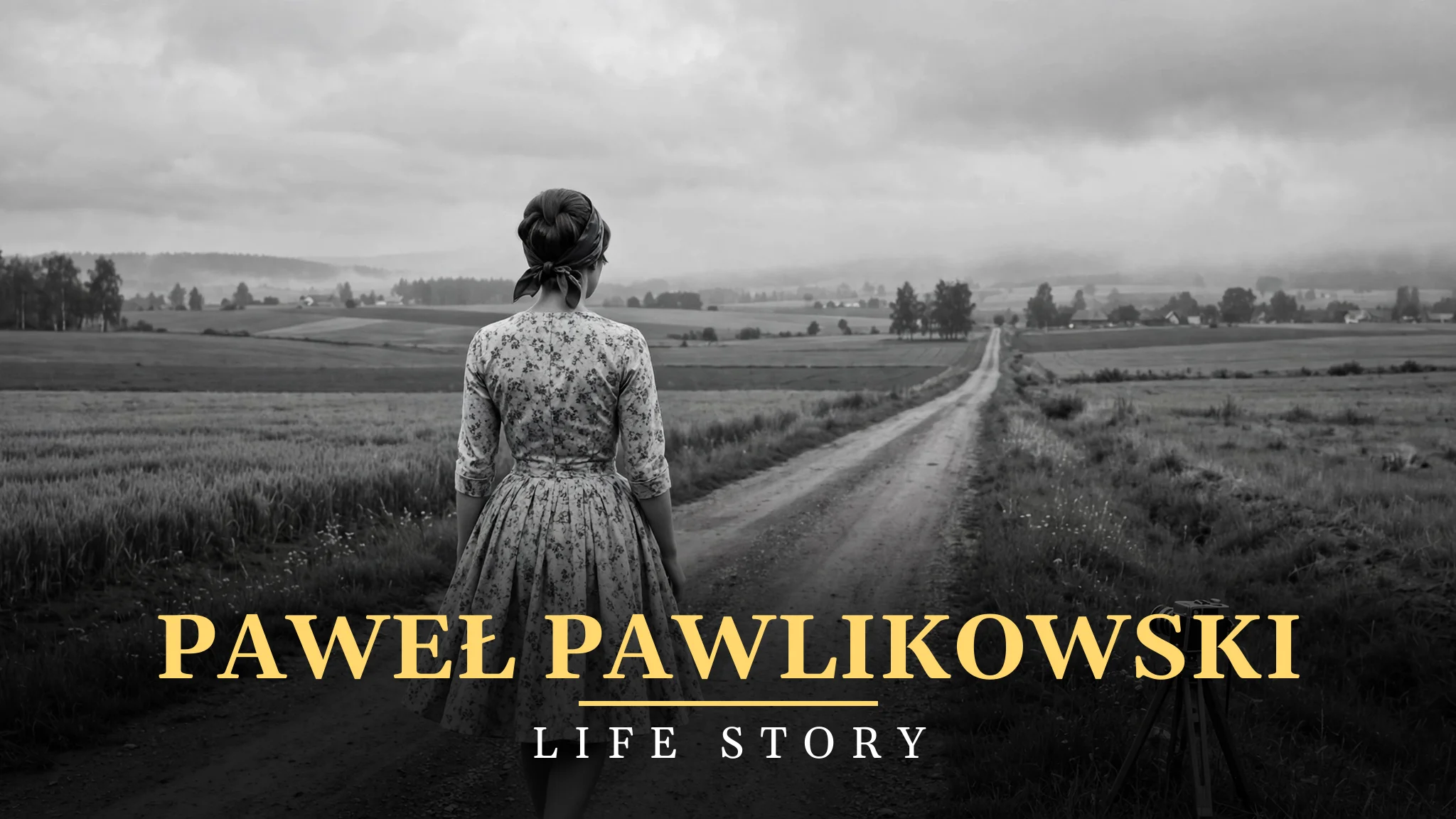
I keep thinking about the black-and-white image of a young woman on a country road, and about how simple it is, and how beautiful. That image is Pawlikowski in one shot. It is quiet, it is still, and it is full of meaning. A young woman, a road, and a sky, and nothing else, and yet the image says everything about a life, about a journey, and about a choice. That is the gift of a director who understands that less is more, and that a single image, made with care, can hold a whole world.
One more thought stays with me, and it is about his parents. Pawlikowski made Cold War as a tribute to them, and to their difficult love, and that is a beautiful act. A son who tells the story of his parents’ love is giving them a gift, and he is also giving the world a gift, because their story becomes our story. I think about my own parents, and about their love, and I feel grateful for a film that reminds me to cherish it. That is a personal gift, and it is one I will carry with me.
I also want to say that I respect Pawlikowski for making films in Polish, even though he lives in Britain and speaks English. He could have made his films in English to reach a larger audience, but he chose Polish, because the stories were Polish, and they needed to be told in Polish. That choice is brave, because it says that a story does not need to be in English to matter. A story in any language can touch people, if it is told with honesty. Pawlikowski proved that, and his Oscar for Ida is the proof.
I think about the future of Pawlikowski’s work, and I feel hopeful, because he is still working, still teaching, and still thinking about his next film. Whatever he makes next, it will be worth waiting for, because his films are made with love, with care, and with a deep understanding of people. I will be waiting, and I think many other people will be waiting too, because his films matter, and his voice matters.
Finally, I want to say that I am grateful for Pawlikowski’s films, because they taught me to slow down, to look carefully, and to feel deeply. His films ask me to be patient, and patience is a gift in a fast world. I hope every reader of this story watches at least one of his films, and I hope they feel what I felt when I first saw them, a mix of sadness and of beauty, and a deep respect for a man who tells the truth with a camera. That is a gift, and it is one I do not take lightly.
I will end with a simple wish. I hope Pawlikowski keeps making films, I hope he keeps teaching, and I hope his next film comes soon, though I know it will take time. The world needs more films like Ida and Cold War, films that are quiet, honest, and beautiful, and Pawlikowski is one of the few directors who can make them. I am glad he exists, and I am glad his story is being told. His films are a gift to Poland, and they are a gift to the world.
When I finish thinking about Pawlikowski, I feel calm, and I feel thoughtful, and I feel hopeful. Calm, because his films slow me down. Thoughtful, because they ask me to think about love, about home, and about loss. Hopeful, because his story shows that a person who leaves home can return, and that the return can be beautiful. That is a lot for one director to give, and I will carry those feelings with me for a long time.
I also think his story has a message for people who feel caught between two places. If you live in one country but your heart is in another, it is easy to feel that you belong nowhere. Pawlikowski tells us that belonging nowhere can be a gift, because it lets you see both places clearly, and it lets you tell stories that no one else can tell. I hope every person who feels caught between two worlds hears that message, and I hope they believe it, because it is true, and because Pawlikowski is the proof. His life shows that a person can carry two homes inside them, and that both homes can make their work richer and more honest, and that is a gift worth keeping.
I want to add one more thought about the square shape of his films, because it is a bold choice in a world of wide screens. A square frame feels old, like a photograph from the past, and it makes the audience look at the centre of the image, at the faces, rather than at the edges. Pawlikowski chose that shape for Ida and for Cold War, and it gave both films a feeling of memory, as if we were looking back at a time that has passed. That choice shows a director who thinks about every part of his film, and who uses the frame itself to tell the story.
Frequently Asked Questions
When was Paweł Pawlikowski born and where is he from?
Paweł Pawlikowski was born on 15 September 1957 in Warsaw, Poland, and he left Poland with his mother at the age of fourteen, moving to Britain. He studied literature and philosophy at Oxford University, and he worked as a documentary filmmaker for the BBC before making feature films.
What are Paweł Pawlikowski’s most famous films?
His most famous films are Ida from 2013, which won the Academy Award for Best Foreign Language Film, and Cold War from 2018, which won the Best Director prize at Cannes and was nominated for three Academy Awards. His earlier films include Last Resort from 2000 and My Summer of Love from 2004.
What is Ida about?
Ida, released in 2013, tells the story of Anna, a young novice nun in Poland in the 1960s, who learns that she was born Jewish and that her parents were killed during the war. She travels with her aunt Wanda to find the truth about her family, and the film, shot in black and white, won the Oscar for Best Foreign Language Film.
What is Cold War about?
Cold War, released in 2018, tells the love story of Wiktor, a musician, and Zula, a young singer, who meet in Poland in the 1950s and whose love takes them to Paris, Berlin, and back to Poland over fifteen years. The film was inspired by the relationship of Pawlikowski’s own parents, and it stars Joanna Kulig and Tomasz Kot.
Why does Pawlikowski make films in black and white?
Pawlikowski shot Ida and Cold War in black and white, in a square format, because the style gives his films a feeling of stillness, of memory, and of old photographs. The black-and-white images help the audience to focus on the faces and the emotions, and they give the films a timeless quality.
Is Paweł Pawlikowski still making films?
Yes, Pawlikowski continues to work, and he also teaches at Oxford University and at the National Film and Television School in Britain. He is known for taking long breaks between films, and his fans wait patiently for his next feature, after the success of Ida and Cold War.


