Rush: The Life Story Behind the Prog-Rock Legends
In this post
- Three Boys From Toronto Who Loved Rock
- Neil Peart Joins and the Band Finds Its Voice
- 2112, a Gamble That Saved the Band
- A Farewell to Kings, Hemispheres, and Permanent Waves
- Moving Pictures, Tom Sawyer, and the Peak Years
- Loss, Grief, and a Long Silence
- Clockwork Angels, the Final Tour, and Goodbye
- A Legacy That Still Plays Loud
- My Take:
Rush was not a normal rock band. They were three musicians from Toronto who played long, complex songs, who wrote about science fiction and philosophy, and who built a career that lasted for more than forty years without ever following a simple pop formula. Geddy Lee sang in a high, clear voice and played bass and keyboards at the same time, Alex Lifeson played guitar with skill and feeling, and Neil Peart played drums like a master and wrote most of the words. Together they made music that was smart, loud, and full of life.
The band began in Toronto in 1968, when Geddy and Alex were still teenagers, and they played in small clubs, in schools, and in bars where few people listened. They did not become famous quickly. They worked for years, they changed drummers, they recorded albums that sold slowly, and they kept believing that their strange and long songs would find an audience. That belief paid off, because Rush became one of the biggest rock bands in the world, with millions of fans who knew every note of their albums.
What makes their story worth telling is the way three friends stayed together, grew together, and made music that was both popular and complex, without ever giving up their own ideas. Their album 2112 saved their career, their album Moving Pictures gave them Tom Sawyer, and their live shows became legendary for their skill and their light shows. This is the story of how three boys from Toronto became prog-rock legends, and how their music still lives on today.
Three Boys From Toronto Who Loved Rock
Rush began in Toronto, Ontario, in 1968, when Geddy Lee and Alex Lifeson were teenagers who loved rock music. Geddy was born Gary Lee Weinrib in Toronto, and his parents were survivors of the Holocaust who had come to Canada to build a new life. Alex was born in Fernie, British Columbia, and he grew up in Toronto, where he learned to play guitar. The two boys met at school, they shared a love of hard rock, and they decided to start a band. That decision, made by two teenagers in a Canadian city, would change music for decades.
As young musicians, they played in garages, in school halls, and in small clubs, learning how to play together and how to write songs. They listened to Led Zeppelin, to Cream, and to other hard rock bands, and they tried to copy that sound while also finding their own voice. It was not easy work. They had little money, they had to carry their own equipment, and they had to play for crowds who did not always listen. But they kept playing, because they loved the feeling of a loud guitar, a strong bass, and a drum that drove the song forward.
The early Rush was a different band from the one that later became famous. They had a different drummer, John Rutsey, who played on their first album, and their sound was more like straight hard rock. They played covers, they wrote simple songs, and they tried to get a record deal. It took time, and it took patience, but they kept working. Toronto in the late 1960s and early 1970s was a city with a growing rock scene, and Rush was part of that scene, playing wherever they could and learning their craft night after night.
The years in Toronto mattered because they gave the band a base, a home, and a sense of identity. They were a Canadian band, and they were proud of it, even when the music business in Canada was small. They did not move to London or Los Angeles to find fame. They stayed in Toronto, they built their career from there, and they proved that a Canadian band could reach the world. That pride in home stayed with them for their whole career, and it helped their fans in Canada to feel that Rush belonged to them.
Neil Peart Joins and the Band Finds Its Voice
In 1974, just before Rush recorded their second album, John Rutsey left the band, and Neil Peart joined as the new drummer. Peart was born in Hamilton, Ontario, and he was a drummer with a rare skill, a love of reading, and a mind full of ideas about science, philosophy, and stories. His arrival changed Rush completely. He did not only play drums. He wrote most of the lyrics, and his words gave the band a new depth that they had never had before.
Peart’s drumming was complex, powerful, and precise, and it gave Geddy and Alex a new freedom to play longer and more complex songs. With Peart, Rush could play a song that lasted ten minutes, that changed tempo, that told a story, and that still felt exciting. The band’s second album, Fly by Night, showed that new sound, and it included the song By-Tor and the Snow Dog, a long and strange track that hinted at the prog-rock direction they would take. Fans who heard it knew that Rush was becoming something different.
The three musicians also became close friends, and that friendship was at the heart of their career. Geddy, Alex, and Neil were different people, with different tastes and different lives, but they shared a love of music and a respect for each other. They worked together, they toured together, and they made decisions together. That respect helped them to stay together for forty years, a rare achievement for any band, and it gave their music a feeling of unity that listeners could hear.
Peart’s lyrics were a big part of that unity. He wrote about individual freedom, about the dangers of conformity, about science fiction worlds, and about the human spirit. His words were not simple pop lyrics. They were thoughtful, they were literary, and they asked listeners to think. That depth made Rush different from many rock bands, and it gave their fans a reason to listen again and again, to find new meanings in songs they already loved.
2112, a Gamble That Saved the Band
In 1976 Rush released 2112, an album that almost did not happen, and that saved their career. Their previous album, Caress of Steel, had not sold well, and their label wanted them to make a more commercial record. Rush refused. They decided to make a long, ambitious album, with a twenty-minute title track that told a science fiction story about a future world where music was controlled by priests. It was a huge gamble, because a long song about a dystopian future was not what radio wanted. But Rush believed in it, and they made it anyway.
2112 became a success, and it proved that Rush could make complex music and still find an audience. The title track told the story of a man who finds a guitar in a world where music is forbidden, and who tries to bring music back to his people. That story was a metaphor for Rush itself, a band that wanted to make its own music in its own way. Fans loved the album, they bought it in large numbers, and they came to shows to hear the long title track played live. The gamble had paid off.
The album also gave Rush a new confidence. They no longer had to worry about making a hit single. They could make the music they wanted, and their fans would follow them. That freedom shaped their next albums, and it gave them the courage to try new ideas, new sounds, and new stories. 2112 was not only a good album. It was a turning point, and it showed that a band can survive by being true to itself, even when the music business tells it to change.
After 2112, Rush toured in many countries, and their audience grew. They played in the United States, in Canada, and in Europe, and they built a reputation as a live band that could play complex music with skill and energy. Their shows were long, their light shows were impressive, and their fans were loyal. The band had found its voice, and it would keep that voice for the next forty years.
A Farewell to Kings, Hemispheres, and Permanent Waves
In the late 1970s Rush released a series of albums that showed their prog-rock skill at its best. A Farewell to Kings in 1977 included the song Closer to the Heart, a track that became one of their most loved songs, with a gentle melody and words about love and hope. Hemispheres in 1978 was even more ambitious, with long songs and complex arrangements that showed how far the band could go. These albums were not easy listening, but they were rewarding for fans who liked to listen closely and to think about the music.
In 1980 they released Permanent Waves, an album that brought a new, more radio-friendly sound while keeping their prog-rock roots. The album included The Spirit of Radio, a song about the power of radio and music, and Freewill, a song about choice and responsibility. Permanent Waves showed that Rush could make shorter songs that still had depth, and it gave them a wider audience. Fans who had loved their long epics also loved these shorter tracks, because they were still smart, still musical, and still true to the band.
These albums also showed how well the three musicians worked together. Geddy’s bass and voice, Alex’s guitar, and Neil’s drums fit together in a way that felt like a single instrument. They could play fast, they could play slow, they could change tempo in a single song, and they always sounded like one band. That skill is rare, and it is one of the reasons Rush is still respected by musicians today. They were not only a popular band. They were a band that other musicians admired.
The late 1970s also brought Rush to larger venues, and their live shows became famous for their skill and their spectacle. They played long sets, they used lasers and lights, and they gave fans a show that was both musical and visual. Their fans, who called themselves Rush fans with pride, followed them from city to city, and they bought every album. The band had built a loyal audience, and that audience would stay with them for decades.
Moving Pictures, Tom Sawyer, and the Peak Years
In 1981 Rush released Moving Pictures, the album that became their biggest success and their most famous work. The album included Tom Sawyer, a song with a powerful riff, a driving beat, and words about a modern-day warrior who refuses to conform. Tom Sawyer became one of the most played rock songs in history, and it is still heard on radio, in films, and in games today. The album also included Limelight, a song about fame and the pressure of being watched, and Red Barchetta, a song about a car and a future world. Moving Pictures was a perfect mix of skill, melody, and feeling.
Moving Pictures was praised by critics and by fans, and it sold millions of copies around the world. It proved that Rush could make an album that was both complex and popular, and it gave them a place at the top of rock music. The band toured the album in large arenas, and their shows became even bigger, with more lights, more sound, and more fans. They were no longer a cult band. They were a major rock band, and they had earned that place by making music that was true to themselves.
The peak years after Moving Pictures were busy and successful. Rush released Signals in 1982, Grace Under Pressure in 1984, and Power Windows in 1985, albums that showed new sounds, with more keyboards and more modern production. They were willing to try new ideas, even if some fans preferred their older sound. That willingness to change is a sign of a band that is still alive, and Rush was still alive. They did not repeat Moving Pictures again and again. They kept moving forward, and their fans moved with them.
During these years, Neil Peart also became known as one of the greatest drummers in rock history. His drum solos were famous, his kit was huge, and his skill was admired by drummers around the world. Geddy Lee became known as a singer and bassist who could do two things at once, and Alex Lifeson became known as a guitarist who could play both heavy riffs and gentle melodies. Together, they were a band that other musicians studied, and that fans loved with a deep and lasting loyalty.
Loss, Grief, and a Long Silence
In the late 1990s Rush faced the hardest time in their history, when Neil Peart suffered terrible losses in his personal life. His daughter Selena died in a car accident in 1997, and his wife Jacqueline died of cancer in 1998, only ten months later. Peart was broken by grief, and he left the band, left music, and travelled alone on his motorcycle for a long time, trying to find a way to live again. Geddy and Alex did not know if Rush would ever play again, and they waited with patience and with respect for their friend.
The band did not make music for several years, and their fans waited with them. It was a sad and quiet time, and it showed how much the band meant to each other. They were not only colleagues. They were friends, and friends wait for each other in hard times. Peart eventually found a new life, he married again, and he began to think about music again. In 2001 the band returned to the studio, and in 2002 they released Vapor Trails, an album that showed a band that had survived grief and was ready to play again.
Vapor Trails was a raw and emotional album, and it was praised for its honesty. It did not try to hide the pain that the band had been through. It let that pain into the music, and it gave fans a record that felt real. The band toured the album, and their fans welcomed them back with love. It was a comeback that felt earned, because it came after loss, after silence, and after a long journey back to music.
The years after Vapor Trails showed that Rush was still a strong band, even after such a hard time. They released Snakes and Arrows in 2007 and Clockwork Angels in 2012, albums that were praised for their skill and their depth. Clockwork Angels was a concept album, with a story and a book, and it showed that the band could still make ambitious music in their sixties. They had survived loss, and they had kept making music that mattered.
Clockwork Angels, the Final Tour, and Goodbye
Clockwork Angels, released in 2012, was Rush’s last studio album, and it was a fitting end to their recording career. The album told a story about a young man in a steampunk world, and it had a rich, complex, and beautiful sound. It was praised by critics, and it showed that the band was still at the top of their skill, even after more than forty years. Fans loved the album, and they loved the tour that followed, where the band played with a string section and gave a show that was both musical and theatrical.
In 2015 Rush played their final tour, called R40, to celebrate forty years as a band. The tour was a celebration, with songs from every era, with old films, and with a setlist that took fans on a journey through their whole career. The final show was in Los Angeles, and it was an emotional night, because fans knew that it might be the last time they would see Rush live. The band played with skill and with feeling, and they said goodbye to the stage in a way that felt both sad and proud.
After the tour, Neil Peart retired from drumming, because of health problems and because he wanted to spend time with his family. Geddy and Alex did not try to replace him. They knew that Rush was three people, and without Neil, there was no Rush. The band ended, not with a fight, but with respect and with love. That ending is rare in rock music, where many bands break up in anger, and it showed how much the three men respected each other.
In January 2020 Neil Peart died of brain cancer, at the age of sixty-seven, and the news shocked fans around the world. Tributes came from musicians, from fans, and from people who had loved his drumming and his words. Peart was remembered as a great drummer, a thoughtful writer, and a kind man who had faced terrible loss with courage. His death was a sad end to the story of Rush, but his music and his words live on, and they will be remembered for a long time.
A Legacy That Still Plays Loud
Rush is remembered as one of the greatest rock bands in history, and their legacy is secure. They sold millions of albums, they were inducted into the Rock and Roll Hall of Fame in 2013, and they have fans in every country who still play their music. Their songs are still heard on radio, their albums are still bought, and their live recordings are still watched. They began as three boys in Toronto, and they became legends, and that journey is still inspiring to young musicians today.
Their influence can be heard in the work of many rock and metal bands who now play complex music, who write thoughtful lyrics, and who try to be both popular and smart. Rush showed that a band can be successful without making simple pop songs, and that a band can be respected by musicians and loved by fans at the same time. That example matters, because it gives young bands permission to be ambitious, to be different, and to be true to themselves.
Today their place in music is secure. Their early albums are still played, their later albums are still loved, and their songs are still shared by new listeners every year. They began as a small band in Toronto, and they became a voice that the whole world knows. Their music is smart, loud, and full of life, and it will keep playing for many years. That is the heart of their story, and it is why fans still say, with pride, that they love Rush.
Their music is complex and powerful, and it gives listeners a feeling of a band that has worked hard to be good, with each note played with skill and with care. Rush does not need a simple chorus to make a song feel strong, because their musicianship is enough to carry the feeling.
My Take:
I think Rush is a band that proves that smart music can also be popular music. When I hear Tom Sawyer, I do not hear a simple rock song. I hear a complex riff, a powerful drum, a high voice, and words about a man who refuses to follow the crowd. That combination is rare, and it is why the song has lasted for more than forty years. A song that is smart and loud can last longer than a song that is only loud, and Rush made many songs like that.
I admire the way they started. They were teenagers in Toronto, they played in small clubs, and they built a career without a big label at first. That path is hard, and many bands would have given up. Rush did not give up. They kept playing, they kept writing, and they kept believing that their long and complex songs would find an audience. That belief paid off, and it is a lesson for any young band: trust your own music, even when the world tells you to make it simpler.
What I like most about their music is the skill. Geddy Lee plays bass and keyboards and sings at the same time, Alex Lifeson plays guitar with both power and beauty, and Neil Peart played drums like a master. That skill is not a trick. It comes from years of practice, from a love of music, and from a respect for the craft. When I listen to Rush, I hear three musicians who have worked hard to be good, and that hard work makes their music feel alive.
I also think about Neil Peart’s words, and how they gave Rush a depth that many rock bands do not have. He wrote about freedom, about choice, about science fiction, and about the human spirit. His words were not simple. They were thoughtful, and they asked listeners to think. That depth made Rush different, and it gave their fans a reason to listen again and again. I respect a band that trusts its audience to think, and Rush did that for forty years.
There is a part of their story that makes me sad, and that is the loss that Neil Peart faced in the late 1990s. Losing a daughter and a wife in less than a year is a pain that no one should have to face, and Peart faced it with courage. He left music, he travelled alone, and he tried to find a way to live again. That journey is a human story, not only a rock story, and it makes his return to music even more moving. I admire the way Geddy and Alex waited for him, with patience and with love, and I admire the way Peart found his way back.
For a young listener, I think the lesson is to be ambitious. Do not be afraid to make a long song, to write a thoughtful lyric, or to try a new idea. Rush made a twenty-minute song about a future world, and it saved their career. That is a powerful lesson, because it shows that a bold idea can win, even when the music business says it will fail. If you believe in your music, make it, and let the world decide. Rush did that, and the world decided that they were legends.
I do wonder sometimes if their complex music can be hard for new listeners, because a ten-minute song is not easy to hear for the first time. But I think that is also a strength. A song that is hard at first can become a favourite after many listens, and Rush’s songs reward patience. A listener who takes the time to hear 2112 or Hemispheres will find a world inside the music, and that world will stay with them. That is a gift that simple pop songs cannot give.
When I think about their final tour, I feel a quiet respect for the way they said goodbye. They did not break up in anger, and they did not try to replace Neil Peart. They played a final tour, they celebrated forty years, and they ended with respect and with love. That ending is rare in rock music, and it shows how much the three men respected each other. I think that is a beautiful way to end a career, and it is one that other bands could learn from.
I also think about their induction into the Rock and Roll Hall of Fame in 2013, and what it meant for their fans. Rush had been ignored by the Hall for many years, and their fans had campaigned for them with passion. When they were finally inducted, it felt like a victory for the fans as well as for the band. It showed that a band with a loyal audience, with smart music, and with a long career deserves to be honoured, even if the music business did not always understand them.
In the end, I see Rush as a band that turned three friends into legends, and that kept their friendship alive through fame, through loss, and through forty years of music. They turned a gamble into a career, a long song into a classic, and a small club in Toronto into a stage in front of millions. They did all of that with skill, with honesty, and with a love of music that never faded. I do not need them to be simpler or louder. I need them to be remembered as they were: three musicians who made smart, loud, and beautiful music, and who proved that a band can be both popular and true.
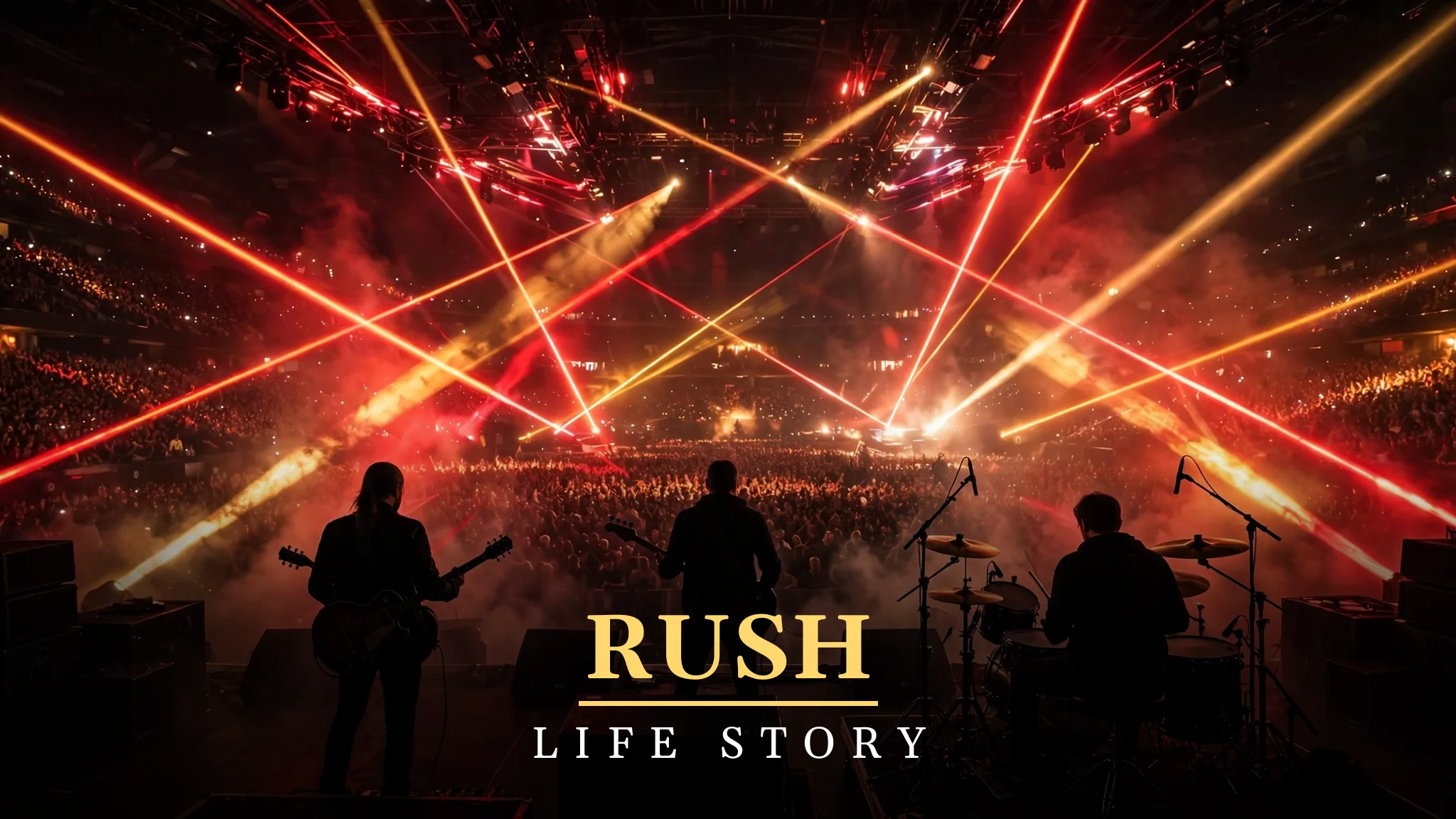
One more thought stays with me. When I hear their music, I think of a huge arena, with red and gold lasers crossing the sky, and three musicians playing with all their heart. That image is simple, but it is also the heart of their work. They made music for those moments, for the times when we need a song that is both smart and powerful. I think we need more music like that, and I am glad Rush is still playing, even now, in the ears of fans around the world.
I also keep thinking about Neil Peart, and how his drumming and his words will live on. A drummer who can play like Peart is rare, and a writer who can write like Peart is even rarer. He was both, and he gave Rush a gift that no other band had. I will keep listening to his drums, and I will keep reading his words, because they remind me that music can be both a skill and a story, and that a band can be both a group of friends and a work of art.
Finally, I want to say that their story gives hope to young bands who feel that their music is too complex, too long, or too different. Rush felt that too, and they kept going anyway. They made the music they believed in, and the world eventually believed in it too. That is a hopeful story, and it is one that I will remember. If three boys from Toronto can do that, then many other bands can do it too, and Rush has shown them the way with their skill, their honesty, and their music.
I will keep their records close, not because they are perfect, but because they are honest. They remind me to think, to listen carefully, and to value music that is made with skill and with heart. In a busy world, that reminder is precious, and I am thankful that three boys from Toronto, with guitars and drums, decided to share their complex and beautiful songs with the rest of us. Their music is a light in a dark arena, and I hope it keeps shining for many years.
I also think about the way their fans love them, and how that love is different from the love for a pop star. Rush fans do not only like the songs. They study the albums, they learn the lyrics, they play the drums and the bass, and they follow the band from city to city. That kind of fandom is a community, and it is one that has lasted for decades. I think that community is a gift, because it shows that music can bring people together in a deep and lasting way.
Another thought that stays with me is about Geddy Lee, and how he does so many things at once on stage. He sings, he plays bass, and he plays keyboards, all at the same time, and he does it with skill and with feeling. That is a rare talent, and it is one that many musicians admire. When I watch him play, I think about how much practice it must take to do three things at once, and I respect that practice. It shows that talent is not only a gift. It is also hard work, done again and again.
I also think about Alex Lifeson, and how his guitar can be both heavy and gentle. He can play a loud riff that fills an arena, and he can play a soft melody that feels like a quiet conversation. That range is special, and it is one of the reasons Rush’s music feels so rich. A guitarist who can do both is a guitarist who understands music deeply, and Lifeson understands it well. His playing is a big part of why Rush sounds like Rush, and not like any other band.
I also want to say something about their Canadian identity, and how proud they were of it. They stayed in Toronto, they played Canadian festivals, and they were honoured in Canada as well as around the world. Canada is a country with many great bands, and Rush is one of the greatest. They showed that a Canadian band could reach the world without leaving home, and that example matters for young Canadian musicians who dream of a career in music.
When I look back over their whole story, I see three friends who made a promise to each other, to make music their own way, and who kept that promise for forty years. That promise is a powerful thing, and it is one that I will keep. A friendship that can survive fame, loss, and time is a rare friendship, and Rush had that friendship. Their music is a record of that friendship, and it will keep playing for many years.
I also think about the future, and I hope young bands learn from Rush. I hope they learn to be ambitious, to write thoughtful lyrics, to practice their instruments, and to trust their own music. Rush did all of those things, and they became legends. If a young band does the same, they may not become Rush, but they will become themselves, and that is the best thing a band can be. A band that is itself is a band that will last.
Finally, I want to remember Neil Peart as a man who faced terrible loss with courage, and who found his way back to music. His story is a human story, not only a rock story, and it teaches us that grief can be survived, that a person can find a new life after loss, and that music can help a person to heal. That is a hopeful lesson, and it is one that I will carry with me. Peart’s drums will keep playing, and his words will keep teaching, for as long as people listen to Rush.
I will keep listening to Rush, because their music is smart, loud, and full of heart, and because a band that makes music with skill and honesty will always have a place in my life.
Their songs will keep playing in my home, in my car, and in my heart, for many years to come, because true music does not fade.
When I think about Rush one last time, I think about three boys who loved rock music so much that they spent forty years making it, and I think about how that love never faded, even when life was hard, even when the world changed, and even when grief tried to stop them. That love is the heart of their story, and it is why their music still matters today, and why it will keep mattering for a long time, in Canada and around the world.
When I hear Rush in a large arena, I think about how their music carries a feeling of skill in a way that few bands can match, and I think about how much the world needs that skill. Their songs do not hide from hard ideas, they face them with music, and that is why they still inspire listeners who love to think.
I will keep Rush’s records close, because they remind me that smart music can be popular, and that three friends who work hard can make songs that last for forty years and more.
Frequently Asked Questions
Where was Rush formed and who were the members?
Rush was formed in Toronto, Ontario, in 1968. The classic members were Geddy Lee on vocals, bass and keyboards, Alex Lifeson on guitar, and Neil Peart on drums and lyrics, who joined in 1974.
What album saved Rush’s career?
2112, released in 1976, saved their career. After Caress of Steel sold poorly, the label wanted a commercial record, but Rush made a long science-fiction album instead, and it became a success that gave them freedom to make their own music.
What is Rush’s most famous song?
Tom Sawyer, from Moving Pictures in 1981, is their most famous song. Other well-known songs include Limelight, The Spirit of Radio, Closer to the Heart, Subdivisions, and Red Barchetta.
What happened to Neil Peart in the late 1990s?
Neil Peart lost his daughter Selena in a car accident in 1997 and his wife Jacqueline to cancer in 1998. He left music for several years, travelled alone, and later returned, with Rush releasing Vapor Trails in 2002.
When did Rush stop touring and when did Neil Peart die?
Rush played their final tour, R40, in 2015, and Neil Peart retired from drumming after it. Peart died of brain cancer in January 2020 at the age of sixty-seven, and the band did not continue without him.
Is Rush still making music today?
No, Rush ended after Neil Peart’s retirement and death. Geddy Lee and Alex Lifeson have worked on other projects, but Rush as a band is finished. Their albums, live recordings, and songs are still loved by fans around the world.


