Start Business With Little Money
In this post
Most people believe a business begins with money. A shop, a signboard, stock on the shelves, maybe a shiny machine. So they wait — for a loan, for a lucky break, for “one day.” And one day never comes.
Here is the quiet truth nobody puts on a poster: a business does not begin with money. It begins with one person who has a problem, and is willing to pay someone to solve it. Money is needed later, in small steps. The beginning can be almost free — if you start in the right order. This guide shows that order, honestly, with no magic promises.
Start With a Skill You Already Have
Forget buying things for a moment and ask a simpler question: what can I already do that other people find useful? Maybe you can cook well, repair phones, sew clothes, design on a phone, teach children, write, take good photos, fix bikes, or speak a language others want to learn.
A skill is the cheapest business seed in the world, because you already own it. A product business needs stock before the first sale. A service business needs only your time and your hands. The tailor earns from the first shirt. The tutor earns from the first lesson. The home cook earns from the first order. When money is small, services are the safest first door to walk through.
Find a Problem People Will Pay to Solve
A skill alone is not a business. It becomes a business when it meets a real problem. The U.S. Small Business Administration (SBA) puts market research as the very first step of starting a business, for exactly this reason: research tells you whether there is a real chance to turn your idea into a working business, who your possible customers are, and who else is already serving them.
You do not need a survey company for this. Walk around your own area. What do people complain about? What do they travel far to get? What queues are always long? Then look at the people already doing similar work. What do customers like about them — and what do they grumble about? That grumble is your opening. Maybe you can be faster, cleaner, friendlier, open at better hours, or simply more honest. That small advantage is how a tiny newcomer wins the first customers.
Test Your Business Idea Cheaply
Here is where most beginners lose their little money: they spend it all before selling anything. They print cards, rent a place, buy stock — and only then discover that nobody wants to buy.
Do it the other way around. Test first, with the smallest possible version of your idea. If you dream of a food business, cook one dish and offer it to a small circle. If you dream of a clothing label, make a few sample pieces and show them. If you want to sell a service, describe it clearly to people and ask the only question that matters: “If I start this next week, will you book me?” Friendly praise costs people nothing, so watch their hands, not their words. A real test ends with a real order, a booking, or a small advance payment. That is proof. Compliments are not proof.
A cheap test can fail — and that is good news, not bad. A small failure costs you a week. A big, untested launch can cost you everything you saved.
Sell First, Then Spend
Once someone is ready to pay, let the customer’s money guide your spending. Take the booking first, then buy only what that first job needs. Deliver well. Then take the next booking.
This one habit protects small beginners more than any loan can. Every purchase should answer a simple question: “Which paying customer needs this?” If no customer needs it yet, it can wait. The beautiful signboard can wait. The expensive packaging can wait. The second machine can wait. Businesses with little money die from buying too early, not from starting too small.
Keep Your Costs Near Zero
In the early days, treat every coin like a soldier — do not send it out without a mission. Work from home or from a corner of a family shop if you can. Use the phone you already own. Tell people about your work through free channels: your WhatsApp status, local groups, a free social media page, and above all, word of mouth from happy customers.
Borrow or rent a tool for the first jobs instead of buying it. Buy materials in the smallest quantity that gets the work done, even if the bigger pack looks cheaper per piece — a cheap pack you never use is the most expensive thing of all. And keep one clear record, even in a simple notebook: what came in, what went out, and what is left. The SBA’s guide makes the same point in its own way: a simple plan and knowing your numbers help you see how much money the business truly needs, instead of guessing.
Make It Legal, One Step at a Time
“Small” should never mean “careless.” The SBA lists the legal steps of a real business: choose how your business will be structured, pick a name that nobody else is already using, register the business, get the tax identification your country and area require, and apply for the licenses or permits your kind of work needs. Those permits differ by trade and by place — selling food is not the same as teaching online — so check the rules where you live before you take your first customer.
This sounds like a mountain, but you climb it one step at a time, and most steps are done only once. Being legal protects you, lets customers trust you, and later allows you to open a proper business bank account, which the SBA also recommends so that business money and home money never get mixed into one confusing pile.
Grow Step by Step, Not All at Once
When the first real money comes in, the temptation shouts: expand everything, now! Resist it. Grow the way a tree grows — one ring at a time. Put part of every earning back into the business. Add one new service or product only when customers keep asking for it. Improve the thing people already pay for before chasing something new.
And here is the honest part, because you deserve honesty more than motivation: starting small does not guarantee success. Some ideas will not work, and some good businesses still grow slowly. That is exactly why the small way is wise. A person who starts tiny risks little, learns fast, and can change direction without drowning in debt. You are not trying to become rich this month. You are building something real, brick by brick, with money you can afford — and that is how most lasting small businesses in this world actually began.
Frequently Asked Questions
How much money do I need to start a small business?
There is no fixed number. A service based on your own skill can begin with almost nothing, because you are selling your time and ability, not stock. Start with the smallest version of your idea and let real orders tell you what to buy next.
Should I take a loan to start my first business?
Be very careful. A loan must be repaid whether the business works or not. Test your idea cheaply first, with your own small money, so you know people truly want to buy before you owe anyone anything.
What is the best first business with little money?
Usually a service built on a skill you already have — cooking, teaching, repairs, sewing, design, writing and similar work. It needs little or no stock, so your first earning can come quickly and safely.
How do I know if my business idea will work?
Do simple market research, as the SBA advises: study your possible customers and the people already doing similar work, then test with a small real offer. An idea is proven when a stranger pays for it, not when friends praise it.
Do I need to register a very small business?
In most places, yes — rules differ by country and by type of work. Registration, a tax ID and any needed permits protect you and build customer trust, so check your local requirements early.
Sources
- U.S. Small Business Administration — 10 steps to start your business: https://legacy.sba.gov/business-guide/10-steps-start-your-business
- Small Business Development Associates (SBDA) guide — Starting a Business Without Capital: From Zero to Launch: https://sbda.com/Start_a_Business.htm
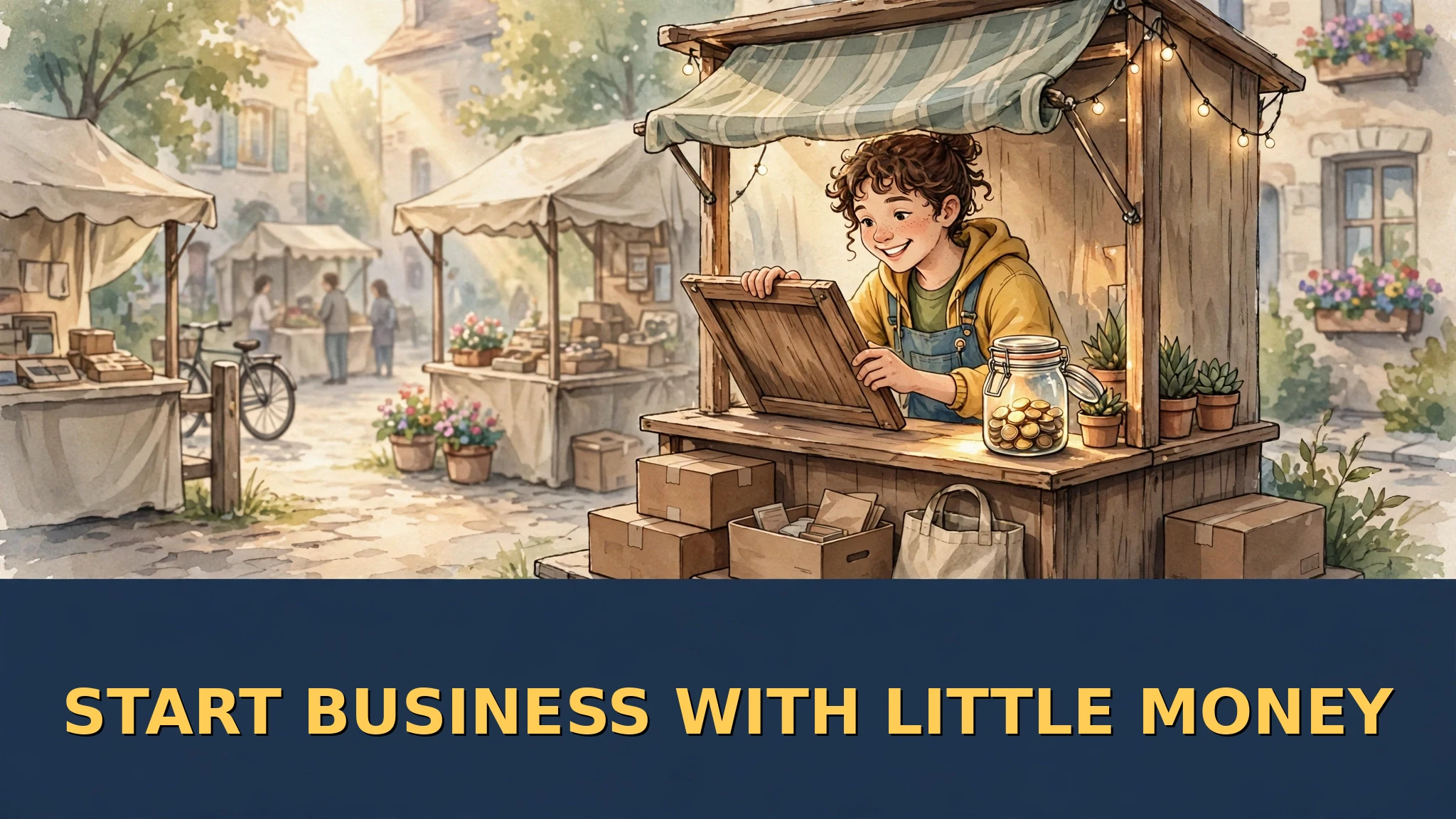
- The picture on this page is an original illustration made for Talha M Blog.