Stress Eating: Why It Happens and How to Stop
In this post
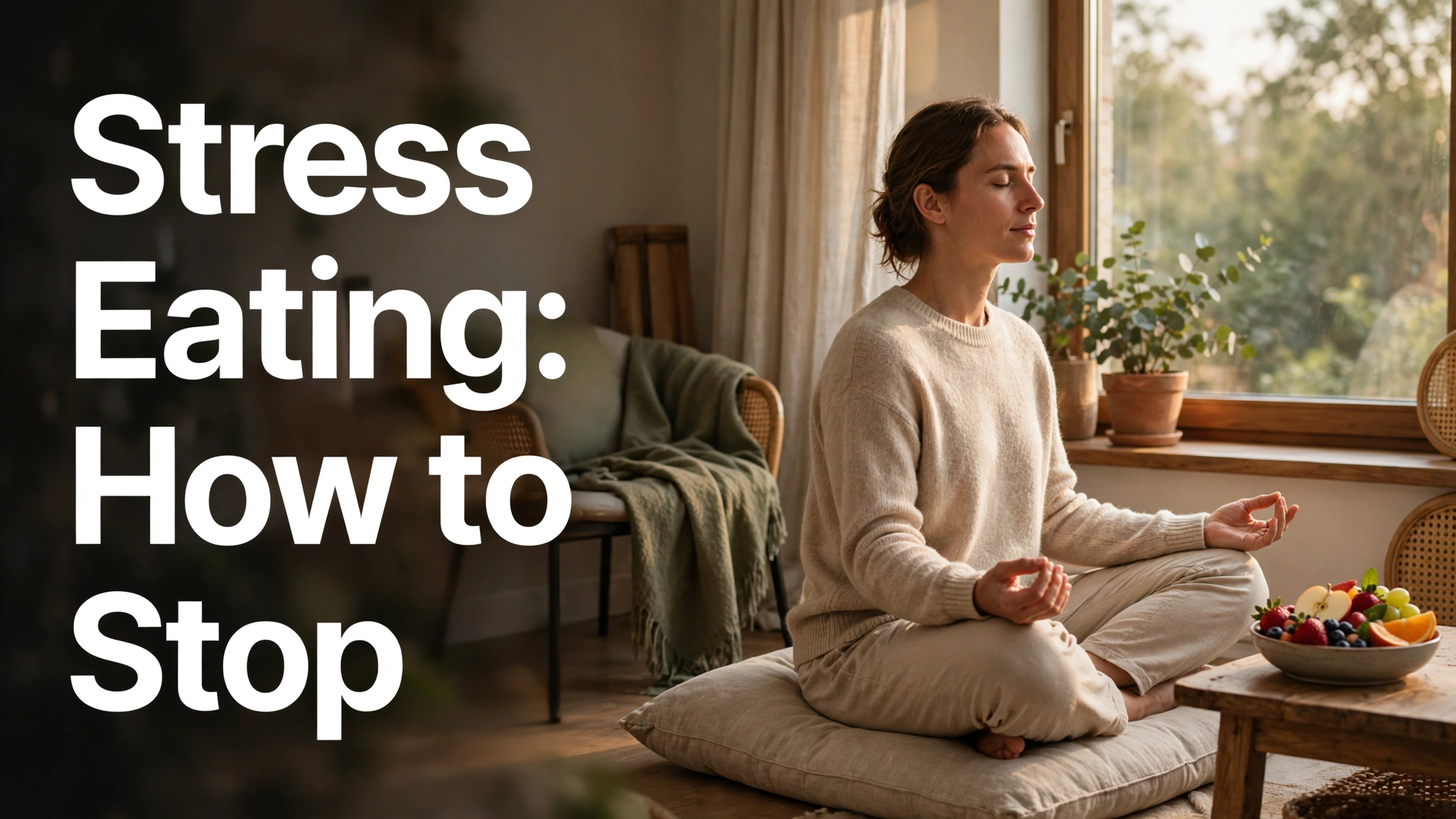
Stress eating, also called emotional eating, happens when you eat in response to feelings rather than hunger. You may reach for comfort food after a hard day, eat when you are bored or anxious, or find yourself snacking without realising it. It is a common problem, and it is not a sign of weakness or lack of willpower. Stress changes hormones, appetite, and the brain’s reward system, and it makes high-calorie, sugary, and fatty foods feel especially appealing. This article explains why stress eating happens, and how to stop it, in simple, compassionate terms. It is general information only, not a substitute for medical advice.
The key idea is that stress eating is a coping strategy, not a character flaw. When you are stressed, your body releases cortisol, a hormone that increases appetite, especially for energy-dense foods, and the brain seeks comfort and relief. Food provides a quick, reliable source of comfort, so the habit forms easily and becomes automatic. Breaking it does not mean relying on willpower alone; it means understanding the triggers, finding other ways to cope, and changing the environment so that the healthy choice is easier. This guide covers the science, the triggers, and practical strategies that actually work.
Why Stress Makes You Hungry
Stress triggers the release of cortisol, a hormone that prepares the body for a threat by increasing appetite and encouraging the storage of fat, especially around the abdomen. In the short term, stress can suppress appetite, but chronic stress usually increases it, especially for foods high in sugar, fat, and salt. These foods activate the brain’s reward system, releasing dopamine and providing a brief feeling of pleasure and relief. That relief is real, but it is short-lived, and it is followed by guilt, bloating, or a crash in energy, which can increase stress further. Understanding this cycle helps you see stress eating as a biological response, not a personal failure.
A diet that suits a young athlete may not suit an older person with kidney disease, and an exercise that aids one person may harm another with a bad knee. That is why general advice should be treated as a starting point, not as a prescription, and why listening to your personal body matters. If a habit makes you feel better, keep it. If it makes you feel worse, stop it and try something else. Your body is the finest guide you have, and learning to listen to it, with patience and with professional help when needed, is the most important wellbeing skill of all. Finally, wellbeing is personal, and what works for one person may not work for another.
That is why modest, simple habits beat grand plans: a short walk, a glass of water, a consistent bedtime, and a straightforward meal are all things you can do even when everything else is difficult. Design for the worst week, and the good weeks will take care of themselves. The most helpful way to think about any wellbeing habit is to ask whether you could still do it on your worst week, not your best one. A routine that only works when life is calm, when you have time, money, and energy, will fail at the first busy period, and busy periods are when you need it most. A habit that survives a bad week, a late night, a cold, or a family crisis is a habit that will last for years.
Hunger or Emotion: How to Tell the Difference
Physical hunger builds gradually, can be satisfied by a range of foods, and stops when you are full. Emotional hunger comes on suddenly, craves a specific food, often something sweet or salty, and persists even after you are full. A useful test is to ask yourself: would I eat an apple right now? If the answer is no, but you want chocolate or crisps, the hunger is likely emotional. Another test is to wait ten minutes and drink a glass of water; physical hunger usually remains, while emotional hunger often fades or changes. Learning to pause and ask what you are actually feeling, tired, bored, anxious, lonely, is the first step to choosing a different response.
A pain that lasts, a tiredness that does not lift, a change in appetite or in bowel habits, a mole that changes shape: all of these are the body’s way of asking for attention. Ignoring them does not make them go away; it generally makes them harder and more expensive to treat later. Paying attention early, and asking a clinician a straightforward question, is one of the cheapest and most effective wellbeing habits there is. It is not hypochondria; it is responsibility, and it is the habit that saves lives more often than any supplement or diet. Many wellbeing problems are made worse by the habit of ignoring early warnings.
Medication is not a sign of failure; it is a tool, and like any tool, it works best when used properly and combined with other tools. The finest health outcomes come from honesty: take the medicine you need, make the changes you can, and work with your clinician, not against them. That combination is the most effective medicine there is. Medication and lifestyle are frequently presented as opposites, as if you must choose one or the other, but in reality they work together. A person who takes blood pressure medicine and also walks, eats less salt, and sleeps well will do better than a person who does only one of those things.
Common Triggers and How to Spot Them
Stress eating triggers are often predictable: a difficult day at work, an argument, boredom in the evening, loneliness, or tiredness. Keeping a simple food and mood diary for a week can reveal patterns you had not noticed, such as always snacking after a stressful meeting or when watching television late at night. Once you know your triggers, you can plan for them: if evenings are difficult, plan a walk, a bath, or a phone call at that time. If work stress is the trigger, build in short breaks and a proper lunch. The goal is not to avoid stress completely, which is impossible, but to notice it early and to have a plan for it.
Finally, remember that wellbeing is a lifelong project, not a short-term fix. A diet that lasts a month, an exercise programme that lasts a few weeks, or a sleep routine that lasts a few days will not change your health in the long term. What changes health is a pattern that you can keep for years, through distinct seasons of life, through work, family, and ageing. That pattern does not need to be perfect; it needs to be sustainable. Build a life that supports your health, rather than a plan that fights your life, and you will be healthier for longer.
A scale, a step counter, or a blood pressure reading is helpful if it tells you whether a habit is working, but it is harmful if it becomes a everyday judgement that makes you feel like a failure. The best way to use numbers is to look at trends over weeks, not at single days, and to pay attention to how you feel, not only to what the number says. If you sleep better, feel more energetic, and walk further, those are real improvements, even if the scale has not moved. Judge a habit by your life, not by a single measurement, and you will be kinder to yourself and more likely to keep going. Numbers can help or they can harm, depending on how you use them.
Practical Strategies That Actually Work
Practical strategies for stress eating start with the environment: keep comfort foods out of easy reach, and keep healthy snacks, such as fruit, nuts, and yoghurt, visible and ready. Eat regular, balanced meals with enough protein and fibre, because skipping meals makes cravings stronger. When a craving hits, pause for ten minutes, drink water, and do something else, such as going for a walk, stretching, or calling a friend. If you still want the food, eat a small portion slowly and enjoy it, rather than eating it quickly and feeling guilty. Mindful eating, paying attention to taste, texture, and fullness, helps you notice when you are satisfied and stop before overeating.
Muscle can be built at any age, balance can be improved, and the brain can learn fresh things throughout life. The individuals who age well are usually the ones who keep moving, keep learning, keep eating well, and keep connected to others, not the ones who accept decline as inevitable. That is a hopeful message, because it means that the choices you make today, at any age, still matter. It is never too late to start, and the benefits of starting, even late, are genuine and measurable. Age is a reason to take care of yourself, not a reason to give up. Ageing changes the body, but it does not have to mean decline.
Food labels can be confusing, and numerous products that claim to be healthy are not. A cereal that says whole grain may still be high in sugar, a juice that says natural may still be high in calories, and a snack that says low fat may be high in salt. Learning to read a label, to check sugar, salt, and fibre per hundred grams, and to ignore the claims on the front of the packet, is a useful skill. It takes a few minutes to learn, and it saves you from being misled by marketing. Trust the numbers on the back, not the promises on the front.
Healthier Ways to Cope With Stress
The most effective way to stop stress eating is to find other ways to cope with stress that work for you. Exercise is one of the best, because it reduces cortisol, improves mood, and provides a healthy outlet for tension, even a ten-minute walk helps. Talking to a friend, writing in a journal, listening to music, or doing a breathing exercise can also help. Sleep is important too, because tiredness increases cravings and reduces willpower. Building a daily routine that includes time for rest, movement, and connection makes stress easier to handle, and it reduces the need to use food as the only coping tool. Experiment with different strategies and keep the ones that help.
Fix sleep, and food becomes easier. Fix food, and energy improves. Fix movement, and sleep improves. Pick the easiest one, start there, and let the improvement spread. That is how real change happens, not in a single dramatic overhaul, but in a chain of small improvements. Sleep, food, movement, and stress are not separate topics; they are one system, and they affect each other constantly. Poor sleep makes you crave sugar, sugar makes you sleep badly, lack of movement makes you tired, and tiredness makes you stressed. Breaking that cycle at any one point aids the whole system, which is positive news: you do not need to fix everything at once.
Those habits do not eliminate stress, but they make the body more resilient to it, and resilience is the goal, not a stress-free life, which does not exist. Stress is not only a feeling; it is a physical state that affects the heart, the gut, the immune system, and the brain. Chronic stress raises blood pressure, disrupts sleep, increases appetite for sugary food, and weakens immunity. Managing stress is therefore not a luxury or a self-indulgence; it is a medical necessity. The most effective stress management is often the simplest: consistent sleep, consistent movement, time outdoors, time with individuals you trust, and a few minutes of quiet each day.
Breaking the Guilt Cycle After Overeating
Many people who stress eat get caught in a guilt cycle: they eat, they feel guilty, the guilt increases stress, and the stress leads to more eating. Breaking that cycle starts with self-compassion: one episode of overeating does not ruin your health or your progress, and it does not make you a failure. Instead of punishing yourself by skipping meals or over-exercising, return to your normal routine at the next meal, drink water, and move on. Notice what triggered the episode without judging yourself, and use it as information for next time. Kindness to yourself is not indulgence; it is the most effective way to change a habit, because shame rarely helps anyone eat better.
A better approach is to decide in advance what you will do when life gets challenging: a shorter walk, a simpler meal, a earlier bedtime. Having a minimum version of your routine, one you can do even on the hardest day, keeps the habit alive through the disruption, and it makes it easier to return to the full routine afterwards. Plan for the bad days, and the positive days will look after themselves. Another helpful habit is to plan for setbacks in advance. A holiday, a busy week at work, an illness: all of these will disrupt a routine, and if you have no plan for them, you are likely to give up entirely.
Changing the environment is easier than changing yourself, and it works even when motivation is low. Set up your home and your day so that the right choice is the default, not a daily battle. One of the hardest parts of changing a wellbeing habit is that the benefits are slow and invisible, while the costs are immediate and obvious. Giving up a favourite food feels like a loss today, while the benefit, a lower risk of disease in ten years, feels abstract. That mismatch is why willpower alone rarely works, and why environment matters more: if healthy food is visible and junk food is hidden, if walking shoes are by the door and the car keys are not, the healthy choice becomes the easy choice.
When to Seek Professional Help
Most stress eating improves with awareness, planning, and healthier coping strategies, but some situations need professional help. If you binge eat regularly, feel out of control around food, hide your eating, or feel distressed about it, talk to a clinician or a dietitian. Eating disorders, including binge eating disorder, are serious and treatable, and they are not a sign of weakness. A therapist can help with stress management and with the emotional patterns behind eating, and a dietitian can help with a balanced, non-restrictive eating plan. Seeking help is a strong and sensible step, and it is the fastest way to break a pattern that has become difficult to manage alone.
Movement is not a penalty; it is a pleasure, a way to feel strong, to clear your mind, and to enjoy your body. When exercise is framed as a chore, individuals avoid it, and when it is framed as a way to burn calories, individuals quit when the calories do not add up. A better frame is to find movement you enjoy, whether it is walking, dancing, swimming, or gardening, and to do it because it feels positive, not since you have to. Enjoyable movement is sustainable movement, and sustainable movement is the only kind that matters for wellbeing. Exercise is often sold as punishment for eating, or as a way to earn food, and that framing is harmful.
Wellbeing is not only an individual project; it is a social one, and the individuals around you can help or hinder, often without realising it. Talking openly about what you are trying to do, and asking for support, is not a sign of weakness; it is a practical step that makes success more likely. You do not have to do it alone, and you should not try to. One more point that is often missed is the role of other individuals in wellbeing. A partner who cooks with you, a friend who walks with you, a family that supports a fresh habit: all of these make change easier and more enjoyable.
My Take:
Stress eating is a topic I approach with compassion, because it is so often treated as a lack of willpower, when it is really a sign that a person is coping the best way they know how. Food is comforting, it is available, and it works, briefly, so it is no surprise that stressed people turn to it. I think the kinder and more effective approach is not to shame the habit, but to understand it, to find other ways to cope, and to change the environment so that the healthy choice is easier. Willpower is a poor tool for a problem that is really about stress, tiredness, and habit. Finally, my practical advice is to start smaller than you think you need to. Choose one change, make it so small that skipping it feels silly, and do it at the same time each day. Track how you feel, not just a number. Give it several weeks before judging it, and change only one thing at a time so you know what helped. If a change makes life harder without making you feel better, drop it and try another. The best routine is the one you can keep, the one that fits your life, and the one that leaves you with more energy, not less.
I also believe we should be honest about the guilt cycle, because guilt is what keeps stress eating going. Eating, feeling guilty, and then eating more because you feel guilty is a trap, and the way out is not more guilt, but more kindness. A single episode of overeating does not define you, and returning to a normal meal, drinking water, and moving on is a far better response than punishment. Health is built over weeks and months, not in a single meal, and the person who treats themselves with compassion is far more likely to change than the person who treats themselves with shame. I also believe that asking for help is a strength, not a weakness. Persistent tiredness, pain, or worry deserves a clinician’s attention, and getting that attention early is wiser than waiting until a problem becomes serious. Too many people suffer in silence because they do not want to be a bother, or because they think their problem is not serious enough. It is serious enough if it affects your daily life, and a good clinician will take it seriously. Health is not a solo project; it is a shared one, and help is part of it.
Stress eating is a topic I approach with compassion, because it is so often treated as a lack of willpower, when it is really a sign that a person is coping the best way they know how. Food is comforting, it is available, and it works, briefly, so it is no surprise that stressed people turn to it. I think the kinder and more effective approach is not to shame the habit, but to understand it, to find other ways to cope, and to change the environment so that the healthy choice is easier. Willpower is a poor tool for a problem that is really about stress, tiredness, and habit. My view is simple: health advice should fit a real life, not an ideal one. If a routine only works when you have time, money, and energy, it will fail when you need it most, and that is not your fault; it is the advice’s fault. I look for habits that survive a bad week, that cost little, and that can be done in an ordinary home, because those are the habits that actually change health. The rest is decoration, and decoration does not lower blood pressure, improve sleep, or make you stronger. Small, survivable habits are the ones worth keeping.
I also believe we should be honest about the guilt cycle, because guilt is what keeps stress eating going. Eating, feeling guilty, and then eating more because you feel guilty is a trap, and the way out is not more guilt, but more kindness. A single episode of overeating does not define you, and returning to a normal meal, drinking water, and moving on is a far better response than punishment. Health is built over weeks and months, not in a single meal, and the person who treats themselves with compassion is far more likely to change than the person who treats themselves with shame. I also think we should stop treating health as a moral test. A missed walk, a late night, or a heavy meal is not a failure of character; it is a normal day. The language of cheating and falling off the wagon turns normal life into guilt, and guilt rarely helps anyone make a better choice tomorrow. What helps is noticing, without drama, and returning to the routine at the next opportunity. That calm return is a skill, and it matters more than any single perfect day. Be kind to yourself, and you will be healthier for it.
Stress eating is a topic I approach with compassion, because it is so often treated as a lack of willpower, when it is really a sign that a person is coping the best way they know how. Food is comforting, it is available, and it works, briefly, so it is no surprise that stressed people turn to it. I think the kinder and more effective approach is not to shame the habit, but to understand it, to find other ways to cope, and to change the environment so that the healthy choice is easier. Willpower is a poor tool for a problem that is really about stress, tiredness, and habit. Another belief I hold is that the body gives better feedback than any app. Tiredness, thirst, hunger, pain, and poor sleep are all information, not annoyances to be overridden. Learning to notice those signals early, and to act on them, is one of the most valuable health skills there is. It does not replace medical care; it tells you when medical care is needed, and it tells you sooner, when help is usually simpler. Listen to your body, and take it seriously, because it is trying to tell you something.
I also believe we should be honest about the guilt cycle, because guilt is what keeps stress eating going. Eating, feeling guilty, and then eating more because you feel guilty is a trap, and the way out is not more guilt, but more kindness. A single episode of overeating does not define you, and returning to a normal meal, drinking water, and moving on is a far better response than punishment. Health is built over weeks and months, not in a single meal, and the person who treats themselves with compassion is far more likely to change than the person who treats themselves with shame. I want to be honest about limits too. No single habit, food, or routine is a cure, and anyone who promises a cure is selling something. Health is shaped by genetics, environment, income, and luck, as well as by choices. Pretending otherwise blames people for problems they did not cause. What honest advice can do is shift the odds, reduce daily strain, and make life feel better. That is enough, and it is worth doing without exaggerating it. Trustworthy advice says what it can do and what it cannot.
Frequently Asked Questions
Why do I eat when I am stressed?
Stress raises cortisol, which increases appetite for sugary and fatty foods, and eating activates the brain’s reward system, providing brief comfort.
How can I tell if I am hungry or stress eating?
Physical hunger builds gradually and can be satisfied by many foods, while emotional hunger comes suddenly and craves a specific comfort food.
How do I stop stress eating at night?
Eat regular meals during the day, keep comfort foods out of reach, plan an evening activity such as a walk, and pause for ten minutes when a craving hits.
Does stress eating cause weight gain?
It can, because stress eating often involves high-calorie foods eaten in excess, although the effect depends on overall diet and activity.
What can I do instead of stress eating?
Try a walk, breathing exercises, talking to a friend, journaling, or listening to music, and choose the coping strategy that works best for you.
When should I get help for emotional eating?
Seek help if you binge regularly, feel out of control, hide your eating, or feel distressed about food, as these can be signs of an eating disorder.