The Real History Of Halloween
In this post
Every year on the last night of October, children put on costumes, knock on doors, and ask for sweets. Pumpkins glow on porches and plastic spiders hang from trees. It all feels like a modern party, invented for fun. But the roots of Halloween go back a very long way, to a time before electric lights, before supermarkets, and even before the countries we know today had their current names.
A festival from long ago
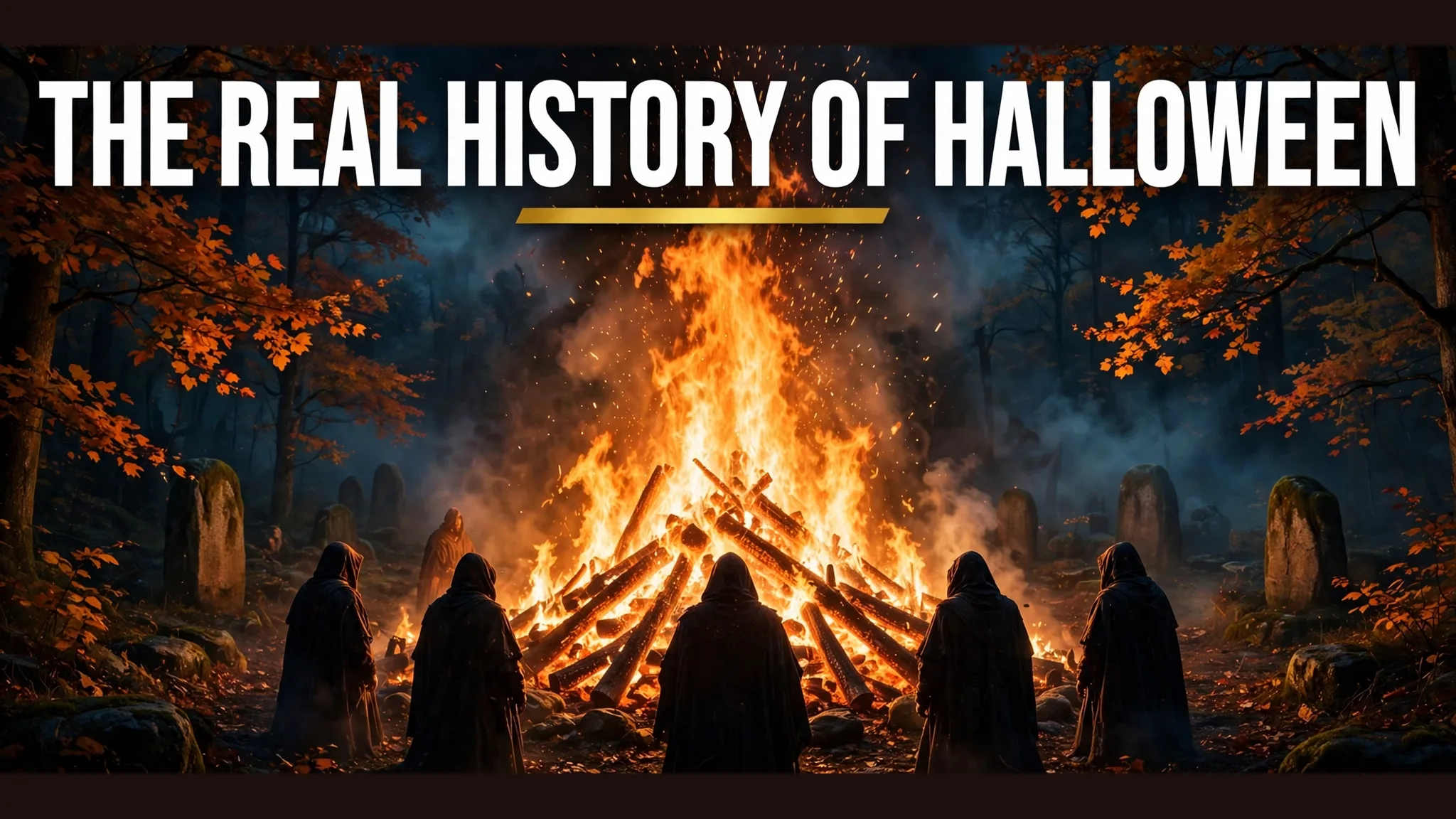
Long ago, the Celtic people lived in the lands that are now Ireland, the United Kingdom, and northern France. Their year was divided by the seasons, and one of their most important festivals was called Samhain. It marked the end of the harvest and the start of the dark, cold half of the year.
For the Celts, this was a serious and thoughtful time. The harvest was in, and the long winter was coming. People lit large bonfires, and communities gathered together. Many believed that on this night, the line between the world of the living and the world of the dead felt thinner than usual. That belief shaped many of the customs that followed.
From saints to spooks
As centuries passed, the Christian church began to honour saints and the dead around the same time of year. The first of November became All Saints’ Day, a day to remember holy men and women. The evening before it was called All Hallows’ Eve. Over time, people shortened that name, and it slowly turned into the word we use now: Halloween.
This is why Halloween sits exactly where it does on the calendar. It grew out of two traditions meeting each other: an older harvest festival and a newer day of remembering the dead. The costumes, the fires, and the night-time gatherings carried over, but their meanings changed a little with each generation.
How pumpkins took over
One of the oldest Halloween customs was carving faces into vegetables. In Ireland and Scotland, people carved turnips and potatoes, placed a small light inside, and set them on windowsills or carried them on dark roads. These glowing faces were meant to keep away unfriendly spirits, or so people believed at the time.
When large numbers of Irish and Scottish people moved to America, they found pumpkins everywhere. Pumpkins were bigger, softer, and much easier to carve than turnips. The old custom moved into a new vegetable, and the jack-o’-lantern as we know it was born. Today, pumpkin carving is one of the most loved parts of the whole holiday.
Trick or treat is born
Trick-or-treating also has old roots. In past centuries, poor people would visit homes and offer prayers for the dead in exchange for small cakes. Children later took up a lighter version of the custom, dressing up and visiting neighbours for treats. By the middle of the last century, this had become the friendly door-to-door tradition that children enjoy today.
Costumes changed along the way too. Early costumes were often made from animal skins or simple cloth, and they were meant to disguise the wearer from wandering spirits. Modern costumes are made for fun: superheroes, witches, ghosts, and animals. The idea of dressing up stayed the same, but the reason changed from protection to play.
Halloween today
Today, Halloween is celebrated in many countries, and each place adds its own flavour. Some families carve pumpkins together at the kitchen table. Some schools hold costume parades. Some neighbourhoods organise small parties where children play games and share sweets. Shops fill their windows with orange and black, and parks sometimes hold pumpkin displays that whole families walk through after dark.
What is striking is how familiar all of it feels, even though the details change from place to place. A child in one country and a child in another may wear very different costumes, but both are doing the same simple thing: dressing up, stepping out into the night, and joining in a shared game.
Why the old story still matters
In my view, the best part of this history is how one old festival kept changing without ever disappearing. Every generation added something new: a new food, a new costume, a new game. Yet the heart of it stayed the same. It is a night when neighbours meet, children play, and communities come together at the edge of winter.
So when you carve a pumpkin or hand a sweet to a small ghost at your door, you are taking part in something far older than any shop display. You are joining a chain of people, across many centuries and many countries, who all marked this same night in their own way. That is a lovely thought to carry with you next time the doorbell rings.
You may also like
Sources
- Britannica — https://www.britannica.com/topic/Halloween
- History.com — https://www.history.com/topics/halloween/history-of-halloween