The Shadows: The Life Story Behind the Apache Hitmakers
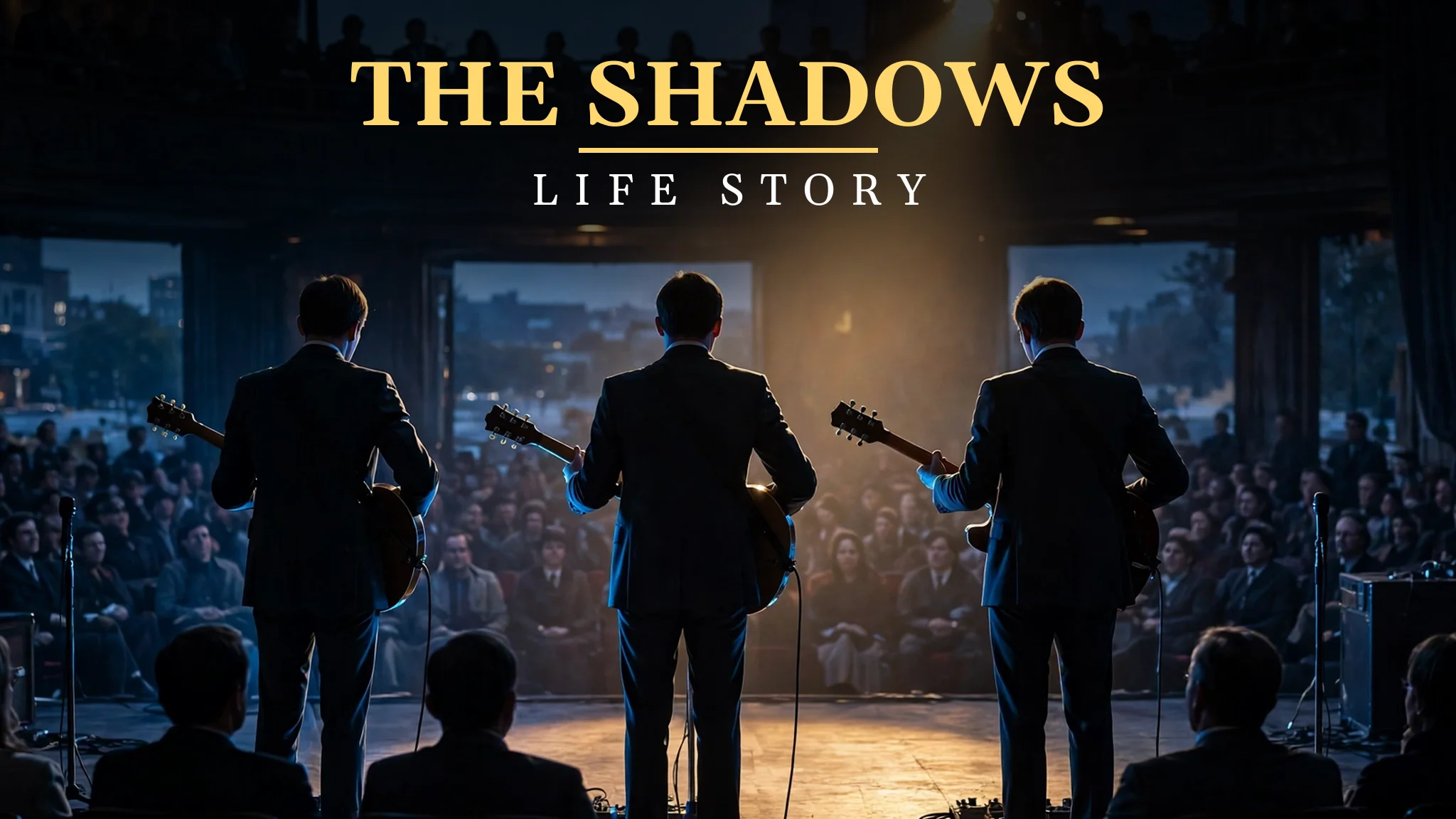
In this post
- A Backing Band From North London
- Apache and the Sound That Changed Guitar Music
- Working With Cliff Richard and the Big Years
- The Later Years, the Reunions, and the Legacy
- What the Shadows Left Behind
- The Red Stratocaster and the Sound of Hank Marvin
- The Shadows’ Influence on the Beatles and Beyond
- The Shadows’ Albums and the Art of the Instrumental
- My Take:
Before the Beatles, before the Rolling Stones, and before almost every British band you have ever heard of, there was a group of young men who played instrumental guitar music so beautiful that it changed British pop forever. They were called the Shadows, and their leader was a guitarist named Hank Marvin, a man with a red Fender Stratocaster and a sound that was clear, melodic, and unforgettable. Their record Apache, released in 1960, went to number one in Britain, and it became one of the most famous instrumental records ever made. Every young guitarist in Britain wanted to play like Hank Marvin, and many of them did.
The Shadows began as the backing band for Cliff Richard, the young singer who was Britain’s first rock and roll star. But they soon became stars in their own right, with hit after hit, and a sound that was entirely their own. They did not sing. They played guitars, and the guitars sang for them. Their music was melodic, graceful, and full of feeling, and it appealed to people of all ages. The band lasted for decades, with many changes of members, and they are still loved today by fans who remember the sound of that red Stratocaster.
This is the story of the Shadows: how they began, how they became famous, how they made Apache and the other great instrumental hits, how they worked with Cliff Richard, and how their music influenced generations of guitarists. It is a story about melody, about skill, and about a band that proved you do not need words to say something beautiful.
A Backing Band From North London
The Shadows began in the late 1950s, when a young singer named Cliff Richard needed a backing band. Cliff Richard was born Harry Webb in Lucknow, India, in 1940, and he had moved to England as a child. He became Britain’s first rock and roll star, and he needed musicians to play behind him. The band that formed around him was first called the Drifters, and then, after a legal problem with an American group of the same name, they became the Shadows. The name was suggested by Jet Harris, the band’s bass player, and it suited a group that played behind a star.
The classic early line-up of the Shadows was Hank Marvin on lead guitar, Bruce Welch on rhythm guitar, Jet Harris on bass, and Tony Meehan on drums. Hank Marvin was born in Newcastle upon Tyne in 1941, and he was a talented guitarist with a clear, melodic style. Bruce Welch was born in Newcastle in 1941 as well, and he was a fine rhythm guitarist. Jet Harris was born in London in 1939, and he was a bass player with a strong, driving sound. Tony Meehan was born in London in 1943, and he was a drummer with a precise, powerful style. Together, they made a sound that was tight, professional, and beautiful.
The band played behind Cliff Richard on stage and on record, and they became famous as his backing group. But they also wanted to make records of their own, and in 1959, they released their first single, Feelin’ Fine, which was a modest hit. The band’s sound was already special: Marvin’s guitar sang like a voice, and the band’s playing was clean and melodic. The public began to notice the band, and not just the singer they were backing. The Shadows were becoming stars in their own right.
The band’s early years were spent touring Britain with Cliff Richard, playing in theatres and dance halls, and learning how to be professional musicians. It was hard work, but it was also an education. The band learned how to play together, how to read an audience, and how to make a record that would sell. They were young, they were talented, and they were ready for their own success. That success was about to arrive, in the form of a record called Apache.
Apache and the Sound That Changed Guitar Music
In 1960, the Shadows released Apache, an instrumental record that became one of the most famous in British music history. The song was written by Jerry Lordan, and it was a dramatic, melodic piece, with Marvin’s guitar playing a tune that sounded like a journey across a desert. The record went to number one in Britain, and it stayed there for five weeks. It was a remarkable achievement for an instrumental record, and it made the Shadows famous. Every young person in Britain knew the tune, and every young guitarist wanted to learn how to play it.
Apache’s success was built on Marvin’s guitar sound. He played a red Fender Stratocaster, a guitar that became almost as famous as he was, and his playing was clear, melodic, and full of feeling. He used a tremolo arm to bend the notes, and he played with a smoothness that made the guitar sound like a human voice. The sound was new, and it was beautiful, and it changed the way British guitarists played. Before the Shadows, British guitar music had been rough and raw. After Apache, it was melodic and graceful, and the Shadows were the reason.
The band followed Apache with more instrumental hits, including Man of Mystery, F.B.I., and Wonderful Land. Wonderful Land, released in 1962, also went to number one, and it is one of the band’s most beautiful records. The band’s music was melodic and romantic, and it appealed to people who did not normally listen to rock and roll. The Shadows were not a loud, rebellious band. They were a band that made beautiful music, and they were loved by audiences of all ages, from teenagers to their parents.
The band’s success also changed the music business. Before the Shadows, instrumental groups were not common in British pop music. After Apache, every record company wanted an instrumental group, and many young guitarists formed bands in imitation of the Shadows. The band had created a new kind of pop music, and they had shown that a guitar could be the star of a record. That influence is still felt today, in the music of guitarists who learned to play by listening to Hank Marvin.
Working With Cliff Richard and the Big Years
The Shadows continued to work with Cliff Richard throughout the early 1960s, and the partnership was one of the most successful in British pop music. Cliff Richard and the Shadows made many hit records together, including The Young Ones, Summer Holiday, and Bachelor Boy, and they appeared in films together. The films were light, cheerful musicals, and they were very popular with audiences. The band and the singer were a team, and they worked well together. Cliff Richard was the star, but the Shadows were an essential part of the sound.
The band’s own records continued to be hits, and they toured Britain and the world. They played in Europe, in Australia, and in Japan, and they were welcomed everywhere. The band’s music was international, because it did not depend on words. A melody is the same in every language, and the Shadows’ melodies were beautiful in every country. The band were ambassadors for British music, and they were proud of that role.
But the band was changing. Jet Harris left the group in 1962, and Tony Meehan left in 1961. They were replaced by Brian Bennett on drums, who joined in 1961 and stayed with the band for decades, and by other bass players. The changes were sad, but the band carried on, and the sound remained. Hank Marvin and Bruce Welch were the heart of the band, and they kept it going through the changes. The band’s ability to survive the loss of members was a sign of their strength, and it would serve them well in the years to come.
By the mid-1960s, the music world was changing. The Beatles and the Rolling Stones were making a different kind of music, and the Shadows’ melodic instrumentals began to sound old-fashioned. The band’s hits became fewer, and they were no longer at the top of the charts. But the band did not give up. They kept touring, they kept recording, and they kept the music alive. They were a band that loved to play, and they were not going to stop just because the fashion had changed.
The Later Years, the Reunions, and the Legacy
In the late 1960s, the Shadows broke up for a time, and the members went their separate ways. Hank Marvin moved to Australia, and Bruce Welch worked as a songwriter and producer. But the band reformed in the 1970s, and they had a new wave of success. In 1978, they released the album 20 Golden Greats, a collection of their old hits, and it went to number one in Britain. The album’s success showed that the band’s music was still loved, and that new listeners were discovering it. The band toured again, and they were welcomed by audiences who had grown up listening to their records.
The band continued to tour and record through the 1980s and 1990s, and they became a beloved part of British music. They were no longer chart stars, but they were still a great live band, and their concerts were full of fans who loved the old songs. The band’s final tour was in 2004, and it was a celebration of their long career. Hank Marvin and Bruce Welch, who had been with the band from the beginning, played the old hits one last time, and the audiences were full of people who had loved the band for decades.
Jet Harris died in 2011, and Tony Meehan died in 2005. Their deaths were sad moments for the band’s fans, but the music they made together has survived. The Shadows’ records are still played today, and they are still studied by guitarists who want to learn how to play melody. Hank Marvin’s red Stratocaster is one of the most famous guitars in the world, and his playing is still admired by musicians of all ages.
The band’s place in music history is secure. They were the first British instrumental group to become stars, and they changed the way British guitarists played. They showed that a guitar could sing, and that a melody could be as powerful as any words. Their music is still beautiful, and it will be for a long time.
What the Shadows Left Behind
The legacy of the Shadows is in the guitar. Hank Marvin’s playing influenced generations of guitarists, from the Beatles to the guitarists of the 1970s, 1980s, and beyond. The band showed that the electric guitar could be a melodic instrument, not just a loud one, and that a beautiful tune could be a hit. That lesson has been passed down through the generations, and it is still true today. Every guitarist who plays a melody, rather than just a riff, owes something to Hank Marvin and the Shadows.
The band also left a lesson about professionalism. The Shadows were a band that worked hard, that played well, and that respected the audience. They were not a band that relied on fashion or on scandal. They relied on skill, on melody, and on the love of music. That is a simple lesson, but it is a powerful one, and it is one that many younger bands could learn from. The Shadows lasted for decades because they were good at what they did, and because they never stopped trying to be better.
The band’s songs are still played today, and they still sound fresh. Apache, Wonderful Land, and F.B.I. are part of the history of British pop music, and they will be for a long time. The Shadows were masters of the instrumental, and their records are a testament to their skill. They may not have been the most famous band of the 1960s, but they were one of the most influential, and their music deserves to be remembered.
The Red Stratocaster and the Sound of Hank Marvin
Hank Marvin’s red Fender Stratocaster is one of the most famous guitars in the world, and its story is a part of the Shadows’ legend. Marvin bought the guitar in 1959, after seeing one in a shop in London, and he paid for it with money he had saved. The guitar was bright red, and it stood out on stage. Marvin’s playing on the Stratocaster, with its clear, melodic tone and its tremolo arm, created a sound that was new and beautiful. The guitar became as famous as Marvin himself, and young guitarists all over Britain wanted one just like it.
The Stratocaster’s sound was built on Marvin’s technique. He used the tremolo arm to bend notes, he played with a smooth, flowing style, and he let the melody sing. His playing was not fast or showy. It was melodic and graceful, and it made the guitar sound like a human voice. That style influenced a generation of guitarists, and it is still studied today. The red Stratocaster was not just a guitar. It was an instrument that changed the way British musicians thought about the electric guitar, and it is a symbol of the Shadows’ legacy.
Marvin still plays a red Stratocaster today, and the guitar remains his trademark. He has owned many guitars over the years, but the red Stratocaster is the one that people remember. It is a reminder that an instrument can become a part of a musician’s identity, and that the right guitar, in the right hands, can change music history. Hank Marvin and his red Stratocaster did that, and their story is a part of the history of British pop music.
The Shadows’ Influence on the Beatles and Beyond
The Shadows’ influence on other musicians was enormous, and it began with the Beatles. The young Beatles, who were starting out in Liverpool in the early 1960s, listened to the Shadows’ records, and they learned from them. The Shadows’ melodic guitar style, their tight harmonies, and their professional approach to music were all influences on the Beatles’ early sound. The Beatles were not the only band to learn from the Shadows. The Rolling Stones, the Hollies, and countless other groups also listened to the Shadows’ records and took lessons from them.
The Shadows’ influence was not just on British bands. Their music travelled around the world, and guitarists in America, Europe, and Australia also learned from Hank Marvin’s playing. The melodic, graceful style of the Shadows became a model for instrumental guitar music, and it is still heard today in the work of guitarists who play with feeling rather than with speed. The band’s influence is a quiet one, and it is often overlooked, but it is real, and it is deep. Many of the guitarists who are famous today learned to play by listening to the Shadows.
The band’s influence is also heard in the music of later generations. The jangling guitar sound of the 1960s, the folk-rock of the 1970s, and the indie music of the 1980s and beyond all owe something to the Shadows’ melodic approach. The band showed that a guitar could be a melodic instrument, and that a beautiful tune could be a hit. That lesson has been passed down through the generations, and it is still true today. The Shadows may not always get the credit they deserve, but the musicians who learned from them know the truth.
The Shadows’ Albums and the Art of the Instrumental
The Shadows made many albums, and their records show a band that was always trying to make beautiful instrumental music. Their early albums, including The Shadows, released in 1961, and Out of the Shadows, released in 1962, were collections of melodic guitar tunes, and they sold well in Britain. The albums were not just collections of singles. They were carefully made records, with a mix of original songs and covers, and they showed the band’s range. The band could play a fast, exciting tune, and they could also play a slow, beautiful ballad, and the albums captured both sides of their talent.
The band’s later albums, including 20 Golden Greats, released in 1978, were collections of their greatest hits, and they were very successful. The album went to number one in Britain, and it introduced the band’s music to a new generation of listeners. The success of the album showed that the band’s music had not been forgotten, and that new audiences were still discovering it. The band’s albums are a record of a long career, and they are a testament to the band’s skill and their dedication to instrumental music.
The art of the instrumental is a difficult one, because a band without a singer has to hold the listener’s attention with melody alone. The Shadows were masters of that art, and their albums prove it. Each song is a melody, carefully played, and each album is a collection of melodies that work together. The band’s albums are not just background music. They are music to be listened to, and to be enjoyed for their beauty. That is a remarkable achievement, and it is why the Shadows’ records are still loved today.
The band’s albums also show how the Shadows’ sound changed over the years. The early albums were simple and direct, with a clean, bright sound. The later albums were more polished, with richer arrangements and a fuller sound. But the heart of the music never changed: a beautiful melody, played with skill and with feeling, on a guitar. That consistency is a part of the band’s legacy, and it is why their albums are still worth listening to. A band that knows its sound, and that stays true to it, is a band that will be remembered.
The Shadows’ albums are also a reminder that instrumental music can be popular. In a world where most pop music has vocals, the Shadows proved that a guitar could be the star, and that a melody could be a hit. That is a lesson for any musician: you do not need words to make a great record. You need a good tune, played well, and the Shadows had both. Their albums are a celebration of the guitar, and they are a part of the history of British pop music that deserves to be remembered.
The Shadows’ story also includes their work as session musicians and their influence on the recording studios of London. In the early 1960s, the band played on countless records for other artists, and their clean, precise playing set a standard for British session work. Hank Marvin’s guitar sound became a model for studio guitarists, and Bruce Welch’s rhythm playing was studied by young musicians all over the country. The band’s professionalism in the studio was just as important as their work on stage, and it is a part of their legacy that is often overlooked. A band that can play well in the studio, take after take, is a band that has real skill, and the Shadows had it in abundance.
My Take:
When I think about the Shadows, I think about a guitar singing. That is the first image that comes to mind, and it is the most beautiful one. Hank Marvin’s guitar does not just play notes. It sings a melody, and the melody tells a story. Apache is a perfect example. The tune sounds like a journey, like a man riding across a desert, and it does not need words to tell you that. The guitar tells you. I think that is a wonderful thing, and it is why the Shadows’ music has lasted for so long. A melody does not need a language, and it does not need a fashion. It just needs to be beautiful, and Apache is beautiful.
I admire Hank Marvin more than I can say. He was a young man from Newcastle who picked up a guitar and learned to play it with a grace and a feeling that very few people have ever matched. His red Fender Stratocaster became famous, but it was not the guitar that made the music. It was Marvin’s hands, his ear, and his heart. He played with a smoothness that made the guitar sound like a human voice, and he did it without showing off. He did not play fast for the sake of it, and he did not play loud for the sake of it. He played the melody, and he played it beautifully. I think that is the mark of a great musician: knowing what not to play, as well as what to play.
I also think about the band’s role as Cliff Richard’s backing group, and about how hard it must have been to be in the shadow of a star. The Shadows were a great band in their own right, but for many years they were known as Cliff Richard’s band, and their own success was often overlooked. I admire the way they handled that. They did not complain, and they did not try to upstage Cliff Richard. They did their job, they did it well, and they built their own success alongside his. That is a lesson in professionalism, and in humility. A great musician does not need to be the star. Sometimes, the most important job is to make the star sound good, and the Shadows did that better than anyone else.
The band’s influence is something I think about a lot. Every guitarist in Britain in the 1960s wanted to play like Hank Marvin, and many of them did. The Beatles, the Rolling Stones, and countless other bands learned from the Shadows’ sound. The jangling, melodic guitar that became a key part of British pop music owes a debt to the Shadows, and to Marvin’s red Stratocaster. I find that beautiful: a band makes a sound, the sound travels, and it lives on in other people’s music, even when the band itself is forgotten. That is a kind of immortality, and it is one that the Shadows earned.
There is a sadness in the band’s story, too, and I do not want to ignore it. The band were famous, and then the fashion changed, and they were no longer at the top. They had to watch as new bands took their place, and as their music was called old-fashioned. That must have been hard, especially for men who had been at the very top. But they handled it with dignity. They kept playing, they kept touring, and they kept the music alive. When the album 20 Golden Greats went to number one in 1978, it was a vindication, a proof that the music had never really gone away. I am glad that the band lived to see that, and I am glad that they were honoured for it.
I also think about the band’s final tour in 2004, and about the audiences who came to say goodbye. It must have been a wonderful feeling for Hank Marvin and Bruce Welch, after more than forty years, to stand on stage and see people who had loved the band for decades. It must have been sad, too, to know that it was the end. But it was a fitting end, and it was an ending that the band chose for themselves. They did not break up in anger, and they did not fade away. They said goodbye, they played the old songs one last time, and they left the stage with dignity. I think that is the best way for a band to end, and I am glad that the Shadows did it that way.
If I could say one thing to a young guitarist today, it would be this: learn to play a melody. The Shadows’ greatest gift was not speed, and it was not volume. It was melody, the ability to play a tune that people can remember and that people can hum. In a world where so much guitar music is about speed and noise, that lesson is more important than ever. A beautiful melody is worth more than a thousand fast notes, and the Shadows proved it. I hope that young guitarists still learn from Hank Marvin, and I hope that the sound of that red Stratocaster keeps ringing out for many years to come.
In the end, I think the Shadows teach us that you do not need words to say something beautiful, and that a band can be great even if it is not the loudest or the most famous. The Shadows were a band of skilled, professional musicians who made beautiful music, and they did it for decades. Their songs are still played, their sound is still heard, and their story is still told. That is a wonderful legacy, and it is one that they earned by working hard, by playing well, and by never forgetting that the music comes first. I am glad that their records are still here, and I am glad that new listeners can still discover the sound of Apache.
I also think about the red Stratocaster, and about how an instrument can become a legend. Hank Marvin’s guitar was not just a tool. It was a part of who he was, and it was the sound that people remembered. When young guitarists saw Marvin playing that bright red guitar, they wanted one just like it, and they wanted to play just like him. That is the power of an image, and it is the power of a sound. The guitar and the man became one, and together they changed British music. I think that is a beautiful thing, and it is a reminder that the tools we use can become a part of our story.
There is a lesson in the Shadows’ story about the importance of melody. In a world where so much music is about volume and speed, the Shadows remind us that a beautiful melody is the most powerful thing a musician can create. Apache is a melody, and it is a melody that has lasted for more than sixty years. That is a remarkable achievement, and it is a sign that the band understood something fundamental about music: people remember tunes. They forget noise, they forget fashion, but they remember a good tune. The Shadows made good tunes, and that is why their music is still here.
I also think about the band’s influence, and about how quiet it was. The Shadows did not shout about their importance, and they did not demand credit. They just played, and other musicians listened and learned. The Beatles learned from them, and the Beatles changed the world. That means that the Shadows’ influence travelled further than their own fame, and it is still travelling today. I find that beautiful: a band makes a sound, the sound inspires others, and the inspiration spreads, even when the original band is forgotten. That is a kind of immortality, and it is one that the Shadows earned.
One more thought stays with me, and it is about the band’s professionalism. The Shadows were a band that worked hard, that played well, and that respected the audience. They did not rely on scandal, and they did not rely on fashion. They relied on skill, on melody, and on the love of music. That is a simple lesson, but it is a powerful one, and it is one that many younger bands could learn from. The Shadows lasted for decades because they were good at what they did, and because they never stopped trying to be better. I admire that, and I think it is a model for any musician who wants to have a long career.
What the Shadows show me, in the end, is that you do not need words to say something beautiful, and that a band can be great even without being the loudest or the most famous. The Shadows were a band of skilled, professional musicians who made beautiful music, and they did it for decades. Their songs are still played, their sound is still heard, and their story is still told. That is a fine inheritance, won through decades of hard work, skilful playing, and a refusal to put anything ahead of the music. I am glad those records survive, and glad that new listeners can still discover the sound of Hank Marvin’s red Stratocaster.
I also think about the band’s albums, and about how they show a band that was dedicated to instrumental music. The Shadows made album after album of melodic guitar tunes, and they did it at a time when most pop music had vocals. That dedication is remarkable, and it is a sign of the band’s belief in their music. They did not add a singer to chase the charts. They stayed true to their sound, and they made records that were beautiful. I admire that, because it is much easier to follow fashion than to stay true to yourself. The Shadows stayed true, and their albums are the proof.
There is a lesson in the Shadows’ story about the importance of an album as a work of art. The band’s albums were not just collections of singles. They were carefully made records, with a mix of songs that worked together. That care is a part of why the albums are still loved today. A good album is more than the sum of its parts, and the Shadows understood that. They made albums that were worth listening to from start to finish, and that is a rare achievement. I think that is a lesson for any musician: make an album that matters, not just a collection of songs.
I also think about the band’s later success with 20 Golden Greats, and about how it proved that their music had never really gone away. The album went to number one in 1978, nearly twenty years after Apache, and it introduced the band to a new generation. That is a remarkable thing, and it is a sign that good music does not have a sell-by date. The band’s melodies were as beautiful in 1978 as they had been in 1960, and new listeners recognised that. I find that comforting, because it means that good work will find its audience, even if it takes twenty years.
One more thought stays with me, and it is about the importance of listening. The Shadows’ music is music to be listened to, not just heard in the background. The melodies are beautiful, and they reward careful listening. In a world where music is often played as background noise, the Shadows remind us to listen properly, to pay attention, and to enjoy the beauty of a well-played tune. I think that is a valuable lesson, and it is one that the band’s records teach better than any other. When I listen to Apache, I do not just hear a song. I hear a guitar singing, and I am glad that I took the time to listen.
I also think about Hank Marvin’s influence on young guitarists, and about how many people learned to play by listening to him. The red Stratocaster, the clear tone, the melodic style: these things inspired a generation of musicians, and they are still inspiring people today. That is a wonderful legacy, and it is one that Marvin should be proud of. He did not just make records. He taught people how to play, and he showed them that a guitar could be a melodic instrument. That teaching is a part of his story, and it is just as important as the records themselves.
Finally, I want to say that the Shadows were a band that proved you do not need words to say something beautiful. Their music is still played, their sound is still heard, and their story is still told. That is a rich inheritance, earned by working hard, by playing beautifully, and by keeping the music first through every change. I am glad the recordings are still with us, and glad that a new generation can still find the sound of that red Stratocaster.
Frequently Asked Questions
Who were the Shadows?
The Shadows were a British instrumental rock band, formed in the late 1950s as the backing band for Cliff Richard. Their classic early line-up was Hank Marvin on lead guitar, Bruce Welch on rhythm guitar, Jet Harris on bass, and Tony Meehan on drums. They became stars in their own right with hits like Apache and Wonderful Land.
What is the Shadows’ most famous song?
Apache, released in 1960, is the Shadows’ most famous song. The instrumental record, written by Jerry Lordan, went to number one in Britain and stayed there for five weeks. Its melody, played by Hank Marvin on his red Fender Stratocaster, is one of the most recognisable tunes in British music.
Who was Hank Marvin?
Hank Marvin was the Shadows’ lead guitarist, born in Newcastle upon Tyne in 1941. He played a red Fender Stratocaster, and his clear, melodic playing style changed the way British guitarists played. He was the heart of the Shadows’ sound, and he is still admired by guitarists around the world.
Did the Shadows sing?
No, the Shadows were mainly an instrumental band, and their most famous records, like Apache, Wonderful Land, and F.B.I., had no vocals. They did sing on some records, but they were best known for their instrumental guitar music, with Hank Marvin’s guitar playing the melody.
What was the Shadows’ relationship with Cliff Richard?
The Shadows began as Cliff Richard’s backing band, and they played behind him on stage and on record for many years. They also made hit records of their own, and they appeared in films with Cliff Richard, including The Young Ones and Summer Holiday. The partnership was one of the most successful in British pop music.
When did the Shadows retire?
The Shadows’ final tour was in 2004, after a career that had lasted for more than forty years. Hank Marvin and Bruce Welch, who had been with the band from the beginning, played the old hits one last time. The band had reformed several times over the years, and they remained popular with audiences who loved their music.
Why are the Shadows important in music history?
The Shadows were the first British instrumental group to become stars, and they changed the way British guitarists played. Hank Marvin’s melodic style influenced generations of guitarists, and the band’s hits, like Apache, showed that an instrumental record could be a number one hit. Their music is still studied by guitarists today.


