Trick Or Treat Safety Rules
In this post
The street lights are coming on. Small ghosts and witches are bouncing along the pavement, buckets swinging, voices high with excitement. It is the best evening of October for many children. It is also an evening when a few simple rules make the difference between a happy memory and a spoiled one.
These rules are not meant to spoil the fun. They are meant to protect it, so that every child comes home tired, happy, and safe.
Before You Step Out
Plan the route first. Stick to streets you know, and houses with their porch lights on. A lit porch is a quiet invitation. A dark house is not part of the game, so walk past it without knocking.
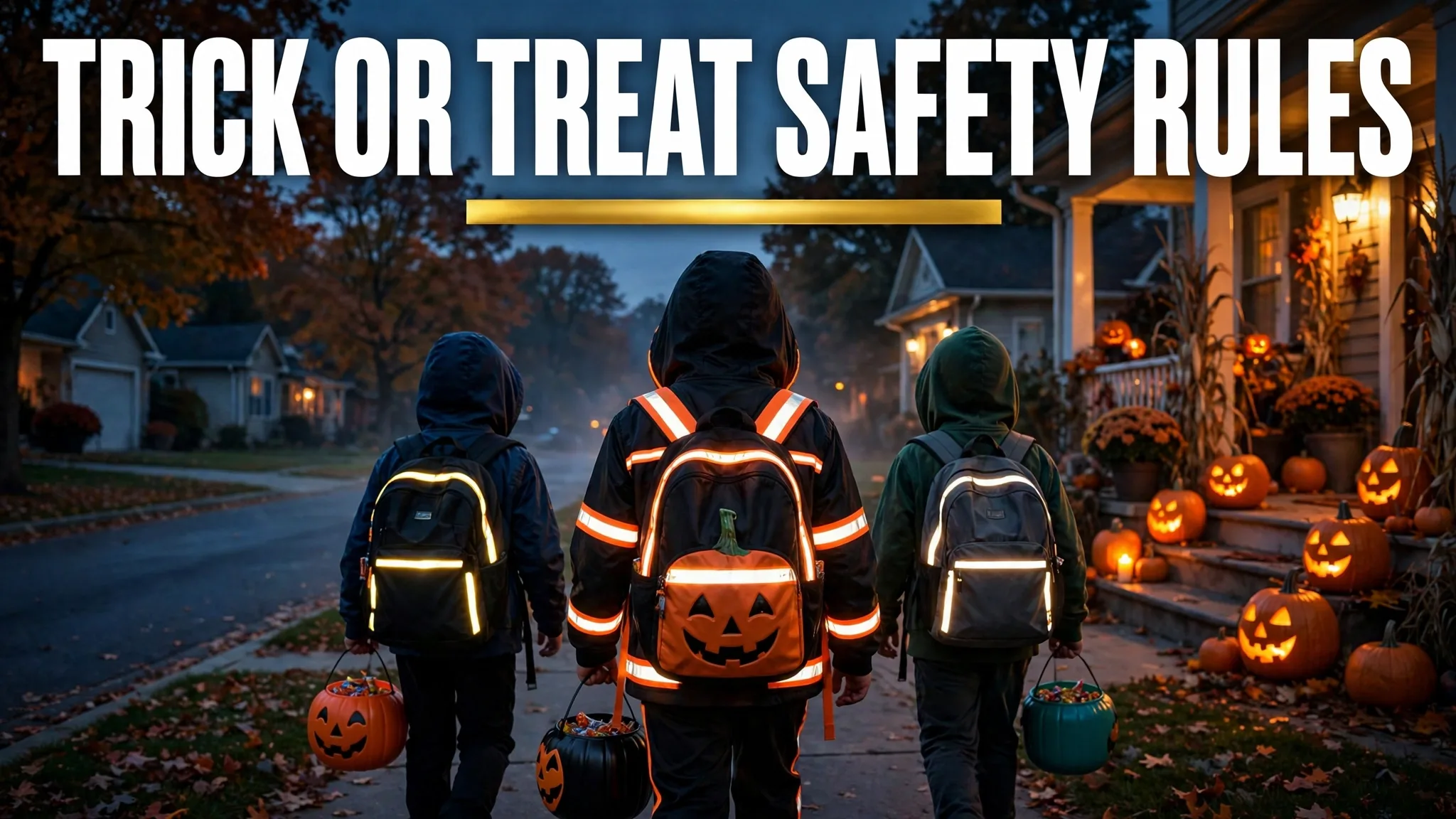
Costumes need a safety check before the door opens. Make sure your child can see clearly through any mask, and that long capes or dresses do not trail on the ground. A small trip on a pavement step can end the night early. Add something bright to every costume: a reflective strip, a glow stick, or a light-coloured bag. Drivers notice bright things first.
Carry a torch, even if the street looks well lit. Gardens and driveways have shadows that street lights never reach.
On The Street
Walk, do not run, between houses. That sounds dull, but running children and parked cars are a bad mix. Stay on pavements, cross roads at corners, and look both ways even on quiet streets. Hold the hand of any child under eight when crossing.
Stay together as a group. If the group splits, the adults should know exactly where each child is. Older children who want to go with friends should have a phone, a meeting point, and a time to be back. No child should walk a route alone in the dark.
Keep the group small enough that one adult can actually watch everyone. Ten excited children and one tired adult is not a plan. It is a hope.
At Every Door
Teach children to wait on the doorstep, not to step inside a stranger’s house, even if invited warmly. A kind host will always understand. Take treats politely, say thank you, and move on. The best nights move at a steady pace, not a race to the most houses.
Never eat treats on the street. Wait until you are home, where an adult can check everything first. Throw away anything unwrapped, damaged, or homemade from a house you do not know. It is a small waste for a big peace of mind.
If Something Goes Wrong
Even careful nights have small surprises. A child may feel scared by a loud decoration, or tired long before the route ends. The answer is simple: stop, sit on a wall for a minute, and let them decide whether to carry on or go home. A night that ends early but happily beats a night pushed too far.
If a child gets separated from the group, they should know to stay where they are and call out, not to wander looking for adults. Agree on this before leaving the house, along with a meeting point like the corner shop or a neighbour’s gate. Phones help, but a spoken plan helps more, because children remember a place better than a number under stress.
Carry a small bag with water, a plaster, and a phone charger. Blisters from new shoes and dry throats from shouting “trick or treat” fifty times are the two most common complaints of the night, and both are fixed in seconds if you planned for them. A couple of safety pins also earn their place in the bag, because a falling cape or a slipping hat is a two-second fix with a pin and a ten-minute sulk without one.
When You Get Home
Empty the buckets onto a table and sort the treats together. This is secretly the best part of the night for many children. Check wrappers, set aside anything doubtful, and let them keep the rest. Wash hands and faces, hang up the costumes, and let them tell the story of the evening while it is still fresh.
In my view, a calm parent makes the whole night calmer for children. When adults walk slowly, laugh a lot, and follow the same rules, children copy them without a lecture.
Halloween is meant to be a little spooky and a lot of fun. A planned route, bright costumes, and a checked bucket keep it exactly that way.