Why We Get Goosebumps Sometimes
In this post
- The Cold Response: Trapping Warmth That Is Not There
- Goosebumps In Everyday Cold
- The Fear Response: Looking Bigger Than You Are
- Goosebumps With No Cold At All
- Frisson: Goosebumps From Music, Awe, And Emotion
- Frisson Is Normal And Harmless
- Goosebumps In Animals: The Original Purpose Made Visible
- When Goosebumps Signal Something Else
- The Balanced Message On Goosebumps
- Living With Goosebumps: Nothing To Fix
- You may also like
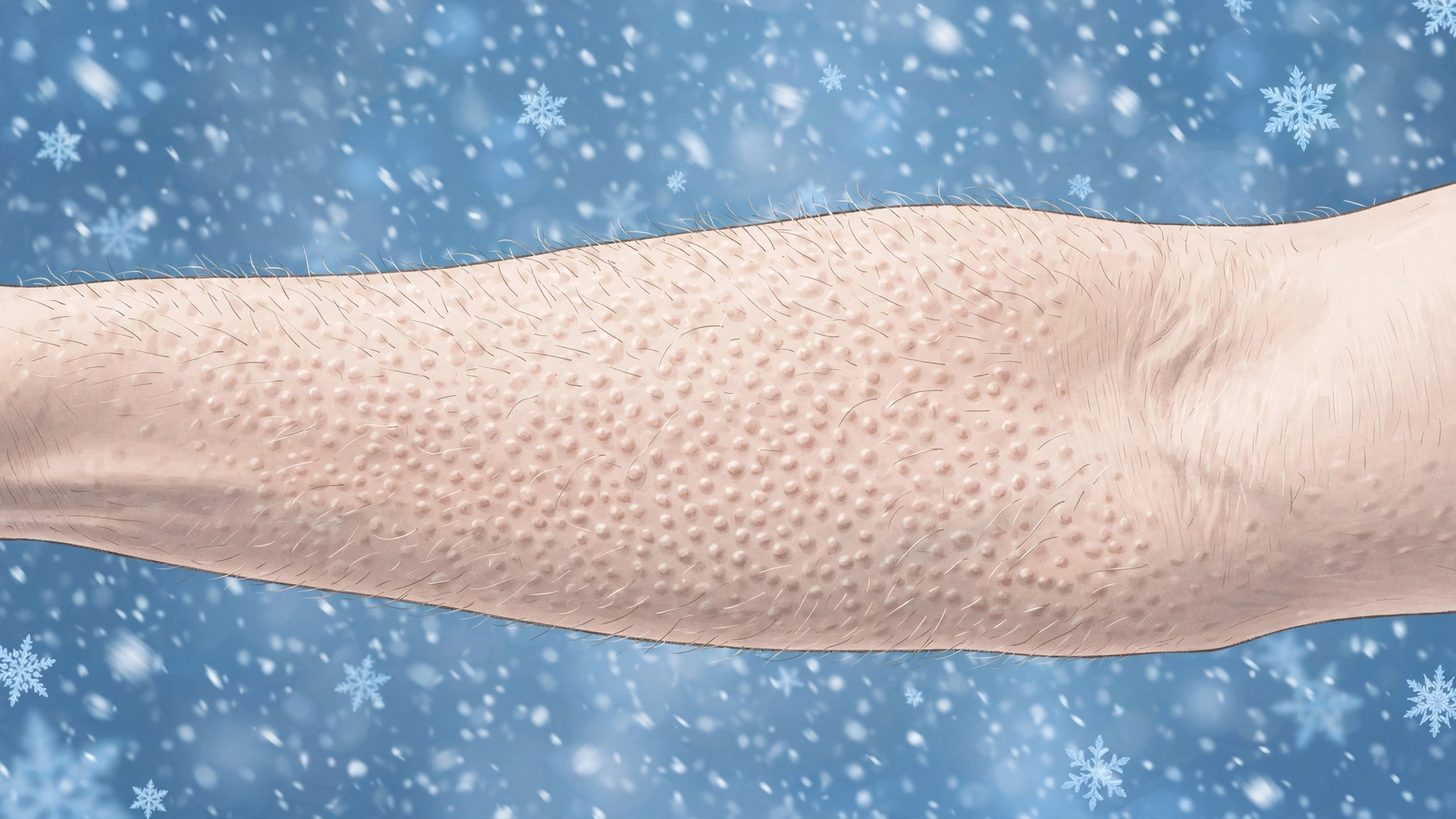
You step out into cold air, and your arms prickle. You watch a frightening scene in a film, and your neck prickles. You hear a piece of music that moves you, and your whole body prickles, in a wave that runs from your scalp to your feet. In each case, the same thing has happened to your skin: tiny bumps have risen around the base of each hair, the hairs themselves have stood upright, and your skin looks, for a moment, like the skin of a plucked goose. That is where the name comes from, and the phenomenon is called piloerection, from the Latin words for hair and erection, or, more familiarly, goosebumps, gooseflesh, or goose pimples. Why do we get goosebumps, and why do cold, fear, and beautiful music all produce the same response? The answer lies in reflexes far older than humans, in muscles too small to see, and in a nervous system that still reacts to the world as our ancestors did.
Goosebumps happen when tiny muscles at the base of each hair, called arrector pili muscles, contract and pull the hair upright. Each hair on your body has its own arrector pili muscle, a smooth muscle attached to the hair follicle, and when it contracts, it pulls the hair shaft into a vertical position and dimples the skin around it, creating the bump. You cannot control these muscles consciously, any more than you can control your heartbeat or your pupils. They are controlled by the sympathetic nervous system, the branch of the nervous system responsible for the fight-or-flight response, which prepares the body for action in response to threat, cold, or strong emotion. Goosebumps are therefore not a decision. They are a reflex, fired by the same system that quickens your pulse and sharpens your senses when you are startled.
The Cold Response: Trapping Warmth That Is Not There
The oldest and clearest purpose of goosebumps is warmth. In furry animals, erect hairs trap a layer of air close to the skin, and still air is an excellent insulator, slowing the loss of body heat to the cold surroundings. A cat in the cold fluffs its fur, a dog’s hackles rise, and a bird fluffs its feathers, all for the same reason: erect hairs and feathers hold warm air, and warm air keeps the animal warm. The arrector pili muscles, contracting in the cold, are part of the body’s heat-conservation system, working alongside shivering, which generates heat by muscle activity, and the narrowing of blood vessels in the skin, which reduces heat loss from the surface.
In humans, the response survives, but its benefit is mostly gone. We have so little body hair, and what we have is so short and sparse, that erect hairs trap almost no air, and goosebumps conserve almost no heat. The reflex fires, the hairs stand up, the skin bumps, and the body is barely warmer for it. We are left with the mechanism but not the fur it was designed to raise, a leftover from ancestors who were far hairier than we are, and who depended on their coats for survival in the cold. Evolution rarely removes a reflex cleanly. It leaves it in place, firing faithfully, even when the fur it was meant to move has mostly vanished.
Goosebumps In Everyday Cold
That is why goosebumps are most familiar in the cold: stepping into cold air, getting out of a warm bath, or feeling a cold draught on damp skin. The body senses cold, the sympathetic nervous system fires, the arrector pili contract, and the skin prickles, in an attempt to conserve heat that, for a nearly hairless human, will mostly be lost anyway. Shivering, which accompanies goosebumps in the cold, does the real work of warming, by generating heat through rapid muscle contractions, while goosebumps are the visible sign of a system trying, in its ancient way, to help.
The Fear Response: Looking Bigger Than You Are
The second purpose of goosebumps is display. In furry animals, erect hairs do not only trap air. They also make the animal look larger, more threatening, and more dangerous to a predator or rival. A cat with its back arched and its fur on end looks twice its size. A dog with raised hackles signals aggression and readiness to fight. A porcupine, whose erect quills are modified hairs, becomes a bristling, unapproachable ball. In all these cases, piloerection is communication: a visible warning, produced by the same sympathetic arousal that prepares the body for fight or flight.
Humans retain this response too, and it fires in fear, anger, and confrontation, even though we have no fur to raise and no predator to impress. The neck prickles in a frightening film, the arms prickle in a tense argument, the skin prickles at a sudden threat, and the body, in its ancient logic, is trying to look bigger, to signal danger, to prepare for a fight that will be fought with hands and words, not with fur. The response is vestigial, a leftover, but it is not meaningless: it is a visible sign of sympathetic arousal, of the body’s alarm system firing, and it tells an observer, and the person feeling it, that the fight-or-flight system is active.
Goosebumps With No Cold At All
This is why goosebumps appear in situations with no cold at all: a frightening story, a sudden noise, a confrontation, a moment of danger, real or imagined. The trigger is not temperature but threat, perceived by the brain and relayed to the sympathetic nervous system, which fires the arrector pili along with every other part of the alarm response: heart rate up, breathing quickened, pupils dilated, digestion paused, muscles tensed. Goosebumps, in fear, are one visible part of a whole-body mobilisation, and they fade as the threat passes and the parasympathetic system, the rest-and-digest branch, restores calm.
Frisson: Goosebumps From Music, Awe, And Emotion
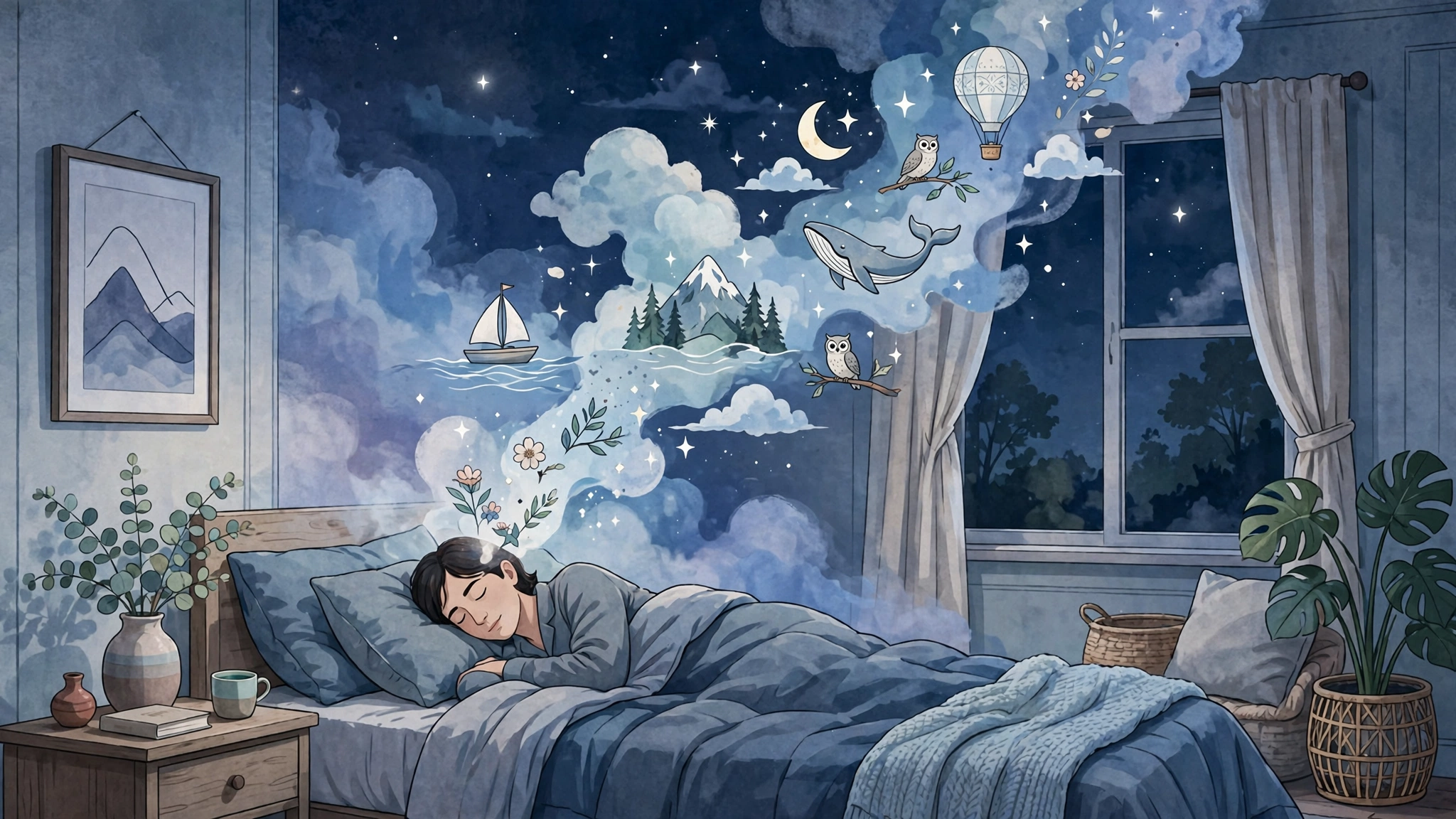
The strangest trigger for goosebumps is neither cold nor fear, but beauty. A piece of music, a powerful film scene, a moving speech, a moment of awe in nature, or a memory that suddenly returns with full force can produce a wave of goosebumps, often accompanied by a shiver, a tingling in the scalp and neck, and a feeling of being moved that is hard to describe. This experience has a name: frisson, from the French word for a shiver, and it is one of the most studied, and most mysterious, forms of goosebumps, because it has no survival purpose that is obvious, and it is triggered by art, not by threat or cold.
Frisson is linked to the brain’s reward system, the networks that respond to pleasure, anticipation, and emotional intensity. Music that builds tension and then releases it, a voice that swells with emotion, a story that reaches a turning point, all produce patterns of anticipation and reward that the brain finds intensely pleasurable, and that pleasure spills over into the sympathetic nervous system, firing the arrector pili along with the emotional response. People differ greatly in how readily they experience frisson: some feel it often, from many kinds of music and art, while others rarely or never feel it, and the difference is thought to reflect differences in the brain’s wiring, in the connections between the emotional and sensory systems, although research is ongoing and the picture is not yet complete.
Frisson Is Normal And Harmless
What is clear is that frisson goosebumps are normal, harmless, and, for those who experience them, one of the most pleasurable sensations the body offers. They are not a sign of illness, and they do not require treatment. They are a sign that the brain’s emotional systems are engaged, that art is doing its work, and that the ancient reflex of piloerection, designed for warmth and display, has been recruited, by evolution and by culture, into the service of feeling. The same muscles that once raised fur now raise hairs at a song, and the body, in its economy, reuses old machinery for new purposes.
Goosebumps In Animals: The Original Purpose Made Visible
To understand human goosebumps, look at animals, where the original purposes are still visible and still effective. A cat, threatened by a dog, arches its back, raises its fur, and doubles its apparent size, in a display that often ends the confrontation without a fight. A dog, meeting a rival, raises its hackles along the neck and back, signalling arousal and readiness, in a language every dog understands. A bird, in cold weather, fluffs its feathers, trapping air and conserving heat, and then shakes them out when the sun warms it. In each case, piloerection works, because the animal has the covering, fur or feathers, that makes it work.
Humans, watching these displays, recognise the pattern, even though our own version is vestigial. We say a frightening story “makes our hair stand on end,” preserving, in language, the animal response we no longer fully possess. We say a person “raised the hairs on the back of my neck,” describing a feeling whose physical basis is the arrector pili contracting at the nape. Language remembers what the body has mostly forgotten: that we were once furry, that our hairs once stood up to useful effect, and that the reflex, though diminished, still fires, faithfully, whenever the sympathetic system calls on it.
The comparison also explains why goosebumps are so widespread across mammals and birds, and why they appear in response to such different triggers. The mechanism is shared, ancient, and conserved by evolution, because it serves two vital functions, warmth and display, in animals that depend on fur and feathers. Humans inherited the mechanism, lost most of the fur, and kept the reflex, which now fires in cold, in fear, and in frisson, a reminder, written on the skin, of an ancestry we share with every mammal that has ever fluffed its coat against the cold or raised its hackles at a threat.
When Goosebumps Signal Something Else
Most goosebumps are normal, brief, and harmless, fading as the cold, fear, or emotion that caused them passes. But goosebumps can also appear as part of other conditions, and persistent, unexplained, or unusual goosebumps deserve attention, not alarm, but assessment. Goosebumps that appear without any trigger, that persist for long periods, that affect only one part of the body, or that are accompanied by other symptoms, should be discussed with a doctor, who can determine whether they are a normal reflex or a sign of something that needs investigation.
Several conditions are associated with goosebumps or with the skin changes that resemble them. Keratosis pilaris, a common, harmless skin condition, produces small, rough bumps around hair follicles, often on the upper arms and thighs, that look like permanent goosebumps, but are in fact plugs of keratin, the protein that makes up hair and skin, blocking the follicles. It is not dangerous, it is often called “chicken skin,” and it is managed with moisturising and gentle skin care, rather than treated as a disease. Anxiety can also produce goosebumps, as part of the sympathetic arousal that accompanies worry and panic, and goosebumps that appear during anxiety are a sign of the alarm system firing, not of a skin problem.
More rarely, goosebumps can accompany withdrawal from certain drugs, as the autonomic nervous system, disrupted by the absence of a substance it has adapted to, fires erratically, producing sweating, shivering, and piloerection among other symptoms. Seizures, particularly a type called temporal lobe seizures, can produce goosebumps as part of their symptoms, sometimes with a rising feeling in the stomach, unusual smells or tastes, or brief confusion. And autonomic dysreflexia, a condition affecting people with spinal cord injuries above a certain level, can produce goosebumps below the level of injury, along with dangerous rises in blood pressure, in response to a stimulus below the injury, such as a full bladder. These associations are uncommon, and goosebumps alone, without other symptoms, rarely indicate any of them, but persistent or unusual goosebumps, especially with other symptoms, should be assessed medically, rather than dismissed.
The Balanced Message On Goosebumps
The message is balanced: goosebumps are, in the overwhelming majority of cases, a normal, healthy reflex, and they should be enjoyed, in music and awe, and accepted, in cold and fear, as part of being human. But a reflex that changes, that persists, that appears without cause, or that comes with other symptoms, is worth mentioning to a doctor, who can distinguish a normal reflex from a sign of something else, and reassure, or investigate, as appropriate.
Living With Goosebumps: Nothing To Fix
For most people, goosebumps need no treatment, no prevention, and no concern. They are a reflex, like shivering, blushing, or the quickening of the pulse, and they come and go with the conditions that cause them. Dressing warmly reduces cold-induced goosebumps, by reducing the cold signal that fires them, and avoiding known emotional triggers reduces frisson goosebumps, although most people who experience frisson would not want to avoid it, since it is pleasurable. Beyond that, there is nothing to do, and nothing that needs doing: the reflex is working as designed, in a body that has kept an ancient mechanism for modern purposes.
It is worth appreciating goosebumps, rather than merely enduring them. They are a direct, visible link to our evolutionary past, a reflex shared with cats, dogs, birds, and every furry ancestor, firing on our nearly hairless skin, in response to cold, fear, and beauty. They remind us that the body is not a machine designed from scratch, but a palimpsest, written over by evolution, with old systems repurposed for new uses, and old reflexes firing in new contexts. The next time your arms prickle at a song, or your neck prickles at a story, notice it, and recognise it for what it is: tiny muscles, pulling tiny hairs upright, in a response older than humanity, still working, still faithful, still telling the body’s ancient story, on the surface of the skin.
You may also like
Frequently Asked Questions
Why do we get goosebumps when we are cold? Because tiny muscles at the base of each hair, called arrector pili muscles, contract and pull the hair upright, in an attempt to trap a layer of air close to the skin and conserve heat. In furry animals this works well, since erect fur holds warm insulating air, but humans have so little body hair that goosebumps conserve almost no heat, and shivering does the real work of warming. The reflex survives from hairier ancestors, controlled by the sympathetic nervous system, and it fires faithfully in the cold even though its benefit for us is mostly gone.
Why do we get goosebumps when we are scared? Because the same sympathetic nervous system that prepares the body for fight or flight also fires the arrector pili muscles, as part of the alarm response. In furry animals, erect hairs make the animal look larger and more threatening to a predator or rival, so piloerection is a display as well as a warming mechanism. Humans retain the response in fear, anger, and confrontation, even though we have no fur to raise, and goosebumps in fear are one visible part of a whole-body mobilisation that includes a quicker pulse, faster breathing, and tensed muscles.
What is frisson and why does music give me goosebumps? Frisson, from the French word for a shiver, is the wave of goosebumps, tingling, and shivering produced by music, art, awe, or powerful emotion, with no cold or threat involved. It is linked to the brain’s reward system, which responds to pleasure, anticipation, and emotional intensity, as when music builds tension and then releases it, and that pleasure spills over into the sympathetic nervous system, firing the arrector pili. People differ greatly in how readily they experience frisson, and it is normal, harmless, and, for those who feel it, one of the body’s most pleasurable sensations.
Are goosebumps a sign of illness? Usually not: most goosebumps are a normal, brief, harmless reflex that fades as the cold, fear, or emotion that caused them passes. Persistent, unexplained goosebumps, goosebumps affecting only one part of the body, or goosebumps accompanied by other symptoms should be discussed with a doctor, because they can rarely be associated with conditions such as keratosis pilaris, anxiety, drug withdrawal, seizures, or autonomic dysreflexia in people with spinal cord injuries. Goosebumps alone, without other symptoms, rarely indicate any of these, but a reflex that changes or persists is worth assessing medically.
Can I stop getting goosebumps? There is no need to stop them, and no treatment is needed for normal goosebumps, since they are a healthy reflex that comes and goes with its triggers. Dressing warmly reduces cold-induced goosebumps by reducing the cold signal, and avoiding emotional triggers reduces frisson goosebumps, although most people who experience frisson find it pleasurable and would not want to avoid it. If goosebumps are persistent, unexplained, or accompanied by other symptoms, see a doctor, who can distinguish a normal reflex from a sign of something that needs investigation.
Sources
- Cleveland Clinic, Health Essentials, “Why do you get goosebumps?”: http://health.clevelandclinic.org/why-do-you-get-goosebumps