Why Yawning Spreads So Fast

In this post
- What Actually Happens When You Yawn
- The Old Oxygen Idea That Failed Its Tests
- The Leading Idea: A Yawn Cools The Brain
- The Nottingham Experiment: Trying Not To Yawn Makes It Worse
- The Closer The Person, The Stronger The Yawn
- Why Little Children Rarely Catch A Yawn
- Animals Catch Yawns Too — Even From Us
- When Yawning Is Worth Mentioning To A Doctor
- Sources
Before you read any further, a fair warning: there is a good chance this page will make you yawn. Not because it is boring — because yawning is catching, and even reading about yawns, or merely thinking about them, is enough to set many people off. If it happens to you in the next few minutes, do not feel bad. It will put you inside the very mystery scientists are still trying to solve.
Because here is the honest truth: yawning looks simple, and everybody does it, yet science has not fully settled why we yawn or why yawns jump from person to person like a spark along a wire. What researchers do have are some strong clues, some fascinating experiments, and a few surprises — including the fact that your dog may be catching your yawns too.
What Actually Happens When You Yawn
A yawn is a deep, slow breath you do not fully control. Your mouth opens wide, your jaw stretches, air flows deep into your lungs, and then you breathe out again. The whole performance in a human lasts roughly six seconds — and in one study that timed yawns across the animal world, our yawns turned out to be the longest of all, longer even than those of elephants and walruses.
Yawning begins before life does: babies yawn while still in the womb. We yawn when we are sleepy, when we wake up, when we are bored in a long meeting, and sometimes for no clear reason at all. Almost every creature with a backbone yawns. So a yawn is clearly doing something useful — the argument is only about what.
The Old Oxygen Idea That Failed Its Tests
For many years, the popular explanation sounded perfectly sensible: we yawn to pull in extra oxygen and push out extra carbon dioxide. A big breath for a tired brain — neat, tidy, and, as it turned out, probably wrong.
Psychologist Andrew Gallup and his father, Gordon Gallup, tested the idea directly. When they raised or lowered the oxygen and carbon dioxide in the air people breathed, the amount of yawning did not change. If yawning were simply about gas levels in the blood, those experiments should have switched it on and off. They did not. So the researchers began looking at a completely different suspect: heat.
The Leading Idea: A Yawn Cools The Brain
Your brain is an expensive organ. It burns up to about a third of all the calories you eat, and like any hard-working engine, it produces heat as it runs. The Gallups proposed, in 2007, what is now called the thermoregulatory — or brain-cooling — theory of yawning.
The idea works like opening a window in a warm room. When you yawn, you drag in a deep draught of air, which is almost always cooler than your body. At the same time, the powerful stretch of your jaw pushes blood flowing around the head, helping warmer blood move away and cooler blood arrive. Put together, a yawn may act as a small radiator for the brain — and a cool brain, like a cool computer, simply works better.
Two simple experiments gave the theory real support. Students who breathed through their noses — a way of cooling the blood heading to the brain — watched videos of people yawning and did not catch a single yawn. Students holding cold packs against their foreheads also resisted, while those holding warm or room-temperature packs yawned away as usual. Cool the brain by another route, and the yawn seems unnecessary.
A later study added an elegant twist. Gallup’s team timed yawns from 19 species, from mice at under a second to humans at about six and a half seconds, and found that the bigger and more complex an animal’s brain, the longer its yawn. A bigger engine, it seems, needs a longer cooling cycle.
Honesty matters here, though: this theory is the leading explanation, not a closed case. Some scientists argue that one breath cannot cool the brain by very much, and the debate continues in the journals. What almost everyone agrees on is that yawning is tied to the brain’s temperature and alertness — and that it is not a sign of rudeness or simple boredom.
The Nottingham Experiment: Trying Not To Yawn Makes It Worse
Why, though, does a yawn spread? In 2017, a team at the University of Nottingham, led by Professor Stephen Jackson, published a study in the journal Current Biology that got closer to the machinery than ever before.
They sat 36 adults in front of video clips of people yawning. Half the time, the volunteers were told to let themselves yawn freely. The other half, they were ordered to resist. The result will sound familiar to anyone who has ever sat in a quiet classroom trying to be good: the instruction to resist made the urge to yawn stronger, not weaker. People who fought it simply produced more half-swallowed, stifled yawns. Trying not to yawn changed how the yawn came out — it did not switch off the desire.
Using a technique that measures how excitable the brain’s movement-control area — the primary motor cortex — is in each person, the team found that this wiring predicted who would catch yawns and who would not, accounting for about half of the difference between people. In plain words: catching a yawn is largely an automatic reflex, and how strongly it fires is built into each individual’s brain. You cannot defeat it by willpower, because willpower was never the part in charge.
Scientists call this kind of automatic copying an echophenomenon — the same family of reflexes that makes us flinch, mimic an accent, or feel an itch when someone else scratches.
The Closer The Person, The Stronger The Yawn
If yawning were only a reflex, any yawn would do. But a careful study from the University of Pisa found something warmer hiding inside it. The researchers spent a year quietly observing 109 adults in everyday life — at work, at dinner tables, on trains — and recorded over 1,300 yawns, noting who caught whose.
Only one thing predicted whether a yawn would spread: how close the two people were. Family members caught each other’s yawns most of all. Friends came next. Then acquaintances. Strangers came last — and even when strangers did respond, they were slower about it, while loved ones answered a yawn fastest of all. How a person felt about the yawner, not their age, sex or nationality, decided the strength of the echo.
This is why the Pisa team, and many others, connect contagious yawning with empathy — our built-in ability to feel a shadow of what another person is feeling. The yawn behaves like a tiny act of emotional copying: the deeper the bond, the deeper the copy. Researchers are careful to say the empathy link is still being argued over, and a yawn is certainly not a love test. But the pattern — family first, strangers last — has been found again and again.
Why Little Children Rarely Catch A Yawn
Here is a simple home experiment hidden inside the science: yawn in front of a baby, and almost certainly, nothing happens. Not because babies cannot yawn — they yawn beautifully, and often — but because the catching kind of yawning has to grow.
In a University of Connecticut study, a researcher read stories to 120 children aged from one to six, pausing to yawn as she read. None of the twenty one-year-olds yawned back. Only one of the two-year-olds did. Then, at around the age of four, the numbers jumped sharply, close to adult levels. About half of adults, by comparison, will catch a yawn from someone near them.
The timing is telling. Around four is also when children get much better at understanding that other people have feelings and thoughts of their own. The copying seems to arrive together with the social mind — one more reason scientists suspect that a caught yawn is really the brain practising being someone else, just for a second.
Animals Catch Yawns Too — Even From Us
Humans are not the only yawners who catch the habit. Chimpanzees do it among themselves, as do baboons and bonobos — and, remarkably, the habit can cross the border between species.
In a study at the University of Tokyo, 25 pet dogs watched their owner, or a stranger, either yawn for real or merely open and close their mouth in a fake yawn. The dogs yawned far more at genuine yawns than at the fakes — and far more at their own owner’s yawns than at a stranger’s. Their heart rates stayed calm throughout, which suggests the yawns were not stress. They looked, as much as anything in science can look, like sympathy.
So the wave that passes through a family in the evening may not stop with the humans. Yawn on the sofa, and there is a fair chance the dog will answer — especially the dog who loves you most.
When Yawning Is Worth Mentioning To A Doctor
Normal yawning — when you are tired, bored, waking up, or surrounded by yawning people — is a healthy, ordinary part of being human, and nothing in this article is medical advice. But because yawning is wired into the brain’s temperature and alertness systems, yawning that is constant, excessive, or arrives together with other unexplained symptoms is worth mentioning to a doctor, simply so a professional can take a proper look. Trust the pattern, not the single yawn.
Frequently Asked Questions
Is yawning a sign that my brain needs more oxygen? That was the old belief, but experiments that raised or lowered the oxygen and carbon dioxide people breathed did not change how much they yawned. The leading explanation today is different: a yawn may help cool the brain and sharpen alertness.
Why do I yawn when I am not tired at all? Because tiredness is only one trigger. Yawns also appear when the brain needs to switch into a more alert state — during boredom, after waking, or when watching someone else. And if you have read this far without yawning at least once, you are in the resistant minority.
Why can I not stop a yawn when I try? The University of Nottingham study found that resisting actually increases the urge. Catching a yawn is driven by automatic reflexes in the brain’s movement area, and how strong that reflex is differs from person to person. Willpower can squash the yawn into a smaller, stifled version — it rarely deletes it.
Why does my little child not yawn back at me? Contagious yawning develops with age. In studies, almost no children under four caught yawns, and the ability rose sharply around the fourth birthday — the same age when children become much better at understanding other people’s feelings.
Is it true that people who love me yawn back faster? Research from the University of Pisa found exactly that pattern: family and close friends catch yawns most often and most quickly, then acquaintances, then strangers. Scientists link it to emotional closeness and empathy — though it is a tendency, not a test to grade your relationships by.
Should I worry if I yawn a lot? Occasional yawning is completely normal. If you find yourself yawning constantly, or heavy yawning comes with other symptoms you cannot explain, mention it to a doctor. This article is general information only, not medical advice.
Sources
- University of Nottingham research, reported by Neuroscience News, “Why is Yawning So Contagious and Why Should it Matter”: https://neurosciencenews.com/yawning-contagious-7389/
- Scientific American, “The Bigger Your Brain, the Longer Your Yawn”: https://www.scientificamerican.com/article/the-bigger-your-brain-the-longer-your-yawn/
- ScienceDaily, “Psychologists Attribute Yawning To The Need To Cool The Brain And Pay Attention”: https://www.sciencedaily.com/releases/2007/06/070621161826.htm
- Norscia and Palagi (University of Pisa), “Yawn Contagion and Empathy in Homo sapiens”, PLOS ONE: https://journals.plos.org/plosone/article?id=10.1371/journal.pone.0028472
- UConn Today, “When Yawning Isn’t Contagious”: https://today.uconn.edu/2010/09/when-yawning-isnt-contagious/
- ScienceDaily, “Dogs yawn more often in response to owners’ yawns than strangers”: https://www.sciencedaily.com/releases/2013/08/130807204847.htm
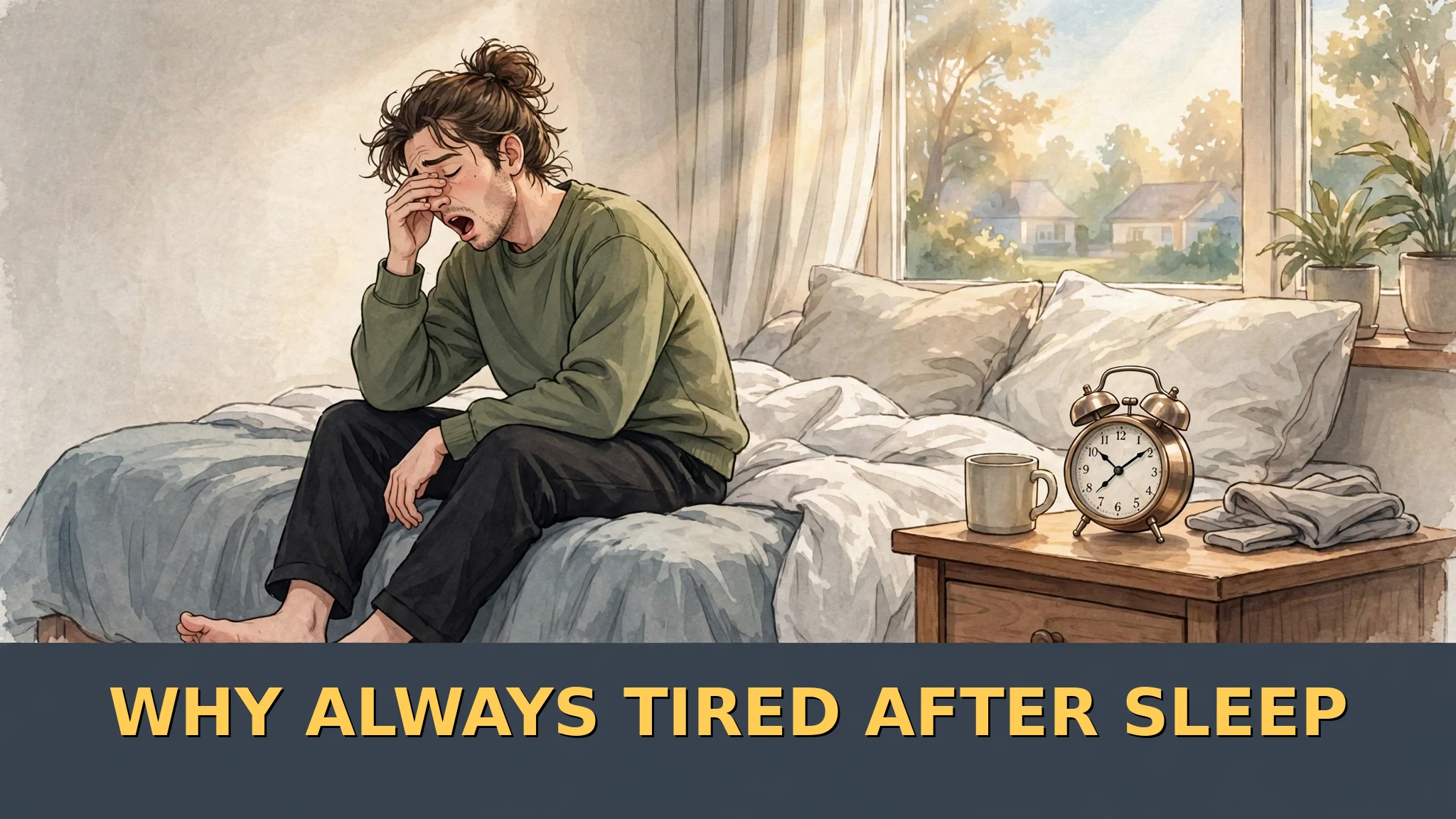
- The picture on this page is an original illustration made for Talha M Blog.