Vatican Confirms Pope Leo Has Lung Cancer: Part of His Right Lung Removed — and the One Detail Giving Doctors Hope
Pope Leo XIV, 71, had part of his right lung removed at Rome's Gemelli Hospital after tests confirmed lung cancer. The surgery, what adenocarcinoma means, and why doctors say there is real reason for hope.
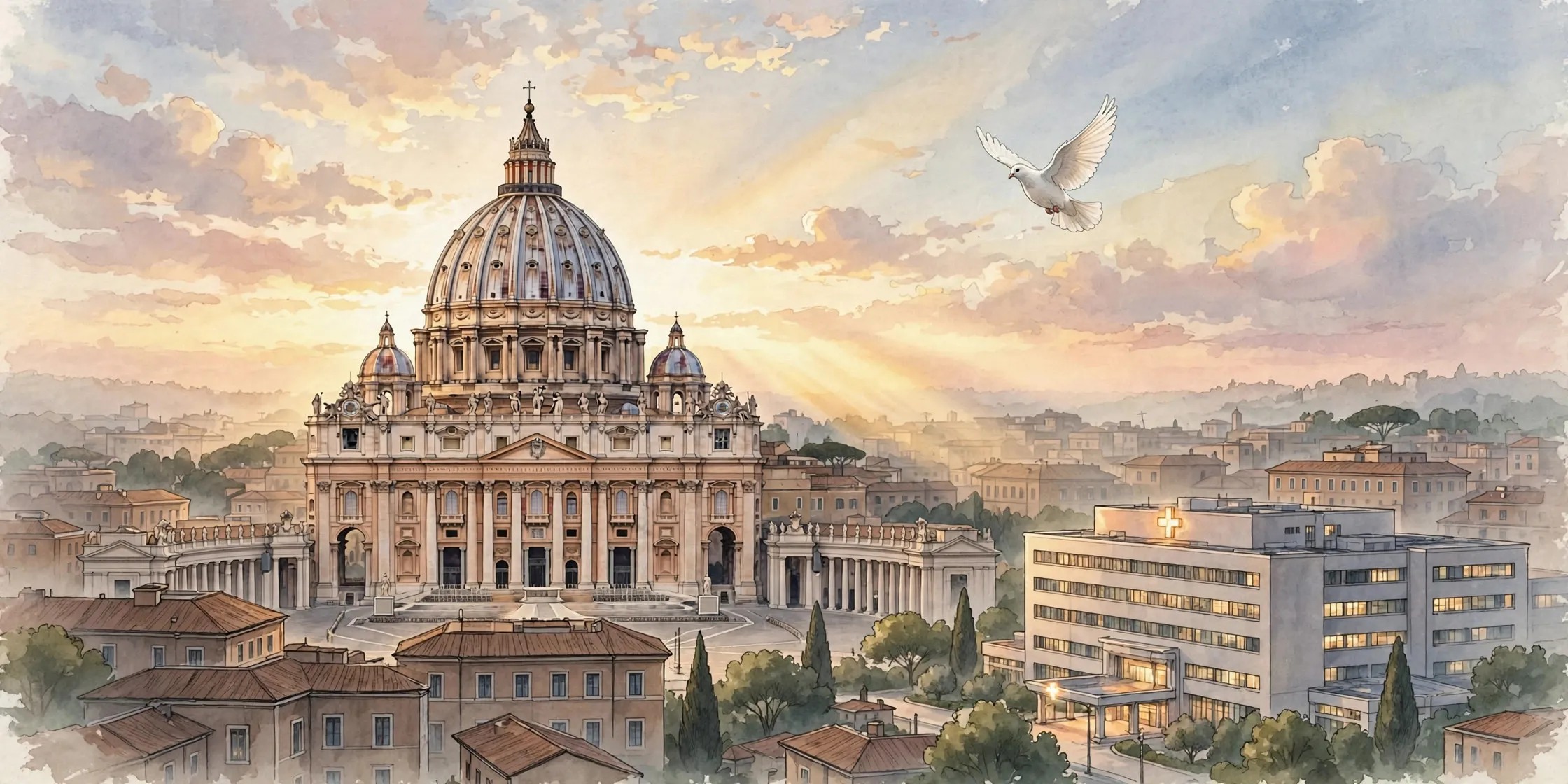
He walked into the hospital on his own feet, waving and smiling at the people who had gathered to wish him well. A few hours later, Pope Leo XIV was waking up from surgery — and asking for some dinner.
It is a small detail, but it says a lot. On Tuesday, October 13, 2026, the 71-year-old Pope had a serious operation at Rome’s Gemelli Hospital. Doctors removed the lower lobe of his right lung. Afterwards, the Vatican confirmed the news that millions of Catholics around the world had been quietly fearing: the Pope has lung cancer.
And yet, in the middle of the worry, there is one detail in the doctors’ words that carries real hope. The cancer, they say, was found early, small and in one place — and it has been completely removed.
How the News Slowly Came Out
This story did not begin with a sudden emergency. It began, unusually, with the Pope himself.
At his Sunday noon prayer, just days before the operation, Pope Leo personally told the crowd that doctors had found a small growth — a nodule — in his lung during a recent check-up. For a pope to speak so openly about his own health is rare. Papal health has almost always been wrapped in silence and official statements. This time, the man at the centre of it chose to tell people himself, calmly and honestly.
His words had an effect. Around the world, people had time to understand what was happening, to pray, and to prepare for the surgery day. When Tuesday came, there was no panic in St. Peter’s Square — just concern, and a great deal of affection.
On Tuesday morning, the Pope arrived at Gemelli Hospital, the large Rome hospital where popes have been treated for decades. Witnesses described him walking in steadily, waving at well-wishers and smiling, as if to say: I am all right, and I am in good hands.
Ninety Minutes in the Operating Room
The operation was led by Dr Stefano Margaritora, the hospital’s chief thoracic surgeon — a specialist in operating on the chest and lungs.
The surgery itself lasted about 90 minutes, although the Pope was in the operating room for around three hours in total, counting the preparation and the careful waking-up process afterwards.
During the operation, the surgeons removed the lower lobe of the Pope’s right lung. To understand what that means, it helps to picture the lungs like two soft balloons divided into sections called lobes. The right lung has three lobes. The doctors took out one of them — the lower one — where the growth was found.
After the surgery, the Vatican gave the clearest statement of the whole week. It said the operation “confirmed the diagnosis of a pulmonary adenocarcinoma, as suspected from the pre-operative tests.” In simple words: the growth was indeed lung cancer, of the type doctors call adenocarcinoma, just as the tests before surgery had suggested.
The Vatican also said the operation was successful, there were no complications, and the cancerous tissue was completely removed.
Then came that human detail. Matteo Bruni, the director of the Vatican press office, told journalists that the Pope woke up normally — and even asked for some dinner. Anyone who has waited outside an operating room for a loved one knows how much a sentence like that is worth.
The One Detail Giving Doctors Hope
A cancer headline is frightening. But doctors who specialise in this disease say the most important word in the Vatican’s announcement is not “cancer”. It is “localised”.
Here is why. When the Pope spoke on Sunday, he described the growth as small and localised — meaning it was sitting in one place, and it had been caught during a check-up, not after years of symptoms. That is exactly the situation doctors hope for.
Dr Juanita Mora of the American Lung Association explained that adenocarcinoma is the most common type of lung cancer, and that it is more common in non-smokers than other types. She added that when this cancer is caught early and is localised, the five-year survival rate after surgical removal is “80 to 98 percent” — a strikingly hopeful figure for such a feared disease.
Dr Stephen Liu, a cancer specialist at Georgetown, struck a similar note. He described adenocarcinoma as the type of lung cancer with the most favourable prognosis — the best outlook — among lung cancers. At the same time, he was honest about the open question: the stage of the cancer is the key thing now. In other words, what matters most is whether the cancer stayed in that one place, or whether it had quietly travelled anywhere else.
That question will be answered by more tests. Doctors will examine the tissue that was removed, including the lymph nodes — small glands that are usually the first place a cancer spreads to, if it spreads at all. Only when those results come back will the medical team know the full picture. So far, doctors have not discussed chemotherapy, and no decision of that kind has been announced.
For now, the confirmed facts are these: the growth was small, it was caught early, and the surgeons say they removed all of it.
A Week in Hospital, and an Empty Chair Until October 20
The Pope is expected to spend about a week in hospital recovering. Breathing takes time to adjust when part of a lung is gone, and at 71, the body deserves patience. The good news is that people live full, active lives with part of a lung removed — the remaining lung slowly stretches and does more of the work.
While he recovers, the Vatican has cleared his schedule. His audiences are cancelled until October 20. The weekly rhythm of the papacy — the meetings, the blessings, the crowds — will pause for a few days while its leader rests in a hospital room overlooking Rome.
This is the first publicly disclosed major health problem of Pope Leo’s papacy, which began 17 months ago. In that time, he has built a reputation as a calm, warm and quietly reforming figure. The openness of this week — announcing his own diagnosis himself, walking in smiling, and the Vatican sharing real details afterwards — has only deepened the respect many people feel for him, including far beyond the Catholic Church.
Prayers From Around the World
Messages of support arrived quickly from across the globe.
In the United States, Secretary of State Marco Rubio, who is himself a practising Catholic, said that he and his wife were united in prayer for the Pope’s health.
In Australia, Prime Minister Anthony Albanese sent his thoughts and prayers as well, describing Leo as “a voice for peace, humanity and reason” — words that seemed to sum up how many leaders, of many faiths and none, see this Pope.
From ordinary parish churches to heads of government, the message of the week has been the same: get well soon.
Frequently Asked Questions
What kind of cancer does Pope Leo have?
The Vatican has confirmed a pulmonary adenocarcinoma — a type of lung cancer. Experts say it is the most common type of lung cancer, and it is more often found in non-smokers than other lung cancer types.
What exactly did the surgeons remove?
They removed the lower lobe of his right lung. The right lung has three lobes, and the growth was in the lower one. The Vatican said the cancerous tissue was completely removed and the surgery had no complications.
Did the cancer spread to other parts of his body?
That is not known yet. Further tests, including tests on the lymph nodes removed during surgery, will show whether the cancer had spread. The Vatican has described the growth as small and localised, and doctors have not yet discussed chemotherapy.
How long will Pope Leo stay in hospital?
He is expected to stay for about a week. His audiences are cancelled until October 20 while he recovers.
Why are doctors hopeful?
Because the cancer was caught early, while it was still small and in one place, and because it was fully removed. Dr Juanita Mora of the American Lung Association said that when this type of cancer is caught early and localised, the five-year survival rate after surgery is 80 to 98 percent.
A Quiet Room in Rome
Tonight, in a quiet room at Gemelli Hospital, a 71-year-old man is resting after the hardest week of his papacy — a man who told the world his own diagnosis, walked into hospital with a smile, and woke up from surgery asking for dinner. The tests ahead will tell their part of the story. But the part already written — of honesty, calm and a small growth caught just in time — has given millions of people something they did not expect from a cancer headline: a reason to hope.