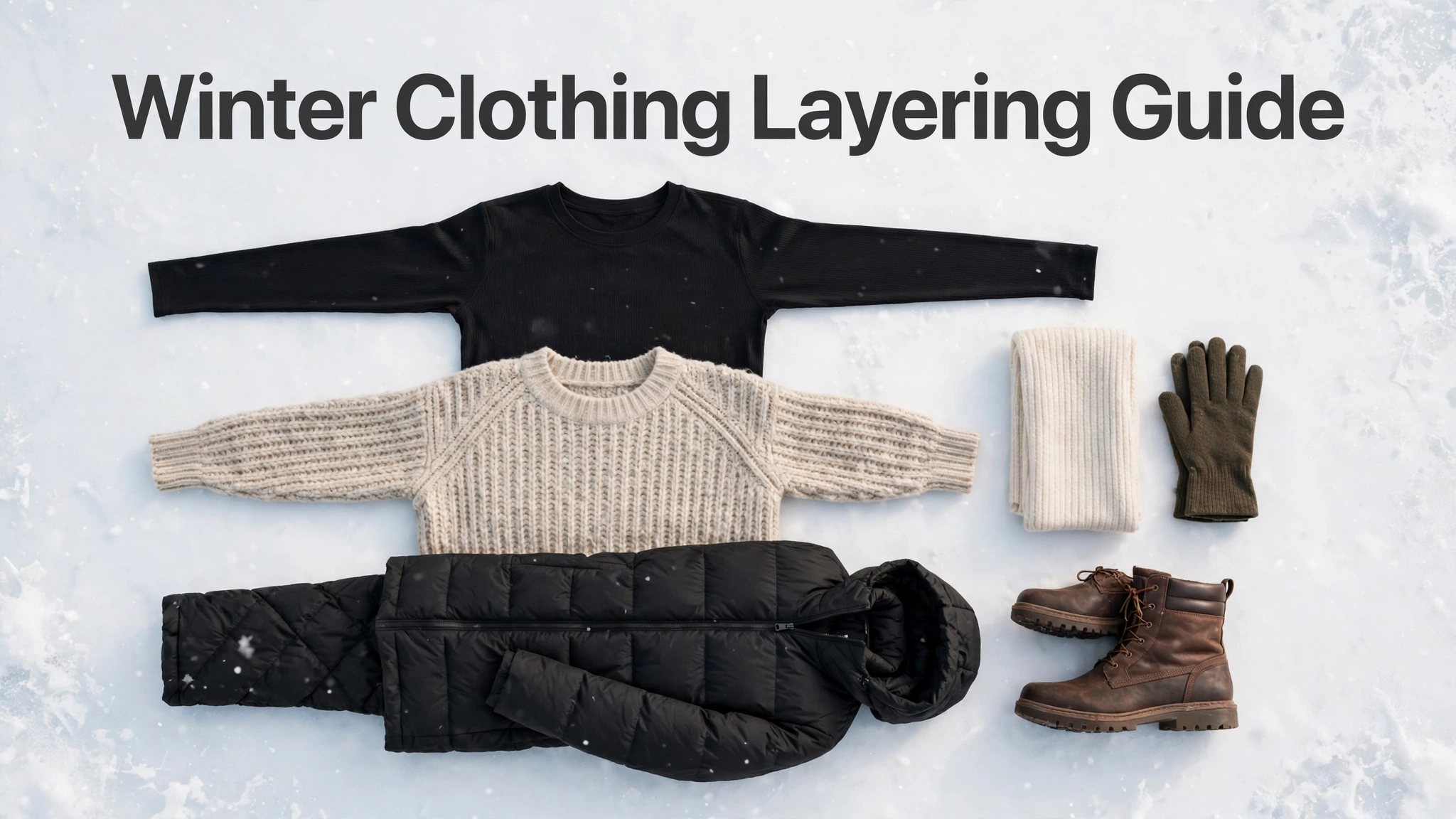
Winter Clothing Layering Guide 2026
In this post
- Layer One: The Base Layer Against Your Skin
- Layer Two: The Middle Layer That Traps Warmth
- Layer Three: The Outer Layer Against Wind and Rain
- Fabrics That Work and Fabrics to Avoid in Winter
- Hands, Feet, Head and Neck: The Details That Decide Warmth
- Adapting Layers for Walking, Commuting, Sport and Children
- Caring for Winter Layers and Building a System on a Budget
- My Take:
Staying warm in winter is less about owning one very thick coat and more about wearing the right layers in the right order. A single heavy coat can leave you sweating indoors, freezing outdoors, and unable to adjust when the weather changes during the day. Layers, by contrast, let you add or remove warmth as conditions change, trap warm air between fabrics, and keep sweat away from your skin. This guide explains the classic three-layer system, the fabrics that work best in each layer, and how to adapt layering for walking, commuting, working outdoors, and winter sports. It offers general information only, not medical advice, and anyone with a health condition affected by cold should seek professional advice about their own needs.
The principle behind layering is simple physics. Warmth comes less from the fabric itself than from the air trapped within and between fabrics. Still air is a good insulator, which is why fluffy, lofty materials feel warm and why several thin layers often outperform one thick one. Layers also manage moisture. When you walk, climb stairs, or work, your body produces sweat, and if that sweat stays against your skin, it cools you rapidly when you stop moving. A good layering system therefore does two jobs at once: it keeps warm air in, and it moves moisture out. Understanding those two jobs makes every clothing choice easier, because you can ask of each garment: does it trap air, does it handle sweat, and does it block wind or rain?
A common mistake is to wear too many layers of the wrong kind. Four cotton sweatshirts, for example, may feel warm indoors but become heavy, damp and cold outdoors, because cotton holds moisture and loses insulation when wet. Another mistake is to wear a waterproof outer layer that does not breathe, trapping sweat inside until you feel clammy and cold. The goal is not maximum bulk. It is a balanced system in which each layer has a job, fits comfortably over the layer beneath it, and can be adjusted without a complete change of clothes. With that system, winter weather becomes manageable rather than miserable.
Layer One: The Base Layer Against Your Skin
The base layer is the layer you wear next to your skin, and its main job is moisture management, not warmth alone. It should fit snugly without being tight, wick sweat away from the skin, and dry quickly. The best fabrics for base layers are merino wool and synthetic blends designed for sport. Merino wool is naturally warm, breathable, and resistant to odour, which makes it excellent for multi-day trips, although it is more expensive and needs gentler washing. Synthetic base layers, usually made from polyester blends, are cheaper, dry very fast, and are widely available, although they can develop odour more quickly than wool. Both are far better than cotton for active winter use, because cotton absorbs sweat, stays wet, and draws heat away from the body.
Fit matters as much as fabric. A base layer that is too loose will not wick sweat effectively, because it does not stay in contact with the skin. A base layer that is too tight will restrict movement and feel uncomfortable under other layers. Look for flat seams, which reduce chafing, and a length that stays tucked in when you bend or reach. Long-sleeved tops and full-length leggings are the standard for cold weather, although in milder cold, a short-sleeved base layer under a warm middle layer may be enough. For very cold conditions, some people wear two thin base layers, but a single good base layer plus a proper middle layer usually works better than doubling up on the same thin fabric.
Base layers also include socks, and socks deserve more attention than they usually get. Cold feet often result from damp socks, tight boots that restrict circulation, or cotton socks that stay wet. Wool or synthetic hiking socks, worn in a thickness suited to your boots, keep feet warmer and drier. Avoid wearing two thick pairs of socks in boots that fit only one pair, because compression reduces insulation and can make feet colder. As with tops, the rule is: moisture-wicking fabric, correct fit, and no cotton for active use. Warm feet start with dry feet, and dry feet start with the right socks.
Layer Two: The Middle Layer That Traps Warmth
The middle layer is the insulation layer, and its job is to trap warm air. This is where fleece, wool sweaters, down jackets and synthetic insulated jackets belong. Fleece is light, breathable, quick-drying and affordable, which makes it an excellent everyday middle layer for walking, commuting and working. Wool sweaters, especially chunky knits, are warm and stylish, and they continue to insulate reasonably well even when slightly damp, although they are heavier and slower to dry than fleece. Down jackets offer the highest warmth for their weight, packing small and feeling wonderfully light, but they lose insulation when wet unless treated, and they are more expensive. Synthetic insulated jackets mimic down with man-made fibres, performing better in damp conditions and costing less, although they are usually bulkier for the same warmth.
Choosing a middle layer depends on activity and weather. For active use, such as brisk walking or cycling, a breathable fleece or light insulated jacket works well, because it releases excess heat and prevents overheating. For standing still outdoors, such as watching a match or waiting for transport, a warmer, loftier jacket is better, because your body is not generating much heat. Many people benefit from owning two middle layers: a light fleece for mild cold and active days, and a warmer insulated jacket for deep cold and still days. Wearing both together, with the fleece under the insulated jacket, is a practical way to handle very cold weather without buying a specialised expedition coat.
Thickness should be matched to the outer layer. A middle layer that is too bulky to fit under your coat will compress, losing the trapped air that provides insulation, and will restrict movement. When trying on a winter system, wear the base and middle layers together and then try the outer coat over them, checking that you can raise your arms, bend, and zip up without strain. A system that fits well feels comfortable and allows movement. A system that is too tight feels restrictive and, paradoxically, colder, because compressed insulation cannot trap air and tight clothing can reduce circulation to hands and feet.
Layer Three: The Outer Layer Against Wind and Rain
The outer layer, often called the shell, protects you from wind, rain and snow. Its job is not primarily insulation, although many winter coats combine a shell with insulation. Its job is to keep the weather out while letting sweat vapour escape from inside. The best outer layers are windproof and water-resistant or waterproof, with a breathable membrane or coating. A hood is extremely valuable in winter, because a large amount of heat can be lost from an uncovered head in wind, and a hood that fits over a hat and adjusts around the face makes a noticeable difference in storms.
There are two main approaches to outer layers. The first is a single winter coat that combines insulation and weather protection, such as a parka with a waterproof outer fabric and warm lining. This is simple, convenient, and ideal for everyday commuting and city life. The second is a separate shell jacket worn over an insulated middle layer, which is more flexible for outdoor sports and variable conditions, because you can change the insulation without changing the shell. Both approaches work. The choice depends on whether you value simplicity or flexibility more, and on how variable your winter activities are. For most everyday users, a good parka is simpler and therefore more likely to be worn consistently.
Fit and features matter in an outer layer. Look for a length that covers your hips or thighs in very cold weather, cuffs that close snugly to keep wind out, and pockets that are accessible while wearing gloves. Zips should be sturdy and easy to operate with cold hands, and the hood should not block your vision when raised. Waterproofing should be maintained over time: dirt and washing with ordinary detergent can reduce water repellency, so follow the manufacturer’s care instructions and re-proof the fabric when water stops beading on its surface. A well-maintained outer layer can last many winters, while a neglected one may look fine but fail in rain.
Fabrics That Work and Fabrics to Avoid in Winter
Fabric choice is where many winter wardrobes succeed or fail. Wool, especially merino, is excellent for base and middle layers because it insulates, breathes, and manages odour, although it requires care in washing and can be expensive. Fleece, made from synthetic fibres, is light, warm, and easy to wash, making it ideal for everyday middle layers and for children, who need durable, washable clothing. Down is unmatched for warmth-to-weight ratio in dry cold, but it needs protection from wet weather. Synthetic insulation offers a practical compromise, performing well when damp and costing less than down. Modern softshell fabrics, which combine wind resistance with stretch and breathability, are useful for active use in dry cold, although they are not fully waterproof.
Cotton deserves a clear warning in winter layering. Cotton is comfortable indoors and in mild weather, but it absorbs moisture, dries slowly, and loses insulation when wet. A cotton T-shirt under a coat may feel fine at the start of a walk, but after sweating and then stopping, it can leave you chilled. That is why experienced winter walkers say “cotton kills” in extreme cold, a phrase that is dramatic but contains a real warning: in serious cold and wet conditions, wet cotton against the skin is genuinely dangerous. For everyday city winter, cotton is less risky, but for active outdoor use, hiking, or very cold weather, wool or synthetic base layers are a much safer choice.
Other fabrics have specific roles. Waterproof membranes, such as those used in quality rain jackets, block rain while allowing some vapour to escape, although no membrane breathes perfectly during hard activity. Leather, used in gloves and boots, is durable and wind-resistant but needs waterproofing treatment to stay effective in wet snow. Nylon and polyester outer fabrics are light, strong, and quick-drying, which is why they dominate outdoor clothing. When buying winter clothing, reading the fabric label is more useful than trusting marketing words such as “thermal” or “winter-proof”, which have no standard meaning. Look for fibre content, check whether insulation is down or synthetic, and choose fabrics whose properties match the job of that layer.
Hands, Feet, Head and Neck: The Details That Decide Warmth
Extremities lose heat quickly and cause the most winter discomfort, so accessories are not optional extras. They are essential parts of the layering system. A warm hat is the simplest and most effective winter accessory, because the head is exposed and loses heat in wind. Wool, fleece-lined, or insulated hats that cover the ears work best, and a balaclava or neck gaiter that can be pulled up over the face is valuable in very cold wind. Earmuffs alone leave the top of the head exposed and are less effective than a full hat in serious cold.
Gloves and mittens deserve careful choice. Mittens are warmer than gloves because fingers share warmth inside one space, which makes them ideal for very cold, still conditions and for children. Gloves offer better dexterity for driving, using a phone, or handling equipment, but they keep fingers separate and therefore colder. A good compromise is a glove liner under a mitten, or a convertible mitt with a flap, for activities that need both warmth and occasional dexterity. Waterproof outer gloves or mittens are important in wet snow, because wet gloves lose insulation quickly. Carrying a spare pair of dry gloves on long winter outings is a simple habit that can prevent miserable, cold hands.
Scarves, neck gaiters and snoods protect the neck and lower face, areas often left exposed between a hat and a coat. A wool scarf wrapped snugly, or a fleece gaiter pulled up in wind, reduces heat loss and protects skin from windburn. For feet, insulated, waterproof boots with good grip are essential in snow and ice, and boot fit should allow room for warm socks without compression. Gaiters, which cover the gap between boots and trousers, keep snow out during deep-snow walking. These details may seem small, but winter comfort is usually decided by them. A person with a warm coat but cold hands, wet feet and an uncovered head will feel cold, while a person with a complete system, including accessories, will feel comfortable in the same weather.
Adapting Layers for Walking, Commuting, Sport and Children
Different activities need different layering, and adjusting layers to activity is the skill that separates comfortable winter dressers from those who are always too hot or too cold. For brisk walking and hiking, start slightly cool, because you will warm up within ten minutes of activity, and carry an extra layer in a backpack for stops. For commuting, where you move between cold streets, warm transport and heated offices, layers that are easy to remove, such as a zip-up fleece and a coat that opens easily, work best, and a bag to carry a removed layer is useful. For standing still, such as spectating at sports, add an extra insulation layer and pay special attention to feet, hands and seating insulation, because standing on cold ground draws heat away.
Winter sports have their own layering needs. Skiing and snowboarding require a waterproof, breathable shell, insulation that can be adjusted on lifts and runs, and accessories such as goggles, helmet-compatible hats, and waterproof gloves. Running in winter needs lighter, more breathable layers, with reflective details for dark mornings and evenings, and a windproof outer layer that does not cause overheating. Cycling needs windproof fronts, breathable backs, and protection for ears and hands, which face wind chill at speed. In all sports, the principle remains the same: moisture-wicking base, insulating middle, weatherproof outer, with adjustments for activity level and wind.
Children need special attention in layering, because they lose heat faster relative to their size, they may not complain about cold until they are very cold, and they are often active in bursts, sweating during play and then cooling quickly. Dress children in the same three-layer system, with easy-to-remove layers, waterproof outer clothing for snow play, and accessories they will actually keep on, such as mittens on strings and hats that fit well. Check children’s hands, feet and faces regularly during outdoor play, and bring them indoors to warm up before they become thoroughly chilled. Adults should also watch for signs of cold stress in themselves and others, such as shivering, numbness, clumsiness or confusion, and seek warmth and help promptly if those signs appear. This is general information only; serious cold-related symptoms need professional medical attention.
Caring for Winter Layers and Building a System on a Budget
Winter clothing lasts longer and performs better when cared for properly. Wool should be washed gently, following label instructions, and dried flat rather than hung, to prevent stretching. Down jackets need special washing and thorough drying to restore loft, and many people use a professional cleaner or follow manufacturer instructions carefully. Waterproof outer layers should be washed with appropriate cleaners and re-proofed when needed, rather than washed with fabric softener, which can harm water repellency. Fleece and synthetics are the easiest to care for, washing well at normal temperatures and drying quickly, which is one reason they are popular for everyday and children’s clothing.
Building a layering system on a budget is entirely possible if you prioritise in the right order. Start with a good base layer and warm socks, because moisture management affects everything else. Next, invest in a warm middle layer that fits your daily life, such as a quality fleece or a well-chosen insulated jacket. Then, choose an outer layer that genuinely blocks wind and rain, rather than a fashionable coat that looks warm but lets weather through. Accessories, such as a hat, gloves and scarf, offer the best warmth per unit of cost and should not be skipped to save money. Buying second-hand wool sweaters, quality coats, and outdoor gear can also stretch a budget, provided the items are in good condition and fit well.
Finally, try your full system before you need it in serious weather. Wear all layers together on a cold day walk, check for tight spots, test whether you can move, sit, drive and use your phone, and adjust before a long trip or an important outdoor day. A layering system that has never been tested together often reveals problems at the worst moment: a coat that will not zip over a sweater, boots that are too tight with winter socks, or gloves that cannot operate a zip. A short test walk costs nothing and prevents a miserable day. Winter layering is a skill, and like any skill, it improves with practice. After a few outings, adjusting layers becomes automatic, and winter weather stops feeling like an obstacle and starts feeling like a season you are equipped to enjoy.
My Take:
My opinion on winter clothing is that most people own too many coats and too few good layers, and that imbalance is why they are cold. I see wardrobes full of fashionable jackets that look warm in a shop mirror but fail in wind and rain, while the humble base layer, the warm socks, and the hat that actually covers the ears are missing. Fashion marketing encourages this mistake by selling coats as single solutions to winter, when winter is a system problem, not a coat problem. A good layering system is less photogenic than a new coat, but it is far more effective, and I think anyone who has tried both knows which one keeps them warm on a real winter walk.
I am particularly firm on one point: cotton has no place as a base layer in serious cold, and I wish more people knew that before a hiking trip or a long day outdoors. I have seen friends set out in cotton hoodies, feel fine for the first hour, and then become cold, damp and miserable when they stopped for lunch, without understanding why. The explanation is simple and worth repeating: cotton holds sweat, and wet fabric against skin steals heat. Wool and synthetics are not marketing inventions. They solve a real physical problem, and choosing them is one of the cheapest safety decisions a winter walker can make. I would rather spend money on a good base layer than on a fashionable coat, because the base layer works all day, in every coat, while the coat only works when its other layers are right.
On cost, my view is that layering is actually the budget-friendly way to dress for winter, even though it sounds like buying more clothes. A single expensive winter coat that only suits one temperature is less useful than a base layer, a fleece, and a shell that can be combined for mild cold, deep cold, wet weather and active days. That combination covers more conditions for similar money, and each piece can be replaced separately when it wears out. Second-hand wool sweaters and quality fleeces are also excellent value, and I think the outdoor community’s habit of buying used gear is something everyday shoppers should copy. Warmth does not need to be new. It needs to fit, to be made of the right fabric, and to be worn.
I also think accessories are unfairly treated as afterthoughts, when in practice they decide whether a winter day is enjoyable. A warm hat, good gloves, and a scarf cost little compared with a coat, yet they prevent the cold hands, cold ears, and stiff neck that make people dread going outside. I have a simple test for any winter outfit: can I stand outside for twenty minutes, in wind, without thinking about my hands, feet, or head? If the answer is no, the outfit is not finished, no matter how warm the coat feels indoors. That test has saved me from many bad purchases, because shops are warm, and a coat that feels cosy in a heated shop may reveal its gaps only in a real wind. Always test winter clothing outdoors, or at least imagine it in wind and rain, before deciding it works.
On children, my opinion is that parents should dress children for the weather they will actually experience, not for the photograph. A beautiful but thin coat, gloves that fall off, and a hat that will not stay on are worse than a slightly less pretty outfit that stays warm, dry, and in place during snow play. Children also need adults to check on them, because children absorbed in play often ignore cold until they are thoroughly chilled. A parent who brings children in for a warm drink, checks their hands and feet, and sends them out again with dry gloves is practising good winter care, not overprotectiveness. Winter play should be joyful, and joy depends on warmth.
I am sceptical of marketing words such as “thermal”, “extreme”, and “winter-proof” when they appear without fabric details or temperature guidance. These words have no standard meaning, and a garment labelled “thermal” may be thin cotton with a brushed finish, while an unlabelled wool sweater may be far warmer. My advice is to read labels, check fibre content, and trust physics over slogans: trapped air insulates, moisture must escape, wind must be blocked. If a garment’s description does not explain how it does those three things, it is probably selling an image rather than warmth. Informed shoppers, who understand layering, are much harder to mislead, and that knowledge is worth more than any single purchase.
Finally, I believe learning to layer is a small life skill with outsized rewards. Once you understand base, middle, and outer layers, winter stops being a season to endure and becomes a season to enjoy. Walks become pleasant, commutes become manageable, and outdoor sports become possible in weather that once kept you indoors. That change in attitude matters, because winter lasts months in many countries, and spending those months dreading the cold is a poor way to live. A good layering system does not change the weather. It changes your relationship with it, and that, to me, is the real point of dressing well for winter. Warmth is not vanity. It is the freedom to go outside, stay outside, and enjoy the season on its own terms.
One final point deserves emphasis, because it is easy to forget in a shop: winter clothing should be judged outdoors, in wind, not under bright lights in a heated store. I make it a habit to step outside, or at least to stand near an open door, when trying winter gear, and to move my arms, bend, and imagine walking for half an hour in that outfit. That simple test has prevented more bad purchases than any review I have read, because reviews describe someone else’s winter, while your own body in wind tells you the truth about yours. Trust that test, trust the layering system, and let comfort, not fashion alone, decide what you wear when the temperature falls.
Frequently Asked Questions
How many layers should I wear in winter?
Most people do well with three layers: a moisture-wicking base layer, an insulating middle layer, and a windproof and waterproof outer layer. Add or remove a middle layer, or adjust accessories, as temperature and activity change, rather than wearing many layers of the same kind.
Is cotton bad for winter clothing?
Cotton is comfortable indoors but poor as a base layer for active or very cold outdoor use, because it absorbs sweat, dries slowly, and loses insulation when wet. Wool or synthetic base layers manage moisture far better and keep you warmer when you stop moving.
Should I choose down or synthetic insulation?
Down offers the best warmth for weight in dry cold but loses insulation when wet. Synthetic insulation performs better in damp conditions and usually costs less, although it is bulkier. Choose down for dry, very cold use and synthetic insulation for wet or variable conditions.
Are mittens warmer than gloves?
Yes, mittens are generally warmer because fingers share warmth inside one space. Gloves offer better dexterity for driving or handling equipment. A glove liner under a mitten, or convertible mitts, can offer a useful compromise for activities needing both warmth and dexterity.
How can I keep my feet warm in winter?
Wear moisture-wicking wool or synthetic socks in boots that fit without compressing them, choose insulated waterproof boots with good grip, and avoid two thick sock pairs in boots made for one. Keep boots dry, and change damp socks promptly during long outings.
What should children wear for playing in snow?
Children should wear the same three-layer system as adults, with a waterproof outer layer, warm accessories that stay in place, and mittens rather than thin gloves. Adults should check children’s hands, feet and faces regularly and bring them indoors to warm up before they become thoroughly chilled.