Winter Road Trip Packing Checklist
In this post
- The Winter Car Kit: What Every Car Should Carry
- Clothing and Personal Packing for Cold Weather
- Food, Water and Comfort for the Journey
- Tech, Documents and Money: The Boring Essentials That Save Trips
- Packing for Children, Pets and Passengers
- Before You Leave: Car Checks, Route Planning and Packing Order
- My Take:
A winter road trip can be one of the best journeys of the year: quiet snow-covered landscapes, festive towns, warm stops, and the feeling of adventure that only cold-weather travel brings. It can also turn difficult very quickly if the weather changes, a road closes, or the car has a problem far from help. The difference between a memorable trip and a miserable one is usually packing. Not packing more, but packing smarter: the right car kit, the right clothes, enough food and water, and a plan for delays. This checklist covers everything worth packing for a winter road trip, organised so that you can tick it off before you leave and relax once you are on the road.
The first principle of winter packing is to pack for the worst plausible day, not the best forecast. Weather apps are useful, but mountain passes, rural roads, and long stretches between towns can have very different conditions from the town you left that morning. Snow can fall faster than expected, temperatures can drop sharply after sunset, and a short delay can become a long wait if a road is closed for clearing. Packing a blanket, extra food, and a charged phone does not mean expecting disaster. It means respecting winter and giving yourself options. Experienced winter drivers pack as if they might have to wait, and then enjoy the trip all the more because they are not worried about what would happen if they did.
The second principle is to keep essentials accessible. A emergency kit buried under suitcases in the boot is of little use when you need it in falling snow. Items you might need on the road, such as a scraper, de-icer, torch, snacks, water, and a phone charger, should be within reach from the driver’s seat or in a top layer of luggage. Heavy items should be stored low and secured, so that they do not slide or fly forward if you brake suddenly. Packing a car well is like packing a house for a storm: the things you need first should be easiest to find, and everything should stay where you put it.
The Winter Car Kit: What Every Car Should Carry
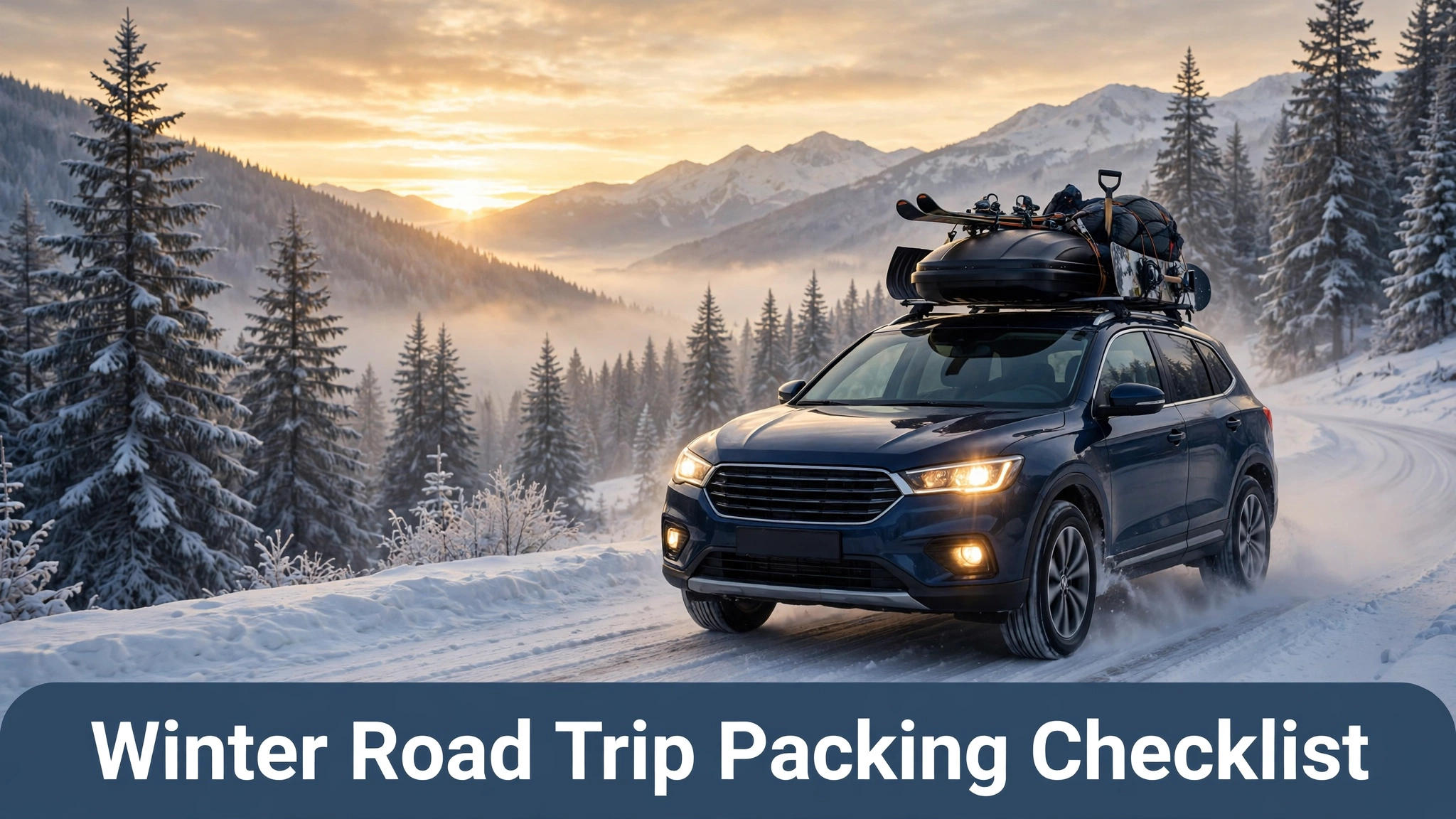
The car kit is the non-negotiable core of winter packing, and it should be checked before every winter trip, not just once a season. Start with visibility and clearing tools: an ice scraper, a snow brush, de-icer spray, and a small shovel, which is invaluable if your wheels get stuck in snow. A windscreen cover can save time on frosty mornings, but it is no substitute for a scraper when ice forms during the day. Keep washer fluid rated for freezing temperatures, because summer fluid can freeze in the reservoir and pipes, leaving you unable to clear a dirty windscreen on a salty winter road. Check that your wipers are in good condition, because worn wipers smear rather than clear, and visibility in winter spray and snow is already difficult enough.
Next, pack tools and recovery items: jump leads or a portable jump starter, a tow rope, a tyre pressure gauge, and a basic toolkit. Check your spare tyre, or your tyre repair kit if your car has no spare, and know how to use it before you need it in the dark and cold. A portable tyre inflator is a useful addition, especially for long trips, because cold weather lowers tyre pressure and under-inflated tyres handle worse in snow. A high-visibility vest and a warning triangle are legal requirements in many countries and are essential safety items everywhere, because a stopped car in snow and poor light is hard for other drivers to see. A torch with spare batteries, or a rechargeable torch kept charged, belongs in the kit too, along with a first-aid kit, which should be checked for expired items before the trip.
Finally, pack warmth and waiting supplies for the car: a warm blanket or sleeping bag, extra hats and gloves, and a bag of cat litter or sand, which can be scattered under tyres for grip if you get stuck on ice. A small bag of grit or a traction mat serves the same purpose. Keep a paper map as a backup, because phone signals can fail in rural and mountain areas, and a paper map does not need a battery. A notebook and pen are also useful for recording directions, phone numbers, or messages if your phone dies. These items take up little space, cost little, and can transform a long, cold wait into a manageable delay. Check the whole kit before departure, replace anything used or expired, and store it where it can be reached without unloading the car.
Clothing and Personal Packing for Cold Weather
Personal packing for a winter road trip follows the layering system: a moisture-wicking base layer, an insulating middle layer, and a windproof, waterproof outer layer, as explained in winter clothing guides. For a road trip, the key addition is versatility, because you will move between a heated car, cold outdoors, warm shops, and possibly cold accommodation. Pack layers that can be added or removed easily, rather than one very heavy outfit that leaves you sweating in the car and cold outside. A zip-up fleece, a packable insulated jacket, and a waterproof outer layer cover most conditions, and they pack smaller than a single bulky coat.
Footwear deserves special attention on winter trips. Pack waterproof boots with good grip for snow and ice, and keep a pair of lighter, comfortable shoes for driving, because thick boots can make pedal control less precise and can become tiring on long drives. Many drivers change into driving shoes for the journey and switch to boots at stops, which is a sensible habit. Socks should be wool or synthetic, not cotton, and packing an extra pair of dry socks is one of the smallest, most valuable packing decisions you can make. Wet feet ruin a winter day faster than almost anything else, and dry socks restore comfort instantly.
Do not forget accessories and personal items: a warm hat, gloves or mittens, a scarf or neck gaiter, sunglasses for snow glare, and lip balm and moisturiser, because cold wind dries skin quickly. Sunglasses may seem like a summer item, but snow reflects sunlight strongly, and glare on bright winter days can be tiring and dangerous while driving. Pack toiletries in a small, leak-proof bag, including any regular medication, with enough supply for delays, and keep medication in hand luggage rather than in the boot, where it could freeze or be inaccessible. A small bag of personal comfort items, such as hand warmers, tissues, and a reusable water bottle, makes long winter drives far more pleasant, especially for passengers.
Food, Water and Comfort for the Journey
Food and water are safety items on a winter road trip, not just snacks. Pack more water than you think you need, in bottles that will not burst if they freeze, and keep at least one bottle inside the car rather than in a freezing boot. Water is essential if you are delayed, and it is also useful for washing hands or cleaning a windscreen in an emergency. For food, choose items that are filling, non-perishable, and easy to eat in a car: nuts, dried fruit, granola bars, crackers, cheese, apples, and sandwiches for the first day. Avoid food that requires heating or that spoils quickly, and pack enough for an extra day beyond your planned journey, in case of delays.
Hot drinks in a good thermos flask are one of the great pleasures of winter driving, and they also serve a practical purpose on a cold wait. Fill a flask with tea, coffee, or hot chocolate before departure, and refill it at stops. A second flask with hot water is useful for making instant drinks or for warming hands in an emergency. Keep cups with lids to prevent spills while driving, and never drink a hot drink while driving in a way that distracts you. Stops for food and drink are also safety stops: they give the driver a break, allow everyone to stretch, and provide a chance to check the weather, the car, and the route. Planning stops every two hours or so, as road safety guidance commonly recommends, reduces fatigue, which is a major risk on long winter drives.
Comfort items make a long winter journey enjoyable rather than merely bearable. Pack a travel pillow and a light blanket for passengers, entertainment for children, such as books, games, or downloaded films, and charging cables for all devices, with a car charger and, ideally, a portable power bank. Music, audiobooks, and podcasts make long winter roads pass pleasantly, and downloaded content is essential where mobile signal is weak. A small rubbish bag keeps the car tidy, and wet wipes handle spills and sticky hands. These items seem minor, but on a six-hour winter drive, they are the difference between a trip that feels like an adventure and one that feels like an endurance test.
Tech, Documents and Money: The Boring Essentials That Save Trips
Technology packing for a winter road trip starts with navigation and communication. Download offline maps for your route before departure, because signal can disappear in mountains, forests, and rural areas, and an offline map continues to work without data. Carry a car phone charger and a portable power bank, both fully charged, and keep charging cables for every device you carry. A phone is your map, your weather forecast, your emergency contact, and your camera, so protecting its battery in cold weather matters: keep the phone in a warm pocket rather than on a cold dashboard, because cold drains batteries faster, and consider a phone case that insulates slightly.
Documents and money need the same care as tech. Carry your driving licence, vehicle documents, insurance details, and breakdown cover information, in paper form as well as on your phone, because a dead phone should not leave you without proof of cover. Note down the phone numbers for breakdown services, accommodation, and emergency contacts on paper, and share your route and expected arrival time with someone who is not travelling, so that someone knows where you should be if you are delayed. For money, carry a bank card and a small amount of cash, because rural petrol stations, tolls, and small cafés may not accept cards, and card machines can fail in power cuts or poor signal areas. Keep cash and cards in separate places, so that losing one does not leave you without the other.
Insurance and breakdown cover deserve a check before departure, not during a crisis. Confirm that your breakdown cover includes winter conditions and the areas you will travel through, including remote or mountain roads if relevant, and check whether your insurance covers winter driving, rental cars, or travel abroad if your trip crosses borders. If you are hiring a car, check what winter equipment is included, such as winter tyres, snow chains, or a scraper, and what you need to bring yourself. In some countries, winter tyres or snow chains are legally required in certain months or areas, and fines or refused passage can result from not having them. Checking these rules before you leave, through official travel or motoring sources, is far easier than discovering them at a roadside checkpoint in snow.
Packing for Children, Pets and Passengers
Children change winter road trip packing in important ways. Pack extra clothes for children, because they are more likely to get wet playing in snow, spill drinks, or need a change after a long drive. Keep children’s essentials within reach: snacks, water, wipes, tissues, a change of clothes, and any medication, in a bag by their seat rather than buried in the boot. Entertainment is essential for children’s patience on long drives: books, drawing materials, audiobooks, games, and downloaded shows, with headphones so that adults can concentrate on driving. Plan stops at places where children can run, play in snow safely, and use facilities, because a child who has burned off energy at a stop is far easier to travel with than one who has sat still for four hours.
Safety for children in cars is paramount in winter. Car seats should be fitted correctly, and bulky winter coats should not be worn under harness straps, because the bulk compresses in a crash and leaves the harness too loose. Instead, dress children in thinner layers for the car seat, and place a blanket over them once they are strapped in. This advice is widely given by road safety organisations and is worth following even though it takes a little extra time at each stop. Check children’s hands, feet, and faces for cold during outdoor stops, and bring them back to the warm car before they become thoroughly chilled. A winter road trip with children can be wonderful, but it requires more stops, more patience, and more spare clothes than the same trip with adults alone.
Pets also need winter packing. Bring water and a bowl, food, any medication, a lead, waste bags, and a blanket or bed for the car, so that the pet has a comfortable, secure space. Never leave a pet alone in a cold car for long periods, because cars cool rapidly in winter and pets, especially small, elderly, or short-coated animals, can become cold quickly. Plan stops where pets can exercise and relieve themselves safely, away from busy roads and icy surfaces, and carry a towel to dry wet paws and fur after snow. Passengers with health conditions, elderly travellers, and anyone who needs regular medication should also have their essentials in hand luggage, with extra supply for delays, and should tell the driver about any needs that might affect stops or driving plans. A road trip is a team effort, and packing for everyone’s needs makes it enjoyable for everyone.
Before You Leave: Car Checks, Route Planning and Packing Order
Packing is only half of preparation. The car itself needs a winter check before departure: tyres, including tread depth and pressure, battery, lights, brakes, coolant, oil, and washer fluid. Cold weather is hard on batteries, which lose power in low temperatures, so a battery that struggles in autumn may fail on a frosty winter morning. Tyres are equally important: winter tyres, where appropriate, offer better grip in snow and ice than summer tyres, because their rubber stays flexible in cold and their tread is designed for winter surfaces. All-season tyres are a compromise that suits mild winters, but in serious snow and ice, dedicated winter tyres are noticeably better. Check local rules and advice for your destination, because requirements vary by country and region.
Route planning for winter is different from summer planning. Choose main roads where possible, because they are cleared and gritted first, and avoid remote mountain passes in severe weather unless you are experienced and equipped. Check weather forecasts and road condition reports before departure and again at stops, and be willing to change plans, delay departure, or take a longer, safer route if conditions worsen. Share your route with someone else, and set realistic arrival times that allow for slower winter speeds and extra stops. The most dangerous winter driving decision is often not a packing mistake but a scheduling one: feeling forced to drive through bad weather to meet an unrealistic deadline. Building slack into your plan is a safety decision, not a waste of time.
Finally, pack the car in a sensible order. Heavy items low and forward in the boot, essentials accessible, emergency kit on top or in a side compartment, and nothing loose on the rear parcel shelf or dashboard that could become a projectile in sudden braking. Do a final walk-around before departure: check lights, clear all windows and mirrors of snow and ice, remove snow from the roof, because it can slide onto the windscreen when braking, and check that number plates and lights are visible. Then, and only then, set off, with a full tank or charge, a charged phone, and the knowledge that you have packed for winter properly. A well-packed winter road trip is not about fear. It is about freedom: the freedom to enjoy snow, cold, and adventure, knowing that you are ready for whatever the road brings.
My Take:
My opinion on winter road trip packing is blunt: most people pack for the holiday they imagine, not for the journey they will actually have, and that optimism is what gets them into trouble. They pack outfits for photographs, snacks for a perfect picnic, and a playlist for sunny roads, but they forget a scraper, a blanket, and a phone charger, which are the items that matter when the weather turns. I have learned, from my own mistakes, that packing for winter is not about pessimism. It is about respect for a season that does not care about your itinerary. A blanket in the boot does not ruin a trip. It allows you to enjoy the trip without worrying about what happens if you are delayed, and that peace of mind is worth more than any extra outfit.
I am particularly firm about the car kit, because I have seen how quickly a small problem becomes a big one without it. A car that slides into a snowdrift with a shovel, a traction mat, and a charged phone is an inconvenience. The same car without those items, at night, in falling snow, with a dead phone, is a genuine emergency. The difference is not luck. It is a box of items that costs little, takes up little space, and can be checked in ten minutes before departure. I do not understand why anyone would skip that check, and I think every winter driver should treat the car kit as part of the car itself, like tyres or brakes, rather than as optional luggage. If your car does not have a winter kit in November, it is not ready for winter, whatever the forecast says.
On clothing, my view is that road trips expose the same mistake as everyday winter dressing: people wear one heavy coat and call it done, then suffer in a heated car, at a warm service station, and again outside in wind. Layers are the answer on the road as much as on a walk, because a road trip involves constant temperature changes. A zip-up fleece you can remove in the car, a waterproof layer you can add in rain, and a warm hat you can put on at a stop are far more useful than a single coat that is too hot indoors and not quite warm enough outdoors. I also think driving shoes matter more than people admit. Thick boots are for snow, not for pedals, and changing shoes for driving is a small habit that improves control and comfort on long journeys.
I have mixed feelings about technology on winter road trips. Offline maps, charged power banks, and weather apps are genuinely valuable, and I would never set off without them. But I worry that drivers now trust their phones too much, assuming that signal, battery, and data will always be available. They will not, especially in mountains and rural areas, which are precisely where winter road trips go. A paper map, a written list of phone numbers, and a full tank of fuel are old-fashioned, but they work when technology does not, and they cost almost nothing. My rule is to use technology as the primary tool and paper as the backup, never the other way around, and never to rely on a single device for navigation, communication, and emergency calls. Redundancy is not paranoia on a winter road. It is common sense.
On children and pets, my opinion is that packing for them is where good planning shows most clearly. A driver who packs extra clothes, snacks, entertainment, and medication within reach for children, and who plans stops where children can play, will have a far happier journey than one who assumes children will sit quietly for six hours. The same applies to pets, who need water, warmth, and stops just as people do. A road trip is not a test of endurance for its youngest or furriest passengers. It is a shared adventure, and the adults’ job is to make it comfortable for everyone, not only for the driver. That means more stops, more patience, and more bags, and it is worth every extra minute.
I am also sceptical of the idea that a winter road trip must be fast to be successful. The pressure to arrive by a certain time, to cover a certain distance, or to “make good time” is one of the most dangerous influences on winter driving, because it pushes drivers to continue through worsening weather, to skip breaks, and to drive faster than conditions allow. I would rather arrive late, or change plans entirely, than drive through a storm to meet a deadline that nobody will remember next year. A winter road trip that ends with a night in an unplanned hotel, because the driver chose safety over schedule, is a success story, not a failure. The journey is part of the holiday, and the holiday is not worth a risk to anyone’s safety.
Finally, I believe a well-packed winter road trip teaches a broader lesson about preparation in life. Packing a blanket, checking tyres, downloading maps, and carrying extra food are not just travel tasks. They are habits of foresight: imagining what could go wrong, preparing for it calmly, and then enjoying the present without anxiety. People who pack well for winter roads often pack well for other challenges too, because they have learned that preparation does not spoil spontaneity. It enables it. A driver who is ready for snow, delays, and cold is free to enjoy snow, to explore a detour, and to stop for an unexpected view, because they are not afraid of what happens next. That freedom, earned by an hour of careful packing, is the real reward of a winter road trip checklist, and it is why I take this apparently boring subject so seriously.
One habit I would add to every winter road trip is checking the forecast and road conditions again at every major stop, not only before departure. Weather in winter changes by valley, by altitude, and by hour, and a forecast that was correct at 8 in the morning can be dangerously wrong by 2 in the afternoon. A two-minute check at a petrol station, a café, or a rest stop costs nothing and can change a decision that matters: whether to take a mountain pass or a longer valley road, whether to press on or to stop for the night. Drivers who check only once are driving on old information, and old information in winter is a quiet risk that is easy to avoid.
Frequently Asked Questions
What is the most important item for a winter road trip?
A winter car kit is most important: ice scraper, snow brush, de-icer, shovel, jump leads or starter, torch, blanket, high-visibility vest, warning triangle, first-aid kit, food and water. These items turn a delay or minor problem into a manageable wait rather than an emergency.
Do I need winter tyres for a winter road trip?
It depends on your destination and conditions. Winter tyres offer better grip in snow and ice than summer tyres because their rubber stays flexible in cold. Check local rules, as some countries or regions require winter tyres or snow chains in certain months or areas.
How much food and water should I pack for winter driving?
Pack enough water and non-perishable food for at least an extra day beyond your planned journey, in case of delays or road closures. Keep water inside the car where possible, and choose filling, easy-to-eat items such as nuts, dried fruit, crackers and granola bars.
Should children wear bulky coats in car seats?
No, bulky coats should not be worn under car seat harness straps, because the bulk compresses in a crash and leaves the harness too loose. Dress children in thinner layers for the seat and place a blanket over them once strapped in, following road safety guidance.
How often should I stop on a long winter drive?
Plan a break roughly every two hours, as commonly recommended for road safety, to rest, stretch, check weather and road conditions, and refuel. More frequent stops are sensible in poor weather, with children, or when the driver feels tired.
What should I do if my car gets stuck in snow?
Stay calm, clear snow from around the tyres and exhaust, use a shovel and traction material such as sand or cat litter under the tyres, and try gentle acceleration rather than spinning the wheels. If you cannot free the car, stay with it where safe, keep warm, and call for help, keeping the exhaust clear of snow.