Best Lakeside Towns in Europe for Travel
In this post
- Hallstatt, Austria: The Postcard That Is Real
- Annecy, France: The Venice of the Alps
- Lake Bled, Slovenia: Small, Gentle, and Easy to Love
- Lake Como, Italy: Glamour, Villas, and Villages
- Lucerne, Switzerland: A City on a Lake
- Lesser-Known Lakeside Towns Worth the Detour
- How to Plan a Lakeside Trip That Actually Works
- My Take:
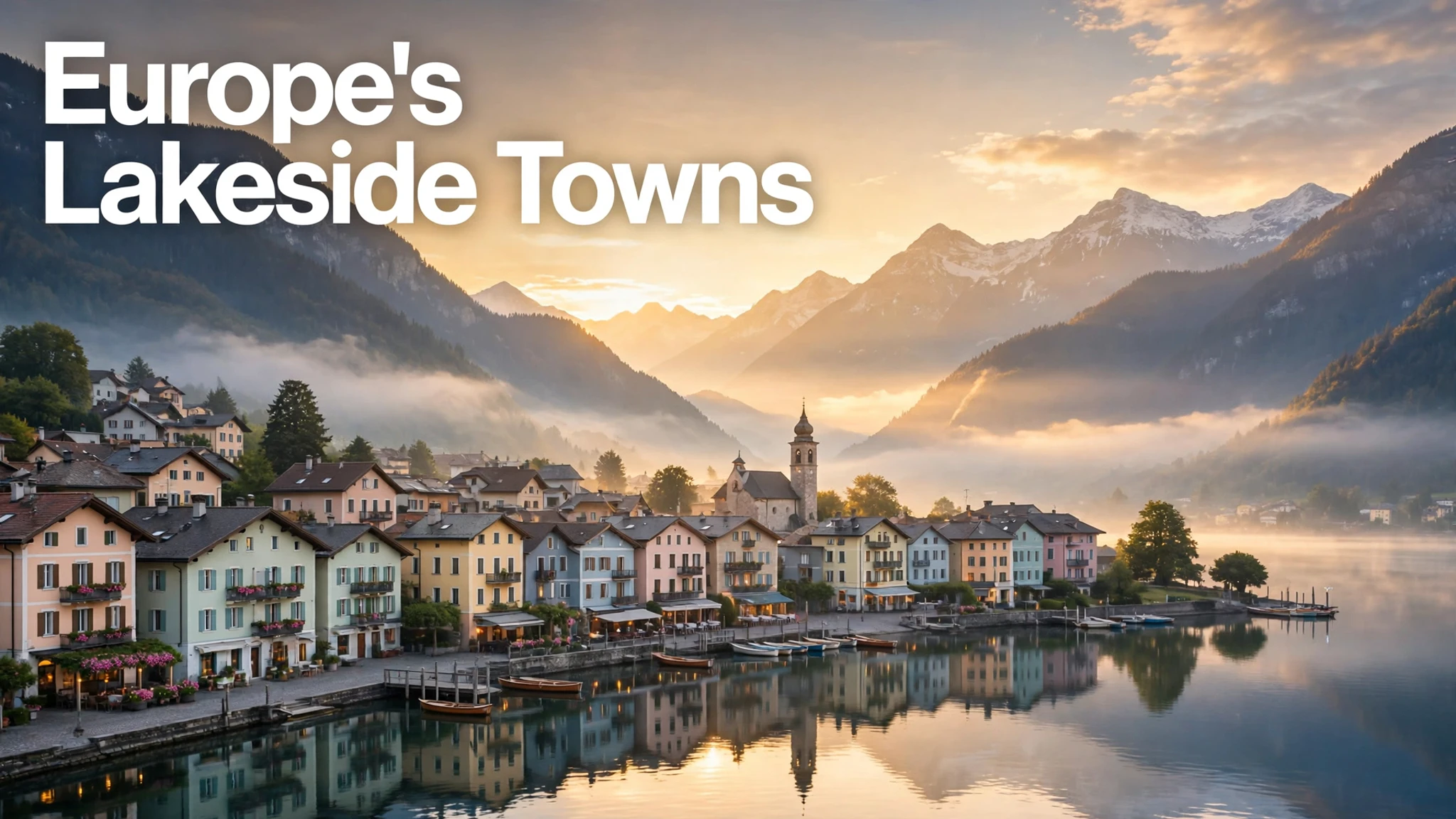
Europe’s lakeside towns have a particular kind of magic that big cities cannot copy. The water slows everything down. Mornings begin with mist on the surface, church bells carry across the bay, and the day’s biggest decision is whether to walk the promenade first or take a boat out first. These towns are not just pretty backdrops for photographs, although they photograph beautifully. They are working places with markets, bakeries, ferry timetables, and local routines, and that combination of beauty and everyday life is what makes them so rewarding for travellers. A lakeside town invites you to stay a little longer than planned, to eat lunch slowly, and to come back in a different season to see the same water in a different mood.
Choosing the best lakeside towns in Europe means balancing several things at once. Some towns are famous and crowded, and their fame is deserved, but visiting them well requires timing and patience. Others are quieter and less polished, and they reward travellers who are willing to travel a little further or stay overnight rather than passing through for an hour. This guide covers both kinds. It looks at what each town does best, who it suits, when to visit, and the practical details that turn a nice day trip into a memorable stay. It is written for international travellers planning from abroad, so it focuses on the kinds of choices that matter before you book: how easy the town is to reach, how walkable it is, what the lake itself offers, and what you can do when the weather changes.
One important note before the list begins: lake towns change a great deal with the seasons. Summer brings swimming, boat hire, and long evenings, but also crowds and higher prices. Spring and early autumn often give the best balance of pleasant weather and breathing room. Winter can be quiet and atmospheric, especially in Alpine towns, but some boat services and lakeside restaurants close or run reduced hours. Where a town is strongly seasonal, this guide says so, so you can match the visit to your own tolerance for crowds and cold water.
Hallstatt, Austria: The Postcard That Is Real
Hallstatt, on Lake Hallstatt in Austria’s Salzkammergut region, is the town most people picture when they imagine a European lakeside village. Its pastel houses stand directly on the water’s edge, backed by steep mountains, and its church spire is one of the most photographed sights in Austria. The town’s history is just as striking as its appearance. Salt mining here goes back thousands of years, and the Hallstatt salt mine offers tours that explain how salt shaped the town’s wealth and its place in European trade. The lakeside promenade is short and walkable, and a boat ride gives the classic view back toward the village that no photograph from land quite captures.
The honest trade-off with Hallstatt is popularity. On summer days, day-trippers can outnumber residents, and the narrow streets feel busy. The best way to enjoy Hallstatt is to stay overnight. Early mornings and evenings, when the day visitors have left, are calm and lovely, and the light on the lake at dawn is worth the early alarm. If you can only visit for a day, arrive as early as you can and consider the quieter walk to the upper viewpoints rather than staying only in the most crowded corner. Book accommodation well ahead for summer weekends, and check boat and mine opening times before you travel, since they vary by season.
Hallstatt also works well as part of a wider Salzkammergut trip. Nearby lakes and villages offer similar scenery with fewer visitors, and the region’s trains and buses make it possible to base yourself in a larger town and visit Hallstatt for a day. But if Hallstatt itself is the dream, give it a night. The difference between seeing it in a crowd at noon and seeing it alone at dawn is the difference between a photograph and a memory.
Annecy, France: The Venice of the Alps
Annecy, in eastern France near the Swiss border, is often called the Venice of the Alps, and the nickname is fair. Canals run through its old town, flower-decked bridges cross clear water, and Lake Annecy itself is famous for its clean, turquoise water. The lake is ringed by mountains and by a cycling path that runs for much of its shore, making it one of the best European lakes for active travellers. You can cycle from Annecy to villages along the shore, stop for lunch, swim at a lakeside beach, and cycle back, all in a day.
Annecy’s old town is compact and walkable, with a castle overlooking the canals and a lively market that is worth planning a morning around. The town suits families particularly well, because the lake beaches are supervised in summer, the cycling is mostly flat, and there are boat trips for days when legs are tired. Food lovers will enjoy the Savoyard specialities of the region, including cheeses and hearty mountain dishes, and the lakeside restaurants range from simple snack bars to more formal dining. In summer, book restaurants for dinner if you want a waterside table.
The lake’s water quality is a point of local pride, and swimming here feels different from swimming in a busier resort lake. The water is cool even in summer, which is refreshing on a hot day but worth knowing if you prefer warm water. Spring and early autumn are excellent for cycling and walking, with fewer crowds and still-pleasant weather. Winter in Annecy is quieter and the old town’s Christmas market adds warmth, but lake swimming and many boat services pause, so winter visitors should come for the town, the food, and the mountain views rather than for the water.
Lake Bled, Slovenia: Small, Gentle, and Easy to Love
Lake Bled in Slovenia is small enough to walk around in a couple of hours and beautiful enough to make you want to do it twice. The lake’s island church, reached by traditional wooden pletna boats, and the castle perched on a cliff above the water give Bled a storybook quality. The walk around the shore passes swimming spots, cafes, and viewpoints, and the climb to the viewpoints above the lake rewards you with the classic panorama of the island, the castle, and the Julian Alps beyond.
Bled is an excellent choice for first-time visitors to Slovenia and for travellers who want a gentle, low-stress lake holiday. The town is compact, English is widely spoken in tourist services, and day trips to Ljubljana, the capital, and to the nearby Vintgar Gorge are easy. The local cream cake, kremšnita, is a small ritual worth trying at a lakeside cafe. In summer, swimming in the lake is popular, and rowing boats can be hired for a quieter alternative to the pletna boats. The water is cooler than Mediterranean swimming, but on a warm day it is inviting.
Bled’s small size is both its charm and its limitation. It does not offer the variety of a large resort, and in peak summer it can feel busy around the most famous viewpoints. Staying two nights rather than one lets you enjoy an early morning walk before the crowds and a slower second day. Travellers who want wilder scenery can combine Bled with Lake Bohinj, a larger and quieter lake further into the mountains, which feels more remote and less developed. Together, the two lakes give a fuller picture of Slovenia’s alpine water.
Lake Como, Italy: Glamour, Villas, and Villages
Lake Como in northern Italy is the most glamorous lake on this list, and it earns that reputation. The lake is shaped like an inverted Y, with elegant villas, gardens, and villages along its shores, and mountains rising behind. Towns such as Bellagio, Varenna, and Menaggio each have their own character, and travelling between them by ferry is part of the pleasure. Bellagio is polished and busy, Varenna is romantic and walkable, and Menaggio is relaxed and practical, with a pleasant promenade. The lake’s villas and gardens, some open to visitors, show a world of historic wealth and careful landscaping.
Como rewards travellers who plan their base carefully. Staying in one town and using ferries for day trips works well, but ferry timetables deserve attention, since some services are slower or less frequent outside peak season. Como town itself, at the southern end of the lake, is a good arrival point with rail links, while the mid-lake villages are better for the classic scenery. Prices vary sharply: lakeside hotels and restaurants in the most famous villages can be expensive, while staying slightly back from the water or in a less famous village can save a great deal without losing the lake experience.
The lake is at its best from late spring to early autumn, when gardens are in bloom and ferries run frequently. Winter is quiet and can be misty and atmospheric, but many villas and gardens close. Como is also a good choice for travellers who want to combine lake time with culture, since Milan is within reach for a day trip. For a first visit, three nights split between the mid-lake area and Como town gives a good balance of scenery, walking, and easy travel.
Lucerne, Switzerland: A City on a Lake
Lucerne is larger than most towns on this list, and that is its strength. It offers the beauty of a lakeside setting with the facilities of a small city: a famous covered wooden bridge, a well-preserved old town, museums, and excellent rail connections. Lake Lucerne is long and branched, with arms reaching into the mountains, and boat trips on the lake are among the best in Switzerland. A boat to a mountain railway, a ride up, and a walk or a second boat back make for a classic Swiss day that combines water, mountains, and engineering.
Lucerne suits travellers who want comfort and variety. The town is clean, safe, and easy to navigate, and it works well as a base for wider Swiss travel. The downside is cost: Switzerland is expensive, and lakeside dining and hotels in Lucerne reflect that. Travellers on a budget can save by staying in a nearby town, eating at bakeries and markets for lunch, and choosing one mountain excursion rather than several. The lake itself is free to enjoy from the promenade, and walking the old town costs nothing.
The best time to visit Lucerne depends on what you want. Summer gives full boat services and warm promenade evenings. Autumn brings clear mountain air and fewer visitors. Winter gives Christmas markets and snowy mountain views, though lake boats run less often. Lucerne is also one of the best lakeside places for a short visit, since its compact centre means even a single day can feel full, but two or three days let you add a lake cruise and a mountain trip without rushing.
Lesser-Known Lakeside Towns Worth the Detour
Beyond the famous names, several lesser-known lakeside towns deserve attention. Ohrid, on Lake Ohrid in North Macedonia, combines a UNESCO-listed old town, ancient churches, and a large, clear lake shared with Albania. It feels older and less polished than the Alpine lakes, and its prices are generally lower. The lake is excellent for swimming in summer, and the old town’s lanes reward slow walking. Travellers who enjoy history and a sense of discovery will find Ohrid refreshing after the more crowded western European lakes.
In Finland, the town of Savonlinna on Lake Saimaa offers a different kind of lakeside experience: forests, islands, and a medieval castle that hosts an opera festival in summer. The Finnish lake district is vast and quiet, and Savonlinna is a good base for boat trips among the islands. It suits travellers who prefer nature and space to glamour. In Sweden, towns around Lake Vänern and Lake Vättern offer long summer evenings, cycling, and a relaxed Scandinavian pace, though the water is cool and the season is short.
Closer to the famous lakes, towns such as Talloires on Lake Annecy, Orta San Giulio on Lake Orta in Italy, and Gmunden on Lake Traunsee in Austria give a quieter version of their better-known neighbours. Orta San Giulio, in particular, is a small, elegant town on a small lake, with an island monastery and a peaceful atmosphere that contrasts with nearby Lake Maggiore’s grandeur. These smaller towns are worth considering if you have already visited the headline lakes or if you simply prefer a slower pace. They also tend to be better value, and they often give a warmer welcome because tourism has not overwhelmed local life.
How to Plan a Lakeside Trip That Actually Works
Practical planning makes the difference between a lakeside trip that flows and one that frustrates. Start with the base: choose one town for at least two nights rather than racing between lakes. Lakes reward slow mornings, and moving every night wastes the best hours. Check how you will arrive, since some lake towns are easy by train and others need a bus or a car. In the Alps, trains and boats often combine well, while in more rural lake districts a car gives freedom that public transport cannot match. Book accommodation near the water if your budget allows, but remember that a short walk from the shore often halves the price.
Pack for the lake, not just for the town. Bring layers, because lakeside evenings can be cool even after warm days, and bring comfortable walking shoes, since the best views usually require a climb or a lakeside path. If you plan to swim, check whether beaches are supervised, whether the water is deep at the entry point, and whether there are changing facilities. If you plan to cycle, check whether hire shops are open in your season and whether the lakeside path is paved or gravel. For boat trips, check timetables the day before, since lake services can change with weather and season.
Budget honestly. Lakeside towns can be deceptively expensive, because the most attractive restaurants and hotels charge for the view. A good rule is to eat one meal a day at a bakery, market, or simple cafe, and save the lakeside restaurant for one special dinner. Use free pleasures generously: promenade walks, public beaches, church visits, and sunset viewpoints cost little or nothing. Finally, build in a weather plan. Lakes are beautiful in rain, but boat trips and swimming may not run, so have a museum, a covered market, or a long lunch in reserve. A rainy day in a lakeside town, spent watching the weather move across the water from a cafe window, can become one of the trip’s best memories.
My Take:
My honest take is that the best lakeside town in Europe is not a single place but a match between a town and a traveller’s temperament, and getting that match right matters more than ticking off the most famous name. If you love glamour and gardens and do not mind paying for them, Lake Como will feel like a reward. If you want gentle, easy beauty with a walk you can do before breakfast, Lake Bled will feel like a gift. If you want activity, cycling, and swimming in famously clean water, Annecy will keep you happily busy. And if you want the single most photogenic village in Europe, Hallstatt will deliver, provided you stay overnight and see it without the midday crowd. The mistake is not choosing the wrong town; it is choosing a town for its photographs alone and then being surprised by its crowds, its prices, or its pace.
I would also argue that lakeside towns teach a useful lesson about travel itself. Cities reward speed: more sights, more museums, more neighbourhoods in less time. Lakes reward the opposite. The best hours are often the ones with no plan at all: a morning coffee while mist lifts off the water, a slow walk with no destination, an evening when the light changes and the same view looks completely different. Travellers who arrive with a rigid checklist sometimes leave a lake town feeling they have missed something, when in fact the town was offering a different kind of richness. My advice is to leave half of each day unplanned. Walk without a map for an hour. Sit somewhere and watch the boats. Let the town set the pace for a while, and you will understand it better than any guidebook can explain.
Season matters more here than in most kinds of travel, and I think travellers underestimate it. The same town in July and in October can feel like two different places. July gives swimming and festivals and long evenings, but also queues and heat and the sense that you are sharing every viewpoint with hundreds of strangers. October gives quiet lanes, autumn colour, and the chance to talk to locals, but shorter days and cooler water. Neither is better in the abstract; it depends on what you value. If your main joy is swimming and boat trips, go in summer and accept the crowds. If your main joy is walking, photography, and conversation, go in the shoulder season and accept that some services will be closed. What I would not do is visit a famous lake town for a single rushed day in peak season and judge it on that experience alone. That is like judging a restaurant by its queue.
Budget is another place where honesty helps. Lakeside towns can be expensive, and pretending otherwise leads to frustration. Switzerland and Lake Como will cost more than Ohrid or the Finnish lake district, and that is fine, provided you plan for it. The trick is to spend on what the lake does uniquely well and save elsewhere. Pay for a boat trip or a lakeside dinner, because those are the experiences you will remember. Save on lunch, on a hotel a few streets back from the water, and on transport by walking and cycling. Travellers who try to do everything at the top price level exhaust themselves and their wallets; travellers who choose one or two special splurges enjoy the trip more and remember it better.
Finally, I believe lakeside towns are at their best when they are treated as places to live for a few days rather than sights to collect. Shop at the market, learn the ferry timetable, find a favourite bakery, and greet the same cafe owner twice. That small sense of belonging, even for a weekend, is what turns a beautiful place into a personal one. Europe has many lakes and many towns, and you will not see them all in one trip, nor should you try. Pick one lake, stay a little longer than seems necessary, and let the water do its slow work. When you leave, you will probably find that the town has stayed with you longer than the busier places you rushed through, and that is the real test of a great lakeside destination. Travelling with children or older relatives changes the choice again, and it is worth thinking about access rather than only beauty. A town with a flat promenade, step-free access to boats, and beaches with shallow entry points will be far more enjoyable for a mixed-age group than a town whose best views require a steep climb. Annecy and Bled score well here, because their main walks are flat and their boats are easy to board, while Hallstatt’s narrow lanes and steps can be harder for pushchairs and for anyone with limited mobility. That does not rule Hallstatt out, but it means planning: check where the accessible routes are, choose accommodation near the flat lakeside path rather than up a hill, and allow more time for short distances. A lakeside holiday should be relaxing for everyone in the group, and the most beautiful viewpoint is of little use if half the party cannot reach it comfortably.
There is also a responsibility question that thoughtful travellers should consider, because the popularity of lakeside towns has real effects on the people who live there. In the most famous villages, housing prices have risen, local shops have been replaced by souvenir stores, and residents sometimes feel that their home has become a backdrop. Visitors can help by staying overnight rather than passing through for an hour, by eating in locally owned restaurants rather than international chains, by shopping at markets, and by respecting quiet hours and private property, especially in residential lanes where people live behind the picturesque facades. Photography is part of the joy of these towns, but it is worth remembering that a house is someone’s home before it is a photograph. Small courtesies, such as not blocking a doorway for a picture and not flying a drone over a village without checking local rules, make a genuine difference to how welcome visitors feel.
Finally, a practical itinerary idea: rather than trying to see five lakes in five days, pair two complementary lakes in one trip and give each at least two nights. A week split between Lake Bled and Lake Bohinj gives both a gentle, classic lake and a wilder, quieter one, with a single base region and minimal travel. A week split between Annecy and a nearby Alpine lake gives cycling, swimming, and mountain walking in one journey. A longer trip could pair Lake Como with Lake Orta, combining glamour with tranquillity. The pattern is the same in each case: one famous lake for the iconic views, one quieter lake for space and local life, and enough time in each to learn its rhythms. That is how a lakeside trip becomes more than a collection of photographs, and it is how you return home with a place you genuinely know, rather than a place you merely saw.
Frequently Asked Questions
What is the best lakeside town in Europe for a first visit?
Lake Bled in Slovenia is a strong first choice because it is small, walkable, easy to reach, and offers a castle, an island church, swimming, and mountain views in one compact place. Annecy in France is another excellent first visit, especially for families and cyclists.
When is the best time to visit European lakeside towns?
Late spring and early autumn usually offer the best balance of pleasant weather, open services, and smaller crowds. Summer is best for swimming and full boat services but brings crowds and higher prices, while winter suits atmospheric town visits rather than lake activities.
Are European lakeside towns expensive?
Costs vary widely. Switzerland and Lake Como are generally expensive, while towns in Slovenia, North Macedonia, and parts of central Europe are usually more affordable. Staying slightly back from the water and eating at markets and bakeries can reduce costs considerably.
Can you swim in European lakes?
Yes, many European lakes are popular for swimming in summer, including Lake Annecy, Lake Bled, and Lake Ohrid. Water temperatures vary, and Alpine lakes are cooler than Mediterranean ones, so check local conditions and whether beaches are supervised before swimming.
Do I need a car to visit lakeside towns in Europe?
Not always. Many Alpine lake towns are well served by trains and boats, and Annecy, Lucerne, and Hallstatt are reachable by public transport. A car is more useful in rural lake districts such as Finland’s Lake Saimaa, where services are spread out.
Which European lakeside town is least crowded?
Smaller towns such as Orta San Giulio in Italy, Gmunden in Austria, and Savonlinna in Finland are generally quieter than Hallstatt, Bellagio, or Annecy. Visiting famous towns outside peak summer weekends also reduces crowds significantly.