Electric Vs Petrol Car 2026
In this post
The showroom question has changed. A few years ago, buying a car meant choosing between petrol and diesel, and the argument was about fuel prices and motorway miles. Today a third choice sits in the middle of the showroom floor, plugged into the wall, silent and gleaming, and the question is bigger: should the next car have a plug, a fuel tank, or both? The answer is not the same for everyone, because the right car depends on how far you drive, where you can charge, and how much the purchase price matters against the running costs.
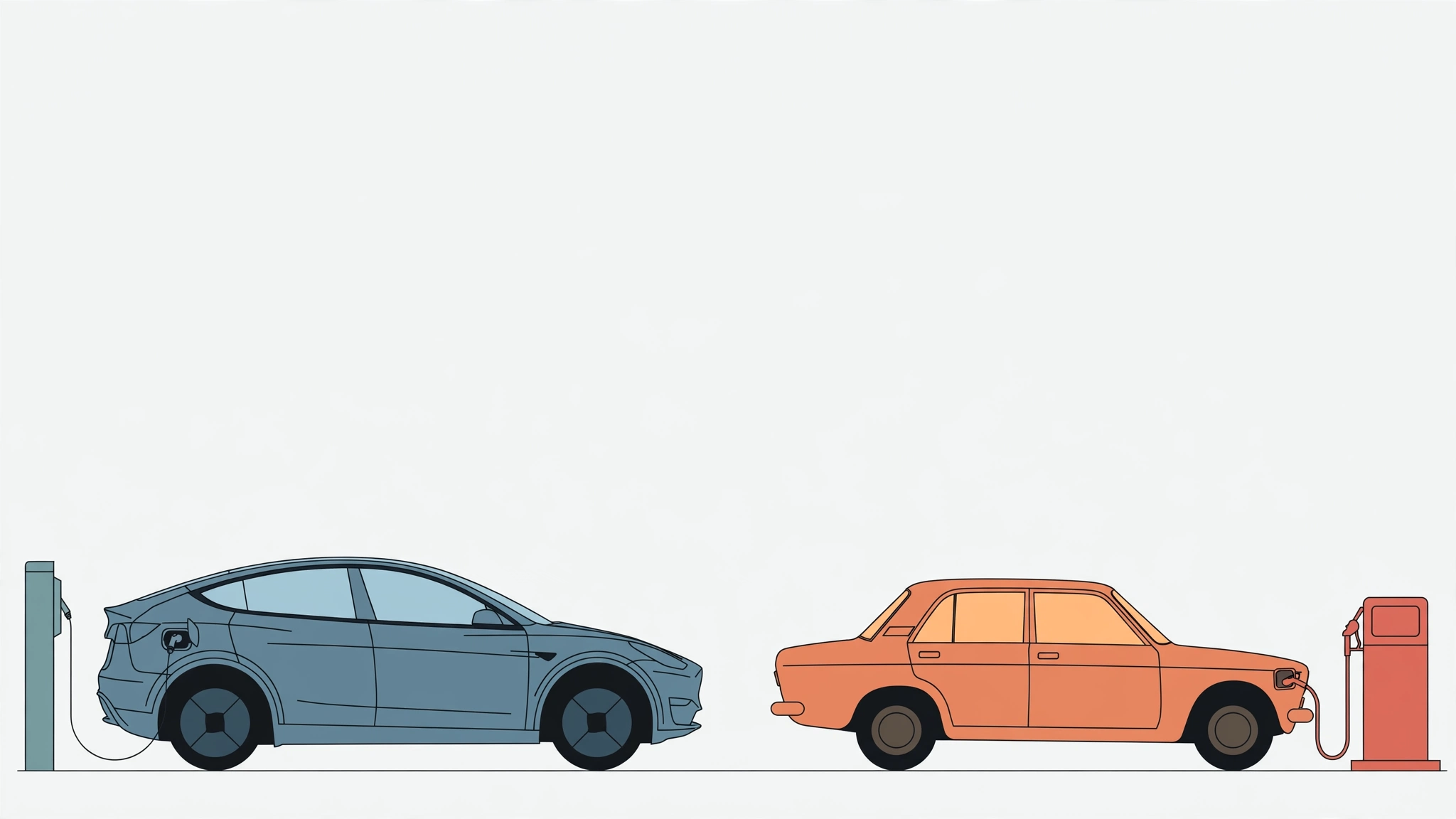
The honest way to compare them is to separate the price of buying from the price of using. Electric cars usually cost more to buy and less to run. Petrol cars usually cost less to buy and more to run. The winner depends on which side of that trade matters more to your driving. This guide compares the two on the evidence available in 2026, with figures attributed to their markets, and ends with the middle path — the hybrid — that suits drivers who cannot yet choose either side cleanly.
The purchase price gap is real
The first difference is the one you feel in the showroom: electric cars cost more to buy than equivalent petrol cars. The battery is the reason. A large battery pack is the single most expensive part of an electric car, and it pushes the sticker price above a petrol car of the same size and comfort. Times Now, reporting on the Indian market in March 2026, describes petrol cars as having the lowest starting price of the three options it compared — petrol, diesel, and electric — and that pattern holds in most markets.
The gap is shrinking as battery prices fall and more models arrive, but in 2026 it has not closed. A buyer comparing two similar family cars will usually find the electric version costs meaningfully more on the day of purchase. That gap is the electric car’s biggest weakness, and no honest comparison should hide it.
Against the gap stand the running costs, which run the other way and never stop running. The purchase price is paid once. Fuel and maintenance are paid every week for years. A buyer who looks only at the sticker price will choose petrol. A buyer who adds up five years of driving may choose differently, which is why the comparison must count both sides.
Running costs: electricity is cheaper per kilometre
The daily economics favour the electric car clearly. Times Now reports Indian-market running costs of roughly Rs 1 to Rs 3 per kilometre for an electric car, against roughly Rs 5 to Rs 7 per kilometre for a petrol car. Those are Indian figures, shaped by Indian fuel and electricity prices, but the direction is the same in most markets: electricity per kilometre costs a fraction of petrol per kilometre, because an electric motor converts far more of its energy into motion and wastes far less as heat.
The size of the saving depends on how much you drive. A driver covering short distances may save a modest amount each month, and the purchase premium may take years to repay. A driver covering long daily distances — Times Now suggests that an electric car makes most sense for drivers covering more than 50 to 60 kilometres a day, with home charging available — saves far more, and the premium repays much faster. Mileage is the multiplier. The more you drive, the stronger the electric case becomes.
Home charging is the other multiplier. Charging at home, overnight, on a domestic electricity tariff is the cheapest way to run an electric car. Relying on public fast chargers costs more per unit of electricity and takes more time, which trims the saving. A buyer without home charging should count the real cost of public charging in their area before assuming the cheapest figures apply to them.
Maintenance: fewer moving parts, fewer bills
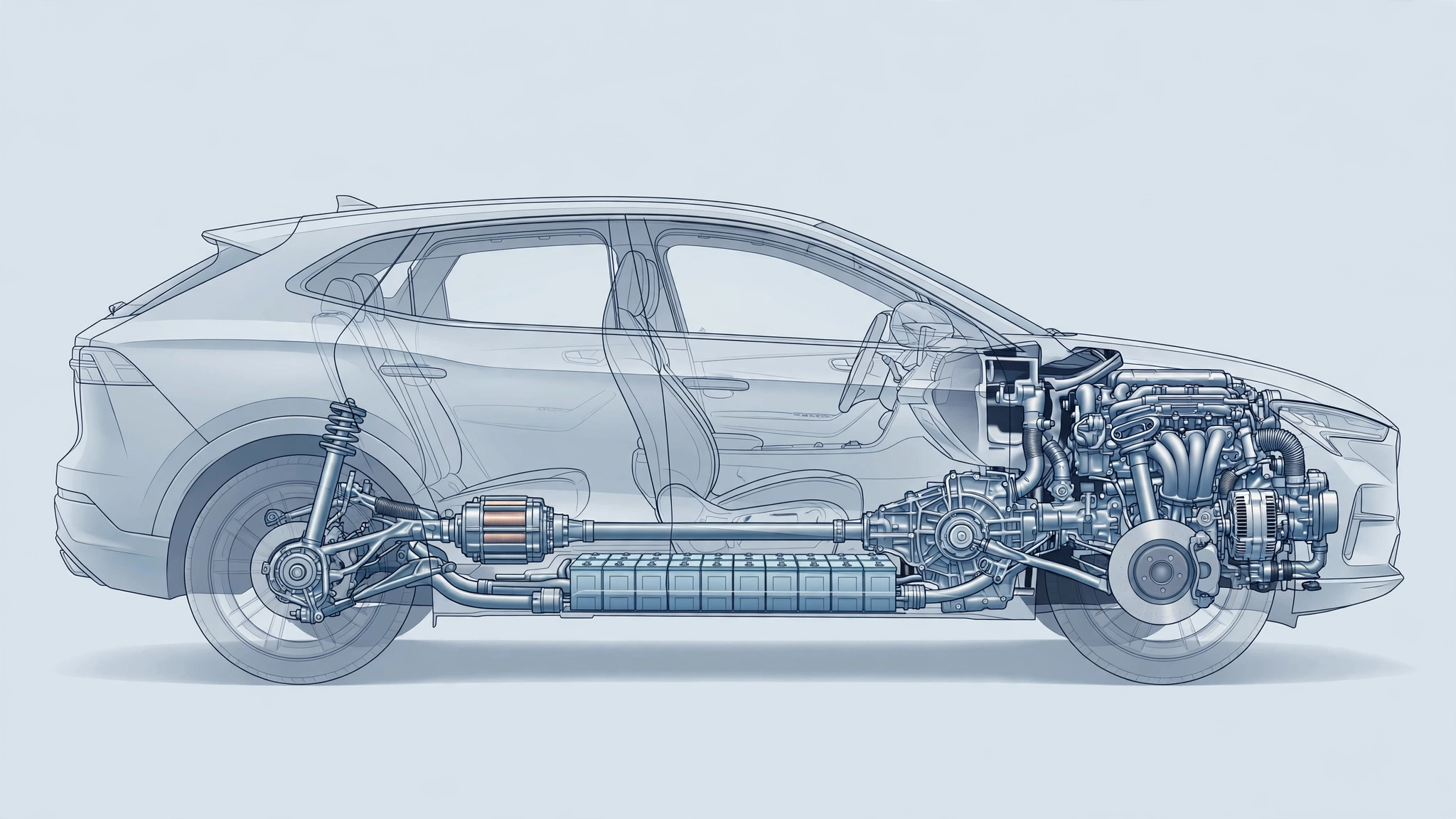
An electric car has far fewer moving parts than a petrol car. There is no engine oil to change, no exhaust system to rust, no clutch to wear, no timing belt to replace, and no gearbox of the petrol kind to service. The brakes last longer too, because regenerative braking — the motor slowing the car and recovering energy — does much of the slowing work that brake pads do in a petrol car.
Times Now describes electric cars as having the lowest maintenance of the options it compared, and the engineering explains why: the drivetrain is a motor, a battery, and electronics, with a fraction of the wearing parts. The main long-term cost is the battery itself, which degrades slowly over years and many charging cycles, and battery replacement is expensive — but for most owners the battery outlasts the period they keep the car, and warranties on batteries are typically long.
Petrol cars, by contrast, need regular servicing: oil, filters, spark plugs, belts, and exhaust work, spread across the years. None of it is ruinous, but it never stops either. Over five years, the maintenance gap adds a real amount to the electric car’s side of the ledger, on top of the fuel saving.
Range, charging time, and the long trip
The electric car’s real weakness is not cost but convenience on long trips. A petrol car refuels in minutes at any of thousands of stations, and its range is restored completely with a single stop. An electric car charges slowly by comparison: hours on a home charger, and even a fast public charger takes meaningful time to add a useful amount of range. Times Now lists charging time and higher upfront cost as the electric car’s main disadvantages, alongside the need for a home charger.
Range itself has improved greatly. Most new electric cars cover a few hundred kilometres on a charge, which handles daily driving easily. The problem is the exceptional trip: the long holiday drive, the remote destination, the day with no charger at the end. Planning becomes part of the journey — checking charger locations, allowing charging stops, and accepting that a long trip takes longer than it did in a petrol car.
For a driver whose longest regular trip fits comfortably inside the car’s range, with home charging every night, this weakness barely appears. For a driver who regularly drives long distances on short notice, it appears constantly. The honest test is your own calendar: how often does a day’s driving exceed the car’s range, and how much does a charging stop cost you in time?
The petrol car still wins on simplicity
The petrol car’s case is simplicity, and it is a strong one. The purchase price is the lowest. Refuelling takes minutes anywhere. The range is long, the infrastructure is everywhere, and the technology is familiar to every mechanic. Times Now notes that a petrol car is the best fit for drivers covering under about 1,000 kilometres a month, who value a low starting price and never want to think about charging.
Petrol also wins for drivers without home charging, for drivers in areas with thin charging networks, and for buyers who change cars often and would never keep one long enough to repay an electric premium through running costs. A petrol car asks nothing new of its owner. It works the way cars have worked for a century, and that familiarity is worth real money to many people.
The costs run the other way, steadily, for the life of the car: higher fuel cost per kilometre, more maintenance, and exposure to fuel price rises. The petrol car is cheap to buy and expensive to keep. Whether that trade suits you depends on how long you keep cars and how far you drive them.
The hybrid middle path
Between the two sits the hybrid, and for many buyers in 2026 it is the most sensible answer of all. A hybrid pairs a petrol engine with an electric motor and a battery, and Times Now calls it the middle path: no charging worry, because the engine charges the battery and the car refuels like a petrol car, with better economy than a pure petrol car in town driving.
Hybrids come in two main kinds, and the distinction matters. A mild hybrid can never drive on electricity alone; its motor assists the engine and recovers braking energy. A plug-in hybrid can drive on electricity alone for short and medium trips, charges at home or at public chargers, and falls back on its engine for longer journeys. The plug-in suits a driver with home charging and mostly short trips, who still wants the engine for the occasional long drive. The mild hybrid suits a driver with no charging access who simply wants lower fuel bills.
The hybrid’s weakness is that it is two systems in one car, so it costs more than a petrol car to buy, and it never matches the electric car’s running costs. But it removes the two biggest worries — range and charging — while keeping much of the economy. For a buyer who is not ready to go fully electric, it is a genuine compromise, not a fudge.
Which car fits which driver
The decision can be reduced to a few questions. How far do you drive each day? If the answer is more than 50 to 60 kilometres with home charging available, the electric car is hard to beat on cost. If the answer is under 1,000 kilometres a month with no home charging, petrol is the simpler and cheaper choice. If the answer is long highway distances every week, diesel still has a case, as Times Now notes for drivers covering 1,500 kilometres a month or more — though stricter rules are narrowing diesel’s future in many markets.
Where can you charge? Home charging transforms the electric case; without it, the case weakens. How long will you keep the car? The longer you keep it, the more the running-cost saving repays the purchase premium. And how much does a long trip matter? If long trips are rare, the electric car’s charging stops are a minor inconvenience. If they are weekly, they are a burden.
There is no universal winner in 2026, and anyone claiming one is selling something. There is a winner for your mileage, your charging, and your budget, and the questions above find it. The market is moving toward electric, the infrastructure is growing, and the purchase gap is shrinking — but the right car today is the one that fits the life you actually drive, not the life the future promises.
Diesel still has a case for some drivers
Diesel deserves a paragraph of its own, because the comparison is not only electric versus petrol. Times Now notes that diesel suits drivers covering 1,500 kilometres a month or more, mostly on highways, where its long range and strong economy at steady speed pay off. Diesel cars cost more than petrol cars to buy and face stricter rules in many markets, with low-emission zones and changing regulations narrowing where they can go. For a high-mileage highway driver, those costs may still be worth paying. For a town driver, they rarely are, and the stricter rules are a reason to check local restrictions before buying. Diesel is not dead in 2026, but its territory has shrunk to the long road, and buyers should be sure their driving lives there before choosing it.
Frequently Asked Questions
Is an electric car cheaper than a petrol car in 2026?
An electric car usually costs more to buy and less to run. Times Now reports Indian-market running costs of roughly Rs 1 to Rs 3 per kilometre for electric, against Rs 5 to Rs 7 for petrol, and electric cars also have the lowest maintenance. Whether the total cost is lower depends on how much you drive: high-mileage drivers repay the purchase premium much faster than low-mileage drivers.
How far can an electric car go on one charge?
Most new electric cars cover a few hundred kilometres on a charge, which handles daily driving easily for most owners. The difficulty is the exceptional long trip, where charging stops add time that a petrol car’s minutes-long refuel does not. Drivers whose longest regular trip fits inside the car’s range, with home charging every night, rarely feel the limit.
How long does it take to charge an electric car?
Charging takes hours on a home charger and meaningful time even on a fast public charger, which is the electric car’s main convenience disadvantage against petrol. Home charging overnight is the cheapest and easiest pattern, since the car charges while you sleep. Public fast charging costs more and takes longer, so buyers without home charging should count its real cost before deciding.
What is the difference between a hybrid and a plug-in hybrid?
A mild hybrid pairs a petrol engine with a motor that assists acceleration and recovers braking energy, but it can never drive on electricity alone and needs no plug. A plug-in hybrid can drive on electricity alone for short and medium trips, charges at home or at public chargers, and uses its engine for longer journeys. The plug-in suits drivers with home charging and mostly short trips; the mild hybrid suits drivers with no charging access.
Should I buy electric, petrol, or hybrid in 2026?
It depends on your driving. Electric fits high daily mileage with home charging; petrol fits low monthly mileage under about 1,000 kilometres, low purchase price, and no charging access; hybrids are the middle path with no charging worry and better town economy than petrol. Ask how far you drive, where you can charge, and how long you keep cars, and the answers will point to the right choice for your life.
Sources
- Times Now — Petrol vs Diesel vs Electric Car: Which One Should You Consider in 2026? (fetched 2026-10-28)
- SEAT — Hybrid Car vs Petrol (fetched 2026-10-28)