Foods for Healthy Skin Explained 2027
In this post
Healthy skin is often treated as a cosmetic issue, solved by creams and treatments, while food is treated as an afterthought. In reality, skin is a living organ, built and maintained from the nutrients you eat, and diet plays a real, if sometimes overstated, role in how it looks and feels. No single food will give you perfect skin, and no diet will override genetics, sun damage, hormones, or medical skin conditions. But a balanced diet rich in certain nutrients can support the skin’s structure, its moisture barrier, its repair processes, and its defence against damage, and that support shows up over weeks and months, not overnight.
This guide explains the science in plain language: how skin is built, which nutrients matter most, which foods supply them, how hydration and gut health fit in, and which popular claims deserve scepticism. It also explains honestly what food cannot fix, and when a skin problem needs medical attention rather than a diet change. This article is general information only, not medical advice, and it does not replace a dermatologist for persistent or severe skin conditions.
How Skin Is Built and What It Needs
Skin has three main layers. The outer layer, the epidermis, acts as a barrier, keeping moisture in and irritants, microbes, and pollutants out. Beneath it, the dermis contains collagen and elastin, proteins that give skin its strength and elasticity, along with blood vessels, nerves, and oil glands. The deepest layer contains fat that insulates and cushions. Skin constantly renews itself: new cells form at the base of the epidermis and migrate outward, replacing older cells that shed from the surface. This turnover takes roughly a month, which is why dietary changes do not show results in days. You are literally waiting for new skin to be built from new nutrients.
Collagen deserves special attention, because it is the most abundant protein in skin and a frequent target of marketing. Collagen is made in the body from amino acids, the building blocks of protein, with vitamin C playing an essential role in its synthesis. Without enough protein and vitamin C, collagen production suffers, and skin may heal more slowly and lose firmness. Eating collagen powder or bone broth does not directly install collagen into your skin; the body breaks dietary collagen into amino acids and uses them where needed, along with amino acids from all protein sources. A diet with adequate total protein, from varied sources, is therefore more important than any single collagen product, and vitamin C from food is essential to the process.
Fats are equally important, and this surprises people who associate fat with skin problems. The skin barrier itself is built partly from lipids, including ceramides and fatty acids, which prevent water loss and protect against irritants. Essential fatty acids, particularly omega-3 fats found in oily fish, flaxseed, and walnuts, contribute to this barrier and to the body’s inflammatory balance. Severely low-fat diets can therefore leave skin dry and fragile, while a diet with healthy fats supports a supple barrier. The key word is healthy: fats from fish, nuts, seeds, olive oil, and avocado support skin differently from the heavily processed fats in much fast food, though the relationship is about overall dietary pattern, not about any single meal.
The Key Nutrients for Skin Health
Vitamin C is perhaps the most important single nutrient for skin, because it is required for collagen synthesis and acts as an antioxidant, helping to protect skin cells from damage by unstable molecules called free radicals, which are generated by sunlight, pollution, and normal metabolism. Good sources include citrus fruits, strawberries, kiwi, bell peppers, broccoli, and tomatoes. Bell peppers, in fact, contain more vitamin C per weight than oranges, which surprises many people. Because vitamin C is water-soluble and not stored in large amounts, regular intake from food matters more than occasional large doses, and supplements are generally unnecessary if your diet is varied, unless a health professional advises otherwise.
Vitamin A and its plant precursor, beta-carotene, support skin cell growth and turnover. The body converts beta-carotene from orange and dark green vegetables, such as carrots, sweet potatoes, spinach, and kale, into vitamin A as needed, which is a safer route than high-dose vitamin A supplements, which can be harmful in excess. Vitamin E, found in nuts, seeds, and vegetable oils, works alongside vitamin C as an antioxidant in the skin’s fatty layers. Zinc, found in shellfish, meat, chickpeas, lentils, nuts, and seeds, supports wound healing and immune function in the skin, and deficiency, though uncommon in varied diets, can impair healing. Selenium, found in Brazil nuts, fish, and eggs, also supports antioxidant defences, though Brazil nuts are so rich in selenium that one or two a day is plenty, and large amounts can be harmful.
B vitamins, iron, and protein complete the picture, though they rarely feature in skin marketing. B vitamins support cell metabolism, iron carries oxygen to skin cells via the blood, and protein supplies the amino acids for collagen, elastin, and new skin cells. A diet that is adequate in overall energy and protein, with plenty of varied plant foods, usually covers these nutrients without special effort. The pattern to notice is that skin nutrients come from ordinary, varied foods, not from exotic superfoods. A diet built on vegetables, fruits, whole grains, legumes, fish, nuts, and healthy oils already contains most of what skin needs, which is reassuring and, for marketers, inconvenient.
Best Foods for Skin, Grouped by Benefit
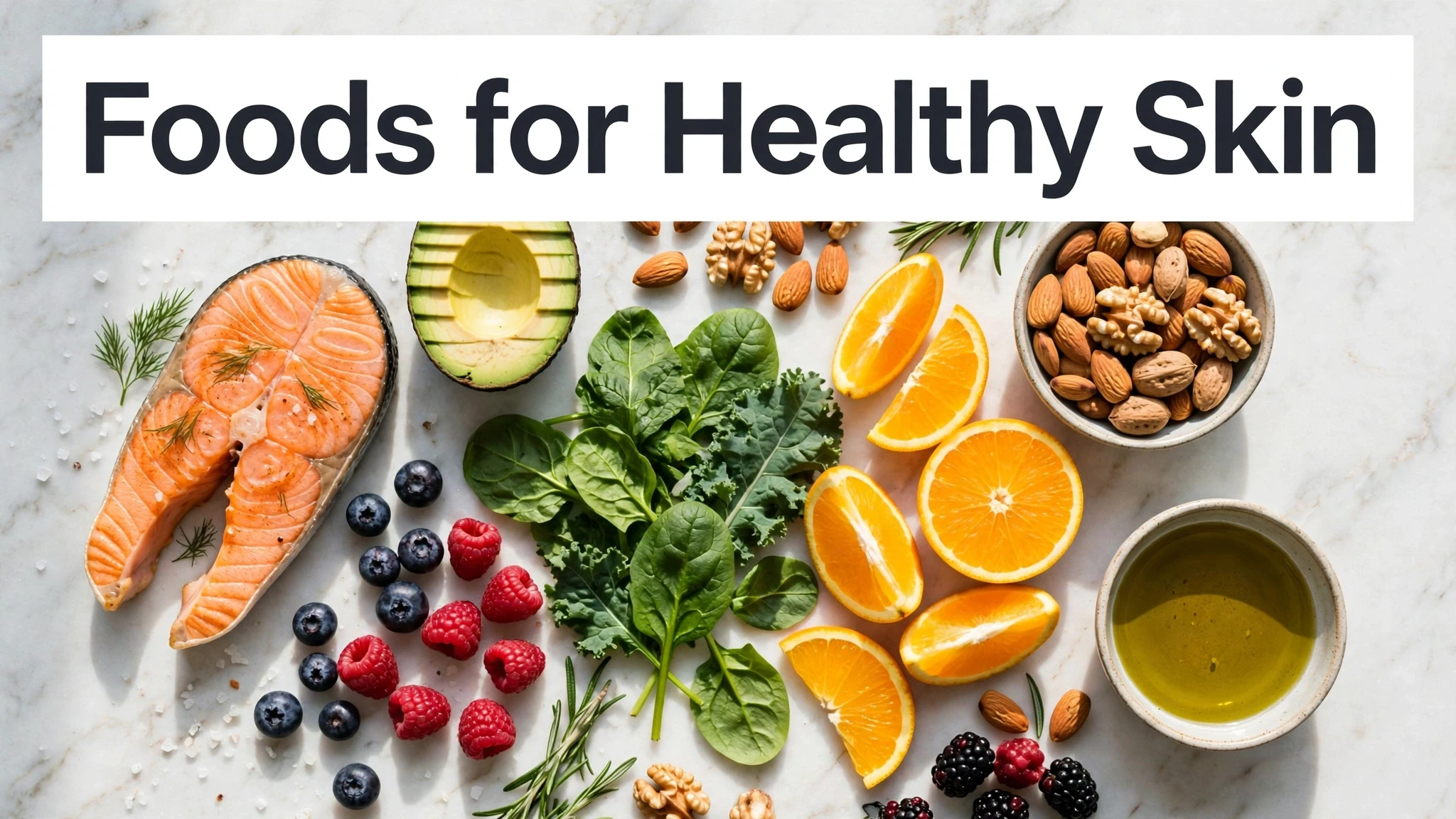
Oily fish, such as salmon, mackerel, sardines, and trout, are among the most skin-friendly foods, because they combine high-quality protein with omega-3 fats and, in some cases, vitamin D and selenium. Omega-3 fats support the skin barrier and may help calm inflammation, which is relevant to conditions where inflammation plays a part, though fish is not a treatment for eczema, psoriasis, or acne on its own. For people who do not eat fish, flaxseed, chia seed, and walnuts provide a plant form of omega-3, though the body converts it less efficiently, so variety and regularity matter. Aim for fish a couple of times a week if you eat it, as part of a balanced diet, rather than treating it as a daily medicine.
Colourful fruits and vegetables earn their place through antioxidants and vitamin C. Berries, such as blueberries, raspberries, and blackberries, are rich in pigments called anthocyanins, which act as antioxidants. Citrus fruits, kiwi, and strawberries provide vitamin C. Orange vegetables, such as carrots and sweet potatoes, provide beta-carotene. Dark leafy greens, such as spinach and kale, provide beta-carotene, vitamin C, and folate. Tomatoes provide lycopene, an antioxidant that some research links to skin protection, and cooking tomatoes, for example in soups and sauces, makes lycopene more available. Eating a range of colours is a practical shortcut: different colours generally mean different antioxidants, so a colourful plate is usually a skin-friendly plate.
Nuts, seeds, and healthy oils supply vitamin E, zinc, selenium, and healthy fats in a compact form. Almonds and sunflower seeds are good vitamin E sources. Pumpkin seeds and chickpeas provide zinc. Walnuts provide plant omega-3 fats. Olive oil, used for cooking and dressings, provides monounsaturated fats and polyphenols, plant compounds with antioxidant activity. Avocado combines healthy fats with vitamin E, vitamin C, and B vitamins, which is why it appears in almost every skin-food list, deservedly, though it is not magical on its own. Fermented foods, such as yoghurt, kefir, and kimchi, are sometimes linked to skin through gut health, and while the gut-skin connection is an active research area, fermented foods are best viewed as part of a varied diet, not as a skin treatment.
Hydration, Sugar, Dairy, and the Acne Question
Hydration is often presented as the secret to glowing skin, usually with the advice to drink a specific large amount of water. The truth is more nuanced. Skin hydration depends mainly on the skin barrier preventing water loss, and on moisturising from the outside, as well as on overall fluid intake. Drinking water is essential for health, and dehydration can make skin look duller and less elastic, but drinking far beyond thirst does not super-hydrate skin, and excess water is simply excreted. A practical approach is to drink regularly through the day, eat water-rich foods such as cucumber, melon, oranges, and soups, and protect the barrier with gentle skincare and sun protection. Thirst, urine colour, and overall health are better guides than a rigid daily litre target, which varies by climate, activity, and body size.
Sugar and highly processed foods deserve a careful, non-alarmist discussion. Diets high in refined sugars and refined starches raise blood sugar and insulin, which can increase oil production and inflammation in some people, and may worsen acne for those prone to it. This does not mean a single dessert causes a breakout, nor that cutting sugar cures acne. Acne is influenced by hormones, genetics, bacteria, oil production, and skincare, and diet is one factor among many. Similarly, dairy is linked to acne in some observational studies, particularly skimmed milk, but the evidence is mixed, and many people eat dairy without any skin effect. If you suspect a food trigger, a sensible approach is to keep a simple food and skin diary for a few weeks, then discuss any pattern with a health professional or dermatologist, rather than eliminating whole food groups on guesswork, which can harm overall nutrition.
Alcohol and smoking affect skin more clearly than most single foods. Alcohol dehydrates, dilates blood vessels, and can worsen conditions such as rosacea, while smoking reduces blood flow to the skin, damages collagen and elastin, and impairs wound healing. These effects are well established, and reducing alcohol and avoiding smoking are among the most effective skin-protective steps available, though they are rarely marketed as beauty advice. Sleep also matters: during sleep, skin repair processes are active, and chronic poor sleep is linked to duller skin and slower healing. Diet, sleep, sun protection, and not smoking together form a far more powerful skin strategy than any single superfood.
What Food Cannot Fix, and When to Seek Help
Honesty requires stating the limits of diet. Food cannot change your genetics, reverse deep sun damage, remove scars, or cure medical skin conditions such as eczema, psoriasis, rosacea, or severe acne on its own. Those conditions involve immune, hormonal, and structural factors that need proper diagnosis and treatment, which may include topical or oral medicines prescribed by a clinician. Diet can support treatment and may reduce triggers for some people, but presenting food as a replacement for medical care is misleading and can delay effective treatment. If a skin problem is severe, spreading, painful, infected, or not improving, or if it affects your mental health, see a doctor or dermatologist.
Sun protection deserves emphasis here, because it outweighs diet in preventing premature skin ageing and skin cancer. Ultraviolet radiation damages collagen, causes pigmentation, and increases skin cancer risk, and no food provides equivalent protection. Daily sun protection, including shade, protective clothing, and sunscreen appropriate to your climate and skin type, is the single most effective anti-ageing step available. Antioxidant-rich foods may support the skin’s defences against sun damage, but they do not replace sunscreen, and anyone who believes otherwise risks serious harm. Similarly, gentle skincare, avoiding harsh scrubbing, over-washing, and irritating products, protects the barrier that diet helps to build. Skin health is a system: diet supplies the building materials, sleep allows repair, and sun protection and gentle care prevent damage.
A final caution concerns supplements. The supplement market promises glowing skin from pills containing collagen, biotin, vitamin E, or herbal blends, often at high doses. For most people eating a varied diet, these supplements offer little proven benefit, and some carry risks: high-dose vitamin A can be toxic, high-dose selenium can be harmful, and biotin supplements can interfere with laboratory test results. Collagen supplements are broken down like other proteins and are not a substitute for dietary protein and vitamin C. If you suspect a deficiency, have a restricted diet, or take medication that affects nutrient absorption, discuss testing and supplementation with a health professional rather than self-prescribing from marketing claims.
A Simple Skin-Friendly Eating Pattern
Rather than a rigid meal plan, a skin-friendly pattern is easier to follow and more sustainable. Build most meals around vegetables and fruits, aiming for a range of colours across the day. Include a protein source at each meal, whether fish, eggs, dairy, legumes, tofu, or meat. Include a healthy fat source, such as olive oil, nuts, seeds, or avocado. Choose whole grains over refined ones most of the time. Drink water regularly and eat water-rich foods. Limit, without obsessing over, heavily processed foods, sugary drinks, and alcohol. This pattern is essentially a balanced, Mediterranean-style diet, and its skin benefits come from the combination, not from any single ingredient.
A sample day, as an example only, might look like this: breakfast of oats with berries, nuts, and yoghurt; lunch of a large salad with leafy greens, tomatoes, chickpeas, olive oil dressing, and wholegrain bread; a snack of an orange and a handful of almonds; dinner of salmon or lentils with sweet potato and broccoli; and water through the day. Notice that this day contains no exotic ingredients, no expensive powders, and nothing you cannot find in an ordinary supermarket. That is the point. Skin-friendly eating is ordinary healthy eating, done consistently, and its power lies in weeks and months of adequacy, not in days of perfection. If your diet already looks roughly like this, your skin is already receiving most of what food can offer, and further gains will come from sleep, sun protection, and skincare rather than from another superfood.
My Take:
My opinion on skin food is deliberately unfashionable: I think the beauty industry has turned a simple truth into an expensive lie. The simple truth is that skin, like every other organ, is built from food, and a varied, adequate diet helps it. The expensive lie is that you need a specific powder, berry, or supplement, preferably imported and overpriced, to unlock glowing skin. In my view, the foods that help skin most are the least marketable ones: carrots, lentils, eggs, sardines, spinach, and olive oil. They are cheap, ordinary, and unglamorous, which is precisely why they do not feature in glossy advertisements. I would rather see someone eat a decent, varied diet every day than buy a month’s supply of collagen powder and continue eating poorly, because the first approach supplies everything skin needs, while the second supplies mainly hope.
I also think we should talk more honestly about what glowing skin actually means. Much of what is sold as glow in photographs is lighting, makeup, filters, and youth, not diet. Real skin has pores, texture, occasional spots, and variation in tone, and that is normal, healthy skin. Chasing flawless, poreless skin through diet is chasing a digital illusion, and it can lead to restrictive eating, anxiety, and disappointment. I believe a healthier goal is comfortable skin: skin that feels supple, heals reasonably, is not constantly irritated, and is protected from the sun. That goal is achievable, it is honest, and it does not require perfection. If your skin is comfortable and you feel well, your diet is probably doing its job, even if your skin does not look like a filtered photograph.
Another opinion I hold is that the acne-diet debate needs more kindness and less certainty. I have seen people with acne blamed for eating chocolate or dairy, as if their skin were a moral report card, when acne is largely driven by hormones and genetics. Diet may influence acne for some people, and exploring triggers with a professional is reasonable, but the blame culture around acne food is cruel and often wrong. A teenager who eats pizza is not causing their acne by moral failure, and an adult who cuts dairy and sees no improvement has not failed at dieting. I think we should treat diet as one tool among many for skin, to be explored without guilt, and keep the focus on effective medical care where it is needed, rather than on food shame.
Finally, I want to defend the boring conclusion of this article, because boring conclusions are often the true ones. Eat varied, colourful, ordinary food. Drink when thirsty. Sleep enough. Protect your skin from the sun. Do not smoke. Be patient for a month while new skin forms. That advice will not sell a product, and it will not go viral, but it will serve your skin better than any trend, and it will serve your wallet and your overall health at the same time. Skin is not separate from the body; it is the body’s surface, and it reflects the body’s general care. Look after the whole body, consistently and without drama, and the skin will usually follow. That is not a miracle, but it is, in my view, the most honest beauty advice there is.
Seasonal eating is a practical angle that skin advice often ignores. In winter, when fresh produce is scarcer and indoor heating dries the air, skin often becomes drier, and the diet naturally shifts towards cooked foods, soups, and stews. Those cooked foods still count: cooked tomatoes provide lycopene, cooked carrots provide beta-carotene, and soups provide fluid, all of which support skin in cold months. In summer, when heat and sun increase damage and fluid loss, water-rich fruits, salads, and lighter meals suit both hydration and appetite, while sun protection becomes even more important. Adapting your skin-friendly foods to the season, rather than eating the same salad all year, makes the pattern sustainable, because it follows appetite, availability, and climate instead of fighting them. Skin changes with seasons, and a diet that changes with it is more realistic than a fixed list.
The gut-skin connection is another area where enthusiasm currently outruns evidence, and it deserves a calm verdict. Research does suggest links between gut health and some skin conditions, and a varied diet rich in fibre and fermented foods supports a diverse gut microbiome, which is good for overall health. However, the leap from that general finding to specific probiotic products curing eczema or acne is not supported by strong evidence, and many products are marketed far beyond what trials show. A sensible approach is to eat a fibre-rich, varied diet with some fermented foods if you enjoy them, and to discuss persistent skin conditions with a dermatologist rather than experimenting with expensive gut products. Good digestion supports good skin indirectly, through nutrient absorption and overall health, but it is not a shortcut around diagnosis, sun protection, and consistent skincare.
Skin and ageing deserve a final, honest paragraph, because much skin-food marketing promises to reverse ageing, which no food can do. Skin naturally thins, loses elasticity, and develops lines with age, as collagen production slows and cumulative sun exposure takes effect, and those changes are normal, not failures of diet or character. A good diet can support skin health at every age, helping skin remain comfortable, resilient, and better able to heal, but it cannot restore the skin of youth, and promising otherwise exploits a natural process for profit. The healthier goal at any age is skin that feels good, is protected from further damage, and reflects overall health, rather than skin that looks decades younger. Accepting normal ageing while caring well for skin is not giving up; it is the most realistic and dignified approach, and it frees attention and money for habits that genuinely help, such as sun protection, sleep, and a varied diet, rather than for products that promise the impossible.
A last point worth making is about skin and mental health, because the two are linked in both directions and the link is often ignored in diet advice. Visible skin conditions can cause embarrassment, anxiety, and low mood, which in turn affect eating, sleep, and self-care, creating a cycle in which skin and mood worsen together. Conversely, stress can trigger or worsen skin flare-ups through hormonal and immune pathways, which is why a skin-friendly life must include stress management, sleep, and, where needed, psychological support, alongside diet. If a skin problem is affecting your confidence, relationships, or daily functioning, that impact alone is a valid reason to seek help, from a dermatologist and, if helpful, from a counsellor, without shame. Skin is visible to the world in a way that most organs are not, and caring for the person inside the skin is as important as caring for the skin itself.
Frequently Asked Questions
What is the single best food for skin?
There is no single best food. Skin needs a combination of nutrients, including vitamin C, protein, healthy fats, zinc, and antioxidants, which come from varied foods such as fish, colourful vegetables, fruits, nuts, and olive oil. A varied diet beats any single superfood.
Can diet cure acne?
Diet alone does not cure acne for most people, though some find that high-sugar diets or dairy worsen their breakouts. Acne is influenced by hormones, genetics, oil production, and bacteria, so persistent or severe acne should be assessed by a dermatologist.
Does drinking more water give glowing skin?
Drinking enough water supports overall health and can help skin look less dull when dehydrated, but drinking far beyond thirst does not super-hydrate skin. Protecting the skin barrier and using moisturiser and sun protection matter at least as much.
Are collagen supplements effective for skin?
Collagen supplements are broken down into amino acids like other proteins and do not directly become skin collagen. Adequate total protein plus vitamin C from food is more important, and supplements are generally unnecessary for people eating a varied diet.
Which vitamins are most important for skin?
Vitamin C is essential for collagen production, vitamin A supports skin cell turnover, vitamin E acts as an antioxidant, and zinc supports healing. These are best obtained from food, as high-dose supplements can be harmful and are rarely needed without a diagnosed deficiency.
How long does it take for diet changes to affect skin?
Skin renews over roughly a month, so dietary changes usually take several weeks to show any effect. Judge changes over a month or more, and remember that sun protection, sleep, and gentle skincare also play major roles.