How Do Spiders Make Webs? Explained Simply
In this post
A spider web looks like a piece of art, thin and perfect, yet it is built by an animal smaller than a coin, working in the dark, without a plan drawn on paper. The spider does not measure with a ruler or follow a blueprint. It follows a set of instincts, uses silk stronger than steel for its weight, and rebuilds the whole structure again and again. When you watch one work, you see a builder that wastes nothing and checks its work with its feet.
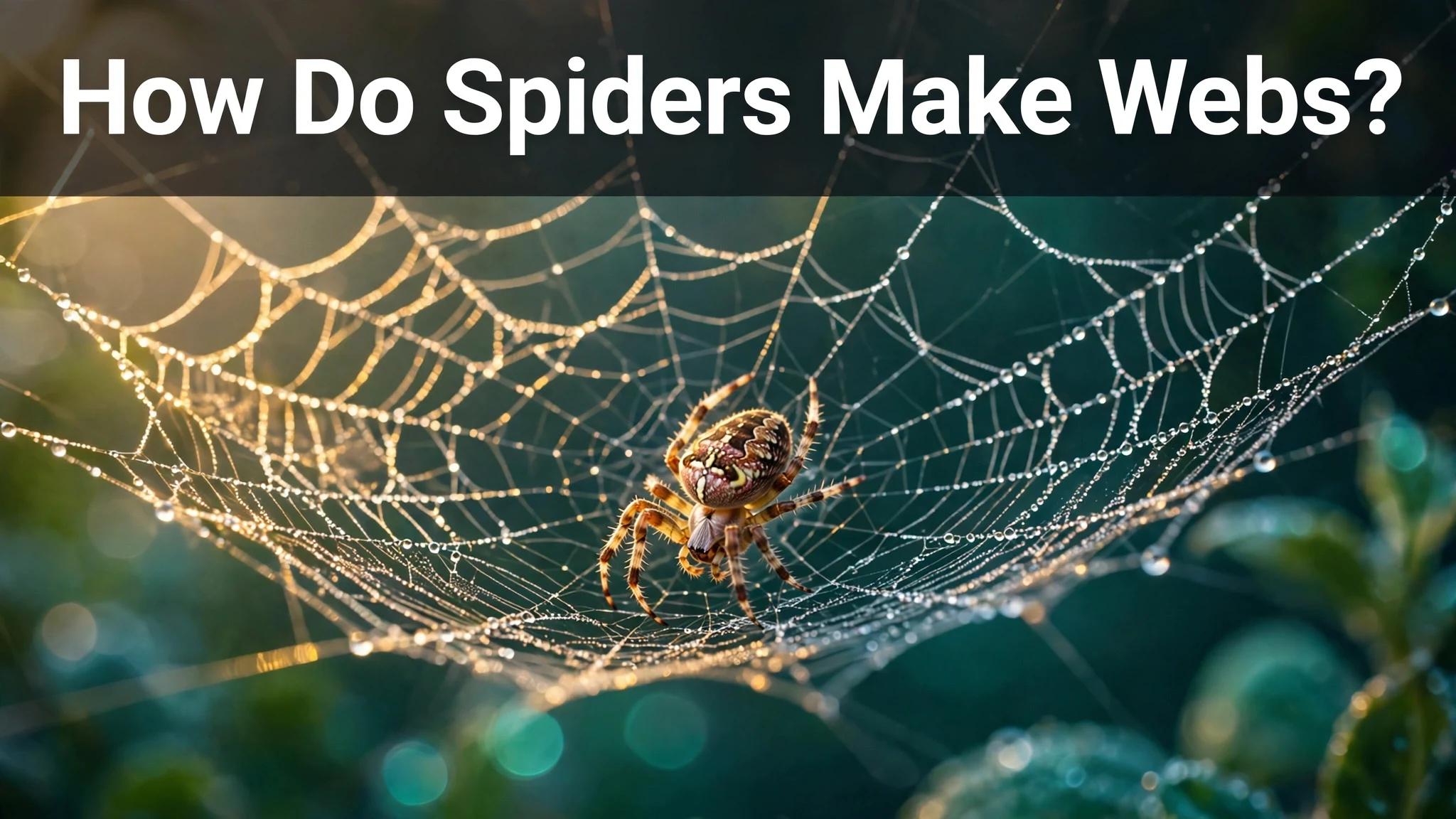
Most webs you notice are orb webs, the round wheel-shaped nets made by garden spiders and their relatives. Other spiders make funnel webs, sheet webs, cobwebs, or no web at all. Each design is a hunting tool, shaped by where the spider lives and what it eats. This guide follows one orb web from the first thread to the finished trap, and explains the silk, the spinnerets, and the clever physics that make it work.
What Spider Silk Really Is
Silk is not one material. A spider can make several kinds, each with a different job, and it switches between them as it builds.
In practice, A spider produces silk as a liquid inside silk glands in its abdomen, and the liquid hardens into a solid thread as it leaves the body. That change happens because the liquid is pulled and exposed to air, which lines up its protein molecules into a strong fibre. An orb weaver may have several types of silk glands, one for the frame, one for the sticky spiral, and one for wrapping prey. So the web is really a small factory output, with different products coming from different glands at different moments. The gluey spiral is what turns a few threads into a working trap, and once I understood that, the dew-covered circle in the garden stopped looking like luck to me.
Look closer and Spider silk is famous for being stronger than steel of the same thickness, and far more stretchy. Its strength comes from tiny crystals inside the protein, while its stretch comes from the looser parts between them. A thread can absorb the shock of a flying insect without snapping, which is why a web can catch prey much heavier than the spider. So the web is not fragile at all; it is a shock absorber, built to take a hit and hold. Nothing in that round net is decoration: the frame holds, the spokes spread the shock, and the sticky ring does the catching, which is why the whole thing holds together at all.
The key point is that The silk is also light, so a whole web weighs almost nothing. That lightness matters because the spider must carry the raw material in its body and climb while it builds. A large orb web may use tens of metres of silk, yet the finished web is so light that a breeze can move it. So the spider gets a large trap for a tiny investment of material, which is good economics for a hunter. Up close, an orb web reads less like a clever stunt and more like a night-shift solution to a real problem, namely dinner, delivered without a chase.
Spinnerets: The Spider’s Silk Tools
At the tip of the abdomen sit the spinnerets, small finger-like organs that control the silk as it comes out.
What makes this work is that Spinnerets are not one nozzle. They are a set of tiny spigots, each connected to a different silk gland. By opening and closing different spigots, the spider can choose which silk to use at each step of the build. It can also control the thickness of the thread by pulling faster or slower with its legs. So the spinnerets work like a set of taps, giving the spider fine control over a material it makes inside itself. Walk past a web without pausing and you miss the whole point, because the glue on that spiral decides whether the spider eats tonight or goes hungry.
Step back for a moment and The spider uses its back legs to pull silk from the spinnerets and to place it exactly where it wants it. Those legs comb, stretch, and attach the thread, and they also test how tight it is. If you watch closely, you will see the spider touch each new thread with a leg before moving on. So building is a hands-on job, and the legs are both tools and measuring instruments. A single night of spinning packs a factory, a sensor, and a larder into a few milligrams of silk, and the spider spends almost nothing to run it.
The surprising part is that Some spiders also use silk for things that have nothing to do with webs. They make draglines for safety, egg sacs for their young, and ballooning threads that carry young spiders through the air. A dragline is a lifeline: if the spider falls, the line catches it, like a climber’s rope. So silk is a general-purpose material, and the web is only its most famous use. Connect the sticky ring to the frame and the spokes, and the web stops being a pretty accident and starts being a plan you can follow thread by thread.
The First Thread: Bridging the Gap
Every web starts with a single line across empty space, and getting that first line across is the hardest part.
In practice, The spider releases a fine thread into the air and lets the wind carry it until it sticks to something on the other side. That thread is so light that even a gentle breeze can lift it across a gap of a metre or more. Once it sticks, the spider pulls it tight and walks across it, strengthening it as it goes. So the first bridge is made by luck and wind, and then turned into a solid road by the spider’s own work. The gluey spiral is what turns a few threads into a working trap, and once I understood that, the dew-covered circle in the garden stopped looking like luck to me.
Look closer and The spider then builds a frame by walking around the edges and laying down strong, non-sticky silk. The frame is the skeleton of the web, and it must be strong enough to hold the whole structure. It is usually attached to leaves, twigs, fences, or walls, wherever there are good anchor points. So the shape of the web is decided by the shape of the place, not by the spider alone. Nothing in that round net is decoration: the frame holds, the spokes spread the shock, and the sticky ring does the catching, which is why the whole thing holds together at all.
The key point is that Next comes a set of spokes, like the spokes of a wheel, radiating from the centre. The spider walks from the centre to the edge again and again, laying a spoke each time. It keeps the spokes evenly spaced, and it can feel with its legs whether the tension is right. So the wheel shape is not decoration; it spreads the force of an impact across the whole web. Up close, an orb web reads less like a clever stunt and more like a night-shift solution to a real problem, namely dinner, delivered without a chase.
The Sticky Spiral: The Actual Trap
With the frame and spokes in place, the spider adds the spiral that actually catches insects.
What makes this work is that First it lays a temporary spiral, a rough guide made of non-sticky silk, to help it space the real spiral evenly. It walks in a spiral from the centre outwards, laying that guide as it goes. Then it turns around and comes back, replacing the guide with sticky silk, eating the temporary thread as it goes. So nothing is wasted: the guide thread is recycled into the spider’s body and used again. Walk past a web without pausing and you miss the whole point, because the glue on that spiral decides whether the spider eats tonight or goes hungry.
Step back for a moment and The sticky spiral is coated with tiny droplets of glue. Those droplets are what hold an insect when it flies into the web. The glue is strong enough to hold a struggling fly, yet the spider itself can walk on the non-sticky spokes without getting stuck. So the web has safe roads and sticky traps, and the spider knows exactly which is which. A single night of spinning packs a factory, a sensor, and a larder into a few milligrams of silk, and the spider spends almost nothing to run it.
The surprising part is that The spider usually builds at night or in the early morning, when insects are active and the air is still. Building takes about an hour for a large orb web, and the spider works quickly and steadily. Many orb weavers rebuild their web every day, eating the old silk in the morning and starting again. So the web is a daily tool, not a permanent home, and it is replaced as regularly as a fisherman replaces a net. Connect the sticky ring to the frame and the spokes, and the web stops being a pretty accident and starts being a plan you can follow thread by thread.
How a Spider Knows an Insect Is Caught
A spider does not watch its web with eyes. It listens with its feet, feeling vibrations through the silk.
In practice, The spider sits at the centre of the web, or in a hiding place nearby, with its legs touching the silk. Every vibration travels along the threads, and the spider can tell the difference between a trapped insect, a falling leaf, and a gust of wind. A struggling insect makes a fast, irregular vibration, while wind makes a slow, even one. So the web is also a sensor, and the spider reads it like a musician reads a string. The gluey spiral is what turns a few threads into a working trap, and once I understood that, the dew-covered circle in the garden stopped looking like luck to me.
Look closer and When it feels the right vibration, the spider runs to the spot, moving fast along the non-sticky spokes. It bites the prey to inject venom, then wraps it in silk so it cannot escape. The venom paralyses the insect and starts to break down its insides, because spiders cannot chew solid food. So the catch, the bite, and the wrapping are one quick sequence, and hesitation would let the prey escape. Nothing in that round net is decoration: the frame holds, the spokes spread the shock, and the sticky ring does the catching, which is why the whole thing holds together at all.
The key point is that The spider may eat the prey at once, or leave it wrapped for later. Wrapping keeps the food fresh and safe from other animals. If the web is badly damaged by a large insect, the spider may cut out the damaged section and repair it. So the web is maintained, not abandoned, and a good web can keep working for a whole day. Up close, an orb web reads less like a clever stunt and more like a night-shift solution to a real problem, namely dinner, delivered without a chase.
Why Some Spiders Never Build Webs
Not every spider is a web builder. Many hunt on foot, and their silk is used for other jobs.
What makes this work is that Wolf spiders and jumping spiders hunt by running and jumping, using excellent eyesight to find prey. They use silk only for draglines, egg sacs, and shelters. A jumping spider can leap many times its own body length to catch a fly. So for these spiders, speed and sight replace the web, and silk becomes a safety rope instead of a trap. Walk past a web without pausing and you miss the whole point, because the glue on that spiral decides whether the spider eats tonight or goes hungry.
Step back for a moment and Trapdoor spiders dig burrows and wait at the entrance, feeling for vibrations in the ground. Funnel-web spiders build a sheet with a tunnel at one end, and rush out when something lands on it. Each design matches a different hunting style and a different place to live. So there is no single best web, only the web that fits the spider’s life. A single night of spinning packs a factory, a sensor, and a larder into a few milligrams of silk, and the spider spends almost nothing to run it.
The surprising part is that Even among web builders, the designs vary a lot. Some make messy cobwebs, some make sheets, some make triangles, and some make a single thread with a sticky blob at the end. The bolas spider swings a sticky ball on a thread to catch moths, like a fisherman with a lure. So the variety is a reminder that evolution tries many answers to the same problem. Connect the sticky ring to the frame and the spokes, and the web stops being a pretty accident and starts being a plan you can follow thread by thread.
Webs, Weather, and the Spider’s Daily Life
A web is exposed to rain, wind, and dust, and the spider must cope with all of it.
In practice, Rain can break a web, and strong wind can tear it from its anchors. That is one reason many spiders rebuild daily: a fresh web is stronger and stickier than an old one. Dew in the morning makes webs visible, which is why we notice them most at dawn. So the beautiful dew-covered web is really a web at the end of its working life, just before it is recycled. The gluey spiral is what turns a few threads into a working trap, and once I understood that, the dew-covered circle in the garden stopped looking like luck to me.
Look closer and The spider itself must stay safe while it works. It is exposed to birds, wasps, and other spiders while it builds. Many orb weavers hide during the day and build at night, when fewer predators are active. So the timing of the build is a safety choice as much as a hunting choice. Nothing in that round net is decoration: the frame holds, the spokes spread the shock, and the sticky ring does the catching, which is why the whole thing holds together at all.
The key point is that A web also tells other animals where the spider is, so camouflage matters. Some spiders look like bird droppings or dead leaves, and sit still in the centre of the web. Others hide in a curled leaf nearby, with a signal thread running to the web. So the spider’s own body is part of the trap’s design, and hiding is as important as building. Up close, an orb web reads less like a clever stunt and more like a night-shift solution to a real problem, namely dinner, delivered without a chase.
My Take:
I have spent a long time watching spiders, and I still find them hard to dislike once you understand what they are doing. A web is not a mess in the corner of a room. It is a piece of work, made by an animal that cannot see a plan, cannot buy materials, and cannot ask for help, yet it builds something that works. That is the part about the spider’s web that stays with me. It makes my own excuses look thin.
I think the most impressive part is the recycling. A spider eats its old web and builds a new one, which means nothing is wasted and every day starts fresh. I have seen a garden spider finish a web in under an hour, then sit in the middle as if it had done nothing special. Recycling is what keeps pulling me back to garden spiders: an animal that eats yesterday’s trap to build today’s, and treats nothing as waste, teaches me more than the silk chemistry ever could. When I watch an orb weaver now, I am not reciting a fact about silk; I am checking my own habit of looking, and the web is the test I use.
I also think we judge webs by how they look, not by how they work. A web looks fragile, so we assume it is weak, yet it can stop a flying insect in mid-air without breaking. That gap between appearance and performance is something I notice in people too, and it reminds me not to judge quickly. For me, the honest test for the spider’s web is simple. Clever words alone do not win me over; I would rather watch a spider rebuild than listen to a neat theory about one. A good explanation lets me guess the spider’s next move, like knowing it will eat the old web at dawn, and this one keeps getting those guesses right. That is the sort of thing I would mention to a neighbour over a garden fence, so the next web they find feels like a small workshop rather than a mess to sweep away.
The vibration idea changed how I watch spiders. Once I learned that the spider reads its web with its feet, I stopped thinking of it as a passive trap. Now, when I see a spider rush to one corner, I imagine it hearing a message through the silk, like a phone ringing. Sitting still beside a web for an hour taught me that understanding takes longer than reading, and I had been rushing it. For me, learning about the spider’s web was not one dramatic moment. A leg touching a thread here, a rebuilt ring there, and slowly the separate moments join into something I can actually picture. Simple questions about webs do not annoy me any more, because the plainest one, why rebuild every day, turned out to have the richest answer.
I am not comfortable with the idea of killing every spider I see indoors. Most house spiders are harmless, and they eat the insects that actually bother us. I now catch them in a glass and put them outside, which takes a minute and costs me nothing. If a friend asked me about webs, my first piece of advice would be to keep asking after the first answer runs out. Ask what a wet morning does to the glue, who gains when the wind changes, and what the rebuild costs the spider, and the web suddenly has a whole economy behind it. My old idea of webs was loud and wrong, and the new one arrived quietly, which is probably why it has stayed put without me having to argue for it.
The part I keep returning to is the first thread. A spider throws a thread into the wind and trusts that it will stick somewhere, which is a brave way to start a project. It reminds me that most good work starts before you can see the whole result, with one small line across a gap. There is a humility in learning about the spider’s web too. The deeper I go into silk and spinnerets, the less sure I feel about sweeping statements, and that uncertainty feels honest rather than weak. A second look at a web pays off, because the first glance misses the glue, the spokes, and the spider’s own patience. One clear picture, a spider eating its own web to start again, is worth more to me than a notebook full of silk facts I will never use.
If I could change one thing, it would be how we teach children about spiders. We teach fear first and facts second, and that order is backwards. A child who watches a spider build a web will remember the building long after they forget the fear, and that memory is worth more. If I could keep only one image from all this, it would be the first thread sailing on the wind, because it changed how I begin difficult jobs myself. Writing this in plain words forced me to notice where I was bluffing about silk, and where I actually understood the spider’s work.
Going back over the silk section, I was struck by how many small choices, which gland, which thread, which thickness, decide whether the trap works. The showy fact about silk beating steel is not the teacher here; the quiet, steady work of the glands, hour after hour, is. That steadiness comforts me, because a spider’s success comes from repeatable little steps, and anyone watching a garden web can practise noticing them.
The spinnerets section changed how I describe webs to other people, because it gave me a concrete tool to point at instead of a vague wonder. Now I begin with a question about the silk, show the spinneret doing its job, and only afterwards say what I think it proves. That order feels fairer to the listener, because they get to watch the evidence arrive instead of being handed my verdict up front. It also leaves space for someone to push back, and a web that survives a good argument is a much better thing to talk about than one protected by certainty.
Thinking about the first thread again, at the very end, I noticed a thread running through the whole piece that I had missed at the beginning. Patience shows up in the rebuilding, attention shows up in the vibrations, and a readiness to be proved wrong shows up everywhere in between. Those habits travel well beyond gardens and spiders, which is why this piece earns a second look from me rather than a single skim. I will return to a garden web on another morning, watch a different spider, and expect the second visit to show me something the first one hid.
Frequently Asked Questions
Do all spiders make webs?
No, not all spiders make webs. Many spiders, such as wolf spiders and jumping spiders, hunt on foot and use silk only for safety lines, egg sacs, and shelters. Web building is one hunting method among several.
How long does it take a spider to build a web?
A large orb web usually takes about an hour to build. Many orb weavers build at night or in the early morning, and some rebuild their web every day.
Is spider silk really stronger than steel?
For its weight, yes. Spider silk is stronger than steel of the same thickness and much more stretchy, which lets it absorb the shock of a flying insect without snapping.
Why do spiders eat their own webs?
Eating the old web recycles the silk protein, so the spider can use it again for the next web. It also removes a damaged, dusty web and replaces it with a fresh, sticky one.
Can a spider get stuck in its own web?
Usually not. The spider walks on the non-sticky spokes and frame, and avoids the sticky spiral. Its legs also have a coating that helps it move without sticking.
What is the sticky part of a web made of?
The sticky spiral is coated with tiny droplets of glue. Those droplets hold an insect when it touches the thread, while the spider itself uses the dry threads to move around.