How to Grow Herbs on a Kitchen Window
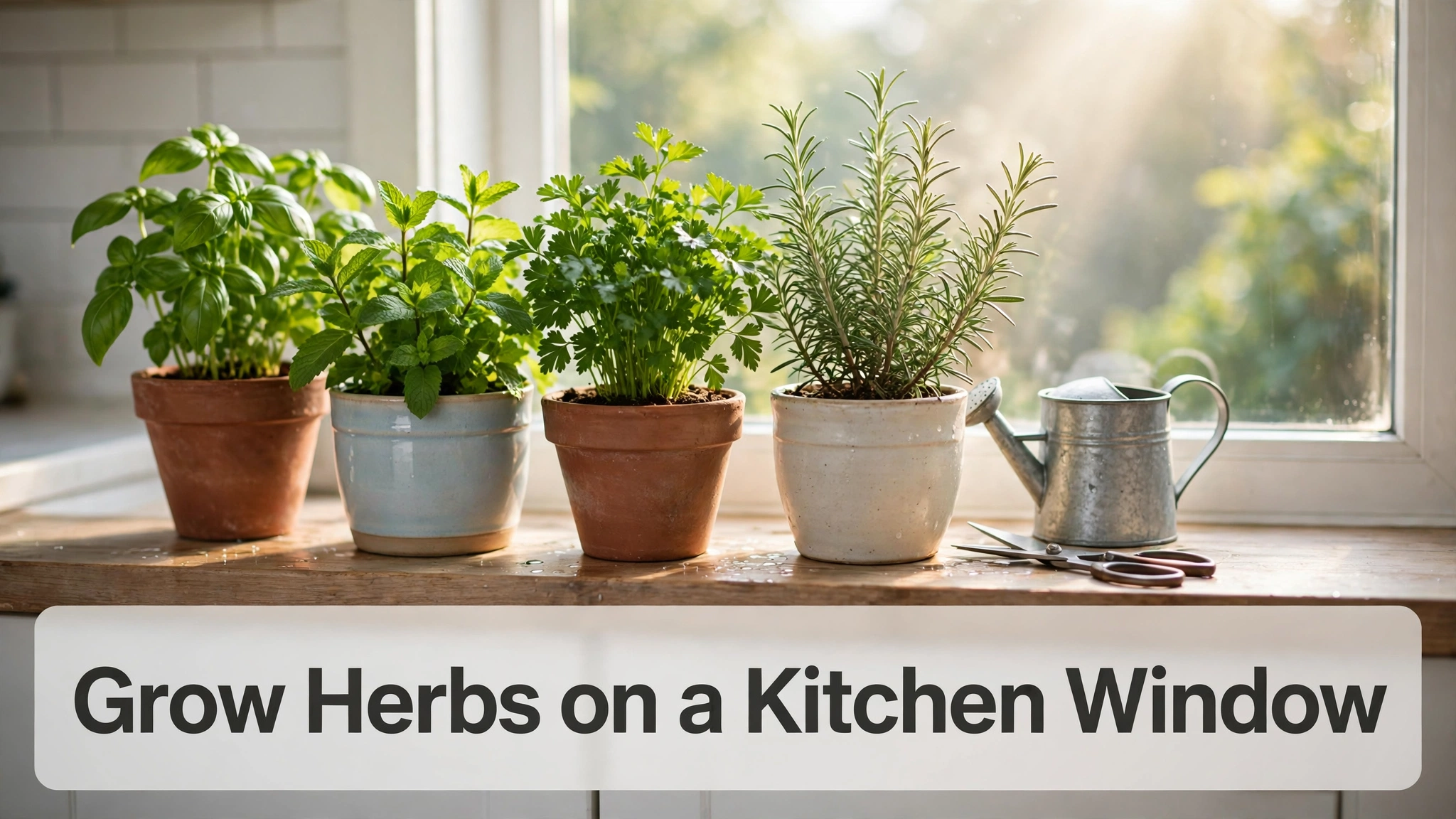
In this post
- Choose the Right Window: Light Is Everything
- Best Beginner Herbs: Basil, Mint, Parsley, Chives, and More
- Pots, Soil, Drainage, and Planting Without Mess
- Watering, Feeding, and Seasonal Care on a Windowsill
- Harvesting, Pruning, and Keeping Herbs Bushy
- Cooking With Windowsill Herbs, Storage, and Safety
- Common Problems, Pests, and Starting Again Without Guilt
- Expanding Your Herb Garden: Cuttings, Seeds, and Indoor-Outdoor Moves
- Herbs for Tea, Health Routines, and Gifts
- My Take:
Growing herbs on a kitchen window turns cooking into a small daily harvest. A windowsill herb garden needs little space, little money, and little time, yet it gives fresh flavour that dried herbs rarely match. Success depends on light, watering, pot drainage, and regular harvesting, not on expensive equipment or gardening experience. Beginners do best by starting with a few forgiving herbs, learning their light and water needs, and expanding only when those herbs thrive. This guide gives general growing information for home kitchens, with safety notes for pots, water, and pets where relevant.
Choose the Right Window: Light Is Everything
Herbs need light more than any other factor, and kitchen windows differ greatly. A south-facing window in the northern hemisphere gives the strongest light and suits basil, rosemary, and mint, while an east-facing window gives gentle morning sun that suits parsley, chives, and mint. A west-facing window gives stronger afternoon sun that can suit many herbs but may overheat small pots in summer. A north-facing window gives soft light that suits only the most tolerant herbs, such as mint and chives, and growth will be slower. Observe your window for a few days: note hours of direct sun, shade from buildings or trees, and temperature near glass in summer and winter.
If light is limited, rotate pots every few days so stems grow straight rather than leaning sharply toward glass. Move pots slightly back from cold glass in winter nights, and use a sheer curtain to soften harsh midday sun in summer. Avoid placing herbs directly above a radiator or beside a hot oven, because heat dries soil quickly and stresses roots. If your kitchen has no suitable window, a small grow light can help, but choose one suitable for indoor plants, follow electrical safety guidance, and place it at the distance advised by its maker. Light determines flavour too: herbs grown in good light usually taste stronger and grow bushier than herbs grown in shade.
Best Beginner Herbs: Basil, Mint, Parsley, Chives, and More
Basil is the classic kitchen-window herb, loved for pasta, salads, and sauces, but it needs warmth, bright light, and consistent moisture. It dislikes cold drafts and wet feet, so use a pot with drainage, water when top soil dries, and pinch the top regularly to encourage bushy growth and delay flowering. Mint is almost indestructible and grows fast, but it spreads aggressively, so always grow mint alone in its own pot, never mixed with other herbs. Mint tolerates less light than basil, prefers moist soil, and rewards frequent cutting, which keeps it bushy rather than leggy.
Parsley grows slower but lasts longer, tolerating cooler conditions and moderate light. Soak seeds overnight before sowing if starting from seed, or buy a young plant for faster results. Chives are easy, hardy, and useful for eggs, potatoes, and salads; cut them with scissors, leaving a few centimetres to regrow. Rosemary prefers bright light, free-draining soil, and less frequent watering, making it ideal for sunny windows and forgetful waterers. Thyme and oregano also prefer sun and drier soil, while coriander grows fast but bolts, or flowers, quickly in heat, so sow small amounts frequently for continuous supply. Start with three herbs you actually cook with, rather than ten you rarely use.
Pots, Soil, Drainage, and Planting Without Mess
Good pots and soil prevent most beginner failures. Choose pots with drainage holes and saucers to protect windowsills, and use a light, free-draining potting mix, not dense garden soil that compacts and stays wet. For rosemary, thyme, and oregano, mix in perlite or coarse sand to improve drainage. For basil, parsley, and mint, a general potting mix with good moisture retention suits better, but drainage remains essential. Pot size matters: small pots dry quickly and need frequent watering, while very large pots stay wet and can rot roots. Start with pots around twelve to fifteen centimetres wide for individual herbs, moving up only when roots fill the pot.
Planting is simple: fill the pot with moist mix, place the plant at the same depth it grew before, firm gently, and water until water runs from drainage holes, then empty the saucer. Label pots with herb name and planting date, especially if you grow similar-looking herbs. Keep soil off windowsills by using trays, and wipe spills promptly to prevent stains or mould. If starting from seed, sow thinly, cover lightly as advised on the packet, keep soil moist but not soaked, and thin seedlings so the strongest plants have space. Buying young plants is faster and more reliable for beginners, while seeds are cheaper and offer more varieties for later experiments.
Watering, Feeding, and Seasonal Care on a Windowsill
Watering windowsill herbs correctly is a skill learned by touching soil, not by following a fixed calendar. Push a finger one to two centimetres into soil: if dry, water thoroughly until drainage appears, then empty the saucer; if damp, wait. Basil and mint prefer soil that stays lightly moist, while rosemary and thyme prefer soil that dries between waterings. Water in the morning where possible, so leaves dry during the day, and avoid wetting leaves repeatedly, which can encourage disease. In summer, small pots may need daily checking, while in winter, growth slows and watering should reduce. Always adjust to pot size, light, temperature, and plant type rather than watering every herb on the same day.
Feeding should be light and seasonal. A balanced liquid feed at half strength once every few weeks in spring and summer is enough for most windowsill herbs, and overfeeding can produce weak, flavourless growth. Do not feed stressed, dry, or newly repotted plants until they recover. In winter, feed rarely or not at all, because growth slows and excess feed can burn roots. Rotate pots for even growth, remove yellow leaves promptly, and check leaf undersides for pests such as aphids or whitefly. Isolate affected plants, wash leaves gently, and use gentle, food-safe methods first, because herbs are eaten. Never spray herbs you plan to eat with garden chemicals unless the product is explicitly approved for edible plants and you follow its safety intervals.
Harvesting, Pruning, and Keeping Herbs Bushy
Regular harvesting is care, not damage, when done correctly. Harvest in the morning after dew dries, when flavour oils are often strongest, and use clean scissors or fingers to avoid tearing stems. For basil, pinch just above a pair of leaves to encourage two new branches, and remove flower buds promptly to keep leaves tender. For mint and parsley, cut outer stems first, leaving the centre to regrow. For chives, cut leaves to a few centimetres above soil and allow regrowth. For rosemary and thyme, cut soft new growth rather than woody old stems, and never remove more than about a third of the plant at once, so it can recover.
Pruning keeps herbs compact on a small windowsill. If a herb becomes leggy, with long bare stems and few leaves, cut it back moderately and improve light, rather than letting it stretch further. Use harvested herbs fresh for best flavour, store short-term in a damp cloth in the fridge, or freeze chopped herbs in water or oil in ice-cube trays for later cooking, labelling each tray. Drying works well for rosemary, thyme, and oregano, but basil and parsley lose flavour when dried, so freezing suits them better. Regular, gentle harvesting gives a continuous supply, prevents flowering in many herbs, and keeps windowsill plants tidy and productive.
Cooking With Windowsill Herbs, Storage, and Safety
Windowsill herbs transform everyday cooking with small amounts. Basil suits tomato dishes, pasta, salads, and sandwiches. Mint suits teas, salads, desserts, and savoury sauces. Parsley suits soups, salads, eggs, and garnishes. Chives suit potatoes, eggs, and cream sauces. Rosemary suits roasted vegetables, bread, and potatoes. Thyme suits soups, stews, and roasted dishes. Add soft herbs such as basil, parsley, and mint near the end of cooking to preserve flavour, and add woody herbs such as rosemary and thyme earlier so their flavour infuses. Taste as you go, because fresh herbs vary in strength by light, season, and variety.
Safety matters for edible plants. Wash harvested herbs gently before eating, especially if pets, dust, or kitchen sprays are nearby. Do not use garden soil treated with unknown chemicals for edible herbs, and keep herbs away from cleaning sprays, insecticides, and cigarette smoke. Some herbs can interact with medicines or health conditions in large amounts, so general cooking amounts are normally fine, but people with specific health concerns should check with a health professional about large or medicinal use. Keep herbs out of reach of pets that chew plants, and check pet safety for specific herbs before allowing access. Fresh herbs are food, not medicine, and their value lies in flavour, freshness, and the pleasure of harvesting at cooking time.
Common Problems, Pests, and Starting Again Without Guilt
Common windowsill problems have simple first checks. Leggy growth usually means low light, so move the plant brighter gradually. Yellow leaves often mean overwatering, poor drainage, or low light, so check soil and pot holes first. Brown leaf tips often mean dry air, inconsistent watering, or cold drafts. Small flies usually mean soil staying wet, so allow soil to dry and remove dead leaves. Aphids cluster on new growth and can be washed off gently with water, while whitefly flies up when leaves are disturbed. Isolate affected plants, clean leaves, and avoid harsh sprays on edible herbs. If a plant dies, learn one lesson from it and start again, rather than giving up on all herbs.
Starting again is normal in gardening, even for experienced growers. Seeds fail, basil bolts in heat, mint outgrows a pot, and winter light weakens plants. Keep a simple note of what worked: which window, which pot, which watering pattern, and which herb thrived. That note helps the next planting succeed faster. Share cuttings with friends, swap herbs, and enjoy the process as a kitchen habit rather than a test. A windowsill with three healthy herbs you cook with weekly is more successful than a windowsill crowded with ten struggling plants. Begin small, harvest often, and let your kitchen window become a reliable, fragrant part of daily cooking.
Expanding Your Herb Garden: Cuttings, Seeds, and Indoor-Outdoor Moves
Once three herbs thrive, expansion becomes tempting, and cuttings offer the cheapest way to grow. Mint, basil, rosemary, and oregano can often be propagated from stem cuttings: cut a healthy stem below a leaf node, remove lower leaves, place it in water until roots appear, then plant it in moist potting mix. Keep cuttings in bright indirect light, change water regularly, and transplant gently once roots are a few centimetres long. Not every cutting roots, so take two or three per herb and celebrate those that succeed. Seed starting offers more varieties, but requires patience, thin sowing, and consistent moisture, so start seeds in small batches rather than a whole tray at once.
Moving herbs between indoors and outdoors needs gradual adjustment. In warm seasons, windowsill herbs can spend days outdoors in sheltered, bright spots, but bring them in gradually to avoid shock from wind, strong sun, or cold nights. Harden plants by increasing outdoor time over a week, and check for pests before bringing them back inside. In autumn, move tender herbs indoors before first frost where relevant, prune lightly, and place them in the brightest window available. Keep a note of which herbs survived moves and which did not, because local climate and window conditions vary. Expansion should follow success, not ambition: add one new herb at a time, learn it, and only then add another.
Herbs for Tea, Health Routines, and Gifts
Kitchen herbs offer more than cooking flavour. Mint, chamomile where suitable, and lemon balm can make simple herbal teas, using fresh leaves steeped in hot water, but check safety for children, pregnancy, medicines, and pets before regular medicinal-style use, because herbal teas are not risk-free for everyone. This guide gives general cooking information, not medical advice, and large or therapeutic amounts should be discussed with a health professional. For everyday cooking amounts, fresh herbs are safe for most people, but wash them well and use them fresh rather than storing steeped teas for long periods. Keep tea herbs separate from cooking herbs if you use them frequently, so harvesting does not deplete cooking supply.
Herbs also make thoughtful, low-cost gifts. A potted mint cutting, a small basil plant, or a jar of dried rosemary with a handwritten label gives a personal, useful present that costs little and encourages the recipient to grow. Include a simple care note: light, watering by soil touch, and harvesting tips, because a gift plant without guidance often dies quickly. For children, a small mint or chive pot with a watering can teaches responsibility and food origins in a tangible way. Sharing herbs, cuttings, and cooking ideas builds community around a windowsill, turning a solitary kitchen habit into a shared pleasure that costs almost nothing and gives fresh flavour to others as well.
My Take:
My first windowsill herb was basil, and it died within weeks because I treated it like a decoration rather than a living plant. I placed it in a dark corner, watered it whenever I remembered, and never harvested it, so it grew tall, weak, and bitter. That failure taught me that herbs need use, not admiration. When I moved basil to a bright window, watered by touching soil, and pinched it regularly, it became bushy, fragrant, and generous. The difference was not talent; it was attention to light, water, and harvesting. Beginners should hear that herbs forgive small mistakes, but they do not thrive on neglect disguised as decoration.
Cooking with fresh herbs changed my meals more than any new pan or recipe book. A handful of basil transformed plain tomatoes, mint brightened a simple salad, and parsley made soup taste finished rather than plain. Those small changes made home cooking feel more enjoyable, and enjoyable cooking led to cooking more often, which saved money compared with takeaway meals. Fresh herbs also reduced waste, because I harvested only what I needed instead of buying a large bunch that wilted in the fridge. That cycle, grow a little, harvest a little, cook a little, felt sustainable and satisfying in a way bulk buying never did.
I also learned to choose herbs by cooking, not by gardening fashion. I once grew herbs I rarely used because they looked attractive, while buying parsley and mint I actually needed. Now I grow only herbs that appear in my weekly cooking, and I grow them in amounts that match my use. That discipline keeps the windowsill tidy and productive, and it prevents guilt about neglected plants. If you cook Italian food often, basil and parsley matter more than exotic herbs. If you drink mint tea daily, mint deserves the best pot. Matching plants to real meals is the simplest rule for windowsill success, and it applies to many other home choices too.
Mint taught me a separate lesson about boundaries. I planted mint with other herbs, thinking sharing a pot would save space, and mint quickly crowded everything else. Growing mint alone, in its own pot, with its own saucer, solved the problem and gave me a lesson about invasive growth in general: some things need their own container to thrive without harming neighbours. That lesson, learned from a plant, now helps me organise time, work, and household tasks. Give vigorous things their own space, and everything else grows better. It sounds simple, but I learned it by watching roots, not by reading advice.
Finally, I think windowsill herbs offer a gentle introduction to growing food, especially for people without gardens, balconies, or gardening experience. A kitchen window is accessible, visible, and tied to daily cooking, so care becomes part of a routine rather than a separate chore. Children can water, harvest, and taste herbs, learning where flavour comes from without a lecture. Adults can enjoy a quiet morning ritual of checking soil, pinching basil, and planning a meal. That ritual, repeated daily, builds confidence for larger growing projects later, or simply remains a small pleasure in itself. Start with one pot, one herb you love, and a bright window, and let fresh flavour grow from there.
I also learned that herb gardening rewards routine more than knowledge. Reading about herbs helped, but daily checking, soil touching, and harvesting taught far more. A two-minute morning check, while water boils for tea, became part of my day: soil dry or damp, leaves healthy or yellow, stems needing pinching or not. That tiny routine prevented most problems before they grew large, because I noticed changes early. Knowledge without routine fails, while routine with basic knowledge succeeds, and that principle now guides other habits too. Small daily attention beats occasional expert effort in gardening and in many parts of home life.
Another lesson is about sharing and generosity. When my mint grew abundantly, I gave cuttings to neighbours, friends, and family, with simple care notes. Those gifts started conversations about cooking, windows, and light, and several recipients began their own windowsill gardens. Sharing plants feels different from sharing objects bought in a shop, because a cutting carries care and growth, and it invites the recipient to continue that care. That cycle of giving and growing builds community quietly, without cost or organisation. A windowsill herb garden, started for personal cooking, became a small source of connection, and that unexpected benefit now matters as much to me as fresh flavour.
Finally, I think windowsill herbs teach patience and seasonality in a modern kitchen that otherwise promises instant everything. Herbs grow slowly, respond to seasons, and cannot be rushed by wanting them faster. Waiting for basil to bush out, parsley to regrow after cutting, or rosemary to strengthen over months teaches trust in slow processes. That patience transfers to cooking, where fresh ingredients need time, and to life, where skills grow gradually. My kitchen window now holds herbs I use, love, and understand, and each harvest reminds me that small, steady care produces real flavour. Start with one pot, learn it well, and let your herb garden grow at the pace of your real life.
One more habit I now value is a simple herb journal, even a phone note, recording planting dates, windows, watering patterns, and harvests. That journal helps me remember which herbs thrived in which window, which pots dried fastest, and when to sow coriander again for continuous supply. Without a note, I repeated the same mistakes each season, planting basil in a dark corner or overwatering rosemary. With a note, each season builds on the last, and my windowsill improves steadily without extra effort. A herb journal turns gardening from trial and error into a small, personal science that grows more reliable every year.
That steady, small-scale approach is what I would recommend to anyone starting out: pick one clear habit, repeat it until it feels ordinary, and only then add the next one. Grand overhauls rarely survive busy weeks, but ordinary habits do, and ordinary habits repeated for months create a home that feels genuinely easier to live in.
Frequently Asked Questions
How do I grow herbs on a kitchen window?
Choose a bright window, use pots with drainage and light potting mix, water only when top soil dries, harvest regularly, and start with forgiving herbs you actually cook with, such as basil, mint, or parsley.
Which herbs grow best on a windowsill?
Basil, mint, parsley, and chives suit many kitchen windows, while rosemary, thyme, and oregano suit bright, sunny windows with drier soil. Mint should always grow alone in its own pot.
How much light do kitchen window herbs need?
Most herbs prefer bright indirect light or several hours of gentle direct sun. South or east windows usually suit herbs best, while north windows give slower growth and suit only tolerant herbs like mint and chives.
How often should I water windowsill herbs?
Check soil with a finger first. Water thoroughly when top soil feels dry for that herb type, empty saucers, and reduce watering in winter when growth slows. Basil and mint prefer lightly moist soil, rosemary prefers drier soil.
Why is my basil leggy or weak?
Leggy basil usually means low light, insufficient harvesting, or flowering. Move it brighter gradually, pinch tops regularly above leaf pairs, remove flower buds, and avoid overwatering in poor light.
Can I grow herbs on a kitchen window in winter?
Yes, with care. Move pots back from cold glass at night, reduce watering as growth slows, harvest lightly, and accept slower growth. Mint, parsley, and chives often tolerate cooler windows better than basil.