Leon Lai: The Life Story Behind Hong Kong's Heavenly King
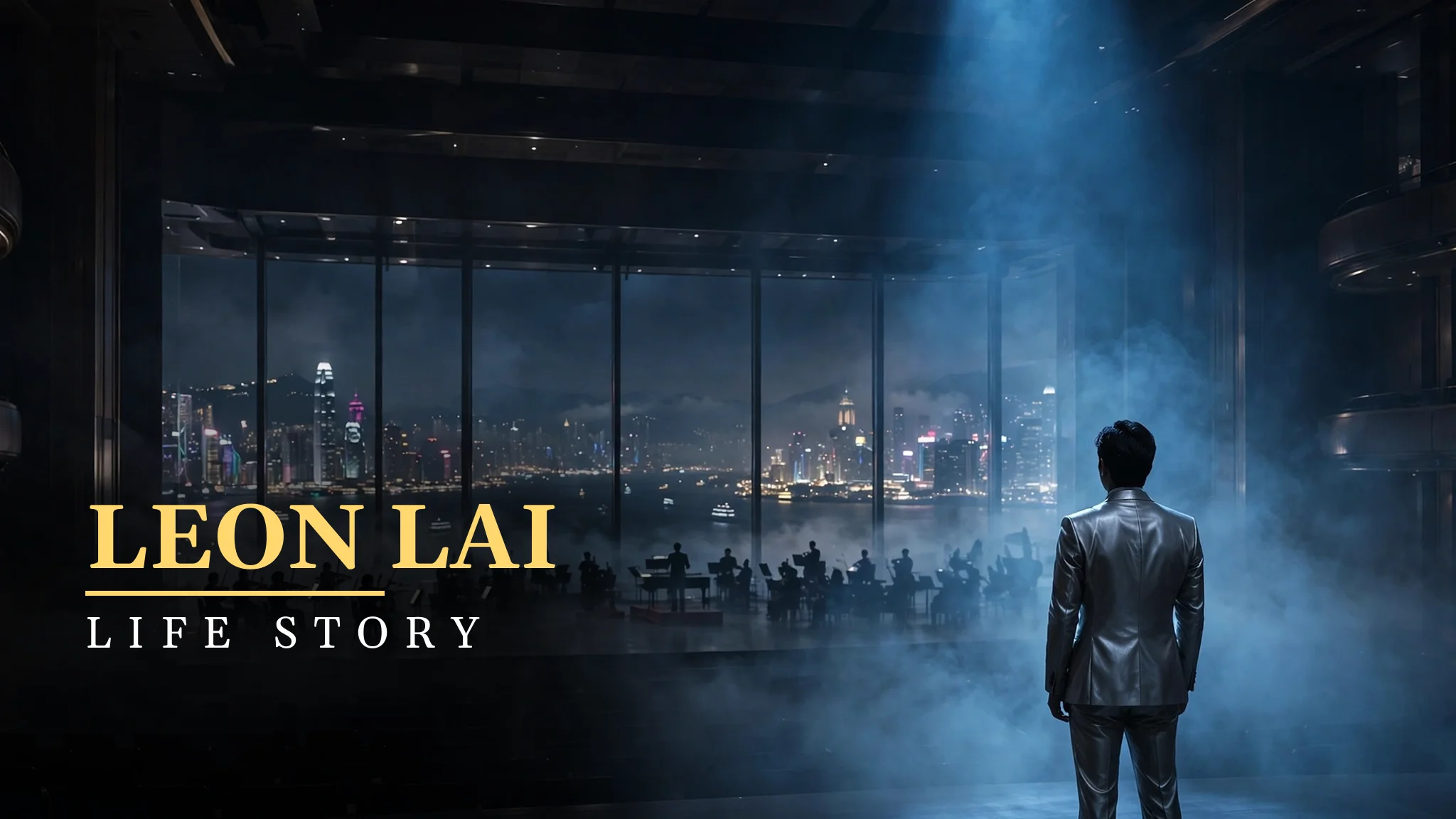
In this post
Leon Lai is a star who has always carried a quiet kind of elegance. He does not shout, he does not chase attention, and he does not try to be the loudest person in the room. He stands still, he sings in a soft and steady voice, and the room comes to him. That calm presence made him one of the Four Heavenly Kings of Hong Kong in the 1990s, the four singers who ruled Cantopop for a decade, and it has kept him loved for more than thirty years. He is a singer, an actor, a businessman, and a charity worker, and he has done each of those jobs with the same quiet care.
He was born Lai Ming in Beijing on 11 December 1966, and he moved to Hong Kong as a young child. His parents separated when he was young, and he grew up with his father, learning to be independent and to take care of himself. Hong Kong in the 1970s was a busy and crowded city, and a boy from Beijing had to find his place in it. Leon found his place in music and in film, and he did it with a patience and a gentleness that set him apart from many other stars. He was not the most aggressive singer, and he was not the most dramatic actor, but he was one of the most trusted, and trust lasts longer than noise.
His story is a story of a quiet boy who became a king, not by fighting for the crown, but by earning it through steady work. He won a place in the New Talent Singing Awards in 1986, he released his first album in 1990, and he became one of the biggest stars in Asia. He sang Sorry I Love You, he starred in Fallen Angels and in Comrades: Almost a Love Story, and he built a music company of his own. He also gave a great deal of his time to charity, working for children in need around the world. This is the story of how a boy from Beijing became a Heavenly King of Hong Kong, and why his quiet elegance still matters today.
A Beijing Boy Growing Up in Hong Kong
Leon Lai was born in Beijing in 1966, at a time when China was going through great change, and his early life was shaped by that change and by the move to Hong Kong. He came to Hong Kong as a small child, and the city became his home, even though he had been born far away. Hong Kong in the 1970s was a place of tall buildings, crowded streets, and a fast pace of life, and a young boy had to learn how to live in it. Leon learned to be quiet, to watch, and to take care of himself, because his family life was not easy. His parents separated, and he lived with his father, who worked hard to provide for him.
Growing up with a single parent taught Leon to be independent at a young age. He learned how to manage his own time, how to study, and how to make decisions for himself. He was not a loud child, and he was not a child who demanded attention. He was a thoughtful boy who liked music, who liked films, and who dreamed of a life that was bigger than the one around him. He went to school in Hong Kong, and he did well enough, but his heart was not in an office job. His heart was in the world of entertainment, where a singer could touch thousands of people with a single song.
Music was a comfort to Leon as a young man. He listened to the songs on the radio, he sang along, and he began to believe that he could sing too. His voice was soft and gentle, and it was not the kind of voice that shouted for attention. It was the kind of voice that drew people in, that made them listen closely, and that stayed with them after the song had ended. He began to take part in singing activities, and he worked on his voice with care, learning how to breathe, how to hold a note, and how to sing with feeling. He was building a skill, and he was building it slowly, as he had learned to build everything in his life: step by step, with patience.
By the middle of the 1980s, Leon was ready to try his luck in the professional world. He was a young man with a good voice, a calm manner, and a clear idea of who he wanted to be. He did not want to be a star who was famous for a short time. He wanted to build a career that would last, and he was willing to start at the beginning. In 1986, he entered the New Talent Singing Awards, and that decision would open the door to a career that would make him one of the most famous men in Asia.
The 1986 Contest and the First Steps in Music
In 1986, Leon Lai entered the New Talent Singing Awards in Hong Kong, and he won a place in the contest that gave him his start in the music world. He was nineteen years old, and he was still a young man finding his way, but the contest showed the judges and the audience that he had something special: a voice that was soft and warm, and a presence that was calm and elegant. He signed a recording contract, and he began to learn the business of being a singer, from recording in a studio to performing on television to meeting the public. It was a new world for him, and he entered it with the same quiet care that had marked his whole life.
The late 1980s were years of learning for Leon. He released his first music, he appeared on television, and he began to build a fan base in Hong Kong. His early songs were gentle Cantopop ballads, and they suited his voice perfectly. He did not try to be loud or shocking. He sang in a natural, honest way, and listeners responded to that honesty. Young women in Hong Kong loved his calm and handsome image, and young men respected his steady and reliable manner. He was becoming a star, but he was becoming a star in his own way, without noise and without drama.
His first album, called Leon, came in 1990, and it marked the real beginning of his career as a recording artist. The album introduced his voice to a wider audience, and it showed that he could carry a full record of songs with grace and with feeling. The songs were about love, about longing, and about the hope that a young man carries into the world, and Leon sang them as if they were his own story. The public began to notice him, and the music industry began to watch him with interest. He was not yet one of the biggest stars in Hong Kong, but he was on his way, and his steady progress was a sign of the long career to come.
By the early 1990s, Leon was becoming known as one of the most promising young singers in Hong Kong. He had a growing fan base, he had a reputation for singing well, and he had the respect of the people who worked with him. He was also beginning to act, and his film work would soon give him a second career. He was a singer who took his craft seriously, and that seriousness would soon be rewarded with a place among the Four Heavenly Kings, the highest honour in Hong Kong pop music.
One of the Four Heavenly Kings
In the early 1990s, Hong Kong music was ruled by four singers who were known as the Four Heavenly Kings: Jacky Cheung, Andy Lau, Aaron Kwok, and Leon Lai. They were the four biggest male stars in Cantopop, and together they defined an era. Each of them was different. Jacky was known as the God of Songs, Andy was known for his hard work and his many films, Aaron was known for his dancing, and Leon was known for his elegance and his calm. Leon’s place among the four was a sign of how far he had come, from a boy from Beijing to one of the kings of Hong Kong music.
As a Heavenly King, Leon released album after album, and his songs became part of the daily life of Hong Kong. He sang Sorry I Love You, a ballad about love and regret that became one of his signature songs, and he sang Sugar in the Marmalade, a sweet and gentle song that showed his softer side. His concerts drew large crowds, and his face was on magazine covers across Asia. He was not only a singer in Hong Kong. He was a star in Taiwan, in mainland China, in Singapore, in Malaysia, and in other parts of Asia, and his music travelled far beyond the city where he had grown up.
The Heavenly Kings era was a golden age for Cantopop, and Leon was at the centre of it. The four kings performed at the same awards shows, they appeared on the same television programmes, and they were compared to each other constantly by fans and by the press. Leon handled that pressure with his usual calm. He did not try to outshine the others, and he did not try to be someone he was not. He sang his songs, he made his films, and he let his work speak for him. That calm, in a world of constant comparison, was one of his greatest strengths, and it is one of the reasons his fans loved him so deeply.
By the middle of the 1990s, Leon was one of the most famous men in Asia. He had money, he had fame, and he had the love of millions of fans, but he kept the same quiet manner he had always had. He did not become loud or arrogant. He stayed gentle, he stayed polite, and he stayed focused on his work. That steadiness is rare in a star, and it is one of the reasons his story is still told with respect today. He became a king, and he wore the crown lightly, as if it were a natural part of who he was.
Fallen Angels and Comrades: Almost a Love Story
While his music career was at its height, Leon Lai also became a serious film actor, and his film work gave him a second life as a star. In 1995, he starred in Fallen Angels, directed by Wong Kar-wai, playing a hitman who is tired of his life and who longs for something more. The film was stylish, dark, and full of the kind of visual beauty that Wong Kar-wai is known for, and Leon’s performance was praised for its quiet sadness. He did not overact. He let the camera find the feeling in his face, and the audience felt the loneliness of his character without him having to explain it.
In 1996, he starred in Comrades: Almost a Love Story, directed by Peter Chan, playing a young man from mainland China who comes to Hong Kong to make a better life, and who falls in love with a young woman played by Maggie Cheung. The film is one of the most loved Hong Kong films of all time, and it tells a story about migration, about hope, and about love that almost happens but does not quite happen. Leon’s performance was at the heart of it, and he played the character with a gentleness and an honesty that made the audience care deeply about him. The film won many awards, and it is still watched today as a classic of Hong Kong cinema.
These two films showed that Leon was not just a pop singer trying his hand at acting. He was a real actor, with a gift for stillness, for longing, and for quiet pain. He chose roles that asked him to be thoughtful, and he worked with directors who wanted more than a star’s face. He was, by then, a performer who could carry a film on his own, and his name on a poster was a promise of quality. His film work gave his songs more depth, and his music gave his film roles a sense of rhythm and feeling. He was at the top of his career, and he was doing it in two worlds at once.
In the years that followed, Leon continued to act in films of many different kinds, from romance to crime to drama, and he brought the same calm and care to each one. He starred in Three in 2002, and in other films that showed his range, and he never seemed to repeat himself. He chose roles that challenged him, and he worked with directors who trusted him. He was a Heavenly King who had become a serious actor, and that is a rare achievement in Hong Kong entertainment, where many singers act but few are taken seriously as actors. Leon was taken seriously, and he earned that respect through hard work and through the quality of his performances.
A Music Company, Charity, and a Quieter Life
In 2004, Leon Lai founded his own music company, A Music, known as Amusic, and he began to work as a producer and as a businessman as well as a singer. He wanted to help younger singers find their way, and he wanted to make music that he believed in, without having to follow the orders of a large company. Founding a company was a bold step, and it showed that Leon was not only a performer. He was also a person who understood the business of music, and who wanted to use his experience to help others. He signed new artists, he produced records, and he tried to build a company that was based on quality and on care.
Leon has also given a great deal of his time to charity, and that work is one of the most important parts of his story. He has worked as a goodwill ambassador for UNICEF, the United Nations children’s fund, and he has travelled to many countries to help children who are sick, hungry, or in need. He has raised money, he has visited hospitals and schools, and he has used his fame to bring attention to the needs of children around the world. He does not talk about his charity work loudly. He does it quietly, in the same way that he does everything else, but the work is real, and it has helped many people.
In his personal life, Leon has kept a low profile. He married the model Gaile Lok in 2008, and the marriage ended in divorce in 2012. He later became a father, and he has spoken about his daughter with love and with a desire to protect her privacy. He does not share his private life with the public in the way that many stars do, and he has always believed that some things should stay private. That belief is part of his character, and it is one of the reasons his fans respect him. He is a star who knows where the stage ends and where life begins, and he guards that line with care.
In recent years, Leon has performed less often, and he has lived a quieter life, focusing on his company, his charity work, and his family. He still sings, he still appears at special events, and his fans still love him, but he is no longer chasing the spotlight. He has earned the right to a quieter life, and he lives it with the same calm and elegance that marked his whole career. He is a Heavenly King who has become a wise elder of Hong Kong music, and his example still guides younger singers today.
He has also been a pioneer in using new technology in his concerts, with stages that use light, sound, and video in new ways. His shows are not only about singing. They are about creating a world on stage, a world that the audience can step into for an evening. He works with designers, with musicians, and with technicians to build that world, and he takes great care with every detail, from the lighting to the sound to the order of the songs. That care is why his concerts are remembered, and why his fans return again and again. He does not give the audience a routine show. He gives them an experience, and that experience is worth the ticket, because it is made with love and with attention to detail.
The Elegance That Never Faded
Leon Lai has always been known for his elegance, and that elegance has never faded, even as the years have passed. He dresses well, he moves well, and he speaks well, and he does it without trying too hard. His elegance is not a costume. It is a part of who he is, a calm and gentle way of being in the world that comes from his character. In a music world that often rewards noise and drama, Leon’s elegance is a reminder that quiet can be strong, and that a person who does not shout can still be heard by millions.
That elegance is also visible in his music. His songs are not loud or aggressive. They are gentle, they are thoughtful, and they are sung with a clear and steady voice that does not need to shout to be heard. He sings about love, about regret, and about hope, and he sings about them in a way that feels honest and calm. Listeners who are tired of noise find rest in his songs, and listeners who are sad find comfort in them. That is the power of a gentle voice: it does not demand attention, it earns it, and once it has earned it, it keeps it for a long time.
His elegance has also made him a style icon in Hong Kong and across Asia. Young men have copied his clothes, his hairstyle, and his manner, and they have done so because they admire the calm confidence he carries. He does not follow fashion loudly. He chooses what suits him, and he wears it with ease. That ease is hard to copy, because it comes from inside, not from a shop. It comes from a person who knows who he is, and who does not need to prove it to anyone. Leon knows who he is, and that knowledge has carried him through more than thirty years of fame without breaking him.
Why Leon Lai Still Matters
Leon Lai still matters today, not only because of his songs and his films, but because of the example he sets for younger stars. He shows that a singer can be famous without being loud, that an actor can be great without being dramatic, and that a star can be generous without making a show of it. He shows that a career can last for decades if it is built on quality, on care, and on respect for the audience. He shows that a person can come from another place, can grow up in a difficult family, and can still become a king, not by fighting, but by working steadily and by being true to himself.
For a new listener, the best place to start is with his most famous songs, especially Sorry I Love You, and then with his films, especially Comrades: Almost a Love Story and Fallen Angels. Together, they show a man who can sing with gentleness and act with depth, and who can carry a story with quiet strength. Then learn about his charity work, and see how he has used his fame to help children around the world. Together, these pieces show a complete person: a singer, an actor, a businessman, and a giver. That is why, more than thirty years after he first sang on television, Leon Lai is still called a Heavenly King, and why Hong Kong still loves him.
My Take:
When I think about Leon Lai, the first word that comes to my mind is calm. He is a calm star in a loud world, and I find that calm deeply attractive. Hong Kong in the 1990s was a loud place, full of bright lights, fast music, and stars who competed for attention every single day. Leon did not compete in that loud way. He stood still, he sang softly, and he let the audience come to him. I think that takes a special kind of confidence, because it is easy to be loud when everyone else is loud, and it is much harder to be quiet and to trust that quiet will be enough. Leon trusted quiet, and quiet was enough. His career is proof that a person does not need to shout to be heard, and that a gentle voice can travel further than a loud one if it is honest.
I think about his beginning, and I find it moving in a way that many star stories are not. He was born in Beijing, he moved to Hong Kong as a child, and his parents separated when he was young. He grew up with his father, learning to be independent and to take care of himself. That is not an easy childhood, and it could have made him bitter or angry. Instead, it made him calm and thoughtful. He learned to watch, to listen, and to make his own decisions, and those lessons stayed with him for the rest of his life. I think about the boy who had to grow up fast, and I see the man who became a Heavenly King, and I realise that the boy’s patience became the man’s strength. He did not become a king by fighting. He became a king by waiting, by working, and by being steady. That is a lesson I carry with me: a hard childhood does not have to make a person hard. It can make a person gentle, if the person chooses gentleness, and Leon chose gentleness.
His place among the Four Heavenly Kings is one of my favourite parts of his story, because it shows how four very different men could share the top of Hong Kong music without destroying each other. Jacky was the God of Songs, Andy was the hard worker, Aaron was the dancer, and Leon was the elegant one. Each of them had his own strength, and each of them was loved for a different reason. I think about how easy it would have been for them to become rivals, to fight for the crown, and to tear each other down. Instead, they shared the stage, they performed at the same shows, and they let the audience love all four of them. Leon’s part in that was to be himself, to sing his songs, and to let his work speak for him. He did not try to be Jacky, or Andy, or Aaron. He was Leon, and being Leon was enough. I think that is a lesson for anyone who feels compared to others: you do not need to be someone else to be great. You need to be yourself, fully and honestly, and the world will find a place for you, as it found a place for Leon among the kings.
His films are the part of his work I return to most often in my mind, especially Comrades: Almost a Love Story. That film is about two people who come to Hong Kong from mainland China, who fall in love, who miss each other, and who almost find each other again. It is a film about hope, about migration, and about the way life can bring people close and then pull them apart. Leon plays the young man with a gentleness that makes the audience care deeply about him. He does not act with big gestures. He acts with small ones: a look, a pause, a quiet word. That is the hardest kind of acting, because it asks the audience to come to the character, rather than the character coming to the audience. Leon did it, and the film became a classic. I think about the many people in Hong Kong who came from elsewhere, who left their homes to find a better life, and who saw their own story in that film. Leon gave them a face, and he gave them a voice, and that is a gift that goes far beyond entertainment. He told the story of Hong Kong itself, a city built by people who came from elsewhere and who made a new life, and he told it with love.
Fallen Angels is a different film, darker and more stylish, and it shows another side of Leon. He plays a hitman who is tired of his life, who longs for something more, and who cannot find it. The film is full of beautiful images, of rain, of neon lights, and of lonely people in a crowded city. Leon’s performance is quiet and sad, and it stays with the viewer long after the film has ended. I think about that sadness, and I realise that Leon is a singer and an actor who understands loneliness. He understands what it is like to be in a crowded city and to feel alone, and he can show that feeling without saying a word. That understanding comes from his own life, from growing up with a single parent, from moving from one place to another, and from learning to be alone. He turned that loneliness into art, and his art helps other lonely people feel less alone. That is a beautiful thing, and it is one of the reasons I admire him so much.
I also want to say something about his charity work, because it is easy to overlook it when we talk about stars. Leon has worked for UNICEF, he has travelled to many countries, and he has helped children who are sick, hungry, or in need. He does not talk about this work loudly. He does it quietly, in the same way that he does everything else, but the work is real, and it has helped many people. I think about a famous singer who could have spent all his time on himself, on his fame, on his money, and who chose instead to spend his time on children he had never met, in countries far from Hong Kong. That choice tells me who Leon is. He is a person who knows that fame is not only a gift, but also a duty, and he has taken that duty seriously. He has used his name to bring attention to children who have no name in the press, and he has used his time to visit places that other stars would never visit. That is not a small thing. It is a great thing, and it is one of the reasons his legacy will last longer than his songs.
His founding of A Music is another part of his story that I admire, because it shows that he is not only a performer, but also a builder. He wanted to help younger singers, and he wanted to make music that he believed in, and he built a company to do it. That is a brave step, because running a company is very different from singing on a stage. It asks a person to think about money, about people, and about the future, and Leon took on that work with the same calm he brings to everything else. He did not do it for fame. He did it because he believed in music, and because he wanted to give younger singers the chance that he had been given in 1986. I think about the young singers who have been helped by his company, and I see that Leon’s influence goes far beyond his own songs. He is helping to build the future of Hong Kong music, and he is doing it quietly, without asking for praise.
What I learn from Leon Lai, in the end, is that calm is a strength, and that a quiet life can be a great life. He did not become a Heavenly King by being the loudest, or the most dramatic, or the most shocking. He became a Heavenly King by being steady, by being elegant, by being kind, and by working hard for more than thirty years. He teaches me that I do not need to shout to be heard, that I do not need to fight to be great, and that I can be myself and still find a place in the world. He also teaches me that fame brings a duty to help others, and that a star who uses his fame to help children is a star who understands what fame is for. Those are lessons that go far beyond music, and they are lessons I will keep.
If I could speak to a young person who is just finding Leon Lai now, I would say this. Listen to Sorry I Love You, and hear the gentleness in his voice. Watch Comrades: Almost a Love Story, and see the quiet strength in his acting. Learn about his charity work, and see how he has used his fame to help children. Then think about your own life, and about the way you carry yourself in the world. Do not think that you need to be loud to be noticed. Be calm, be steady, be kind, and work hard, and the world will notice you in its own time. That is what Leon did, and it is why he is still called a Heavenly King after more than thirty years.
I will remember Leon Lai as the elegant king of Hong Kong, as a singer with a gentle voice, as an actor with a quiet depth, and as a man who used his fame to help children around the world. His songs will keep playing, his films will keep being watched, and his example will keep teaching us that calm, kindness, and steady work are the strongest things a person can offer. I also think about his work for UNICEF in more detail, because it is easy to say that a star does charity, and harder to understand what that work actually means. Leon has travelled to many countries, he has visited children who are sick, hungry, or living in difficult conditions, and he has used his name to bring attention to their needs. He has not done this work for publicity. He has done it quietly, often without cameras, and he has spoken about it only when asked. I think about a famous singer sitting with a sick child in a hospital far from Hong Kong, listening to that child’s story, and I realise that this is a different kind of performance, one without an audience, without applause, and without a stage. It is a performance of care, and it is the most important performance of his life, because it helps people who have no voice of their own. That is a legacy that will outlast any song.
His music company, A Music, is another part of his story that I admire, because it shows a man who wants to build something that lasts beyond himself. He founded the company in 2004, and he signed young singers, produced records, and tried to make music that he believed in. Running a company is very different from singing on a stage. It asks a person to think about money, about people, and about the future, and Leon took on that work with the same calm he brings to everything else. I think about the young singers who have been helped by his company, and who have been given a chance because Leon believed in them, and I see that his influence goes far beyond his own songs. He is helping to build the future of Hong Kong music, and he is doing it quietly, without asking for praise. That is the work of a king who cares about his kingdom, not only about his crown.
I also think about his film choices, and about how carefully he has chosen his roles. He did not take every film that was offered to him. He chose films that asked him to be thoughtful, that had a good director, and that told a story worth telling. Fallen Angels and Comrades are both films that have lasted, and they have lasted because they are good films, not because they were popular for a season. Leon understood that, and he chose quality over quantity. I think about the actors who take every role, and who are forgotten quickly, and I see that Leon’s careful choices are the reason his films are still watched today. He was patient, he waited for the right role, and when it came, he gave it his best. That patience is a lesson for anyone who wants a lasting career: choose well, work hard, and let the work speak for itself.
His privacy is another part of his story that I respect deeply. Leon does not share his private life with the public, and he has always believed that some things should stay private. He married, he divorced, he became a father, and he has spoken about those things only briefly, with a desire to protect his family. I think about the stars who share everything on social media, and who live their whole lives in public, and I admire Leon for keeping a boundary. He knows where the stage ends and where life begins, and he guards that line with care. That boundary has helped him stay calm, stay sane, and stay true to himself, even after more than thirty years of fame. It is a lesson for all of us: we do not need to share everything to be loved. We can keep some things for ourselves, and that privacy is a form of strength.
Finally, I think about his roots in Beijing, and about what it means to be a boy from Beijing who became a king of Hong Kong. He was born in one place, he grew up in another, and he belongs to both. He sings in Cantonese, the language of Hong Kong, and he is loved in Beijing, in Taiwan, and across Asia. I think about the many people in Hong Kong who came from elsewhere, who left their homes to find a better life, and who made Hong Kong their home. Leon is one of them, and his story is their story. He shows that a person can come from another place, can grow up in a difficult family, and can still become a king, not by forgetting where they came from, but by carrying it with them. That is a message of hope for anyone who has moved, who has started again, and who is building a new life in a new place.
Frequently Asked Questions
Was Leon Lai born in Hong Kong?
No, Leon Lai was born in Beijing on 11 December 1966 and moved to Hong Kong as a young child, where he grew up with his father after his parents separated and where he built his singing and acting career.
How did Leon Lai become a Heavenly King?
Leon Lai became one of the Four Heavenly Kings of Hong Kong in the early 1990s, alongside Jacky Cheung, Andy Lau and Aaron Kwok, after winning a place in the 1986 New Talent Singing Awards and releasing his first album Leon in 1990.
What is Leon Lai’s most famous song?
Leon Lai’s most famous song is Sorry I Love You, a gentle ballad about love and regret that became one of his signature works, alongside Sugar in the Marmalade and his many other Cantopop hits of the 1990s.
Which Leon Lai films should a new viewer watch?
A new viewer should watch Comrades: Almost a Love Story from 1996, a classic about love and migration in Hong Kong, and Fallen Angels from 1995, a stylish Wong Kar-wai film in which Leon plays a lonely hitman.
Has Leon Lai done charity work?
Yes, Leon Lai has worked as a goodwill ambassador for UNICEF, travelling to many countries to help children who are sick, hungry or in need, and raising money and attention for children’s causes around the world.
Does Leon Lai still perform today?
Leon Lai performs less often today and lives a quieter life focused on his music company A Music, his charity work and his family, but he still sings at special events and remains one of Hong Kong’s most respected stars.


