Most Haunted Places Around World
In this post
- How Do You Rank A Haunted City
- Bucharest, The Surprise Leader
- Rome And Venice, Old Cities, Old Ghosts
- Bran And The Dracula Connection
- New Orleans, America’s Haunted Capital
- Charleston, Savannah And The American South
- Castles And Prisons That Lead The Lists
- Edinburgh Castle And The Banff Bride
- Airports, Hotels And Ordinary Places
- The Lizzie Borden House
- Why These Stories Keep Spreading
- Visiting With Care And Common Sense
- You may also like
No scientist has ever proved that a place is haunted. No ghost has ever been photographed in a way that settles the argument. And yet, all over the world, certain cities, castles, hotels and islands collect ghost stories the way other places collect postcards. People visit them, pay for tours, and leave both thrilled and unsure.
This post is not a claim that ghosts are real. It is a careful tour of the places most often called haunted, what stories are attached to them, and why those stories refuse to die. Every haunted claim below is presented as a story people tell, not as a proven fact.
How Do You Rank A Haunted City
Ghosts cannot be measured, so people who rank haunted places measure something else: ghost tours, cemeteries, haunted houses and old buildings. A recent study reported by Mental Floss did exactly that. It counted haunted attractions across 25 locations famous for spooky lore, weighted the numbers, and gave each city a Dark Tourism Score out of 100. The higher the score, the more haunted the destination appeared by those measures.
It is a playful method, not a scientific one. A city with many cemeteries is not proof of ghosts. It is proof of age, history and a busy trade in ghost tours. But the ranking is a useful starting point, because it shows where ghost stories cluster, and which places have built whole visitor industries around the dead.
Bucharest, The Surprise Leader
The study’s leader was a surprise to many readers: Bucharest, the capital of Romania, with a perfect Dark Tourism Score of 100 out of 100. Bucharest has 84 ghost tours, 8 haunted houses and 69 cemeteries, according to the study’s table. Its chief cemetery, Bellu Cemetery, holds the graves of literary figures such as Ion Luca Caragiale and Mihai Eminescu.
Bucharest is not usually the first city people name in ghost stories. Romania is more often linked to Transylvania, castles and Dracula. But the capital’s mix of belle époque avenues, old buildings and a large number of ghost walks and cemetery tours put it at the top. The lesson is simple: haunted reputation follows storytelling and tourism as much as it follows history.
Rome And Venice, Old Cities, Old Ghosts
Rome came second, with 41 ghost tours, 6 haunted houses and 266 cemeteries. Its sprawling catacombs, running from San Callisto to Domitilla beneath the city, draw dark history enthusiasts from around the world. Rome’s age works in its favour. A city with more than two thousand years of emperors, executions, plagues and wars will always have stories to tell after dark.
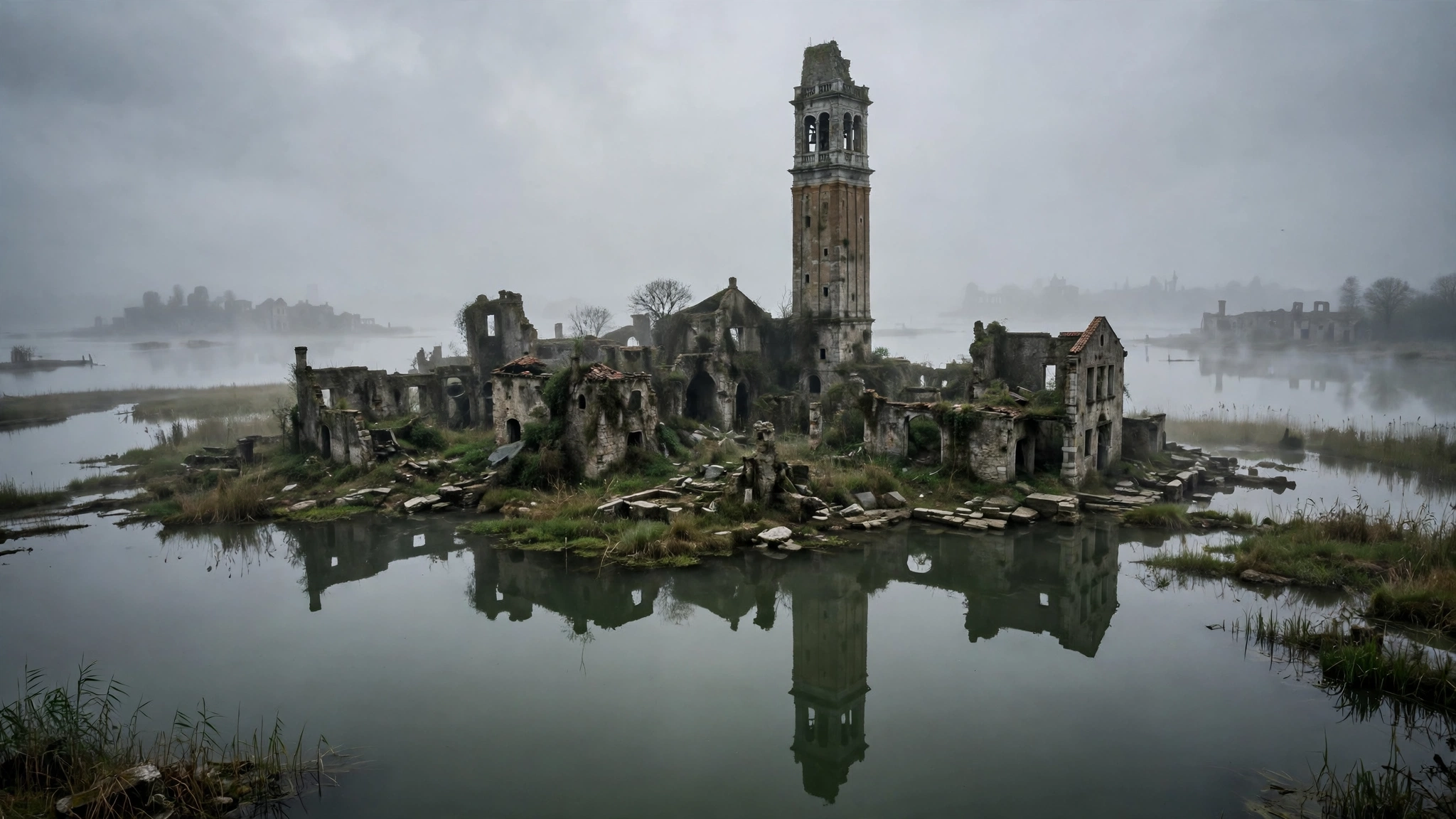
Venice came fourth, with 29 ghost tours, 24 haunted houses and 55 cemeteries. Its foggy canals and island burial ground of San Michele give it a natural stage for ghost stories. Many of its reputedly haunted houses sit in former Renaissance palazzos, buildings where, as Mental Floss puts it, 500-year-old wounds still remain fresh in local lore. Venice’s most famous haunted place of all, Poveglia Island, has its own story, told separately on this blog.
Bran And The Dracula Connection
Bran, in Romania, came fifth, and it shows how one story can carry a whole town. Bran has 103 ghost tours, more than Rome and New Orleans combined, according to the study. Most of those tours guide visitors through Bran Castle, a fortress wrapped in vampire lore.
The connection is literary more than historical. Bram Stoker’s Dracula and later films, including the 2024 adaptation of Nosferatu, fixed Romania in the world’s imagination as the home of vampires. Bran Castle benefits from that image, whether or not any vampire ever lived there. Ghost tourism often works this way: a famous tale gives a real place a second, shadowy life.
New Orleans, America’s Haunted Capital
The highest-ranked city in the United States was New Orleans, Louisiana, in third place, with 55 ghost tours, 13 haunted houses and 82 cemeteries. Mental Floss credits New Orleans with creating the modern template for paranormal tourism in the 1990s, when Anne Rice’s The Vampire Chronicles projected the city’s supernatural side to a wide public.
New Orleans built its offering block by block: guided ghost walks, Gothic tomb tours, voodoo lore and vampire legends. The LaLaurie Mansion, with its notorious history, and the Jacques Saint-Germain House, with its blood-red doors, are among the stops visitors seek out. The result is a multi-million-dollar supernatural trade that fuels the local economy every year. Whether visitors believe in ghosts or not, they pay to walk where the stories live.
Charleston, Savannah And The American South
Two more Southern cities made the top ten: Charleston, South Carolina, in sixth place, with 55 ghost tours and 118 cemeteries, and Savannah, Georgia, in seventh, with 70 ghost tours and 63 cemeteries. Nashville, Philadelphia and Houston completed the list. The American South’s combination of old houses, battlefields, slavery’s painful history and long, humid nights gives it a deep store of stories.
Charleston and Savannah are often described as beautiful by day and unsettling by night. Their old homes, graveyards and squares have witnessed centuries of joy and suffering. Ghost stories there are rarely only about spooks. They are also ways of remembering histories that are hard to speak about directly.
Castles And Prisons That Lead The Lists
When lists move from cities to single places, the same kinds of buildings appear again and again: castles, prisons, hotels and houses where people died violently or were held against their will. Rustic Pathways, in its list of 13 haunted places, begins with the Castle of Good Hope in South Africa, the country’s oldest colonial building, later a fort and prison. Its best-known ghost story concerns Governor Pieter van Noodt, who in the 1700s oversaw hangings, was said to have been cursed by a condemned man, died of a heart attack later that day, and is said to haunt the battlements.
The Tower of London is another constant. Rustic Pathways notes that Anne Boleyn, beheaded in 1536, is said to appear near the site of her execution, sometimes carrying her head under her arm. Lady Jane Grey, executed there, and the two young princes, Edward V and Richard of Shrewsbury, said to have been murdered in the Tower in 1483, are also among its reported spirits. The Tower’s real history of executions and imprisonment gives its ghost stories a solid, grim foundation.
Edinburgh Castle And The Banff Bride
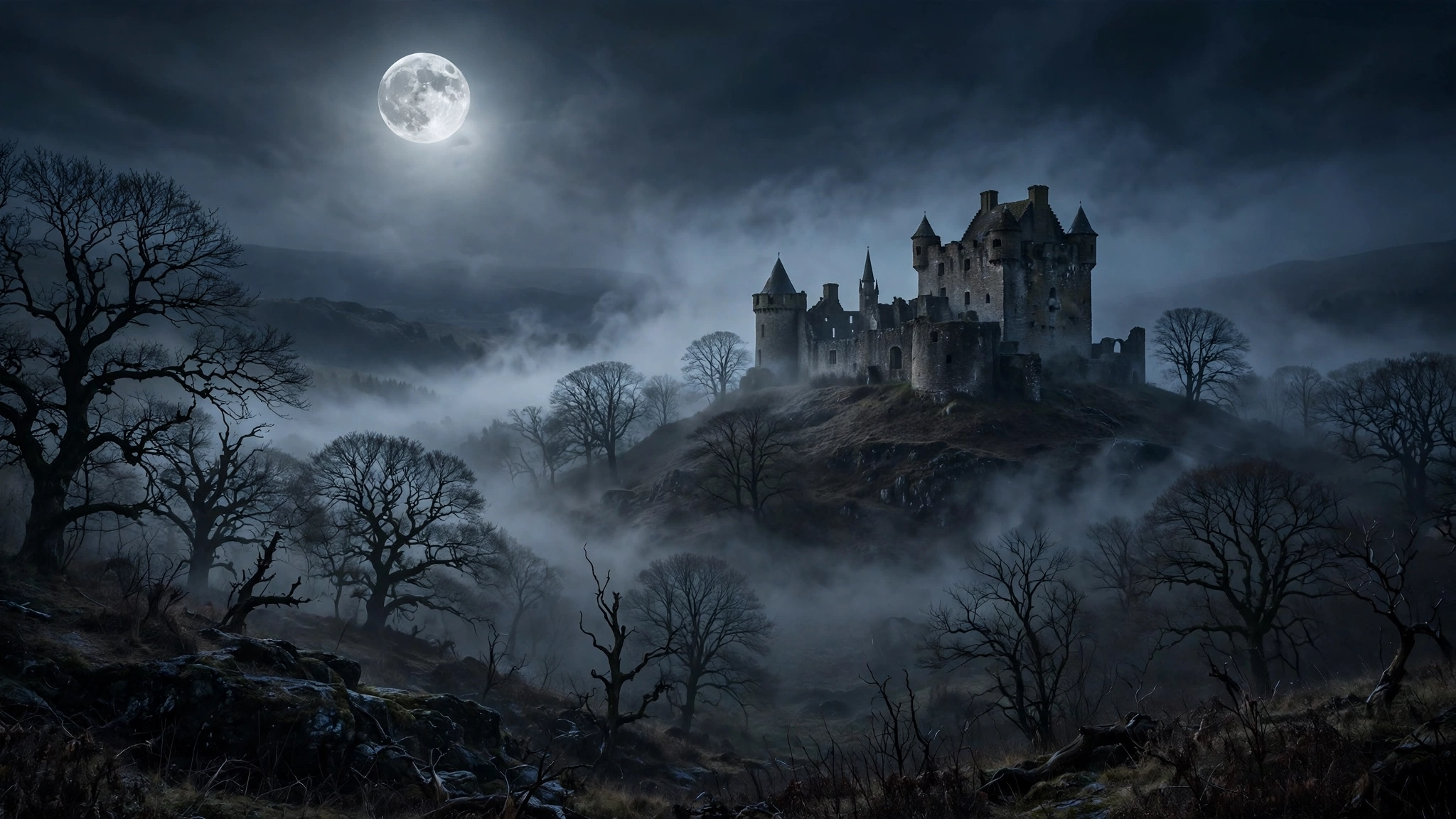
Edinburgh Castle in Scotland is built on an ancient burial ground and is said to be haunted by prisoners held in solitary confinement, soldiers who died in battle, and a headless drummer. Rustic Pathways describes it as one of the most haunted buildings in the world, with a 12th-century history of warfare and imprisonment behind its legends.
In Canada, the Fairmont Banff Springs Hotel is famous for the legend of a bride who died on its staircase, said to have been seen as the Green Lady wandering the halls. Guests have also reported ghostly figures in vacant rooms and strange noises in empty corridors. A grand old hotel, full of corridors and history, is a natural home for such tales. The bride story may be legend, but it is told so often that the hotel itself has become part of the story.
Airports, Hotels And Ordinary Places
Not every haunted place is a castle. Rustic Pathways includes Suvarnabhumi Airport in Thailand, built on swampland and a former graveyard, where 99 monks were invited to perform cleansing rituals for nine weeks before it opened, and where workers still report seeing ghosts. It also includes Machu Picchu in Peru, where travellers speak of whispers in the fog, and the Han River in Seoul, where riverside legends mix with real history.
The lesson is that any place with a sad or strange past can gather stories. An airport, a hotel, a river or a lighthouse can become haunted in local telling if enough people repeat the tale, and if the place itself feels strange after dark. Haunted places are not only about death. They are about atmosphere, memory and the human love of a good fright.
The Lizzie Borden House
One of the most famous haunted houses in the United States is the Lizzie Borden House in Fall River, Massachusetts. In 1892, Andrew and Abby Borden were killed there with an axe, in murders that were never conclusively solved. The house is now a tourist attraction, and visitors report an eerie presence, footsteps and muffled voices in empty rooms.
Rustic Pathways is careful on this point: the murders are real history, while the haunting is reported experience. That distinction matters for every place in this post. Real events give ghost stories their weight. The ghost itself remains a matter of belief, story and atmosphere, not of proof.
Why These Stories Keep Spreading
Haunted places fascinate people for reasons that have little to do with proof. They mix real history with mystery. They let visitors feel close to the past. They offer a safe fright: a shiver in a tour group, followed by daylight and a warm meal. And they travel well. A good ghost story can be told in any language, in any town, and it grows a little with each telling.
Rustic Pathways puts it plainly: stories about haunted places often begin with a real historical event, a battle, imprisonment, unexplained death or period of social upheaval, and over time documented history becomes intertwined with local legends, reported sightings and stories passed between generations. That blending is the whole art of the haunted place. History provides the bones. Storytelling provides the flesh.
Visiting With Care And Common Sense
If you visit a reputedly haunted place, go with respect and common sense. Many are private property, museums or memorials where real people died. Follow the rules, join an official tour where one is offered, and do not trespass on closed sites. Poveglia Island, for example, is closed to the general public. The dead deserve better than a dare.
Go for the history first and the thrill second. Read about what really happened before you arrive. Ask what is documented and what is only legend. You will enjoy the visit more, and you will leave with something better than a scare: a clearer sense of how the past still speaks, in stories, in buildings, and in the quiet places where people once lived and died.
You may also like
Frequently Asked Questions
What are the most haunted places in the world?
There is no objectively proven most haunted place in the world, because the answer depends on whether you count reported sightings, historical deaths, cultural reputation or popularity with paranormal investigators, as Rustic Pathways explains. The places named most often include the Tower of London, Edinburgh Castle, Poveglia Island, the Lizzie Borden House, the Castle of Good Hope, the Banff Springs Hotel and the cities of Bucharest, Rome, New Orleans and Venice. Each is famous for a mix of real history and ghost stories that have grown around it over many years.
Which city is ranked the most haunted in the world?
In a study reported by Mental Floss, Bucharest in Romania ranked first, with a perfect Dark Tourism Score of 100 out of 100, based on 84 ghost tours, 8 haunted houses and 69 cemeteries. Rome came second with 266 cemeteries, New Orleans third with 55 ghost tours and 82 cemeteries, Venice fourth, and Bran in Romania fifth with 103 ghost tours. The ranking measures haunted attractions and tourism, not proof of ghosts, so it shows where ghost stories cluster rather than where spirits have been verified.
Is the Tower of London really haunted?
The Tower of London is one of the strongest candidates in haunted-place lists because its ghost stories are connected to well-documented executions, imprisonments and royal disappearances. Its reported spirits include Anne Boleyn, beheaded in 1536, who is said to appear near the site of her execution, Lady Jane Grey, and the two young princes Edward V and Richard of Shrewsbury, said to have been murdered there in 1483. The history is real and documented, while the sightings themselves are stories people report, not facts that have been proved.
Why do people visit haunted places?
People visit haunted places for history, atmosphere and the thrill of a safe fright, and because ghost stories mix real events with mystery in a way that is easy to retell. Rustic Pathways notes that such stories often begin with a real battle, imprisonment or unexplained death, and over time documented history becomes intertwined with legends, reported sightings and stories passed between generations. Cities such as New Orleans have built large visitor industries around that fascination, with ghost walks and tomb tours that bring the past to life after dark.
Can you visit Poveglia Island and other famous haunted places?
Some famous haunted places welcome visitors through official tours, such as the Tower of London, Edinburgh Castle and the Lizzie Borden House, but others are closed or restricted and must not be entered without permission. Poveglia Island near Venice is closed to the general public, and many haunted sites are private property or memorials where real people died. Visitors should follow the rules, join official tours where offered, and put history and respect first, since trespassing on a closed site is both unsafe and disrespectful.