What To Do During Earthquake
In this post
- The Three Words That Save Lives
- If You Are Indoors, Stay Indoors
- The Doorway Myth Is Wrong
- In The Kitchen, In Bed, In A Crowd
- High-Rise Buildings And Lifts
- If You Cannot Drop To The Ground
- If You Are Outside, Stay Outside
- If You Are In A Car
- Near The Shore, Think About Tsunamis
- After The Shaking Stops
- You may also like
An earthquake gives no warning. One moment the floor is solid. The next, it moves under your feet, glasses slide off tables, and the whole building seems to breathe. In those first seconds, most people freeze, or run, or try to reach a doorway. The safest action is simpler, and it can be learned in advance: drop, cover, and hold on.
This post explains what to do during an earthquake, wherever you are when it strikes, using the safety guidance of the United States Centers for Disease Control and Prevention (CDC) and the United States Geological Survey (USGS). The advice is general and practical. Local authorities may give extra instructions for your area, and those should always be followed.
The Three Words That Save Lives
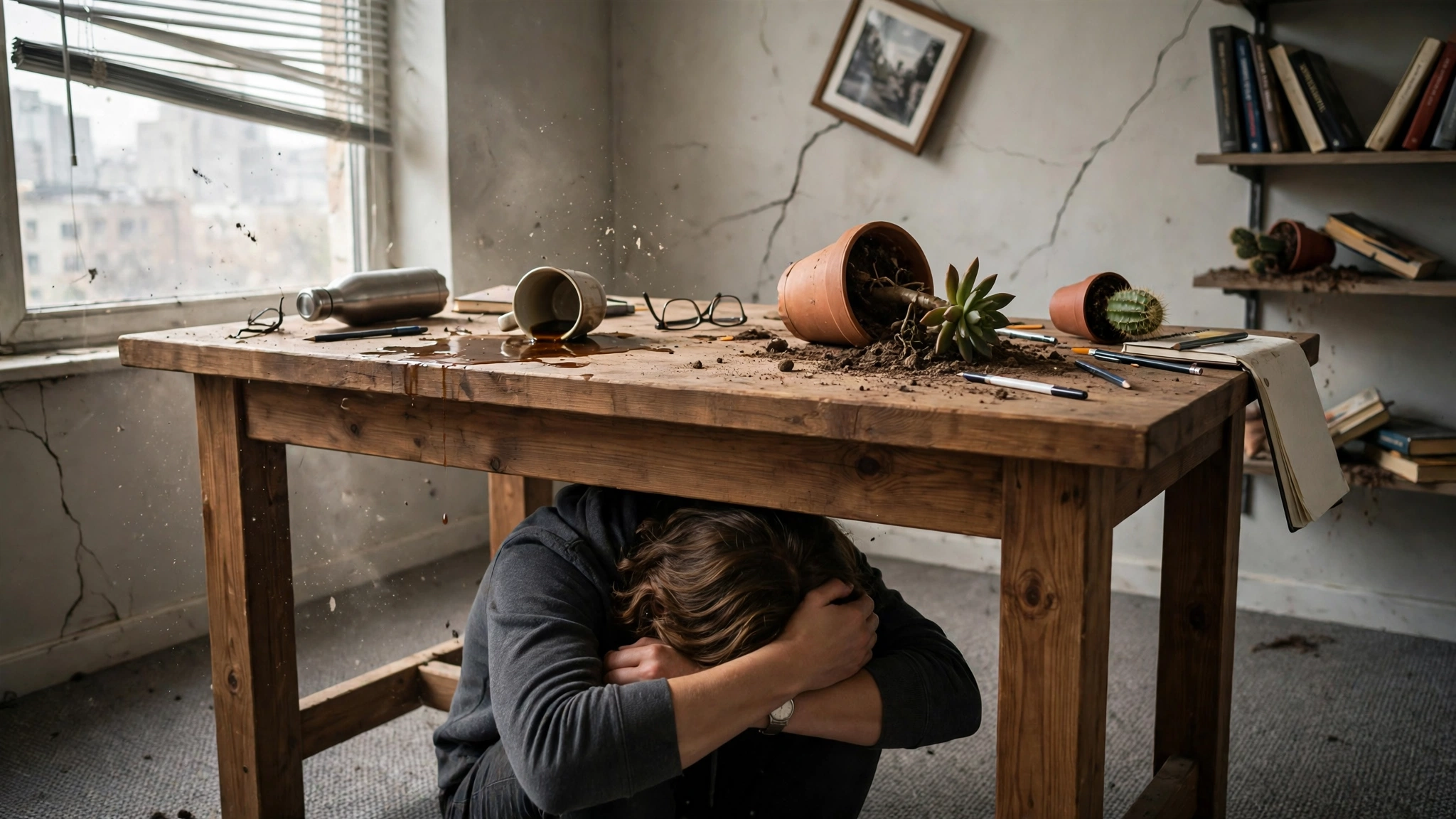
If there is an earthquake, drop, cover, and hold on. The CDC states the three actions plainly. Drop down onto your hands and knees before the earthquake knocks you down. This position protects you from falling, while still allowing you to move if necessary. Cover your head and neck, and your entire body if possible, underneath a sturdy table or desk. Hold on to your shelter, or to your head and neck, until the shaking stops, and be prepared to move with your shelter if the shaking shifts it around.
These three actions work because most earthquake injuries are not caused by buildings collapsing. They are caused by falling or flying objects, such as televisions, lamps, glass and bookcases, or by being knocked to the ground. Dropping low, getting under something sturdy, and holding on protects you from exactly those dangers. Practise the three actions before an earthquake happens, so that your body knows them when your mind is frightened.
If You Are Indoors, Stay Indoors
If you are inside, stay inside. The USGS is firm on this point: get under a desk or table and hang on to it, or move into a hallway or against an inside wall, stay clear of windows, fireplaces, and heavy furniture or appliances, and do not run downstairs or rush outside while the building is shaking.
The CDC gives the same warning in stronger terms. Do not run outside or to other rooms during an earthquake. You are less likely to be injured if you stay where you are. The area near the outside walls of a building is the most dangerous place to be, because windows, facades and architectural details are often the first parts of a building to collapse, and falling debris is greatest just outside doorways and close to outer walls.
If possible, within the few seconds before shaking intensifies, quickly move away from glass, hanging objects, bookcases, china cabinets, or other large furniture that could fall. Watch for falling objects such as bricks from fireplaces and chimneys, light fixtures, wall hangings, high shelves, and cabinets with doors that could swing open. If something is available nearby, grab it to shield your head and face from falling debris and broken glass.
The Doorway Myth Is Wrong
Many people were taught to stand in a doorway during an earthquake. The CDC says plainly: do not stand in a doorway. You are safer under a table. In modern houses, doorways are no stronger than any other part of the house, and doorways do not protect you from the most likely source of injury, falling or flying objects.
The doorway advice comes from older buildings, where a door frame might have been the strongest part of a wooden structure. In a modern home, a table or desk gives far better protection. It shields your head and neck, it stays over you while the ground moves, and you can hold on to it. A doorway leaves you exposed on both sides, with nothing above you. Forget the doorway. Remember the table.
In The Kitchen, In Bed, In A Crowd
Different rooms call for small adjustments to the same idea. If you are in the kitchen, quickly turn off the stove and take cover at the first sign of shaking. The USGS warns that the kitchen is a dangerous place, because things can fall on you, and calls on people to get out of the kitchen to a safer spot. Do not spend the shaking trying to save cooking or dishes. Protect yourself first.
If you are in bed, hold on and stay there, protecting your head with a pillow. You are less likely to be injured staying where you are, the CDC explains, because broken glass on the floor can cause injuries if you walk or roll onto it. If you are in a crowded place, do not rush for doorways, since others will have the same idea. Move away from display shelves containing objects that may fall, take cover if you can, and shield your head and face. In a stadium or theatre, stay in your seat, protect your head and neck with your arms, and do not leave until the shaking is over.
High-Rise Buildings And Lifts
If you are in a high-rise building, stay in the building. Move away from windows and outside walls, drop, cover, and hold on, and do not use the lifts. The electricity may go out, and the sprinkler systems may come on, trapping you in a lift with no way out. Stairs are safer than lifts after shaking stops, but during shaking, staying put under cover is safer than running for a stairwell.
If you are trapped, stay calm. Try to get someone’s attention by tapping on hard or metal parts of the structure. Doing so may increase your chances of being rescued. Do not light a match or lighter, in case of gas leaks. Shout only as a last resort, to save your voice and avoid breathing dust. Help will come, and a calm, steady signal is easier to hear than panic.
If You Cannot Drop To The Ground
Not everyone can drop to their hands and knees. The CDC gives guidance for people with impaired mobility and other access and functional needs. If you cannot drop to the ground, try to sit or remain seated so you are not knocked down. If you are in a wheelchair, lock your wheels, remove any items that are not securely attached to the wheelchair, and protect your head and neck with a large book, a pillow, or your arms.
If you are able, seek shelter under a sturdy table or desk, and stay away from outer walls, windows, fireplaces and hanging objects. If you are unable to move from a bed or chair, protect yourself from falling objects by covering up with blankets and pillows. The goal is always the same: prevent injuries from falling down, or from objects that might fall or be thrown at you. For more resources, the CDC points readers to the Earthquake Country Alliance, which provides guidance for people with access and functional needs.
If You Are Outside, Stay Outside
If you are outside, stay outside. Move away from buildings, utility wires, sinkholes, and fuel and gas lines, and go to an open area away from trees, telephone poles and buildings. Once in the open, get down low and stay there until the shaking stops.
The greatest danger from falling debris is just outside doorways and close to the outer walls of buildings, so do not shelter against a wall. The USGS adds a warning for mountainous areas: watch out for falling rock, landslides, trees, and other debris that could be loosened by quakes. In open ground, away from anything that can fall on you, you are in one of the safest places to be during an earthquake.
If You Are In A Car
If you are in a moving vehicle, stop as quickly and safely as possible. Move your car to the shoulder or curb, away from utility poles, overhead wires, and under- or overpasses. Stay in the car and set the parking brake. A car may jiggle violently on its springs, but it is a good place to stay until the shaking stops.
Do not stop on or under a bridge or overpass, or under trees, light posts, power lines or signs, the USGS warns. Turn on the radio for emergency broadcast information. If a power line falls on the car, stay inside until a trained person removes the wire. When it is safe to begin driving again, watch for hazards created by the earthquake, such as breaks in the pavement, downed utility poles and wires, rising water levels, fallen overpasses, or collapsed bridges. Drive slowly, and expect the road to be different from the road you know.
Near The Shore, Think About Tsunamis
If you are near the shore when a strong earthquake strikes, the danger may not end when the shaking ends. The CDC advises: drop, cover, and hold on until the shaking stops, and if severe shaking lasts 20 seconds or more, immediately evacuate to high ground, as a tsunami might have been generated by the earthquake.
Move inland 2 miles, about 3 kilometres, or to land that is at least 100 feet, about 30 metres, above sea level, immediately. Do not wait for officials to issue a warning. Walk quickly, rather than drive, to avoid traffic, debris and other hazards. A tsunami can arrive within minutes, and the first wave is not always the largest. High ground, reached on foot, is the safest choice.
After The Shaking Stops
When the shaking stops, the danger is not fully over. Aftershocks, smaller earthquakes that follow the main shock, can happen minutes, hours or days later, and can be strong enough to topple weakened buildings and shelves. Stay alert, and be ready to drop, cover and hold on again.
Check yourself and others for injuries. Check for gas leaks, damaged wiring, and broken glass, but do not enter a badly damaged building. Listen to local radio, television or official alerts for instructions. Use a phone only for emergencies, to keep lines free for rescue work. If you must leave a building, use stairs, not lifts, and watch for debris, fallen wires and broken pavements. Help neighbours, especially older people and those with mobility needs, and follow the guidance of local emergency services.
You may also like
Frequently Asked Questions
What should you do during an earthquake?
During an earthquake, drop, cover, and hold on: drop down onto your hands and knees before the shaking knocks you down, cover your head and neck and your whole body if possible under a sturdy table or desk, and hold on to your shelter until the shaking stops. If you are indoors, stay indoors, stay clear of windows, fireplaces and heavy furniture, and do not run outside or to other rooms, since the area near outside walls is the most dangerous place to be. Most injuries are caused by falling or flying objects or by being knocked down, and dropping low under sturdy cover protects against exactly those dangers.
Should you stand in a doorway during an earthquake?
No, you should not stand in a doorway during an earthquake, because in modern houses doorways are no stronger than any other part of the house and do not protect you from falling or flying objects, which are the most likely source of injury. The CDC says plainly that you are safer under a table, which shields your head and neck, stays over you while the ground moves, and can be held on to. The doorway advice comes from older buildings, and in a modern home a sturdy table or desk gives far better protection than an open doorway with nothing above you.
What should you do during an earthquake if you are outside or driving?
If you are outside, stay outside, move to an open area away from buildings, utility wires, trees, telephone poles, sinkholes and fuel lines, get down low and stay there until the shaking stops, since the greatest danger from debris is just outside doorways and close to outer walls. If you are driving, stop as quickly and safely as possible on the shoulder away from utility poles, overhead wires and bridges or overpasses, stay in the car with the parking brake set until the shaking stops, and when driving again watch for broken pavement, fallen poles and wires, rising water and collapsed bridges.
What should you do after an earthquake if you live near the coast?
If severe shaking near the shore lasts 20 seconds or more, evacuate to high ground immediately after the shaking stops, because a tsunami might have been generated by the earthquake, and do not wait for officials to issue a warning. Move inland 2 miles, about 3 kilometres, or to land at least 100 feet, about 30 metres, above sea level, walking quickly rather than driving to avoid traffic, debris and other hazards. A tsunami can arrive within minutes, the first wave is not always the largest, and high ground reached on foot is the safest choice.
What should you not do during an earthquake?
Do not run outside or to other rooms while the building is shaking, do not stand in a doorway, do not use lifts in a high-rise building, and do not light a match if you are trapped, in case of gas leaks. Do not stop a car on or under a bridge or overpass, do not shelter against an outside wall where debris falls first, and do not rush for exits in a crowd, since others will have the same idea. After shaking stops, do not re-enter a badly damaged building, and stay ready for aftershocks, which can follow minutes, hours or days later and topple weakened structures.
Sources
- Centers for Disease Control and Prevention (CDC) — https://www.cdc.gov/earthquakes/safety/stay-safe-during-an-earthquake.html
- United States Geological Survey (USGS) — https://www.usgs.gov/faqs/what-should-i-do-during-earthquake