Why Autumn Leaves Change Colour
In this post
- The Green That Hides Everything Else
- The Slowdown Before The Colour
- The Yellows And Oranges Were There All Along
- Why Yellow Comes First
- The Reds Are Made Fresh, In The Final Weeks
- Which Trees Turn Red
- Why Trees Let Go: The Seal And The Reclaiming
- The Seal That Protects The Tree
- Why Some Trees Stay Green All Winter
- Weather, Place, And The Best Autumn Colour
- You may also like
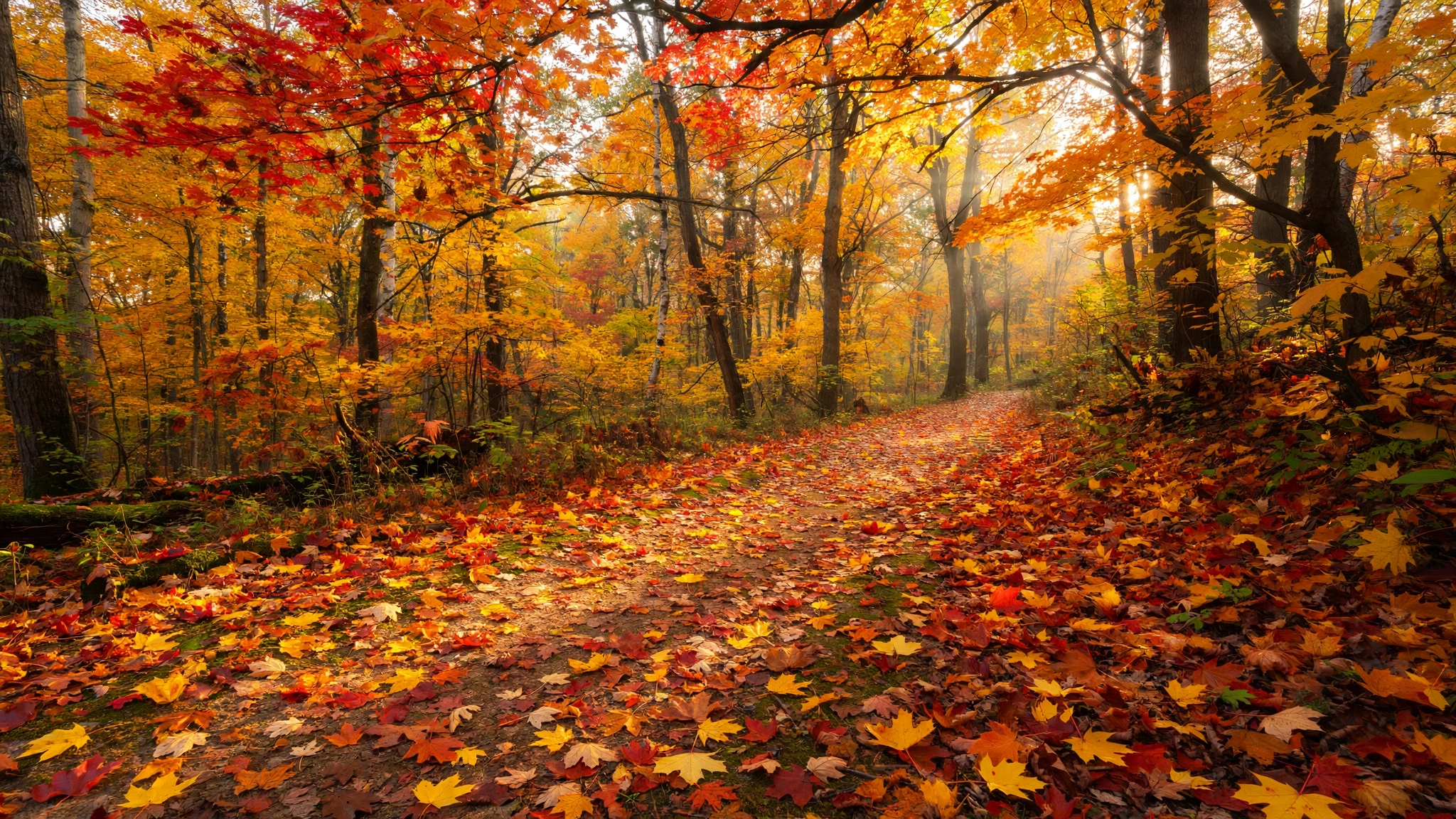
In summer, a forest is a single colour: green, green, and more green, as far as the eye can see. Then, almost without warning, the green begins to break. A branch turns yellow. A tree blushes red. Within weeks, whole hillsides are gold, orange, scarlet, and purple, as if someone had taken a paintbrush to the landscape overnight. And then, just as suddenly, the leaves fall, and the trees stand bare. The change is one of the most beautiful events in nature, and it is also one of the most practical. Leaves change colour in autumn not to please us, but because trees are preparing for winter, shutting down, reclaiming what they can, and letting go of what they cannot keep.
Why do leaves change colour in the fall? The short answer is that the green pigment that dominates summer fades, revealing colours that were there all along, while new red pigments are made from sugars trapped in the leaf. The longer answer is a story about sunlight, seasons, chemistry, and survival, in which every colour has a cause, and every cause is connected to the tree’s need to survive the cold months ahead.
The Green That Hides Everything Else
To understand autumn colour, you must first understand summer green. Leaves are green because of chlorophyll, the pigment that makes photosynthesis possible. Chlorophyll captures sunlight and uses its energy to build sugars from water and carbon dioxide, feeding the tree. It is so abundant in a healthy summer leaf, and so strongly coloured, that it masks every other pigment in the leaf. The leaf contains yellow and orange pigments too, but you cannot see them, because the green overwhelms them, just as a loud voice drowns out quieter ones in the same room.
Chlorophyll is not permanent. It breaks down constantly in sunlight, and the tree must continually manufacture more to replace it, as long as the leaf is working. That manufacture requires warmth, light, and nutrients, all of which are plentiful in summer. The tree invests heavily in chlorophyll, because photosynthesis is its livelihood, and the green leaf is its factory. As long as the factory is running, the leaf stays green, and the other pigments stay hidden.
The Slowdown Before The Colour
The first sign of autumn is not a colour change but a slowdown. As days shorten and nights cool, the tree begins to prepare for winter. It reduces chlorophyll production, and the existing chlorophyll begins to break down faster than it is replaced. The green fades, gradually, and as it fades, the other pigments, which were present all summer but masked, begin to show through. The yellows and oranges of autumn are not new. They are old, revealed, like colours in a painting that appear when a layer of green paint is washed away.
The Yellows And Oranges Were There All Along
The yellow and orange pigments revealed in autumn are called carotenoids. Carotenoids are the same family of pigments that colour carrots orange, corn yellow, and buttercups yellow, and they are present in leaves throughout the growing season, where they play a supporting role in photosynthesis, capturing light and protecting chlorophyll from damage. In summer, they are invisible, hidden by chlorophyll. In autumn, when chlorophyll fades, they take centre stage, and the leaf turns gold, amber, and orange.
Different trees show different amounts of carotenoids, which is why some species turn brilliant yellow while others turn only pale gold. The intensity depends on the tree, the soil, and the weather of the preceding summer. A leaf that was healthy and well-fed in summer has a good supply of carotenoids to reveal in autumn, while a leaf that struggled may show duller colours. The yellows and oranges are, in a sense, the leaf’s true colours, the ones it carried all year, waiting for the green to step aside.
Why Yellow Comes First
This is also why the yellow stage often comes first, and why it is the most reliable autumn colour. Carotenoids do not need to be made in autumn. They only need to be revealed, and revealing them requires only that chlorophyll fades. Red, as the next section explains, is a different matter: it must be actively manufactured, in the final weeks of the leaf’s life, under the right conditions, and not every tree, or every year, manages it.
The Reds Are Made Fresh, In The Final Weeks
Reds and purples in autumn leaves come from a different family of pigments, called anthocyanins. Unlike carotenoids, anthocyanins are not present in most leaves all summer. They are manufactured in autumn, in the leaf itself, from sugars that become trapped there as the tree prepares to shed the leaf. When the leaf’s connection to the tree begins to close, sugars produced by photosynthesis can no longer flow out to the rest of the tree, and they accumulate in the leaf. The trapped sugars, in the presence of bright light, drive the production of anthocyanins, which colour the leaf red, crimson, or purple.
That is why red autumn colour depends so much on weather. Anthocyanin production is favoured by sunny days, which provide the light energy for the chemical reactions, and cool nights, which slow the movement of sugars out of the leaf and keep them trapped where they can be converted. The best autumn colour, the brilliant reds that draw visitors from far away, comes in years with dry, sunny, cool autumns, when days are bright and nights are cold but not freezing. A warm, cloudy, wet autumn produces duller colours, because the sugars do not accumulate in the same way, and the anthocyanins are not made in the same quantity.
Which Trees Turn Red
Which trees turn red depends on species. Oaks, dogwoods, maples, and sumacs are famous for red autumn colour, because they are efficient anthocyanin producers, while birches, aspens, and many other species turn yellow, because they rely on carotenoids alone. A single tree may show both: yellow on shaded branches, where light is low, and red on sunlit branches, where sugars are trapped and light is abundant. The pattern of colour on a tree is a map of its light, its sugars, and its chemistry, written in pigment.
Why Trees Let Go: The Seal And The Reclaiming
Colour change is only half the story. The other half is leaf fall, and the two are connected. As autumn progresses, the tree forms a protective seal at the base of each leaf stem, a layer of cells called the abscission layer, which gradually cuts the leaf off from the tree. At the same time, the tree reclaims valuable nutrients from the leaf, drawing nitrogen, phosphorus, and other minerals back into its branches and trunk, to be stored over winter and reused in spring. The leaf, drained of its useful contents, becomes a husk of pigments, cellulose, and waste, ready to fall.
This reclaiming is the practical reason for the whole autumn performance. Leaves are expensive to make, and the nutrients in them are valuable. A tree that simply dropped its leaves in full summer green would throw away a season’s investment. By breaking down chlorophyll, reclaiming nutrients, and only then letting the leaf fall, the tree recovers much of what it spent, and enters winter with its stores intact. The colours we admire are a by-product of this economy: the fading of green, the revealing of yellow, the making of red from trapped sugars, all happen while the tree is carefully emptying the leaf of everything worth keeping.
The Seal That Protects The Tree
The seal also protects the tree. Once the leaf falls, the scar where it was attached must not become an entry point for disease, frost, or insects. The abscission layer forms a clean, sealed wound, and the leaf detaches neatly, often with a slight breeze. That is why autumn leaves fall in such numbers on windy days, and why a tree can shed thousands of leaves in a single night, once the seals are complete. The fall is not a failure. It is a controlled release, timed and sealed, as precise as any human engineering.
Why Some Trees Stay Green All Winter
Not all trees change colour and drop their leaves. Evergreen trees, such as pines, spruces, and firs, keep their needles through winter, and stay green all year. The difference is not that evergreens are immune to winter, but that they have a different strategy for surviving it. Their needles are tough, waxy, and narrow, designed to resist freezing, drying winds, and snow loads, and they photosynthesise slowly through winter whenever conditions allow. Shedding them all at once would be wasteful, because regrowing them in spring would cost more than keeping them.
Deciduous trees, the ones that change colour and drop their leaves, have taken the opposite gamble. Their broad, thin leaves are excellent solar panels in summer, capturing large amounts of light, but they are fragile in winter: they would freeze, dry out, and be torn by snow and wind, while the tree, with no liquid water available from frozen soil, could not replace the water they lost. Dropping them is cheaper than keeping them. The tree accepts the cost of regrowing leaves each spring, in exchange for avoiding the cost of maintaining broad leaves through a winter they cannot survive.
Both strategies work, and both have produced some of the world’s most successful trees. The evergreen strategy dominates in cold, northern forests and on poor soils, where regrowing leaves each year is expensive. The deciduous strategy dominates in temperate regions with rich soils and distinct seasons, where a summer of broad leaves repays the cost of regrowth. Autumn colour belongs to the deciduous strategy, and it is the visible sign of a tree choosing, each year, to let go in order to survive.
Weather, Place, And The Best Autumn Colour
If you want to see the best autumn colour, the conditions matter as much as the trees. The most brilliant displays come after a summer that was warm and well-watered, which produces healthy leaves with abundant pigments, followed by an autumn that is dry, sunny, and cool, with bright days and cold, but not freezing, nights. The sunshine drives anthocyanin production, the cool nights trap sugars in the leaves, and the dryness prevents the colours from being washed out or the leaves from falling early through storms.
Geography matters too. Regions with a sharp transition from summer to winter, with clear, cold nights in autumn, tend to produce more vivid colour than regions with gradual, cloudy autumns. Mountain areas often show colour earliest, at higher elevations, where nights cool first, and the colour moves downhill as autumn advances, like a slow wave. Coastal areas, with milder nights, often show later, duller colour. And within a single wood, south-facing slopes, sunlit edges, and isolated trees often colour first and brightest, because they receive the most light, which drives the chemistry of red.
It is worth remembering, too, that autumn colour is not guaranteed, even in a good year, in a good place. A sudden early frost can kill leaves before they colour, turning them brown and causing them to fall while still green at the edges. A violent storm can strip a tree before its display peaks. Drought can cause leaves to fall early, dull and scorched. The display we travel to see is fragile, dependent on a chain of conditions, any one of which can break it. That fragility is part of its beauty, and part of why it draws us out, year after year, to look.
Autumn leaves change colour because the green chlorophyll that hides all other pigments fades as the tree prepares for winter, revealing yellow and orange carotenoids that were present all summer, while red anthocyanins are manufactured fresh from sugars trapped in the leaf, under sunny days and cool nights. Behind the colours is a practical economy: the tree reclaims nutrients, seals the leaf stem, and lets the leaf fall, to survive a winter its broad leaves cannot endure. The beauty is real, and it is not an accident, but it is not the purpose. The purpose is survival, and the beauty is how survival looks, when sunlight, chemistry, and season align.
You may also like
Frequently Asked Questions
Why do leaves change colour in autumn? Leaves change colour because the green pigment chlorophyll, which dominates in summer and masks all other pigments, breaks down as days shorten and nights cool, revealing yellow and orange carotenoids that were present all along. At the same time, red pigments called anthocyanins are manufactured fresh in the leaf from sugars that become trapped there as the tree prepares to shed it. The colour change is part of the tree’s preparation for winter: reclaiming nutrients, sealing the leaf stem, and letting the leaf fall.
Why do some trees turn red and others turn yellow? Reds come from anthocyanins, which are manufactured in autumn from trapped sugars, while yellows and oranges come from carotenoids, which were present in the leaf all summer but hidden by chlorophyll. Trees such as oaks, dogwoods, and maples are efficient anthocyanin producers and turn red, while birches and aspens rely mainly on carotenoids and turn yellow. Red colour also depends on weather: sunny days and cool nights favour anthocyanin production, so a warm, cloudy, wet autumn produces duller colours.
Do leaves change colour to attract animals? No, autumn colour is not made to attract animals or to please viewers, but is a by-product of the tree preparing for winter. The yellows are revealed pigments, the reds are made from trapped sugars, and both appear while the tree reclaims nutrients from the leaf and forms a protective seal at the leaf stem before letting it fall. The beauty is real, but the purpose is survival: dropping broad, fragile leaves that could not endure freezing, drying winds, and snow, and entering winter with stored nutrients intact.
Why do evergreen trees stay green in winter? Evergreen trees such as pines, spruces, and firs keep their needles through winter because their needles are tough, waxy, and narrow, designed to resist freezing, drying winds, and snow loads, and they photosynthesise slowly whenever conditions allow. Shedding them all at once would be wasteful, because regrowing them in spring would cost more than keeping them. Deciduous trees take the opposite gamble: broad leaves are excellent in summer but fragile in winter, so dropping them is cheaper than maintaining them.
When is the best time to see autumn colours? The most brilliant displays come after a warm, well-watered summer, followed by a dry, sunny, cool autumn with bright days and cold but not freezing nights, which favour anthocyanin production and trap sugars in the leaves. Mountain areas colour earliest at higher elevations, where nights cool first, and the colour moves downhill as autumn advances, while coastal areas with milder nights colour later and duller. A sudden early frost or violent storm can end the display early, so the timing is fragile and varies year by year.
Sources
- Smithsonian Magazine, “Why do leaves change color in the fall?”: https://www.si.edu/stories/why-do-leaves-change-color-fall