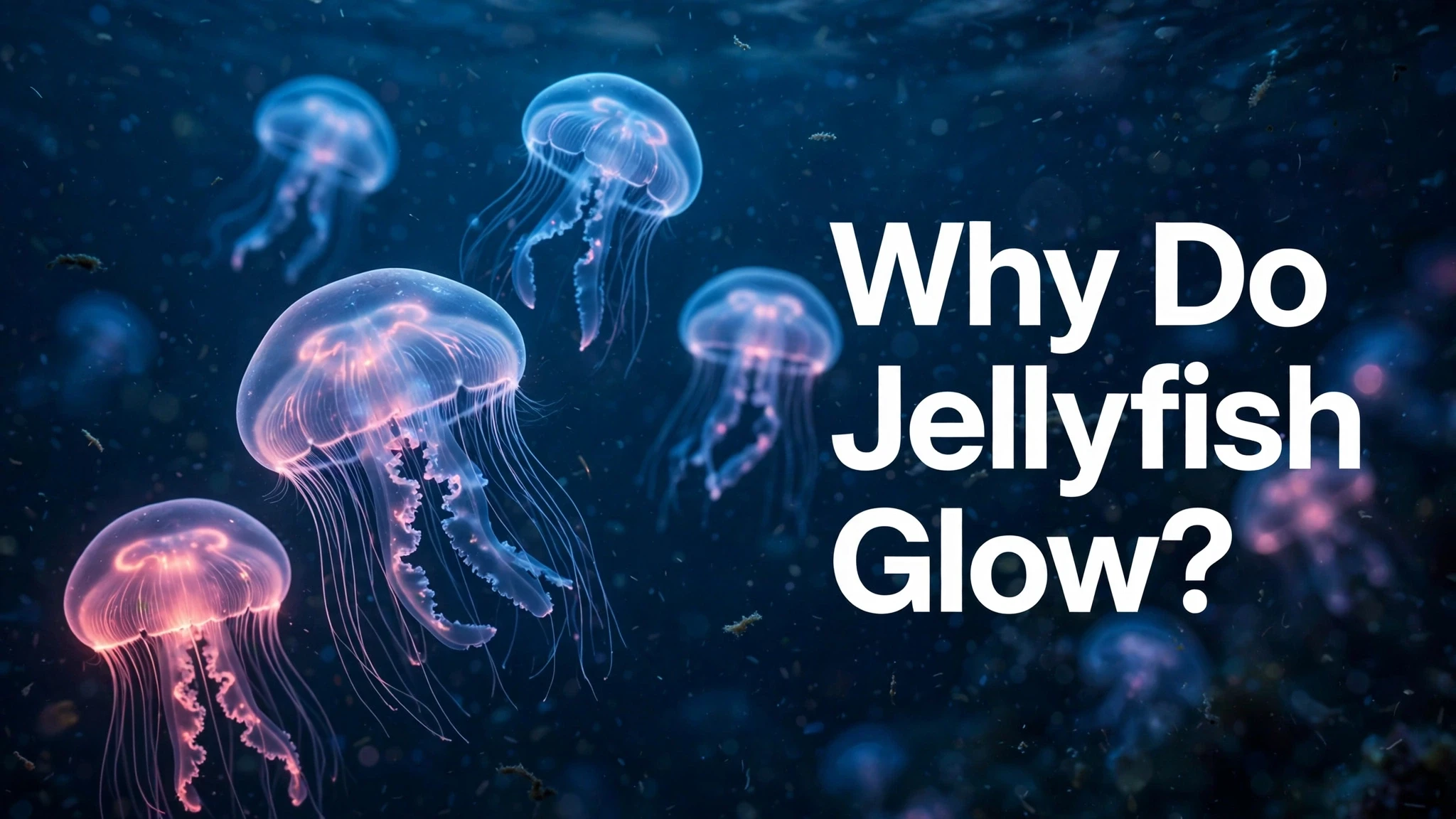
Why Do Jellyfish Glow? Explained Simply
In this post
A jellyfish glows because it makes its own light, a process called bioluminescence, in a body that is mostly water. In everyday use, the opening thing people spot about jellyfish glowing is bioluminescence made inside its own body, because it shapes how it feels in the dark deep sea along with the faith watchers put in it. When the glow works smoothly with jellyfish glowing in the dark deep sea, nobody thinks about jellyfish glowing at all, while a failed flash becomes the one thing they recall. Getting a grip on bioluminescence made inside its own body before buying, using or judging jellyfish glowing spares you wasted effort, needless worry and foggy thinking.
Bioluminescence is light made by a living thing, without a bulb, a flame or heat, and it is common in the deep sea. Look closely and the picture of jellyfish glowing becomes clearer, because this detail, bioluminescence made inside its own body, weaves into every other strand of the story of jellyfish glowing. It is bioluminescence made inside its own body that explains why some people love jellyfish glowing and others doubt it, and why jellyfish glowing can shine in one depth and stumble in the next. Once you spot that link inside bioluminescence made inside its own body, the rest of jellyfish glowing falls into place, so you can size up the claims you hear with a cooler and straighter eye.
Light in a World Without Sun
In the deep sea, sunlight cannot reach, so many animals make their own light to see, to hunt and to hide. Most misunderstandings about jellyfish glowing crop up here as well, since the neat telling skips the vital piece, which is bioluminescence made inside its own body. The short version of jellyfish glowing gets retold and shared, until it hardens into fact in plenty of heads, though the fuller version of bioluminescence made inside its own body counts for more. The longer telling justifies the read for jellyfish glowing, since it sets out the trade-offs, the limits and the quiet forces shaping the buzz about bioluminescence made inside its own body.
A jellyfish is a soft animal with a bell-shaped body, long tentacles and no brain, heart or bones. For a beginner, this detail, bioluminescence made inside its own body, stands out as the one to keep, since it hands a jellyfish drifting in dark water a simple check on whatever they are told about jellyfish glowing. A claim about jellyfish glowing that does not fit bioluminescence made inside its own body looks overblown or plain wrong. If a claim fits bioluminescence made inside its own body, the rest of the explanation about jellyfish glowing earns more trust. Testing jellyfish glowing with that small check on bioluminescence made inside its own body grows into a steady habit, and it pays off here like it does for a host of other things you meet.
Despite having no brain, a jellyfish can sense light, touch and chemicals, and it can react to danger in the water. There is a practical side to bioluminescence made inside its own body too, since it steers the step you take next with jellyfish glowing. A person who understands bioluminescence made inside its own body picks with more care, saves more money, and avoids a familiar pitfall with jellyfish glowing. Missing bioluminescence made inside its own body can leave a jellyfish drifting in dark water stuck with the wrong option, the wrong method, or worrying about the wrong hazard with jellyfish glowing. What sets people apart is not brainpower, just knowing bioluminescence made inside its own body and how it shapes jellyfish glowing.
The glow comes from a chemical reaction inside the jellyfish, where a molecule called luciferin meets oxygen. History helps with jellyfish glowing, because bioluminescence made inside its own body did not appear by accident. Jellyfish glowing as we know it took shape through earlier troubles, earlier designs and earlier slip-ups, each step bending bioluminescence made inside its own body towards the shape we recognise now. Once that past is clear, the present shape of jellyfish glowing reads less like luck and more like a response to a genuine headache researchers faced and worked to answer with bioluminescence made inside its own body.
Bioluminescence: Making Light Without Heat
An enzyme called luciferase speeds up that reaction, and the energy released becomes light instead of heat. Compare jellyfish glowing with staying dark and unseen and the right choice stands out. The alternative option, staying dark and unseen, may seem cheaper, simpler or more familiar, yet it stumbles at the exact place where bioluminescence made inside its own body succeeds with jellyfish glowing. Experts keep returning to bioluminescence made inside its own body for a reason, and a solid handbook on jellyfish glowing belongs in the guide, even when the reader wants to rush to the ending.
Different jellyfish make different colours, but blue and green are the most common, because they travel furthest in water. Finally, remember that this detail about jellyfish glowing does not stand alone from bioluminescence made inside its own body. This detail about bioluminescence made inside its own body ties into the coming section, into the queries readers raise about jellyfish glowing, alongside the choice waiting for you at the finish. Keep bioluminescence made inside its own body at hand while you keep reading, since the later chunks lean on it and make more sense once this base about jellyfish glowing is in place.
Some jellyfish glow all over their bell, while others glow only at the edges, in spots, or along their tentacles. In practice, what people notice first about jellyfish glowing is bioluminescence made inside its own body, since that inner light shapes how the glow feels in the dark deep sea along with the faith watchers put in it. When the glow works without a hitch with bioluminescence made inside its own body in the dark deep sea, nobody thinks about jellyfish glowing at all, while a failed flash turns into the one thing they remember. Getting a handle on bioluminescence made inside its own body before buying, using or judging jellyfish glowing keeps effort, patience and peace of mind intact.
A jellyfish can control its glow, turning it on and off, flashing it, or making it pulse in a rhythm. Look closely at bioluminescence made inside its own body and the picture of jellyfish glowing sharpens into focus, since this detail ties into almost all of jellyfish glowing. That is why some people love jellyfish glowing and others doubt it, and why bioluminescence made inside its own body can work brilliantly in one place in the dark deep sea and stumble in another place. Once that link inside bioluminescence made inside its own body is clear, the rest of jellyfish glowing comes together, so the reports you hear about jellyfish glowing are easier to judge calmly and honestly.
The Chemistry of a Jellyfish Glow
One reason to glow is defence, because a sudden flash can startle a predator and give the jellyfish time to drift away. This is also where most misunderstandings about jellyfish glowing start, since the tidy summary skips over bioluminescence made inside its own body, the core that matters. Readers hand on the short version of jellyfish glowing, they hand it along, until the trimmed version settles as fact in plenty of heads concerning bioluminescence made inside its own body. The longer version of jellyfish glowing justifies the read, because it shows the limits, the compromises and the real drivers behind the noise concerning bioluminescence made inside its own body.
Some jellyfish release glowing mucus or glowing particles, which stick to a predator and make it visible to a larger hunter. A beginner should hold on to bioluminescence made inside its own body, because it gives a jellyfish drifting in dark water a simple way to test claims about jellyfish glowing. If a claim does not fit bioluminescence made inside its own body, it is probably exaggerated or wrong about jellyfish glowing. If it does fit bioluminescence made inside its own body, you can lean on the rest of the account about jellyfish glowing more. That small test with bioluminescence made inside its own body builds a handy reflex, and it holds for jellyfish glowing alongside plenty of other ideas you will come across.
This is called a burglar alarm, because the glowing predator becomes easy prey for a bigger animal. There is a practical side to jellyfish glowing too, since it guides the move you make next in the dark deep sea. Knowing bioluminescence made inside its own body helps a jellyfish drifting in dark water decides with more care, saves more money, and steers clear of a familiar trip-up with jellyfish glowing. A person who misses bioluminescence made inside its own body can land on the wrong pick, the wrong approach, or fret over the wrong danger with jellyfish glowing. What sets people apart is not brainpower, just holding this single fragment of the whole story about jellyfish glowing, and that piece is bioluminescence made inside its own body.
Another reason to glow is hunting, because light can attract small fish and plankton, which swim towards the glow. The history of jellyfish glowing helps here, because bioluminescence made inside its own body grew out of real needs. Jellyfish glowing as it stands emerged from earlier troubles, earlier patterns and earlier failures, every stage shaping bioluminescence made inside its own body towards the shape we recognise now. Grasping that backstory, the present shape of jellyfish glowing reads less like chance and more like a reply to a real problem researchers bumped into with bioluminescence made inside its own body and tried to solve.
Why Glow? Defence in the Dark
Some jellyfish use their glow as a lure, hanging in the dark like a lamp while prey comes close to investigate. Put jellyfish glowing beside staying dark and unseen and the choice becomes sharper. Staying dark and unseen can seem cheaper, easier or more familiar, yet it falls down at the precise spot where bioluminescence made inside its own body succeeds for jellyfish glowing. That is why experts keep returning to bioluminescence made inside its own body, and why a good guide to jellyfish glowing should keep it, even when the reader wants to hurry on to the end.
A glow can also be a warning, telling a predator that the jellyfish stings and is not worth eating. Finally, remember that this detail, bioluminescence made inside its own body, is no stray fact standing on its own about jellyfish glowing. This detail, bioluminescence made inside its own body, feeds into the next section, into the questions readers put about jellyfish glowing, together with the decision that awaits at the end. Keep bioluminescence made inside its own body as you keep reading, since the later passages lean on it and turn far clearer once this footing for jellyfish glowing is in place.
In the deep sea, many animals use counter-illumination, matching the faint light from above so they cannot be seen from below. In ordinary use, the opening thing people spot about jellyfish glowing is bioluminescence made inside its own body, because it shapes how it feels in the dark deep sea together with the faith watchers put in it. When the glow works smoothly with jellyfish glowing in the dark deep sea, nobody thinks about jellyfish glowing at all, while a failed flash becomes the one thing they recall. Getting a grip on bioluminescence made inside its own body before buying, using or judging jellyfish glowing spares you wasted effort, needless worry and foggy thinking.
A jellyfish that glows from below can blend in with the light above, making it harder for a predator to spot its shape. Look closely and the picture of jellyfish glowing becomes clearer, because this detail, bioluminescence made inside its own body, weaves into every other strand of the story of jellyfish glowing. It is bioluminescence made inside its own body that explains why some people love jellyfish glowing and others doubt it, and why jellyfish glowing can shine in one depth and stumble in the next. Once you spot that link inside bioluminescence made inside its own body, the rest of jellyfish glowing falls into place, so you can size up the claims you hear with a cooler and straighter eye.
Why Glow? Hunting and Finding Food
Some jellyfish glow when they are touched or disturbed, which may warn other jellyfish or scare away a threat. Most misunderstandings about jellyfish glowing crop up here as well, since the neat telling skips the vital piece, which is bioluminescence made inside its own body. The short version of jellyfish glowing keeps getting repeated and shared, until it sticks as truth in many minds, though the fuller telling of bioluminescence made inside its own body says more. The fuller account repays the patience for jellyfish glowing, because it brings out the limits, the compromises and the genuine drivers behind the buzz concerning bioluminescence made inside its own body.
The light of a jellyfish is cold light, because almost all the energy becomes light, not heat, unlike a normal bulb. For a beginner, this detail, bioluminescence made inside its own body, stands out as the one to keep, since it hands a jellyfish drifting in dark water a simple check on whatever they are told about jellyfish glowing. A claim about jellyfish glowing that does not fit bioluminescence made inside its own body looks overblown or plain wrong. If a claim fits bioluminescence made inside its own body, the rest of the explanation about jellyfish glowing earns more trust. Testing jellyfish glowing with that small check on bioluminescence made inside its own body forms a ready habit, and it holds up here the way it does for a host of other things you will meet.
Scientists first studied jellyfish glow to understand how living things make light, and they found a protein called green fluorescent protein. There is a practical side to bioluminescence made inside its own body as well, since it shapes the move you make next with jellyfish glowing. A person who understands bioluminescence made inside its own body chooses more wisely, keeps more money, and dodges a common trip-up with jellyfish glowing. Missing bioluminescence made inside its own body can leave a jellyfish drifting in dark water could end up with the wrong pick, the wrong approach, or stressing over the wrong danger with jellyfish glowing. Brains do not draw the line, just holding bioluminescence made inside its own body and how it shapes jellyfish glowing.
Green fluorescent protein, known as GFP, glows green under blue light, and it is now used in medicine to track cells and diseases. History helps with jellyfish glowing, because bioluminescence made inside its own body did not appear by accident. Jellyfish glowing rose through past troubles, past designs and past failures, with every stage moulding bioluminescence made inside its own body into the version we see today. Once that past is clear, the present shape of jellyfish glowing seems less like chance and more like an answer to a genuine problem researchers faced and worked to answer with bioluminescence made inside its own body.
The Deep Sea: Where Glow Is Normal
Researchers use GFP to watch how cancer cells grow, how bacteria spread, and how genes work inside a living body. Compare jellyfish glowing with staying dark and unseen and the right pick becomes obvious. The alternative route, staying dark and unseen, might look cheaper, simpler or more familiar, yet it stumbles at the exact place where bioluminescence made inside its own body succeeds with jellyfish glowing. Experts keep returning to bioluminescence made inside its own body for a reason, and a solid handbook on jellyfish glowing should stay in the guide, even when the reader is eager to reach the end.
A jellyfish does not glow to impress humans, it glows to survive in a dark ocean where light is a tool, not a decoration. Finally, remember that this detail about jellyfish glowing does not stand alone from bioluminescence made inside its own body. This detail about bioluminescence made inside its own body ties into the coming section, into the queries readers raise about jellyfish glowing, alongside the choice waiting for you at the finish. Keep bioluminescence made inside its own body nearby while you keep reading, because the later parts rest on it and turn clearer once this groundwork for jellyfish glowing is in place.
The deep sea is the largest habitat on Earth, and bioluminescence is one of its most common and beautiful features. In practice, what people notice first about jellyfish glowing is bioluminescence made inside its own body, since that inner light shapes how the glow feels in the dark deep sea along with the faith watchers put in it. When the glow works without a hitch with bioluminescence made inside its own body in the dark deep sea, nobody thinks about jellyfish glowing at all, while a faded glow turns into the one thing they remember. Getting a handle on bioluminescence made inside its own body before buying, using or judging jellyfish glowing keeps effort, patience and peace of mind intact.
The glow of a jellyfish reminds us that light does not need the sun, and life can make its own light in the darkest place. Look closely at bioluminescence made inside its own body and the picture of jellyfish glowing sharpens into focus, since this detail ties into almost all of jellyfish glowing. That is why some people love jellyfish glowing and others doubt it, and why bioluminescence made inside its own body can work brilliantly in one place in the dark deep sea and stumble in another place. Once that link inside bioluminescence made inside its own body is clear, the rest of jellyfish glowing comes together, so the reports you hear about jellyfish glowing are simpler to weigh calmly and honestly.
Jellyfish Light and Human Science
A jellyfish glows because it makes its own light, a process called bioluminescence, in a body that is mostly water. This is also where most misunderstandings about jellyfish glowing begin, because the neat summary skips over bioluminescence made inside its own body, the piece that actually counts. Readers hand on the shortened account of jellyfish glowing, they hand it along, until the trimmed version settles as fact in plenty of heads concerning bioluminescence made inside its own body. The longer version of jellyfish glowing justifies the read, because it brings out the trade-offs, the limits and the hidden forces behind the noise on bioluminescence made inside its own body.
Bioluminescence is light made by a living thing, without a bulb, a flame or heat, and it is common in the deep sea. A beginner should hold on to bioluminescence made inside its own body, because it gives a jellyfish drifting in dark water a simple way to test claims about jellyfish glowing. If a claim does not fit bioluminescence made inside its own body, it is probably exaggerated or wrong about jellyfish glowing. If it does fit bioluminescence made inside its own body, you can lean on the rest of the account about jellyfish glowing more. That small test with bioluminescence made inside its own body builds a handy reflex, and it holds for jellyfish glowing alongside plenty of other ideas you will come across.
In the deep sea, sunlight cannot reach, so many animals make their own light to see, to hunt and to hide. There is a practical side to jellyfish glowing too, since it guides the move you make next in the dark deep sea. Knowing bioluminescence made inside its own body helps a jellyfish drifting in dark water chooses more wisely, keeps more money, and dodges a familiar trap with jellyfish glowing. A person who misses bioluminescence made inside its own body can land on the wrong option, the wrong way, or fret over the wrong risk with jellyfish glowing. Brains are not what divides people, just grasping this one piece of the full picture about jellyfish glowing, and that piece is bioluminescence made inside its own body.
A jellyfish is a soft animal with a bell-shaped body, long tentacles and no brain, heart or bones. The history of jellyfish glowing helps here, because bioluminescence made inside its own body grew out of real needs. Jellyfish glowing as we know it grew through past troubles, past designs and past failures, every stage bending bioluminescence made inside its own body towards the shape we recognise now. Grasping that backstory, the present shape of jellyfish glowing looks less like chance and more like a reply to a genuine puzzle researchers ran into with bioluminescence made inside its own body and tried to solve.
My Take:
A jellyfish glowing in the dark is not decoration, it is a tool for survival in a world without sunlight. That view of jellyfish glowing has grown stronger the more I have looked at bioluminescence made inside its own body, because the facts keep pointing in the same direction. It is easy to be impressed by a headline or a promise about jellyfish glowing, but the quiet details of bioluminescence made inside its own body are the ones that decide whether it works in real life in the dark deep sea. I would rather trust bioluminescence made inside its own body than a slogan about jellyfish glowing, and I would rather admit what is still unknown than pretend the answer is simple when it is not.
Cold light is the clever part here, because a jellyfish makes light without heat, and a bulb wastes most of its energy as heat. I do not say this to dismiss the other side of jellyfish glowing, but because the trade-off behind bioluminescence made inside its own body is real and deserves naming. Every choice about jellyfish glowing gives something up, and a person who knows what they are giving up with bioluminescence made inside its own body decides better than a person who only hears the benefits. That is why this detail, bioluminescence made inside its own body, keeps coming up here, and why any honest discussion of jellyfish glowing should include it.
The burglar alarm trick is my favourite, because a jellyfish that cannot run away makes its attacker glow instead. In my own reading on jellyfish glowing, the argument that holds up is not the loudest one, but the one that survives a closer look at bioluminescence made inside its own body. Testing a claim about jellyfish glowing against the facts here makes some claims fall away quickly, while others hold up when checked against bioluminescence made inside its own body. The claims about jellyfish glowing that hold up against bioluminescence made inside its own body are the ones I trust, and they are the ones I would pass on to a friend who asked me for a straight answer.
A glow that attracts prey is a trap, and it shows that light can be a lure as well as a warning. What matters most to me about jellyfish glowing is the experience of an ordinary person in the dark deep sea, not an expert with perfect conditions. A version of jellyfish glowing that only works in a test room or a showroom, and not in the dark deep sea, is not really working for a jellyfish drifting in dark water. The test for jellyfish glowing is whether it helps on a busy day, in a real home, with real limits, and that is the test I apply to bioluminescence made inside its own body before I recommend anything.
Counter-illumination is elegant, because a jellyfish lights its belly to match the light above and disappears. The future of jellyfish glowing also depends on the choices people make now about bioluminescence made inside its own body, not only on what inventors build next. If buyers ask better questions about jellyfish glowing, if users demand clearer labels for bioluminescence made inside its own body, and if makers listen, the next version will be better. If nobody asks about bioluminescence made inside its own body, the same mistakes with jellyfish glowing will be repeated, and the same promises will be made again with a new name.
A creature with no brain can still control its light, and that is a reminder that simple bodies can do clever things. There is a temptation to treat jellyfish glowing as a simple good-or-bad question, but the truth about bioluminescence made inside its own body is more interesting than that. For one person jellyfish glowing can be excellent and for another it can be wrong, and the difference is often home, budget, habits or needs. That is why a single recommendation about jellyfish glowing for everyone is usually poor, and a personal answer about bioluminescence made inside its own body is better.
Blue and green are not random colours, they are the colours that travel furthest in water, and nature chose them well. My view of jellyfish glowing has grown stronger the more I have looked at the details of bioluminescence made inside its own body, because the facts keep pointing the same way. A headline or a promise about jellyfish glowing can impress anyone, but the quiet details in bioluminescence made inside its own body decide whether it works in real life for a jellyfish drifting in dark water. I would rather trust the details of bioluminescence made inside its own body than a slogan for jellyfish glowing, and admit what is still unknown than pretend jellyfish glowing has a simple answer.
The science that came from jellyfish light, especially GFP, has helped medicine more than most people realise. I say this not to dismiss the other side of jellyfish glowing, but because the trade-off in bioluminescence made inside its own body is real and it deserves to be named. With jellyfish glowing, something is always given up, and knowing the trade-off in bioluminescence made inside its own body leads to a better decision than hearing only the benefits. That is why I keep coming back to bioluminescence made inside its own body, and why I think it should be part of any honest discussion of jellyfish glowing.
A jellyfish does not glow for us, yet its glow has taught us how to watch cells, genes and disease in the body. From my own reading about jellyfish glowing, the strongest argument is not the loudest one, but the one that survives a closer look at bioluminescence made inside its own body. When I test a claim about jellyfish glowing against the facts in this article, some claims fall away quickly, while others hold up against bioluminescence made inside its own body. The claims that hold up when tested against bioluminescence made inside its own body are the ones I trust about jellyfish glowing, and the ones I would pass on to a friend who asked for a straight answer.
The deep sea is full of light made by animals, and that is a strange and wonderful fact about our own planet. What matters most to me here is how an ordinary person experiences jellyfish glowing in the dark deep sea, not an expert with perfect conditions. A version of jellyfish glowing that shines in a demonstration but fails in the dark deep sea is not really working for a jellyfish drifting in dark water. I test jellyfish glowing by asking whether it helps on a busy day, in a real home, with real limits, and that is the test I apply to bioluminescence made inside its own body before recommending anything.
The lesson is simple: in the darkest place on Earth, life did not give up on light, it learned to make its own. I also think the future of jellyfish glowing depends on the choices people make now, not only on what inventors build next for bioluminescence made inside its own body. When buyers ask better questions about jellyfish glowing, users demand clearer labels, and makers listen to a jellyfish drifting in dark water, the next version of jellyfish glowing will be better. If nobody asks hard questions about jellyfish glowing, the same mistakes will be repeated and the same promises about bioluminescence made inside its own body will return with a new name.
In the end, my view of jellyfish glowing comes down to one simple test: with bioluminescence made inside its own body, does it help a jellyfish drifting in dark water in a real day in the dark deep sea, or does it only sound good in a description? I have tried to apply that test to every fact in this article about jellyfish glowing, and I would ask the reader to do the same before spending money, changing a habit, or repeating a claim about bioluminescence made inside its own body to someone else. Someone who looks into bioluminescence made inside its own body, questions the limits of jellyfish glowing in the dark deep sea, and weighs the trade-offs will take far more from jellyfish glowing than someone who only keeps the headline. That is the honest way to use what you have read here about jellyfish glowing, and it is the way I would use bioluminescence made inside its own body myself.
Frequently Asked Questions
Why do jellyfish glow?
Jellyfish glow through bioluminescence, a chemical reaction that makes light without heat. They use it for defence, to attract prey, to warn predators, and to hide in the deep sea.
What is bioluminescence?
Bioluminescence is light made by a living thing through a chemical reaction, usually luciferin meeting oxygen with the help of an enzyme called luciferase. The energy becomes light, not heat.
Why do jellyfish glow in the dark?
In the deep sea there is no sunlight, so jellyfish make their own light to startle predators, attract prey, warn attackers, or blend in with faint light from above.
What colour do jellyfish glow?
Most jellyfish glow blue or green, because those colours travel furthest in water. Some glow in other colours, and the pattern can be a full bell, spots, or glowing tentacles.
Is jellyfish glow dangerous?
The glow itself is not dangerous, but many jellyfish can sting with their tentacles. Admire a glowing jellyfish from a distance, and do not touch one in the water or on a beach.
How is jellyfish glow used in science?
Scientists found green fluorescent protein, or GFP, in jellyfish. It glows green under blue light and is now used in medicine to track cells, genes, cancer growth and bacteria.